India – my first time (1)

Just a few photos this time, taken on my first proper trip to India. On the only previous visit, in 1988, I had spent a manic 18 hours in Delhi, and then taken a long bus journey to Nepal. That was a journey that really should be the subject of a blog itself, sometime.

On the following year, then, I returned to India, intending to spend rather longer there this time. As it turned out, I had to return to England after a few weeks, but the short time that I was in India whetted my appetite for more. It is said that western visitors to India tend to fall into one or the other of two categories. Either they fall in love with the country, and return whenever they can, or they swear never to go within a thousand miles of it ever again.

I’ve been back about ten times.

Delhi Red Fort 1

The Red Fort (1989)

I arrived in Delhi with a copy of Lonely Planet’s ‘West Asia on a Shoestring’. In those days, the Lonely Planet tomes really were aimed at backpacking budget travellers, with their recommendations for rooms tending to be dormitories and really cheap hotels. My flight arrived in the late afternoon, so that not only was I weary from the long journey, but the light was already fading when I walked out of the airport. In the chaotic maelstrom outside of passengers and taxi drivers fighting over them, I managed to remain calm enough to locate the corner where the buses of the Ex-Servicemen’s Air Link Transport Services waited. I think they are still in operation today (I’m sure someone will tell me), with their yellow (I think) buses providing a cheap link into the centre of Delhi where I was heading.

I was dropped off near the hotel I had decided to use, the Ashok Yatri Niwas, which stood at the junction of Janpath and Ashoka Road. It has long gone, now; a great concrete monster of a place with cement beds and lifts that seemed to take half a day to do the full journey up to the top floor. I don’t think that many people mourn its going, but I was reasonably comfortable there for a couple of nights. It was where I had stayed the previous year for the one night I was in Delhi. There was hot water in the bathroom, as long as you rose early enough, and I remember the cafeteria being fairly basic, but adequate. For someone on a tight budget, it was fine. Back then, it was a case of turn up and hope there was a room, especially if you had just arrived in the country. There was no email in those days. But it was pretty big, and there was room for me.

Unlike my previous flying visit, I now had time to wander about and savour everything around me. And for the first time, it really did seem an alien and exotic society. I had enjoyed browsing in the souks (bazaars) when I had lived in Oman, and also out in the little villages there, but my first taste of India seemed to me to be as exciting and exotic as it got. Everywhere I went, I was surrounded by the noise of traffic and the odours of exhaust fumes. But the traffic was different; the buses appeared to be almost falling to pieces, loud and fierce, with people hanging off the outside as well as being crammed inside behind open, barred, windows. I saw tuk-tuks everywhere; the little three-wheeled taxis that buzzed like wasps through the traffic, squeezing through every available gap. Amongst this impatient, petulant, hooting traffic, carts pulled by horses or buffaloes plodded. Motorbike riders forced their way through, and cyclists cautiously weaved their way along. Everywhere, pedestrians took their lives in their hands to cross the roads, but the traffic all swerved out of the way for the cattle that wandered imperiously through the streets, ignoring it all.

Incredibly, through the traffic pollution so thick that you could grab handfuls of it out of the air, there were dozens of other smells assailing me everywhere I went. I was tempted every few steps by cooking foods, and then I might pass a doorway and a strong smell of incense would waft out. Seconds later, I would suddenly wrinkle my nose as I passed a pool of sewage on the sidewalk, but then immediately I might pass a fragrant flower stall.

delhi_gate

Delhi Gate, in the old city near Chandni Chowk. (1989)

There were temples everywhere, and a shrine of some description every few steps. Here and there were green and white mosques, stalls of old sacking and weathered boards set up outside gleaming new metal, glass and concrete shops. There were holy men jostling office workers, great hump-backed cattle and pariah dogs in corners or in the middle of the footway, beggars, shoe shiners, touts and hustlers, people in a hurry and idlers passing the time of day. I was urged to discretely change money, buy drugs, see pornographic videos, have a massage, change hotels, visit ‘my brother’s’ shop or book a trip to another part of India.

It was dirty, colourful, loud, exciting, and different and I loved it.

I walked everywhere I could, not just because I was on a tight budget, but it is always how I have got to know a place. I went to the Red Fort, on my first full day there, enjoying the relative peace and quiet inside, and it was here that I discovered Mogul architecture: The beautiful soft red stone and the marble, the carvings and inlay, the arches and columns…the only time I’d seen architecture that beautiful, before, was in Grenada, in Spain.

And now, looking at the photos I took, I am struck by an odd discrepancy. In my memory, one of the defining things about Delhi when I arrived was the incredible press of traffic. In my photos, though, there are comparatively few people, and even less traffic. Is my memory at fault? Is it just that there were obviously far fewer people in India 30 years ago? Perhaps it is chance alone.

But I think I’ll return to the architecture at a later date.

Once Upon a Time

046

Are you sitting comfortably? Then I’ll begin.

It is a cliché that causes us to smile, yet variations of that phrase will have been used countless times in the distant past, when our ancestors gathered around the storyteller of the tribe to hear whatever tale he (or she) was about to tell.

And research http://rsos.royalsocietypublishing.org/content/3/1/150645  that was published this week, now tells us that the history of fairy tales turns out to be even longer than anyone suspected, going back to the times of prehistoric tribes. Not that this theory is entirely uncontested, of course.

But I would be surprised if it were untrue.

There have always been storytellers, who performed an important role, especially before the invention of writing. In those days, when all knowledge had to be memorised if it was to be of any use, then the skills of the storyteller in the tribe, someone who was used to organising their thoughts so that they could remember what was important and then recount it to the rest of the tribe, would have been vital for far more than simply entertainment; they would have been essential for the tribe’s survival.

They would have told stories about wild animals; either cautionary tales, or how to hunt them. Stories of skirmishes with other tribes; praising the bravery of their own warriors, and recounting how the other tribe was put to flight, but warning, still, of the danger these other tribes posed.

They must have always speculated on the origins of their world, and come up with the various creation myths. It would be important that all the tribe understood the appropriate rituals they would need to follow to appease the gods and ensure their own welfare.

So these stories would have been a way of sharing information with all the members of the tribe.

Much later, after the invention of writing, these tales began to perform a different function. They would still be used as cautionary tales, but now perhaps aimed more towards children (watch out for cross-dressing wolves and the like), or purely for entertainment.

But in a society where the majority were unable to read, they would remain important.

Throughout history, there has always been a borrowing and reinvention of stories; the myth of a flood that wipes out most of mankind, for example, is found virtually all over the world.

But the difference between a ‘myth’ and a ‘fairy story’ seems a little vague. I suppose the term ‘myth’ does seem to have a little more gravitas.

Many of these stories concern blacksmiths, which might be due to an early awe of those peoples who discovered how to work stronger metal, specifically iron, and fears that they might be using magical or supernatural means to do so. I’ll return to that shortly.

Now let’s take one well-known example of a fairy tale; the story of Snow White plays out both as a royal power struggle, something that has occurred time and again all over the world, and also the classic tale of the wicked stepmother, highlighting the insecurity a child may feel when a parent dies and is replaced by a stranger.

She flees an assassination attempt to find refuge with another people. The fact that they are depicted as dwarves (in the well-known European version) serves to emphasize the fact that they are not her own people.

There are further attempts on her life, but she is finally rescued by a passing prince and lives happily ever after.

Variations of this story crop up across Europe, Turkey, Africa, Asia and America. Whether these tales were passed from tribe to tribe and spread across the world that way, or were invented spontaneously in different parts of the world, it is unlikely we will ever know. It was probably a combination of the two. What is certain, is that they tend to be reinvented regularly.

Stories of mortals striking deals with supernatural beings (i.e. the devil) occur world-wide. What they all have in common is that either the human making it reneges on the deal, and usually finds a way to cheat the supernatural being, or, of course, the devil comes to collect his soul.

It is still a well-used device in literature. There is Goethe’s Faust, and since then many other popular novels on the subject, and we are still happily reinventing this story, as well as all of the other fairy tales, into new stories today.

In Britain, there are numerous folk-tales on this subject, usually concerning blacksmiths who either make pacts with the devil, or who are visited by him in disguise and realise who he really is (the comely maiden with the cloven hooves is often a bit of a giveaway). It usually ends with the devil being grabbed by the nose with red hot pincers and running off screaming. But again, these tales surface from all parts of the British Isles, and are set in times that are contemporary to the story teller. So the fellow telling the tale in an ale-house in a sixteenth century village would mention the blacksmith in a village twenty or so miles away – close enough to be particularly exciting to the listeners, but probably far enough away for there to be no one in his audience who might confidently denounce it as false.

And then, of course, they all lived happily ever after.

The Language Barrier

As part of its strategy to counter extremism, the British Government has today announced its intention to fund a plan to help all migrants to this country learn English. For once, I think that this is a plan to applaud.

For the inability to speak and understand the language of others around you fosters fear, misunderstanding and distrust.

Having lived in an ex-patriate community myself, I remember how easy it is to become persuaded by others that you are somehow surrounded by ‘enemies’, and to develop a laager mentality. This mindset takes it as a given that everyone outside of the circle does not understand you, they are somehow ‘against’ you, and forever plotting to attack or undermine you, so you sit there muttering darkly about these ‘outsiders’, and voicing your dislike and prejudices against them…it becomes a cycle of mistrust that can possibly become violent.

It is another example of the saying that we hate what we fear, and we fear what we do not understand. And when someone is trapped in a limited social circle because they cannot understand anyone outside of that circle, their chances of becoming a full member of the wider community are severely limited.

Having travelled in non-English speaking countries, I realise how much easier life becomes for me when I make the effort to learn even a small amount of the language.

There will be some who refuse to learn the language on the grounds that they feel that they are there temporarily, possibly working on a short term contract, and can get away with using their own language in a limited circle of work, shopping and socialising.

And there will be some for whom it is a matter of pride to use only their birth language.

I think that both of these viewpoints are mistaken.

Writers understand only too well the importance of language. We worry over whether to use this or that word or phrase to get our meaning across; we worry over whether the way we have worded something may be misunderstood. But when you are attempting to communicate with others in a language that you only vaguely understand, every single conversation is full of these fears.

And when that is the norm, it becomes easier just to avoid any situations where you have to try to use that language.

But it does not actually take much to overcome these fears. Perhaps accepting an invitation to visit to someone’s home, or their place of worship, will lead naturally to conversations where people can learn about each other. But the essential thing is to be able to communicate, which becomes next to impossible without at least a few words of a language in common.

A bit of paint splashed around

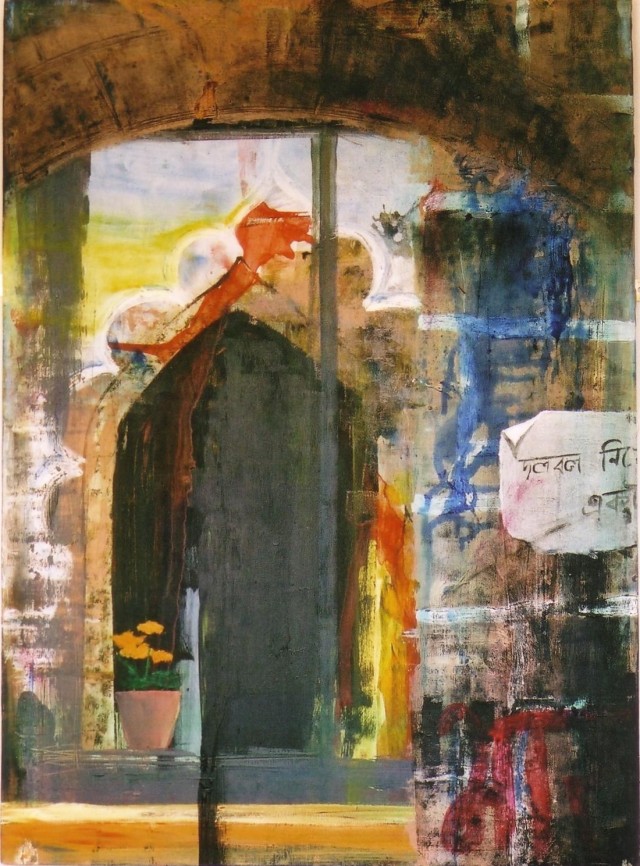
A different sort of creativity, today. I paint, at times, so here are a couple of my paintings that were inspired by my trips to India.

bihari door

This one is of a door on a house in the North India state of Bihar.


india #1

And this one a more impressionist rendering of doorways, arches and windows.


Although writing has always been the primary medium through which I have tried to express my thoughts and feelings, it was my first trip to India, 28 years ago, that persuaded me to try to paint seriously. Although I have done little in recent years, I still dabble on occasions, and suspect that it is only a matter of time before I begin work on a new painting.

A Short History of Blogging

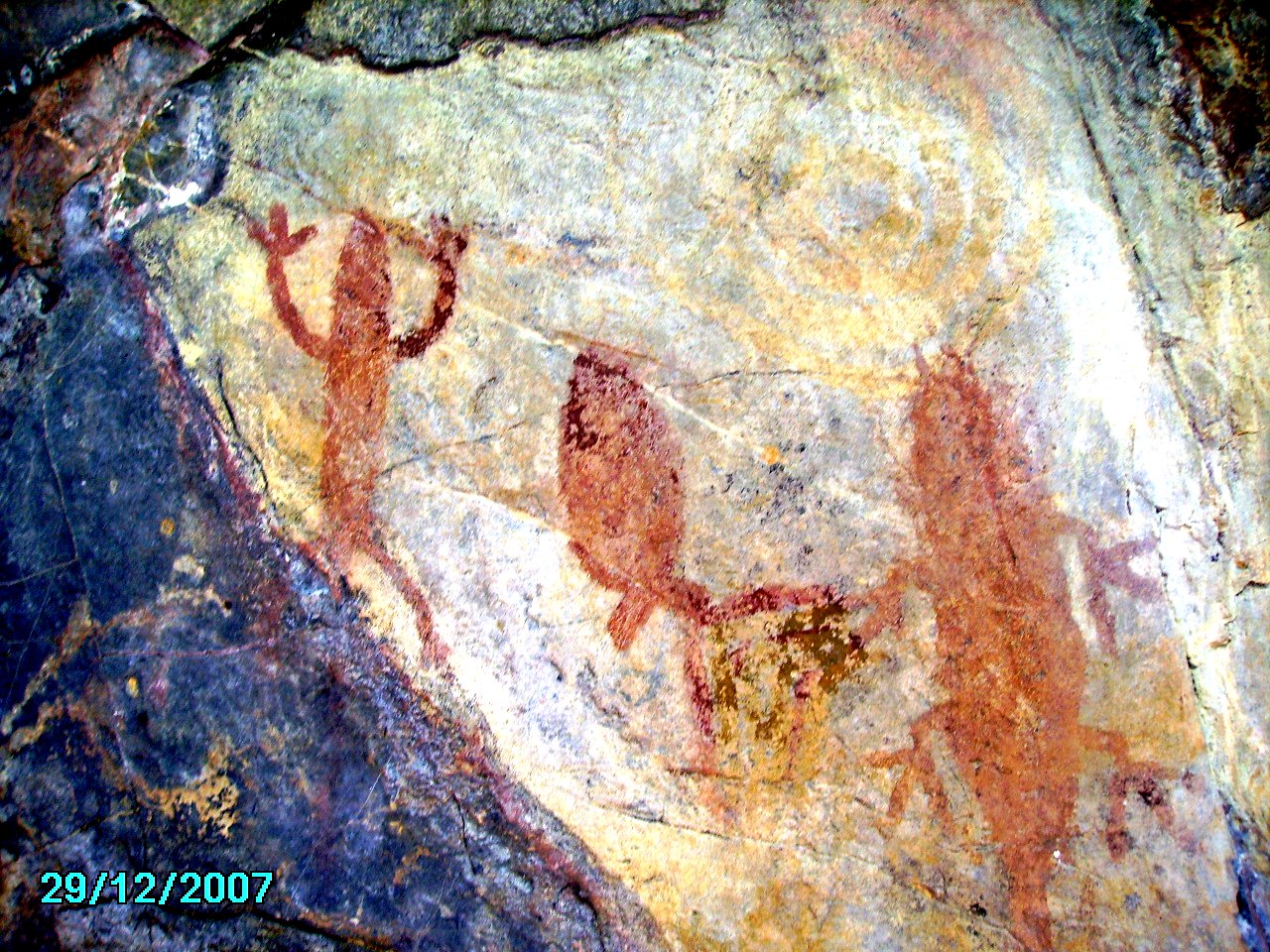
Blogging has always been about self-promotion. The first known blogs were on cave walls, although they were pretty crude, to be honest, and it is often really difficult to make out what the bloggers were on about. There is speculation, indeed, that to refer to them as ‘blogs’ might be a little misleading. The fact that they tend to be short and that it is very hard to make out what they mean, leads some experts to assume that they were an early form of Twitter. And then the fact that they frequently depict crude human figures, especially exaggeratedly female ones, and various animals, suggest that even in these early times, social media were largely the preserve of young person

cave paintings

‘Share if you think these babes are hot.’

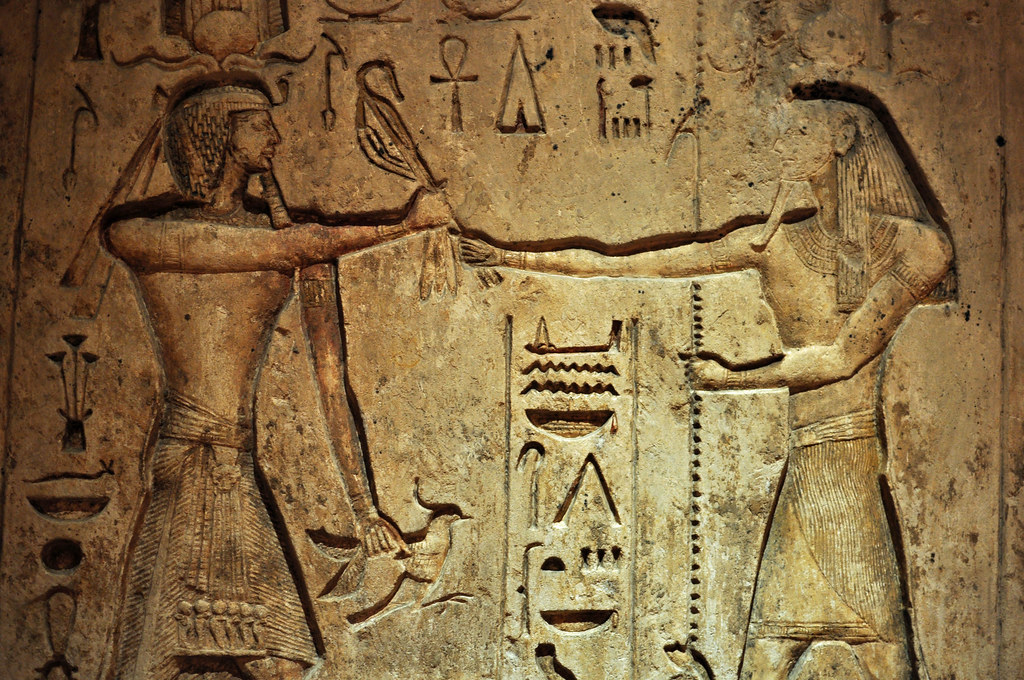
By the time of the rise of the first true civilisations in Egypt, they were beginning to get the hang of it. They have left massive numbers of inscriptions all over walls and columns and pretty well anything else that they could get a hammer and chisel near.

Egyptian carvings

‘Amenhotep snubbed in Big Brother Pyramid game – LOL’

Some even see the Rosetta Stone as a forerunner of Google, but others don’t.

The first English blogger was The Venerable Bede. His blog is one of the main sources of our knowledge of Saxon times, which is a bit of a bugger really, when you consider how reliable social media are today as a source of modern history. He probably missed out most of the good stuff. But he blogged in Old English, anyway, which no one can understand nowadays so it probably doesn’t matter.

bede

Leonardo da Vinci did a wicked selfie, but would probably be criticised nowadays for how few he produced. To be anyone on social media, it is probably necessary to post a minimum of twenty selfies in any twenty four hour period, but Leo was never up to that. But most of his blogs were all about what would then be science fiction and art and politics…so he’d have fitted in quite well with today’s bloggers really.

Samuel Pepys’ diaries are, of course, just the notes he took for his blogs. They are a mix of politics and news and what his family were up to, and his ‘conquests’ of various ladies. Wisely, he wrote most of this in shorthand and, even more wisely, put the more salacious bits in code. Nowadays, it is unnecessary to use code, since language is now changing so fast that no one can understand anything that was written more than six months ago anyway.

The Puritans thought blogging might be fun so they banned it, along with just about everything else, except breathing and praying. Well, praying, anyway.

A little later, newspapers were invented. These were not really blogs, since they were filled with news, rather than self-promotion, and it took a number of years before newspaper owners and editors realised that. Once they did, however, they worked very hard to make up for lost time, and now there are very few newspapers in the world that print mainly news.

And quite a lot that do not print any news at all.

In fact, they tend to be full of primitive opinion and often depict crude human figures, especially exaggeratedly female ones, and various animals.

And thus life turns full circle.


Photo credit (picture 1): jmarconi via VisualHunt.com / CC BY         

Photo credit (picture 2): PMillera4 via Visualhunt / CC BY-NC-ND


The Problem of Historical Truth

In my previous post about the pitfalls of online research, I began by alluding to the unreliability of newspaper reports. If you were to read reports on an important item of news in a number of different newspapers, you frequently might be forgiven for thinking that they were actually talking about completely different events. There will be political bias, of course, and the prejudices and agendas of reporters and editors alike. Are the individuals in an armed insurgency terrorists or freedom fighters? It is a point of view. Are strikers in an industry greedy mischief-making saboteurs, or victimised and mistreated victims of greedy corporations? Again, it is a point of view.

It can be very hard today to see through the fog of opinions and misinformation on any topic. How much more so when we delve back into time?

History is written by the victors. For example, what we know about Caesar’s campaigns in Gaul and Britain were written largely by the Roman conquerors, especially Caesar himself. Most of what we know of the reign of Ashoka, in India, comes from the edicts that he caused to be inscribed upon the remarkable number of rocks and pillars that are still in existence.

023 (2)

Even tales written by the vanquished are likely to be inaccurate, of course. The cruelty of the victors, their barbarity; all of their actions will be exaggerated.

The historian understands that information comes largely from primary and secondary sources. A primary source might be, for example, an account written at the time (Caesar, above) or Parish registers of births, marriages and deaths. These sources are considered to be most likely to be accurate, being compiled at the time of the events described, but clearly they might all be deliberately or accidently falsified. Secondary sources might be newspapers, which are largely made up of analysis and opinion, and therefore considered to be an interpretation of information that has been derived from another (hopefully primary!) source.

A primary source is also referred to as evidence, yet I wonder whether a better distinction would be made if ‘evidence’ referred only to unwritten sources; archaeological remains, buildings, pottery, jewellery and coins and their like, which, whilst needing interpretation, are unlikely to be prey to the kind of distortions that written sources might be. Caesar, after all, might have claimed to take ten thousand prisoners when he only took five hundred, yet pottery of a particular type that is found at a particular spot, tells a story that needs to be interpreted, yet is unlikely to be a falsehood.

We need to be careful, though, when it is interpreted in light of contemporary writing, to avoid the temptation of unconsciously corroborating those writings.

Having written the above, we do have to take a certain amount on trust, because it is not practical to question everything in the world that we come across.

Yet, just because we discover that Troy really does exist, does not mean that all of the stories of the Iliad are now, somehow, all true. That would be like an author writing an incredibly impossible fantasy tale, in which the city of Vienna still exists and features, yet claiming it must be true because Vienna is a real place.

During the first year of World War One, a fictional short story ‘The Bowmen’ was published in the London Evening News by Arthur Machen. In this tale, he describes a battle between English and German soldiers at Mons, in France, in which the beleaguered British were aided by the sudden appearance of phantom archers who intervened to keep the British safe. Although this was fiction, the story quickly ‘went viral’, as we might put it today, and was readily believed by many in Britain. Of course, there was a feeling then that the British were good and the Germans evil, and so it was natural that God might intervene to help and protect them. A far stronger belief in God, in those days, also contributed to the feeling that it was natural to find that a miracle had occurred.

Although Machen republished the tale in a book with a long introduction explaining that it was fiction, and examining reasons the public thought it was true, not only did the belief persist, but further reports of angels on the battlefield began to appear. As a child in the 1960’s, I remember reading an account of this in a comic, with it presented as the truth. In 2001, the Sunday Times reported that photographic evidence to support the story had been discovered, although this was proved to be a hoax.

The Sunday Times also published exerts from Hitler’s Diaries in 1983, until these, too, were proved to have been forged.

Memories are notoriously unreliable. I was reading just a few days ago of an experiment where a group of people were encouraged to discuss childhood memories, with selected members of the group feeding in deliberately false information. After an initial hesitation, it seemed that all of them accepted these false memories as real, even to the extent of agreeing that they had taken part in a balloon ride, when they had not, and describing what they had seen from the balloon, and their feelings during the ride. The point being that they came to believe these were their own, real, memories.

How reliable are our own memories, then? And what can we trust? Clearly, there must be a lot of historical narrative that has been honestly recorded, that is simply not true, and we are unlikely to ever know what it is.

Ho Ho Ho

So, here is the final instalment of my merry Christmas tale. Everything will be resolved satisfactorily, and we’ll all live happily ever after. As if.

Merry Christmas!

Henderson stood there staring at the spot in the middle of the field where the sleigh was no longer standing, but the peasant with the pitchfork was; he was looking up into the sky, as motionless as he had been before, so that Henderson thought at first he must somehow still be frozen in time. He had not noticed the woman following him across the yard, but now she called out ‘Moses!’ and the man turned, saw him, and swung the pitchfork around so that it pointed towards him. Involuntarily, he gave a little yelp, put his hands up and took a few steps backwards as the man stepped towards him, his face expressionless.

Then he turned and ran.

Behind him, he heard the man also begin to run and ahead of him the woman stood grinning at him. He swerved as well as he could, considering his age, his fitness, and the mud, and ran through the gateway.

He stopped for a second to catch his breath, and then began to run again towards the buildings. He had only taken a couple of steps this time, however, when he suddenly saw the cat in front of him. It hissed and took a couple of paces towards him, and then fixed its eyes upon him, crouched lower to the ground and began to run towards him, before launching itself up towards his throat. He backed away, suddenly terrified, and watched the creature sail towards him. He seemed to have plenty of time to take in its evil, soulless eyes; he saw its mouth full of razor-sharp teeth like tiny little yellow daggers, little droplets of saliva clinging to their tips; he even had time to see how its whiskers curved ever so gently backwards in flight, although they had spread out wide as they bristled stiffly.

He had plenty of time. As much as he wanted, it seemed, for the cat had stopped in mid-air, about a foot in front of him. Very slowly, his eyes on the cat, he stepped sideways. Then he reached out and touched it. Its fur still felt soft, but its body, like that of the horse earlier, felt cold, but the weirdest thing of all was that no matter how much he pushed it, he could not get it to move at all. He passed his hands all around it, but it hung there, in the air, in front of his face.

Slowly he turned around, and walked back towards the gateway. He paused and listened, but the world had gone silent again. Entering the field, he saw that the sleigh had returned. It sat on the opposite side of the field, now, where the farmland seemed to turn to woodland. The peasant and the witch had become frozen statues and stood close to the gateway. He scratched his head in bewilderment, and then walked quickly across the grass.

As he reached the sleigh, he noticed some small, fresh, muddy footprints on the running board. At that moment, there was a kind of double thud, and the elves landed beside him.

‘Jeez!’ he gasped, and they burst into spiteful laughter.

‘Boo!’ said one of them.

‘Well, look who it isn’t.’ said the other. ‘You’ve got mud all over your clothes, Fat Boy.’

‘They’ll bill you for that. Dock it out of your wages.’

They seemed none the worse for their experience, he thought bitterly, as he stepped into the sleigh, and sat down.

‘Come on, then.’ he sighed. ‘Let’s go.’ They grinned.

‘Maybe we don’t want to get in.’

‘Oh, stop buggering about! I’ve no intention of sitting here all day.’

‘Well, I don’t suppose you can go back without us.’

‘And we just came back for you! Aren’t we good! I reckon you owe us, Fat Boy.’

‘Actually,’ he said, exasperated, ‘I came to get you before you got involved in a witchcraft trial.’

‘Oh, aren’t you the noble one, then! What brought that on?’

‘Nicol looked up this year and this place on the internet. Seems a bit of a coincidence your arriving here and then the witchcraft trials taking place.’

‘Well, there’s no accounting for the stupidity and ignorance of humans. Anyway, it doesn’t matter what you actually do, because you can’t alter history, Fat Boy.’

‘Oh, really.’ He grinned, after a moment’s thought. The elves glanced at each other, the implication apparently also striking them, and for the first time they looked worried.

‘Wait!’ Quickly, they hopped into the sleigh and took up their positions at the back, where they put their feet up and made themselves comfortable. One of them took a clay pipe out of his pocket, whilst the other grinned at Henderson.

‘Okay, Fat Boy, you can go now.’ He stared at them for a second or two, and then turned around to start up the reindeer. He’d have loved, at that moment, to have just booted them out and taken off, and hang the consequences, but he was, he had to admit, afraid of them. He didn’t have any idea of what they were actually capable of.

He pressed the big green button, and the reindeer exploded into life (once witnessed, never forgotten!). In what felt like no more than five seconds, they were high in the clouds and cruising smoothly.

It wouldn’t take long to get back. He sat musing over how he would be spending Christmas, but at some point, he realised that he had been looking at a vapour trail in the sky above him for a little while, but the implication of that only struck him when the radio on the dashboard, which he hadn’t even noticed before, crackled into life.

‘Attention, unidentified military aircraft: You are violating North Korean airspace. Turn around immediately or you will be shot down. I repeat, turn around immediately, or you will be shot down.’ The elves burst into laughter again.

‘Now you’ve done it, Fat Boy!’

‘Oh, it gets better and better!’

You can’t alter history, but now they were back in 2015, which was the present day. Glancing over his shoulder at the elves, who were looking at each other and giggling, he reached for the satnav over-ride button.

If Nicol wanted to try and get them back this time, he was welcome to try.


Where are those damned elves?

Episode three of my jolly Christmas tale now, and I’m really getting into the swing of it. We’ve had evil elves, a swearing Santa and a peasant with a pitchfork. Now it’s time for a witch.

cat


He held his breath, waiting for the peasant to threaten him with the pitchfork, but then he remembered that he was effectively cocooned within a nanosecond, and that no one could see him. He could sit there for as long as he liked, and nothing outside of the sleigh would change.

Except that he couldn’t. Time was passing within that nanosecond, and he was aging in time with everything back in 2015. He had better get on with it, and look for the elves. Nicol had seemed fairly confident that he had programmed the sleigh to arrive at exactly the same time as the elves would have done, but there was no sign of them from where he was sitting. He got to his feet, intending to step out of the sleigh, but froze as the thought suddenly hit him; ‘If I start walking around this world, won’t time then act on me, and the sleigh simply disappear?

If he stepped out of his cocoon, he was then in a fully functional 1682, wasn’t he? He shivered. ‘Jeez, that was close!’ Or was it? Isn’t that what would have happened each time they got out of the sleigh to deliver the presents? Whatever it was that acted upon the sleigh, it obviously acted upon the occupants, too.

He took a deep breath, and stepped down into the field, although for the moment he kept one hand on the guard rail, as if just having some physical contact with the sleigh would guarantee its protection. Nothing happened. He counted silently to ten, and then let go of the rail. Nothing continued to happen in a comforting way, so he took a few steps forward and then, after a glance back at the sleigh, walked over to where the horse and the bearded man stood like statues in the gloom.

They had passed a few people frozen in time when they had delivered the presents, of course, but he had never had time to look at them closely. Jeez, it was bizarre! It was like looking at statues that had been made to perfectly resemble their subjects in every way. He knew that they were living and breathing, yet there was not a flicker of movement and when, on impulse, he touched the horse’s flank, he immediately drew his hand away with a little involuntary cry; he had expected the warmth of living flesh, but it felt as cold and as solid as marble, as though it really was a statue.

With a last glance at the sleigh, he shivered again, and then walked forward towards a gap he could see in the hedgerow a little way away.

There was a gate, and on the other side was what appeared to be a semi-derelict cottage, with a few small outbuildings that seemed to be in no better state of repair. He stopped to open the gate, and then it struck him how quiet it was. He put his head slightly to one side to listen (people do that, for some reason), and now realised that it was the first time in his life that he had heard total silence. All he could hear was the sound of his own breathing; not because it was loud, but because there was no other sound happening in the whole world. Wow!

He slogged through the mud towards the nearest outbuilding, and looked in through the window. It was too dark to make out anything inside, so he moved towards the doorway. As he went to step inside, there was a sudden hiss, and a black cat shot out of the building, almost cannoning off of his shins. His heart leapt, and then he let out his breath and began to smile, but then he caught his breath again.

He turned around swiftly, but there was no sign of the cat. Suddenly, various odd little gobbets of information in his head began to circle around each other, jumping up and down and waving their arms and trying to get his attention. There were lots of them, but he realised that the ones he particularly noticed were the ones labelled ‘black cats’ and ‘witchcraft’.

‘Load of rubbish!’ He growled to himself, getting in quickly before his conscious mind could speak. ‘Don’t be a pillock!’ But he was spooked, now, and it didn’t reassure him. He told himself firmly that he wasn’t spooked, however, and stepped boldly through the doorway. Immediately, there was a shriek of ‘Lucifer!’ and something tried to squash itself into the darkest corner of the building. He stood rooted to the spot, and, as his eyes slowly adjusted to the gloom, he realised that it was a woman.

‘No no no no no no…’ she whimpered. He took a couple of steps forward and she gave a little scream, but then she caught her breath and said, accusingly, ‘You’re not Lucifer.’ As his eyes slowly adjusted to the semi darkness, he saw that she was painfully thin, dressed in black, with a pale scarf tied around her head, and was wearing a pair of boots that appeared to be far too large for her.

He glanced down at the Santa suit covering his own rather ample girth and agreed with her. ‘No, I’m not Lucifer. Er, why did you think I might be?’

‘Because I just invoked him, of course.’ She sounded disappointed, now.

‘Why did you do that?’ He asked, immediately deciding that it was a pretty stupid question.

She seemed to think so, too. ‘Why does anyone invoke Lucifer, eh? Why do you think?’

‘I…’

‘Goody Smallbrook!’ She hissed. ‘That’s why!’

‘Eh?’

‘Thieving cow! Had half of my turnips this year! She thinks I don’t know that she sneaks into my garden at dead of night, but I does know! And she put a curse on Bob!’

‘Bob?’

‘My goat! Dried up Bob’s milk, she did! She got an evil eye!’

‘Bob… I mean, Bob gives milk?’

‘Not now, she doesn’t! She put the eye on her!’

‘You call her Bob?’

‘I don’t, Moses does.’

Oh, er, right.’

‘Who might you be, anyhow?’ She took a step towards him. ‘Ain’t never seen no one dressed like you.’

‘Well, I…’

‘An’ what you doing here? What do you want?’

‘I’m looking for…er…some elves…’

‘Elves? The fairy people don’t come out in daylight.’ She seemed to be suddenly on the verge of laughter. ‘You need to wait ‘till nightfall. You go away, now.’ He turned, happy to get out of her presence, but immediately she said ‘No, wait. You can stop here with me.’ She smiled, showing one or two discoloured and randomly placed teeth. ‘Moses needn’t know.’

‘Uh, it’s okay.’ He said quickly, stepping outside again. He looked around, but saw no one else, and set off back towards the field where he had landed.

Behind him, the woman came out, and began to follow him.

And now he realised that he could hear birdsong. What was happening? Uneasily, he broke into what could almost have been described as a jog, although it would be more accurate to simply call it a rather fast walk, opened the gate, and stepped into the field.

The sleigh had gone.


Photo credit: ozz13x via VisualHunt.com / CC BY

What Elves?

I may live to regret this, but, here is the sequel to my Christmas short story.

When you get to the end, you might realise that that is not the end, either…

Untitled-Grayscale-01

Henderson who wasn’t really a Santa was having a hard time trying to explain the lack of elves.

‘They fell out of the back?’

‘Yes.’

‘Both of them?’

‘Yes.’

‘Both of them at once?’

He nodded.

‘They both fell out the back, both at once?’

‘Mmm.’

‘That is unusually careless of them.’

‘Is it?’

‘Is it?’ Nicol suddenly shouted. ‘Is it? They’ve been doing this job for almost two hundred years, and I can’t imagine how one of them would come to fall out, never mind both of them! What the hell were you doing whilst this happened? And how come you managed to stay aboard?’

‘I was up the front. They were sitting at the back. Behind me. I didn’t really see what happened.’

‘Alright. Run me through it one more time.’ Henderson shrugged.

‘It’s quite straightforward; we’d done the last drop, we were on our way back and the sleigh did a sharp turn, and, er, they fell out. That’s it, really.’

It really was difficult suppressing a grin.

‘And they fell out.’ Nicol stared at him. ‘They…just…fell…out.’ They looked at each other for a while without speaking. ‘This sharp turn that the sleigh did…’ Nicol looked out of the window for a moment, and then back at Henderson. ‘No one loses both elves! In fact, only once before has anyone even lost one!’

‘How did that happen then?’ he asked, hoping to change the subject, but Nicol was having none of that.

‘So you suddenly cut in the satnav.’ It was impossible to read anything in his face. ‘That’s never a good idea.’ He seemed to be waiting for an answer.

‘What makes you think I did that?’ But he knew that his expression had given him away. He shrugged. ‘It’s possible I did.’ He conceded.

‘It’s possible that you’ll have to go back and find them, then.’

‘Go back?’

‘Yup, go back.’

*

Nicol opened up the laptop that was the only item on the dusty table.

‘I can check the tacho. That should tell us where you were, and also when you were.’

‘I was on the way back, so I presume I was on ‘today’ time.’

‘It doesn’t work like that. We have to stay in time shift all the time we’re away from here, otherwise Air Traffic Control at Heathrow will have kittens. So…let’s see…’ He tapped a few keys. ‘Right, then. It plonked you straight into 1682 as soon as you left your last drop, and you went…’

‘1682? Why on earth then?’ Nicol shrugged.

‘Why any particular time? It’s well over a hundred years before we started. All the run-ins and run-outs take place BS.’

‘BS?’

‘Before Santa. No chance of accidently colliding with yourself in mid-air. Or with anything else. Look at it like radio waves; a radio station gets a particular frequency so that its signal doesn’t interfere with any other radio station. In theory, that is. Every single run-in or run-out gets its own slot – year, month, day, hour, minute and second – so…’ he looked at the screen again, took a biro from one of his trouser pockets, rummaged around in his other pockets for a moment, then brought out a scrap of paper. He put it down on the table and smoothed it out, then carefully wrote down the figures from the screen.

‘Of course, it’s not really like that at all. Now, before we do anything, let me just Google that…oh, this doesn’t look terribly good. In 1682 a couple of strangely dressed creatures were found on a hillside just outside the village of Porton, which is where you were, according to the tacho, which began a frenzy of witch hunting that resulted in…blah, blah, blah…ah, here we are. Yes, two burnings and a hanging.’

‘What?’ Suddenly, he no longer felt like laughing.

‘Yes. Directly responsible for it, I expect. Apparently these creatures were examined by the village priest and someone referred to as a ‘doctor of physic’, who declared them to be ‘imps of Satan.’’

‘Does it say if they were dead?’

‘Nooo…’ he said slowly. ‘It doesn’t. But they’re tough little buggers.’ Unexpectedly, he gave a short snort of laughter. ‘Harder to kill than cockroaches, someone once said.’

‘Perhaps they’d tried.’ Henderson said, with feeling.

‘Be that as it may, we need the little buggers back.’

*

‘I don’t think we’ve ever had to do this before.’ He narrowed his eyes, staring intently at the screen.

‘I think the only way it would work is if we programmed in exactly the same deliveries as today’s. It should then come up with exactly the same route, using the same time shifts.’ He thought for a moment. ‘I’m not actually sure whether or not it’s affected by how long each stop is…I think I’ll have to over-ride the date and time thingy, as well, so it really thinks that it’s nine o’clock this morning.’

‘And then what?’

‘And then I push you out, like the elves.’

What?

‘Not really.’ He looked as though he quite fancied the idea, however. ‘Now…’ He tapped away at the keyboard again, and then leaned forward, his hands resting on the edge of the table, staring at the screen.

‘What did you do before you had computers?’

‘Eh? Oh, it took a lot longer.’ He stared at the screen some more, and then scratched his chin thoughtfully. ‘I don’t understand. What…?’

‘Yes?’

‘It’s not giving me the same…hang on, other than when you lost the elves,’ he glared, ‘did you use the satnav at all?’

‘A couple of times.’

‘Oh, bugger. I don’t suppose you could remember where?’

‘No, sorry…oh, sort of. It was just once. I’m still not sure where, although it was quite early on.’

‘Once. Are you certain of that?’

‘Yes.’

‘Oh, that might not be too bad.’ He stared at the screen a little longer, and then began tapping the keys again.

‘Can’t we just go straight to sixteen whatever you said?’

‘I don’t think so. There doesn’t seem to be an option for that. I’m afraid you’ll just have to sit in the sleigh for seven hours until you get to that point, and then land.’ Henderson stared at him.

‘I can’t help noticing that you say ‘you’ and not ‘we’.’

‘I’m not going. I can’t be gone for that long, I’ve got work to do here. The night shift will be in soon.’

‘What night shift? What about that EU working time stuff you mentioned?’

‘That only applies to the over fifty’s. Tonight’s Santa is a student making a bit of holiday money.’

‘Oh. But, anyway, we can just return to the same time that we left.’

‘Unfortunately, it doesn’t work that way. You have to age exactly the same amount when you’re in time shift as you would here in 2015.’

‘Why?’ He shrugged.

‘You just do. Trust me.’

*

‘What the hell am I doing?’ He asked himself, as the sleigh slowly dropped through the clouds and came to rest in a small, muddy field. The gloom that covered the land reflected his mood pretty well, he thought. He sat still and stared around carefully, half expecting to see the elves lying close nearby; he imagined then stuck head down in the mud, feet kicking ineffectually in the air, and grinned. Then he reminded himself that he was supposedly in 1682, and thought again ‘What the hell am I doing?’

He could not see any elves. The only obvious sign of life was a horse that stood a little way away, apparently staring at him.

And a very large bearded man, who was brandishing a pitchfork.

Dull day

It is a particularly dull and miserable day, today, with unbroken thick grey cloud overhead, an unpleasant, damp cold, and a very thin rain in the air. I read bits of my novel, and I yearn at this moment to be in India. That I am looking through a few of the photographs I took in India, at the moment, does not help.

P1050060

I am now at the stage of giving my short novel its first edit. I have written the book from the point of view of an adult female in a rural community in Northern India. It is primarily about both the relationship between the two main characters; a woman and her daughter-in-law, and about the roles and the treatment of women in a male dominated society. The way that I have written it, it is essential for the reader to be able to get inside the head of one of the main protagonists. So, for this reason, I felt that the narrator had to be one of them.

It is a little unusual, of course, but hardly unheard of, for a writer to write with the voice of someone of the opposite sex, although it is more usual for female authors to adopt the voice of a male narrator, rather than the other way round.

(Is that because we are so shallow and easily understood? Don’t answer that, it might be a post for another time, although if I did attempt to write it, I probably wouldn’t have the courage to finish.)

Anyway, whether this voice I have used in my novel sounds authentic or not, might be quite another matter.

I can imagine several areas where I might have succeeded less well than I would have hoped;

a) It might sound like a male voice, especially to female readers.

b) I may have painted a vague, shallow picture of my narrator, subconsciously avoiding difficulties.

c) I may therefore have painted minor characters more brightly than the protagonists.

d) By doing this, I may present as an arrogant westerner, thereby fulfilling images of ex-colonial stereotypes.

On my CV, however, I do have a few months when I was living and working in a small town in Northern India, much of the time spent in rural areas, amongst a dozen or so visits to India in total.

It probably goes without saying that I also have a keen interest in most things Indian, many books about India and, of course, we all have Google.

And writers do, all the time, write about places and situations that are outside their experience, and it is never really possible for anyone to fully understand the thought processes of someone from another time, another culture, or another gender, and so it is a level playing field in that respect.

So, with a glance out of the window at the gloom outside, I’ll get on with it. I do wonder how many male writers have tried to write with a female voice, though, and how successful they felt they were…

…anyone want to come in at this point?