A Bit of Digging

Well, they arrived yesterday.

I have finally got my family history book formatted and printed, and I reckon it looks quite decent. So all I need to do now is to get it posted out to family members.

While researching all this, I naturally made a lot of discoveries. Some were certainly more unexpected than others, though. From previous research my father had done, we already suspected that my great grandfather had changed his name, possibly on a whim, from Prater to Canning. I was able to confirm this by, amongst other things, a comparison of various dates of birth in his family. This immediately removes the possibility of my searching back to see whether my name has any noble / famous / important roots. This is something that matters a lot to some people, although obviously only along the male line, which is why it seems to matter much more to men.

Although I turned it up too recently for the book, I have learned details about my father’s life in WWII which I would otherwise never have come to know. I had no idea – and seemingly nor had anyone else in the family – that from 1940 until joining the regular army in 1943 and being posted to India and Burma, he had been part of what had been dubbed ‘Churchill’s Secret Army’, soldiers trained to operate behind enemy lines in the event of a German invasion of Britain. Fulfilling the same role as the French Resistance, they would have carried out acts of sabotage and hit-and-run attacks to slow the enemy advance. it was only after that threat had receded that he joined the ‘Regulars’.

And then, less unexpectedly, there were the stories of extreme hardship: the early deaths, the poverty, the workhouse, tuberculosis and pleurisy…

Of course, if it was possible to search back far enough, we would all find we had a common early human ancestor, which gives the lie to the importance of race.

Does any of this research really matter? Well, in some ways, no. Does it sound crazy if I say that despite all my work, it does not matter that much to me? I’m very much in two minds over this. A lot of this felt more like an intellectual exercise than a personal quest. It was interesting to find out where my great grandparents and their parents had lived, for this felt just close enough to be a part of me. But before them? And especially when I could discover nothing more than their names and some vague dates? No, not really. Throughout this project I have been especially keen to be able to put names to old photographs, for this seemed the only way to make these people come alive again, or at least begin to. That I’ve been able to positively identify some of them feels more satisfying than pushing a line back another hundred years, although I do have nearly every branch back at least to the 1700’s, but in every case it is the stories I’ve found out about these people that matter.

But back to my question. Does any of this research matter? I do think it has the potential to bring us a little closer to our families by emphasising our shared history, and I’ve greatly enjoyed long discussions with cousins about our various researches and discoveries. But beyond that? Well, I’ve enjoyed learning the social history involved with my family, the realities of how people actually lived in the towns and countryside over the last few hundred years. And as well as emphasising my connection to my extended family it has also, as I wrote a few month ago, given me a greater sense of connection to the land where I live.

I have enjoyed exploring the past, but I’m not going to live there.

Twitter Tantrum

It was interesting – or demoralising – to follow a couple of threads on Twitter today where the vast majority of contributors remarked that if someone followed you, you HAD to follow back. If not, you’d be unfollowed instantly. I noticed this because a few times recently I’ve been followed, only to be unfollowed a few hours later, presumably because I hadn’t followed back. This tells me these new followers had NO interest in what I might post, only in boosting their followers total. And if that’s what the majority think, then why on earth bother posting anything if the only reason anyone else is there is to gain followers?

Just go away. We don’t want your sort in here.

Rant Inspired by The Compleat Trespasser by John Bainbridge

Ooh, I liked this book.

51pfb0Ihk8L._AC_UY218_

My intention was to review it today, but as I was writing the review it gradually turned into a polemic against grouse moors and the people who own them. So I’m going to run with that and write the review (properly) next week instead.

So, why is this about grouse moors? Well, in The Compleat Trespasser, grouse moors are one of the habitats John mentions in relation to trespassing.

There’s so much to detest about grouse moors.

Firstly, the fact that they tend to be very large areas of land owned by one rich person who wants to keep everyone else off that land; land that is, to use the hackneyed but nonetheless accurate phrase, the birthright of everyone in this country. Land that has, like much other land, been stolen from us originally by force and then passed around from one rich and powerful person to another. Land that, at one time, people would have depended upon for their livelihoods in a multitude of forms, whether it was growing food, gathering wood for shelter or for fire, fodder for their livestock, or somewhere to live.

Secondly, that same owner does everything in their power to destroy all wildlife other than the grouse they protect, so those grouse can then be killed either by their rich chums, or by others who can afford to pay for the pleasure of killing other creatures. Foxes, rats, rabbits, badgers, crows, hawks…the list is pretty well endless. Trapped, poisoned, shot…the result being a landscape as devoid of life as any desert. And I hate that arrogance that says ‘all these wild animals are my property.’

Thirdly, the drab uniformity of the landscape. Nothing but heather growing, and that burned in ten year cycles to maintain that barren uniformity. And this in turn contributes to accelerated run off and flooding in periods of heavy rainfall, affecting land lower down – often villages or small towns.

And, I daresay, the lack of cover makes it easier for the gamekeepers to watch for intruders.

But, at last opinions are beginning to slowly, but surely, turn against these dreadful habitats and their dreadful owners. I’m sure it will take a while yet, but I’m hopeful that in my lifetime we will see a ban on commercial grouse moors and the beginning of their re-wilding.

The Oddness of Time – 2

I was eleven, and it was my first year in secondary school.

I don’t remember the day or the date, which in a way surprises me, since everything else was so vivid. But I was walking with Chas, a sometime friend, and we had just finished a maths lesson and were on morning break. The day was overcast, and I suspect it was early summer.

003a

We had just walked down the half dozen steps that ran down to the Lower Quad from the strip of asphalt beside the cloisters which connected the two main school buildings, and separated the Upper Quad from its lower cousin. At that point, I know I had not yet realised that ‘Quad’ was short for ‘Quadrangle’ – why would I? I was in my first year there, all was relatively new and there were more than enough new things to get my head around and cope with, without adding any unnecessary ones into that particular stew.

At the bottom of the steps I looked to my right at the large building that housed the dining hall and the geometry room, among others. There was nothing unusual or special about it that day, I just looked at it and had a powerful realisation – an understanding – that I would never again experience exactly what I was experiencing in that moment.

I might view the same view again, and perhaps the weather would be the same. Maybe even every boy in the school might occupy exactly the same place as they occupied at that moment, either outside where I could see them or elsewhere, unlikely though that might be. But it could never actually be the same again.

The universe would have changed; in one year we would occupy the same position relative to the sun, but not to all the other bodies in space. That would never be repeated. The Virginia Creeper on the dining hall wall would have changed – grown larger, grown new new leaves and lost many of the older ones. So too the other trees and plants.

We would never occupy the same point in time again.

I did not discover anything new that day. I did not add anything to the sum of human knowledge. But what I did was actually experience my existence in a way I had never done before, and have done only a few times since.

It is tempting to look back across that huge gulf – over fifty years, more than half a century – and fill my eleven year old head with profound thoughts that were not there at the time. But I knew I would never experience that moment again, yet I understood instinctively that I would forever be able to recall it. In a way like a snapshot, but a snapshot that included physical feelings and a strange sense of wonder.

Time is sometimes described as an infinite series of moments – because only the present exists – much like an old-fashioned cine film where the perception of movement is supplied by viewing a rapid sequence of still images, each one a gradual progression between the previous ones and the following ones, yet in a way this idea negates the whole concept of motion, since if that really was our experience, we should lose the consequences of motion; just think of the effects of a car crash, or a punch to the jaw, for example.

This was a snapshot in time, but it was anything but frozen. I felt it not only as a moment, but as part of continuous stream. I could still feel the rest of the world flowing past me as I stood there.

Buddhists speak of ‘Little Enlightenments’, which are moments when one has an almost overpowering feeling of existence, a strong sense of being connected to the whole world, during which that person experiences a heightened awareness – they seem to hear what is around them more clearly, see unusual detail and find that even colours appear more vivid than usual. At the same time thought seems unusually profound. This only lasts a short time, perhaps a couple of seconds, but leaves behind a powerful impression. I have twice experienced this, and each time I was somehow reminded of my experience that day at school.

And I wonder if the connection there is that I had an unexpected understanding of time for a few moments at the foot of the steps below the cloister.


International Women’s Day

Today, on International Women’s Day, it seems appropriate to re-post this piece I put up several years ago. It seems that nothing has changed.

salt-workers

It would be impossible to document all of the humiliations, injustices and degradations that women throughout the centuries have had to put up with in almost every part of the world. That they should continue to do so, even in the 21st century, is an absolute disgrace. The way the Taliban treat and regard women is well documented and needs little further comment. They routinely deny women education, healthcare or any freedoms. They can be bought and sold and married against their will. They have no legal rights. They can be killed with impunity. It is difficult to imagine how a society in which women are actually treated worse could ever be constructed.

However, the so-called Islamic State go one step further than this, and are happy to buy and sell captured women in slave markets as sex slaves, surely the ultimate degradation.

Yet, over a huge part of the globe, women are subject to treatment little better than this, and there is probably no country where they can be said to be genuinely equal to men. Certainly in the west, we like to think of ourselves as modern, liberal, forward looking and fair, so how can it be that such a situation still exists?

There are three basic reasons why men have always been able to regard and treat women as inferiors:

1) They have controlled and governed communities and societies through their greater physical strength. This, in turn, has led to their creation and codifying of the rules surrounding and governing these societies, and, in turn, the creation of their religious books that gave an even greater authority for the subjugation of women. This strength also effectively prevents any ‘rebellion’ by women.

2) Men’s stronger sexual urges. This (the ‘testosterone effect’ in male teenagers, for example), coupled with their greater strength, has allowed men to both physically dominate women and also to subject them to almost constant pregnancy and motherhood.

3) Women bear children. Neither pregnancy nor motherhood are helpful in resisting men’s dominance.

In the west, centuries of brainwashing have led to a situation where, although women no longer daily face a physically perilous existence, inequality lives on in other, often demeaning, ways. Although no longer in danger of being burnt as witches, being sold into servitude or (generally) forced into marriage, they are still way behind men when it comes to the labour market. It is comparatively recently that they have been allowed to train as front line troops in the army or join the clergy in the Church of England, and still encounter stiff resistance if they wish to do so. The Catholic Church still forbids them to hold any post and so we see an exodus of many ‘traditional’ members of the Church of England to the Catholic fold, which has enterprisingly created a ‘special’ niche for those who cannot bear to see women treated as equals.

There are still comparatively few women in high-powered jobs, and those who are still struggle to earn pay similar to a man in a comparable job. Interestingly, the reason often given for that is that ‘market forces’ dictate these pay scales. This is, naturally, a male-dominated market. Women are vastly over-represented, however, in low-paid and part time jobs.

Centuries of brainwashing have also trained them for a role as mannequins, or Barbie dolls; putting on make-up is essential before they go to work, attend meetings, go on a date or almost anything else. Their natural selves are not fit to show men. And if there is anyone who might be in any doubt about this, they need only take a glance at the blizzard of adverts on television or in magazines. And high heels are the obvious descendants of oriental foot-binding; a painful, dangerous and degrading practice designed solely to appeal to men and make running away impossible. I do not understand why any woman still falls for it. And those magazines; the ones aimed at women still manage to create the impression that life is all about make-up and home-making.

In many other parts of the world, though, life as a woman is not only demeaning but can still be ‘nasty, brutish and short’. One of the most common ways to control women, is to deny them the right to work. This might be justified as being degrading for the woman and her husband, or that she must be kept away from other men (because she will ‘stray’), or that she needs to be at home to raise children. This effectively means that she is then working full-time at home, but obviously without any financial reward or freedom. Along with refusing females education, this is another way to force them to remain at home in a state of virtual slavery. Commonly, they will have to work on any land that the family have – weeding and planting, looking after animals, etc – yet will be denied the chance to earn a wage.

This segregation is invariably justified on the grounds that women are sexually provocative and evil. They are temptresses that must be kept away from the eyes of all men except the husband. Hence they are dressed from head to toe in all-enveloping clothing, they are not allowed to speak to any males except close relatives, they are locked up in Zenana – women’s quarters, where they have to peer out at the world through heavily carved screens, whilst men are free to go around at will. Even in more humble dwellings, they are largely confined to the house, having to hide when male visitors come. Hence they cannot go out and work within the society. And this attitude, that women are naturally evil, tempting men against their will, is reflected in the punishments that many societies mete out to those that break their taboos.

The most extreme example is that where, in one or two societies, if a man is accused of rape, the woman is commonly held to be culpable since she must have tempted the man concerned, otherwise the incident would not have happened. The woman then is sometimes executed, although being the victim, whilst the perpetrator is either set free or given a minimal sentence. Rape, also, is frequently used in war situations to ‘control’ a population. Another medieval survival is the practice of confining women to their quarters during menstruation, on the grounds that they are ‘unclean’. Although the ‘punishment’ is not particularly onerous, the insult is that it further demeans women for simply being women. And then, while it tends to be perfectly permissible for men to walk around with bare arms and head, and frequently torso and legs, women that do not cover up from head to foot will feel the full rigour of society’s displeasure – usually physical punishments such as lashing or incarceration.

Suttee – who would still believe that the practice still exists? Yet there have been cases comparatively recently of women being forced onto the funeral pyres of their deceased husbands, possibly due more to the family not wanting an inconvenient daughter in law in the house, than to any religious urges. There are also still cases of bride murders, when the dowry has not been up to the expectations of the groom’s family. That the dowry system still exists at all is an insult; the bride’s family having to pay the groom’s family for taking an ‘unproductive’ woman into the household.

Then there is the lack of healthcare, education or voting rights, the forced marriages, the child brides purchased by the old men, the genital mutilation, the sexual trafficking…the list seems depressingly endless. 1975 was designated International Women’s Year by the United Nations – 44 years ago. Not much seems to have changed since then.
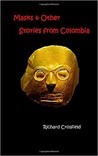
Review of Masks and Other Stories From Colombia by Richard Crosfield

In Masks and Other Stories From Colombia, Richard Crosfield brings us twenty five tales set in Colombia, the majority of them viewed through the privileged eyes of Printer, a British expatriate.

mask

Printer, we are told, has a good ear for a story, and is much in demand by hosts and hostesses at parties to recount these tales. He also has more empathy and sympathy for the Colombians who surround him than do most of the other cossetted expats. Naturally, this acts as a good device to introduce several of the stories.

Some of the stories are little more than vignettes, bringing the reader into the lives led by the mixture of the very poor, the well-to-do middle class, and the extremely well-off and powerful of Colombian society, as well as the expats among whom Printer lives and works. These appear to do little more than illustrate what the lives of these people are like, yet at the end of each story something has changed; there has been resolution of some kind.

Of the others, some demonstrate that you don’t always require an earth-shattering event to create a satisfactory ending, but just a quiet re-drawing of the landscape. Something has shifted, perhaps so subtly that not all the protagonists have even noticed. But we, the readers, see it clearly.

Yet it is easy for the reader to become lulled into a false sense of security by this, so that we are caught out – shocked, perhaps – when we come to one of the stories that has a more powerful and emotional conclusion.

The temptation when placing stories in a setting that is very different from the writer’s own setting, even when that writer has spent a good deal of time there – perhaps especially when that writer has spent a good deal of time there – is to either set all of them in the almost artificial world inhabited by the expat, or to try to set them in the wider community, a community that perhaps they may not completely understand. Richard has managed successfully to do both, something that demonstrates an easy familiarity with both these worlds.

Throughout the book, we can see that the author’s sympathies lie very much with the underdogs of Colombian society, although the stories never become clichés of the noble poor versus the evil rich. They are told with too much intelligence and enough humour to escape that, and, perhaps above all, the writing itself is easy and a joy to read.

Expect to encounter amateur cricketers and murderous bandits, whores and priests, street kids and artists. And a whole host of others.

This is most certainly a five star read.

My disclaimer – I received a copy of this book having beta read one of the stories for the author, although I was not asked to write a review. But my admiration for the stories and my pleasure reading them is entirely genuine.

Do It Tomorrow

IMGP2317

We have all been encouraged to think

That our time is so important.

Yet it is only when we become old,

And we have so much less of it left,

That we realise this is not the case.


We’ve been told we must save time,

Instead of using it and moving on.

How precious time is,

As if it were a commodity we might hoard

And use when we need it most.


Instead of squandering it on what makes us happy,

And filling it with unimportant things.


But I say, let what you’re doing fill your time.

If you’re washing up,

Then let your plates be the cleanest.

And if you’re looking at the winter sun on frosty leaves,

Well, let that be the best experience you have ever had.


Sometimes I have these flashes,

When I think I’ve understood something deep and profound.

And usually it means an evening drinking wine,

Or half an hour sitting on a sunlit hillside.

But I do wonder what we’re all so busy chasing.


And if you think this lesson worth remembering,

There’s no better time than now.


Supermarket Gripes

P1040982b

I haven’t had a good rant for a while, so best I put that right.

I had cause to go into a large store of a well-known supermarket a while ago.

Make that a very large store.

An extremely large store. Obscenely large.

It was like a medium sized city inside.

Or possibly a large cathedral, which would feel more appropriate, since these things are the glorification of the worship of money. How so? This store, like most others of its hateful ilk, does not simply sell food, any more.

Oh no.

It sells clothes. It sells white goods. DVDs and CDs. Computers and accessories. Mobile phones. Books, stationery, and greetings cards. Items of furniture. Garden items. DIY stuff. It has started its own bank and offers everything from insurance policies to bank accounts. The list seems endless. If I had wanted a lighthouse or a wolf they would probably have got me one from out the back.

There seems to be very little that it does not yet sell, although I have no doubt that it will only be a matter of time before those few gaps are filled.

Its business plan is simple – put every single other type of shop out of business, and corner the market in everything.

I had the strangest feeling – the feeling that I was somehow diminished, just by being in there.

And the food items? The reason I went in there in the first place?

Apparently it is essential that we are able to choose from well over a hundred types of cheese which particular one we need – strong, very strong, beat your brains in, mild, sliced, grated, chopped in cubes, turned into string, low fat, no fat, cows’ milk, sheeps’ milk, antelopes’ milk, crocodiles’ milk, virtual cheese, and all produced by four or five different companies.

And that’s just the cheddar.

Its website tells me that it sells 343 different cheese products. I’m all for choice, but, good grief!

Interestingly, looking at a website for a rival big multinational, I find they sell 344 of these products. Perhaps I should go there, instead? I wouldn’t want to miss out on a shopping opportunity. They might be able to offer me a better ‘shopping experience.’ For my ‘shopping solutions.’

Why do advertising agencies have to come up with that drivel?

And that brings me to another interesting thought.

There is the push to encourage all shoppers to use the ‘self’ check-outs, but at least they seem to have reined back a little on the verbal persuasions. I was standing in line at my ‘local’ small branch last year, when I was approached by a member of staff who suggested I use a ‘self’ check-out.

‘No thanks.’ I said.

‘It’s okay,’ he told me, ‘I’ll show you what to do.’

I can see perfectly well what to do. I don’t intend to use it.’

‘Why not, sir?’

‘Because it’s sole purpose is to take away your jobs.’

‘That’s not so…’

‘I suggest you look at their website, then. Because I have. It clearly states that is one of the advantages of buying one.’

Damn the lot of them.

My Button’s Bigger Than Your One!

Untitled-Grayscale-02

My button’s bigger than your one.

You’d better let me play, or else I’ll go,

And take my toys with me.

I’ve got more friends than you have.

That picture’s fake, you’ve Photoshopped in

An extra friend or three.


Vlad’s my pal and he’ll get you.

He’s got your name, and he’ll beat you up,

At the end of school tonight.

That fat, specky boy’s gonna get it,

He won’t have a clue what hit him

When we get into a fight.


See that girl in the playground?

I’ve done it with her! Oh yes, I did!

Of course, she wanted me to.

I’ll tell you how it’s done, you grab them!

Show them who’s boss, they love it,

Yeah, that’s what you do.


Don’t believe all the stories those boys tell.

They’re all liars and cheats and I’m not listening.

La la la I can’t hear you!

White is black, black is white, do you hear me?

All the adults are wrong,

Just believe what I tell you to.


I’m the head boy of the school, because

I won the popular vote, the biggest number of votes,

Despite my opponents cheating.

I’m also the head school bully,

And if you’re gay or disabled, Moslem or black,

I’ll give you a jolly good beating.


Because my button’s bigger than your one!

It is, too!

Stupid face!

You’re stupid!

Poo head!

My friends’ll beat you up, fatty, if you don’t watch out…

Nyagh! Nyagh! Nyagh!


Oh.


Nobody likes me!

It’s not fair!


New Year’s Essay, 2018

I rarely, if ever, make New Year’s resolutions. I feel that if there is something in my life that needs changing, then it should be addressed straight away, rather than leaving it until an arbitrary date in the future. Of course, for many people it acts as a focus or some other incentive to change old habits, although witness the number of gym memberships that never get used beyond, say, the end of January, and it becomes obvious that what many people need to change most is their resolve.

010a

Possibly jumping the gun a little with this photo…

As an introvert, I am very curious to know whether much of my behaviour is conditioned by my being that, or whether it is my behaviour that causes my introversion in the first place. It’s probably a ‘chicken and egg’ situation, of course, with both applying equally. My introversion is surely driven by those elements of anxiety, my inferiority complex and the depression I’ve always lived with, and, in turn, those things will be reinforced by my chosen introverted lifestyle.

But we are complex creatures. Like Harry Haller in Hermann Hesse’s excellent novel Steppenwolf, each one of us consists of many different personalities. Our characters will be made up of a mixture of the cultivated soul, the wild, untamed soul (the ‘wolf of the steppes’ in Hesse’s book), the dancer, the monk, the shopaholic, the miser…all those elements will be there to a greater or lesser degree. And alongside the Introvert exists also the Extrovert, even if this personality is rather repressed in my case. It is all a matter of balance.

It seems much worse in the winter, too. I am certain I am affected by SAD; it seems entirely logical that I should feel low when the weather is cold and grey and bleak, and perk up when the sun comes out. Perhaps we all do.

Yesterday, the weather was the pits. Cold, grey, and bleak, with added showers of freezing cold rain and a wind that cut through me like a knife. I really felt like crap. But today, I walked out under a clear blue sky, a bright sun glinting off the puddles and the grass rippling in a mild, gentle breeze. These are the moments I need to seize; to wrestle my soul back from the darkness. The moments I need to shake off the black dog and point myself towards the little things I can do to lift myself.

I remind myself that I have a published book that people have been nice about, therefore not all my writing is meaningless drivel. I have sold many paintings, and a lot of people have enthused over them. I can paint, and I don’t need to destroy them all. Family and friends do matter, and they do care about me. There will be warm, sunny days and expeditions.  There will be walks and bottles of wine shared. There will be wonderful books to read and interesting places to visit.

And so, I resolve to fight that bastard black dog for another year.