Where Do The Dead Go?

I know. It’s been a while.

I’ve been thinking about how I publish my poetry and stories, and concluded that the simple way is the best way. I don’t wish to spend a lot of time and money submitting them to competitions and magazines, putting them to one side where they may end up forgotten or just unpublished while I decide to submit them ‘just one more time.’ I’m not interested in putting a lot of time and energy into chasing the best deal or the most prestigious publications.

The whole purpose of writing is firstly for myself, and secondly because (naturally) I’d like to be read. It doesn’t have to be a large audience, I’m quite chuffed when anyone let’s me know they’ve read something of mine and enjoyed it. In which case I might as well just write some more zines and publish work on this blog. It feels like far less pressure. And the novel I’ve finished (Long Shadows) and which is still being edited I might submit to an agent or two, but I’ve no intention of spending months and years trying. If I’ve no luck I will quite quickly just self-publish it.

Anyway, putting my writing where my mouth is, here’s a poem.

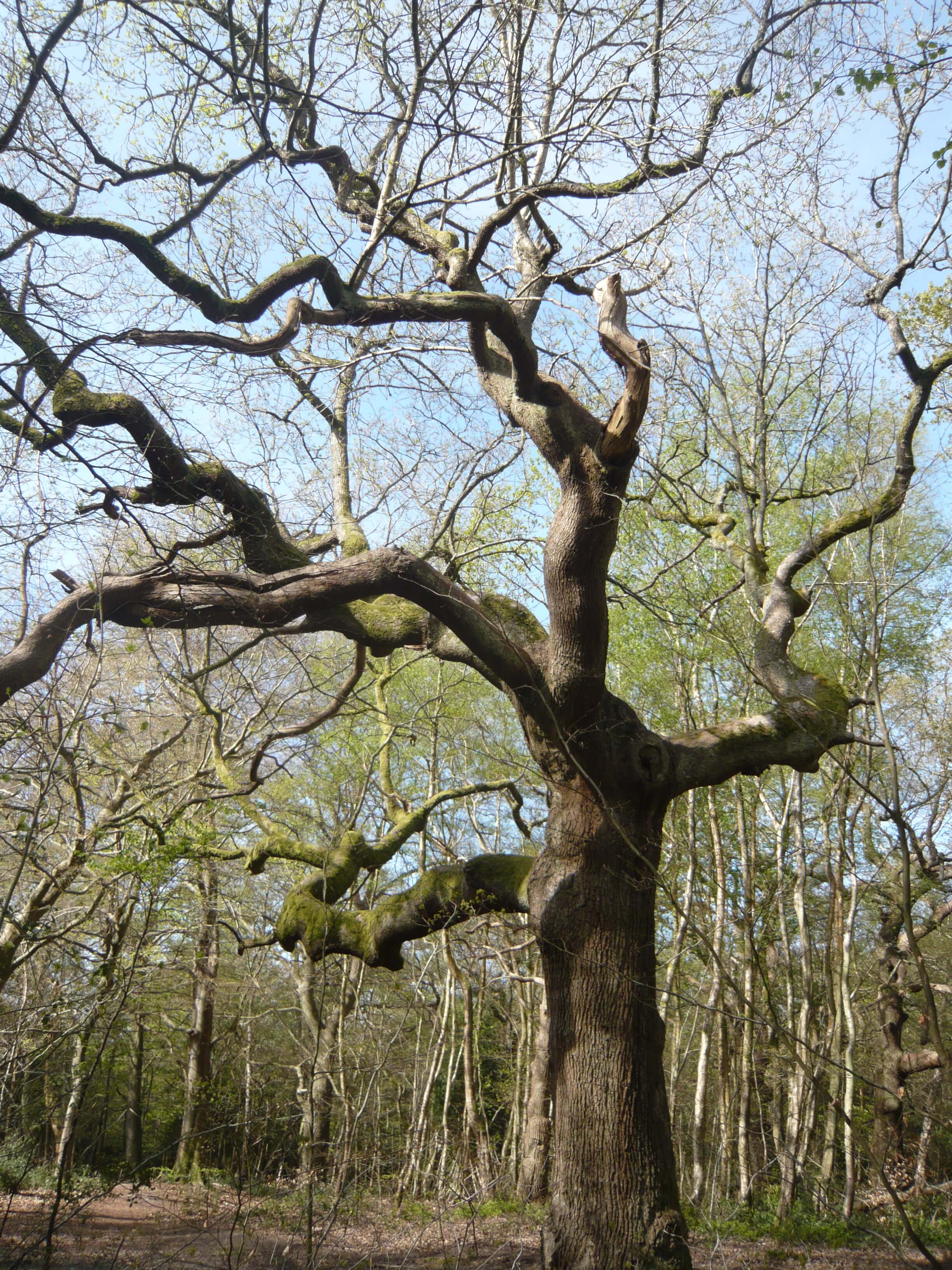
Old

God’s bones.

Cold stone skin covering

A hewn wooden ribcage that

Conceals a petrified heart.

A fossilised giant wallowing in a garden

Growing nothing but death.

.

We know we will get old

But it takes you by surprise all the same.

Perhaps we refuse to see the signs –

Unexpected offers of assistance,

A sudden inability to run for the bus and

A need to take more frequent breaks.

We become fragile,

And lose confidence in our abilities.

.

Perhaps we lack courage, but

Must we resort to this?

.

Really, only the young want to live forever.

Oh, the tedium of eternity

Where angels yearn for the peace of annihilation!

We have a choice;

At the end we have a chance to be brave.

He’s Big, He’s Bad, He’s Very, Very, Bad

I wrote this four or five years ago, but having name-checked nursery rhymes, folk songs, folklore and the like over the past few weeks, now seemed like a good time to post it.

The BBW

or He’s big, he’s bad, he’s very, very, bad

That Big Bad Wolf – it now appears

We’ve had it wrong for all these years.

You know the way the story goes

He dresses up in grandma’s clothes

After he’s had her for his lunch

(they make much play of how he’d crunch

Her up and then he’d gulp her down,

Then put on sleeping cap and gown,

Get into bed, pretend to sleep,

I’m sure he never counted sheep!)

Then in comes young Red Riding Hood,

Who travels blithely through the wood,

So innocent – without a care,

Apparently, she’s not aware

It’s full of perils – hungry wolves

Who dress up in old women’s clothes

To name but one – there’s more, no doubt.

But any one would catch her out.

She’s pretty thick, it must be said,

She sees a big bad wolf in bed

Instead of being cross and furious

She stands there looking vaguely curious

Says ‘What big eyes you’ve got today.’

Is that all she can think to say?

Big eyes? Big eyes? Well, what about

The pointed ears, the great long snout,

Did she not have the slightest thought

This might not be the one who ought

To welcome her to Primrose cottage,

That frail old woman in her dotage?

And what about – ah yes, the teeth.

You knew we’d get around to teeth

Before too long – I think you’d say

About the pearlies on display

It would not take much of a guess

To know that they weren’t NHS.

And so back to that gormless youth

Who stands there staring at the wolf

With no great wonder or surprise

Except to say he had BIG EYES!

And now I wonder more and more

If she had seen her gran before.

Now, if it was left up to me

I’d let the wolf have her for tea.

Just eat her up and finish there.

Although that just might be unfair

Perhaps the girl had poor eyesight,

That’s why she never quite took flight.

I hear it now, a low voice quavers,

‘She should have gone to Specsavers!’

But let’s just leave all that for now,

I hinted some way back just how

This story has become perverted,

The happenings have been inverted.

The emphasis on Riding Hood

When actually I think it should

Be focused more upon the roles

The wolf was playing with the clothes.

We’ve never paid it much attention,

Because it only gets a mention

As a ploy to fool the brat.

I think there’s more to it than that.

The clues were there, before our eyes

It isn’t much of a surprise.

The women’s clothes, the wolf, the bed,

The things that story left unsaid.

The true events I’ll tell you now,

A charming little tale of how

A handsome wolf had searched worldwide

For love (or something on the side).

A simple tale in many ways

It tells how he had passed his days.

He’d been with several little pigs,

And tried some other casual gigs,

But nothing seemed to satisfy

He needed something else to try.

He heard how in the Big Wild Wood

The father of Red Riding Hood

A widowed man, still lithe and strong,

Was also searching for someone.

(The woodland folk had seen his chopper

And word was it was quite a whopper!)

His mind made up, he hatched a plan

To win this handsome, big strong man.

You know the rest, or at least some,

A perfumed letter asking him to come.

A rendezvous deep in the woods,

Where he could view some tempting goods

He might find pleasing. The next day

The wolf, now nervous, in bed lay.

He wondered should he have done more,

But then a knock upon the door.

He held his breath, the door swung wide,

The woodman slowly came inside.

Cue clapping hands and smiles and laughter –

They both lived happily ever after!
My Top Books of 2022

Well, my favourite twelve, anyway. One a month, if you like, although that wasn’t how I read them. Or perhaps the twelve book reviews of Christmas – oops, no. Missed that one. Anyway…these are some of the books I read in 2022, not books that were first published this year. But I seem to have read so many good books in 2022, it’s difficult to make a choice and this has ended up being a little arbitrary.

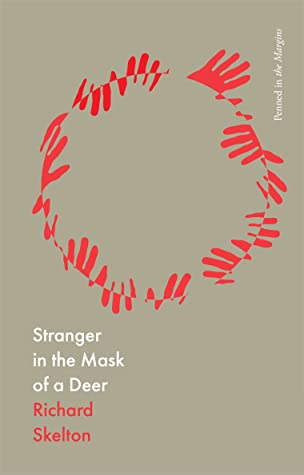
Stranger in the Mask of a Deer by Richard Skelton. It has been a long time since I last read something new and immediately put it into my top ten reads, but this remarkable work is straight in there. A few weeks later I had to re-read it, captivated by its dream-like quality.

It is essentially a poetic narrative ranging between the present day and Palaeolithic Britain, told by humans both ancient and modern, and by non-human voices. Its essence is life and ritual, the connection between humans and animals, between humans and the land they occupy, and the elements surrounding them.

The remains of deer skulls complete with antlers, but with eye holes punched into the skull so they might be worn as masks, have been found at Star Carr in Yorkshire, dating to approximately eleven thousand years ago. It is presumed these masks would have been used in rituals…

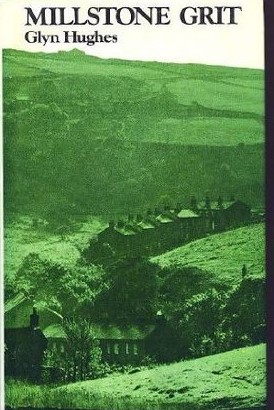
Millstone Grit by Glyn Hughes. This very readable book was originally published in 1975, describing a fifty mile walk the author took through East Lancashire and the West Riding of Yorkshire; an exploration of the moorlands and villages alongside the industrial towns, all of them suffering in their own ways from the effects of the loss of traditional industries in that area. It is about Hughes’ attachment to this area he came to live in, the clash between human and non-human landscapes, and about working class history in these places, but above all else about some most remarkable people he meets along the way.

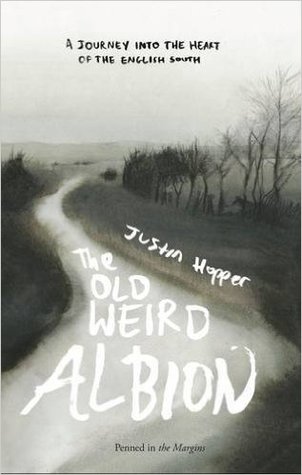
I re-read The Old Weird Albion by Justin Hopper. This is a book about tracing a mystery in his family’s past, beginning with a woman preparing to throw herself off Beachy Head, a notorious spot for suicides, but also about the effects the landscape of the South Downs has had upon people.

This is a book I reviewed on this blog when I first read it three years ago – the link is here – and I’ll just put an extract of that review here: ‘He has a gift for sifting and selecting the weird in these relationships, not just at sites that might be naturally expected to encourage the weird, such as Chanctonbury Ring, high on the Downs above Steyning or in old ruined buildings, but also in humdrum blocks of flats in modern developments. He references modern phenomena like crop circles and throughout there is the presence of ‘magic’, in the sense of a natural force. Many of the people he meets are an eccentric mix of the weird, too, although I choose this description carefully, largely in the old, original meaning of the word of ‘fate’ or ‘destiny’.’

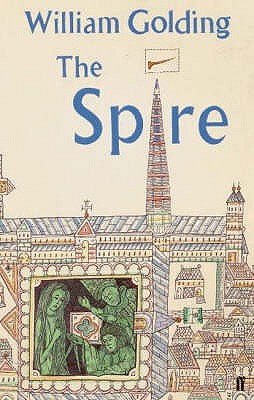
Another re-read, this time of a book I first read some forty years ago. The Spire by William Golding is a novel set in medieval England, in an unspecified city somewhere in the south. It is a story essentially about pride and hubris, about the Dean of a church determined to have built a great spire on his church, despite warnings that the foundations will not be able to support such a colossal structure. The ending seems predictable and yet that is not really where the story is going, being more concerned with the characters inhabiting that space.

The setting is the church and environs, and it evokes the feel of the ecclesiastic medieval as successfully as The Name of the Rose does. One test of how good a novel set in historical times is, is whether it transports the reader easily to that setting. I certainly found it did.

I bought Hemisphere by Pete Green at an event where poets read excerpts from their work. It is effectively a poetic journey around the northern hemisphere, beginning in Scotland, the journey approximating to the latitude of the arctic circle. The writing conveys a tremendous sense of place and feels very right for the cold edgelands described.

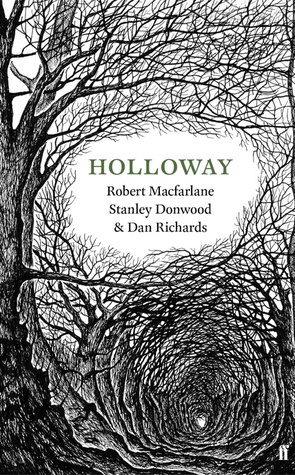
Holloway by Robert MacFarlane and Dan Richards, with illustrations by Stanley Donwood is a short book, describing a journey MacFarlane, Donwood, and Richards made in Dorset, essentially a revisit of a trip MacFarlane made previously with Roger Deakin for an earlier book, exploring holloways. Holloways, often known as sunken tracks or paths, are old – frequently very old – paths made over the centuries by the passage of feet, both human and animal, and perhaps by the wheels of wagons and carts. It is a short journey – perhaps ‘experience’ would be a better word – describing wild camps and walking, cycling and visiting old buildings; in some ways, perhaps it is really no more than a short camping trip, undertaken by a group of men acting out a boyhood adventure. The writing, though, by both MacFarlane and Richards is exquisitely poetic and Donwood’s illustrations never less than beautiful.

Notes on the Sonnets by Luke Kennard.

‘Luke Kennard recasts Shakespeare’s 154 sonnets as a series of anarchic prose poems set in the same joyless house party.

A physicist explains dark matter in the kitchen. A crying man is consoled by a Sigmund Freud action figure. An out-of-hours doctor sells phials of dark red liquid from a briefcase. Someone takes out a guitar.

Wry, insolent and self-eviscerating, Notes on the Sonnets riddles the Bard with the anxieties of the modern age, bringing Kennard’s affectionate critique to subjects as various as love, marriage, God, metaphysics and a sad horse.’

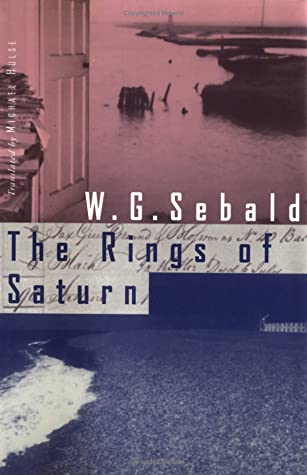
The Rings of Saturn by W. G. Sebald had been on my ‘to-read’ list for a long time, but I finally got around to picking up a copy this year. On one level, this is a walking journey taken by the author along the Suffolk coast in the early 1990’s, describing both places and people he comes across, but really, it is much deeper than that and is a psychogeographical work par excellence. Throughout the journey, we are never quite certain whether events are happening to the author, or have happened in the past, or perhaps to someone else at some other time. He goes off in unexpected directions, literary, historical, and physical, exploring a wide and eclectic range of subjects yet throughout there is a cohesion to the narrative.

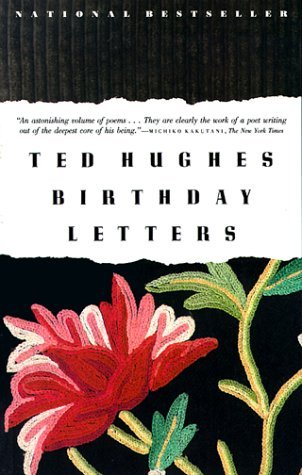
The Birthday Letters are a not-quite-series of poems Ted Hughes wrote to his wife the American poet Sylvia Plath after her death. Personally, I find them to be probably his most accessible poems and wonder whether that says something about me, although this isn’t the time to go into that. Theirs was a difficult relationship, and her suicide (as well as that of a later lover of his) frequently colours people’s opinions of Hughes. Inevitably, these are often extremely personal poems, so much so that at times I feel a slight discomfort reading them, as if I’d opened someone’s private correspondence by accident, but Hughes wrote them as an attempt to restore her to him, and published them almost for the public to read as his own account of her life and death.

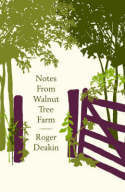
Sadly, Roger Deakin only wrote three books, of which Notes From Walnut Tree Farm is compiled from diary entries he kept during the last six years of his life. In these notes, he recorded his day to day life on the farm, walks on nearby Mellis Common, the yearly cycle of the natural world all around him, and his thoughts on literature, the importance of nature, and musings on the past.

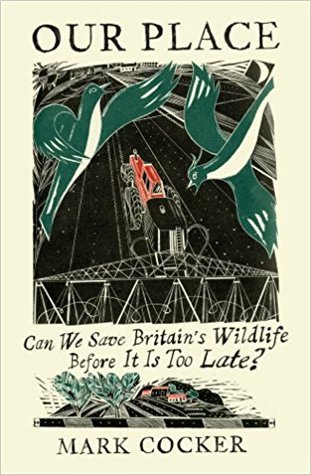
Our Place by Mark Cocker is an exploration of the history of environmental thought and politics in Great Britain and, especially, the way forward. It asks pertinent questions like who owns the land and why? And who benefits from green policies? Not afraid to be radical in its suggestions, it asks why there is such a disconnect between the British public’s sympathy for and championing of the countryside and the reality of its current condition.

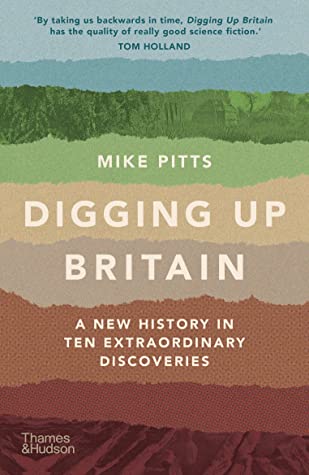
Digging up Britain by Mike Pitts tells the story of Britain’s history and prehistory in ten astonishing excavations. As someone who has always had an interest in history and pre-history, I found this book a timely reminder of the huge strides taken forward in our understanding of the past over the last ten years or so, due to such important tools as DNA analysis as well as the painstaking work of those who excavate and interpret these sites. There are some remarkable tales in this book.

If…

I’ve been feeling a bit flat recently, although that’s not uncommon at this time of the year.

I know I’m currently craving solitude and simplicity, wanting to spend some time somewhere a little remote. An area of moorland, such as Dartmoor or the Pennines, would do me very nicely. Even better if there were some woodlands nearby, too. Although there would be no people around (ideally), there would be wildlife to watch and hills and valleys and those woods to explore. Maybe some interesting ruins nearby…

Simplicity, that’s what I’d want. Somewhere with no wifi, no TV, no phone signal or even radio. A decent supply of food and a few beers because, as Jerome K Jerome said, thirst is a dangerous thing. A fire to sit beside in the evening. Somewhere small and basic with no luxuries.

I’d take some books. Several sorts, so I could pick one up or swap to another depending upon my mood. At least one book of poetry, perhaps Stranger in the Mask of a Deer which I read for the first time a few months ago, and then re-read recently because it was so damned good. Maybe a Seamus Heaney collection, including the ‘Station Island’ sequence of poems, or a collection by Russian poet Yevgeny Yevtushenko for the marvellous long poem Zima Junction. Maybe I’d just take all of those.

I’d include some sort of detective novel for pure escapism, then one or two books by the likes of Robert Macfarlane – books that would inform me about the landscape I had decided to inhabit for a while.

I wouldn’t just be walking and exploring, or reading. I have a few poems I need to finish off, one about salmon and one about the Winter Solstice. In this environment I think I’d be inspired to finish them, hopefully write some more.

A week would probably do it.

Some Diary Extracts

April 10th 2022:

A few days ago I dug out all the pastel paintings I have hanging around and put them to one side, the intention being to chuck them all out. As part of managing to get my creative side working properly again, I feel I need to clear out the majority of my old work. I think it is simply preventing me from getting going again – as well as taking up space we don’t really have spare. I’ve always been a little reluctant to just destroy a painting I think I might be able to sell at some point, but that’s something that doesn’t matter to me in the same way any longer.

It’s much the same with writing. Nice if someone buys it and nice, of course, if someone reads it and likes it and, hopefully, gets something from it. But not important in the same way as it used to be. I’ve never wanted to be famous, or sell millions of books (much the same thing, of course), and perhaps this is part of that. If the poetry I’m currently writing is any good, I would like someone to publish it, and if a small audience appreciated it and thought it worthwhile, well, I’d be tickled pink. But it’s not that important.

If I paint again, or carve wood, it will be entirely for me. If someone likes a painting, then perhaps I’ll simply give it to them. I appreciate this isn’t a philosophy that most creatives could adopt, but it’s what I feel I should like to do at the moment.

Wall painting in Amberley Church, Sussex. It dates from around 1300AD, was whitewashed over around 1550, and restored in 1967.

April 11th 2022:

We’re off to Amberley for a couple of days. We should have been walking the South Downs Way at the moment, but Covid has left us too tired for that, so we cancelled our various bookings. But to give ourselves a short break, we kept the Amberley one and booked an extra night.

Yesterday I contemplated completely coming off the internet for a matter of all of about half a second. I find it a huge distraction and much of it incredibly annoying, but like most folk I’m in too deep to extricate myself. We’ve arranged our lives around it over the past twenty years especially, and in my own case I keep in touch with many people that way, I have my blog, which I don’t think I’m ready to give up yet, rely upon it for booking trains and finding train and bus timetables, use it for family research, writing research, and to find and order books and music. None of these would be insurmountable problems, but cumulatively it would just be too much hassle to do without.

But even when I’m using my laptop for writing, I get too easily distracted by the internet and I feel a little like those people who walk through lovely scenery staring down at their mobile phones.

April 15th 2022:

Sunny and clear this morning and the forecast is that the day will be warm and bright. Having had quite a busy day yesterday, I felt quite run down in the evening and this morning feel very tired despite having slept well. It is four weeks until we go to Coll and I hope I’ve got some energy back by then.

It is sunny and, dare I say it, warm all day and despite this being Easter Bank Holiday weekend, the forecast is that it will continue this way.

Strange powers are at work.

On Leaving Home

What would you take if it were us? she asked.

I shook my head.

.

She was silent for a moment, watching the television.

There were adverts: for cars, for perfumes,

For garden furniture and super-sized burgers.

It all seems so petty, she said.

I nodded.

.

What would you take?

.

A handful of photographs, I suppose.

Our papers and bank cards.

Don’t forget the last of that bread.

And put on your warmest coat, a hat,

Your gloves and your boots.

.

Can I take this?

.

No, leave that. We’ve no room.

Maybe we’ll be back sometime.

Maybe as soon as next Spring.

If there’s anything left to return to, that is.

If there’s anyone here who would welcome us back.

.

Where have you come from?

.

I no longer remember the answer to that.

Possibly Sumy or Sana,

On the other hand, Aleppo, or Aden.

It might have been Myanmar,

Conceivably Kyiv or Kandahar.

.

Why should we allow you in? who are you?

.

Who am I? I might be your son,

Your daughter, your wife or your father.

One day, I might even be you.

And on that day, pray for a compassionate welcome,

Pray for the kindness of strangers.

Panicking Pigeons and Floundering Pheasants

Some birds look particularly elegant and graceful when they fly…

And some don’t…

Panicking pigeons are pitiful things,

Flapping and slapping and clapping their wings,

Each one has only one thing on its brain,

And that’s searching for insects, for seeds, and for grain.

.

Walk-bobbing-walking like chickens on speed,

Or speeded up clockwork or on some doped seed,

Cooing down chimneys and shitting on folks,

A ridiculous call like a ghost being choked.

.

A floundering pheasant’s a physical freak,

With a whirring of wings and a creak from its beak,

You would think they would hide up and shut up all day,

But a clattering rusty noise gives them away.

.

There are plenty of elegant fowl in the sky,

The swift and the swallow, the eagle and kite,

With a breath-taking swoop or a beautiful song,

At times, though, evolution just got it plain wrong.

.

And on the subject of birds, I couldn’t let you go without letting you listen to the blackbird in our garden who I mentioned in the previous post, who has been singing his little heart out every day:

We Do Violence

Yay! Day seven of my Poem-A-Day-For-A-Week-Or-So project. I’m jolly impressed I got this far, although I say so myself. And I’m quite pleased with this one. Although, like all the others, it’ll benefit from some work on it later.

We Do Violence

We all occupy two places simultaneously:

Wherever we happen to be in the physical world,

And wherever we currently inhabit in our heads.

The trick is to get the two to coincide.

.

We interpret our landscape as we walk,

Inflicting our thoughts upon it, changing it,

Or at the very least changing our perceptions of it,

Rather than being truly open to the experience.

.

To achieve that, like a meditation

We need to let go of our thoughts.

.

And the worst of these interpretations,

Is this absurd need to name everything.

We begin to only look for particular things.

And filter out those we cannot name.

.

We do violence to the landscape in this way,

Subverting it from what it is, to what we wish it to be.

.

We need to listen to the landscape in silence,

undistracted by thoughts or by words.

Words are, at best, a poor substitute for things.

As soon as we name a thing, we claim it as our own.

.

We limit it to our own understanding, and we dilute it,

By placing it in the company of other things

That we name the same. It is akin to taking away the

Individual names of people and referring to them all as person.

Quick!

Day 6 of my poem a day for a week or so project. Almost there! And this one is a bit of an experiment…

Quick

Quick, the useless and the wistful,

The deceitful and the unwary,

Come now to me, for I must be honest,

For I must write my poem

.

I have things to say which I must first discover,

Although this seems to take so long.

But time is perfectly without fault and

Time alone will determine how long I must take.

.

I am forever reinventing myself

Plunging in to find out what resonates

Immersing myself in this life

Until I understand or tire of it.