
Well, I tried clearing the cache on the browser, and it made no difference. But I tried opening posts from my phone, and that worked. Help suggested that might mean it’s the browser at fault, so I might change my browser at some point. So for those of you having similar problems, my browser is Chrome. At the moment.
Category: Uncategorized
‘Likes’
Just to say either WordPress has had a wobbly, or my account has – I don’t seem to be able to leave ‘likes’ at the moment; they disappear as soon as I leave the page. In case it’s just my reader, if I’ve successfully left a ‘like’ on anyone’s blog in the last hour or so, can you let me know?
Today
Today, I don’t want to write. I don’t want to look at anything on the internet. If I could spend all my free time reading or walking through woods and fields, or over hills, that would suit me fine. I was out walking this morning when all this began running through my head. I felt completely fed up with the novels I’m working on, fed up with all my writing. I felt I’d like to delete all of them and tear up my notebooks. I felt I’d like to delete my published books.
Today, I hate all the characters I’ve created.
Am I the only one who does this? It was clearly my mood, but I felt a strong temptation to delete both my Facebook and Twitter accounts when I returned home, and even my blog. I won’t, of course, but I can’t rid myself of the feeling I would feel a lot freer if I did. And what if I had the courage to delete all of my online self? My email address? I had just a glimpse of the freedom I’d have if I never had to go onto the internet again, and it looked good.
Rant Inspired by The Compleat Trespasser by John Bainbridge
Ooh, I liked this book.

My intention was to review it today, but as I was writing the review it gradually turned into a polemic against grouse moors and the people who own them. So I’m going to run with that and write the review (properly) next week instead.
So, why is this about grouse moors? Well, in The Compleat Trespasser, grouse moors are one of the habitats John mentions in relation to trespassing.
There’s so much to detest about grouse moors.
Firstly, the fact that they tend to be very large areas of land owned by one rich person who wants to keep everyone else off that land; land that is, to use the hackneyed but nonetheless accurate phrase, the birthright of everyone in this country. Land that has, like much other land, been stolen from us originally by force and then passed around from one rich and powerful person to another. Land that, at one time, people would have depended upon for their livelihoods in a multitude of forms, whether it was growing food, gathering wood for shelter or for fire, fodder for their livestock, or somewhere to live.
Secondly, that same owner does everything in their power to destroy all wildlife other than the grouse they protect, so those grouse can then be killed either by their rich chums, or by others who can afford to pay for the pleasure of killing other creatures. Foxes, rats, rabbits, badgers, crows, hawks…the list is pretty well endless. Trapped, poisoned, shot…the result being a landscape as devoid of life as any desert. And I hate that arrogance that says ‘all these wild animals are my property.’
Thirdly, the drab uniformity of the landscape. Nothing but heather growing, and that burned in ten year cycles to maintain that barren uniformity. And this in turn contributes to accelerated run off and flooding in periods of heavy rainfall, affecting land lower down – often villages or small towns.
And, I daresay, the lack of cover makes it easier for the gamekeepers to watch for intruders.
But, at last opinions are beginning to slowly, but surely, turn against these dreadful habitats and their dreadful owners. I’m sure it will take a while yet, but I’m hopeful that in my lifetime we will see a ban on commercial grouse moors and the beginning of their re-wilding.
Review: “Making friends with the Crocodile” by Mick Canning
A great review of my book by Christoph Fischer.

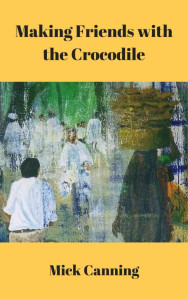 I am delighted to present you my review of Mick Canning’s novel “Making Friends with the Crocodile”. Having followed Mick’s blog posts about India for some time, I was eagerly awaiting it.
The book focuses on women in rural India. “If you live near the river, you better make friends with the Crocodile” is an Indian proverb.
In the novel we get to see simple lives, where people struggle to make a living, earn a reputation and survive in a world full of crocodiles. Those crocodiles come in all shapes and forms: friends, family, strangers, laws, conventions…
Surviving isn’t easy, especially if you are a woman.
The story of Siddiqui and her family revolves largely around an unfortunate evening incident that involves her daughter in law and the friend of her husband. How people and the community respond to said incident shows the difficulties women face.
At first I didn’t…
View original post 255 more words
Interview with Mick Canning
My first author interview, with Cathleen Townsend. My thanks to her for generously hosting this.

 I met Mick through his wonderful blog, located at https://mickcanning.co/, and I was delighted when he agreed to be a guest here today.
Let’s start with you, Mick. Tell us about yourself.
I’ve always been writing, and completed 2 novels a long time ago. Both were so awful, though, that I junked them. It was a good learning curve, however, and now I’m hopefully a more mature writer. Until I become rich and famous (!), though, I make ends meet by teaching rock climbing, and occasionally some other outdoor activities.
I love travelling, especially to India and other nearby countries, which probably comes out in my blog posts!
I’ve learned a lot about India from those posts. How did you start your blog? Has it changed over time?
I have been following the blog at Writer’s Village (http://www.writers-village.org/writing-award-blog.php) for some time, and advice that I received in…
View original post 1,039 more words
My First Long Trip to India (1)
Fifteen years after my first trip to India, I was back again in Delhi.
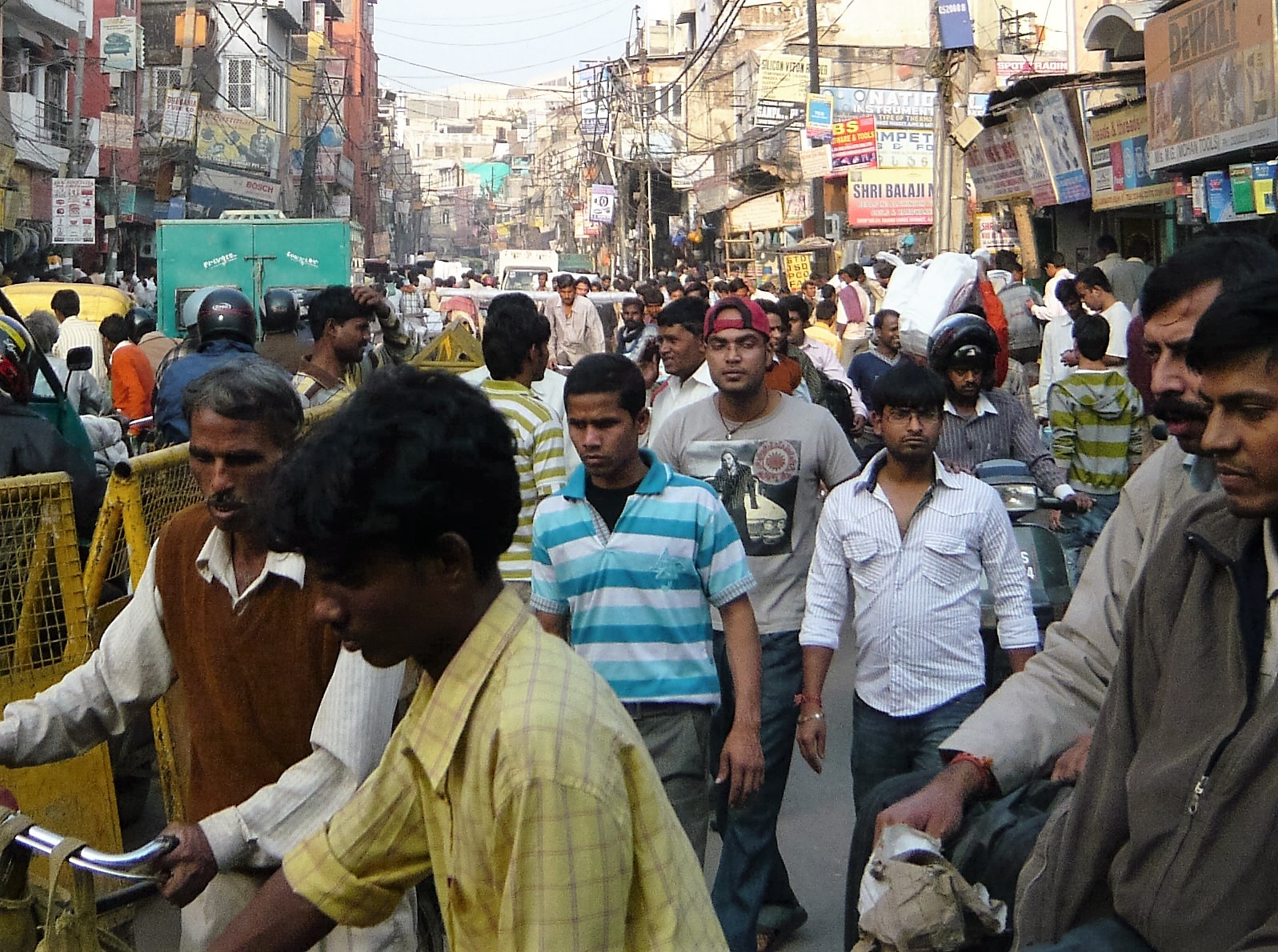
On the first morning I had breakfast, and then had a bit of a walk around being hassled. It proved very difficult, as an obvious westerner, to walk around on my own. One or two beggars approached me, although they were neither numerous, nor persistent, at this point. The strangers offering ‘good advice’ made me more circumspect. They may have been simply being helpful, or they may have been touts. I was advised to go to a nearby ‘Tourist Office’ or ‘Travel Bureau’ – usually a private enterprise in India – for maps and information on what to see. I was advised to carry my bag differently to thwart thieves – no doubt kindly meant. Every step that I took deeper into Paharganj I was accompanied by one or two chaps unobtrusively wandering along at my side, until I began to feel that I had had enough of it. A number of people were out to sell me things – anything from hashish to bus tickets. In the end I dived into a café for a cup of tea to give myself some space and to formulate a strategy for dealing with all this. I was, after all, going to be in India for another three months.
Yes, three months. How came this to pass? The reason was simply that I had become pretty fed up with all of my routines in England. I might say that I was bored; I might say that I felt as though I was stuck in a rut. I might also say that I had come to loathe the work that I was doing. Clearly, some sort of change was required, even if only a temporary one so that I might feel refreshed. Sitting in a pub garden in the sunshine, in a village a few miles from where I lived, drinking a pint of Mr Harvey’s splendid ale, I decided that I would walk around the U.K. As you do. The fact that I now clearly wasn’t walking around the U.K. may require further explanation.
I spent some months working out an itinerary; poring over maps and drawing felt tip lines here and there on them, reading up on places I had never been to, and reading accounts of people who had done this sort of thing before. After rejecting a coastal walk (I’m not mad keen on the coast; I prefer hills and mountains and woods and really don’t like seaside towns) I eventually decided upon a rough route linking up long distance paths and places of interest that ran haphazardly around the island, and decided that I was permitted to take buses and trains to avoid cities and the suchlike. Friends I spoke to said they’d accompany me along the way for a few days here and there, so I didn’t have to put up with my own company all of the time (they generously offered to put up with it instead). I estimated that the project would take four or five months.
I got quite excited about it. And then I decided to walk Offa’s Dyke Footpath (which very roughly follows the border between England and Wales) as a sort of training run (well, walk), and things rapidly began to go wrong.
I couldn’t believe how much stuff I’d crammed into my rucksack. This certainly wasn’t the first time that I had gone long distance walking; carrying everything that I needed to camp along the way, but it seemed that I had about twice as much stuff as I’d ever taken before. How on earth had that happened? I crammed and jammed the last of it in and forced the zips closed. Then I tried to lift the thing; it was ridiculously heavy. I unpacked it and discarded clothes, until I felt that I really had the bare minimum necessary. I got rid of one of my two cooking pans. One of my two books. One or two other odds and ends were jettisoned. I could shut the bag a bit more easily, now, but it still weighed a ton. Should I chuck out the tent and just take a bivvy bag? In the end I didn’t, since it was a lightweight tent that was only fractionally heavier and bulkier than the bivvy bag would have been. Did I really need to take photos? Did I really need to wash? I was still dithering when the time came to leave the house and catch my bus.
The following day I walked out of Chepstow on the first leg of the footpath, with what still seemed like half a ton of stuff on my back. I kept thinking that I’d be carrying even more with me for the four or five months that it was going to take me to do the real thing. But the first day went okay, and I reached the place that I had decided to spend the night after a very pleasant walk. It was the next day that I first twisted my ankle. I’ve always been a bit prone to this; it seems that my left ankle has some sort of weakness, which is probably the legacy of an older injury.
I went down in agony. Eventually the pain subsided enough for me to get carefully to my feet, get my rucksack back on and hobble painfully on my way. It took some while, but after perhaps an hour or two, I was moving fairly well again. Then, towards the end of the afternoon, I began to walk down a hillside towards my campsite, when my foot twisted under me and I went down again with a great yelp of pain and a torrent of bad language.
After that, things just went from bad to worse.
The following day I cut myself a strong walking stick from a wild briar, just outside of Monmouth. But even so, I twisted my ankle a further two or three times that day. The scenery became lovelier and lovelier, but I only had eyes for wherever I was next going to place my foot.
All the joy had gone out of the trip.
On day four, I managed to walk through the best scenery so far without further mishap, and then walked the last few hundred yards into Hay on Wye where, you guessed it, I twisted my ankle. I stayed two nights in Hay, enjoying the bookshops but especially enjoying not carrying my bag around, and the next day I took a bus home, defeated.
I still needed a journey, though, and after a while I thought of India. I had spent a couple of weeks out there some fifteen year’s previously, and had yearned to return and explore it further. And so I began to draw up a new itinerary.
Jaipur
I have recently discovered Arv’s lovely blogsite ‘Jaipur thru my lens’:
https://jaipurthrumylens.wordpress.com/
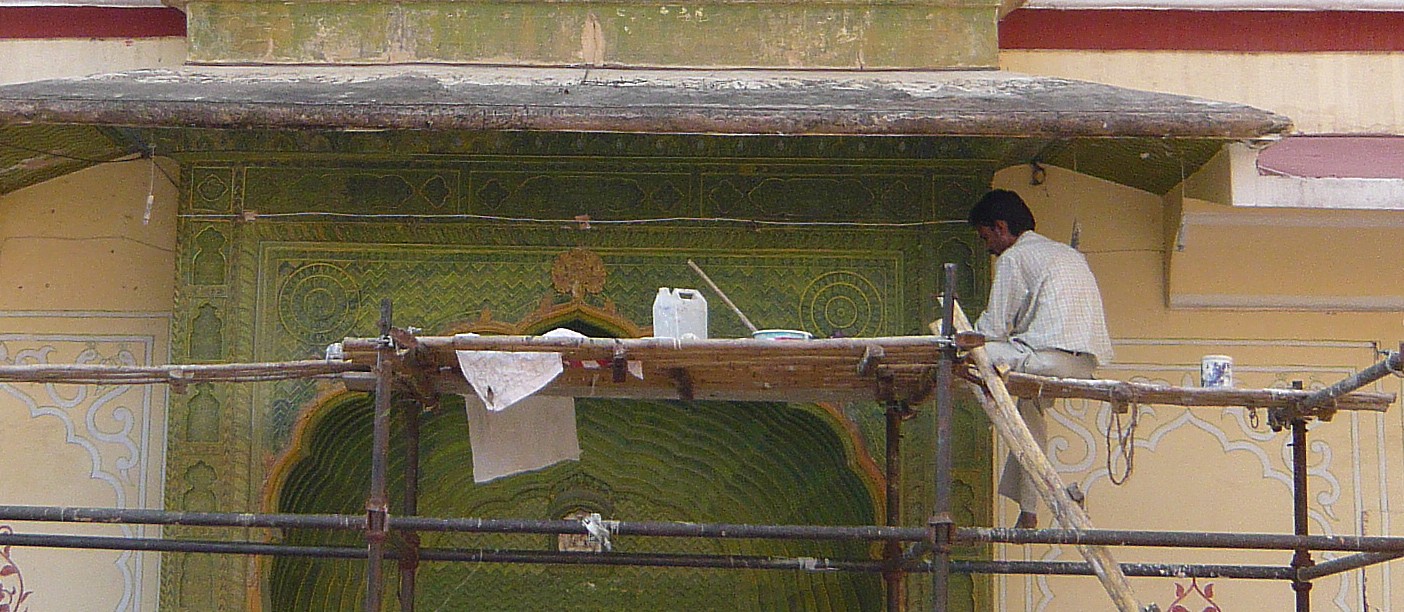
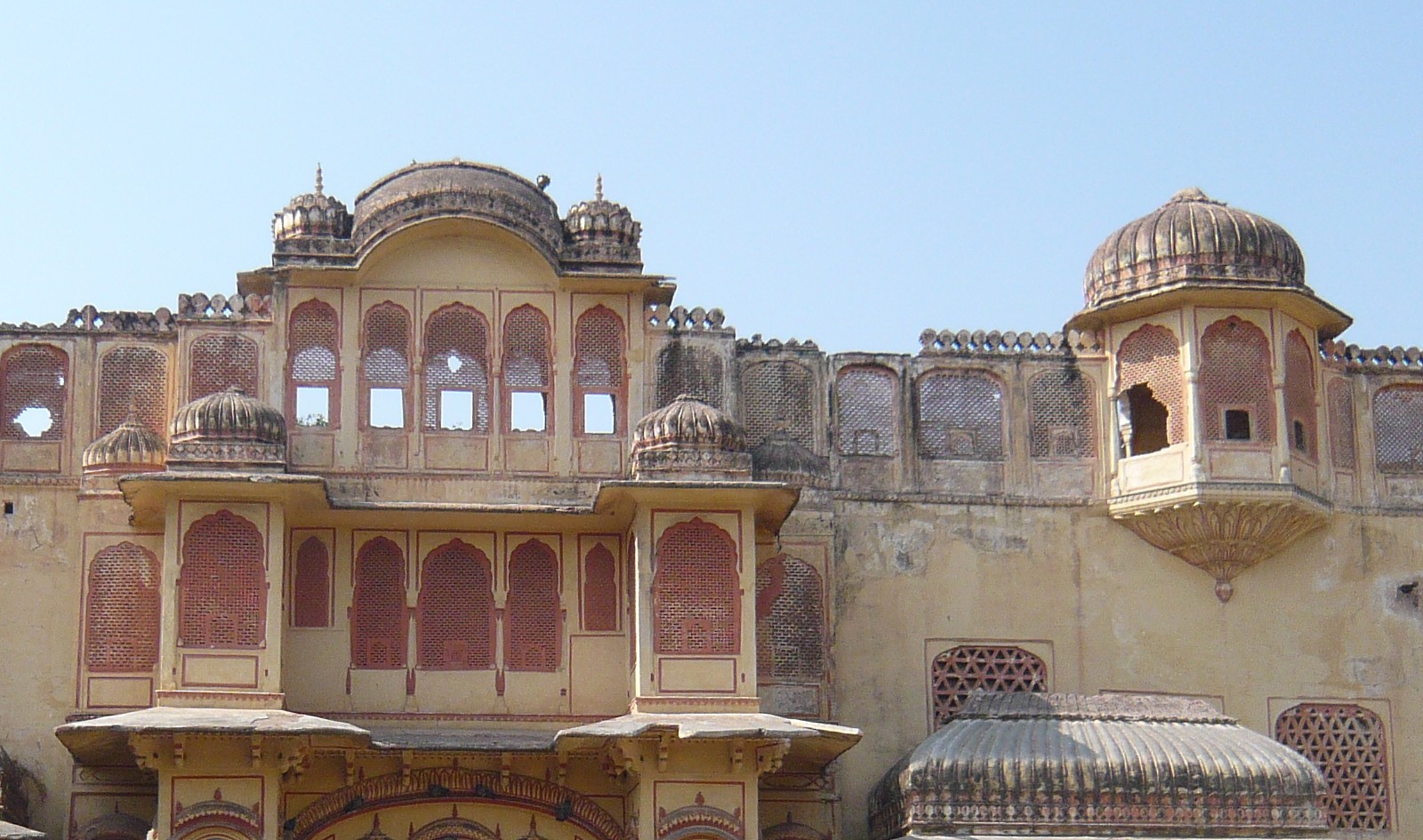
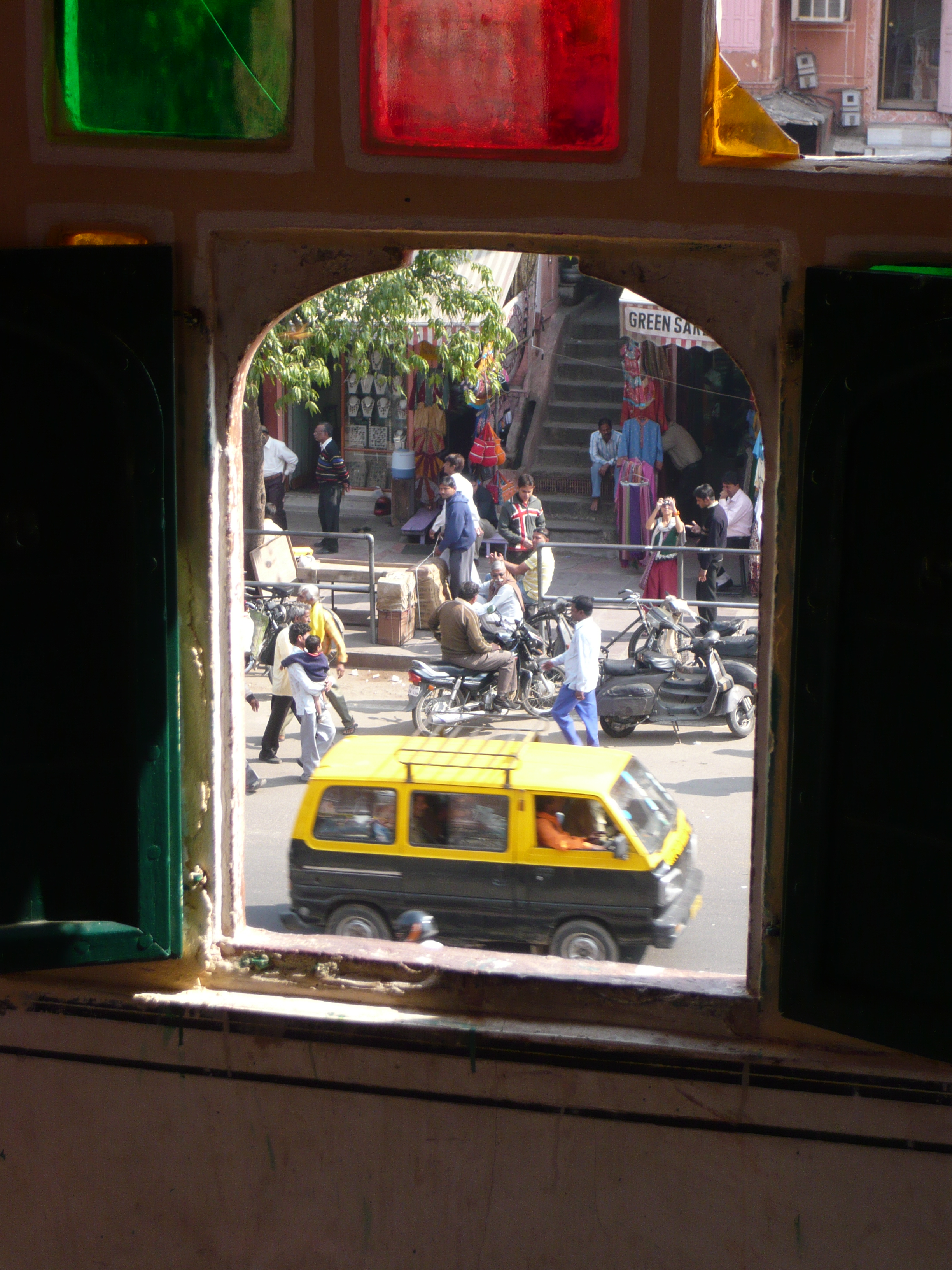
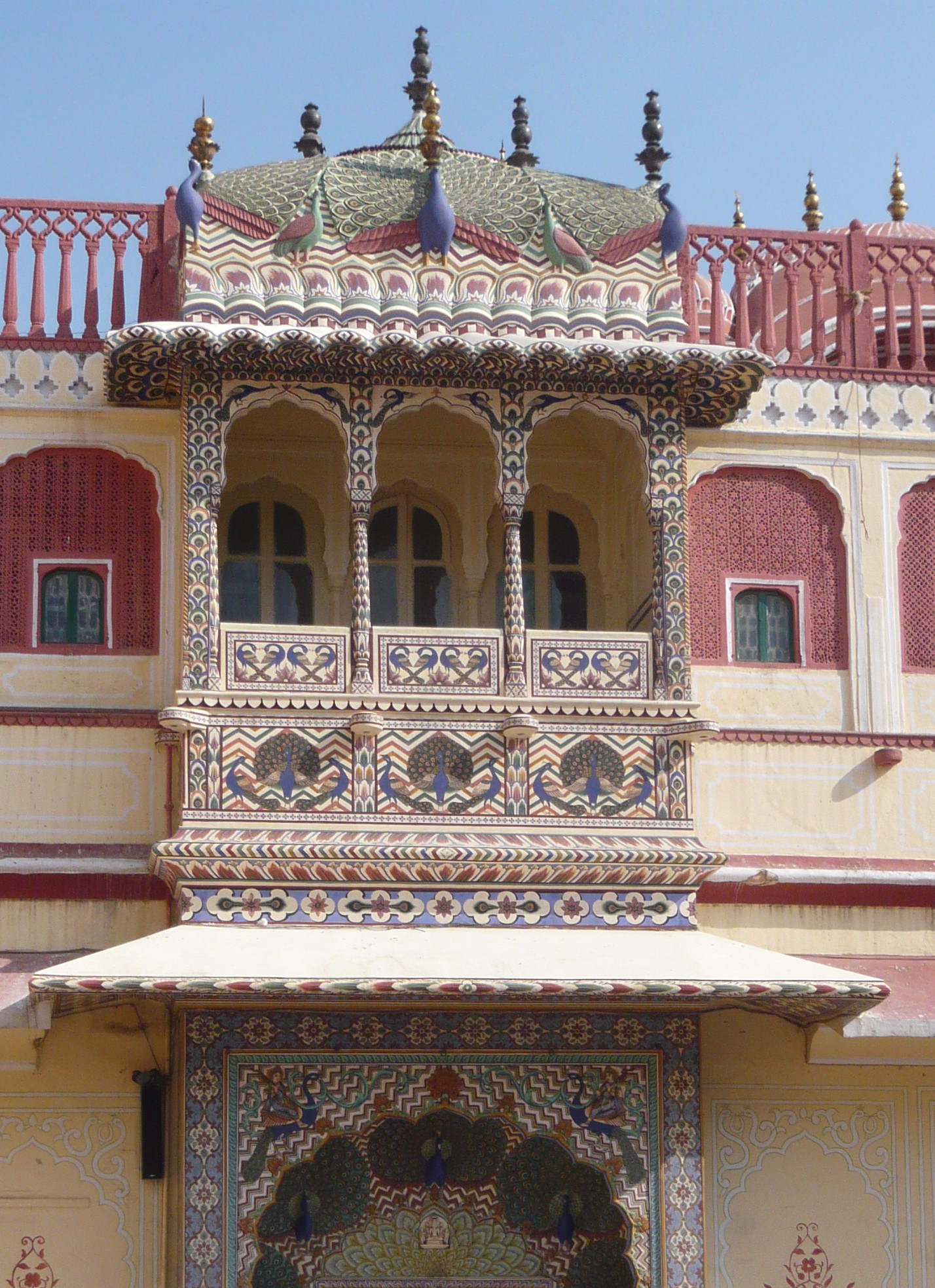
and after reading several posts and enjoying the pictures, I felt that I had to revisit my own photos of Jaipur and share a few of them.
They’re a bit of a mish-mash, but, there you go.
I was there in 2009 for a few days, and probably the thing that I remember most about it is that because I was unwell for much of the time (unusually for me), I did not get to see many of the places there that I had wanted to see.
I think this is why I enjoyed Arv’s pictures so much.






The Mad Woman of the Hill Station
A few years ago I was staying in a town in the Indian Himalaya; one of those towns that would have been described as a ‘hill station’ in the days of the British Raj, where the climate is tolerably similar to that found in Britain, and the Colonial masters were able to retreat for that half of the year that the temperatures on the plains became just too hot for them to endure. When that happened, they would load up themselves and their possessions, even down to plants in plant pots, so that native servants could drive them or carry them for weeks on end, on the long journey up into the hills. Nothing would be too much bother…for the servants and ‘coolies’, that is. At that time, the Westerners considered themselves to be utterly superior to the ‘native peoples.’

Of course, that kind of attitude has been consigned to history, now, hasn’t it?
Anyway, it is a lovely town, this town that I am referring to, full of historical buildings associated not only with the British, but also with Indians (of course), Nepalese, Tibetans, and several other races. For this reason, amongst others, it attracts a goodly number of tourists, Western and otherwise.
One day I sat eating breakfast in a restaurant there, when a group of five other Westerners entered and sat down at a table nearby. Within about half a minute, they had begun to complain bitterly to each other about their travels. They appeared to think that the whole world was a freak show, put on for their benefit as they travelled around viewing it, but everyone that they met in these backward places (‘I don’t miss Western civilisation at all.’ Remarked one of them, whilst playing with his i-phone) were either out to fleece them, or to thwart their plans in some way or another by pretending not to have what they were asking for, or by taking ages to do what was demanded of them.
However, I was distracted from listening to their conversation and wondering how best I could kill them all without being arrested, by the arrival of another Western lady, aged, I would think, about sixty, dressed in a slightly odd mix of Indian and Western dress. She had appeared the previous morning in the restaurant, and had a shouting match with the same group of Westerners, although I had been on the other side of the restaurant that morning and could not understand what it was about.
Today, she popped her bag down on the table next to mine, disappeared for a while, and then returned, with a loaf of sliced bread that she had obviously gone out especially to buy. She took out four slices, turned to me and said ‘Try these; they are much nicer. Are you a priest?’
‘Thank you.’ I replied (I was in t-shirt and trousers, nothing particularly priestly). ‘No, I’m not.’ Our conversation continued for about ten minutes. She was a Plantagenet royal, brought to 2013 by a time machine, which the CIA discovered in 2000. That is why so many people are unhappy; they have been sent away from their proper times. She apologised for not being able to hear very well, although I could see no problem in that respect, but she had been hypnotised. Then she wished me goodbye and went out again.
What a splendid woman. She was a breath of fresh air, and unknowingly saved the lives of five other Westerners that day just by being there.
Unfortunately for me, though, that same evening I chose to eat in a restaurant that was empty when I arrived, so that when a couple of girls came in and sat down two tables away from me, I could hear every word that they said, whether I wanted to or not. There was a Swiss girl, whose role in the conversation was to say ‘yes’ and ‘no’ and very little else, whilst the other girl, who was British, just spouted on and on and on…
It appeared that she was travelling around the world. If I was a relative, I would have given her the money and said ‘go off for a few years. Enjoy yourself.’ And then moved house. She had been to Marrakesh. To Cairo. Thailand, Cambodia, Australia…I forget where else. Almost everywhere, she hated the food. It generally made her sick. She hated the people. They were horrible. Rude. She was excited because someone was shot in a bar in Cambodia whilst she was in the bar. It seemed to have been the highlight of her travels so far. ‘Was he killed?’ ‘Of course!’ she said, excitedly. And on and on and on…
Perhaps we should all be made to stay at home.
 Mick Canning