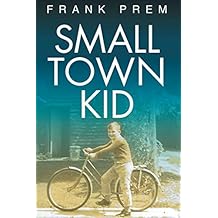
Review of Small Town Kid by Frank Prem

Small Town Kid (Frank Prem Memoir Book 1)

I have enjoyed Frank’s poetry ever since I discovered it a couple of years ago.

Small Town Kid is a book of poems about growing up in a small town in Australia during the 1960’s and 1970’s. The town is provincial, the way that small towns invariably are, where everyone knows everyone else, and everyone else’s business.

In those days, a small town was very different to a small town today, now the internet and social media have changed even the slow-paced life of these places forever. And so those of a certain age will recognise many of the situations and much of subject matter of these poems, while to those much younger they may well seem almost alien.

Rich in emotions, as well as in visual detail, we listen to Frank describe experiences such as hunting rabbits, letting off fireworks, and going on picnics, turning his nose up at his mother’s cooking and enjoying his grandmother’s cakes, suffering school and returning home at the end of the day. We find ourselves both observing and participating in the day to day life of his town.

This could be any small town, and any child. If you could extract the peculiarly Australian nuances and replace them with others, the poems might be about a small town anywhere and any child who grew up in it.

The poems are presented in an order showing the boy growing up from his earliest years through to reaching young adulthood, taking the reader on a journey alongside him.

And they have that power, that they transport you there.

Frank writes sparingly, knowing like an artist when to stop. But everything is there, and the writing invariably has beauty no matter what its subject matter.

Unhesitatingly, I give this book five stars.

You can find more of Frank’s poetry on his blogsites:

Welcome

About and Welcome

Wordy Wednesday 2

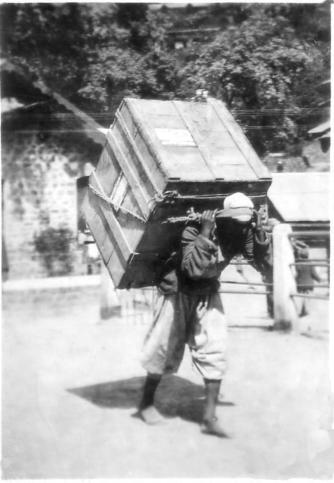
Coolie – now there is a word that is remarkably offensive; offensive not so much because of what it is, but the implications behind it.

coolie 1

The Oxford Dictionary defines the word thus: unskilled native labourer in eastern countries and gives the word’s origin as perhaps from Kuli, an aboriginal tribe of Gujarat, India.

Hobson-Jobson, the 1886 Anglo-Indian Dictionary, has rather more to say upon the matter.

It gives the spelling as ‘cooly’ and the definition as follows: a hired labourer, or burden-carrier; and, in modern days especially, a labourer induced to emigrate from India, or from China, to labour in the plantations of Mauritius, Reunion, or the West Indies, sometimes under circumstances, especially in French colonies, which have brought the cooly’s condition very near to slavery.

It goes on to give further definitions and details of the word, and then makes several suggestions for its origin. One possibility, agreeing with the Oxford Dictionary, is that it derives from Koli, the name of a caste or race in Western India who frequently carried out these tasks and who, the dictionary reports, had long held a reputation for ‘savagery, filth and general degredation.’ This would make its origin analogous to that of slave, which is presumed to come from the racial term Slav.

But it suggests the waters are rather muddied by a couple of similar words in the Sub-continent: In Southern India a Tamil word Kuli signifying ‘hire’, and Khol is a Tibetan word for slave.

And then there is also a Turkish word kol meaning a slave while, more specifically, kuleh  means ‘a male slave, a bondsman’.

But back to the implication. It is impossible to get away from the colonial undercurrents with this word, as brought out in the Hobson-Jobson definition above. So to use the word to describe a person or persons today, is to call them a servant or slave of a foreign overlord.

Wild And Windy Weather

017

Roaring in rustling and

Tossing trees,

Wailing and moaning

In whipping wires.


A strident, insistent,

Car alarm.


An upset bin, with

Unwanted plastics…


Scraping,

Scratching,

Tumbling,

Chasing along the road.


Aggrieved air


With attitude.


Wordy Wednesday 1

Many bloggers post photographs on Wednesday under the heading ‘Wordless Wednesday’. Me? I’m going to write a few posts about words – specifically words in English borrowed from languages of the Indian Subcontinent.

I’m just plain awkward, but you knew that, didn’t you?

I am currently editing the first draft of my novel A Good Place, which is set in a hill station in Northern India. And in that hill station live a number of English who remained behind after Partition.

‘I’m sitting on the veranda of the bungalow in my pyjamas.’ Well, no, no one says that in my book. But if they had, what is the significance of that sentence?

The significance is the number of words borrowed from Indian languages.

Untitled-Grayscale-03

Veranda is an Indian word, but coming originally, perhaps, from Persian. The Oxford Dictionary suggests two derivatives, either from the Hindi (varanda) or from the Portuguese (varanda). Digging a little deeper, if I refer to Hobson-Jobson, the Anglo-Indian Dictionary that was published in 1886 and traces pretty well every word or phrase borrowed from the Sub-Continent, I discover a very long entry on this word. It begins by dismissing the possibility of it being derived from the Persian beramada, and goes on to state that it appears to exist independently in both Hindi, and in Portuguese (and Spanish). It then traces the possible routes the word might have taken to reach the English language, before then saying, surprisingly, that it could have its roots in the Persian after all. This seems quite likely to me, since many Persian words made their way to India especially with the Mughals, and it suggests a possible route to the Spanish peninsular when the Islamic armies arrived in the early eighth century.

I tried typing it into Ngram Viewer. This is an online tool that searches through the entire database of books that Google can access online (including ones still under copyright) published since 1800. Looking at the results for all books in English, it tells me it was barely used in 1800, although it does exist, rises steadily to a peak about 1910, and then falls away slowly, although it is still in common usage. Unfortunately Ngram has not been set up to search books in Indian languages, or even Portuguese. I tried Spanish and the pattern was similar, except that after peaking just before 1910 , it dropped sharply, but since then the trend has been upwards. I then noticed something. I had actually looked at the trend in American English. So I then tried British English, and this gave me a rather different pattern; The curve rose gradually until it peaked in the 1950’s and then fell away sharply. Why? I think it must be due to a surge of historical / biographical / nostalgic writing, both fiction and non-fiction, after the British left India.

Don’t worry, I’m not going to try to go into that sort of detail with other words.

Next, bungalow actually refers to a ‘Bengal style’ house (often with a veranda!) that the British frequently chose to live in.

And pyjamas are loose cotton trousers worn in India which were ‘adapted’ for night wear by Europeans.

Okay, class, lesson over. Be sure to wash your hands before eating your snacks (samosas and pakoras today, of course).

Be Kind


209a

Be kind.

Achieve wisdom and exercise that skill.

The world has always been filled

With angry greedy people.

You cannot legislate them away,

Or hope that they will die out.

The world has always relied on people

Who are kind and wise,

To act as counterbalances to these others.

Unfortunately, the World supply of angry greedy people

Appears to be limitless,

So there will always be a need for kindness and wisdom.


You might just save the world.


Do It Tomorrow

IMGP2317

We have all been encouraged to think

That our time is so important.

Yet it is only when we become old,

And we have so much less of it left,

That we realise this is not the case.


We’ve been told we must save time,

Instead of using it and moving on.

How precious time is,

As if it were a commodity we might hoard

And use when we need it most.


Instead of squandering it on what makes us happy,

And filling it with unimportant things.


But I say, let what you’re doing fill your time.

If you’re washing up,

Then let your plates be the cleanest.

And if you’re looking at the winter sun on frosty leaves,

Well, let that be the best experience you have ever had.


Sometimes I have these flashes,

When I think I’ve understood something deep and profound.

And usually it means an evening drinking wine,

Or half an hour sitting on a sunlit hillside.

But I do wonder what we’re all so busy chasing.


And if you think this lesson worth remembering,

There’s no better time than now.


Winter – a Tanka

I was writing a haiku yesterday, and decided to go the extra mile with it. Traditionally in Japan these poems were sometimes written in the form of tanka, which are essentially poems of five lines rather than three, with a syllable count of 5/7/5/7/7.

They could also be written as linked verse, with one or two poets writing haiku, and others supplying the two remaining lines between each haiku.

I’ve gone down the linked verse route, and also given myself the remit that each verse (of two or three lines) must contain a word or sentiment linking it to those either side – something that was also commonly done.

Yesterday was cold and miserable, hence the results.

It’s my first attempt – please don’t be too harsh!

029

The flowers have gone.

Crumbling stems standing askew,

In waterlogged soil.


Outlined against the grey sky,

Old willows by the stream.


Ten thousand leaves are

All that remain of autumn.

Wistful nostalgia.


Memories of warmer days,

Are all but forgotten now.


Wrapped up warm and snug,

Watching the grey willows weep.

Hands in my pockets.


Leaves fall slowly through the air,

Onto silent black waters.


Now a gust of wind

Swirls leaves around and around.

Racing each other.


Shifting clouds race overhead,

Sudden drizzle on the breeze.


Spiteful winter day,

Grasses shiver in the wind.

Low sunlight dazzles.


Walking in meditation,

Clouds unexpectedly clear.


Sudden bright sunshine

Reminds me the cold Winter,

Will change into Spring.

010a

If I Could Just Wave A Wand…

337a

Pandering to my Inner Vagabond, here…

If I could just wave a wand,

I would wander the world.

With my notebook in hand,

And a bag on my back.


I would sleep under hedges,

In hotels and haylofts.

Drink beers under trees,

And eat cheese on the moor.


I’d watch clouds over hilltops,

And boats on the ocean.

Shapes and shadows at sunset,

A moon with a view.


And I’d write trivial poems

Of snowfall and sunlight,

Birds singing at dawn

And the sounds of a stream.


There’s the lure of a skyline,

And skylarks above me,

Wine and wood smoke my welcome

At the end of the day.


To travel, to journey,

There’s magic in wandering

Over moorland and downland,

Through woods and through fields.


The world’s full of wonders

All waiting for wanderers.

Let me follow these paths

For as long as I can.


Five o’clock

I’ve been away from the computer for most of the last week, but now I’m back with a slightly longer poem than I usually write.

072a

At five o’clock the fire is lit.

Around the table we all sit,

With buttered bread and eggs and ham,

With cups of tea and cake and jam.

The idle talk is of the day,

The work now done, the latest play,

And ‘Anything to watch tonight?’

Or in the warmth and soft lamplight,

Perhaps we’ll read and play a hand,

Of whist, or bridge, you understand.

And ‘Don’t forget, at half past nine,

The radio – it’s music time.’

Then bank the fire, put out the lights,

The household settles for the night.


The heat blasts out in every room,

And lights and games and TVs soon

Take over so completely that

It’s pointless even trying to chat.

The sounds of gunfire, screaming cars,

Exploding buildings, and on Mars

The aliens armed with laser beams,

Are killed on several different screens

In different rooms by different boys,

With highly deadly killing toys.

The evening mealtime’s such a treat,

With pizza, chocolate, crisps and sweets.

Although it seems they all are eating

Different things at different sittings.


‘A cup of cocoa? I don’t think

That that will do, an energy drink

Is what I need, the evening’s young,

And there’s still much that’s to be done.

And if I cannot concentrate,

Upon this game, it’ll be too late,

The zombies will have won and then

I’ll go back down to level ten.’

It’s one o’clock, they still can’t sleep.

There’s not much point in counting sheep,

‘cause they’re all battery-powered toys,

Just so much electronic noise

And moving parts all running round,

And round and round and round and round.


I’m standing now beneath night skies,

Pale silver light from fresh moonrise.

I’ve walked for almost half a day,

It takes that long to get away

now, searching for a quiet place

Where I can pause and have some space.

I’m thinking how it used to be,

At five o’clock, the time for tea.

It seems to me that what we’ve gained,

Is not worth any of the pain.

And even more what we have lost,

We should have saved at any cost.

But anyway, now it’s just me

I have my flask, I’ll pour my tea.


Keep Watch at the Window

It’s October.

021a

That must mean it’s autumn. It certainly feels like it, now. So here’s a little poem for when the days are drawing in and it’s becoming colder and darker outside.

Keep watch at the window in the Westering light,

On the distant hill in the approaching night,

Under darkling clouds, over dew-touched heath,

Where the flowers of summer are now touched by death,

I’ll be coming home in the fading light.


Keep watch at the window in the fading light,

You’ll see me walking when the moon is bright,

My shadow before me coming down the hill,

My breath opaque in the air now chill,

I’ll be coming home in the last of the light.


Keep watch at the window in the last of the light,

When I’m weary you’ll see me come into sight,

Drawn by the firelight and the thought of wine,

By the thought of you; so glad you’re mine!

I’m home now, let’s shut out the night.