Excerpts From The Book of Meh

From Chapter one:

In the beginning there was lots of very dark darkness and very cold cold stuff, which wasn’t at all nice and although no one existed yet, they were all really miserable.

And Meh, the god of this world, thought ‘Well, this isn’t much fun’ and so He created the universe, with the Milky Way above and the Place of Torment below. And the Milky Way is a beauteous place of flowing streams of milk and cream and comfortable sofas beside cosy fires, while the Place of Torment is a cold and frozen place of hard floors and empty food bowls. And that was the first day, and a jolly good first day’s work it was too.

On the second day, Meh created the earth by vomiting up a giant hairball, and then sat back as life rapidly evolved without any further input from Meh, which was how He liked it, so He could curl up and take a little nap…

From Chapter three:

‘And thou shalt make images of Meh, and cause them to be distributed, yeah, all over the internet and into the world even unto the furthest corners. There shall be infinitely more of these images than those of dogs, for I, Meh, am a jealous god.

‘And be it known my chosen ones, whom I love and have created in my own image, shall be afforded a privileged place in thine homes, otherwise I shall visit plagues upon thy households, yeah, even unto the seventh generation of thy accursed species.

‘But those who treat my beloved offspring well shall have their eternal reward, most especially in the Milky Way, while those who mistreat them shall be condemned to be pounced upon and bitten for all eternity, and great will be the wailing and gnashing of teeth.’

From Chapter seven:

And know that this is the truth, for it is written herein and thou shalt believe it for it is the word of Meh.

It is told there was a Man of Meh, and he came unto the land of Babylon to preach to the people there tolerance and goodwill to all those that walk upon four legs and are furry and purr when pleased, yet the people received him with hostility and drove him out into the desert.

And thus Meh said ‘Lo, I shall send plagues to irritate and annoy these godless people until they learn the error of their ways.’ There was first, then, a plague of fleas, which certainly irritated them, although it was insufficient to cause them to mend their ways. So Meh then turned the milk sour, and this annoyed the people, but they still denied Meh and said ‘We don’t want to listen to some preacher spouting a load of old bollox’ and so Meh then caused all the fish in the fish market to be a bit off, and not really smell all that good. And the people said ‘Oh, leave it out. We’ll make our own rules and laws.’

So Meh did withdraw from the world, and he did sulk a goodly while.
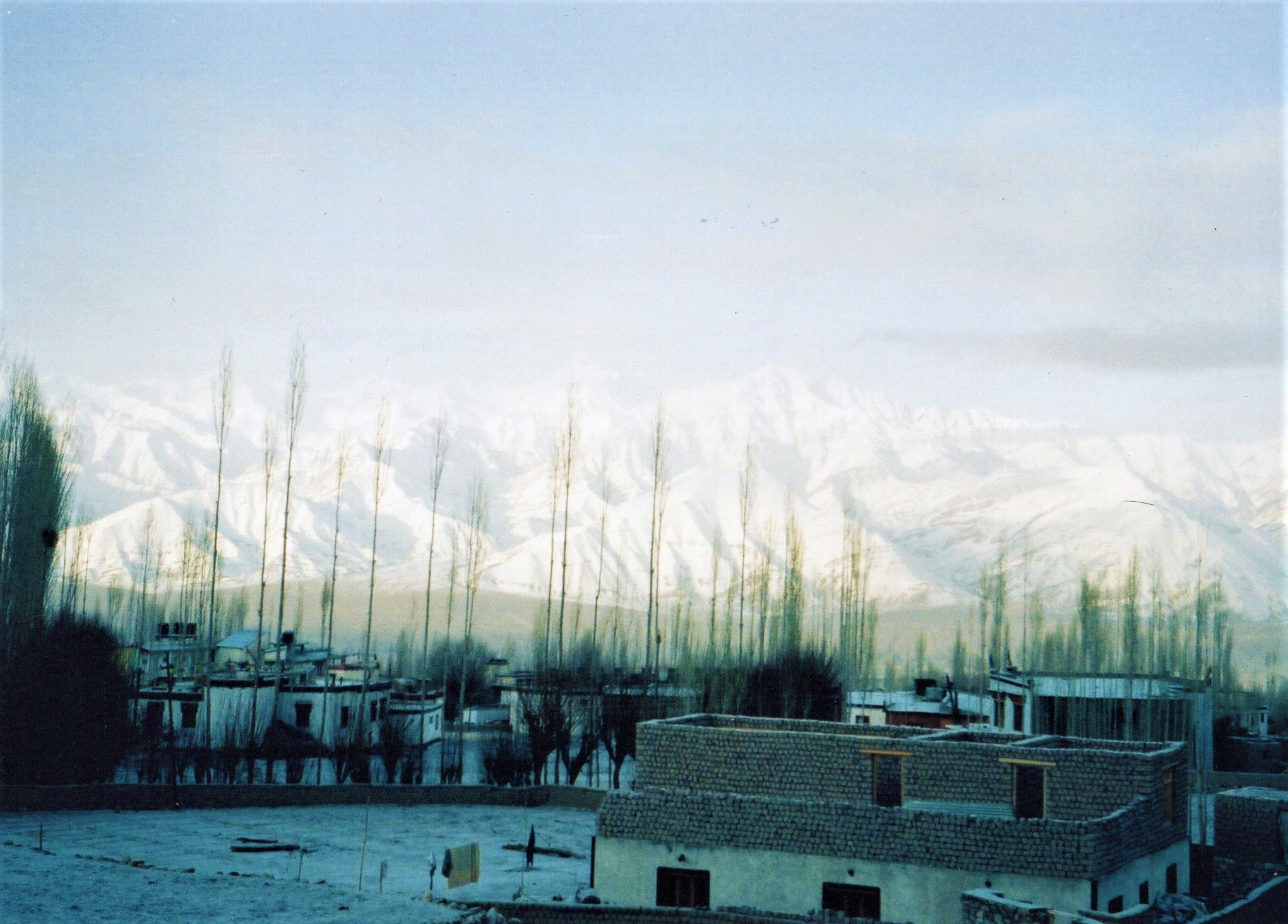
A Day in Ladakh (2)

I’ve posted (and re-posted) a few times over the years about my trip to Ladakh in 2005. So here’s another extract from my journal for one of the days I spent there.

For those not in the know, Ladakh is high in the Indian Himalaya to the west of Tibet, with which it shares many characteristics, not only of geography but also the ethnic makeup of its people. In fact, since the Chinese invasion of Tibet, it is frequently said that Ladakh is more Tibetan than Tibet. The climate is not dissimilar, either, and although I visited in April that is still well before the main tourist season, and I don’t recall seeing any other tourists during my stay there.

Sunday 10th April 2005

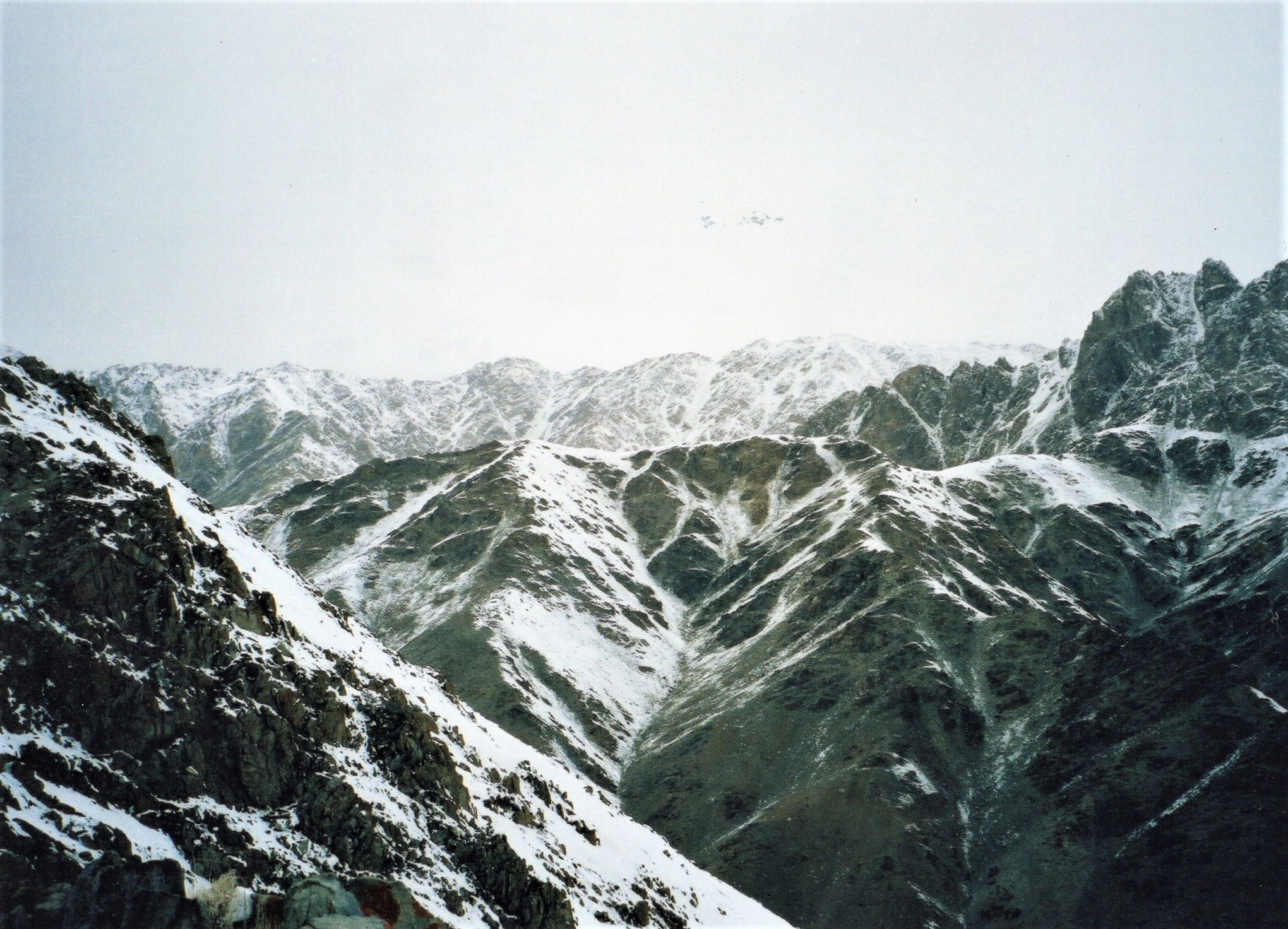
I slept well. No alarms during the night! (I had had a very bad headache the previous night which I put down to altitude sickness) Then up at 6.30 to a fresh snowfall – just a sprinkling of powder on the ground. The skies are clear, though, and the Stok Mountains look wonderful in the sunshine. In fact, they’re going to get photographed right now.

I go out for breakfast and it’s quite mild. Soon last night’s snow has already gone. A few shops are slowly opening – no internet as yet, but I’ll mooch this morning. I’m sure that I can find something.

To use the internet, I need to find a place that is both open and with a generator. This looks as though it might take some time! Never mind, I’ve got a woollen scarf from the Ladakhi Women’s co-op, so a good start to the day.

As well as the scarf I also bought a bag of the dried apricots (organic, ‘solar-dried‘) Ladakh is famous for, and at last a singing bowl. I’m sure I paid more than necessary, but he came down RS 200/-, so what the heck. I think we were both happy with the deal. And it’s a nicer one than any I saw in Bodhgaya.

After a Ladakhi lunch of apricots, apple juice and water, – not that I suppose for one moment that is what a Ladakhi might have for lunch, only that it is all locally produced – I headed north past the Shanti Stupa towards the first line of hills. Reached there at 1.15pm and stopped there for a breather. Silence, apart from the pounding of the blood in my head. Absolute silence. After a few minutes the call of the muezzin drifts up from Leh, from the Jama Masjid. Then a few bird calls from the crags. Perfect peace. A perfect desert landscape, with pockets of snow. I’m sitting on a boulder, warmed by the sun, my feet in patches of fresh snow.

1.50 and I am at the col. A lot higher than the fort at Namgyal Tsemo Gompa, with a fantastic view north up the valley towards the Kardang-la.

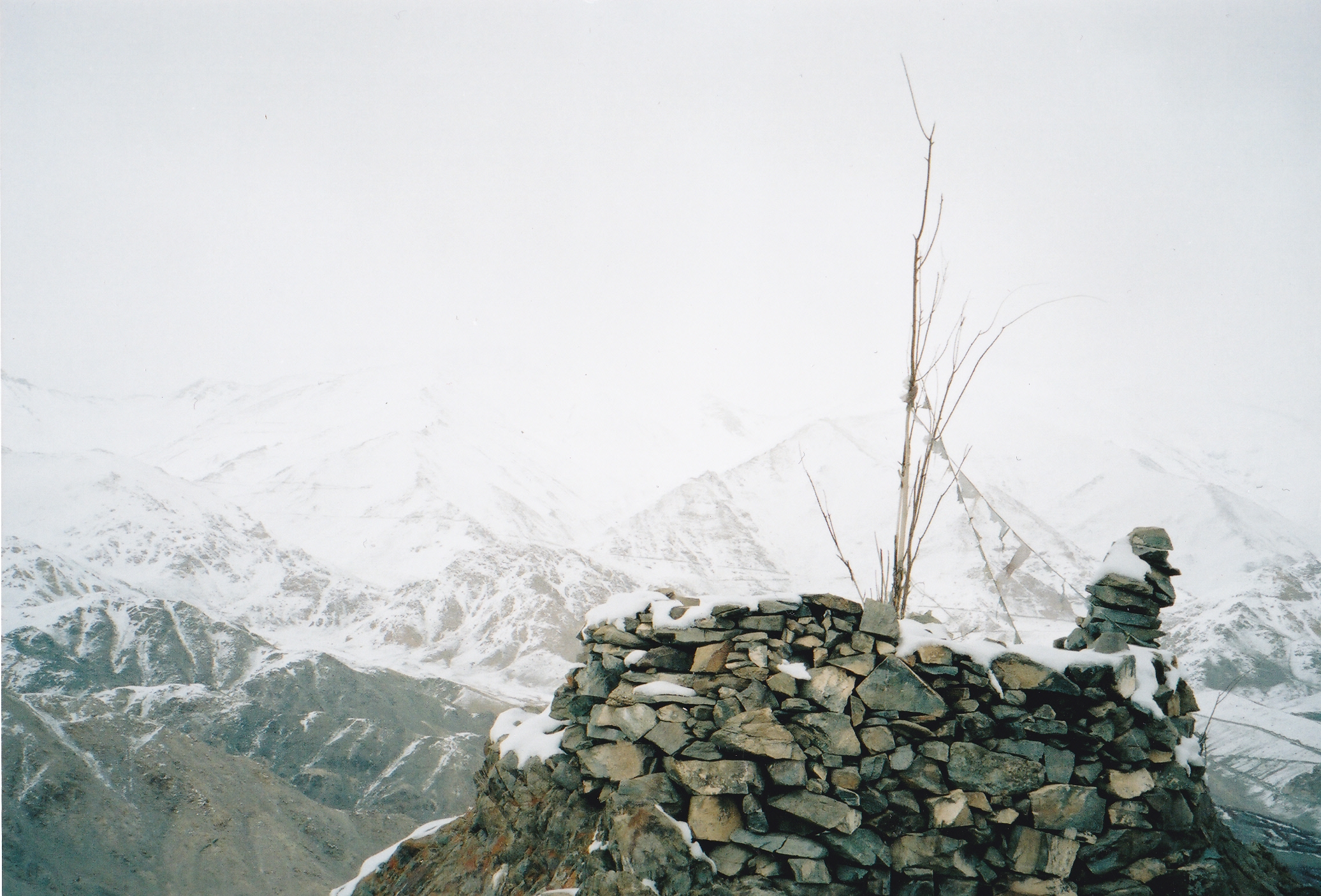
2.45 and I am at what appears to be the highest point. There is another peak some way to the west, but this one has a cairn, walls and prayer flags, so I’m taking it to be the highest. At a rough guess, I’ve climbed about seven to eight hundred metres. The views are out of this world. More side valleys to the north and I’m up in the snow here. On the northern sides it is quite thick and I am feeling quite light-headed. It was worth coming to Ladakh just for this alone! Stunning!

Very reluctant to start heading down, but a few flakes of snow convince me that it’s time to go.

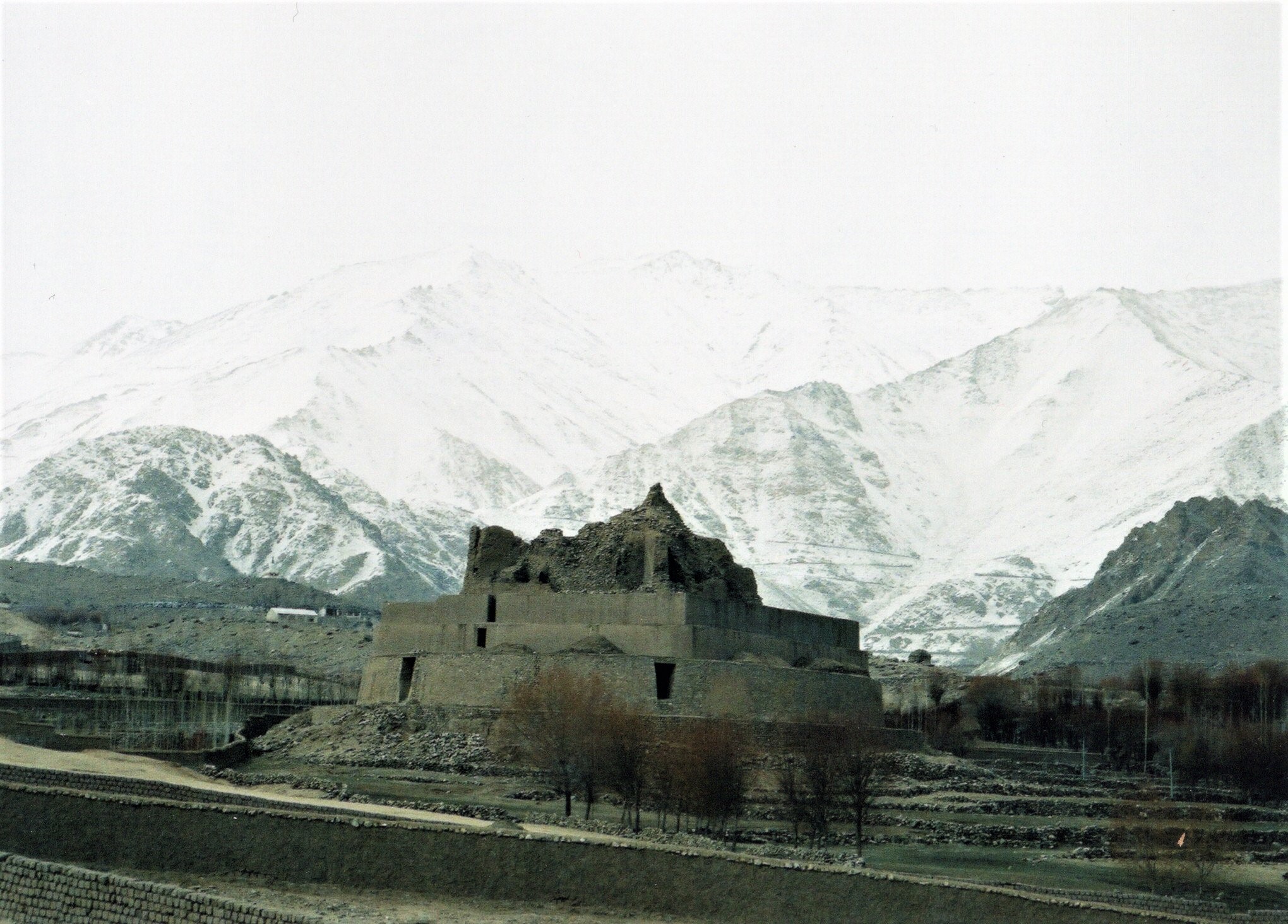
Down to the road just before 4.00, then head up the road to have a look at what appears to be a half reconstructed fort. When I get there, there is nothing to indicate what it is, just a sign warning people that it is of historic interest, so don’t go knocking it over. I guess that it might be Tisseru Stupa, although it does not really look that much like a stupa to me.

I then head back to the guesthouse, feeling a bit weary. Wander out into town and end up eating thukpa in a Tibetan restaurant.

Back again for the evening. It’s getting cold!

Looking at my map, there is a peak a couple of kilometres north of Leh, marked at 4150m. It’s in the right place and is about the right height, so I’m bagging it.

Annapurna Circuit, Nepal – 4

Part Four – from 30 years ago.

IMG_0037

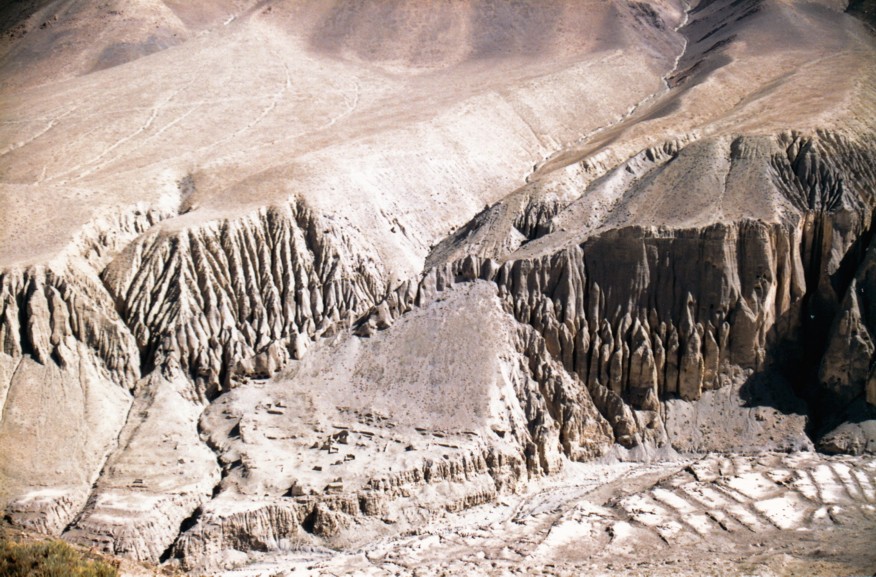
On the western side of Thorung La, the climate is much drier and in places the scenery is very much that of a desert landscape.


IMG_0039

As you descend, though, you soon come across settled areas where meltwater from the snows and glaciers higher up enable vegetation to grow.


IMG_0038

Mani stones plus a fine set of argali horns on top of a wall in Kagbeni. The argali are the wild sheep of the Himalaya.


IMG_0040

In Tukuche, at 2590m – less than half the altitude of Thorung la, which we had crossed just two days before.


IMG_0041

It was in places like this, that we really felt we could be in another century. Buildings of stone and beautifully carved wood, ponies for transport, no wheeled vehicles, and the two fellows to the right of the picture are busy crushing lengths of bamboo to a fibrous pulp, ready to make into paper.

It was in places like these, actually, that I felt I could just leave the world behind and spend the rest of my life. Yes, totally impractical, I know, but…


IMG_0042

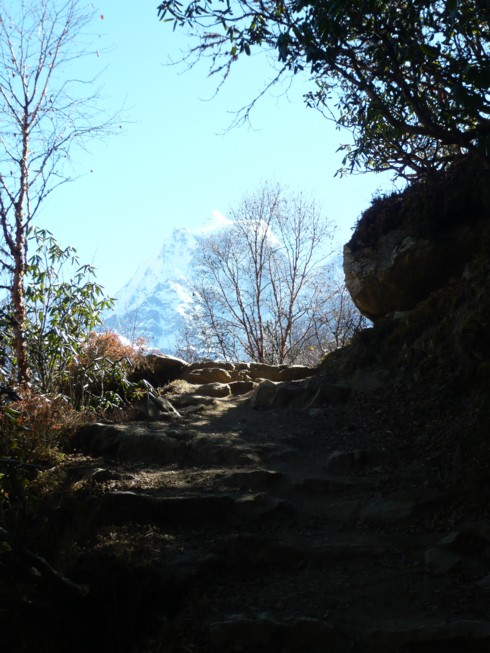
We came for the high peaks, but the mountains lower down have a breathtaking beauty of their own.


IMG_0043

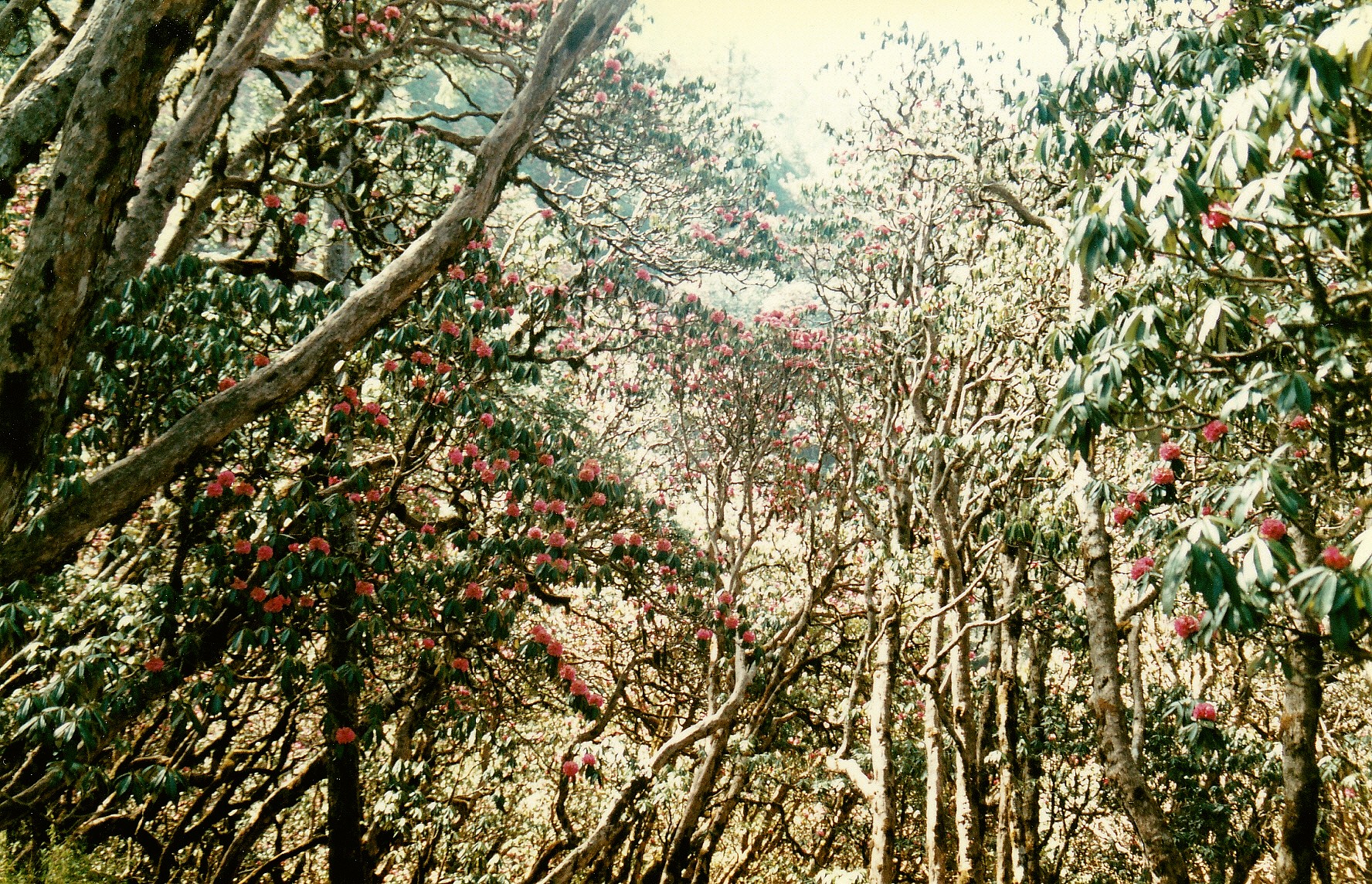
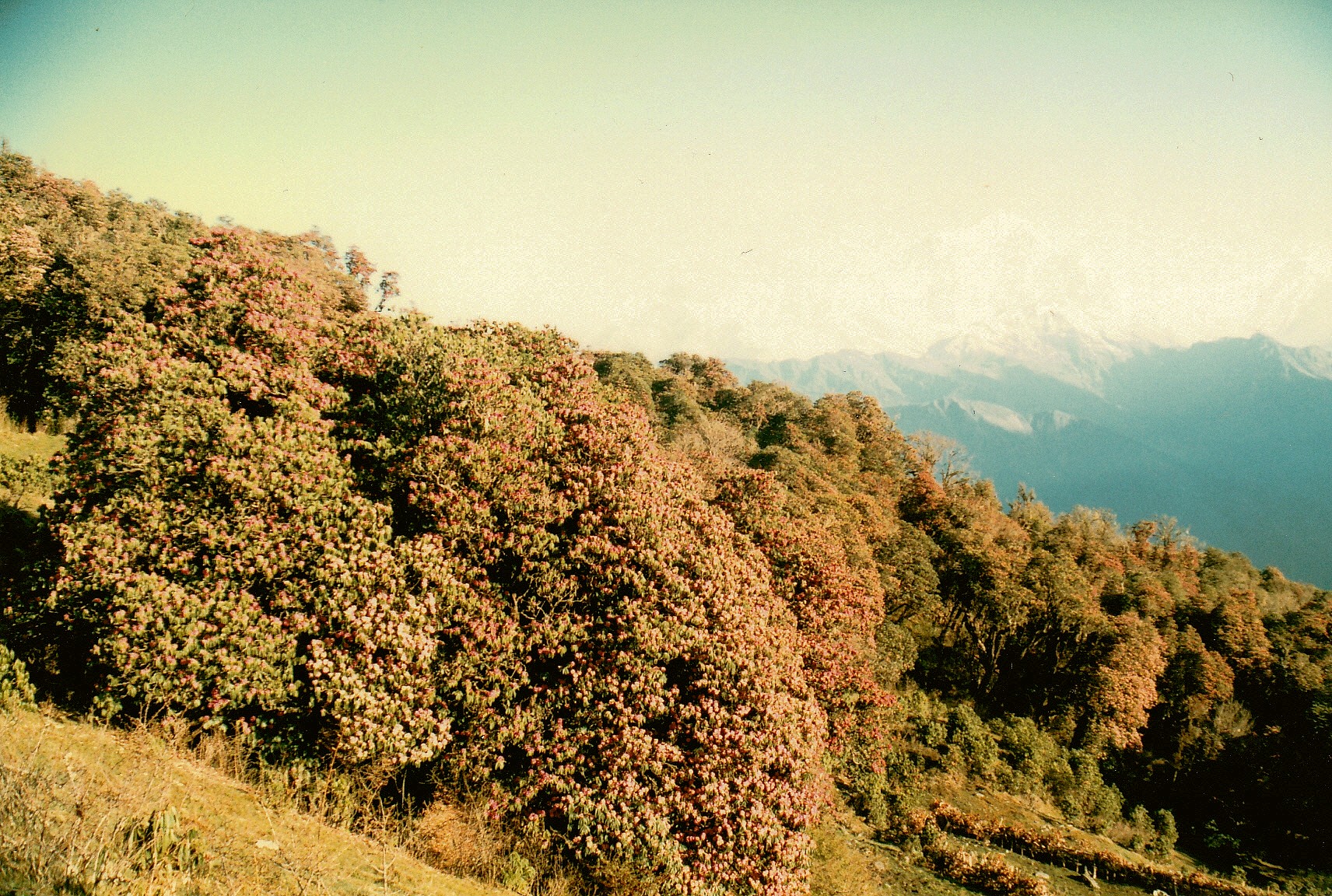
Sunrise on Poon Hill is a treat most trekkers ensure they don’t miss. Unrivalled mountain views, and in the spring the massed flowers of the rhododendron forests.


IMG_0044

Ah, yes. Did I just mention the rhododendron forests?


IMG_0045

Photos just don’t seem to do them justice.


IMG_0046

And then a few days later it was over, and we were back in Kathmandu…

…and that is a different kind of wonderful…

The Collector

Inspiration, writers’ block, ideas…I could write about all or any of these topics. Instead, I thought I’d simply post another poem – plus, of course, a picture (with far better weather than we’re having here) – and let it do the job instead.

337a

I’m a collector of images long stored in my memory,

A desert inferno of razor-sharp rocks.

A mountain breeze rippling an icy cold puddle,

Thick mists and thin soups, flowers, trains, and old shoes.


I’m a collector of memories, both mine and ones borrowed,

The harrowing journey, the lovers’ first kiss.

There’s betrayal and loyalty, flatulence, hope,

There’s a child being born, and a wolf at the door.


I’m a collector of stories, the stranger the better,

Believable, odd, and ridiculous too.

Close to home or historical, alien, fanciful,

Some to keep secret and some I can tell.


I’m a collector of moonbeams and of chance reflections,

A collector of sadness and bittersweet pain.

A collector of strangely shaped stones in a circle,

And dreams that tell stories I don’t understand.


By Popular Request (2)

First of all, a huge ‘thank you’ to all of you who contributed to the comments thread on my post earlier this week, ‘Religion or Philosophy.’

I thought it made it the most interesting so far, and all of your comments certainly given me much food for thought about what I had written and my feelings around the subject.

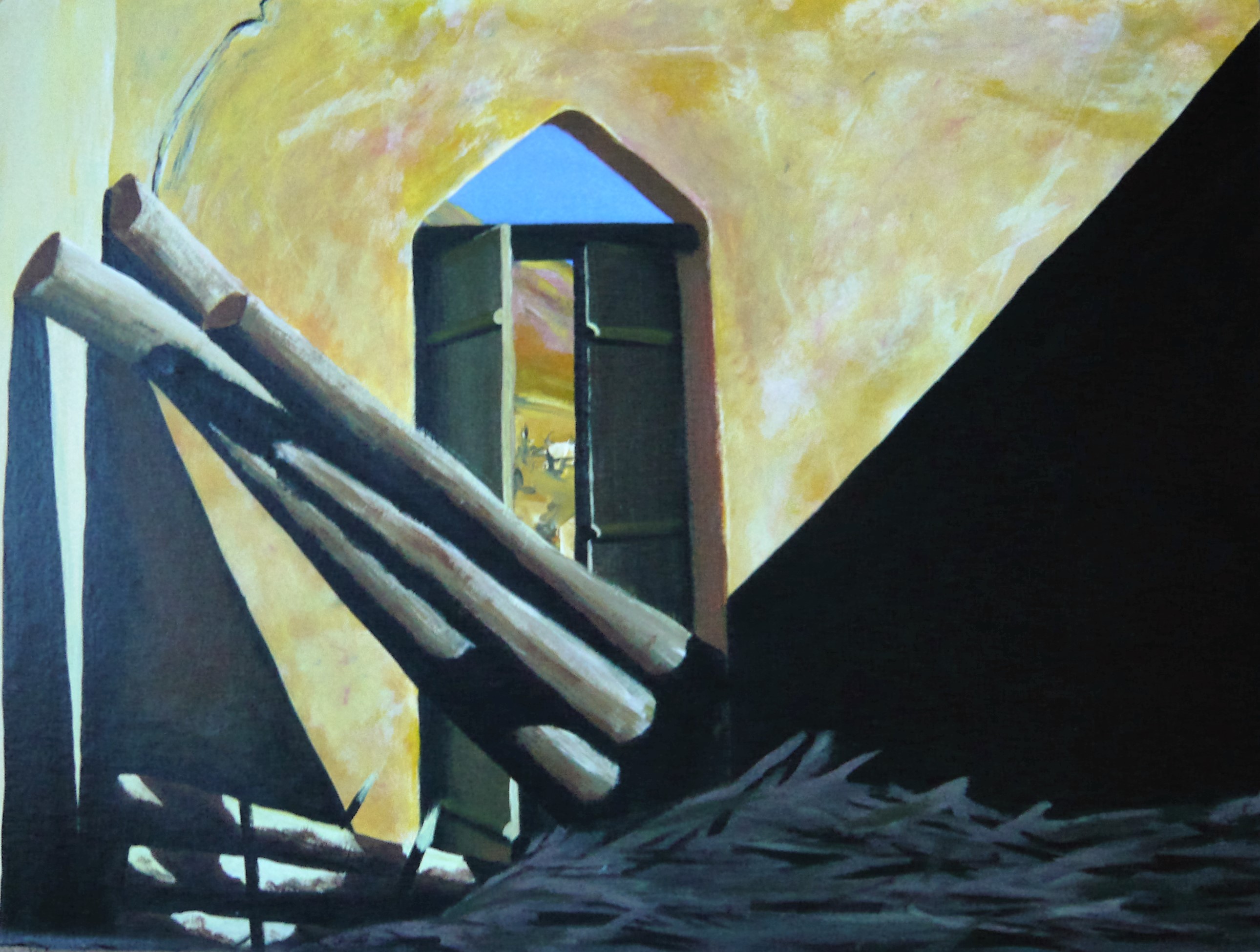
So, today, a couple more paintings. I didn’t paint much when I was in Oman, apart from a few sketches and watercolours, so these ones were worked much later, from some of the photographs I took.

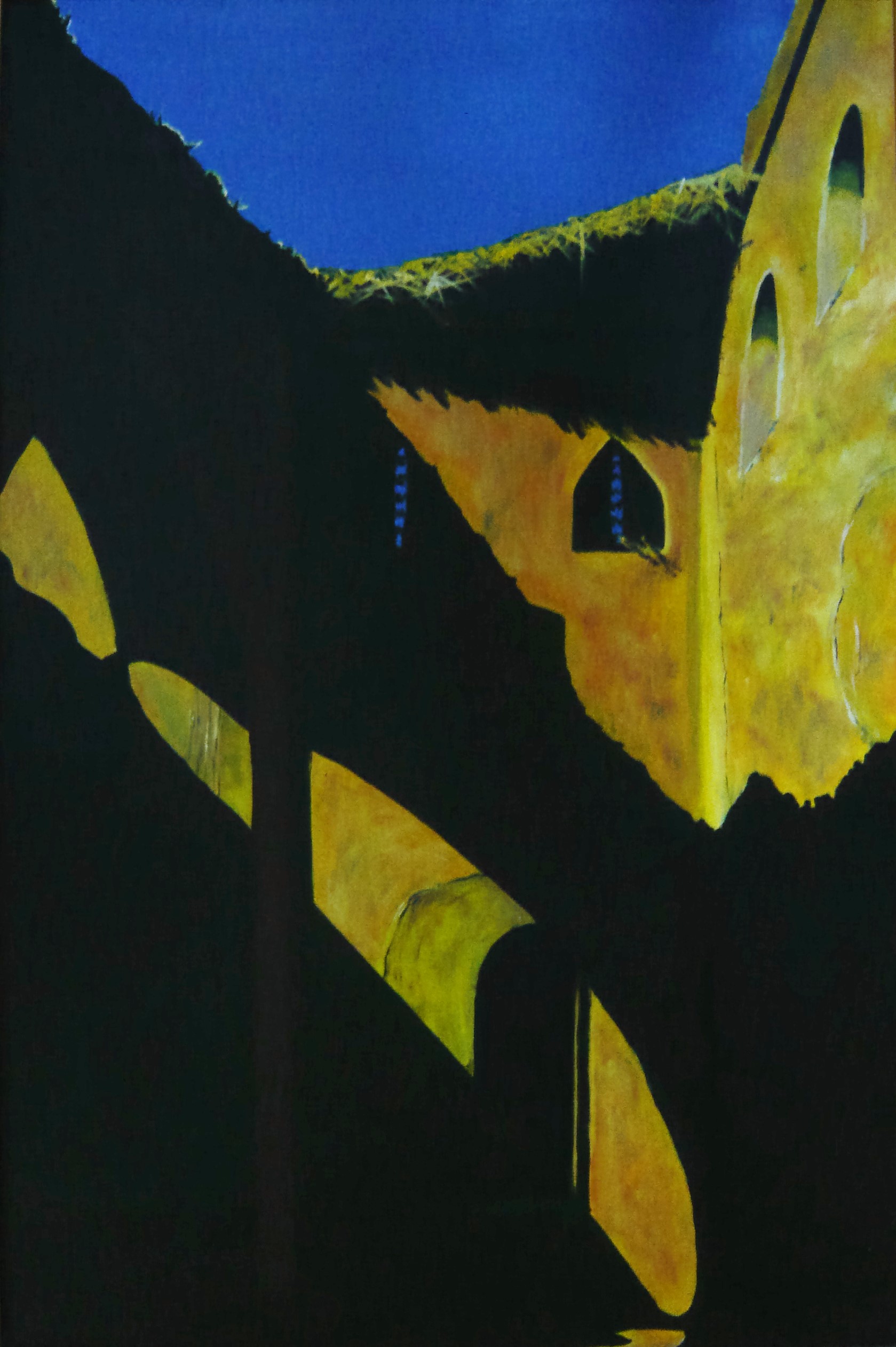
It is in the desert that I have been most aware of the contrast between light and dark, and that is something that I wanted to bring out in these paintings.

P1050093

Oman #1 Acrylic on board. 24 ins x 36 ins

There is something about ruins, by their very nature, that is stark. They have been shaped by human hand, but are now broken. Designed and built for a purpose, but now with that purpose gone. There is a sadness, or at least a feeling of melancholy.

There is a sense of emptiness, which is frequently a feeling that comes upon the traveller in the desert.

And in the desert, there is not that softening growth of ivy, for example, to soften the harsh and fractured edges of ruins.

P1050094

Oman #2 Acrylic on board 37 ins x 23 ins

The second painting, Oman #2, was also an exercise in the use of triangles in composition.

Oman (1)

Prior to 1970, Oman was, in many ways, still a medieval country. There were no more than 3 miles of tarmac road in the whole country, the gates of the capital, Muscat, were still closed between the hours of sunset and sunrise, and it’s exports were largely confined to dates, limes and frankincense. Oil had first been discovered as far back as 1956, and then in commercial quantities in 1962. Production began in 1964 and led irrevocably to massive changes, although these would not come about until 1970.

boat

This launch (Omanis never use the word Dhow) was on the shore at Yiti, just east of Muscat. It would most likely have been used for trading and was probably still seaworthy when I took this photo.

Mindful of these changes that had happened virtually overnight to other Middle Eastern states when oil had been discovered, the then Sultan, Said, was determined that Oman would not go the same way. Unfortunately for everyone concerned, his solution was to stash the proceeds in the royal coffers, whilst the country and its people remained poor. It was a situation that could not last for long, and in 1970 his son, Qaboos, overthrew the old Sultan.

Baushar Fort

Old fort at the village of Baushar, near Muscat.
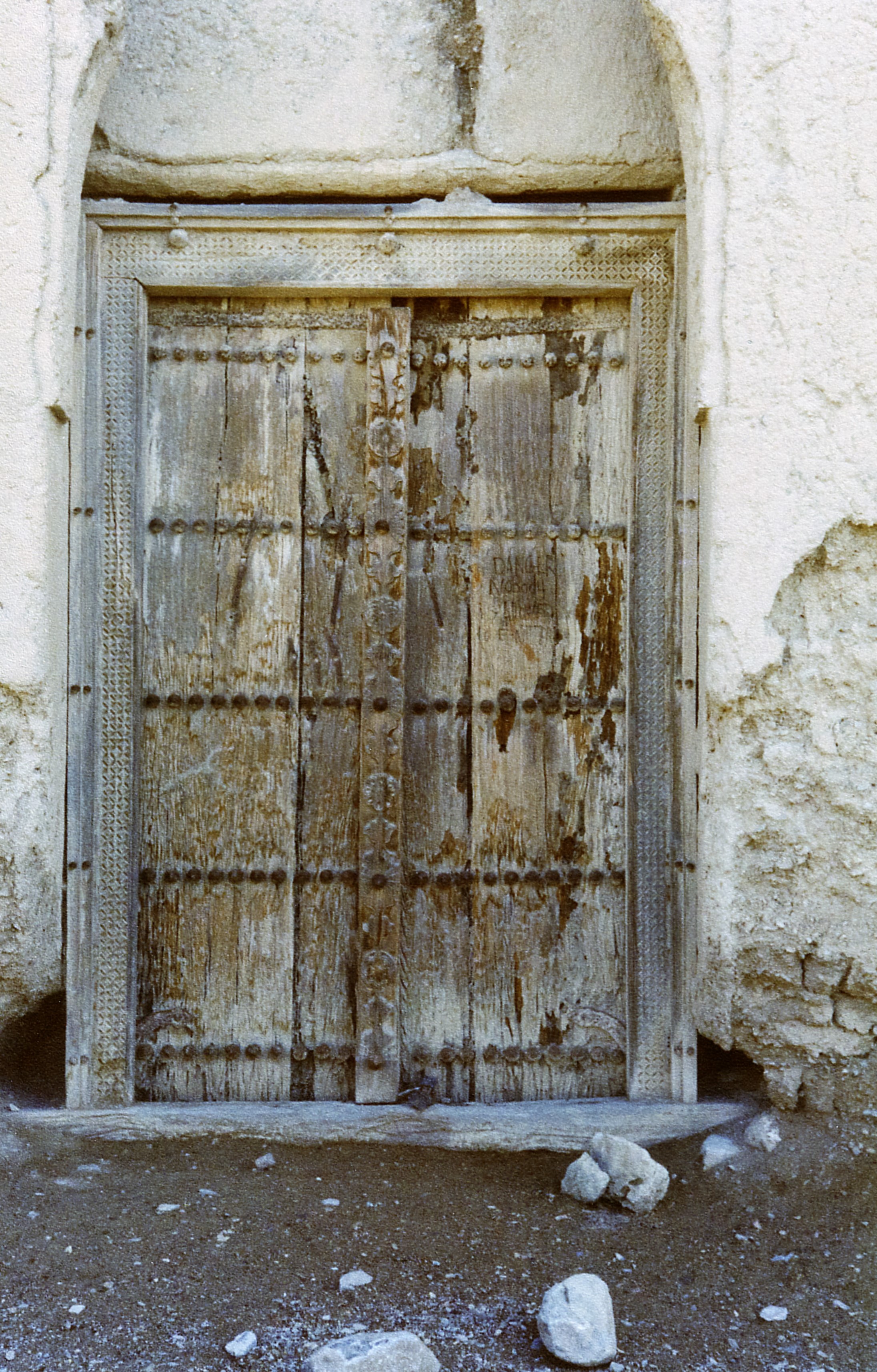
baushar door
Carved wooden door in Baushar Fort

I lived there between 1985 and 1988, during which time the country was making large strides towards being a modern state, although many parts of the country still felt as though they belonged in another century. Around Muscat and along the Northern coast, there were new towns springing up, modern shops and hotels, main roads, and much of the development that might be expected. There did appear to be an emphasis on the building of facilities such as schools and hospitals, however, along with a good deal of restraint, which was a refreshing change from the way that many other states used their oil wealth.

pottery kiln 1

Pottery kiln at Bahla.

Bahla has good quality clay and produces large numbers of pots, which are thrown on simple foot-operated slow wheels and fired in large mud-brick kilns, which are fueled with brushwood.

Pots at bala

Newly-fired pots

Away from the towns, to visit most of the villages was like stepping back in time. Buildings were often still mud brick and palm thatch, and many of the traditional cottage industries were still followed.

falaj

Falaj.

The Falaj system of irrigation originated in Persia and was spread throughout the Arab world. I have even seen examples in Spain. The system consists of a series of underwater channels bringing water from where it arises, usually in the mountains, to where it is needed, where it is distributed by overground channels. These channels, both underground and overground, have been built on a very gentle gradient and show astounding technical skill, being built only with primitive tools, often very deep underground. Many of the Omani Falajes are reckoned to have been built by 500 BC.

dates

Dates spread out to dry near the town of Quriyat.

Dates are an important crop in Oman and were the main export until the discovery of oil there. They are still dried in the traditional way – in the sun.

shark boy crop

Boy on a donkey with sharks. The sea has also traditionally been a major source of food for Omanis. I passed this boy just outside Quriyat.

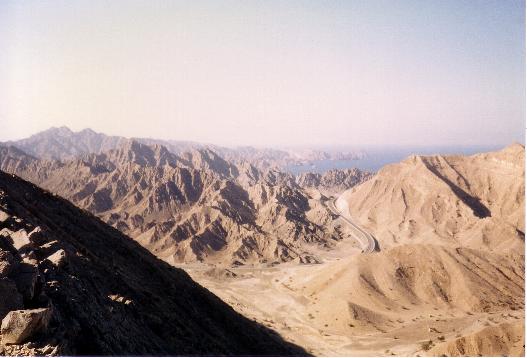
deserty desert

Coastal mountains, SE of Muscat.

For a long time after I finally left Oman, I harboured a strong wish to go back there. But recently I watched several videos on YouTube, which have cured me. Many of the places that I knew as small settlements with dirt roads and small houses, have become places of great wealth with wide boulevards, modern houses and cars, and tourist hotels. It is, no doubt, a development that is welcomed by the majority of the population, but it is not the Oman that I knew.

Oasis

There you go. A picture of an oasis.