Today is the shortest day of the year. Where I live, we will get approximately half the daylight hours that we will get during the Summer Solstice. Actually, slightly less. We get up in the dark and it is dark again long before supper time. The weather is cold and predominantly miserable.
But from today the daylight hours lengthen – at first imperceptibly, but gradually it becomes noticeable the hours of daylight are increasing. Finally, there is an end to the relentless lengthening of darkness, and within a few weeks it will become obvious that the world is, indeed, moving towards a time of warmth again.
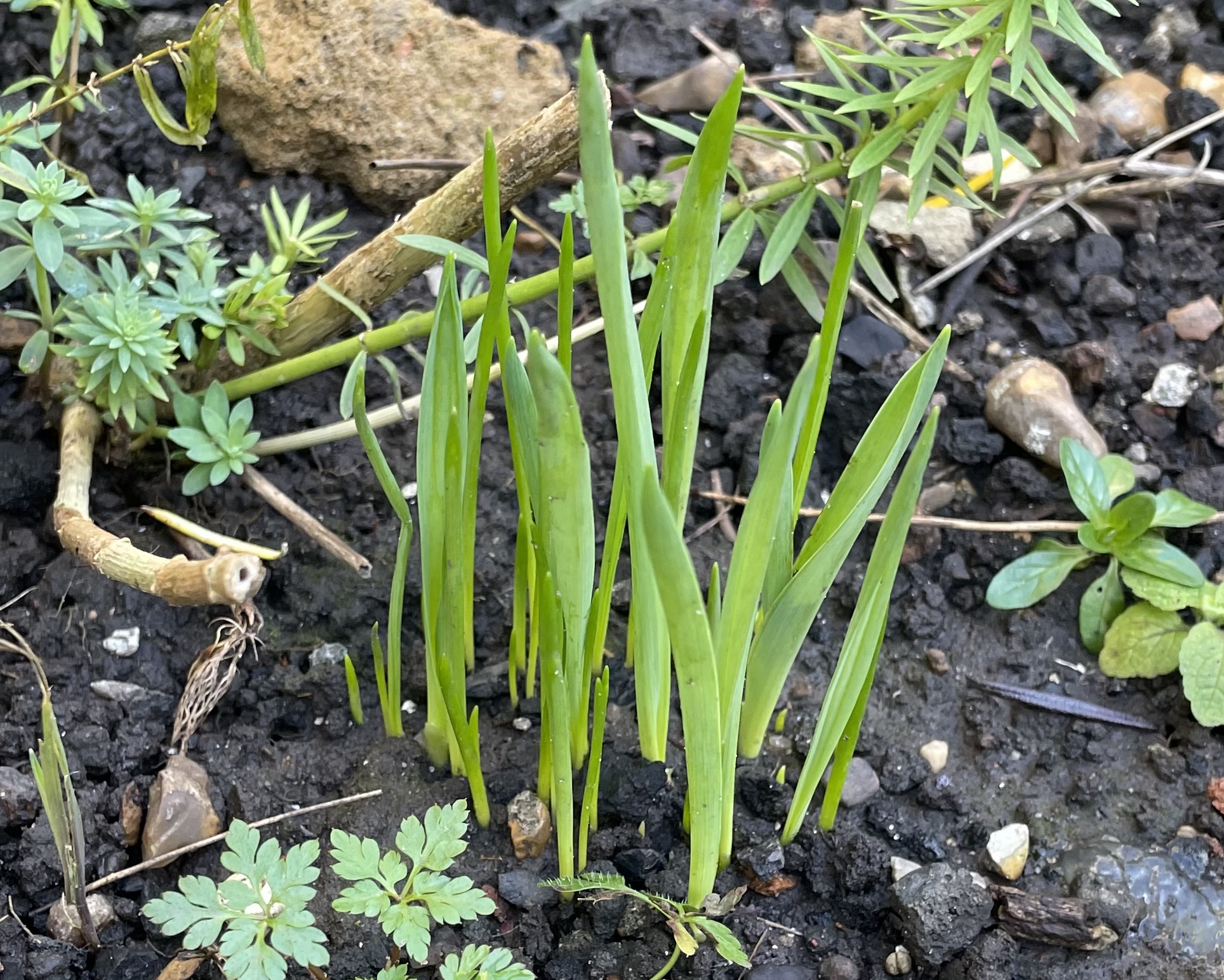
Yet there are already new plants coming up; new growth that has been prompted by…what? When they broke the surface of the ground a few weeks ago the days were still getting shorter and certainly no warmer. Nature is strong and determined. Winter is never a lifeless time of death and decay. There is dormancy and rest, but also a lot of growth if one takes the trouble to look for it.
I’m thinking longingly of Spring, of renewal and growth. In a couple of hours I’m off to see a mumming play – perhaps I’ll leave you to Google that one – down on the Kent coast. Beer will be involved, of course, in line with the best folk traditions. Old – possibly ancient – celebrations of the turning of the year and the approach of Spring.
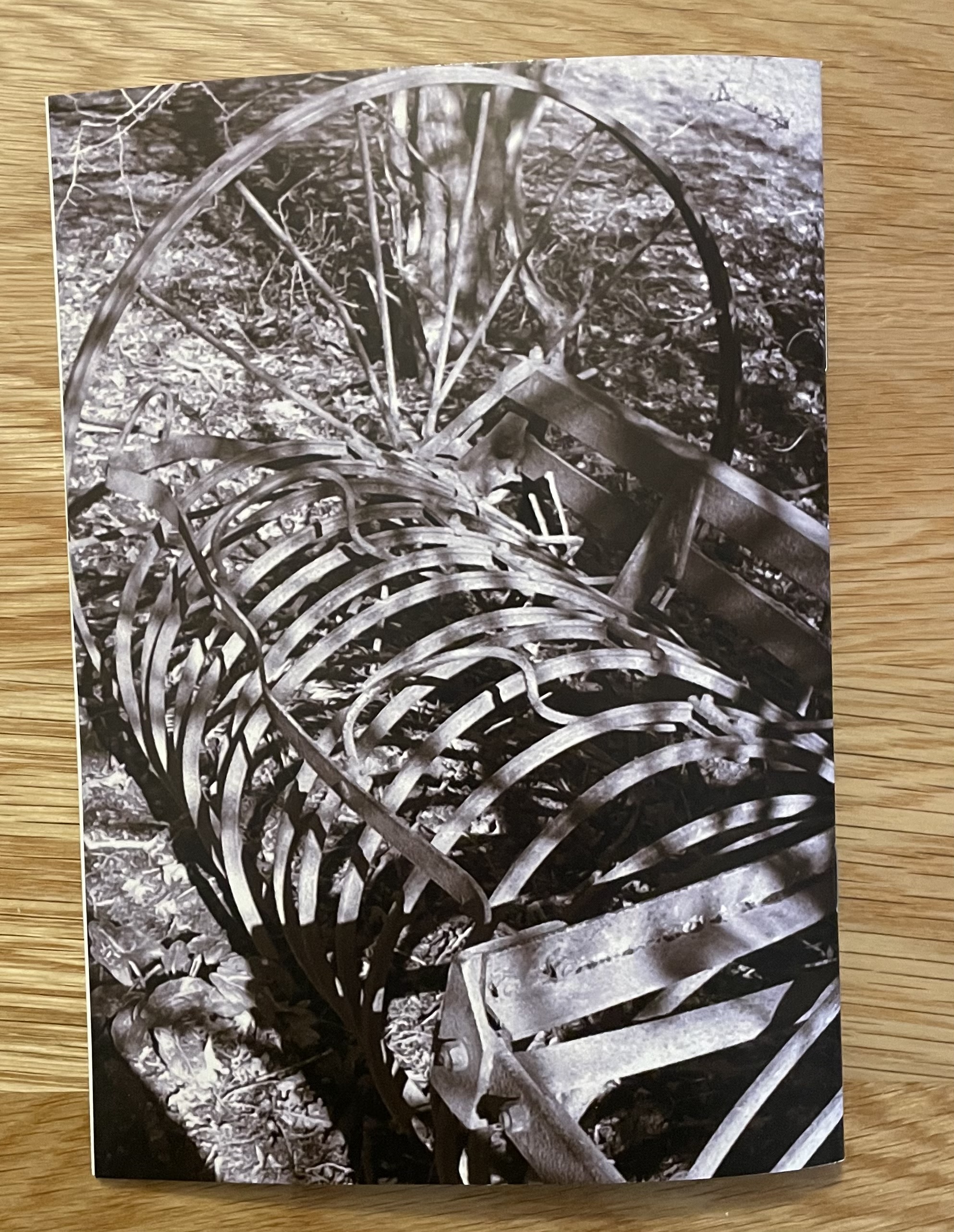
Issue #2 of Echoes and Imaginings has arrived. It’s available both in my Etsy shop or directly from me – message me on the contact page. The format is similar to the first issue, with articles folkloric and psychogeographical. Poetry and photographs. A bit of re-hash from this blog, and new stuff.
And speaking of this blog, I’m slimming it down. It may not be immediately obvious, but I’ve already deleted a third of the posts, with more to go. For all sorts of reasons. Just tidying up, really.
Ladies and gentlemen, I’d like to present Echoes and Imaginings, issue one.
Quite pleased with the title, actually. My aim is to produce at least four issues, although whether I do or not depends largely on how quickly I can put each issue together. I want them to roughly reflect the seasons of the year, without being too dogmatic about it. There is a slant towards folklore, psychogeography and a bit of speculation, as well as photography and poetry. Future issues may well have some of my artwork included.
I’m already writing articles for issue 2…
In this issue you can find Hoodening, Wassailing, a meditation on time, photographs, poetry, and more. There are lots of trees. Some of the articles have appeared here as posts, although there is some re-writing, but most of the poetry and the pictures are new. It is available through my Etsy shop, or just message me directly (I use PayPal).
Personally, I reckon it’s a thing of beauty.
And as well as these four issues, I have ideas for some others, which I expect to bring out at random times.
At the moment, I feel this is the way for me to go. I don’t see myself finishing a novel any time soon, although I do have an almost finished one sitting there. I don’t currently feel inclined to get it published, though. And equally, I don’t feel inclined to go through all the hassle of submitting poems or short stories to different publications or into competitions.
And on another note, you have probably seen on other blogs the ongoing issues of pirated e-books (especially on Amazon, I hear). I think we have AI to thank for a lot of this, and it seems so many authors are having their books ripped or plagiarised it’s becoming ridiculous. For that reason, I have simply decided my books will no longer be available as e-books, and have deleted them.
There are any number of reasons why I haven’t become one in this lifetime, only one being a lack of any obvious talent. Perhaps if I hadn’t gone abroad when I did, I might have inveigled myself into a group of musicians and played a little more, and a little more regularly. Perhaps if I’d practised more I’d have been a little better! Perhaps if I’d actually learned to read music properly I could have learned more tunes properly. Who knows?
I could play both the guitar and mandolin fairly competently, if nothing more. It has been many years now, though, since I owned either – or a fiddle or a whistle either, come to that, both of which I had pretensions of being able to play, at least a little. I still play a pretty mean air mandolin, though, and my air guitar licks would put Richard Thompson to shame, although so far I’ve had limited success with my Henry Parker air guitarwork – unfortunately he uses a different tuning. I am occasionally tempted to buy another mandolin, or perhaps a guitar, but if I’m realistic I have to admit I would never devote the time to them that would be required. It’s going to remain one of those dreams realised only in my imagination.
But a note for that other lifetime: I’m not one of those folk who have to be the very best at whatever they attempt, otherwise they feel it isn’t worth the effort. I wouldn’t have to be a star, I’d be content to be a session musician, a backing musician. Just to make a living doing something you love is awesome and something not given to many. Or not even to make a living, perhaps, just to make music with others is a delight and I could still be happy with it being a spare time occupation.
So, sticking to going to gigs and listening to CDs this time around.
The May Day festival, Beltane, is a survival, or revival, from the Iron Age, celebrated in Celtic communities – Scotland and Ireland particularly – and revived as a full festival in Scotland in the 1980’s by the Beltane Fire Society. Beltane was a fire festival, although nothing of that remains in the festivities carried out in England. Beltane was first mentioned by name in Irish writings from the late 800’s / early 900’s.
The English version of this festival involves cutting flowers and greenery and dancing around a maypole, which things are also carried out during Beltane, celebrating the beginning of Summer which begins on May 1st. When I was a child, dancing around the maypole was the chief, possibly only, activity carried out on May Day. I have a photograph of my brother, my cousin, and myself, dressed up for the May Day Fair at which there was maypole dancing, but no obvious indication of surplus greenery. Past generations in England celebrated May Day with a day of celebrations which while including maypole dancing as an important manifestation of encouraging the fertility of the soil (and the festival-goers!) would also have included plenty of food and drink and general gaiety.
Mayhem, if you like.
This year, I managed two May Day days out.
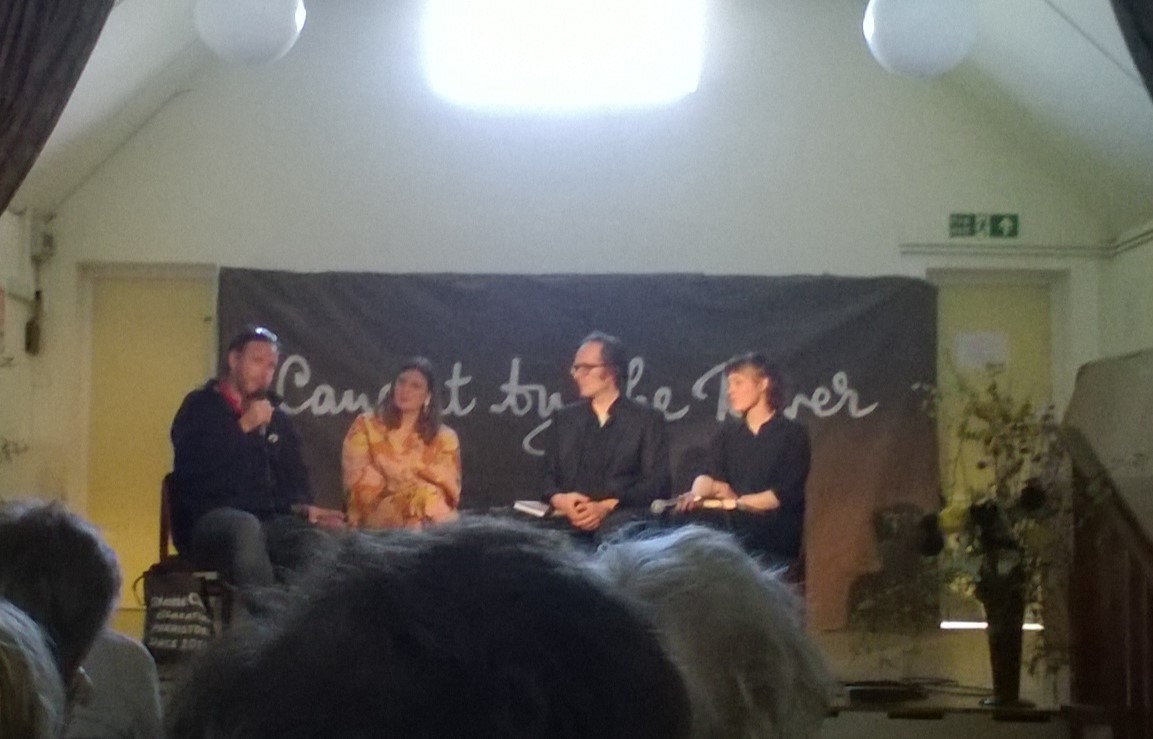
On Saturday, two days before May Day, I visited Kingston near Lewes, in Sussex, for the Caught by the River Mayday event. Caught by the River describe themselves as an arts/nature/culture clash and you can read all about them here. I have followed them now for several years, and this seems as good a time as any to mention that their coverage of arts, nature, and culture are second to none and if you’re not yet following them, well, you should be.
There was mask-making to begin with, especially to involve the children, the makers encouraged to incorporate flowers and greenery into their masks, and almost inevitably a certain amount of folk-horror found its way into some of these.
Nice, Richard.
This was followed by a promenade around the maypole, after which the activity moved indoors.
There were films, talks, and discussions, subjects including rivers, village life in the early eighteenth century, art, standing stones and the like, and the environment. After which, in the late afternoon, we all promenaded up the hillside to the Gurdy Stone.
This is the Gurdy Stone, a modern standing stone on a hillside overlooking Kingston. Here, Local Psycho (Jem Finer and Jimmy Cauty), held a gathering to encode the music of their Hurdy Gurdy song into the stone “To mark the 50,000 year return of the Green Comet and release of The Hurdy-Gurdy song on Heavenly Recordings.”
Throughout the day, naturally, we all had access to the pub.
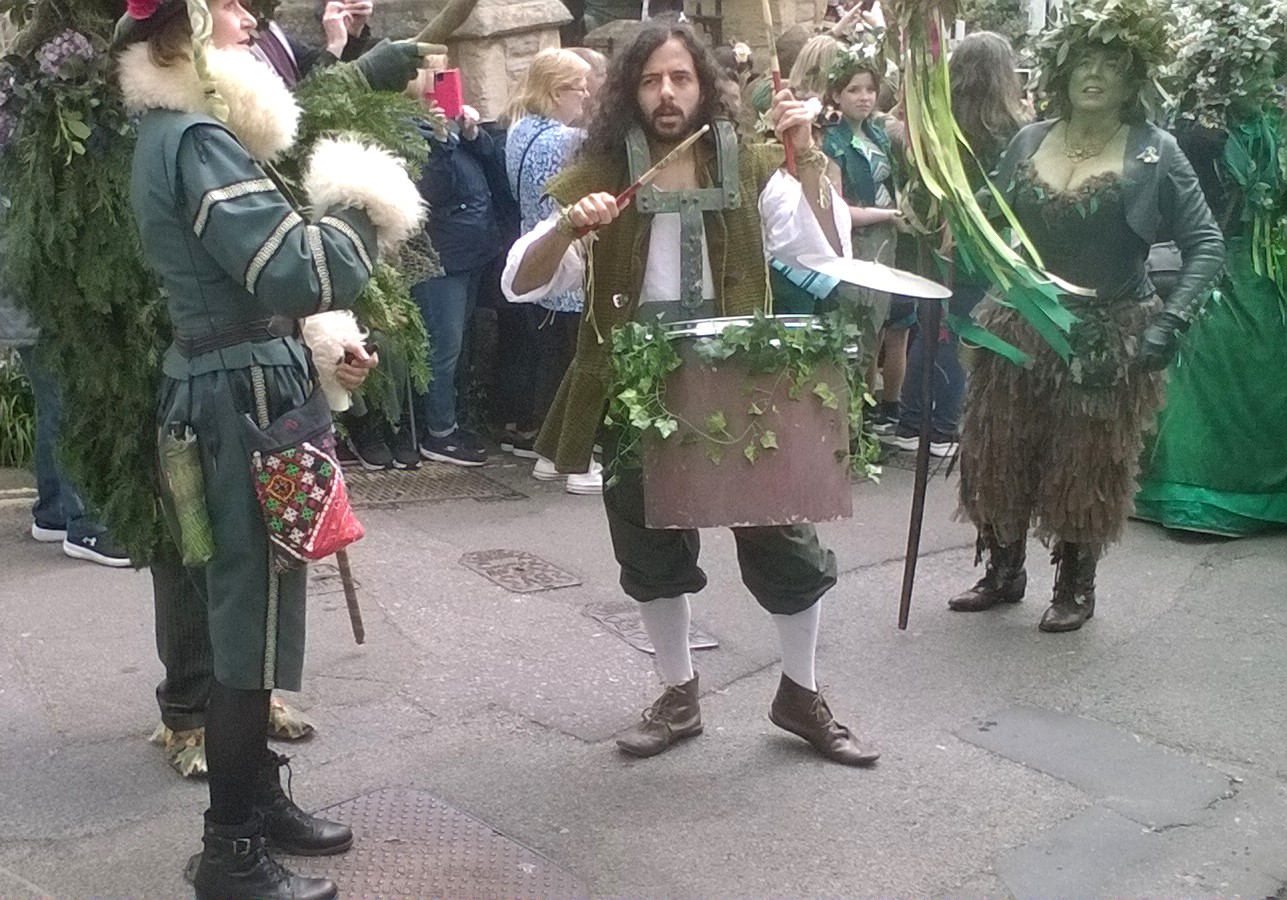
And then on Monday, which was May Day, we went down to Hastings. It rather felt as though everyone in South East England must be in the town, either at the Jack in the Green festivities or watching blokes on motorbikes roaring up and down the seafront for no discernible reason. I don’t much like crowds, and some of this was very difficult. But away from the huge horsepower and testosterone nonsense, amongst the Jack in the Green celebrations the atmosphere was brilliant and the large numbers of people perfectly acceptable. Jack in the Green is a manifestation of the spirit of spring, related to the Green Man, a dancing figure covered in greenery.
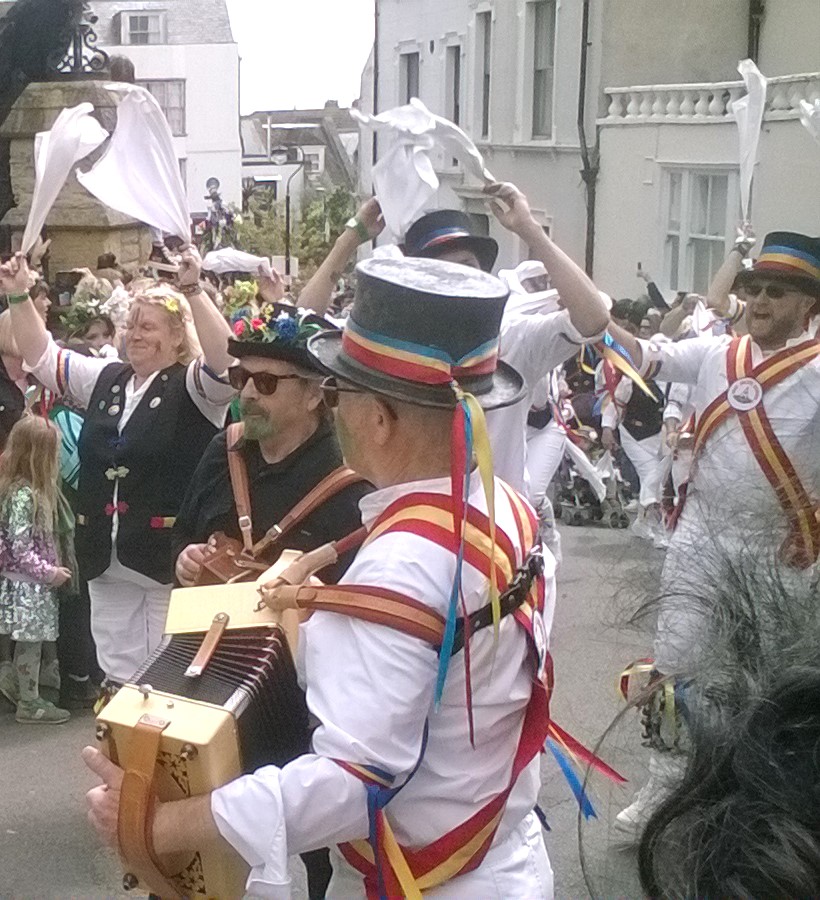
The festival in Hastings has grown over the years into a large event involving musicians, dancers, Morris sides, huge figures in addition to Jack in the Green such as the Queen of the May, a witch, and others, plus any number of people joining in the procession around the town, all decorated with as much, or as little, greenery and/or flowers as they feel suitable.
There you go, a Morris side.
Followed by a large witch with a cat. Why the witch? I’ve no idea. Why not? I suppose.
And there you have it. Music. Drumming. Greenery. Crowd involvement. Summer is icumen in and winter’s gone away-o.
I was talking about hop pockets and pokes last week – and pigs, of course, which was how it all started, but forget the pigs for now. Let’s stick with the pokes and pockets. At the weekend we went for a walk through a part of Kent we hadn’t walked for a few years and part of the walk took us through this field:
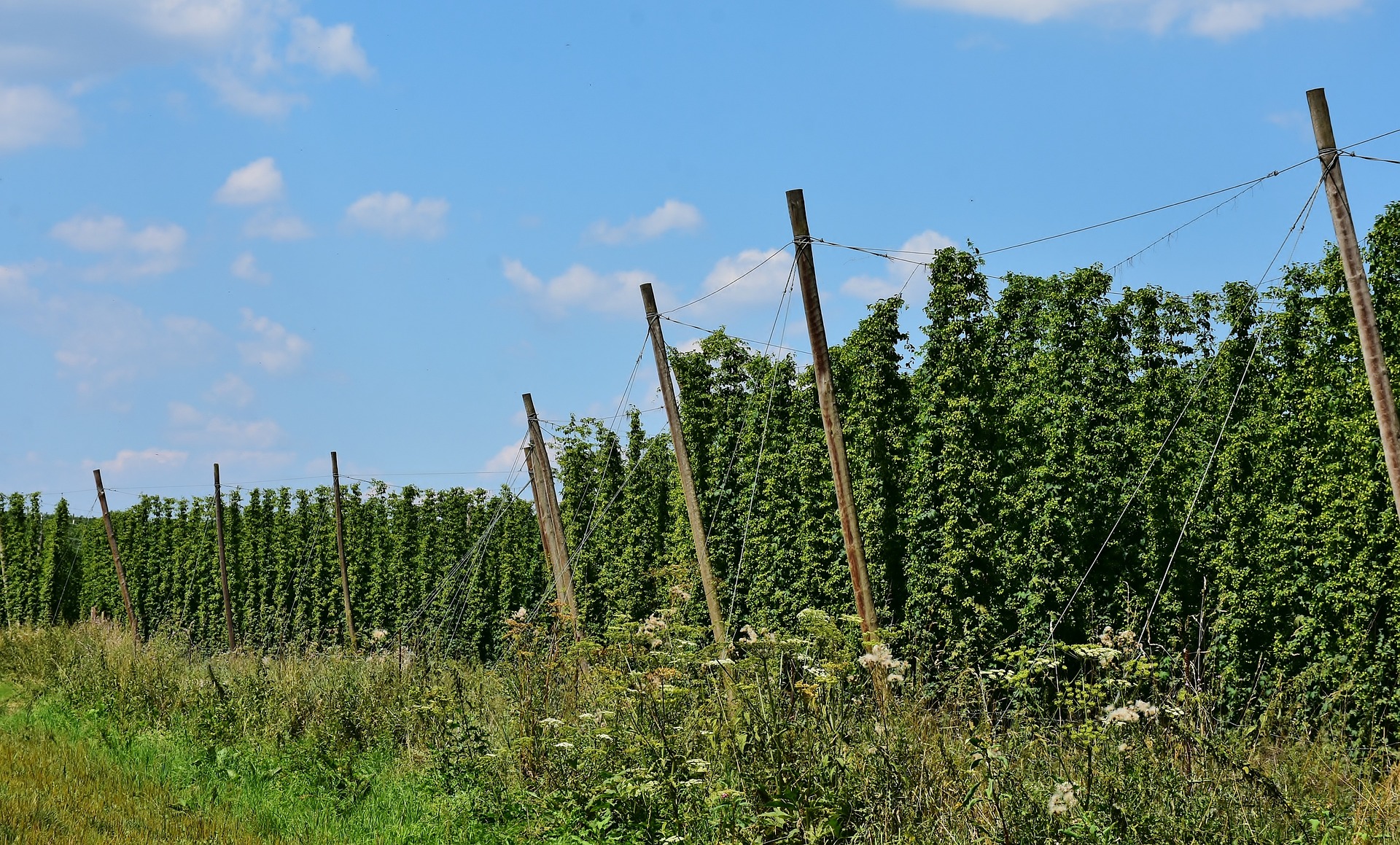
This was a hop garden many years ago. Conveniently close to the oast houses so that as soon as the hops were picked they could be taken in and dried before there was any chance of them spoiling. Taken in bagged up in pokes, and once dried shipped out to the brewers in pockets. A word of explanation for those not familiar with these terms: hops are not grown in fields, they are grown in gardens. Not like your or my back garden, but like a field. But a field full of poles. Hop poles. With huge cable-like wires strung between them to support the hop bines as they grow.
When they are ready for harvesting, the bines are pulled down and the hops picked and put in pokes – large sacks (but you knew that, of course. You remembered it from last week). Then once dried they are shovelled into pockets – another size of sack.
And what are the hops for? Making beer, my friend. Lovely beer.
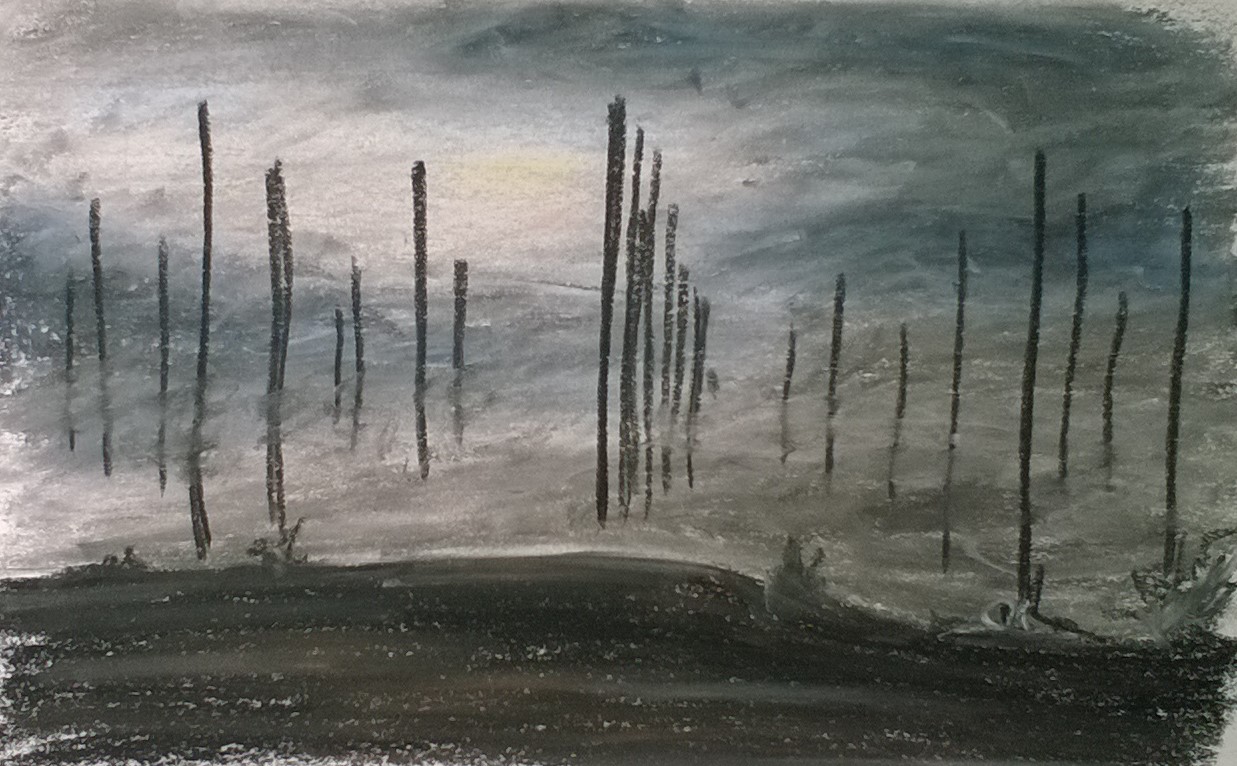
I don’t have a picture of the hop garden from back then, but late one cold, misty, autumn night about thirty years ago, I walked through it and the eeriness was instantly imprinted on me and once I was home I felt compelled to make an oil pastel painting of it (below).
Anyway, as I said I don’t have a photo of the hop garden in question, but this one from Pixabay illustrates very nicely the hop poles and wires with the growing hop bines growing up and across them:
The poles were supported by wires kept under tension, anchored into the ground around the edge of the garden. Quite a few of these are still in situ around the very edge of the field and just into the woodland and hedgerows bordering it.
In 1872, there were 72,000 acres of land in England growing hops, the majority of these being in Kent, employing over 100,000 seasonal workers at picking time. By 2003, the acreage in Kent was down to just over 1,000 and for the first time ever the county had been overtaken by Herefordshire, which now grew more, although the decline does at least appear to have halted for now. In 2011 there were a total of just over 2,500 acres under cultivation in England but it is such a small number there were fears the industry could die out. Although hops are still used in beer brewing, much of the requirement is imported, especially with a popular shift towards less bitter-tasting beers. But in much the same way that Kent has also lost a huge percentage of its apple orchards, a once rich and diverse farming landscape has become more and more homogenised, with endless huge fields of arable crops and sheep and cattle replacing the hop bines and apple trees.
I spent one autumn apple picking around thirty years ago and the farm I was working on had a large acreage of hop gardens (both apples and hops all sadly gone, now). It was an incredibly busy and bustling time, with our diverse group apple picking – a mixture of locals and Europeans come over for the work – and a traditional mix of workers in the hop gardens; as well as locals, there were a lot of gypsies and possibly still a few people down from London’s East End, which was a traditional way for those workers to make some extra money in the nineteenth and early twentieth centuries. It was busy, noisy, very hard work, and a lot of fun.
And, not surprisingly, there are a number of traditional songs about hop picking. So here is the wonderful Shirley Collins and the Albion Dance Band to perform ‘Hopping down in Kent’ especially for you.
I had a couple of conversations the other day on detective novels, in which red herrings were mentioned, and it reminded me of something I had been reading a few days before, as well as one verse of an old nursery rhyme, the words recorded in the 1800’s, which goes thus:
The man in the wilderness asked of me How many strawberries grew in the sea. I answered him, as I thought good, As many as red herrings grew in the wood.
Pixabay image
It is supposedly one of the lesser-known nursery rhymes, but I came across it in one of the books my children had when they were small. Possibly, the Tale of Squirrel Nutkin. Again, there is an old song occurring along the English east coast called the Red Herring, of which these are the first two verses:
1 What shall we do with the red herring’s head? Oh, we’ll make that into feather beds, and all such things, We’ve red herrings and heads and feather beds, and all such things.
Chorus Of all the fish that swim in the sea, red herring it is the fish for me, And all such things.
2 What shall we do with the red herring’s eyes? Oh, we’ll make ’em into puddings and pies, and all such things, We’ve red herrings and eyes and puddings and pies, Red herrings and heads and feather beds, and all such things.
There seem to be many versions of this, one of which was collected by Cecil Sharp, well-known as one of the first people to travel around England in the early 1900’s collecting and writing down folk songs, afraid they would become lost as, in a rapidly modernising world, fewer and fewer people now sang them.
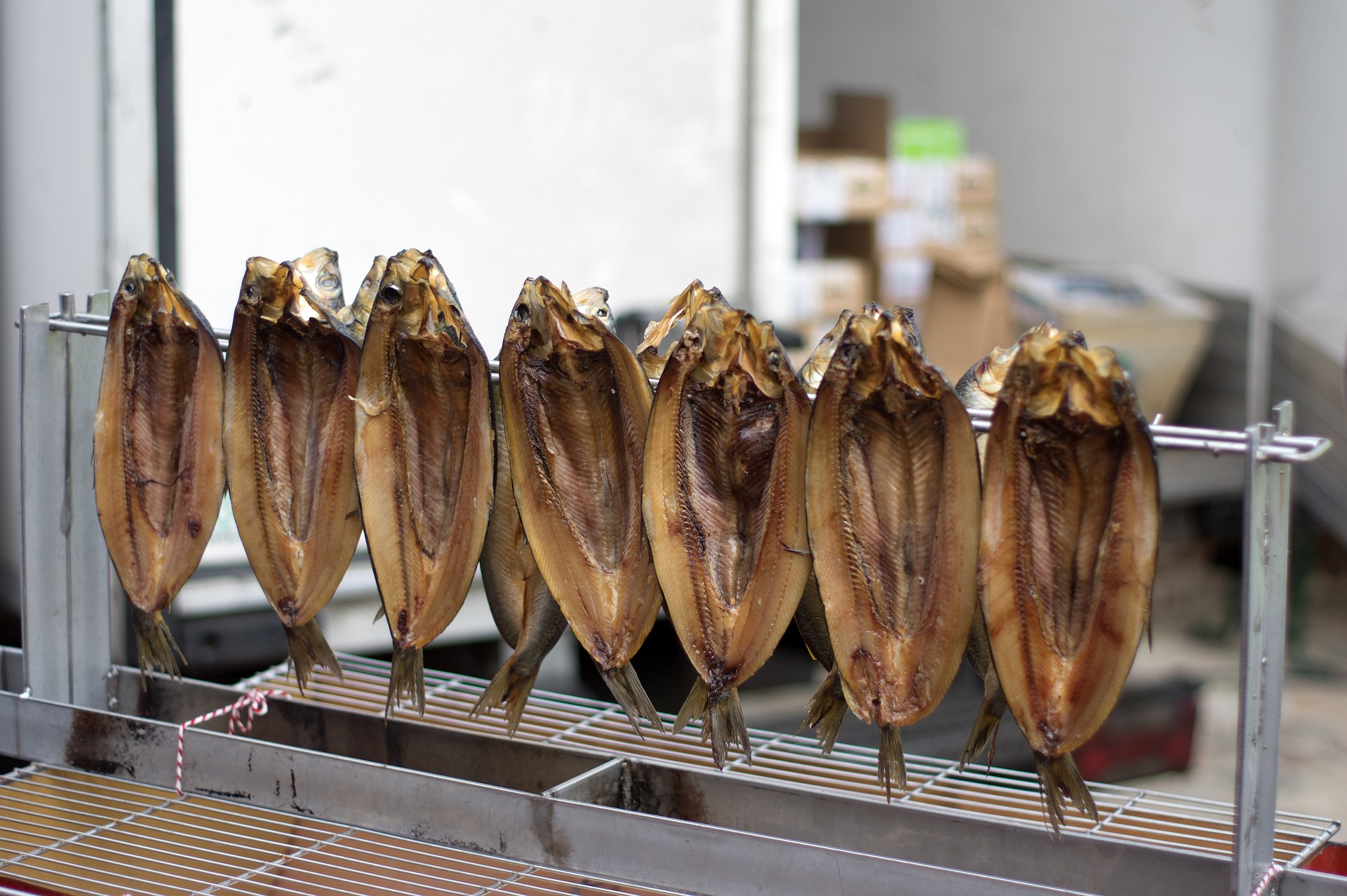
Unusually (because I never trust it as a source) I looked at Wikipedia which merely defined a red herring as a distraction, or something misleading. It suggests the term came from a strong smelling smoked kipper which could be dragged across a track to put hounds off of a scent.
And what it reminded me of was that a dictionary of the Sussex Dialect, published in 1875 does not have a particular entry for red herring, yet under ‘White-Herring’ is found the definition: A fresh herring, as distinguished from a dried one, which is called a red-herring. Delving a little deeper, we find references to dried, smoked, herrings – named red herrings – in use to mask the scent of trails both literally and figuratively, in a story published by William Cobbett in 1807 and also a couple of references from the 1780’s. There is apparently a bit of disagreement over where the phrase was used first in that context, but that doesn’t seem relevant here, it’s just interesting to find out that red herrings actually exist, and how they came to assume the role they have in literature and everyday conversation.
In the town I used to live in, there was once a pub called the Hooden Horse, sadly now renamed to something much less interesting. I was reminded of this at an exhibition at Maidstone museum on Hooden Horses. Hooden Horses? Well, briefly…
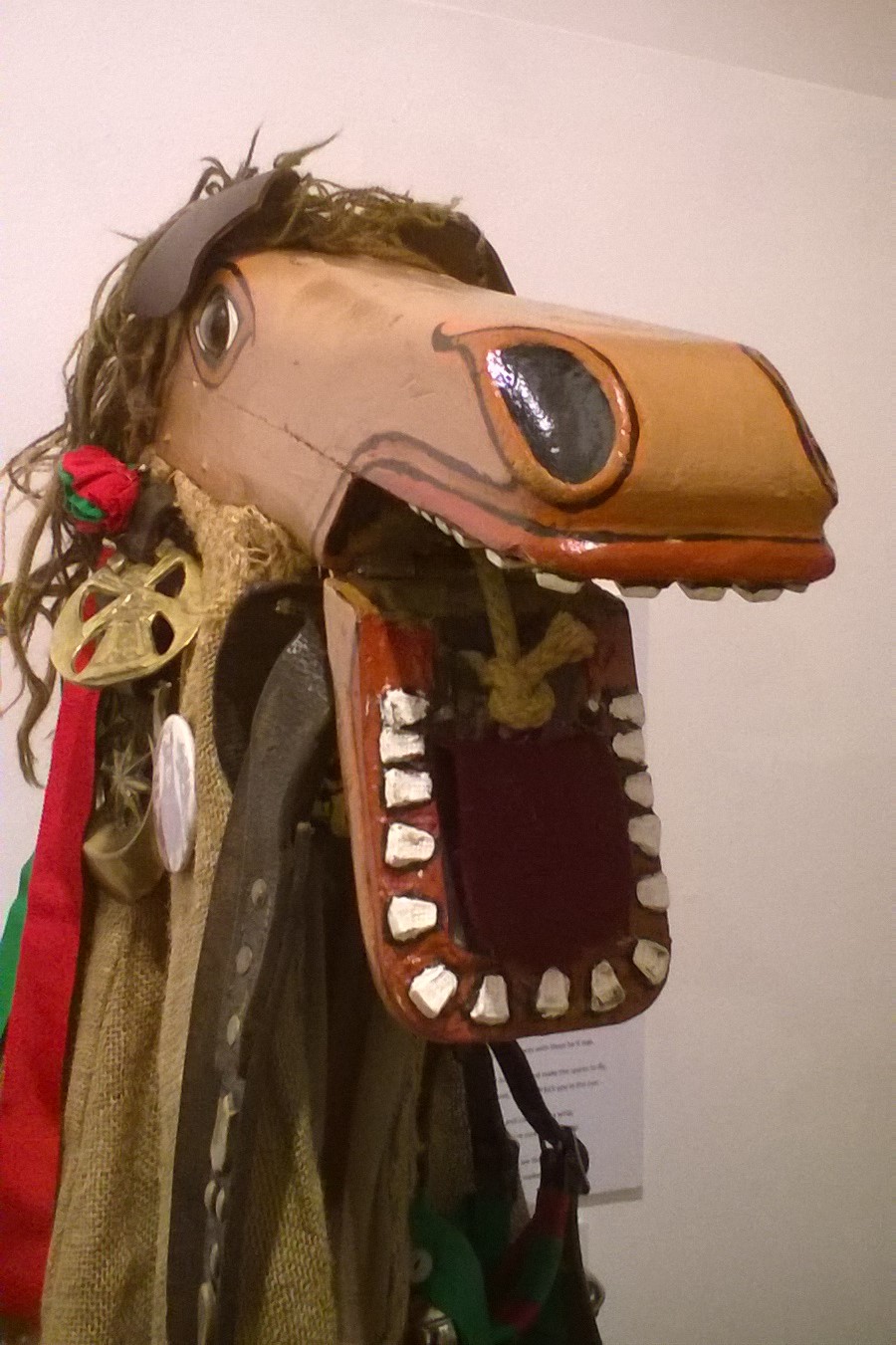
Hoodening is a rural folk tradition unique to East Kent, England. Going back a few hundred years, in the week or so running up to Christmas, groups of farm labourers would dress up as various characters and go from door to door requesting money, cake and beer. One of the characters would be the Hooden Horse, which was an artificial horse’s head made of wood, with a jaw operated by string, on a wooden pole, held by one of the performers with his body covered in cloth – usually sacking. A sort of play was then performed in rhyme, a mixture of plot and satire, usually featuring a few local characters who would be well known to the watchers and might be the butt of jokes and scorn, as well as stock characters such as Molly, a waggoner, and the Mayor. And of course the horse (him)self, invariably called Dobbin. There would also be music performed on whatever might be available – accordions, fiddles, drums or whistles.
The relationship to Morris dancing and Mummers is hard to avoid and, like these traditions, has been revived in modern times by enthusiastic traditionalists.
A photo from the early twentieth century
A modern Hooden Horse
Another early twentieth century photo.
There are many other traditions in Britain involving what is known as ‘animal guising’, where men or women take the guise of an animal, the Padstow ‘obby ‘oss being perhaps the best known of these. The performance on May Day in Padstow, Cornwall, invariably draws large crowds.
On the left, a Hooden horse, and on the right a Mari Lwyd, the ‘skull horse’ of Welsh tradition. Although unconnected (as far as I know) the Welsh had a similar tradition, also taking place around Christmas and New Year. Skull horses are to be found in other parts of England, however, including Yorkshire.
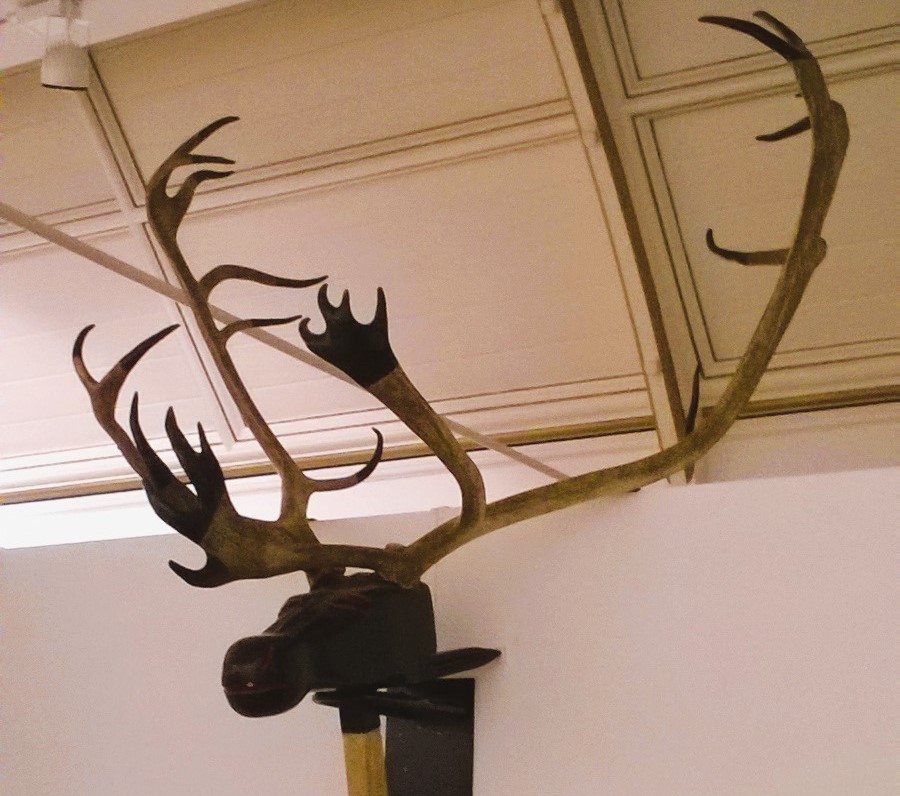
Stag guising is another old tradition – possibly older than horse guising. It was certainly in existence during medieval times and survives today in the form of the Abbots Bromley Horn dancers, Staffordshire, who perform carrying reindeer antlers on poles on the Monday following ‘Wakes Sunday’ in September. Wakes Week became a tradition in industrial Northern England when factories and mills closed down for a week for maintenance giving the workers a holiday. This began in the early nineteenth century, but before this the ritual presumably took place at a different time of year.
The exhibition is on until 17th July 2023 and there is a link to their site here.
I’ve never written an album review on here before, although I have reviewed a couple of concerts I’ve been to, so this is a first.
And if you have absolutely no interest in folk or folk-rock feel free to give this post a miss.
So, probably just one of you left. Let’s go.
Actually, now I’ve written the thing, it’s not really a review at all. It’s a bit of musical history, if anything. That wasn’t exactly what I’d planned.
Oh well…
Unhalfbricking is not my favourite Fairport Convention album, but it is an extremely important one. Which is not to say I don’t like it, because I do. It was released in 1969 and is their third album.
It is the following album, though, Liege and lief, which is rightly regarded as their most important, and an album that has had a huge influence on the direction folk and folk rock music has taken since its release, but Liege and lief came about as a result both of a tragedy and a new direction partly forced on the band by musical events way over the other side of the Atlantic. After the release of Unhalfbricking, most of the band were involved in a serious road accident (singer Sandy Denny was in a separate vehicle) which led to the hospitalisation of some members and, sadly, the death of both drummer Martin Lamble and the girlfriend of guitarist Richard Thompson.
After discussing whether they would continue as a group or just disband, the decision was made to continue and they hired a new drummer, the amazingly talented Dave Mattacks, and persuaded fiddle player Dave Swarbrick, who had guested on Unhalfbricking, to join the band on a permanent basis. And the decision was also made to change musical direction. Much of the material on their previous albums had been either American in origin – there were Three Bob Dylan covers on Unhalfbricking alone, for example – or country-tinged.
There is one track in particular on Unhalfbricking that helped to lead the band into their new direction, the traditional song A Sailor’s Life, which breaks new musical ground in this recording. What makes the track most memorable is that it is the first time a drumkit had ever been used on a traditional English folk song. It was also the first time Dave Swarbrick had used electric amplification, coming from a background with traditional folk groups. And then the whole track was apparently improvised on the first take, the first time the band had played it together, and listening to it, it is remarkable how you can hear them growing in confidence throughout the performance. And it is a long track, which I suspect has more than a little to do with the musicians getting the feel of working together and seeing what could be done with the material. Experimenting as they go along. Nothing like it had been released before.
Over in America, The Band, who had supported Bob Dylan on tour, had recorded Music from Big Pink in what has been called a reconnection with rural Americana, and listening to this there was a realisation both that by covering American standards Fairport would never be more than just one more wannabe Byrds cover band, but also that they wanted to take a similar direction with traditional British music. Bass player Ashley Hutchings had become deeply interested in the genre and Swarbrick came from a folk heritage. Thus A Sailor’s Life became a bit of a template for what was to come.
I really thought I had already written a post about Coll, from our first visit there eight years ago, but it seems not. But we were lured back there earlier this year, as we knew we would be, sooner or later, so here’s a few random shots from both this visit and the first one.
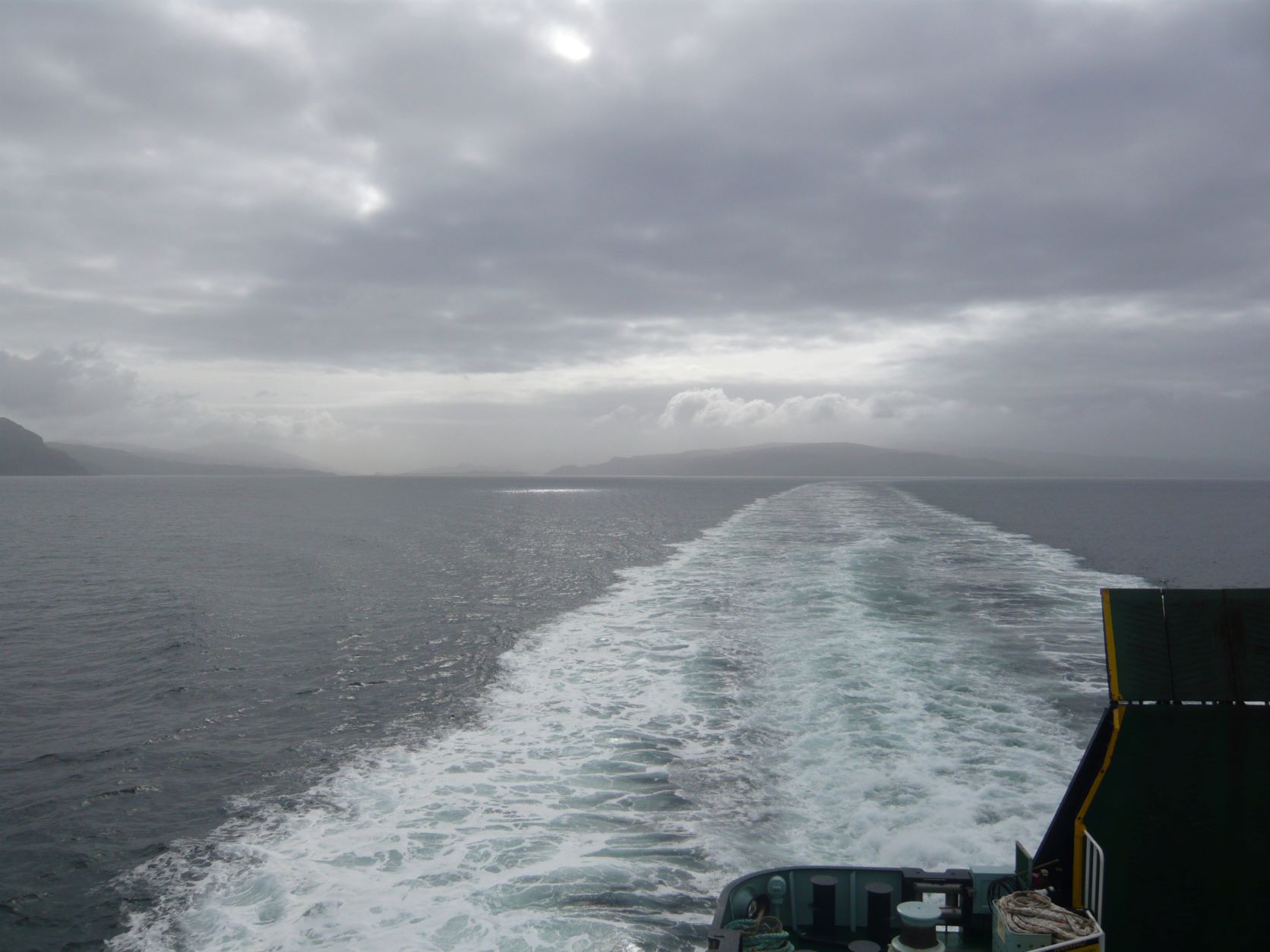
I love travelling to an island on a ferry. It is comparatively slow travel and you get a real sense of the distance travelled and the mood of the world you pass through. It takes two hours forty minutes to reach Coll from Oban; not a huge amount of time, but time enough to realise you’re no longer on the mainland.
Arinagour is not the largest capital city in the world. Although it is the main settlement on Coll, it only has a population of around 50. Although the entire population of Coll is only between 150 and 220 permanent residents, depending on which source you consult.
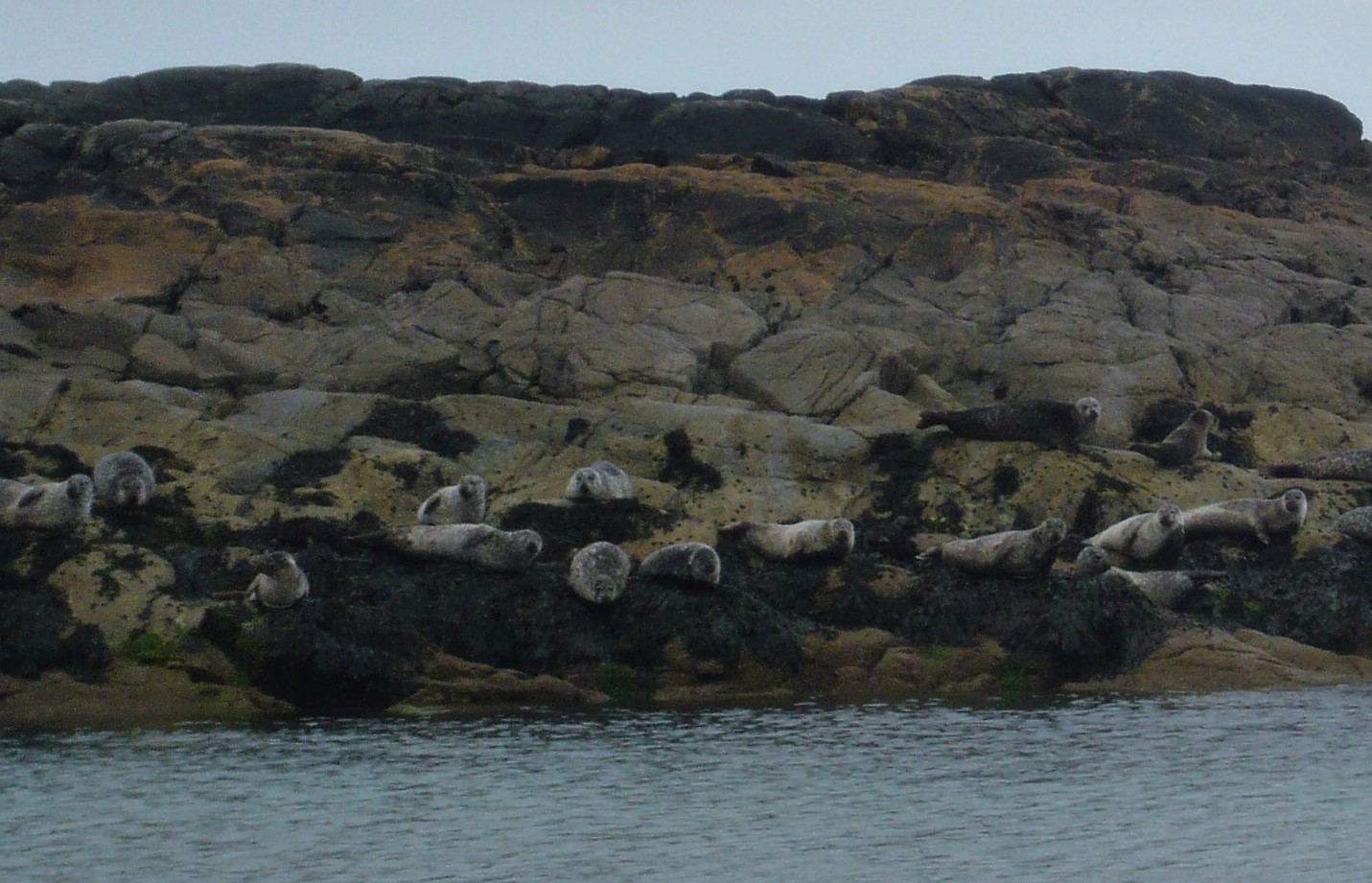
About halfway along the coast on the northern side of the island, there is a bay called Bagh an Trailleich. On our first visit, we walked there hoping to see some seals, but were disappointed. This time, there were about fifty seals on this small island in the bay
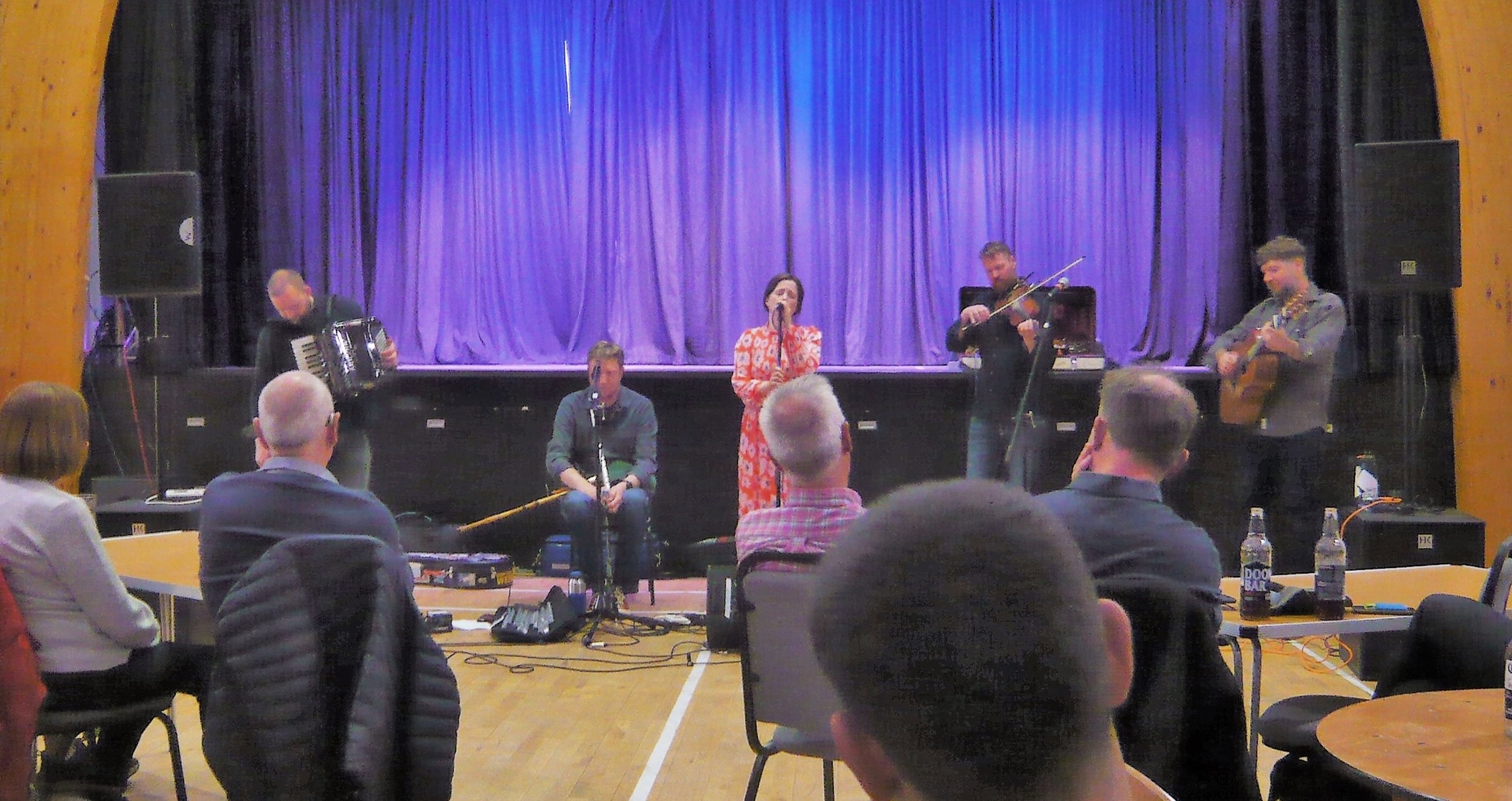
Our cottage was five minutes or so walk from the ferry, and having left our bags there we walked the short way to the island community centre, where we knew there would be a Saturday market and we intended to buy a few treats (homemade cakes, jam, and the like) for the week. While we were there, we saw a flyer for a gig by Daimh (pronounced ‘dive’) on the Wednesday evening. All we learned from this flyer was that they are a Scottish folk group and we thought that sounded like a good evening. On the Wednesday evening, we learned they are frequently described as a ‘Scottish Super-group’, and quickly discovered why. It was one of the best concerts I’ve been to. If you fancy a taste of what they do, I recommend this: Daimh live at Celtic Connections
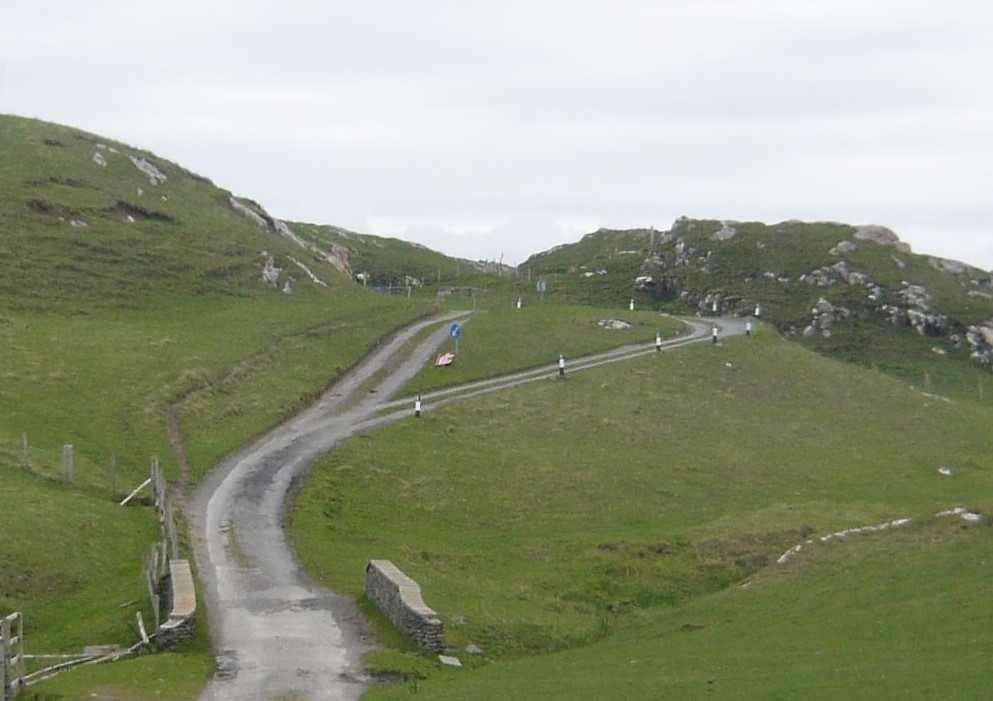
There is just one stretch of dual-carriageway on the island, a length of less than fifty metres, and it’s very difficult to understand why it’s there. There are three main roads on the island, all ‘B’ roads, and this stretch is along the one leading to the hamlet of Sorisdale. As you can see, it’s not the busiest road in the UK, but it may be the shortest stretch of dual carriageway.
Someone is bound to know.
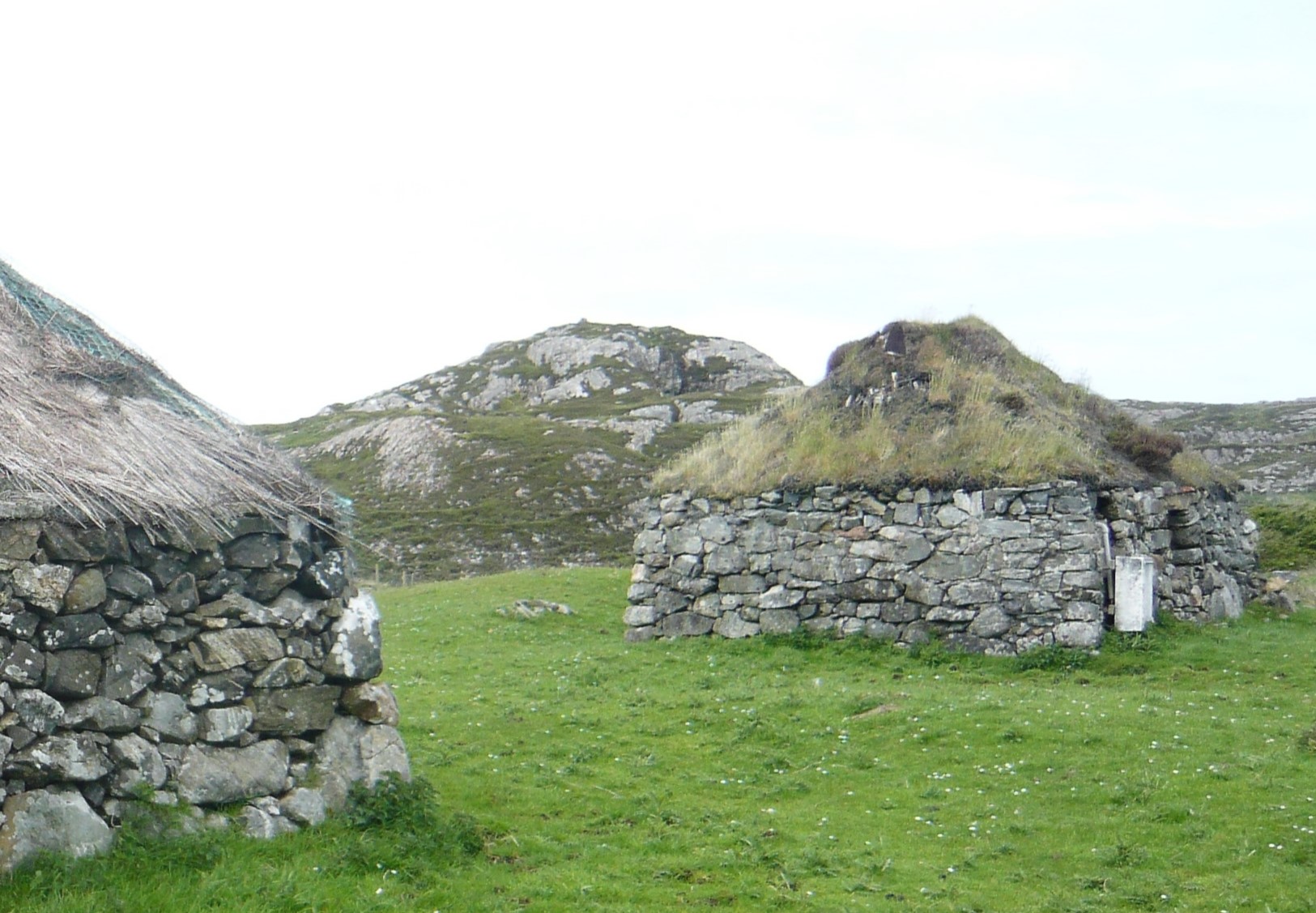
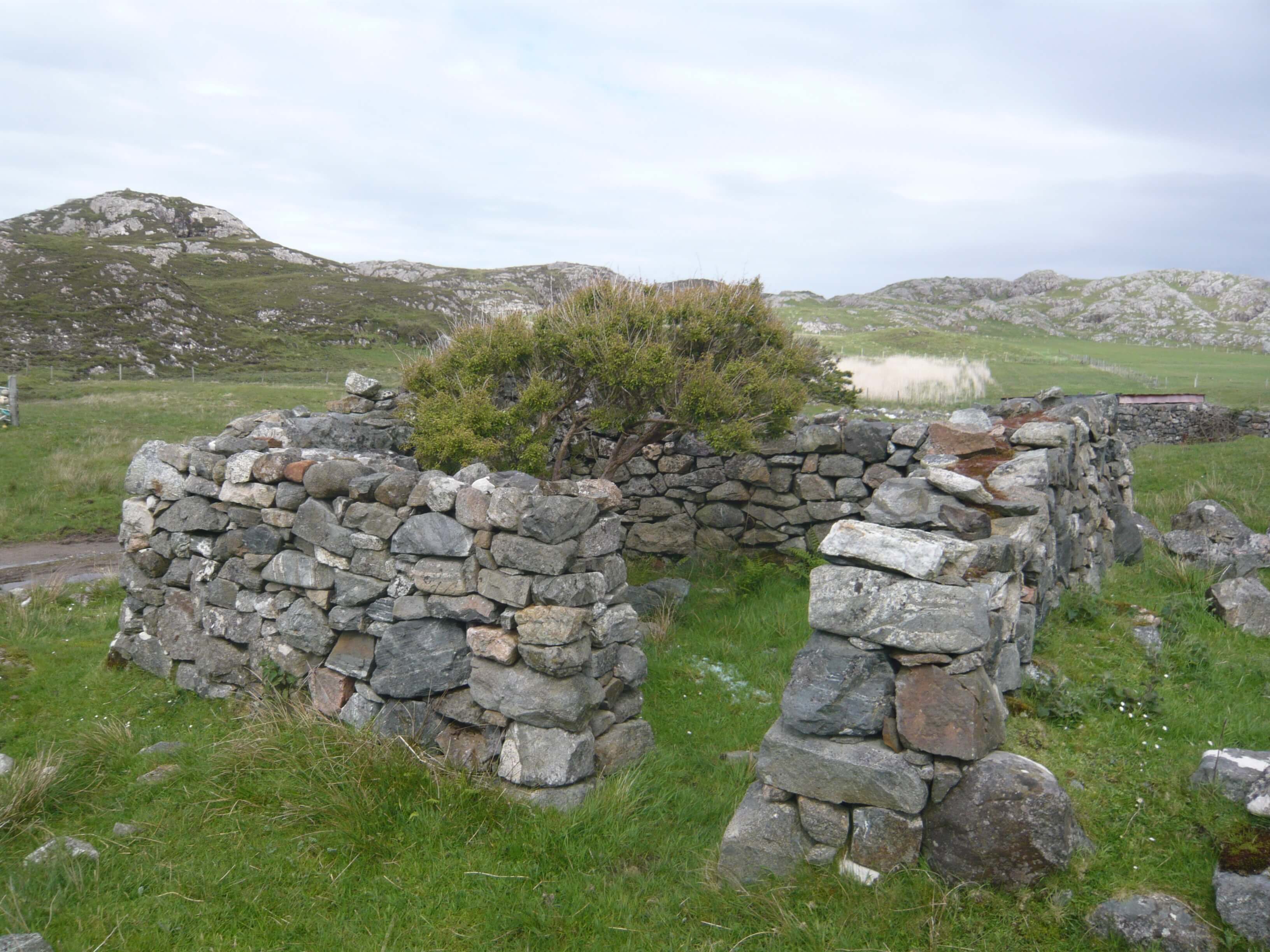
Sorisdale is a former crofting and fishing village at the north east end of the island. There are a couple of modern houses there, but also a number of old cottages with turf or thatched roofs, in various states of repair or disrepair.
And because it’s Scotland, here’s yer Highland coo. Yer’ve met him before.















 Mick Canning