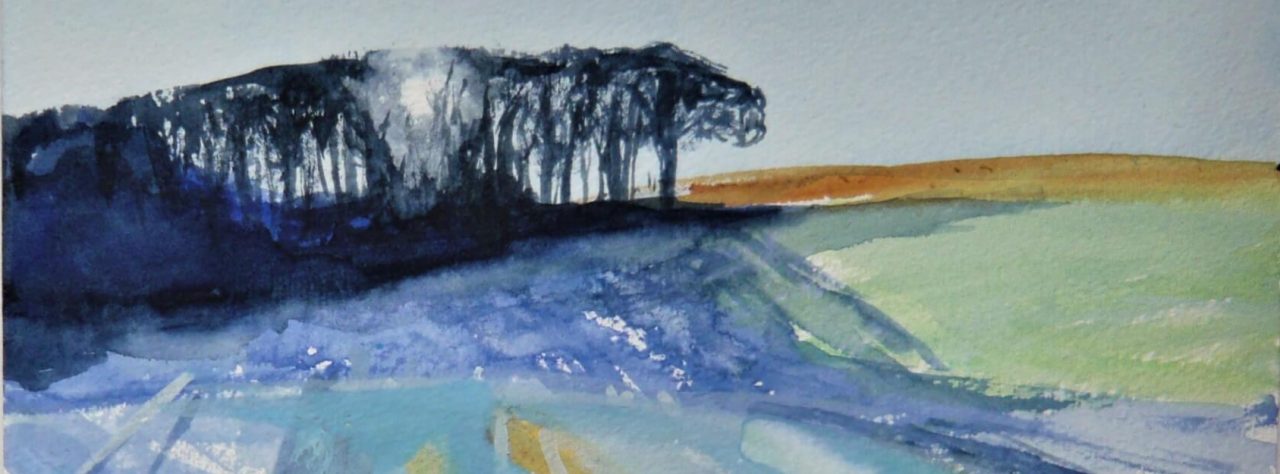
We have just returned from a few days away in Shropshire, which is one reason you haven’t heard from me recently.
We were incredibly lucky with the weather, and spent the time walking and reading and mooching around towns and villages. And finding time for the occasional meal and cold beer, of course.
Yes, we did some lovely walks. And I find it a natural thing to be constantly identifying and photographing whatever I see when out for a walk. I have always been interested in all aspects of the environment, be it the plants and animals, the geography and geology, the weather, or the historical impact of people on the environment in forms such as old trackways, deserted buildings, or ancient boundaries.

And we have spent several fantastic days surrounded by an environment rich in all these things, as we have walked through woods, fields, and open hillsides, seen ancient settlements, butterflies, birds, and many wildflowers, and all this in an area of some of the most complex geology in the UK.
But sometimes I feel myself tiring of the constant need to identify and record everything; it is really a way of trying to own them.
And when you post on social media too, it can feel at times a little like a competition to put up the best pictures of this or that wildflower or bird or mountain, which naturally need to be identified and named. Especially on Twatter, whose format seems to encourage this.
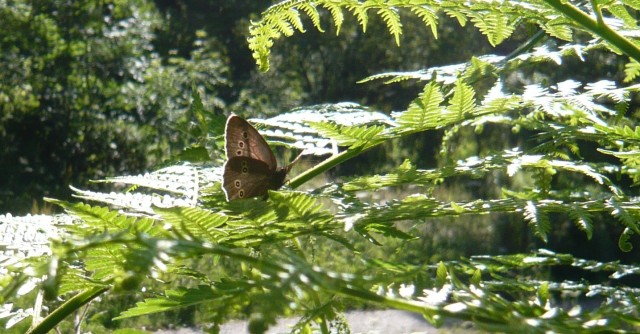
So, on our first morning away, as we walk up a track heading into the hills above Church Stretton, under early morning blue skies with the air crystal clear and beautifully cool, I decide that for now I am just going to exist in the moment.
Because by doing this, I am relieved of the constant necessity of deciding whether this bird is a rook or a crow, or whether that flower is greater stitchwort or lesser stitchwort.

Because it doesn’t really matter.
And for now, instead of having to always know whether it is this or that bird singing, I can allow myself to simply think there is singing. There is birdsong.
Or, even better, there is a sound I find melodic, and it pleases me.
By doing this, I can relax and centre myself, which is something I feel has been badly lacking in my life recently. I have struggled with social media in any case, feeling a huge pressure to post new material and to read the many I follow, even when I don’t feel up to it.
It feels like a return to a much simpler time in my life. I can enjoy the views of the hills, the sounds of the streams and birds, and just concentrate on being.
This must have been part of the pleasure I felt as a child on every occasion when I could roam outdoors. Certainly, I was curious about what I saw, but since I knew so little about them, there was always an openness to the experience and the excitement of discovery. I would see butterflies I had not seen before, and I would just get the thrill of seeing them without having to know anything more about them. I would see wildflowers I didn’t recognise and just enjoy the shapes and colours.
Naturally, you cannot really unknow things in that way, just as you cannot really return to that point in your childhood, but it is possible, even if for only a short while, to let go of the need to identify and quantify (and therefore own) everything, and simply exist in the here and now.


 Mick Canning