An Andalusian Adventure (2) – reblog

It was a long way to Colmenar. I was walking up into the Malaga Mountains, with no map and no directions other than a road sign at the edge of Malaga suggesting that by following this road I would eventually reach my destination.

I suspect I have undertaken other journeys where I have been better prepared.

But the day was perfect for walking, with high drifting clouds and a light breeze to keep me cool, and having done little for several days other than eat, drink and wander around Malaga, I was feeling fit, fresh, and eager to get going.

As the hours went by and I slowly gained height, the clouds began to build up, and the temperature gradually dropped. About an hour from my destination, it finally began to rain. Immediately the temperature plummeted, and I rapidly went from merely chilled to decidedly cold.

Usually, we approach rain all wrong. Buddhists would say unskilfully. If it begins to rain, we hunch ourselves up, both physically and mentally. We fear becoming cold and wet. We need to let go of this fear. It’s a good lesson to learn. Stop. Take several long, slow, deep, breaths, and let go of this feeling. Let go of this need. We act as though hunching ourselves up will keep us dry and make us warmer. It doesn’t. Unless one can find shelter, it is better to accept the rain and finish the journey.

It is a cliché to speak of heightened awareness, yet that is also a by-product of this letting go. We remove our focus from the rain and instead allow it to go elsewhere, where it is really needed. We should throw back our heads and embrace the rain, enjoy the freshness of the rain on our faces. Listen to the sound of the rain on the ground and the leaves around us.

Back then, I hadn’t learned that lesson. I hurried towards the town as fast as I could.

One of the first buildings I came to was an inn. I went into the bar and asked for a room. The room I was given was reached by leaving the bar again and walking around the side of the building. The door to my room had a gap at the bottom of an inch or two, but otherwise fitted the door frame well enough. It was locked and unlocked by the type of huge key frequently described as a jailor’s key. The room was furnished only with a bed, a chair, and a small chest of drawers. There was a mirror above the chest of drawers and a crucifix above the head of the bed, but other than those the whitewashed walls were bare. There was a small window which was shuttered. The floor was of flagstones, with no carpet or mat. To use toilet or bathroom it was necessary to leave the room again and continue still further around the building to reach a very basic room. But again, it was clean. And there was a toilet that worked, and a sink with a cold tap. There was also a shower set into the ceiling I could have braved, but it felt much too cold for that.

Later, I would occupy rooms like this in many other places, in many other countries. Simple, perfectly clean, and usually very cheap. I am not sure whether it is because they appeal to the minimalist in me, but in many ways I prefer them to more comfortable accommodation.

Whenever I have stayed in one, I have always felt I was carrying too much baggage with me. I have been beset with the feeling I should be throwing out some of the items I have in my bag – do I need all those clothes? All those other items? It has been a recurring regret of mine that I have never managed to live a simpler lifestyle than I have. I have never enjoyed the frenetic hurry and clamour of modern urban life, and I hate how easily my life can become complex and filled with what feels like unnecessary fuss.

Here, even the spartan contents of my rucksack seemed too much. Perhaps I had too many books with me…

But now I was here, I changed out of my wet clothes and opened the shutters so I could look out at the low cloud and misty horizon. The rain drummed comfortingly on the roof and I settled down to read a book for an hour or so. I was content, and that’s a good place to be.

I cannot remember what I had for supper that night, but I do remember I drank a bottle of cheap red wine with it. Perhaps that is the reason.

I rather think I slept well, too.

And as in all good stories, the morning dawned bright and clear, the sun shining low in a clear blue sky. Before I left the town, I passed a couple of shops and bought a few items for my lunch: bread, a huge tomato, a hunk of cheese, a couple of apples, a bottle of cheap wine.

img20190318_12103098

With the improved weather, and the fact I had more downhill stretches that day than uphill ones, I allowed myself the luxury of returning to Malaga slowly, including a stop for lunch of about an hour. Compared to the UK, Spain is a large country and the rural population is comparatively small. Although I was not far from the city, I saw almost no one else on my walk and I meandered along slowly through a mixture of low trees and bushes, many of them in flower – the distinctive Mediterranean maquis vegetation – rocky outcrops and clumps of flowers, and the occasional lone farmhouse. The ground was dry and dusty, as though the rain of the previous day had never happened, and the sun was hot. With my lunch consisting of about half a bottle of wine as well as the food, I was feeling extremely weary and footsore when I reached Malaga again. I found the hotel I’d stayed in before and got a room on the same floor. After showering, I finished the bread and cheese and decided all I wanted to do was read my book for a while and then have an early night.

There was a knock at the door and when I opened it Matthias was standing there grinning.

‘I saw you arrive earlier. We go for beer, now!’
Some Nepalese Photos

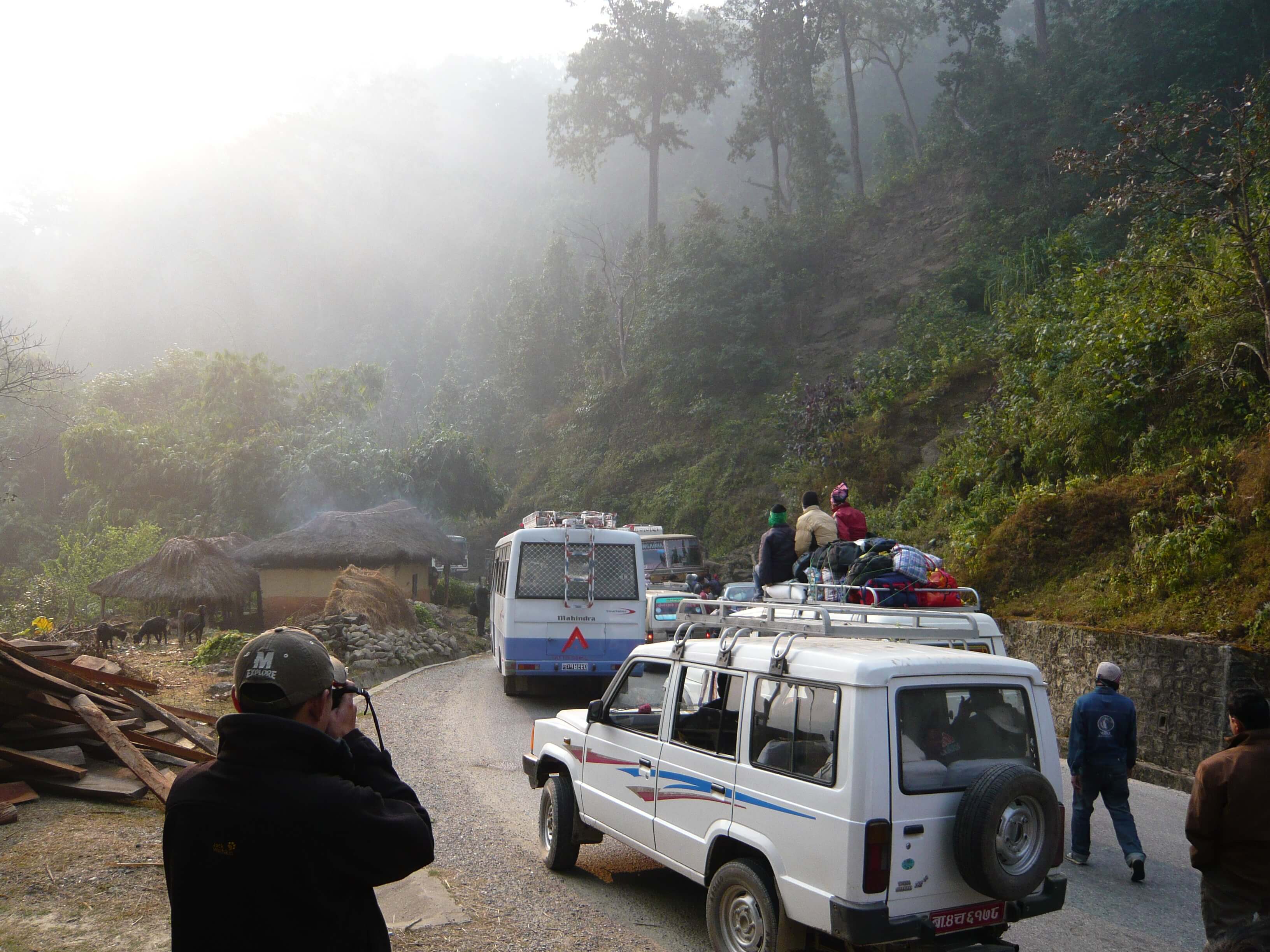
It seems unbelievable (to me, that is), but it’s now fifteen years since I last visited Nepal. This is just a selection of some of my favourite photos from my trips there. Some you’ve already seen, some you haven’t.

Travelling from India to Nepal

Temple in Swayambunath, Kathmandu Valley

Carved wooden window, Kathmandu

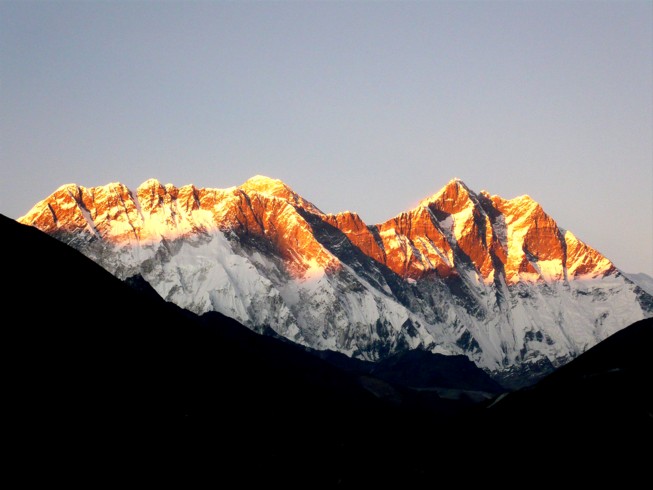
Sunset light on Everest.

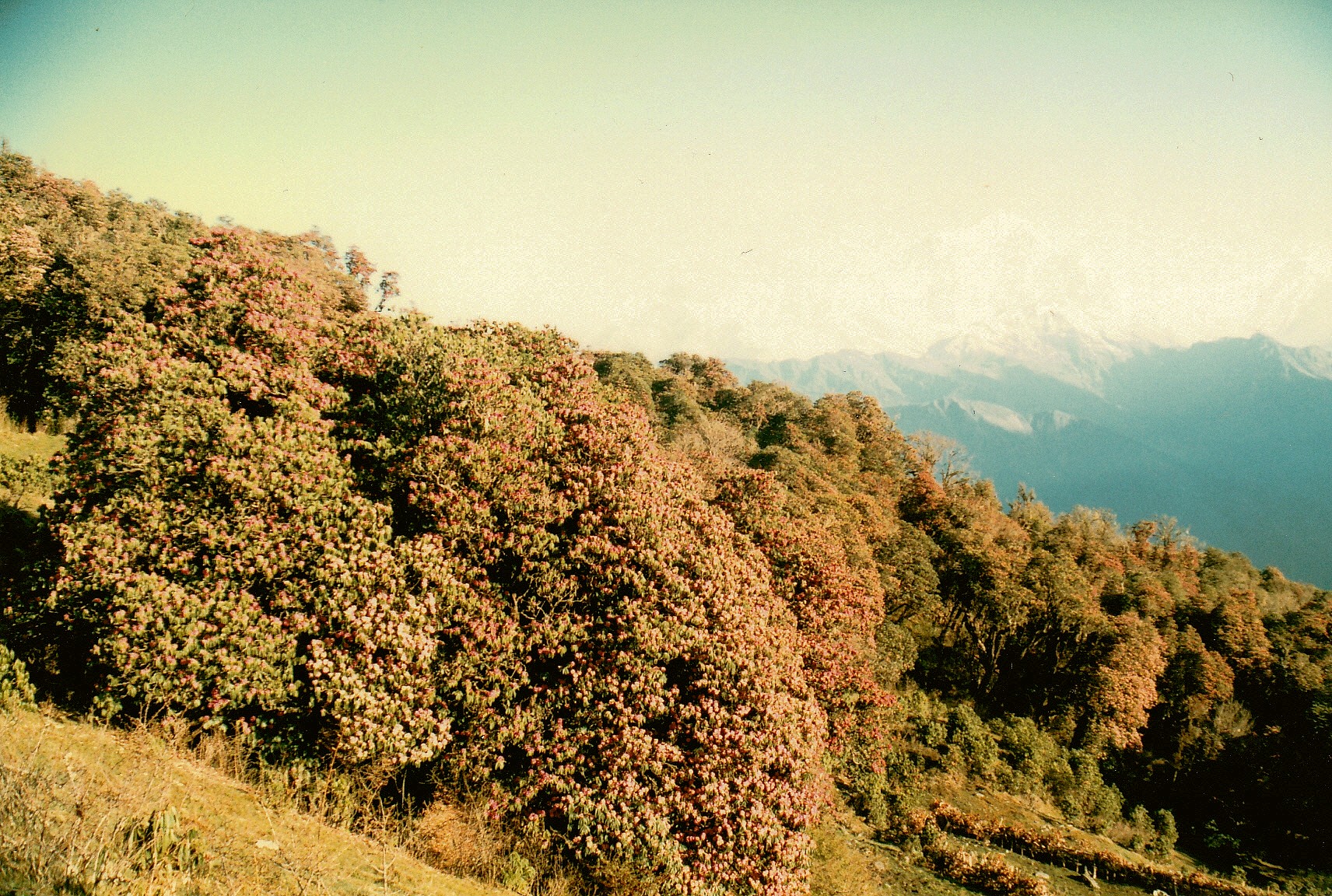
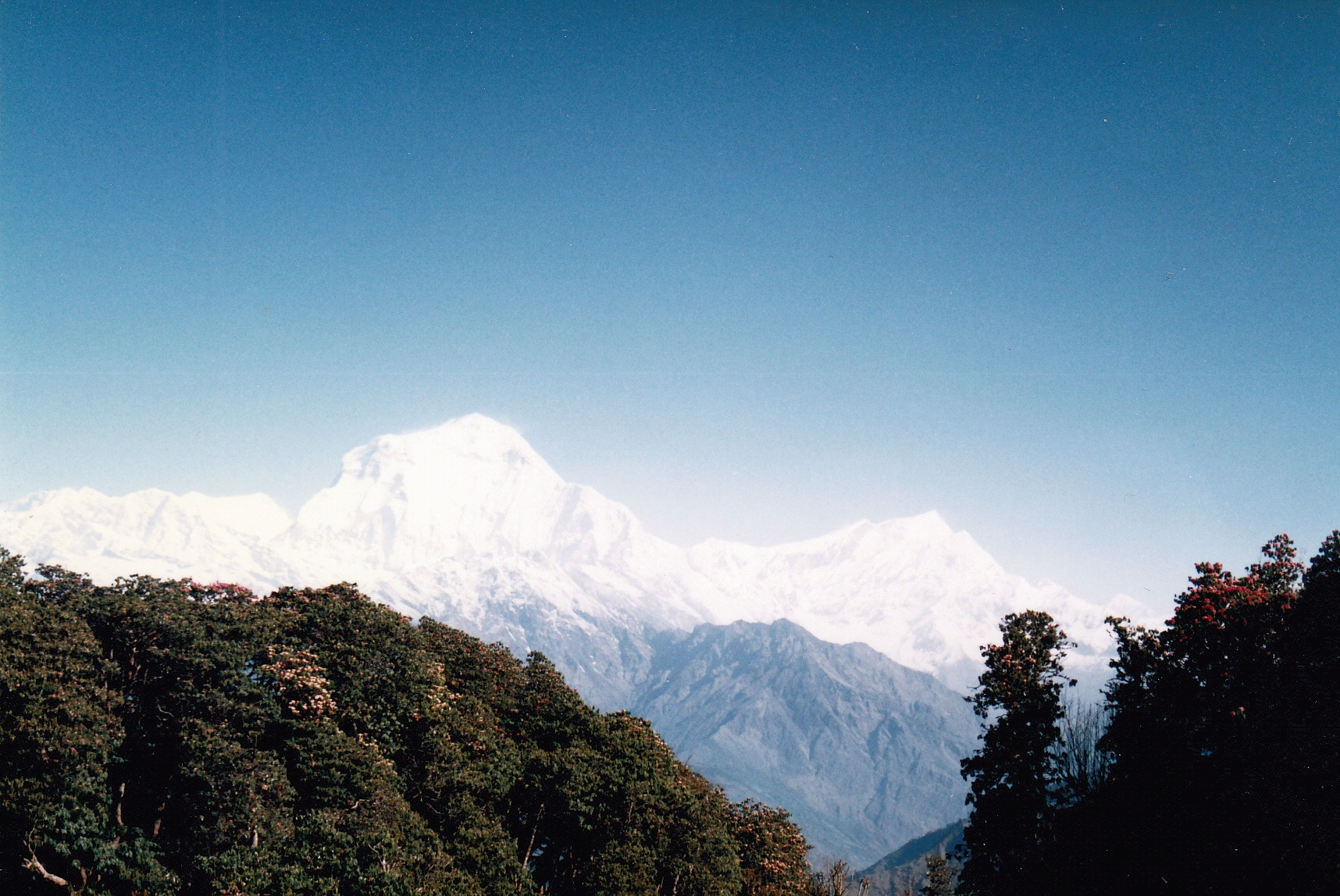
Rhododendron forest, Poon Hill

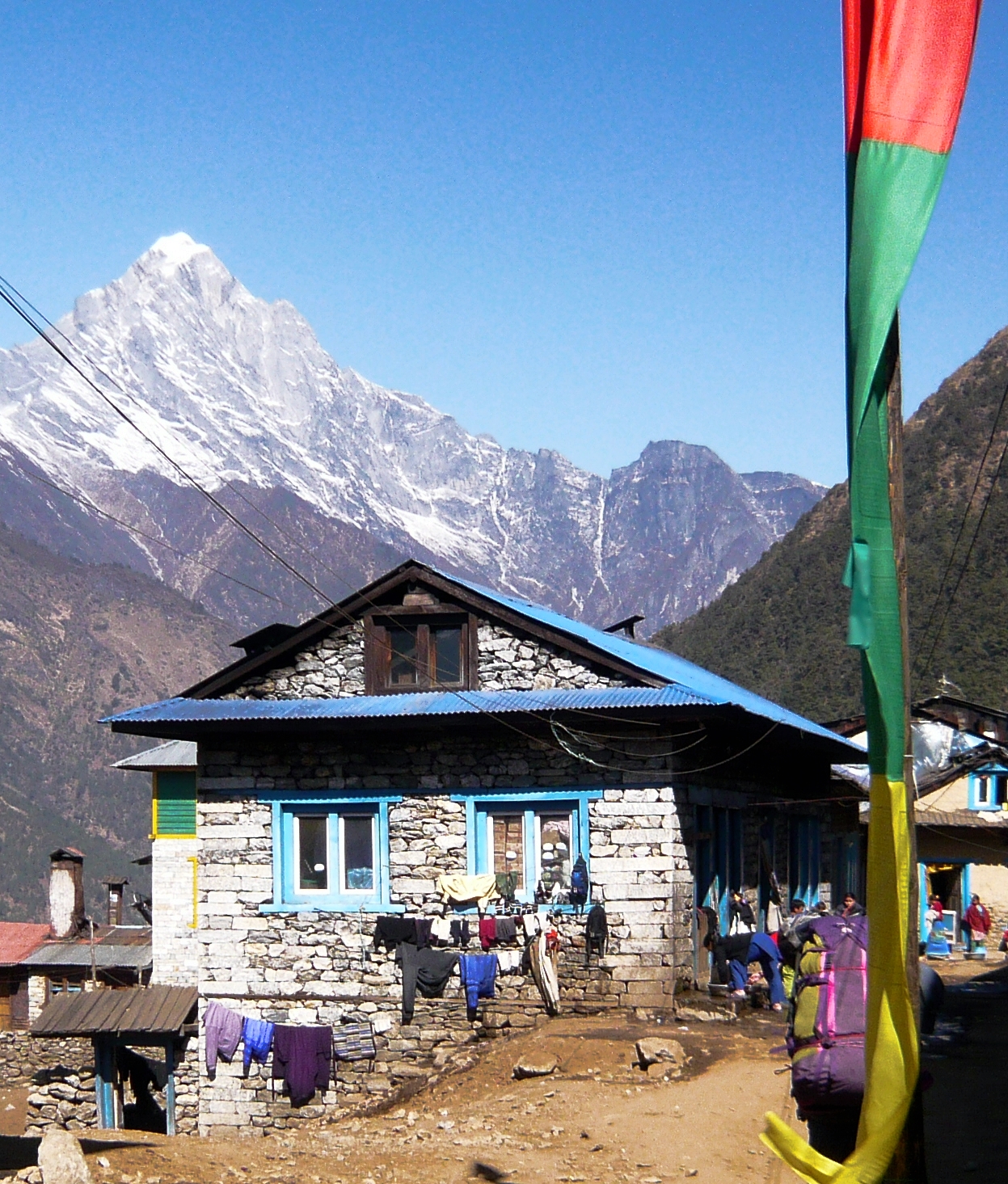
Carrying a load…

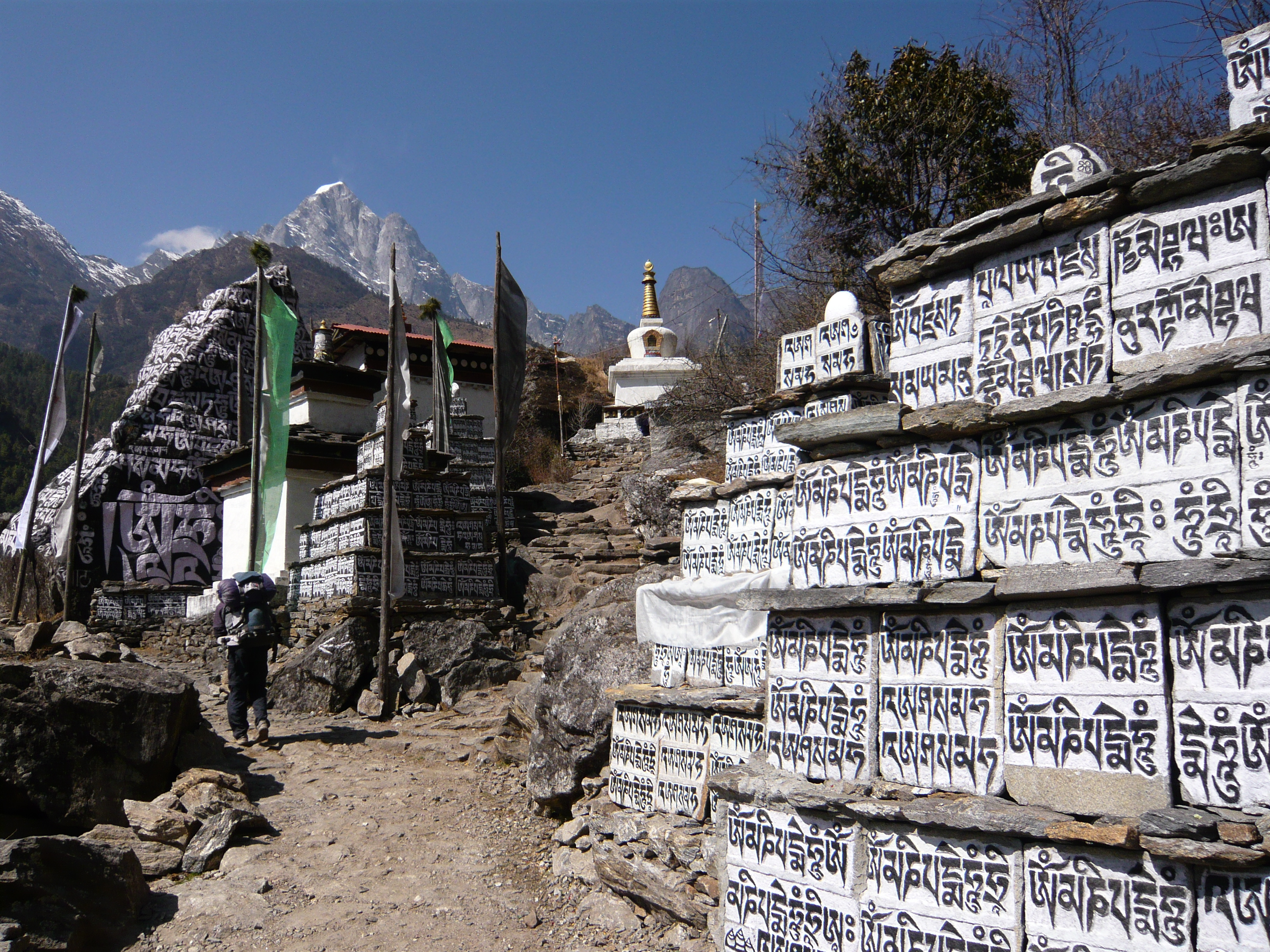
Wall of carved mani stones

Nepal – Annapurna Region (Reblog)

In 1988 I went to Nepal for the first time, travelling by bus from Delhi to Kathmandu. Although the trip took almost 2 days, and the bus was particularly uncomfortable, it was one of the most spectacular journeys I have ever taken, and a most remarkable experience.

And then I trekked the Annapurna circuit, still considered by many to be one of the 10 classic treks of the world. It took 24 days to complete, and from the time we left Ghorka, until the day we walked down into Pokhara, we were travelling entirely on footpaths and saw no vehicles of any description.

Part of the walk is now over a new road, and whilst this is surely welcome to the inhabitants of the region, I suspect that it takes away a little of the magic of the trek.

village_1.jpg

Village near Manang (posibly Mungji), on the Marsyandi River, close to the Annapurnas. In many ways, a typical Nepalese mountain village, it is built on man-made terraces, up steeply sloping mountainside, to avoid using any of the precious farmland available in the valley.

IMG_0001.jpg

View from Poon Hill. Poon Hill lies a little to the west of Ghorapani on the river Ghora (pani being water), west of the Annapurnas. Sunrise there consequently occurs behind the Annapurna peaks, including the spectacular Machhapuchhare, or ‘fishtail’ peaks. That said, this shot was taken towards the west, looking across the Kali Gandaki valley.

IMG_0002.jpg

This is dawn, though. Machhapuchhare and its double peak are shown clearly on the left.

IMG_0003.jpg

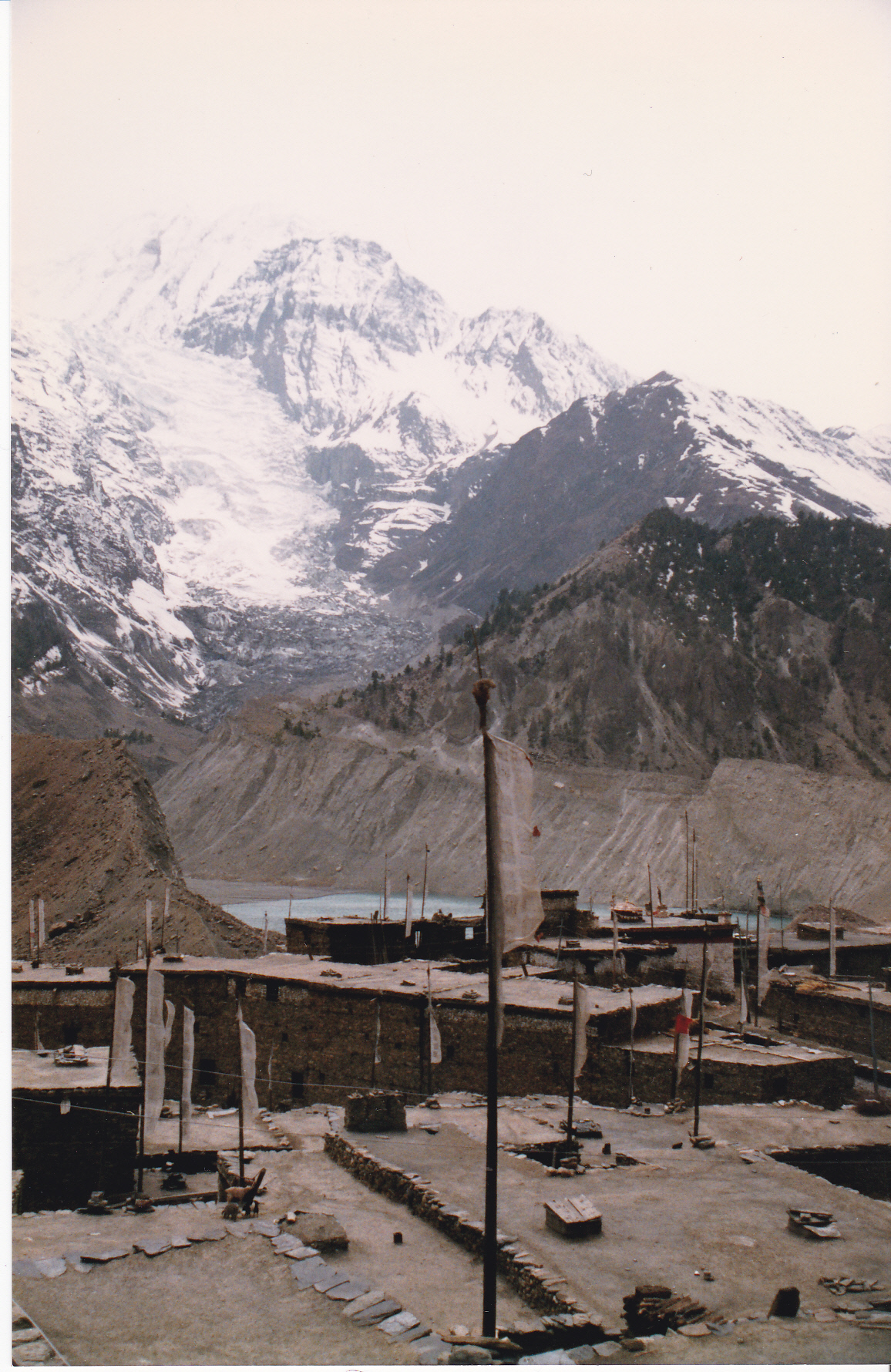
Mountains and glacial lake from the village of Manang.

img_0004

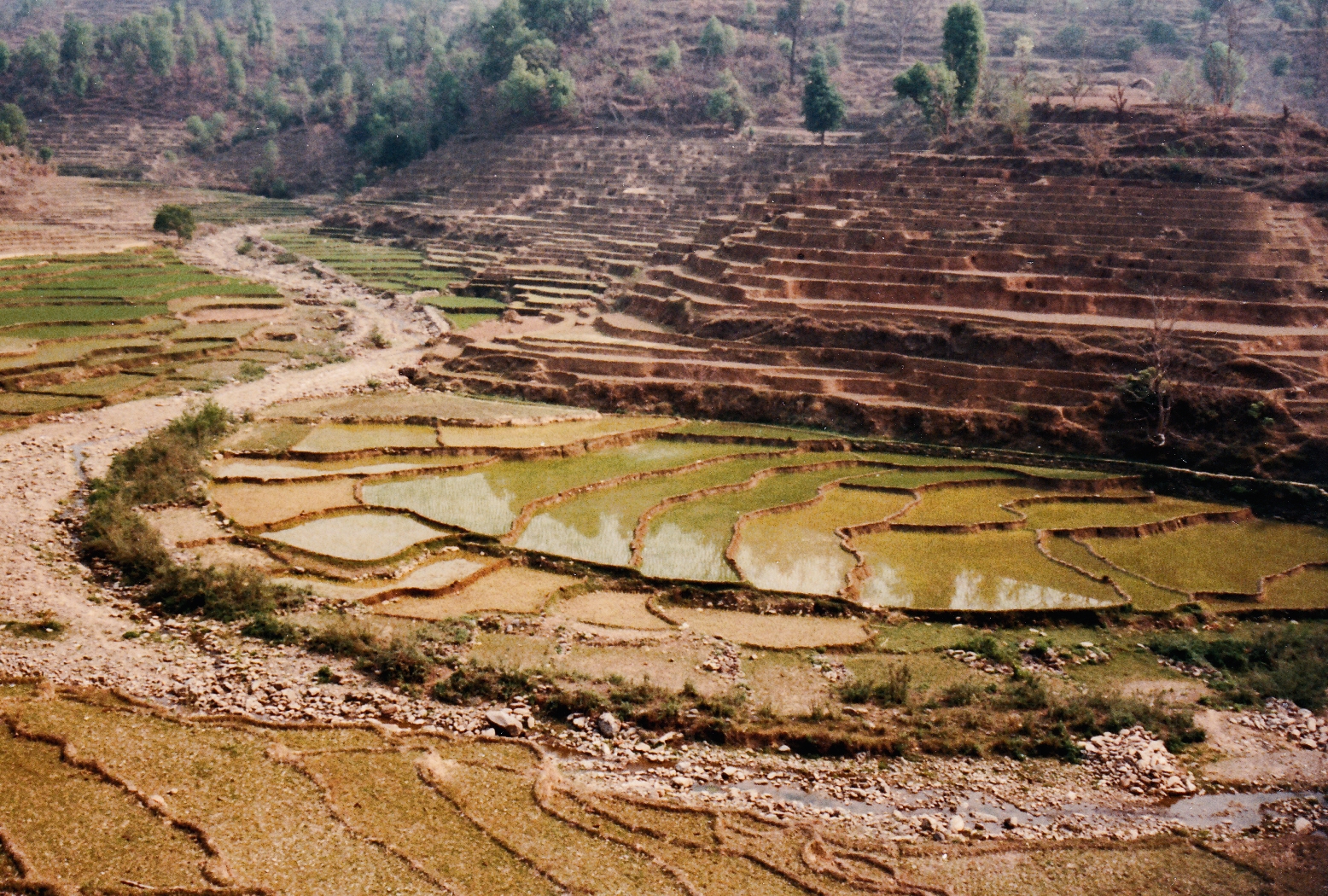
Lower down, the land is heavily terraced, fertile land being at such a premium that every available bit is used. These rice paddies are near the village of Chepe Ghat, on the Marsayandi River.

chorten_2.jpg

Chorten. Chortens, or stupas as they are also commonly known, usually contain relics of saints or priests. The original stupas held relics of the Buddha, such as at the Temple of the Tooth, at Kandy, Sri Lanka.

IMG_0005.jpg

Mountains near the village of Muktinath. In the rain-shadow, here, the landscape is that of a high altitude desert.

IMG_0006.jpg

Mani stones on the Annapurna trail. Mani stones may be carved, painted or both, and serve a similar function to prayer flags, in that they either have a prayer or mantra carved on them (typically ‘Om Mani Padme Hum’ – from which the name ‘Mani Stone’ comes from – meaning ‘Hail to the jewel in the heart of the lotus’ i.e. The Buddha) or they may have a picture of the Buddha himself. Although they may be encountered singly or in small numbers by shrines or at Gompas, at times they make up huge walls containing many hundreds of stones, some of which may have been there for hundreds of years. These walls, like shrines or any other Buddhist relics encountered here, are passed on the left.

IMG_0007.jpg

Houses at Manang.

IMG_0008.jpg

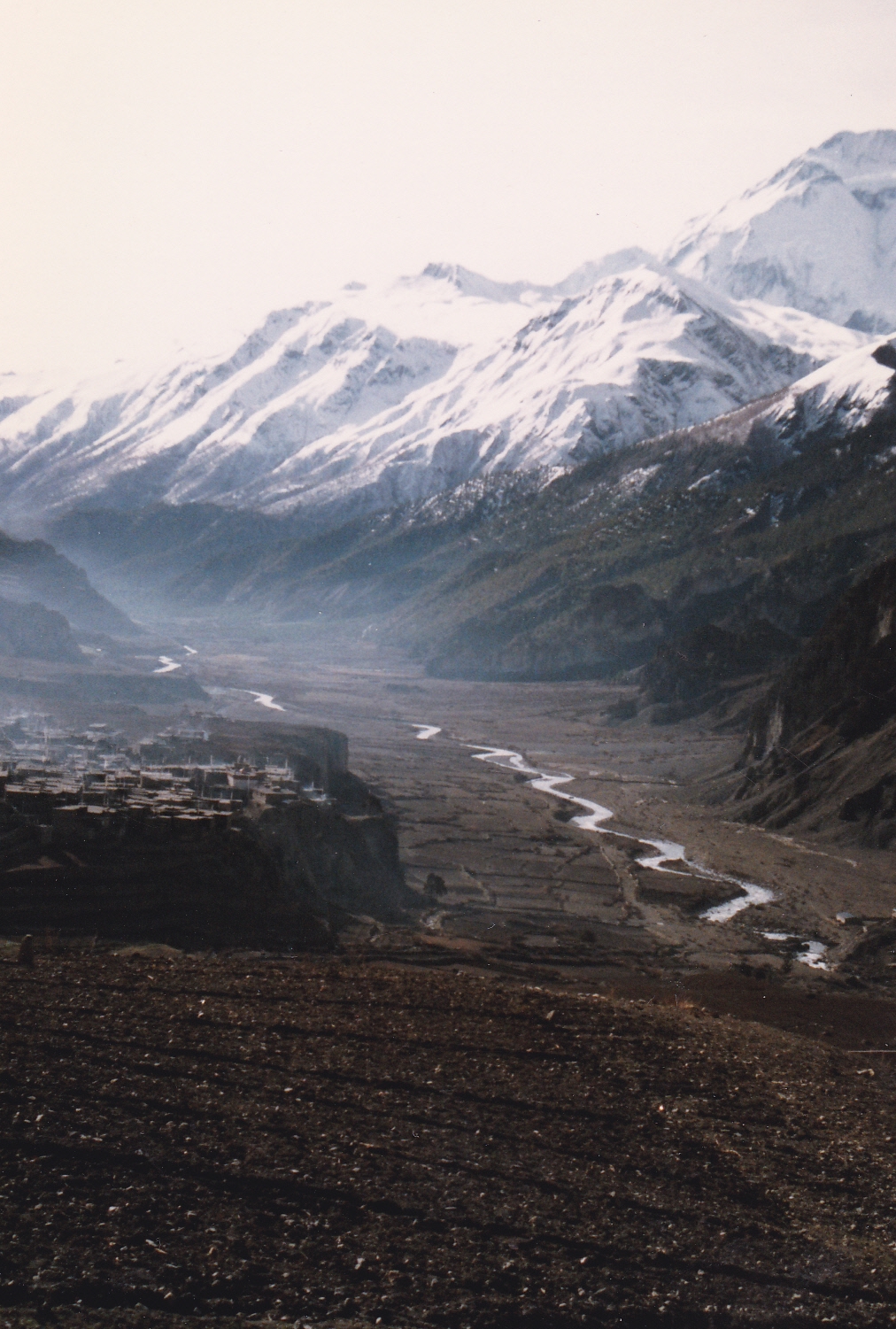
The Upper reaches of the Marsayandi, looking down to Manang.

IMG_0009.jpg

Snowed in below Thorung La. Not an unusual occurrence. Thorung La is at 5415m (17,700ft). We arrived at our campsite early afternoon with the ground clear of snow and the sun out. This was the scene a couple of hours later, delaying our crossing the pass (‘La’ is Tibetan for ‘Pass’) by 24 hours.

IMG_0010.jpg

Crossing Thorung La. On the day we crossed the pass, we left camp just after 4 in the morning, and were down the other side by late afternoon.

IMG_0011.jpg

Looking west (and down!) from Thorung La). On this side of the pass there is far less precipitation and the land is noticeably drier. This is looking towards Muktinath.

A Scottish Coast to Coast Walk (2)

20th June 1994

It rained during the night, but when I emerge from my bivvi in the morning it has eased to an occasional drizzle. Down the valley to the east, the sun is glittering on the trees, while the hilltops are shrouded in cloud. Cotton grass and heather dance around me in the breeze, and it is warm.

Glen Coiltie, looking west.

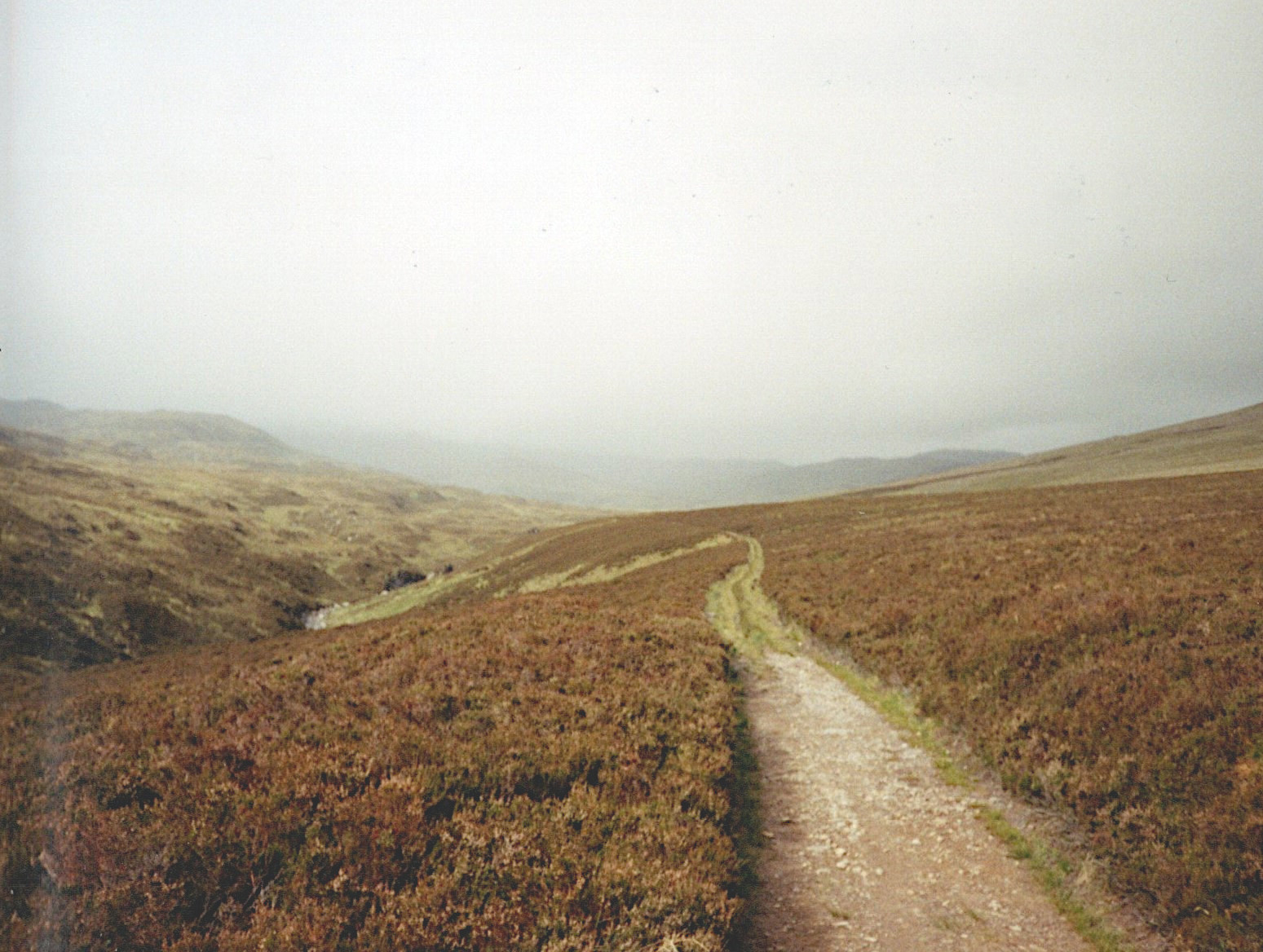
Through the morning, I work my way further west up Glen Coiltie, the wind slowly increasing in strength and the drizzle turning gradually to heavy rain. When I top a final ridge and begin to head down towards Loch Aslaich the wind positively howls. I plod along and gradually up onto a plateau where the path simply disappears. With the low cloud drifting across at ground level this becomes a good test of my navigational skills.

The weather worsens again. At times I stop just to retreat further into my waterproofs rather like a turtle withdrawing its head into its shell. It is a lovely landscape, desolate and wild, but just too wet and windy to enjoy, never mind even to think of taking any photos.

By the evening I am alongside Loch Beinn a Mheadhoin, after a long, wet, day. For a couple of miles I had been looking for somewhere to camp, but the path was through old pine forest and the ground was several feet deep in fallen logs and branches, all covered in moss and lichen. Eventually I find a spot near a waterfall amongst a few birches at one edge of the lake. It is a lovely spot, but I know what will await me in the morning.

21st April 1994

I unzip my bivvi and immediately a huge cloud of midges descends upon me. I forego breakfast for the moment and pack up as quickly as I can, flapping my arms around ineffectively and swearing my very bestest swears.

Not the best place to camp, beside open water with lots of tree cover

Soon enough, though, I am away from the water and ahead of me snowy peaks rear up above the trees. The thrill is upon me again! As I walk through the morning, the clouds are lowering and thickening again, but for now the rain holds off, for which I am thankful. It had been so wet the previous day the rain had managed to soak everything inside my rucksack. During the night I had gradually brought maps and clothes into my sleeping bag for my body heat to dry out. By the morning probably about half of it was dry.

It is colder than yesterday. The snowline looks to be lower here; I am at about three hundred meters and there are pockets of snow level with me on the mountains nearby. But with the improved weather as well as the scenery, my mood is much better and I am enjoying just being part of the environment. It reminds me of other walks and treks I have done – I keep thinking of Nepal! – and in this mood the miles seem to melt away as I walk. The previous day, at one point I had managed less than five miles in three hours up on the plateau in the atrocious weather, so this day is a huge improvement.

The Five Sisters in the distance and Creag a Chaorainn on the right,

I follow a river for a while, and where the water is moving slowly I can really appreciate how beautifully crystal clear it is, even though it has a deep brown hue from the peat. There are tiny orchids in the grass, although I don’t know their name, but few other flowers just here.

An Tudair on the left and Sgurr na Lapaich on the right

And now I pass a couple of walkers and we stop for a brief chat. These are the first people I have seen since leaving Inverness and although yesterday the weather was so bad that only idiots would have been out in it (or one idiot, anyway), in a world of five and a half billion people, to spend a whole day travelling without seeing another soul from dawn to dusk is an increasing rarity.

River Affric near Athnamulloch. The sheep track is so worn it has almost become a tunnel.

I stop for an early lunch and then soon after I set off again I find the path disappears in a particularly boggy area and, predictably, it begins to rain. I take a compass bearing and step forward cautiously. Half a kilometre later I find the path again and the rain stops. Now I go uphill again, over the Eionngleann (lots of these names sound as though they come from Lord of the Rings), down into a long valley where the weather comes in again, and down to the village of Carn-gorm. The village sits at the head of Loch Duich, which joins Loch Aish and this opens up to the Atlantic Ocean. I’m definitely in Western Scotland now. Now to see if there’s anywhere in the village to get a pizza or something more interesting than what’s left in my rucksack.

Eionngleann
Looking North West down Gleann Lichd, my route down to Carn-gorm

A Scottish Coast to Coast Walk(1)

Click on map to enlarge

18th June 1994

My coach got into Inverness at 8.10pm after almost twelve hours on the road, and I was more than ready to begin walking. With over two hours of daylight left, I aimed to get well clear of the city and find a good spot to camp for the night. I grabbed a bag of chips from a chippy, then followed the Caledonian Canal southwest for about four miles, left it and climbed a little more to the west to find somewhere to sleep. I filled my water bottle from a stream, then wandered into a little wood and got out my bivvi tent and settled down for the night, black clouds heading slowly towards me as I did so.

Altourie – rain clouds coming in from the west. Torr Mor in Foreground

19th June 1994

This morning is dry and bright, but quite windy. I boiled some water for coffee and set off as soon as I could, intending to make the most of the good weather. Today I intend to cover quite a few miles on side roads which I hope will be carrying very little traffic and so get a substantial fraction of the journey under my belt before the weather gets any worse. This is Scotland, after all. I‘m expecting rain. It should also break me in gently, being easier ground than much I expect to have to walk. So, I’m aiming for Urquhart Castle, which overlooks Loch Ness and will be a slight diversion from my route but I just fancy having a look at it, and from there I can leave the road and follow the river southwest through Glen Coiltie before turning further towards the west.

As soon as I set off, I was walking straight into the teeth of a strong wind. Long distance footpaths are usually walked from west to east, at least in Britain, and there is a strong argument for that; we get the majority of our weather from the west, so by doing that we have the wind (and whatever it brings with it) at our backs. I’m walking it in the opposite direction not just because I am naturally perverse – or not only for that reason, anyway – but because the more interesting and exciting scenery will be on the west side of the country, and hence my destination. Walking from west to east I feel I would arrive at my destination with a certain amount of disappointment, with all due respect to Inverness which is a delightful city, but I’m after the spectacular wilderness.

So, into the teeth of a strong wind. It is not long, though, before I am walking through Abriachen Forest and I stop for a rest sheltered from the wind.

Abriachen Forest

I rather think Abriachen Forest has changed a little since I passed through there in 1994. I remember it as a dark wood of densely planted conifers, typical of the conifer woodlands planted in the middle to late twentieth century with the intention of producing the maximum possible yield of wood. The trees allow so little light through that other than the trees themselves – Douglas Fir and Sitka Spruce, typically – these plantations (forest is the wrong word) house very little life. But in 1998 the community of Abriachen (a small village) purchased 540 hectares of the woodland and since then have been improving it – thinning the trees, reintroducing native species and creating footpaths and trails.

But on the edge of the forest, and beside the road, there are a multitude of flowers: vetches, Ladies smock, and violets, particularly catch my eye. I draw away from the forest and I am back amongst a more natural landscape, with banks of pepperminty smelling gorse, occasional rowan trees in blossom and heather beginning to flower.

In places, the ground is bright with cotton grass

Now, for the first time, as I leave the road and walk uphill along a track towards the farm of Achpopuli, I get my first good view of large snow-covered mountains to he west. Once past the farm, I am on a supposed footpath heading up towards a saddle between two hill crests but the ground is extremely boggy and proves to be a taste of much of the rest of the route. My feet sink about six inches into either water or soft moss and heather, slowing my progress significantly. But then I m over, and down to a small loch where I stop to refill my water bottle and have a wash. I am surprised by how warm the water is, and I brave a quick dip as well as a shave.

Loch Glanaidh

On, then, to Urquhart Castle and then a little further out of my way to visit Divach falls, a waterfall with a drop of about a hundred feet. And near the bottom, primroses were still out.

Urquhart Castle and Loch Ness

Following a track up Glen Coiltie looking for a suitable spot to make my camp and cook supper I am walking through old forest, such a contrast to the plantation I walked through earlier. The trees are so covered in mosses and lichen it seems at times almost a wonder they are still alive. The path winds up and down and left and right and feels at times like a high mountain trail. Far below I hear the roar of the river, and for almost the first time that day feel I am absolutely in my element.

Eventually I make camp in a small hollow just below Carn a Bhainne. There is a low ridge towards the west which should shelter me from the worst of the wind. After I have eaten, I sit with a mug of tea looking across the river towards a snow pocket that is probably a couple of hundred meters higher than where I am.

Return To Tengboche…

…but not literally, unfortunately. I did say I would re-post another travel post from some while back, so here it is.

Four years ago I wrote four short posts about Tengboche. Here I’ve combined them into a single post and added some extra pictures and text to give a little more information about this lovely place.

Tengboche is a monastery complex and a couple of trekking lodges at 3860m on the route up to Everest Base Camp from Lukla, in Nepal. It sits high above the waters of the Dudh Khosi, the rapidly flowing river than runs alongside much of the Everest Trail.

The monastery complex. On arrival in the afternoon, the clouds are low. This seems to be the pattern most days – clear mornings and then the clouds coming in early afternoon. In a general sense, weather patterns in the Himalaya – certainly in some parts, and probably at certain times of the year – can be quite predictable. When I trekked the Annapurna Circuit, for example, we were told one evening that around ten o’clock the next morning there would be strong winds blowing in the valley we were to follow, because that was what happened every day. And blow they did. At ten o’clock.

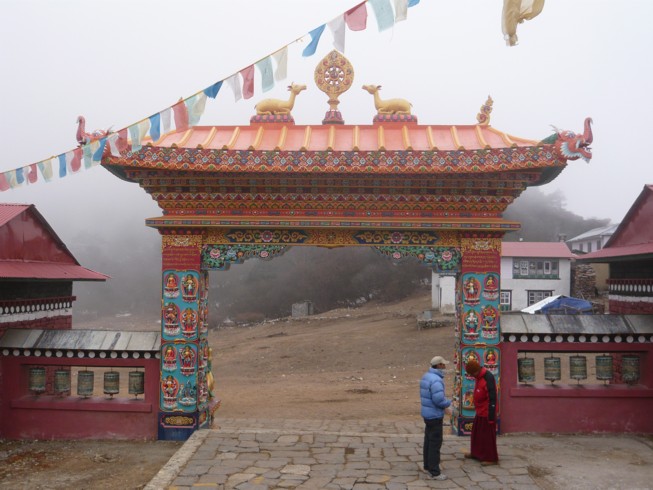
From inside the monastery grounds. The monastery is a Tibetan Buddhist complex, liberally decorated with the pictures, statues, and symbols to be found in every such place.

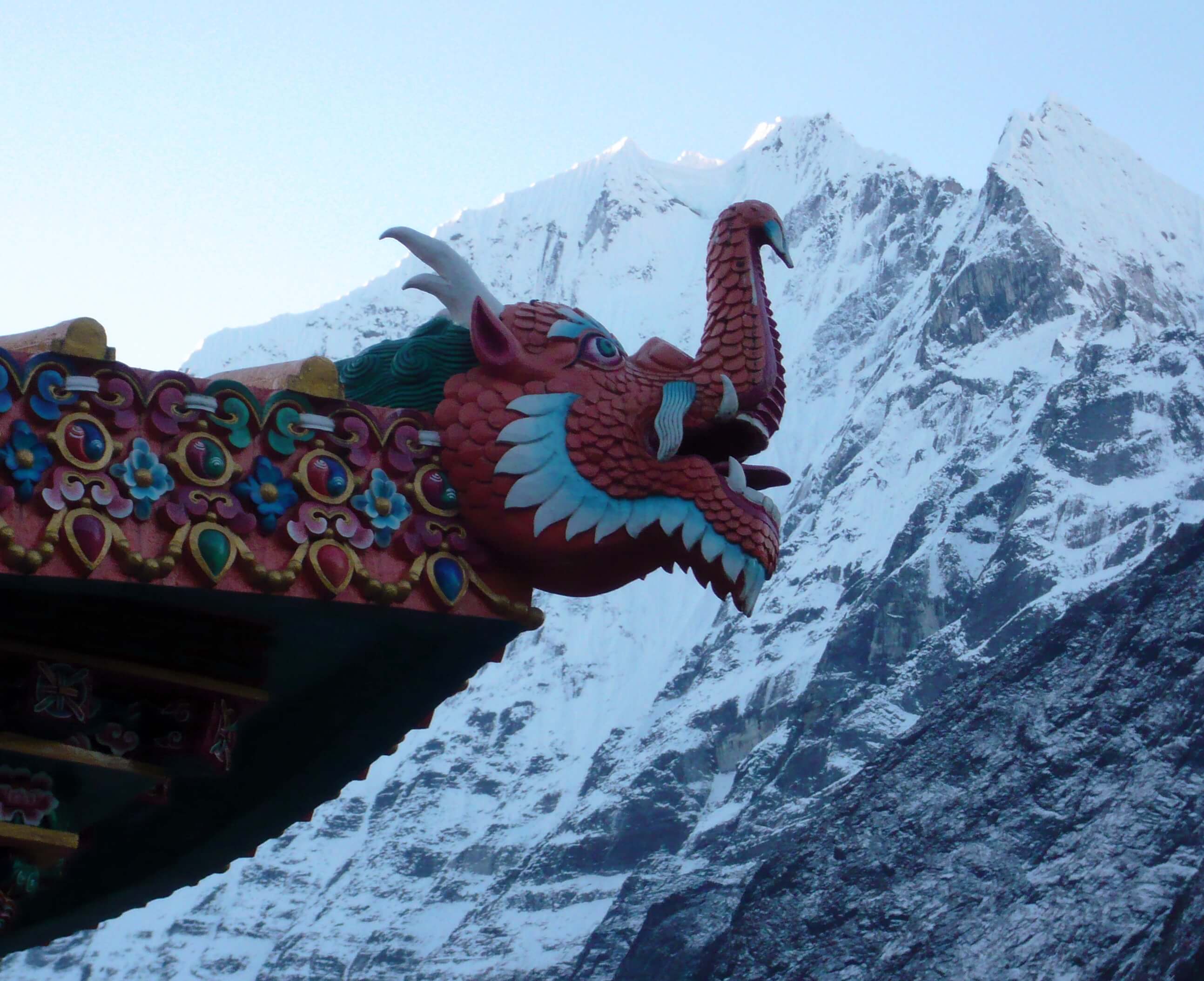
Roof decoration
145a

Inside Tengboche monastery following a puja (ceremony).

Rightly or wrongly, I don’t like taking photographs of pujas in monasteries. It feels intrusive and bad mannered. I would feel the same in a church, mosque or temple. This has nothing to do with any beliefs of my own, but is born of simple respect.

I noted in my diary: We have just sat in on a chanting puja, but my meditation failed dismally. I was completely unable to concentrate on my breath as all that I could think of were my freezing feet!

It was blooming cold!

198a

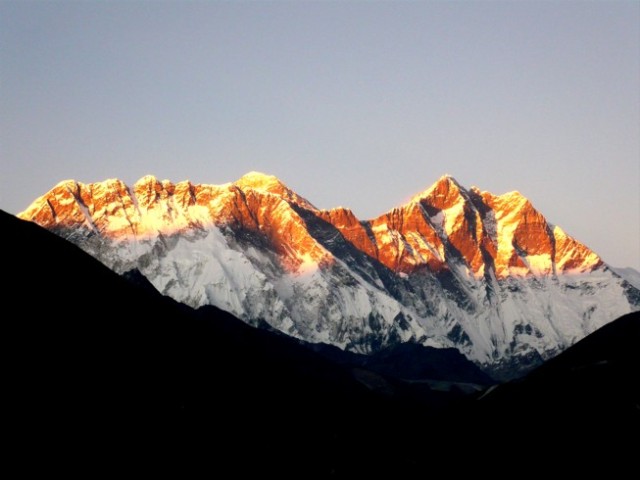
This view must have been photographed so many times, but how fantastic is it? Sunset on Everest (left) and Nuptse (right), photographed from Tengboche. This was taken on my third visit; the other two times the clouds failed to clear in the evening, so this was an unexpected treat.

212a

And this is the same view in the morning – but with the addition of Ama Dablam on the right of the picture. Ama Dablam is possibly my favourite mountain; the classic ‘mountain-shaped’ mountain, similar to the Matterhorn.

Close-up of window showing the dawn chorus orchestra.

We were awoken in the mornings by the harsh notes of conch shells and the clashing of symbols. This was part of the morning puja, rather than a summons for coffee and porridge. It does make for an excellent alarm call, though.

Sigh

Poem number five in my Poem-A-Day-For-A-Week-Or-So series. Snow outside, test cricket on the TV, beer in the cupboard. That’s my day sorted, then.

The sea sighs for you tonight.

It sucks at the shingle

And smears your footprints

Like a wet thumb rubbed across writing.

Where once you walked and left your

Prints, it gently wipes the land clean.

Lovingly it lays its cheek to the ground

And nuzzles your memory.

.

We are more than specks

In the infinity of time and space

Yet somehow we need to

Make sense of our lives.

Rock endures

But so does the wind and the rain.

More so, in fact, since in the end

Mountains are levelled

And the wind and rain remain.

.

In the end the passage of many feet

May be more durable than

Dwellings of stone.

I Made A Vow

Day four of the Poem-A-Day-For-A-Week-Or-So project and a bit of a rush, today, as I’ve been assembling a shed (as you do). Another one, therefore, which will benefit from a revision when I have more time.

In Tripoli I made a vow to travel light, my eyes wide open,

Travel all the time I could, to take my chances when they happened,

Planned to seek out strange new places, take some risks see new horizons,

One thing alone I wanted now, the promise of the unexplored.

.

And I remember where I was, the time of day, the type of weather,

Early morning, early March, this was a time of change for me,

A time for taking big decisions, time to turn my life around,

Time to leave things in the past, the time to turn another page.

.

At the time I made that vow, I yearned to go along the Silk Road,

Travelling any way I could, and though that sadly never happened,

Other projects came and went, journeys all filled with adventure,

Baking deserts, frozen mountains, close to home and far away.

.

I knew the world would not be kind, it would not make my journeys easy,

Whatever it might offer me, I’d leave myself completely open,

Embrace the rain, embrace the wind, embrace the temple and the hillside.

This was my private pact with life and to this day I’ve not yet finished.

The Conquering Hero Comes!

This is another day when I feel frustrated because I’d like to be out travelling, although I did get to have a great long walk on the South Downs on Saturday. But rather than post about that at the moment, I have a fancy to re-post this piece I wrote a few years ago:

I’ve never wanted to ‘conquer’ mountains.

img_0010

Or any other parts of the world, really.

I’ve always felt this was the wrong way to think of a journey. It was ridiculous to think I could impose my will upon a mountain, or on a desert, or indeed upon any part of my route. That I could, perhaps, somehow bend it to my will.

I feel it is more a case of preparing as best as possible, including mentally, and then perhaps said mountain will tolerate my presence; will allow me passage.

‘Conquering’ also carries the implication of invasion, of fighting, of strife. That is not the sort of relationship I want with mountains, or with any other place I choose to travel.

Certainly, in the past I have travelled at least partly with that mindset at times.

IMG_0005

Some of you may recall I wrote about an extremely foolish journey I took in Oman when I lived there over thirty years ago (Mr. Stupid Goes For a Walk). Although I was running low on water, I pushed myself to the limit to reach the final ridge of hills on the route I had decided I was going to achieve one day, nearly killing my stupid self in the process. And although I achieved my aim, I didn’t feel victorious.

Only a bit stupid.

I prefer instead to think of myself as a visitor. And as a visitor, I need to have some manners. You do not expect to find the visitors pushing through your house and demanding to see this or to be given that, so I don’t.

I am not out to break records, nor to prove how tough I am.

This does not imply a lack of ambition, nor a lack of determination. Indeed, I have both – it’s just that the mindset is a little different. In particular, I give myself different priorities. I want to reach my goal but if I don’t, it does not matter. I think I’m more attuned to my own safety, and perhaps that of others. I hope I can be receptive to the feelings of others, too.

A good example in the climbing world is that of the mountains in Nepal that climbers are forbidden to reach the summit of, due to the belief that they are the abode of gods. Theoretically, a climber will stop some 10 meters or so short of the summit. Opinion is naturally divided over whether a climber would, or wouldn’t, in the absence of any witnesses, respect that ban.

I would respect it every time.

The mountains, of course, are inanimate. They do not wish me harm or otherwise. Neither do deserts or oceans. Even the most inhospitable of landscapes is neutral. It does not care whether I succeed in my aim to reach or traverse a particular part of it, and it will not hinder or help me in the attempt.

154

My feelings about a landscape are just my reactions to it, and if I should choose to give this landscape a kindly or vindictive character, I am only projecting my own feelings onto it.

This may give me comfort, or otherwise, but will make no material difference.

Maybe I am simply suggesting it’s good to travel with humility.

I have touched upon that before!

An Andalusian Adventure (2)

Part 1 can be found here: Part 1

It was a long way to Colmenar. I was walking up into the Malaga Mountains, with no map and no directions other than a road sign at the edge of Malaga suggesting that by following this road I would eventually reach my destination.

I suspect I have undertaken other journeys where I have been better prepared.

But the day was perfect for walking, with high drifting clouds and a light breeze to keep me cool, and having done little for several days other than eat, drink and wander around Malaga, I was feeling fit, fresh, and eager to get going.

As the hours went by and I slowly gained height, the clouds began to build up, and the temperature gradually dropped. About an hour from my destination, it finally began to rain. Immediately the temperature plummeted, and I rapidly went from merely chilled to decidedly cold.

Usually, we approach rain all wrong. Buddhists would say unskilfully. If it begins to rain, we hunch ourselves up, both physically and mentally. We fear becoming cold and wet. We need to let go of this fear. It’s a good lesson to learn. Stop. Take several long, slow, deep, breaths, and let go of this feeling. Let go of this need. We act as though hunching ourselves up will keep us dry and make us warmer. It doesn’t. Unless one can find shelter, it is better to accept the rain and finish the journey.

It is a cliché to speak of heightened awareness, yet that is also a by-product of this letting go. We remove our focus from the rain and instead allow it to go elsewhere, where it is really needed. We should throw back our heads and embrace the rain, enjoy the freshness of the rain on our faces. Listen to the sound of the rain on the ground and the leaves around us.

Back then, I hadn’t learned that lesson. I hurried towards the town as fast as I could.

One of the first buildings I came to was an inn. I went into the bar and asked for a room. The room I was given was reached by leaving the bar again and walking around the side of the building. The door to my room had a gap at the bottom of an inch or two, but otherwise fitted the door frame well enough. It was locked and unlocked by the type of huge key frequently described as a jailor’s key. The room was furnished only with a bed, a chair, and a small chest of drawers. There was a mirror above the chest of drawers and a crucifix above the head of the bed, but other than those the whitewashed walls were bare. There was a small window which was shuttered. The floor was of flagstones, with no carpet or mat. To use toilet or bathroom it was necessary to leave the room again and continue still further around the building to reach a very basic room. But again, it was clean. And there was a toilet that worked, and a sink with a cold tap. There was also a shower set into the ceiling I could have braved, but it felt much too cold for that.

Later, I would occupy rooms like this in many other places, in many other countries. Simple, perfectly clean, and usually very cheap. I am not sure whether it is because they appeal to the minimalist in me, but in many ways I prefer them to more comfortable accommodation.

Whenever I have stayed in one, I have always felt I was carrying too much baggage with me. I have been beset with the feeling I should be throwing out some of the items I have in my bag – do I need all those clothes? All those other items? It has been a recurring regret of mine that I have never managed to live a simpler lifestyle than I have. I have never enjoyed the frenetic hurry and clamour of modern urban life, and I hate how easily my life can become complex and filled with what feels like unnecessary fuss.

Here, even the spartan contents of my rucksack seemed too much. Perhaps I had too many books with me…

But now I was here, I changed out of my wet clothes and opened the shutters so I could look out at the low cloud and misty horizon. The rain drummed comfortingly on the roof and I settled down to read a book for an hour or so. I was content, and that’s a good place to be.

I cannot remember what I had for supper that night, but I do remember I drank a bottle of cheap red wine with it. Perhaps that is the reason.

I rather think I slept well, too.

And as in all good stories, the morning dawned bright and clear, the sun shining low in a clear blue sky. Before I left the town, I passed a couple of shops and bought a few items for my lunch: bread, a huge tomato, a hunk of cheese, a couple of apples, a bottle of cheap wine.

img20190318_12103098

With the improved weather, and the fact I had more downhill stretches that day than uphill ones, I allowed myself the luxury of returning to Malaga slowly, including a stop for lunch of about an hour. Compared to the UK, Spain is a large country and the rural population is comparatively small. Although I was not far from the city, I saw almost no one else on my walk and I meandered along slowly through a mixture of low trees and bushes, many of them in flower – the distinctive Mediterranean maquis vegetation – rocky outcrops and clumps of flowers, and the occasional lone farmhouse. The ground was dry and dusty, as though the rain of the previous day had never happened, and the sun was hot. With my lunch consisting of about half a bottle of wine as well as the food, I was feeling extremely weary and footsore when I reached Malaga again. I found the hotel I’d stayed in before and got a room on the same floor. After showering, I finished the bread and cheese and decided all I wanted to do was read my book for a while and then have an early night.

There was a knock at the door and when I opened it Matthias was standing there grinning.

‘I saw you arrive earlier. We go for beer, now!’