Review of Masks and Other Stories From Colombia by Richard Crosfield

In Masks and Other Stories From Colombia, Richard Crosfield brings us twenty five tales set in Colombia, the majority of them viewed through the privileged eyes of Printer, a British expatriate.

mask

Printer, we are told, has a good ear for a story, and is much in demand by hosts and hostesses at parties to recount these tales. He also has more empathy and sympathy for the Colombians who surround him than do most of the other cossetted expats. Naturally, this acts as a good device to introduce several of the stories.

Some of the stories are little more than vignettes, bringing the reader into the lives led by the mixture of the very poor, the well-to-do middle class, and the extremely well-off and powerful of Colombian society, as well as the expats among whom Printer lives and works. These appear to do little more than illustrate what the lives of these people are like, yet at the end of each story something has changed; there has been resolution of some kind.

Of the others, some demonstrate that you don’t always require an earth-shattering event to create a satisfactory ending, but just a quiet re-drawing of the landscape. Something has shifted, perhaps so subtly that not all the protagonists have even noticed. But we, the readers, see it clearly.

Yet it is easy for the reader to become lulled into a false sense of security by this, so that we are caught out – shocked, perhaps – when we come to one of the stories that has a more powerful and emotional conclusion.

The temptation when placing stories in a setting that is very different from the writer’s own setting, even when that writer has spent a good deal of time there – perhaps especially when that writer has spent a good deal of time there – is to either set all of them in the almost artificial world inhabited by the expat, or to try to set them in the wider community, a community that perhaps they may not completely understand. Richard has managed successfully to do both, something that demonstrates an easy familiarity with both these worlds.

Throughout the book, we can see that the author’s sympathies lie very much with the underdogs of Colombian society, although the stories never become clichés of the noble poor versus the evil rich. They are told with too much intelligence and enough humour to escape that, and, perhaps above all, the writing itself is easy and a joy to read.

Expect to encounter amateur cricketers and murderous bandits, whores and priests, street kids and artists. And a whole host of others.

This is most certainly a five star read.

My disclaimer – I received a copy of this book having beta read one of the stories for the author, although I was not asked to write a review. But my admiration for the stories and my pleasure reading them is entirely genuine.

The Path Less Travelled. Or More Travelled. Or Whatever. The Point is, it’s a Path.

Last week, I posted that it was important to take journeys.

177

For the last nine weeks, I have been unable to get around a great deal, having had an operation on my foot to correct a few bits that were, sort of, pointing in the wrong direction, and painful when I put my foot down, and, er, lumpy where they shouldn’t be lumpy…

I’m sure you get the picture.

163

What it means is that I have been desperate to get out of the house and do a decent walk. I have managed to walk an average of a mile or so a day, just to try and keep reasonably fit and, I guess, supple, but it’s been quite hard work with the plaster and bandage on my foot and a stick to help me get around. Going uphill especially.

105

But the plaster comes off in a couple of days, and then I am going to do some walking. Boy, am I going to do some walking! Because I’ve been so frustrated at being unable to just get out there and walk the way that I’m used to doing.

011

I’m gonna walk!

110

And I’m so grateful that I’m still able to. God knows what I’ll do if I ever lose that. It really doesn’t bear thinking about.

A Limo in Lima…

…something that ought to be a cautionary tale.

It was a long time ago, now, but I am sure these things still happen. I was sent by the company I then worked for, to Lima, Peru. My role there was to carry out some training of half a dozen local men who had been recruited to operate the computers in our branch office.

Now, I have never been what could be described as a ‘snappy dresser’. I incline towards what can best be described as a ‘casual’ look, although I have at times been unfairly described as a ‘scruffy bugger’, and no one looks their best after a journey of over 24 hours, with a couple of flight changes and a certain amount of time spent hanging around in airports.

And thus it was I emerged into South America haggard and unshaven, sporting a pair of old jeans and a tee shirt, picked up my battered rucksack from the carousel, then looked around for whoever was meeting me.

IMG_0001

We’ll blend in. No one will us notice us in our big, clean, shiny black limo.

I was accosted by a smart suit and tie which was housing a short man who looked like a mafia boss, but who was affable and friendly and directed me to my transport.

A huge, black, limousine.

Now, in some other circumstances I might have quite enjoyed the ride, since it was an experience I had never had before (or since, as it happens), but we then proceeded to drive through massive slum areas where most of the ‘housing’ appeared to lack even a roof. The road was pitted with potholes, most of the traffic consisted of battered buses, lorries and cars, and poverty seeped out of everything that could be seen.

I have never been so embarrassed.

Every time the car stopped, I wondered whether we would get attacked and robbed – we certainly attracted a lot of attention, all of it the wrong kind as far as I was concerned. And after I was dropped off at the hotel where I would be staying, I was left wondering just who the hell that was meant to impress?

Me? If so it failed abysmally. My (already somewhat low) opinion of the company I worked for simply plummeted further.

The locals? If that was the case, then God forgive the b*stards that thought of it.

Can anyone enlighten me as to the thinking behind that?

Danger! Natural Selection at Work!

Bob has a new mobile phone.

Do you remember Bob?

Some of you may remember him from when he and I went on a mighty expedition together. The report can be found here. And, as an update to that report, I can now reveal that Bob eventually found his way back home, much to his wife’s chagrin as she had already cashed in his life insurance and taken up with a new man.

But that’s another story.

Anyway, Bob has a new mobile phone. And, being Bob, he was insistent that it be the latest, most up-to-date, all-singing and all-dancing mobile phone, with more apps (whatever they are) than…something that has lots of apps.

He has an app for everything; an app for navigation when he is out in the countryside (naturally!), an app to help him choose whatever he is going to buy if he needs to go shopping, an app that gives him a weather forecast. He even has an app that tells him when he needs to eat or go to the toilet.

Heaven only knows how he managed to cope with life before the phone.

But, there is a downside to all this.

We went for a walk and, sure, we didn’t get lost. This was because Bob had his head over the phone the whole time. We didn’t get lost, but Bob bumped into twenty seven trees, fell in two streams, had an altercation with a herd of cows, tripped over almost fifty tree roots and finally walked into the bus stop.

And he had no idea of where we had been or what sort of countryside we had passed through. Rather a waste of time, really.

Now, Bob is not unique in this, oh, God, no.

The sidewalks in our town have become dangerous places since these phones became popular. I’m beginning to get seriously cross with the number of pedestrians who march towards me, head over their phones, and not even walking in a straight line, so it becomes quite difficult to avoid them. And should I have the temerity to perhaps cough discretely to let them know I’m there, or even to feebly call ‘look out!’ or ‘excuse me!’ I invariably get a glare and perhaps a few muttered words about not looking where I’m going.

And it appears to be an almost universal phenomenon now.

We get more and more news items about these people walking into the paths of vehicles, or off the edge of cliffs, or finding other similarly stupid ways to get killed.

Perhaps it’s a modern form of natural selection? I don’t know. Large numbers of idiots seem to kill themselves the same way taking ‘selfies’ (what a f*cking irritating word that is!), so perhaps there is something in that.

137a

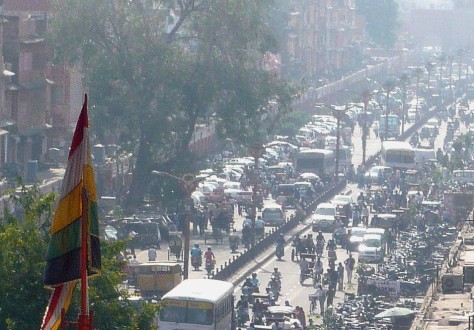
Jaipur – a random photo. Don’t try it here! 

I first became aware of the truly frightening potential for these sort of incidents a few years ago in India. Some of the driving on the switchback roads in the Himalaya is notoriously terrifying in any case, but to then see these fellows also using their phones while driving just made it even more frightening.

And then there was the girl I saw with a mobile phone ‘doing a Bob’ across an extremely busy Calcutta street.

Yet, she survived.

If there is anything in the theory of natural selection, then the future belongs to her!

Wow, What a book #2

To continue with the 10 books that have most influenced my life.

My second choice is The Lord of the Rings, by J R R Tolkien.

Image result for the lord of the rings book cover

I suspect that very few readers are unaware of the story of The Lord of the Rings, having either read the book, seen the film, or both. And at this point, it might be a good idea to just make it clear that I am talking about the book here, and not the Peter Jackson films, or even the ill-fated attempt at animating the entire book in 1978, an attempt that got as far as the first book, and was, to be honest, rather dreadful. Let me content myself by just saying it was a bit ‘Disney’. I’m not that mad on the Peter Jackson films either, to be honest, but back to the book.

So, I’m not going into any great detail about the story, but, in a nutshell, it involves a quest to destroy a ring that gives great power to the wearer, but inevitably corrupts and destroys them. It’s maker, Sauron, is attempting to find it, and the free peoples of the world must not only keep it from him, for if he recovers it it he will then have power to enslave the entire world, but also take it to the fiery mountain, Mount Doom, where it had been forged, to cast it into the flames and destroy it.

Mount Doom is, inconveniently, inside Sauron’s heavily fortified and guarded kingdom.

Elves, dwarves, men, wizards, hobbits, orcs…you all know it, don’t you?

As readers, we are all different. Some of us like a plot that gallops along so fast that we can barely keep up, with writing that limits itself to the action and no more than the minimum descriptions necessary.

Others, like me, enjoy the scenery and the atmosphere of the described world almost as much as the plot itself – join the Slow Book Movement now! Just send a completed application form to…sorry, wrong place. Where was I? Oh yes, most readers like a mixture of the two, of course.

But as one of these Slow Readers, there is a massive amount in this book that appeals to me. When I read descriptions of the hobbits setting off to walk through woods and fields as the sun comes up through early autumn mists, I might have been reading a description of a morning when I had done just that whilst wild camping in the countryside in my part of England. I have always loved walking on footpaths and through fields and woods, and disliked roads and towns.

The countryside Tolkien described around the Shire – the home of the hobbits – might have been my countryside. there were chalk downs and woods and streams, even one or two names (for example Michel Delving) that could have been local.

There were other woodlands in the book, and if they were described as magical, then that was little more than I naturally felt about woodlands anyway. Aren’t they all magical?

And, on top of all that, there were mountains. Today, I love mountains! But I had never seen one at this point, and suddenly I wanted to go and climb one. There were inns and beer, adventure and song, friendship and dangers. What was not to like?

The whole book is really made up of three books, and the first book, which has always been my favourite, is the one which is mainly set in this land that I could almost identify. This was not the first fantasy book that I had read, but it was, and still is, the one whose descriptions have the greatest power to draw me in. It is the one that, to me, seems the most real.

All of this, with the themes of courage and friendship, self sacrifice and loyalty, and the message that good will eventually triumph over evil, come together in a mixture that is in just the right proportions to appeal to me.

But how has it actually influenced me?

For a start, when I began to write, everything that I wrote seemed to be influenced by that book. This was not actually a good thing, because other than The Lord of the Rings, I don’t really enjoy fantasy! But I wrote that way for a long while.

Today, though, what remains is the descriptive writing. I wonder whether I might otherwise have been a very different reader and writer, since before I read LOTR, I read mainly detective stories and adventure novels.

And I explored a lot of the Middle English literature that influenced Tolkien, from Beowulf to Sir Gawain and the Green Knight, which I suppose not too many people do today.

I visited mountains because of that book.

And a measure of how strong this appeal was (and remains) is that I have probably read the book about twenty times. The last but one time, though, was around twenty years ago. When I decided to re-read it last year, I did wonder whether I would be disappointed. I strongly suspected that I might have ‘grown out of it’.

I needn’t have worried.

I enjoyed it just as much as I ever had; I noticed one or two details I had either forgotten or never really noticed in the first place, and I found myself drawn in every bit as strongly as I had been before.

I loved it.

Wow, What a Book! #1

I thought that I would pick out what might be the 10 books that have most influenced my life. Well, I say 10 books, but I may tire of this long before I reach 10, so let’s just see what happens.

You see, these are not really reviews, although it is necessary to give some idea of the plot of each book, it is more about how they have influenced me, and I may decide after a while that I’m just giving away too much about myself.

Or that I’m just going over and over the same ground.

Okay, then. Let’s get on with it. The rules:

Firstly, I must have read the book more than 5 years ago. I know this is an arbitrary figure, but any book that I have read recently is likely to be clearer in my mind, and so appear a little more important to me than it really is. It needs time to settle.

Secondly, I need to be able to demonstrate to myself exactly how it is that the book has influenced me. Just to say ‘it was important to me’ will not be enough. That would be little better than just saying ‘I like it’. Perfectly valid, but hardly the stuff of a blog post. This is another reason to impose the 5 year rule – there must have been enough time elapsed to see the influence.

So I’ll start today with Steppenwolf by Hermann Hesse.

Image result for steppenwolf Hesse

Sometimes, you get the feeling that some people have just been born into the wrong century. Not that they would prefer dressing in cravats or crinolines, although they might anyway, or that they have a hankering after a little piracy or bubonic plague, but rather you can see that they don’t fit in with the pace of modern life, or much like the ethos of the times.

There must be quite a few people like that, which must partly explain the immense popularity of Steppenwolf both when it was released, and then especially in the 1960’s and 1970’s.

It was the second book by Hesse that I had read, after cutting my teeth on ‘The Journey to the East’ as a teenager, and I was a little unprepared for its message.

Whereas ‘The Journey to the East’ felt like a bit of drug-induced fantasy, although a very clever and readable one, without any obvious message beyond ‘free yourself from the conventions of society, man’, Steppenwolf clearly had a more serious message to convey.

It begins with the protagonist, Harry, contemplating taking his own life, because he sees himself as a serious writer both at odds with the world that he lives in (Germany, post WWI), whose values, especially the bourgeois ones, he despises, but also with his inner alter ego, the very opposite of the sophisticated artist that he sees himself, which he calls the Steppenwolf – or the wolf of the steppes. He hates and fears this alter ego, who he feels he cannot control, and who sneers at everything that Harry holds dear.

It is whilst Harry is contemplating suicide, that he comes across a booklet entitled ‘Treatise on the Steppenwolf’ and as he reads it, he discovers that it is about himself. the booklet talks about Harry and his alter ego, but also explains that there are many, many more of these other sides to his character.

Through the rest of the book, Harry learns how to reconcile these many sides of himself and, more importantly, how he can manage to live in this world that up until then, he sees no value in.

When I read the part of the book that consisted of the treatise on the various different natures that made up the protagonist of the novel, it was the first indication to me that we really do have these different sides to our characters; sides that do not need to be in conflict with each other, but can coexist quite peaceably. As a typical young man, I knew that there were parts of me that yearned for safety, parts that simply wanted to rebel. Parts that enjoyed home life and parts that wanted nothing more than to wander the world with my possessions in a rucksack. There was the aesthete and there was the lover. The artist and the fighter.

Until then, the rebel in me had sneered at the home lover, and the artist seemed to be in perpetual conflict with the fighter. I had felt embarrassed by parts of my character and, just as did the hero of Steppenwolf, rather tried to repress them.

What this book did was to show me that it was natural to feel like that, and that the secret was to accept all of these sides of me, and allow them to all have their moments of dominance, and their moments of passivity. They did not need to be in conflict.

It completely changed my outlook on life.

Sue me and I’ll have you killed!

…slowly, he inched his way along the ledge, his heart in his mouth. It was too late to even contemplate turning back now. The sun was sinking rapidly in the pale sky in front of him, dropping towards the distant plains that were almost hidden in the desert haze. It would be completely dark within the hour. For the first time, he knew real fear. He could never survive a night on this thin, narrow ledge – God knows, there was barely enough room to stand and almost nothing to hold on to. It was inevitable that he would slip off at some point. Even now, there was a thin skin of ice on much of the surface, and the terrible cold would descend as soon as the sun disappeared.

Gritting his teeth, he edged towards what looked like a slightly better foothold, and cried out in sudden terror as his foot slid into space, the momentum taking him over the edge and falling…

Hell, I can’t do that! Stop! Phew, that was close.

As writers, we have to be so careful, because nowadays even our characters have rights, did you know that? And we can’t just be doing this and that to them, just as we please. Only the other day, a lawyer claiming to be acting for a character in a well-known children’s series attempted to take the author to court and sue her for, literally, defamation of character.

This character claimed that the author had totally misrepresented his actions, and applied motives to them that could only be described as evil.

And she said he had no nose, which was just spiteful.

He has claimed damages running into millions of dollars.

If this character is successful, then it is difficult to know where we will see this ending.

The fact that the author has created said character is no defence in law. Really, they are like our children. And whereas a few hundred years or more ago, parents had absolute authority over their children, and, short of killing them, could do whatever they so willed with them, nowadays they have more rights than their parents. And I’m afraid that it may come to that with our characters, too.

‘Why should I be killed off?’ They cry. ‘What right have you…?’ And so they will challenge it.

It has even been mooted in some quarters that these characters should perhaps be able to resort to the legal process appropriate for the time and world that they have been created for. Thus, a dragon in a tale set in ancient times, peeved because the author claimed it ate virgins and had bad breath (not sure if the two are connected…) might very well demand that it meet the author in Trial by Combat, a trial that the author would probably be rather ill-prepared to face.

Upset a Tudor monarch or a Viking chieftain, and I wouldn’t give much for your chances.

And any authors writing tales set in the future, who had unwisely failed to specify what sort of legal process was in existence at this time, might find the lawyers, or even their characters, being given the right to specify this. And that might get very nasty indeed.

But there may still be one remedy open to us. If our characters hold the threat of litigation over us, we might, just might, be able to retaliate by threatening to make their next incarnation even more horrible than the one that they are prosecuting us over. Threaten to sue me for creating you with a flatulence problem? Go ahead, and see what problems you have in my next novel! Don’t forget I’m writing a series! You had quite a decent time in the last one, it’ll be the torture chamber for you next!

It might work, but I’m still nervous about it.

001

So what am I going to do? I’m just going to write nice stories about pussy cats, from now on, that’s what.

Authors, you have been warned!

The Travel Bug Bit Me – part 3

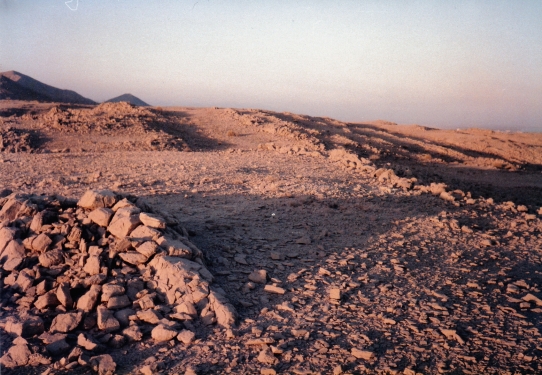
When I lived in Oman, the land around where I lived and worked was all stone desert; hills and valleys of razor sharp broken boulders, water worn stones at the bottom of dry valleys, with occasional villages and settlements and old, crumbling, mud brick forts dating from the time that the Portuguese were there. Almost invisible tracks used by goats and nomads wound their way through this wonderful landscape, or simply followed the routes of the wadis, the dry river valleys. I had a very small scale map of the country, as well as a few very large scale maps that I had pinched from the office where I worked (I did return them when I left). These would consist largely of huge areas of blank paper, with the occasional ‘tree’ or ‘large boulder’ helpfully marked, although they did show the main wadi courses and mountain ridges.

I was very tempted to write ‘here be dragons’ on them occasionally.

img_0001

Never before had I quite understood what silence was. And it was the first place (to be followed by the Himalaya) that I was to truly see a night sky. I was periodically astonished by the desert’s outbursts – blasts of hot wind like an opened oven door; flash floods that appeared from a blue sky in minutes, to ferociously drench the unfortunate climbers on the top of a previously baking jebel (hill); and tiny earthquakes and landslides – I was no doubt fortunate never to witness a serious one. I would overnight in the desert with friends and we would lie on our backs to watch the unbelievable night sky with its thousands of stars, satellites and shooting stars, before ascending a 10,000ft mountain in the morning, or exploring a stretch of uninhabited coastline.

I spent almost every spare hour that I had out in that desert, either trying to find my way across trackless ridges in my jeep, or just walking; walking everywhere within walking distance and discovering just how much there is actually to see in a desert. I was supremely happy in that environment, and some 20 years later when I had to change aircraft in Muscat, I found myself looking out at the purple tinted hazy mountain lines with something very close to homesickness.

Today, even waiting on the station to get a train to go to the next stop, a coffee in hand, a bag over my shoulder with a book in it, I am on a journey. And that journey feels clearly related to the longest journeys that I have ever taken. There can still be the same sense of travelling, of departing and arriving. The search for food and shelter… I think that it shows just how much a journey largely exists in the mind. Often our perceptions of a journey seem to differ from that journey’s reality (as many things do, I suppose). A long, difficult journey can seem to be over quicker than a short, easy one.

Just packing a rucksack, even an overnight bag when I used to have to occasionally stay over where I once worked – a wash bag and towel, sleeping bag and clothes – I feel as though I’m off on a journey. There is a certain amount of excitement…

And I know, too, how smell is such a strong, evocative, sense. Just with the kitchen window open, at 10pm on a slightly rainy October evening, I suddenly catch a scent of something – something cooking nearby, or a hint of smoke, perhaps – and I am instantly transported to Nepal, high in the mountains, remembering an evening with sherpas and villagers beside a river where we ate and then sat around talking and drinking and listening to those sherpas and villagers singing.

Okay, I’m ready to go and pack, now…