It is windy this morning and the forecast is for rain and high winds later in the day. Consequently, I go out for a walk straight after breakfast, heading for the woods beside the common where I know I will be sheltered from the worst of it, should the winds get up soon. Above, the clouds are thick and dark and what light does make it through the mirk is thin and silvery, glittering coldly on leaves and puddles, the latter wrinkled with tiny wavelets scurrying in bursts across their surfaces.
A couple of rooks are calling irritably overhead, buffeted by the breeze, as I reach the edge of the wood. A few paces in, I pass along the edge of a shallow, long-disused sandstone quarry, its banks perforated with badger holes, and with other entrances deeper into the woods. The whole of the sett appears to occupy upwards of a fifth of an acre, although there may well be entrances I have not yet found.
Moving on, I find I am walking to the rhythm of a tune in my head, something that happens to me frequently. This time, it is a track from an album by Stick in the Wheel, a kind of punk-folk group, the track being the Abbots Bromley Horn Dance. Stick in the Wheel are a group I have only recently discovered, and the only album I have of theirs (so far!) gets played rather a lot. This particular tune has a very pronounced beat and I wonder, as I often do, whether the tune has come into my head as the beat matches my pace, or whether I have unconsciously altered my pace to fit the tune.
I also decide it doesn’t matter which it is.
It is still early enough in the day for there to be very few other people about. In about an hour’s time the air will be filled with barking and shouting as the regular dog walkers invade, but for now I have the place almost to myself.
I have just begun to re-read Robert MacFarlane’s The Old Ways, and in this he tells us that at the time of writing (2012) he reckoned he had walked perhaps 7,000 or 8,000 miles along footpaths in his lifetime. Does this mean each mile is a unique mile, in that he means he has walked this distance all along different routes, or does it include the day to day walks along local routes, routes such as the one I repeat day after day? He doesn’t make that clear, and I would guess it includes all repetitions. He then goes on to quote De Quincy saying that Wordsworth walked a total of 175,000 – 180,000 miles in his lifetime (although how did he know?), which would clearly include his repeated local walks, if true. I wonder how many I have done and make a vague stab at guessing a figure. At various times I have worked out I tend to walk an average of 20 miles a week, allowing for good and bad periods of walking, of which probably one half would be on footpaths. There were times when I did much less, and times when I did much more, but it seems a reasonable estimate. That would give me a figure of between 25,000 and 27,000 miles in my adult life so far, which is probably wildly out but is quite similar to Robert Macfarlane’s.
I’ve no idea what to conclude from that.
But I know I would probably walk quite a bit further if I didn’t tend to stop so frequently just to stand and stare at my surroundings. I do it often enough to sometimes irritate those I walk with, although they’re usually kind enough to say nothing about it. But there are also those who just get their heads down and walk, walk, walk, seemingly on some mission to cover as many miles as possible in the shortest possible time, barely able to glance around them as they go. What is that about, unless it’s some sort of charity event and they’re raising money by the mile? Where is the pleasure?
The Welsh poet W H Davies wrote ‘What is this life if, full of care, we have no time to stand and stare?’
What indeed?
I’ve been doing it quite a lot again this morning. It seems so important. Surely everyone must do it to a degree?
Well, my favourite twelve, anyway. One a month, if you like, although that wasn’t how I read them. Or perhaps the twelve book reviews of Christmas – oops, no. Missed that one. Anyway…these are some of the books I read in 2022, not books that were first published this year. But I seem to have read so many good books in 2022, it’s difficult to make a choice and this has ended up being a little arbitrary.
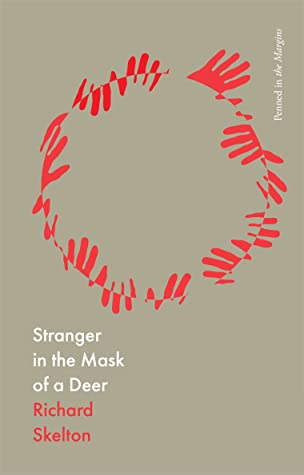
Stranger in the Mask of a Deer by Richard Skelton. It has been a long time since I last read something new and immediately put it into my top ten reads, but this remarkable work is straight in there. A few weeks later I had to re-read it, captivated by its dream-like quality.
It is essentially a poetic narrative ranging between the present day and Palaeolithic Britain, told by humans both ancient and modern, and by non-human voices. Its essence is life and ritual, the connection between humans and animals, between humans and the land they occupy, and the elements surrounding them.
The remains of deer skulls complete with antlers, but with eye holes punched into the skull so they might be worn as masks, have been found at Star Carr in Yorkshire, dating to approximately eleven thousand years ago. It is presumed these masks would have been used in rituals…
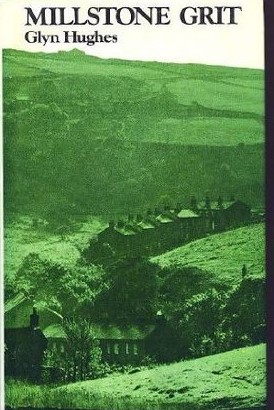
Millstone Grit by Glyn Hughes. This very readable book was originally published in 1975, describing a fifty mile walk the author took through East Lancashire and the West Riding of Yorkshire; an exploration of the moorlands and villages alongside the industrial towns, all of them suffering in their own ways from the effects of the loss of traditional industries in that area. It is about Hughes’ attachment to this area he came to live in, the clash between human and non-human landscapes, and about working class history in these places, but above all else about some most remarkable people he meets along the way.
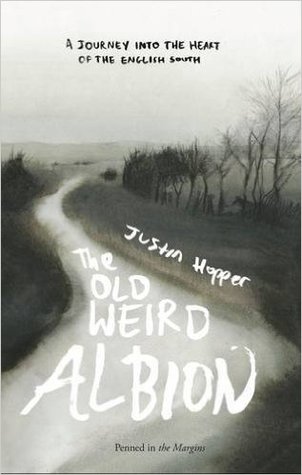
I re-read The Old Weird Albion by Justin Hopper. This is a book about tracing a mystery in his family’s past, beginning with a woman preparing to throw herself off Beachy Head, a notorious spot for suicides, but also about the effects the landscape of the South Downs has had upon people.
This is a book I reviewed on this blog when I first read it three years ago – the link is here – and I’ll just put an extract of that review here: ‘He has a gift for sifting and selecting the weird in these relationships, not just at sites that might be naturally expected to encourage the weird, such as Chanctonbury Ring, high on the Downs above Steyning or in old ruined buildings, but also in humdrum blocks of flats in modern developments. He references modern phenomena like crop circles and throughout there is the presence of ‘magic’, in the sense of a natural force. Many of the people he meets are an eccentric mix of the weird, too, although I choose this description carefully, largely in the old, original meaning of the word of ‘fate’ or ‘destiny’.’
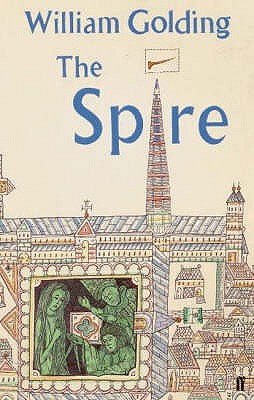
Another re-read, this time of a book I first read some forty years ago. The Spire by William Golding is a novel set in medieval England, in an unspecified city somewhere in the south. It is a story essentially about pride and hubris, about the Dean of a church determined to have built a great spire on his church, despite warnings that the foundations will not be able to support such a colossal structure. The ending seems predictable and yet that is not really where the story is going, being more concerned with the characters inhabiting that space.
The setting is the church and environs, and it evokes the feel of the ecclesiastic medieval as successfully as The Name of the Rose does. One test of how good a novel set in historical times is, is whether it transports the reader easily to that setting. I certainly found it did.
I bought Hemisphere by Pete Green at an event where poets read excerpts from their work. It is effectively a poetic journey around the northern hemisphere, beginning in Scotland, the journey approximating to the latitude of the arctic circle. The writing conveys a tremendous sense of place and feels very right for the cold edgelands described.
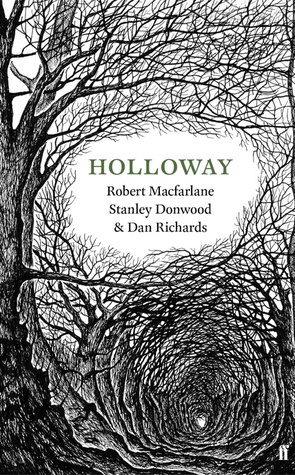
Holloway by Robert MacFarlane and Dan Richards, with illustrations by Stanley Donwood is a short book, describing a journey MacFarlane, Donwood, and Richards made in Dorset, essentially a revisit of a trip MacFarlane made previously with Roger Deakin for an earlier book, exploring holloways. Holloways, often known as sunken tracks or paths, are old – frequently very old – paths made over the centuries by the passage of feet, both human and animal, and perhaps by the wheels of wagons and carts. It is a short journey – perhaps ‘experience’ would be a better word – describing wild camps and walking, cycling and visiting old buildings; in some ways, perhaps it is really no more than a short camping trip, undertaken by a group of men acting out a boyhood adventure. The writing, though, by both MacFarlane and Richards is exquisitely poetic and Donwood’s illustrations never less than beautiful.
Notes on the Sonnets by Luke Kennard.
‘Luke Kennard recasts Shakespeare’s 154 sonnets as a series of anarchic prose poems set in the same joyless house party.
A physicist explains dark matter in the kitchen. A crying man is consoled by a Sigmund Freud action figure. An out-of-hours doctor sells phials of dark red liquid from a briefcase. Someone takes out a guitar.
Wry, insolent and self-eviscerating, Notes on the Sonnets riddles the Bard with the anxieties of the modern age, bringing Kennard’s affectionate critique to subjects as various as love, marriage, God, metaphysics and a sad horse.’
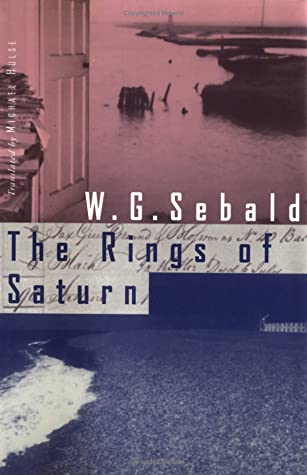
The Rings of Saturn by W. G. Sebald had been on my ‘to-read’ list for a long time, but I finally got around to picking up a copy this year. On one level, this is a walking journey taken by the author along the Suffolk coast in the early 1990’s, describing both places and people he comes across, but really, it is much deeper than that and is a psychogeographical work par excellence. Throughout the journey, we are never quite certain whether events are happening to the author, or have happened in the past, or perhaps to someone else at some other time. He goes off in unexpected directions, literary, historical, and physical, exploring a wide and eclectic range of subjects yet throughout there is a cohesion to the narrative.
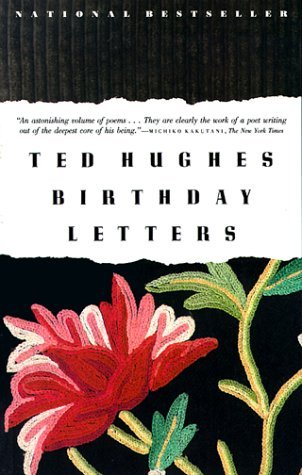
The Birthday Letters are a not-quite-series of poems Ted Hughes wrote to his wife the American poet Sylvia Plath after her death. Personally, I find them to be probably his most accessible poems and wonder whether that says something about me, although this isn’t the time to go into that. Theirs was a difficult relationship, and her suicide (as well as that of a later lover of his) frequently colours people’s opinions of Hughes. Inevitably, these are often extremely personal poems, so much so that at times I feel a slight discomfort reading them, as if I’d opened someone’s private correspondence by accident, but Hughes wrote them as an attempt to restore her to him, and published them almost for the public to read as his own account of her life and death.
Sadly, Roger Deakin only wrote three books, of which Notes From Walnut Tree Farm is compiled from diary entries he kept during the last six years of his life. In these notes, he recorded his day to day life on the farm, walks on nearby Mellis Common, the yearly cycle of the natural world all around him, and his thoughts on literature, the importance of nature, and musings on the past.
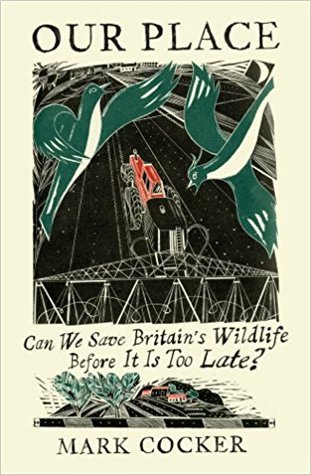
Our Place by Mark Cocker is an exploration of the history of environmental thought and politics in Great Britain and, especially, the way forward. It asks pertinent questions like who owns the land and why? And who benefits from green policies? Not afraid to be radical in its suggestions, it asks why there is such a disconnect between the British public’s sympathy for and championing of the countryside and the reality of its current condition.
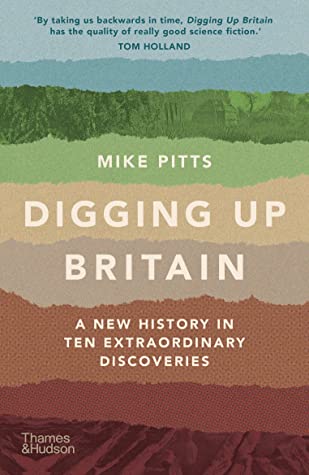
Digging up Britain by Mike Pitts tells the story of Britain’s history and prehistory in ten astonishing excavations. As someone who has always had an interest in history and pre-history, I found this book a timely reminder of the huge strides taken forward in our understanding of the past over the last ten years or so, due to such important tools as DNA analysis as well as the painstaking work of those who excavate and interpret these sites. There are some remarkable tales in this book.
I’ve been feeling a bit flat recently, although that’s not uncommon at this time of the year.
I know I’m currently craving solitude and simplicity, wanting to spend some time somewhere a little remote. An area of moorland, such as Dartmoor or the Pennines, would do me very nicely. Even better if there were some woodlands nearby, too. Although there would be no people around (ideally), there would be wildlife to watch and hills and valleys and those woods to explore. Maybe some interesting ruins nearby…
Simplicity, that’s what I’d want. Somewhere with no wifi, no TV, no phone signal or even radio. A decent supply of food and a few beers because, as Jerome K Jerome said, thirst is a dangerous thing. A fire to sit beside in the evening. Somewhere small and basic with no luxuries.
I’d take some books. Several sorts, so I could pick one up or swap to another depending upon my mood. At least one book of poetry, perhaps Stranger in the Mask of a Deer which I read for the first time a few months ago, and then re-read recently because it was so damned good. Maybe a Seamus Heaney collection, including the ‘Station Island’ sequence of poems, or a collection by Russian poet Yevgeny Yevtushenko for the marvellous long poem Zima Junction. Maybe I’d just take all of those.
I’d include some sort of detective novel for pure escapism, then one or two books by the likes of Robert Macfarlane – books that would inform me about the landscape I had decided to inhabit for a while.
I wouldn’t just be walking and exploring, or reading. I have a few poems I need to finish off, one about salmon and one about the Winter Solstice. In this environment I think I’d be inspired to finish them, hopefully write some more.
Today, the Guardian’s Review section carries a piece by Robert Macfarlane about a growing movement to grant rights to parts of the landscape, seen by some as one way to protect and preserve them. It opens by describing how in December 2018 the Ohio city of Toledo passed a ‘Bill of Rights’ for Lake Erie, which for years had been heavily polluted and reached a crisis point in 2014 when for three days, during the hottest part of the year, it had been impossible to extract drinkable water from the lake.
The piece goes on to discuss the pros and cons of these laws, especially the potential problems of recognising, say, a river or a forest as a ‘person’ in law, and how that might play out in legal disputes.
At the heart of the Extinction Crisis we are currently suffering, in what is now recognised as the Anthropocene – the period during which human activity has been the dominant influence on climate and the environment. – is the way that we, as a society, view the world we live in and those we share it with. And this has powerful consequences at a time when we are directly causing the extinction of so many plant and animal species, and thence the wholesale destruction of ecosystems and the consequent changes to the climate this triggers.
I have always thought of the Earth as consisting of two distinct layers; a rocky planet – a core – wrapped in a mantle of life, a mantle whole and made up of countless billions of organisms all influencing and influenced by each other; a true web of life that we are all part of, but no longer seem to recognise. And by the same token when we think of somewhere as a ‘place’, we commonly imagine it in isolation, as though it existed somehow despite its myriad neighbours. For example, if I ask you to imagine ‘London’ you may have an image of Central London with its familiar landmarks, filled with hurrying people and buses and cars. Or it might be the Docklands area, the West End – any one of thousands of parts of the city. But would you have an image of a city connected to the counties around it by roads, by streams and rivers, by areas of woodland and fields, the flight paths of birds, the daily migration of commuters or the dominant weather patterns, and then this greater area connected even further to the rest of the country, and then this country connected by seas filled with life to other countries and continents?
And this same lack of imagination frequently makes us see everything around us with the blinkered eyes of our own vested interests. Some will view a landscape as something to be exploited purely for financial gain, be it to extract oil, perhaps, or to maximise the yield of farmland by destroying woodland and hedgerow, infilling ponds and killing wildlife. Some may feel it imperative to build more and bigger roads, covering dozens more square kilometres with concrete and asphalt, as though it were so necessary that we should always be able to travel faster than we do already.
It is still quite controversial, but botanists are just beginning to understand the extent to which trees communicate with each other and the remarkable way their roots are all connected through networks of fungal threads – the Wood Wide Web, as it is sometimes called. It is supposed that trees communicate to each other through these threads about things such as insect attacks, which may trigger defence mechanisms in individuals before they are actually under attack. In that way alone, it is appropriate to think of a forest as a single living entity.
To return to the laws that might protect the natural world, what we really need are laws that recognise the importance of this mantle, and how every part of it relates to every other. And this includes our own part in this relationship, since we are very much part of it, and in the end we depend upon it for our own lives.
There is a huge disconnect between the human race and the natural world. This is nothing new, of course, it is something that has gradually been developing ever since man first discovered farming and began to live in settled communities rather than living a nomadic existence. But it has accelerated rapidly since the onset of the Industrial Revolution, until we passed the point where for the first time there were more people living in urban areas than in rural ones. That may seem an obvious fact to many in the Western World, but that statistic is a worldwide one. 55% of the population today is urban, but the spread is very uneven. In North America, for example, 82% of the population today are urban, whereas across Africa as a whole it is only 43%.
This creeping urbanisation has had many obvious consequences, such as the growth of villages into towns, and thence into cities and finally into super-sized metropolises covering hundreds of square kilometres with hardly a tree or a bird to be found in some parts. Such as whole villages being abandoned as the population move to towns to find work, partly due to the growing mechanisation of farming and the demise of traditional rural industries. Such as a rapidly shrinking amount of land that can be thought of as wilderness. Even those areas that are not now covered with an urban sprawl may well be covered with farmlands or plantations, or large areas devoted to leisure activities such as golf courses which as far as wildlife and plant diversity are concerned, are little better than deserts.
And such as a growing and deepening disconnect between humans and the natural world.
In small part, this is natural and necessary; it is a process that is inevitable as we evolve from a species indistinguishable from the other great apes in behaviour and purpose, into a species able to pursue activities unrelated to simple survival.
Of course, we have also become a species capable of wiping out our species and all other species, too.
But this trend seems to have accelerated at an alarming rate over the last thirty to fifty years. Of course, urbanisation continues to be a growing trend, the growth of technology continues to feed into areas such as farming, where we now have huge farms that can be operated by a couple of people alone, which might have required a labour force of maybe a hundred once, and we have social media and computers and gaming and thousands of on-demand TV stations.
This last phenomenon I think is mainly the cause of what appears to be an especially severe disconnect between the natural world and the younger generations.
Now before everyone rushes to tell me of wonderful younger folk who love the natural world and who actively fight to protect it citing, perhaps, the incredible people who make up Extinction Rebellion, obviously there are many exceptions to this. But it is a trend. Before I retired, my job was teaching outdoor activities such as climbing or navigating, and I worked with many children and young adults. The environment in which I worked, of course, was the natural world. And although many of the youngsters who came along lived in towns or cities, there were also many who lived nearby, in a more rural environment. And what shocked me, was that so many of them had no better understanding of that environment than those that lived in inner cities.
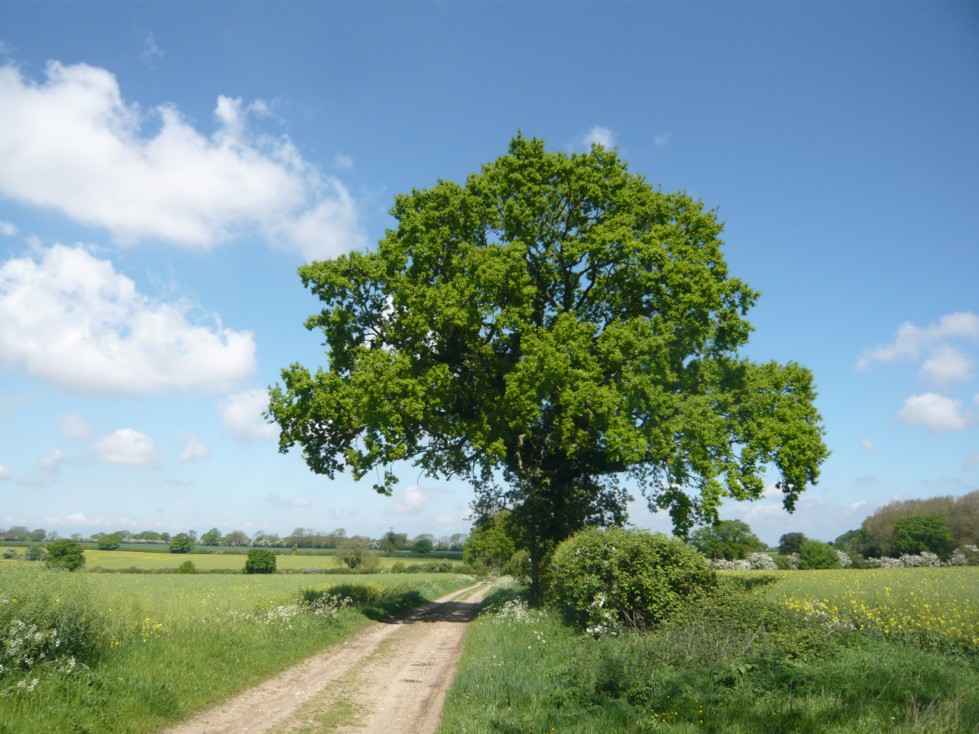
I met country children that couldn’t recognise an oak tree or knew what an acorn was. Country children who couldn’t recognise a kestrel. Country children who had no idea what wild garlic was.
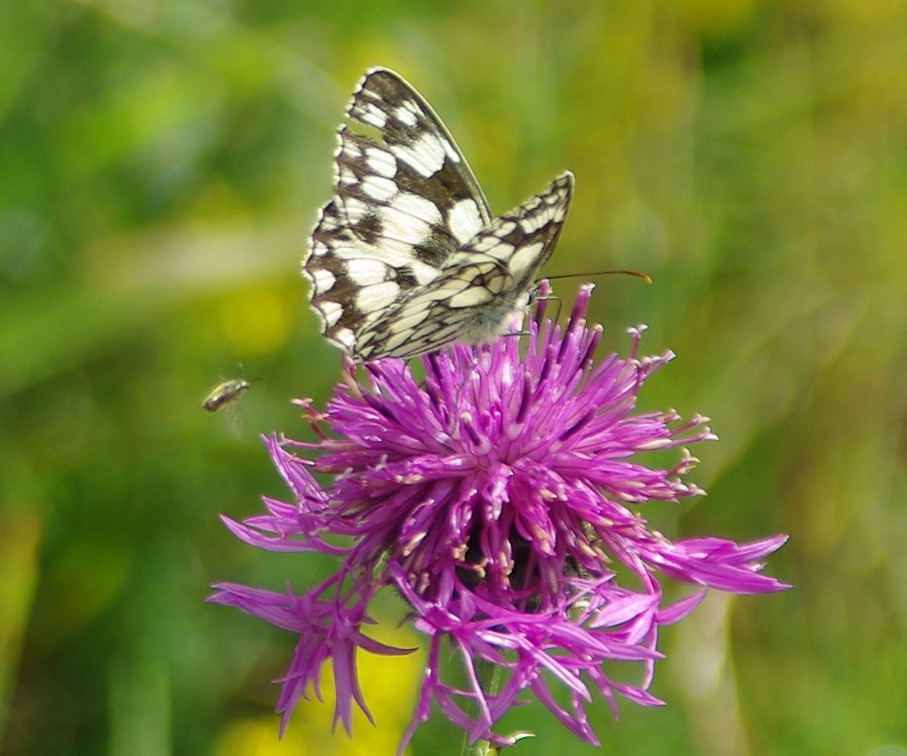
As a kid, I lived on the edge of London. I don’t think I was in any way exceptional, but I would spend as much time as I could playing with friends in the woods and fields I could walk to or get to on my bike. We splashed around in streams and climbed trees, learned what different butterflies looked like, found stag beetles and slow-worms, caught minnows and sticklebacks, and absorbed a lot of knowledge about trees and birds and insects and mammals from books and TV programs and just being out in the country.
I assumed it was what all kids did.
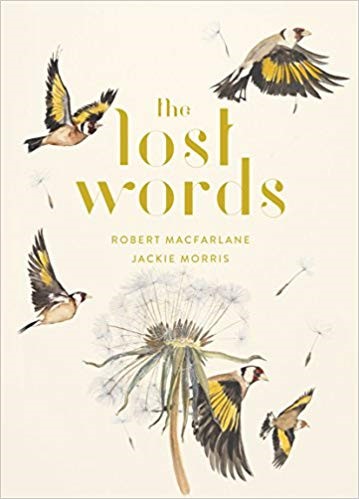
But this seems to be no longer the case. I have already written about The Lost Words (here), the book written by Robert Macfarlane and Jackie Morris as a response to learning that supposedly common words such as conker and kingfisher and acorn are words that the majority of children today are unfamiliar with – something that would once have been unthinkable. And this disconnect seems to me the saddest thing. So much of our very rich heritage has a rural background, be it music or literature, architecture, leisure activities, or traditional crafts. And the same is naturally true for most countries and societies.
But to return to the reasons for this, I feel the rise of social media and on-demand electronic entertainment has been the largest single influence on the younger generation, especially, to the point where to the majority of them, pretty well all their leisure time is taken up with these things and there is no desire to explore the natural world at all.
Sometimes I think the electronic world is more real to many of them than the real world is, anyway.
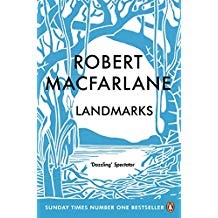
On World Book day I blogged about the wonderful collaboration between Robert Macfarlane and Jackie Morris, The Lost Words, and in this I suggested that perhaps it grew out of Robert Macfarlane’s book Landmarks.
But Landmarks is a marvellous book in its own right, and has much the the same aim as The Lost Words, in that it introduces the reader to scores of words it is unlikely they will have come across before.
These are almost exclusively words from Britain used to describe objects and phenomena in the natural world, be it a word peculiar to East Anglia for a small stream (a currel, since you ask), a word from Sussex for a heap of dung (a maxon), or, from Suffolk, a measure of herrings or sprats (a cade).
Most of these are obscure because they are words in local dialect, and therefore only used in a small number of places, or have fallen into disuse and been virtually lost over the years, or are very specialised words that it is unlikely the majority of people would ever come across.
The book is filled with background stories by the author, either of his own experiences or those of other writers and scholars with a deep love and understanding of words and the natural world, which makes the whole book far more than simply a glossary of lost words.
The reader is introduced to a wealth of knowledge and experience on all aspects of the subject, from seas and rivers to woodlands and mountains, farmed land, the strange no-man’s land at the edge of settlements, and even deep underground.
Personally, I have been trying to drop the word smeuse into conversations since reading the book. It is a Sussex word, and so was / is in use fairly locally to me and means…well, read the book and find out what it means.
World Book Day, celebrated today, 7th March, has the declared aim: Our mission is to give every child and young person a book of their own.
It is celebrated in the UK, although I have no idea whether this is an idea that has been taken up elsewhere, and would be interested to find out.
Schools, in particular, seem to have embraced the idea, with children encouraged to attend classes dressed as their favourite book or literary character. Thus hundreds of Harry Potters and Willy Wonkas and Very Hungry Caterpillars march into schools across the country once each year.
A splendid thought!
Which brings me to a marvellous project aimed at schools across the country.
Growing, in a way, out of Robert Macfarlane’s brilliant book Landmarks is The Lost Words, a collaboration between Robert Macfarlane and artist Jackie Morris. I can do no better than to quote Jackie Morris on the reasons: It had come to the attention of some who work in the world of words that certain words were slipping out of common usage. As a result when it came to amend the junior dictionary for a new edition these words were gone… These words included bluebell, conker, heron, acorn and perhaps the one that cut the deepest for me, kingfisher.
So The Lost Words is aimed towards children, to encourage them, through the words and paintings of the book, to discover the natural world that so many of them know nothing of.
So many grow up today without any meaningful contact with the natural world, and this book aims to encourage them to know and to love and protect it.
And the project – the campaign, really, in a very ad hoc way, is to raise money where necessary to place a copy of the book in every school in Britain. It has already been achieved in Scotland, I understand, and hopefully, it will soon be achieved in every other school in Britain.
We seem to be in the middle of a spell of warm, sunny weather. It seems Spring really has arrived, although things could always change quickly, of course. But it’s the sort of weather that tempts me out to go walking as much as I can. We are extremely fortunate in the UK to have such a wonderful network of footpaths, open to the public.
Dartmoor footpath
Many of the ancient tracks are still just that; just trackways that have never been turned into roads over the years. Often, this is due to their locations in the landscapes they traverse. Neolithic or Bronze Age man lived in a landscape that frequently comprised dense, almost impenetrable, forest, with networks of streams meandering through marshy lowlands, and wherever possible they would utilise the higher ground to move around, and hence we have long-distance footpaths today still following these same routes such as the Ridgeway, while modern roads tend to utilise the lower, flatter land where possible. Walking these Old Ways (and it is impossible to even mention them without referencing Robert Macfarlane’s wonderful book, The Old Ways!) always gives me goosebumps, as I feel I’m following in the steps of these prehistoric travellers.
And yes, we are lucky. Not only do we have so many of these paths, but we have the right to walk them whenever we please. But this has not always been the case. Up until comparatively recently, huge areas of the British countryside were owned by the landed gentry who denied the public any access. In 1932, the first mass trespass by five hundred men and women at Kinder Scout, in the Peak District, led to the imprisonment of five of the trespassers but this led to a second, three weeks later at nearby Castleton, involving ten thousand trespassers.
This growing movement, demanding the right to roam, led eventually to the creation of the first of the national parks in 1951, and to the Countryside Right Of Way act in 2000. So today it is possible to walk plentiful footpaths pretty well anywhere in the country, thanks to this incredibly successful movement of direct action.
My header picture at the very top of the page, incidentally, is a view of the Peak District looking towards Kinder Scout.
And it’s another gorgeous day today, so we’re off for a walk to make the most of it. I’ll catch up with everyone later.
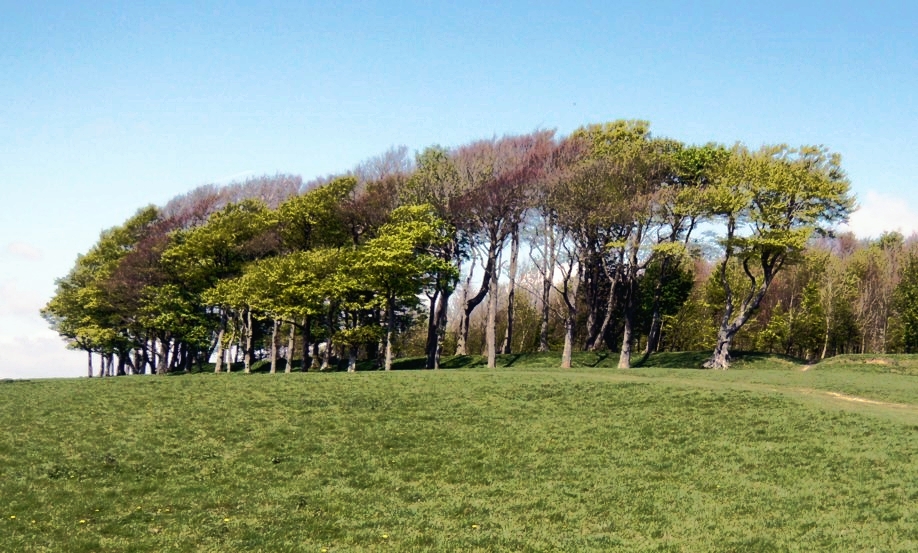
Mouse Lane begins in Steyning and runs along the foot of the scarp slope of the Downs, until it climbs a little towards Chanctonbury Ring, an old hill fort. It is a delightful route, as delightful as its name; a sunken lane full of flowers and bees and butterflies (and, no doubt, mice), cool under the overhanging trees in the hot morning’s sun. It would be pleasant to follow it the whole way, but our route takes us along the ridge, and so we leave the lane to take a footpath up the steep scarp slope.
But where we leave the lane, there is a poem inscribed on a stone block. It was written in 1915 during WWI, by a British soldier poet stationed in the Somme. We pause to read it then stand for a while in silence, each of us alone with our thoughts.
I can’t forget the lane that goes from Steyning to the Ring
In summertime, and on the downs how larks and linnets sing
High in the sun. The wind comes off the sea, and, oh, the air!
I never knew till now that life in old days was so fair.
But now I know it in this filthy rat-infested ditch,
Where every shell must kill or spare, and God alone knows which.
And I am made a beast of prey, and this trench is my lair,
My God, I never knew till now that those days were so fair.
And we assault in half-an-hour, and it’s a silly thing:
I can’t forget the lane that goes from Steyning to the Ring.
Chance memory – John Stanley Purvis 1890 – 1968
Our footpath, ironically, then takes us past an old rifle range. So old, in fact, that according to a walker we stopped to talk with it is still possible to dig musket balls out of the bank behind the range.
On top of the ridge, there is a slight breeze, but it is already very hot and we are clearly in for a hard day’s walking.
Robert Macfarlane, writing in The Old Ways, records sleeping in the Ring one night, and being woken at 2 a.m. by blood-chilling screams that seemed to come from above him, and then proceeded to circle the Ring for a quarter of an hour, although he could see nothing that might account for the sounds – he rules out the possibility of a screech owl – until they finally disappeared and he fell asleep again.
I would never have shut my eyes there again, if that were me.
The Ring has a reputation as the most haunted place in Sussex, with tales of hapless benighted travellers being scared witless for centuries. In 1966, apparently, a group of bikers decided to stay the night there and were forced to flee in terror.
We’ve been to Chanctonbury Ring before and it certainly has an atmosphere. I would have liked to have lingered for a while longer, but the downside of the journey is that we had still to cover quite a few miles in the heat to get to Amberley that afternoon.
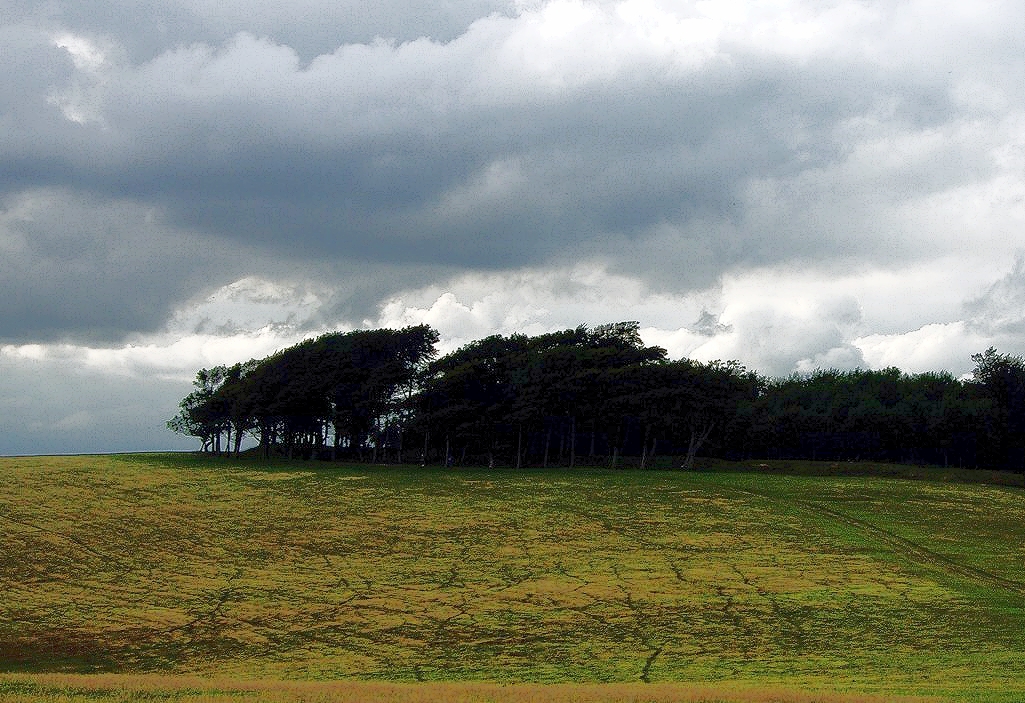
Three years ago when we visited the Ring, the weather was gloomy and somewhat more atmospheric, although we were mercifully left alone by whatever might be lurking around there on the astral plane.




 found stag beetles and slow-worms, caught minnows and sticklebacks, and absorbed a lot of knowledge about trees and birds and insects and mammals from books and TV programs and just being out in the country.
 and kingfisher and acorn are words that the majority of children today are unfamiliar with – something that would once have been unthinkable. And this disconnect seems to me the saddest thing. So much of our very rich heritage has a rural background, be it music or literature, architecture, leisure activities, or traditional crafts. And the same is naturally true for most countries and societies.


 Mick Canning