A Justification of Theft

Clickbait? Perhaps, but I have a point to make.

There is a blog I follow which regularly posts about good people. People who make a difference to their world. Kindness. They change lives. And it makes for a refreshing read in a world which often appears to be so full of shit we could be drowning in the stuff. I also see now on social media – at least on Facebook, which is the only one I follow other than Instagram – AI generated posts on good people. I know they’re AI generated, because the signs are all there. I don’t intend to list the signs, as most people are aware of them already. These AI generated posts seem to fall into the same few categories. There is the rough biker with the heart of gold adopting a defenceless little girl. The retiree who’s lost his wife and finds meaning in life through spreading love through his community. There’re one or two others, but they all seem to fall into a few predictable categories. And you read these long tear-jerkers and reach the end and you go ‘Ah, isn’t that lovely.’ Or you’re meant to, anyway. But they are AI generated, the people don’t exist (although the original ones may have been based on real people), and these things did not really happen. But does this matter?

I think it does, for several reasons. AI invents stuff. If this is not the intention of the user, these are known as ‘AI Hallucinations’. If it can’t find what it’s been asked to find, it will sometimes make something up instead. Equally, it may draw data from untrustworthy sources. Then there are AI programs which are designed to make up stuff. If we understand that, then when we read something we understand is AI generated, we don’t necessarily believe it. And since we don’t believe the characters or the narrative, then the message it is designed to deliver is rejected. We all know that kindness is a good thing, but being told that by a computer program that has clearly fabricated the vehicle of delivery diminishes the message.

It is the exact opposite of ‘Don’t shoot the messenger’, because in this case the message is rejected because the messenger is flawed.

And the more we read these posts, knowing they are AI generated but if we’re still happy to take them completely at face value, the more we help to normalise the things. The more we accept AI into our lives and accept these fabrications.

So there are more than one type of AI program. Many of those that are really good at inventing stuff, and there are quite a few, are designed specifically to write books. They advertise themselves as producing books ‘in minutes, not months’. A few clicks on the button and hey presto! I’ve written a book! I’ll get back to this at some point, but are these people authors? No. They’re not. They’re frauds. But this brings me back to those original posts, which someone has created using an AI program similar to the book writer programs to deliberately invent the contents.

And to the more important point, the point where both the hallucinations, but even more importantly the deliberately fabricated material, really matter.

AI is, as we’ve seen, designed to invent stuff. Okay, that’s a simplification, but the point is that it’s designed to give the user exactly what they ask for. If someone requests it to write a piece justifying theft, or infanticide, for example, (not to ask it if it can be justified, but telling it to actually do so) it will do that, citing either nasty stuff it’s dug up from some remote hole on the internet, or, more likely, completely inventing stuff because the real justifications don’t exist. And it will look reasonably believable, perhaps writing something along the lines of ‘the Cornel University experiments of 1983 – 1984 by Taylor and Whickham et al demonstrate that…’ etc etc. And the casual reader will think ‘oh, I never realised that. So perhaps there’s something in it after all.’ But these citations will be made up.

And to go slightly off topic for a moment, there are the illustrations. AI generated photos are still usually recognisable as such, but they’re getting much better. Ones that have been subtly manipulated are now very hard to detect. The implications there should be obvious, can we now believe anything we see or are told?

This is not to suggest AI is an unmitigated evil. Its champions will point out advances in, for example, medicine and material sciences, which are very real and extremely important. But the issues of misinformation and, as frequently cited, intellectual property theft, to say nothing of the potential to completely destroy careers in the literary and artistic worlds, are also very real.

So how do we fight this? I’m afraid I’ve no idea. The genie is out of the bottle and I see no way it’s going back in again. Other than burning down the internet we are stuck with it and over the next year or so (or less – who knows?) it’s going to get harder and harder to tell truth from complete (and possibly dangerous) crap. While the programs are becoming better at presenting the genuine data they are requested to present, the ones inventing stuff are getting better at making this appear real. All we can do is be aware of this, be cautious and critical. And perhaps we could go back to getting our facts from books which, although not infallible, are far more likely to be accurate. Publishers are still the gatekeepers there, and they tend to do a pretty good job. Research stuff properly. Rather than accepting important medical information, for example, from Joe Bloggs on Facebook, look it up on a respectable site, like the NHS (in UK).

Maybe just stay off the internet more.

Which is probably a good idea anyway.

Found – One Muse

‘Oh, you’re back.’

‘Well, not really. I’ve been here all the time. I just didn’t have anything to say to you, that’s all.’

‘Why on earth not?’

‘For a start, you don’t listen to me. You keep fannying around with that novel that your heart’s not in, anyway. What is it that you actually want to write? Not that one, at least at the moment.’

‘I’d love to finish it, actually, just get it out of the way.’

‘It’ll still be there when you’re ready to finish it – if you ever are. And if you’re not, it doesn’t matter. Surely you’ve got other stuff you’d rather be working on?’

‘I…’

‘Like, your poetry’s pretty crap, but you enjoy writing it.’

‘Hey! I…’

‘Then there’s the other novel, the one you’ve been faffing around with for years.’

‘Yes…’

‘So work on that one, since you actually do like it, and do a few paintings, for God’s sake. You’ve been saying you’re going to, well get on with it.’

‘I thought a muse was meant to be an inspiration, not a nag.’

‘A muse,’ she replied tersely, ‘will say whatever she thinks necessary to get her author off his lazy butt! Now, what about this pamphlet or brochure you’re meant to be doing at the moment?’

‘The zine?’

She visibly cringed.

‘Yes…that. As far as I can see you’ve been tinkering with it for months but you’ve nothing to show for it.’

‘I…’

‘You seem to have decided on a few of the poems you want to put in it, and a short story, but you haven’t rewritten the essays you wanted to use, haven’t sorted out the photographs and done nothing towards the artwork. You’ve not even decided on a title for the thing yet!’

‘I’ve…’

‘Yes, and that’s another thing. You keep jumping from one thing to another, and never completing anything.’

‘I’ve always thought it’s good to have a couple of projects on the go. When I get stuck on one I can go and work on another.’

‘Yeeessss….a couple you say. Exactly how many have you got on the go at the moment?’

‘Ah, er, I’m not sure…’

‘No? Well roughly how many?’

‘Er…’

‘Very roughly? You don’t actually know, do you? Just finish something! What about the short poem’ -*cringe* – ‘zine you’ve got in bits? As far as I can tell it’s nearer completion than the other one.’

‘Um, I suppose I could…’

‘And I’m not some lifestyle guru, but get out and go for more walks. And listen to more music and read some more books. You’re not reading very much at the moment, are you? And read something you want to read and listen to something you want to listen to. Not because you think you ‘ought’ to, whatever the hell that means. And stay off fricking social media, too. It’s poisonous.’

‘That’s certainly true.’

‘So just see that you do, or I really will be off. I’ll be checking up on you more regularly, now. I can see it’s the only way.’

She’s a tough, unforgiving, so-and-so, my muse.

Blogging vs Other Social Media

It’s a fight to the death!

085

Well, okay, not quite that, but bear with me for a bit longer.

The other week I gave a short talk to my writing group on reasons a writer should be on social media and, more importantly, why they needed a blog. I’m not going to go into this in any detail now, but I promised I’d summarise what I said in bullet points, and then thought it might be worth putting up here to see if anyone felt like adding anything to it.

So…

Why?

  • As a writer, you need to have a social media presence to sell books, to get known. Even if you are a published author.
  • On a social media platform, you are aiming to get shares for your posts. The more shares, the more people will see them.
  • It’s all about engaging with customers, fans and critics.
  • There are a huge number of platforms, but just a few examples that I have experience of:
  • Facebook is the biggest, and the most active, with a high rate of engagement. Having an Author Page is a good way to engage through backstories, questions, surveys and daily updates (yours or your work), ‘Behind the scenes’ articles.
  • Linkedin has many users, but a low rate of engagement. A business page can be useful.
  • Twitter is short and succinct. A sort of ‘Marketing Lite’. Posts appear fleetingly and then are essentially gone, though, unless they generate lots of likes and retweets.
  • Goodreads is like ‘background’ media – people need to seek you out to find you.
  • But the number one way to be found is through blog posts.
  • Like all good social media, blogs encourage visitors to return. Unlike ordinary websites, they are updated regularly and the reader can be alerted to each new post.
  • There are many other reasons to blog, viz:
  1. Teaches you to write more professionally – you have an audience
  2. Discipline
  3. Practice
  4. Feedback from people outside your usual circle
  5. Networking with others
  6. You can upload links to other social media
  7. There is space to write more in-depth than on other social media
  8. To review work for other writers
  9. To explore ideas and get feedback on these
  • A blog is simply a website with posts being regularly replaced, although the old ones are still on the website to read.
  • There are many blogging platforms, but I use WordPress.
  • One advantage of WP is the ease by which readers can see you have a new post.
  • Whichever platform you choose, it should have clear instructions and / or tutorials to help you set up.
  • It should also allow you to block spammers, remove adverts (by upgrading), monetise your site, and change the layout. In other words, have as much control as possible over its appearance.
  • It can be really helpful if the platform provides diagnostics on data such as page views, visitors, likes, comments, and links to and from your site. This helps you plan and refine how you run it.

How?

  • Purchase your own address! It is not very expensive, but it makes your blog more personal, more professional, and the address more memorable. And the host cannot arbitrarily close it down, which might happen with a free site.
  • Start by going and looking at other blogs, to find what you like and might work for you. then use your Site Builder Tool to create your site.
  • Once you begin writing your first post make sure you are using a clear font that stands out.
  • Keep the post around 500 words, certainly under 1000. When you have a decent following, you may get away with more, but new readers will be put off by longer ones. (As a guide, this post has 945 words).
  • Add a picture or two to help it stand out and look less daunting, but not too many. And not just dozens of selfies, unless you are an established celebrity. It’s a real turn off.
  • Make the post interesting! Put some good stuff in first, to get the readers’ attention. And don’t save all the good stuff until the end, as readers might not otherwise get there.
  • Use categories and tabs on each post to help new readers find them.

Issues

  • Don’t feel under pressure to post to a fixed schedule.
  • Don’t be afraid to change the subjects you post about – it’s all under your control and there are no rules on it. Let it develop organically.
  • Don’t be afraid to take a break if you need to. It’s very easy to get into a mindset where you think you need to do all these things to a rigid schedule.
  • Don’t obsess about the number of followers you have or likes / comments you get. Chasing them is counter-productive.
  • Find some blogs YOU like, and follow them, commenting when you have something to say. That way you will begin to get visits in return and then, hopefully, follows back. It is pointless following a blog that doesn’t interest you, just hoping to get a follow back. You want followers who will be interested in what you have to offer.
  • And on that subject, if a new follower has a site that doesn’t interest you, there is no obligation for you to follow them back.
  • And don’t feel obliged to comment on / like / or even read every post on blogs you follow.
  • Do remember that copyright law applies exactly the same on the internet as it does in the real world. If you copy a photo or article from the internet without permission and post it on your blog be prepared for possible legal unpleasantness. I always use my own, just to be safe. I think it looks better, too.

The Great Disconnect

There is a huge disconnect between the human race and the natural world. This is nothing new, of course, it is something that has gradually been developing ever since man first discovered farming and began to live in settled communities rather than living a nomadic existence. But it has accelerated rapidly since the onset of the Industrial Revolution, until we passed the point where for the first time there were more people living in urban areas than in rural ones. That may seem an obvious fact to many in the Western World, but that statistic is a worldwide one. 55% of the population today is urban, but the spread is very uneven. In North America, for example, 82% of the population today are urban, whereas across Africa as a whole it is only 43%.

This creeping urbanisation has had many obvious consequences, such as the growth of villages into towns, and thence into cities and finally into super-sized metropolises covering hundreds of square kilometres with hardly a tree or a bird to be found in some parts. Such as whole villages being abandoned as the population move to towns to find work, partly due to the growing mechanisation of farming and the demise of traditional rural industries. Such as a rapidly shrinking amount of land that can be thought of as wilderness. Even those areas that are not now covered with an urban sprawl may well be covered with farmlands or plantations, or large areas devoted to leisure activities such as golf courses which as far as wildlife and plant diversity are concerned, are little better than deserts.

And such as a growing and deepening disconnect between humans and the natural world.

037a

In small part, this is natural and necessary; it is a process that is inevitable as we evolve from a species indistinguishable from the other great apes in behaviour and purpose, into a species able to pursue activities unrelated to simple survival.

Of course, we have also become a species capable of wiping out our species and all other species, too.

But this trend seems to have accelerated at an alarming rate over the last thirty to fifty years. Of course, urbanisation continues to be a growing trend, the growth of technology continues to feed into areas such as farming, where we now have huge farms that can be operated by a couple of people alone, which might have required a labour force of maybe a hundred once, and we have social media and computers and gaming and thousands of on-demand TV stations.

050a

This last phenomenon I think is mainly the cause of what appears to be an especially severe disconnect between the natural world and the younger generations.

Now before everyone rushes to tell me of wonderful younger folk who love the natural world and who actively fight to protect it citing, perhaps, the incredible people who make up Extinction Rebellion, obviously there are many exceptions to this. But it is a trend. Before I retired, my job was teaching outdoor activities such as climbing or navigating, and I worked with many children and young adults. The environment in which I worked, of course, was the natural world. And although many of the youngsters who came along lived in towns or cities, there were also many who lived nearby, in a more rural environment. And what shocked me, was that so many of them had no better understanding of that environment than those that lived in inner cities.

034a

I met country children that couldn’t recognise an oak tree or knew what an acorn was. Country children who couldn’t recognise a kestrel. Country children who had no idea what wild garlic was.

As a kid, I lived on the edge of London. I don’t think I was in any way exceptional, but I would spend as much time as I could playing with friends in the woods and fields I could walk to or get to on my bike. We splashed around in streams and climbed trees, learned what different butterflies looked like, 037bfound stag beetles and slow-worms, caught minnows and sticklebacks, and absorbed a lot of knowledge about trees and birds and insects and mammals from books and TV programs and just being out in the country.
I assumed it was what all kids did.

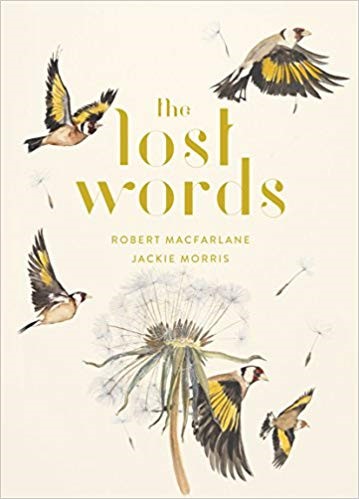
But this seems to be no longer the case. I have already written about The Lost Words (here), the book written by Robert Macfarlane and Jackie Morris as a response to learning that supposedly common words such as conkerlost words and kingfisher and acorn are words that the majority of children today are unfamiliar with – something that would once have been unthinkable. And this disconnect seems to me the saddest thing. So much of our very rich heritage has a rural background, be it music or literature, architecture, leisure activities, or traditional crafts. And the same is naturally true for most countries and societies.

But to return to the reasons for this, I feel the rise of social media and on-demand electronic entertainment has been the largest single influence on the younger generation, especially, to the point where to the majority of them, pretty well all their leisure time is taken up with these things and there is no desire to explore the natural world at all.

Sometimes I think the electronic world is more real to many of them than the real world is, anyway.

057

Sigh. I’m off to check the vegetable garden.

The Joy of Unknowing (1)

We have just returned from a few days away in Shropshire, which is one reason you haven’t heard from me recently.

We were incredibly lucky with the weather, and spent the time walking and reading and mooching around towns and villages. And finding time for the occasional meal and cold beer, of course.

Yes, we did some lovely walks. And I find it a natural thing to be constantly identifying and photographing whatever I see when out for a walk. I have always been interested in all aspects of the environment, be it the plants and animals, the geography and geology, the weather, or the historical impact of people on the environment in forms such as old trackways, deserted buildings, or ancient boundaries.

006a

And we have spent several fantastic days surrounded by an environment rich in all these things, as we have walked through woods, fields, and open hillsides, seen ancient settlements, butterflies, birds, and many wildflowers, and all this in an area of some of the most complex geology in the UK.

But sometimes I feel myself tiring of the constant need to identify and record everything; it is really a way of trying to own them.

And when you post on social media too, it can feel at times a little like a competition to put up the best pictures of this or that wildflower or bird or mountain, which naturally need to be identified and named. Especially on Twatter, whose format seems to encourage this.

017a

So, on our first morning away, as we walk up a track heading into the hills above Church Stretton, under early morning blue skies with the air crystal clear and beautifully cool, I decide that for now I am just going to exist in the moment.

Because by doing this, I am relieved of the constant necessity of deciding whether this bird is a rook or a crow, or whether that flower is greater stitchwort or lesser stitchwort.

018a

Because it doesn’t really matter.

And for now, instead of having to always know whether it is this or that bird singing, I can allow myself to simply think there is singing. There is birdsong.

Or, even better, there is a sound I find melodic, and it pleases me.

By doing this, I can relax and centre myself, which is something I feel has been badly lacking in my life recently. I have struggled with social media in any case, feeling a huge pressure to post new material and to read the many I follow, even when I don’t feel up to it.

It feels like a return to a much simpler time in my life. I can enjoy the views of the hills, the sounds of the streams and birds, and just concentrate on being.

This must have been part of the pleasure I felt as a child on every occasion when I could roam outdoors. Certainly, I was curious about what I saw, but since I knew so little about them, there was always an openness to the experience and the excitement of discovery. I would see butterflies I had not seen before, and I would just get the thrill of seeing them without having to know anything more about them. I would see wildflowers I didn’t recognise and just enjoy the shapes and colours.

Naturally, you cannot really unknow things in that way, just as you cannot really return to that point in your childhood, but it is possible, even if for only a short while, to let go of the need to identify and quantify (and therefore own) everything, and simply exist in the here and now.

A Christmas Carol – 1

I haven’t seen much of Bob, recently.

To be fair to Bob, he’s been rather busy. But he came round to my house the other day. Well,  the other evening, really. He was carol singing. And it was only just December.

‘What on earth are you doing?’ I asked him. He look puzzled.

‘Carol singing, of course. Why?’

‘Why? It’s only just turned December, that’s why.’

‘Well, all the shops have their decorations up now.’

‘I suppose so.’

‘And some have had, for the last few months.’

307a

‘True, but…’

‘And they’re all playing Christmas songs.’

‘Unfortunately true…’

‘And half the kittens on social media are dressed in red and white and chasing Christmas baubles around on the floor and then batting them with their cute little paws…’

‘Stop it, Bob!’

‘So why can’t I go round carol singing?’

‘Because there’s only one of you and it sounds awful!’

‘Oh…sorr…eee!’

‘And what are you collecting for?’

‘Huh?’

‘That tin you’re rattling. What’s it in aid of?’

‘Our Christmas lunch.’

‘Bob! You can’t do that! You’re supposed to be collecting for charity!’

‘Am I? Who says so?’

‘I…er…I don’t know. You just are, that’s all.’

‘Well, I’m collecting for our Christmas lunch!’ He rattled the tin meaningfully towards me. ‘Silent Night…’ he began again, his voice rising suddenly about two and three sevenths octaves. I shuddered. The kittens left their baubles and ran for cover. ‘Holy Night!’

‘Shut your bloody racket!’ Came my neighbour’s voice – slightly muffled, but carrying a clear threat of violence.

Bob left quickly.


In other years, I’ve written a few short stories for Christmas, but not this year.

Bob has inspired me to re-imagine a few Christmas Carols for the twenty first century.

Here is the first one.

Strident night,

Angry night,

Down cheap booze,

Get into a fight.

Punch and scratch and kick and bite.

Tell the other bloke he’s just a shite.

Sleep in a prison cell…oh!

Sleep in a prison cell.

For those of my readers who do consider Christmas to be a holy festival, I must point out that these little offerings are intended as my rant against the excesses and the commercialisation of Christmas today. I hope you will not take any offence, for none is intended!

The Enduring Lie of a Golden Age – Part 2…This is Personal

Two weeks ago I wrote of the idea so many people have that somewhere in the past there was a ‘Golden Age’ when everything was so much better than today.

I am now going to post what might seem a bit of a contradiction to what I wrote then.

121a

More and more, we are losing our connection with the natural world.

Everyone would have a different opinion on what is meant by the phrase ‘quality of life’, but for me if I am surrounded by concrete structures, with a lack of trees and flowers and birds, animals and insects, if the building I am in consists of electronic devices, plastic, steel, and artificial floor coverings, if my engagement with the day to day tasks of this building consists of pressing buttons, then I feel my own quality of life is much diminished.

A common post appearing on Facebook is of a picture of a cabin or cottage in the wilderness somewhere, with the caption ‘Could you live here for a month without TV or phone signal or internet for $25,000?’

Could I do it? I’d bite your hand off for the chance to do it. And I wouldn’t even need the money as an incentive.

No press-the-button entertainment. Setting and lighting a log fire instead of switching on the heating. No dishwasher. No constant barrage of emails, texts and phone calls. No street lights – or streets.

I’d bite yer hand off.

Whether I am at home, working, or walking in the country, always there seems to be the sound of aircraft passing overhead. Day and night. Constantly.

And unless you’re in the middle of a national park, there always seems to be traffic noise. Even when I’m walking in the midst of woodland, or through fields, it’s always present as a background noise.

And anywhere near a road or street, it is just constant. And I find that extremely stressful.

This is one reason why I love being amongst mountains. Usually, they are remote enough that the traffic noise is finally silenced. Frequently, they are away from air routes. And, of course, there are far fewer people around. And those that are there don’t usually seem to be glued to mobile phones or playing music.

And I’m nostalgic. Well, I’m in my sixties now, I’m allowed to be. And that brings us back to the post about a supposed golden age. Nostalgia is a yearning for the past, with the inference that it was better than the present day. There are, of course, many things about today that are much less than perfect – I’ve called out a few of the things I don’t like earlier in this post – but only a fool would deny that huge medical advances have improved all our lives for the better, social security has largely alleviated the horrors of abject poverty and, at least in the affluent west, our lives are not subject to the whims of despots.

But although I can expect to live to a greater age than my forebears – at least in theory – I would be willing to trade some of that for a time when life was less complicated, a life where I didn’t feel constantly bombarded by social media and advertising. A life that was lived more slowly.

Not a Golden Age, certainly, but one I would happily live in.

‘Mr Business Brain’ or ‘Trying to blow my own trumpet without ever having learned how to’.

In today’s alternative ‘Alice in Wonderland: ‘When I use a word,’ Trumpty Numpty said in rather a scornful tone, ‘it means just what I choose it to mean — neither more nor less’.

Lewis Carroll obviously saw this fellow coming.

Just thought I’d share that with you. Anyway, back to the task in hand. After two ridiculously hectic weeks, I now have to do my best to catch up with everything. Onward!

***

I don’t have a business brain.

I look at my clutter of short stories and paintings, my carvings and photographs and think ‘I should be able to at least make a bit of a living out of all of these.’

ladakhi door 2            001

But I don’t. And then I wonder ‘how on earth I am going to do it?’ and go ‘aaargh!’ and run off into the distance.

It really doesn’t help.

And so, if I had to have made a New Year’s Resolution this year, it would have been to sort all this out. I didn’t, but that doesn’t mean I can ignore it for any longer.

To begin with, then, how about attracting new blog followers?

Dressed in a loincloth and brandishing a spear (not a sight that sensitive readers should try to picture in their minds), I go charging out onto the lightly wooded WordPress plains, hunting new blog followers.

‘Aha, there’s one!’ I think, spotting a potential follower grazing harmlessly beside the River of Inspiration. I sneak up on them, then hurl a ‘follow’ at them, hoping that they will respond in kind.

Er, no.

It’s just not me, unfortunately. As I have mentioned in the past, I find it incredibly difficult to blow my own trumpet. And I will not ‘follow’ someone just for the sake of getting a ‘follow’ back. I do understand that anti-social media make up the platforms I have to work with, but for some reason I have not yet got my head around using them properly. So for blogs, I shall carry on as I always have. I don’t hunt for followers, I let them find me. Then if they follow me, it is presumably because they like what I’m writing.

Of course, they might simply be after a follow in return, but that won’t happen unless I like what their site does.

I do need to be more professional, though. For a start, then, I have begun to properly update the information on each site I use – such as the ‘Author Profiles’ on Goodreads, Amazon and LinkedIn.

So please feel free to connect with me on those sites – Goodreads LinkedIn. I promise I will put up more book reviews on Goodreads, and try to work out just what the hell LinkedIn is for.

mosque      untitled-grayscale-01

I shall sort out the prices on the paintings and photography websites.

What? Oh, Paintings and Photographs – thanks for asking!

Making Friends with the -Crocodile

And I need to find new ways to promote my novel Making Friends with the Crocodile. 

And then, there is this blog. I must regularly update the information on the ‘About’ page and the ‘My Writings’ page.

Do I need to simply be bolder in my approach to all this? Should I put a ‘shop’ on my blog?

I don’t know. But, learning how to properly use the limited anti-social media I reluctantly and sporadically do take part in (other than blogging), is a priority for me.

But I’m damned if I will ever use Twatter, though.

Oh heavens, why on earth did I follow that blog?

Untitled-TrueColor-02

Every now and again I get unfollowed. And every now and again I unfollow a blog. Is it a big deal? Should it be a big deal?

At first, it can seem hurtful to find that someone has unfollowed you on any sort of social media, but really it shouldn’t be. Somehow, I find that I now follow a huge number of blogs, most of which I love, and I do wish I had more time available to read them more fully and comment on them, but I don’t. This means that every now and again I sacrifice one for the common good.

But, never without good reason.

First up, one thing that does irritate me, is when I visit and read a blog, leave a response – sometimes a quite lengthy one – and never receive any sort of reply. One blog that I initially followed was like this, and when I had left several comments that were never even acknowledged, I went through their comments strings and found that they could not be bothered to reply to anyone.

Instant unfollow. I dislike rudeness.

What other reasons?

Okay, so maybe I was attracted to your blog initially by the posts about cuddly kittens and home baking, but now the focus of your posts has shifted to motor vehicle maintenance and origami, and I feel my interest is waning. It’s time to move on. Don’t take it badly – what we had was good, but we all grow and develop and change over the years, and what was once right for both of us now leaves at least one of us empty. I wish you well, but I’m leaving you for another.

A little like the above, perhaps I found your blog through a particular post that interested me, but since then it seems that every post is on subjects that don’t. I’m sorry, I gave it a few months, I gave it a good try, but it’s just not doing it for me. Bye bye.

I unfollowed one blog because every post was a long moan about other people. Sorry, there was no pleasure to be had in reading that one.

Perhaps I notice that where your blog was originally full of carefully argued points and good language, it has become home now to foul-mouthed polemics and crude language in general. Hmm, perhaps you should take this one personally. I won’t be the only one to leave.

So, every now and again I see that my own number of followers has fallen, and that I’ve been unfollowed. My reaction? I do wonder whether I have written something boring or offensive, and occasionally re-read a few of my posts in that light. That’s okay, it’s constructive and encourages me to think about what I’m doing.

Perhaps we should all hope to get unfollowed every now and again, just to make us focus constructively on our posts.