The third Monday in January – Blue Monday – is supposedly the worst day of the year for those who suffer from depression. So here we are on the 20th, Blue Monday. But there is no scientific reason for this date to be singled out, it is just a modern myth invented, apparently, by a UK travel company who presumably intended it to prompt people to take foreign holidays to cheer themselves up. However, I can see some justification for the claim, while also seeing a certain hope. Justification, because I tend to feel depressed and miserable at this time of the year. Tired. Lacking in energy or, indeed, motivation.
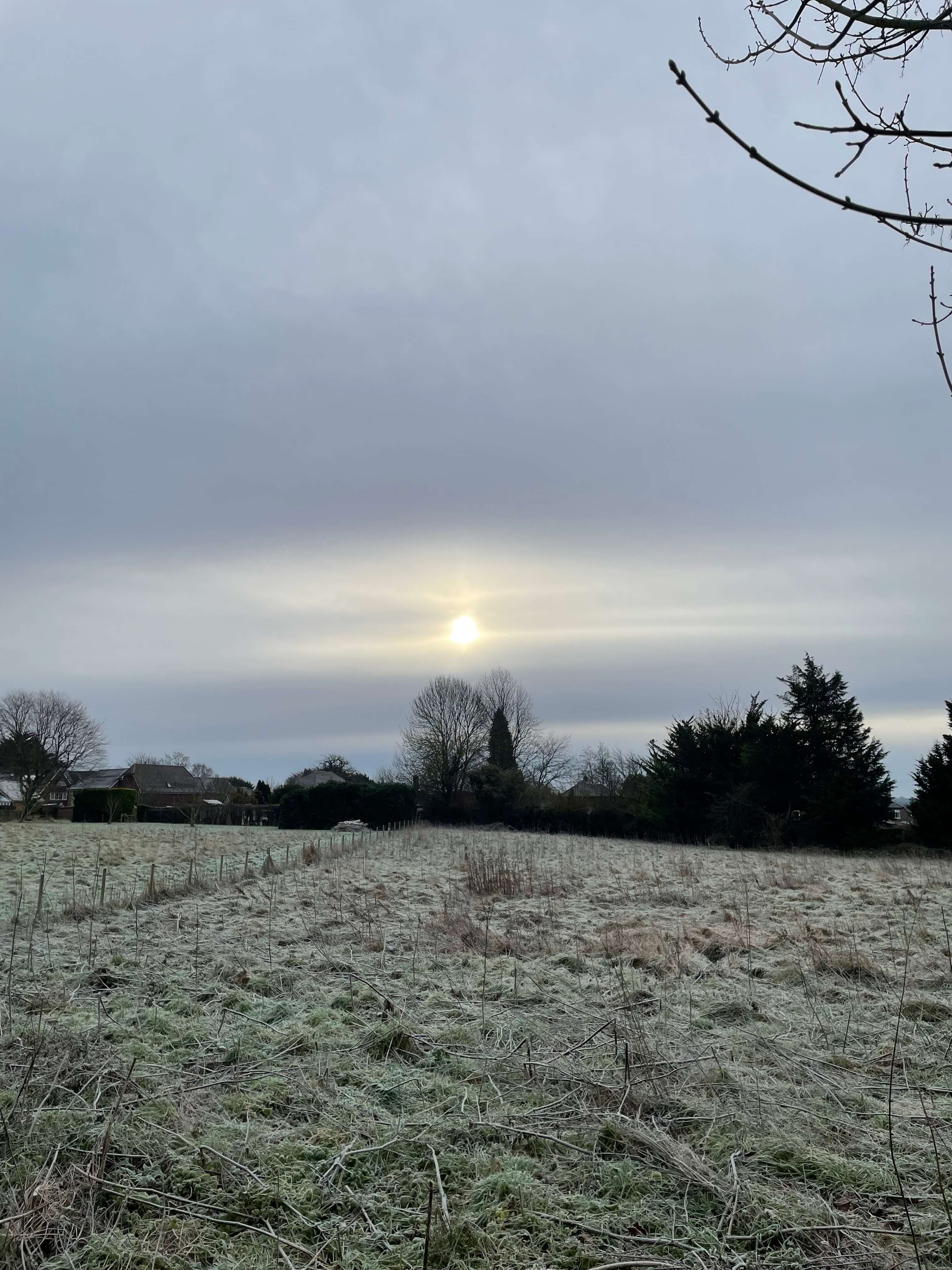
But also a certain hope; by now the daylight hours are lengthening, which becomes apparent when we are fortunate enough to have clear skies around sunrise or sunset. New growth is apparent, with new shoots finding their way up through the earth and leaf or blossom buds swelling on trees and bushes.
I feel so tired at this time of the year. I just feel I need to survive this winter, just get through it. I shall light a fire, wrap up warm, pour a beer and read a pile of books. I am in touch with my inner dormouse and intend to essentially hibernate until Spring.
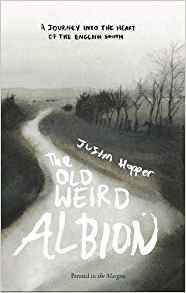
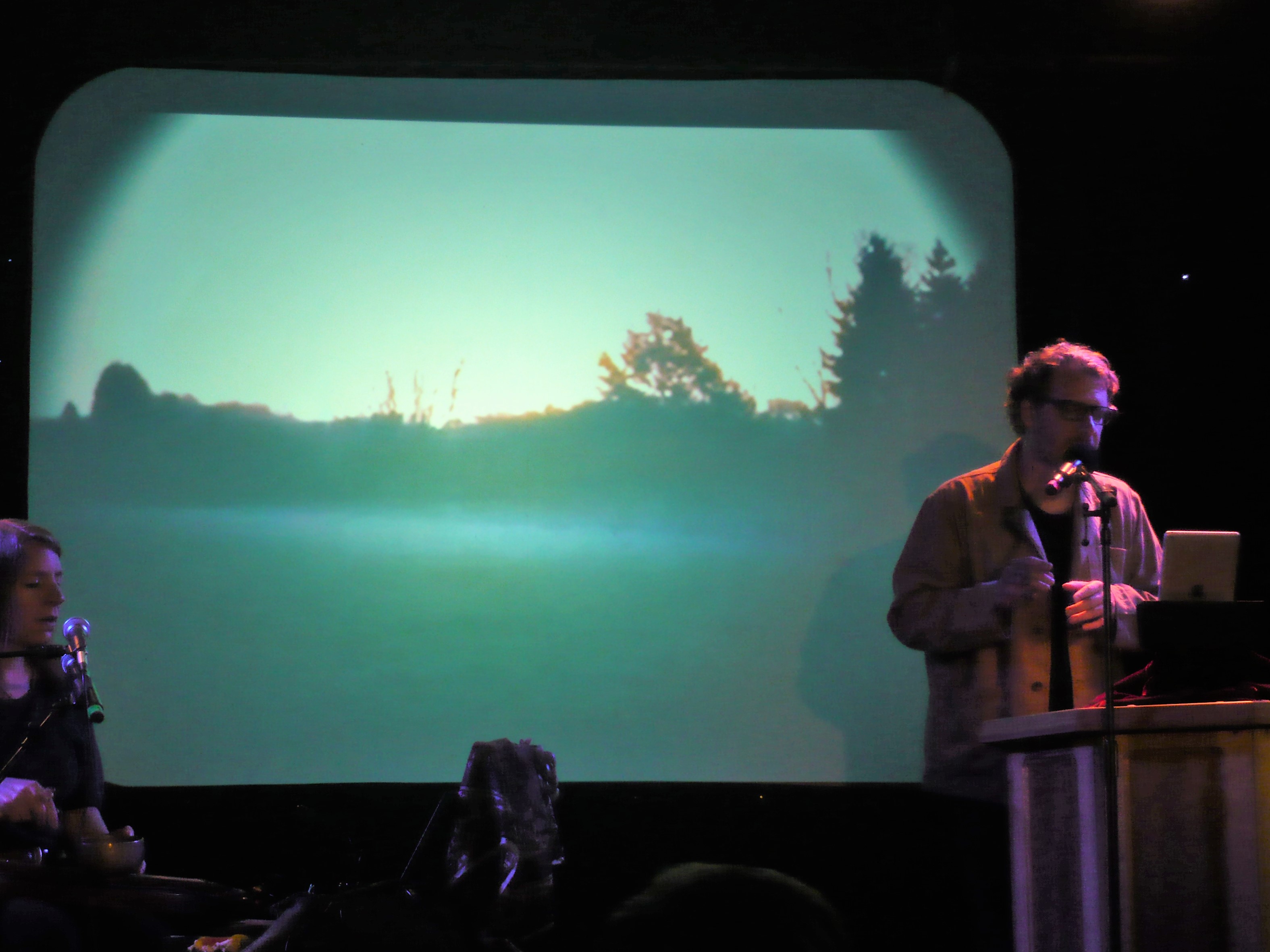
This Tuesday evening just gone. Brighton. 7.30pm. I’m here with my friend Mark to see a gig for the first time since the Pandemic began, a gig I had planned to see last year for my birthday, but which was cancelled – due to the Pandemic, of course. Chanctonbury Rings is a collaboration between writer Justin Hopper, musician Sharron Kraus, and visual artist Wendy Pye, based on extracts from Justin’s 2017 book The Old Weird Albion.
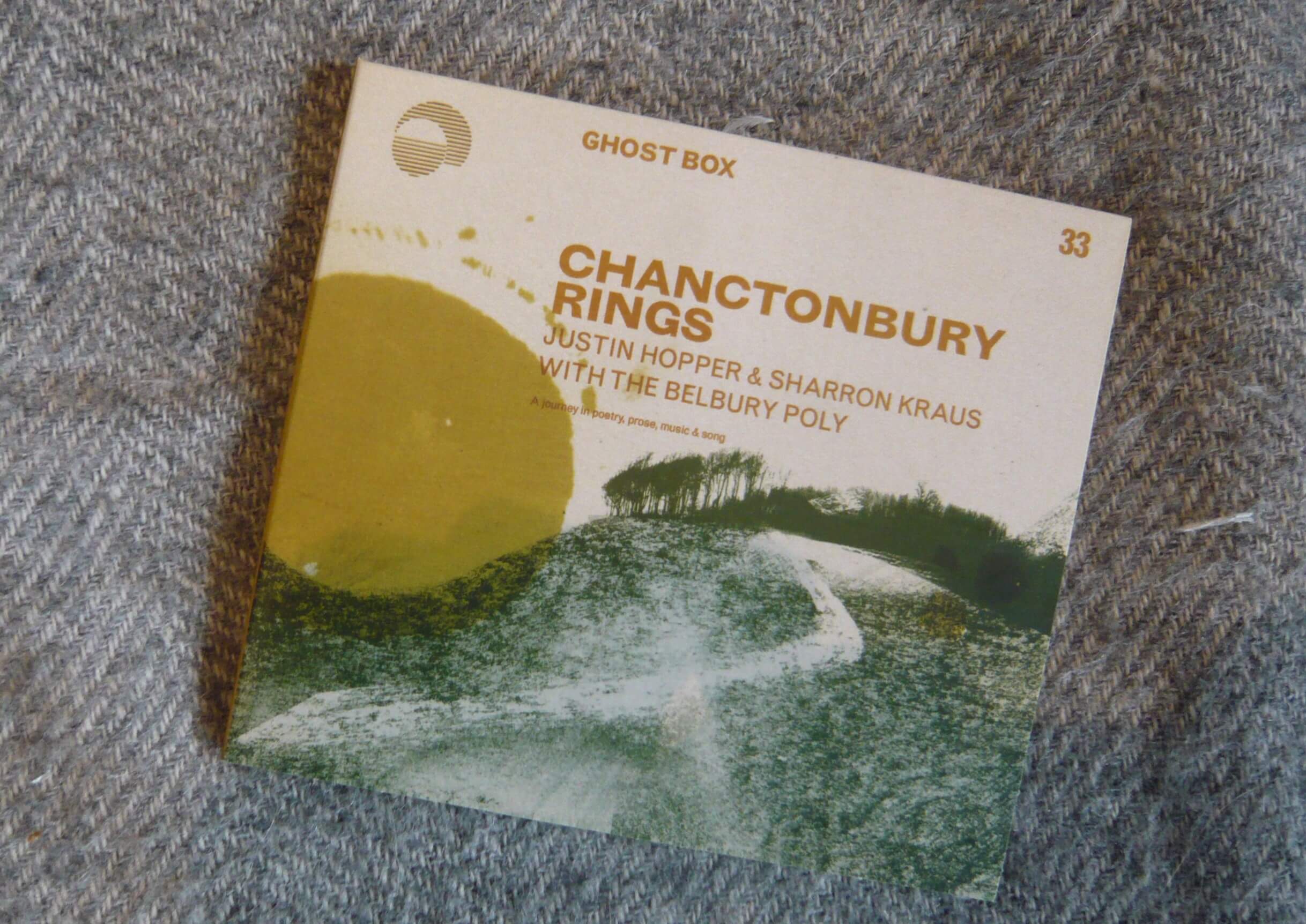
Chanctonbury Rings was released (on CD, vinyl and download) by Ghost Box in 2019, and is described on their website as ‘A spoken word and music project by writer Justin Hopper and folk musician Sharron Kraus. It also features Ghost Box’s own Belbury Poly. Based on live performances of Hopper’s 2017 book The Old Weird Albion, it’s a poetical, autobiographical and psychogeographical account of his experiences at Chanctonbury Ring…‘ It goes on to state: ‘The album is a blend of folk, electronic music, poetry, prose and environmental sound. Kraus’s electro-acoustic soundscapes and songs interweave with Hopper’s rich, intimate narration.’
I first learned of The Old Weird Albion a couple of years ago when I was emailed by a reporter writing a review of the book for the Caught By The River website (which I must post about sometime), who had come across one of my blog posts on Chanctonbury Ring, a prehistoric hill fort on Chanctonbury Hill, part of the Sussex South Downs. In conversation, he told me of both the book and the music project. Naturally, I ended up buying both. (My review of The Old Weird Albion is here if you wish to learn more about it. Of course you do.)
When I heard it was being performed live, I decided I would have to go to see it. Then the Pandemic intervened and it would be over a year before I had another chance.
So on Tuesday we are in the Brighton Spiegeltent, part of the Brighton Fringe, awaiting the show. Outside, pouring rain and a lot of rather drunken football-related chanting. (I believe there was a game on somewhere.)
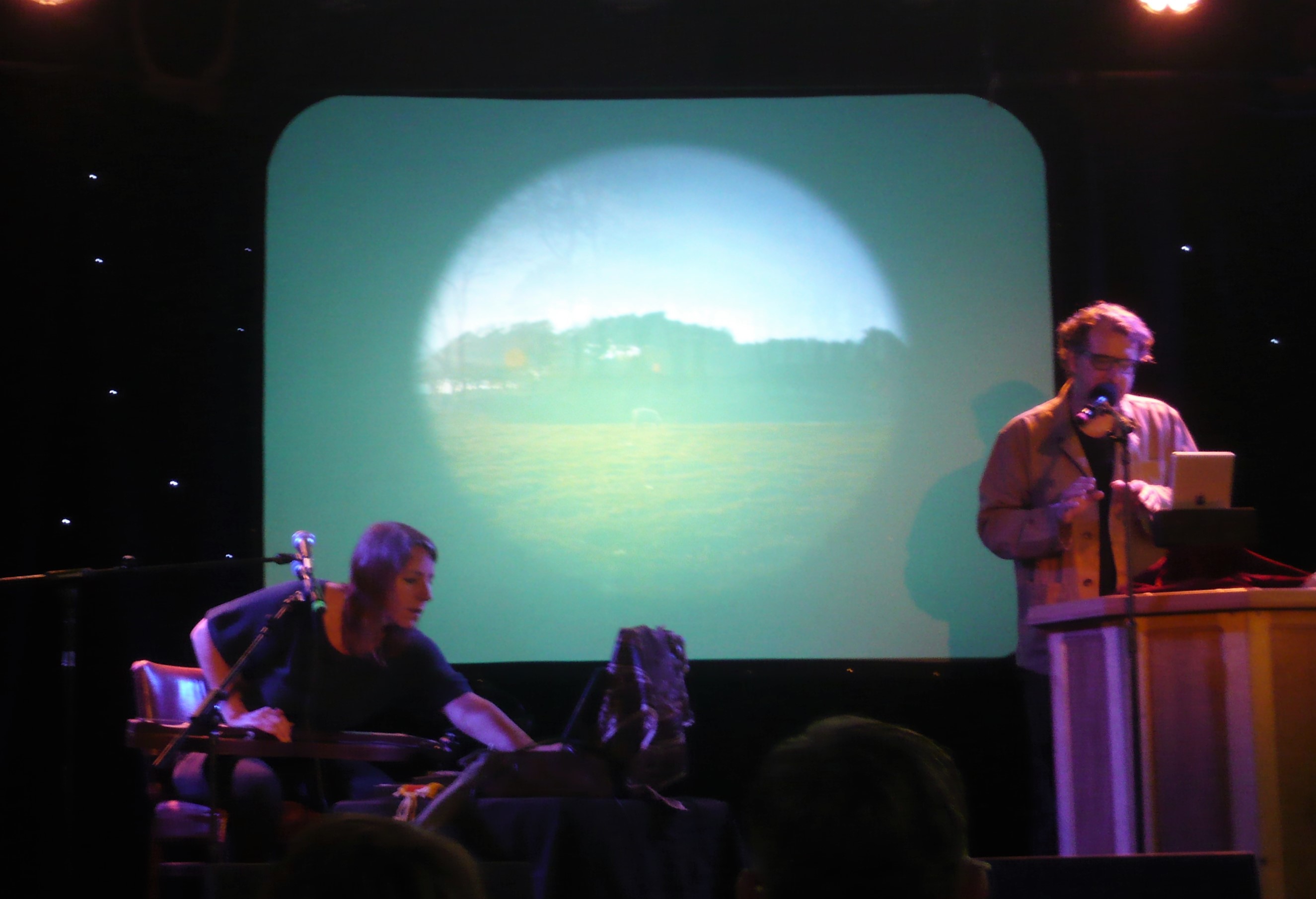
Inside, though, Chanctonbury Rings. The piece is built around the section of the book where Justin visits Chanctonbury Ring one May Day, to watch both the sunrise and the Morris dancers celebrating Beltane, the ancient name for the festival held that day. It combines personal experience with myth and legend, Sharron’s music both punctuating and supporting the narrative, and Wendy’s visuals projected on a screen behind the performers.
Incidentally, Sharron is a musician I had not come across before hearing the album, but I have since been captivated by her own stunning albums. If you have any interest in folk, I’d recommend you give them a listen.
Wendy’s visuals were well-judged photographs and film of Chanctonbury Ring and the surrounding area, at times deliberately grainy and vague and at others lusher, although there was perhaps something ghostly about all of them, each choice inevitably suiting the mood of the narrative at that point.
The spoken words, the music and song, and those visuals weaved around each other and blended happily together, elegantly constructing the world as it appeared to one viewer that May Day morning and projecting the audience, for the duration of the performance, into that world too.
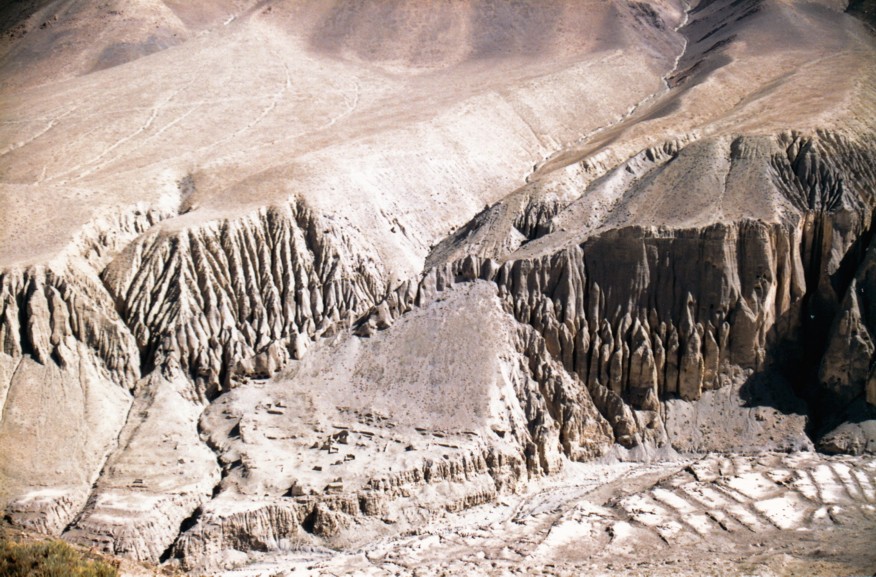
On the western side of Thorung La, the climate is much drier and in places the scenery is very much that of a desert landscape.
As you descend, though, you soon come across settled areas where meltwater from the snows and glaciers higher up enable vegetation to grow.
Mani stones plus a fine set of argali horns on top of a wall in Kagbeni. The argali are the wild sheep of the Himalaya.
In Tukuche, at 2590m – less than half the altitude of Thorung la, which we had crossed just two days before.
It was in places like this, that we really felt we could be in another century. Buildings of stone and beautifully carved wood, ponies for transport, no wheeled vehicles, and the two fellows to the right of the picture are busy crushing lengths of bamboo to a fibrous pulp, ready to make into paper.
It was in places like these, actually, that I felt I could just leave the world behind and spend the rest of my life. Yes, totally impractical, I know, but…
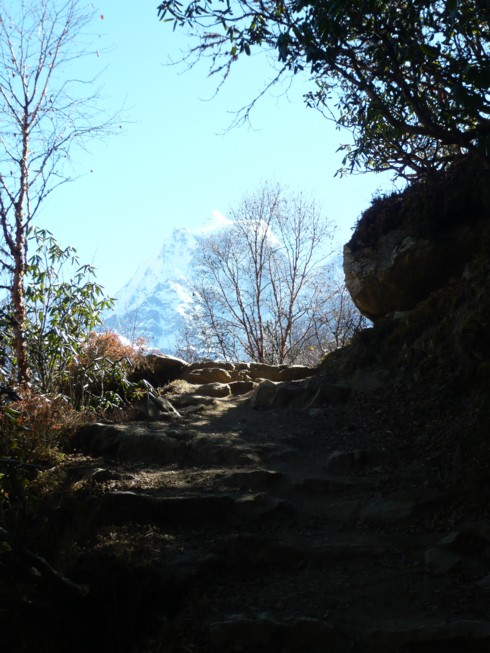
We came for the high peaks, but the mountains lower down have a breathtaking beauty of their own.
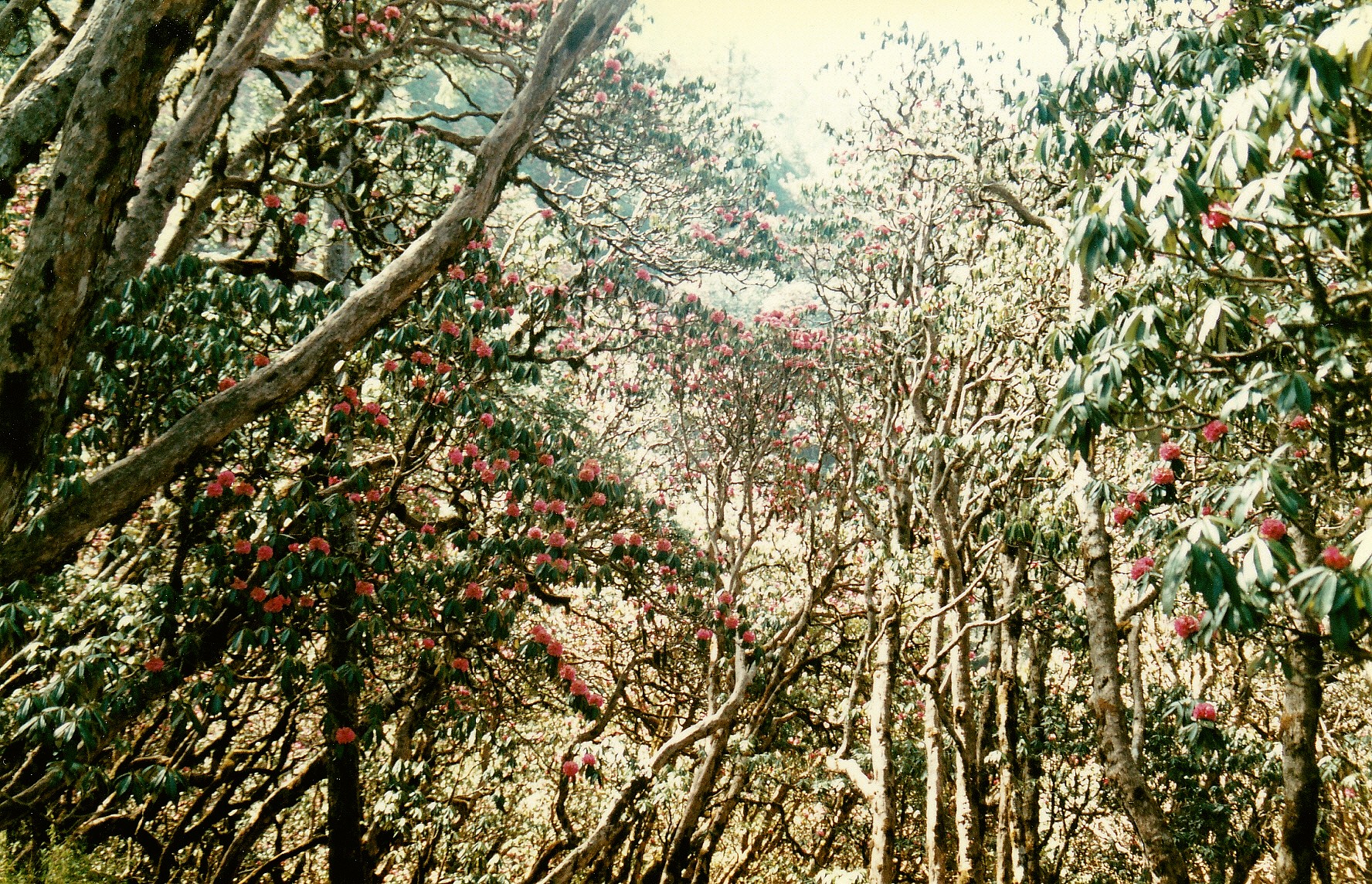
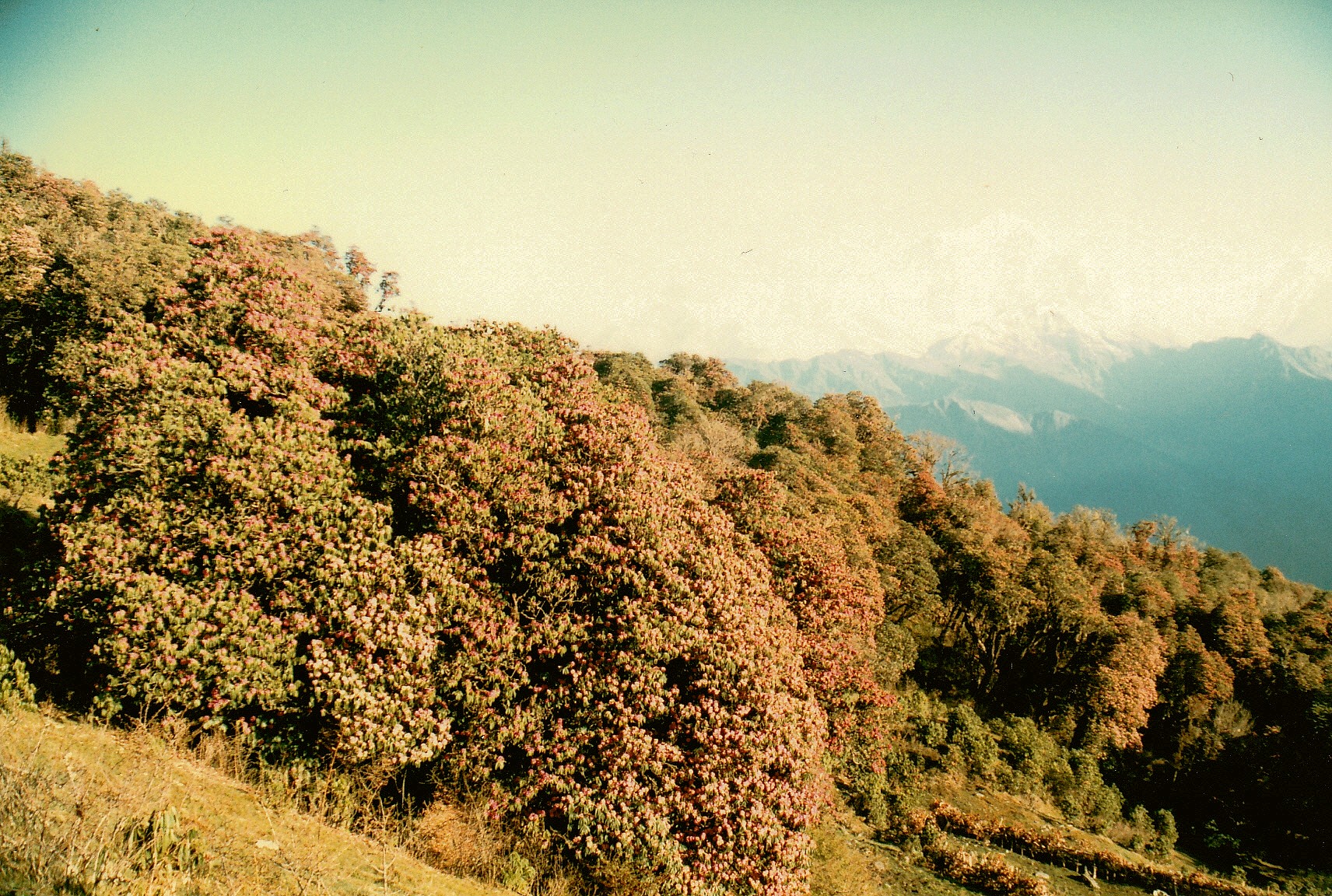
Sunrise on Poon Hill is a treat most trekkers ensure they don’t miss. Unrivalled mountain views, and in the spring the massed flowers of the rhododendron forests.
Ah, yes. Did I just mention the rhododendron forests?
Photos just don’t seem to do them justice.
And then a few days later it was over, and we were back in Kathmandu…






 Mick Canning