The Conquering Hero Comes!

This is another day when I feel frustrated because I’d like to be out travelling, although I did get to have a great long walk on the South Downs on Saturday. But rather than post about that at the moment, I have a fancy to re-post this piece I wrote a few years ago:

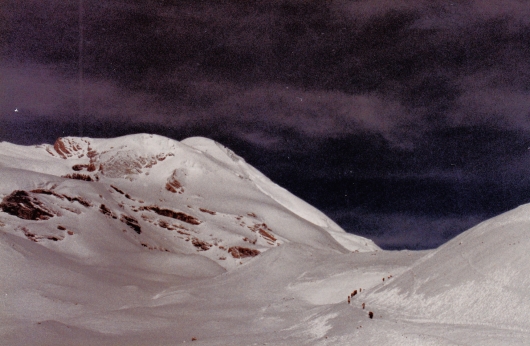
I’ve never wanted to ‘conquer’ mountains.
img_0010

Or any other parts of the world, really.

I’ve always felt this was the wrong way to think of a journey. It was ridiculous to think I could impose my will upon a mountain, or on a desert, or indeed upon any part of my route. That I could, perhaps, somehow bend it to my will.

I feel it is more a case of preparing as best as possible, including mentally, and then perhaps said mountain will tolerate my presence; will allow me passage.

‘Conquering’ also carries the implication of invasion, of fighting, of strife. That is not the sort of relationship I want with mountains, or with any other place I choose to travel.

Certainly, in the past I have travelled at least partly with that mindset at times.

IMG_0005

Some of you may recall I wrote about an extremely foolish journey I took in Oman when I lived there over thirty years ago (Mr. Stupid Goes For a Walk). Although I was running low on water, I pushed myself to the limit to reach the final ridge of hills on the route I had decided I was going to achieve one day, nearly killing my stupid self in the process. And although I achieved my aim, I didn’t feel victorious.

Only a bit stupid.

I prefer instead to think of myself as a visitor. And as a visitor, I need to have some manners. You do not expect to find the visitors pushing through your house and demanding to see this or to be given that, so I don’t.

I am not out to break records, nor to prove how tough I am.

This does not imply a lack of ambition, nor a lack of determination. Indeed, I have both – it’s just that the mindset is a little different. In particular, I give myself different priorities. I want to reach my goal but if I don’t, it does not matter. I think I’m more attuned to my own safety, and perhaps that of others. I hope I can be receptive to the feelings of others, too.

A good example in the climbing world is that of the mountains in Nepal that climbers are forbidden to reach the summit of, due to the belief that they are the abode of gods. Theoretically, a climber will stop some 10 meters or so short of the summit. Opinion is naturally divided over whether a climber would, or wouldn’t, in the absence of any witnesses, respect that ban.

I would respect it every time.

The mountains, of course, are inanimate. They do not wish me harm or otherwise. Neither do deserts or oceans. Even the most inhospitable of landscapes is neutral. It does not care whether I succeed in my aim to reach or traverse a particular part of it, and it will not hinder or help me in the attempt.

154

My feelings about a landscape are just my reactions to it, and if I should choose to give this landscape a kindly or vindictive character, I am only projecting my own feelings onto it.

This may give me comfort, or otherwise, but will make no material difference.

Maybe I am simply suggesting it’s good to travel with humility.

I have touched upon that before!

An Andalusian Adventure (2)

Part 1 can be found here: Part 1

It was a long way to Colmenar. I was walking up into the Malaga Mountains, with no map and no directions other than a road sign at the edge of Malaga suggesting that by following this road I would eventually reach my destination.

I suspect I have undertaken other journeys where I have been better prepared.

But the day was perfect for walking, with high drifting clouds and a light breeze to keep me cool, and having done little for several days other than eat, drink and wander around Malaga, I was feeling fit, fresh, and eager to get going.

As the hours went by and I slowly gained height, the clouds began to build up, and the temperature gradually dropped. About an hour from my destination, it finally began to rain. Immediately the temperature plummeted, and I rapidly went from merely chilled to decidedly cold.

Usually, we approach rain all wrong. Buddhists would say unskilfully. If it begins to rain, we hunch ourselves up, both physically and mentally. We fear becoming cold and wet. We need to let go of this fear. It’s a good lesson to learn. Stop. Take several long, slow, deep, breaths, and let go of this feeling. Let go of this need. We act as though hunching ourselves up will keep us dry and make us warmer. It doesn’t. Unless one can find shelter, it is better to accept the rain and finish the journey.

It is a cliché to speak of heightened awareness, yet that is also a by-product of this letting go. We remove our focus from the rain and instead allow it to go elsewhere, where it is really needed. We should throw back our heads and embrace the rain, enjoy the freshness of the rain on our faces. Listen to the sound of the rain on the ground and the leaves around us.

Back then, I hadn’t learned that lesson. I hurried towards the town as fast as I could.

One of the first buildings I came to was an inn. I went into the bar and asked for a room. The room I was given was reached by leaving the bar again and walking around the side of the building. The door to my room had a gap at the bottom of an inch or two, but otherwise fitted the door frame well enough. It was locked and unlocked by the type of huge key frequently described as a jailor’s key. The room was furnished only with a bed, a chair, and a small chest of drawers. There was a mirror above the chest of drawers and a crucifix above the head of the bed, but other than those the whitewashed walls were bare. There was a small window which was shuttered. The floor was of flagstones, with no carpet or mat. To use toilet or bathroom it was necessary to leave the room again and continue still further around the building to reach a very basic room. But again, it was clean. And there was a toilet that worked, and a sink with a cold tap. There was also a shower set into the ceiling I could have braved, but it felt much too cold for that.

Later, I would occupy rooms like this in many other places, in many other countries. Simple, perfectly clean, and usually very cheap. I am not sure whether it is because they appeal to the minimalist in me, but in many ways I prefer them to more comfortable accommodation.

Whenever I have stayed in one, I have always felt I was carrying too much baggage with me. I have been beset with the feeling I should be throwing out some of the items I have in my bag – do I need all those clothes? All those other items? It has been a recurring regret of mine that I have never managed to live a simpler lifestyle than I have. I have never enjoyed the frenetic hurry and clamour of modern urban life, and I hate how easily my life can become complex and filled with what feels like unnecessary fuss.

Here, even the spartan contents of my rucksack seemed too much. Perhaps I had too many books with me…

But now I was here, I changed out of my wet clothes and opened the shutters so I could look out at the low cloud and misty horizon. The rain drummed comfortingly on the roof and I settled down to read a book for an hour or so. I was content, and that’s a good place to be.

I cannot remember what I had for supper that night, but I do remember I drank a bottle of cheap red wine with it. Perhaps that is the reason.

I rather think I slept well, too.

And as in all good stories, the morning dawned bright and clear, the sun shining low in a clear blue sky. Before I left the town, I passed a couple of shops and bought a few items for my lunch: bread, a huge tomato, a hunk of cheese, a couple of apples, a bottle of cheap wine.

img20190318_12103098

With the improved weather, and the fact I had more downhill stretches that day than uphill ones, I allowed myself the luxury of returning to Malaga slowly, including a stop for lunch of about an hour. Compared to the UK, Spain is a large country and the rural population is comparatively small. Although I was not far from the city, I saw almost no one else on my walk and I meandered along slowly through a mixture of low trees and bushes, many of them in flower – the distinctive Mediterranean maquis vegetation – rocky outcrops and clumps of flowers, and the occasional lone farmhouse. The ground was dry and dusty, as though the rain of the previous day had never happened, and the sun was hot. With my lunch consisting of about half a bottle of wine as well as the food, I was feeling extremely weary and footsore when I reached Malaga again. I found the hotel I’d stayed in before and got a room on the same floor. After showering, I finished the bread and cheese and decided all I wanted to do was read my book for a while and then have an early night.

There was a knock at the door and when I opened it Matthias was standing there grinning.

‘I saw you arrive earlier. We go for beer, now!’

An Andalusian Adventure (1)

img20190318_12075705

It wasn’t my first trip to Spain, although it was a long time ago now. I walked into Malaga with a rucksack on my back and followed the signs for ‘Centro’ until I found myself in the crowded central district of older narrow streets with three- and four-story shops and cafes, guest houses and cheap hotels. The second hotel I tried offered me a perfectly adequate room on the third floor at a very good price.

The hotel was old. The wooden floors of the corridors were worn and polished by the passage of countless feet, and everywhere seemed gloomy. It gave the impression of having more nooks and corners where light never penetrated than it should. But the only light came from the occasional bulbs hanging from the ceilings, and other than by returning to the street, the visitor would only encounter daylight once they had reached their room and opened the curtains.

The bed was old, and sagged a good deal more than it should, and the furniture was so dark with age it was difficult to make out the grain. As a base for a few days, I decided it would suit me fine. As I unpacked and settled in, I suddenly heard a violin being played. It sounded quite close, and I opened my bedroom door to investigate. I had just decided the sound was coming from a neighbouring room when it stopped, and then a door opened. A man about ten years older than myself emerged and stopped when he saw me.

‘I’m sorry,’ he said. ‘Did I disturb you?’

He introduced himself as a German who I shall call Matthias, although I am no longer certain that was his name, and who immediately invited me to go for a beer.

It would have been rude of me to refuse.

Matthias was meandering around Europe, he told me, and supporting himself largely by busking. Later that week I was to see him playing in the street and be surprised at just how many passers-by threw coins into his hat. It seemed a particularly enjoyable way to travel. Over those beers and then over a few more later in the week, we talked travel and philosophy, music and religion. When I meet someone while travelling, I find it interesting how I often have less constraint than I would when I meet someone for the first time in more familiar surroundings. Frequently, I will reveal things about myself I would never dream of doing to someone I meet perhaps for the first time at a friend’s house, or at my writing group. I presume it is the unspoken knowledge we will never meet again.

Beside the entrance to the hotel was a little café where I made it my habit to take a breakfast consisting of strong coffee, sometimes with slices of thick white bread dipped in olive oil, sometimes with fried eggs. It was a good place to sit and watch Malaga waking up. Its clientele were a broad mixture of workers all grabbing a quick breakfast on their way to office, shop or building site. Mostly they sat in silence, reading the morning paper and smoking, other than to give their orders to the waiter. On the bar a tiny transistor radio chattered away in speech too indistinct for me to make out more than the occasional word. In a way, though, that only added to the atmosphere. Despite it being a familiar situation, there was enough of the unfamiliar and the foreign to make it feel a little exotic.

I wanted adventure, I wanted to explore. I’ve wanted to do that for as long as I can remember. I travelled in those days with a few changes of clothes in a rucksack and a minimum of half a dozen paperbacks, which invariably included something by Hermann Hesse and at least one poetry book.

That, at least, hasn’t changed much.

I liked to travel light (other than the books, of course), so I had no camera with me and probably very few of the essentials most people would think to take on a Spanish holiday. No swimwear, for example. I don’t do beaches, at least not in that way.

But I had come to Malaga because I had a peripatetic nature, and my itchy feet were troubling me. After a few days I decided to take a walk out to the little town of Colmenar, to the north of the city. I would take a room there for one night and return to Malaga the following day. Any other destination would have done just as well; the purpose was the journey, and the journey was the purpose. I chose this route simply because while wandering around the outskirts of Malaga I saw a narrow road winding up into the hills with almost no traffic on it, signposted to Colmenar. The morning after I had made the decision, I packed my rucksack and checked out of my hotel immediately after breakfast.

Part 2 to follow

Wandering

I’m posting this poem again, as it rather illustrates what I’ve personally found particularly frustrating during the recent lockdown. We can go for longer walks now, it is true, but that’s still not the same.

015a

If I could just wave a wand,

I would wander the world.

With my notebook in hand,

And a bag on my back.


I would sleep under hedges,

In hotels and haylofts.

Drink beers under trees,

And eat cheese on the moor.


I’d watch clouds over hilltops,

And boats on the ocean.

Shapes and shadows at sunset,

A moon with a view.


And I’d write trivial poems

Of snowfall and sunlight,

Birds singing at dawn

And the sounds of a stream.


There’s the lure of a skyline,

And skylarks above me,

Wine and woodsmoke my welcome,

At the end of the day.


To travel, to journey,

There’s magic in wandering

Over moorland and downland,

Through woods and through fields.


The world’s full of wonders

All waiting for wanderers.

Let me follow these paths

For as long as I can.

The poem can be found in my collection The Night Bus, which is available here. should your interest have been piqued by this…

The Compleat Trespasser by John Bainbridge

This time, the review without any distracting rants. Probably.

51pfb0Ihk8L._AC_UY218_

Sub-titled Journeys into Forbidden Britain, it immediately sets out its agenda: it is both a potted history of how the land was stolen from the inhabitants of Britain, and the long struggles to regain access to much of it, with numerous anecdotes of the author’s own escapades trespassing.

The story of how the inhabitants of Britain came to lose their access to the majority of the land is a story that has been repeated throughout most of Europe and beyond. Land forcibly taken by invading armies and distributed partly to their soldiers, but mainly their officials or nobility. Land enclosed by lords and kings for hunting purposes, burning villages and evicting their inhabitants from the land. Land taken by acts of Parliament to further enrich the gentry. Land given by kings to the established church, so that peasants might labour only to feed the rich and corrupt clergy.

Land that has been kept private and jealously guarded both by strict and cruel laws, and by equally cruel methods by the landowners themselves. Thus laws that deemed the starving and dispossessed villager might be executed for taking a rabbit from land he once lived on, to feed his family. Thus the mantrap that would cut a mans leg off. Thus countless thousands beaten and sometimes killed by gamekeepers and owners.

When I attempted to review this a week ago, it ended up turning into a full-blown rant against grouse moors (I do rants so well, these days!), but even today it is not just grouse moors that are fenced off just so the idle rich can enjoy slaughtering wildlife – there is plenty of woodland and more open land enclosed around the country and dedicated to pheasant shooting, for example. There are country houses with huge estates. Land taken by the MOD for training purposes, and never returned. There are many landowners determined to block access to legal rights of way. Although the Countryside Rights of Way act of 2000 was supposed to restore access to most of the countryside, there is still much that is off-limits.

Yet there are good landowners, too. The tales of John’s own trespassing include several encounters with sympathetic landowners happy to see walkers on their land, with the obvious proviso that they cause no damage.

The improved access rights we do have today were earned the hard way. Since Victorian times there have been mass trespasses intended to both bring the issue into the public forum, and to try to force change. The Kinder Trespass of 1932 is probably the most famous, yet many preceded that. It is thanks to the countless trespassers and campaigners of those days that we have improved access rights today.

The book finishes, though, with a plea. Firstly to campaign for further land reform, for better access rights – rights that are enjoyed in Scotland, but not England, Wales or Ireland. And secondly with a warning – the current government campaigned at the last election on a promise to criminalise trespass, so that anyone who deliberately or inadvertently strays from a public footpath onto private land might find themselves on a charge in a criminal court.

Anyone who enjoys the countryside in any form, enjoys spending time there, and walking in it, should read this book. It provides a very good, clear, account of where we are, how we got here, and what has been done to get us someplace better.

But also that we still have some way to go.

Ghost Roads

I love old roads that have fallen into disuse, or been relegated to the role of footpath.

There is one a few miles away on the edge of the next town. It used to be part of the road running from London to Hastings, but when the ‘A’ road that now serves that purpose was built, it not only rendered it redundant for the purposes of long distance travel, but the new cutting actually sliced through it, so it now ends at the top of a hill. From that point, there are only a couple of footpaths leading away in different directions.

Almost fifty years ago (really? Ye Gods!) I cycled along there on my way to the coast from the London suburb in which I lived as a teenager. Many of the roads I used that day are now very much wider, and all are much busier, save the one on the edge of that town. When I walk there from my house, it feels that for that part of the walk I am on a ghost road. I can still think myself onto my cycle, into that year, and the absence of traffic feels weird. If I think hard, I can almost feel spectral traffic going past. What adds to that effect, is that I often walk that way in the evening and the light – or lack of it – only encourages those feelings.

I think of it as a Ghost Road, but that definition really refers to a road that is haunted. Such a road is the B3212 that crosses Dartmoor, and on the stretch between Postbridge and Two Bridges it passes the cluster of buildings known as Powdermills. Powdermills is so-called because most of it was built for the manufacture of gunpowder. The buildings are spaced far apart in case of accidents (translation: the gunpowder blowing them to Kingdom Come), and for the same reason the roof of each building was of tarred paper. This allowed the blast of an accident to disperse upwards, hopefully giving the occupants of the building a slight chance of survival.

Anyway, there were many such accidents and many deaths. The B3212 is supposedly haunted at the bend nearest Powder Mills, just where it passes over the Cherry Brook, by a pair of hairy hands that try to wrench the steering wheel of unwary drivers that pass that way, causing them to crash. I admit to occasionally slowing down at that point and taking my hands off the wheel to see if anything happened.

It didn’t.

But I still like to think a Ghost Road is one that has fallen into partial or complete disuse. Perhaps old Roman roads that survive as footpaths are ghost roads; there are certainly stories around the country of spectral Roman legions marching along them at the dead of night.

046a

I think there is something magical about any road falling into disuse and gradually becoming overgrown. A road constructed for wheeled traffic used only by foot traffic. It has a special feel when you walk it, different to the feel of other footpaths.

A country lane at night can feel like a Ghost Road, especially in the light of a full moon.

Another type of Ghost Road is the ancient trackway. These paths criss-cross the British countryside and are often of great antiquity. Formed originally by the passage of feet, both human and animal, but used later by carts and other four-wheeled vehicles. These also seem to have that magical feel, although in this case I feel I’m sharing the passage with the ghosts of countless other travellers over thousands of years.

And in the midst of the lockdown during the Covid-19 pandemic we seemed to acquire a few more of these Ghost Roads – an unexpected benefit of the pandemic, in my opinion. It seems a real shame they have become busy again.

Flint Flakes and Very Big Snails

We are now allowed to go out to exercise for an unlimited amount of time each day.

This may not have been top of everyone’s Relaxing-the-Lockdown-Rules-Wish-List, but other than the opportunity to finally begin to see some family and friends, I think it was top of mine. On this first day of slightly increased freedom, I take camera and notebook and go off for a longer walk than I’ve been used to this last couple of months. Nothing particularly long, but it feels good to know there is no reason at all for me to limit my walk or have to justify it to anyone.

Naturally, there are other walks I want to do even more, but I’m still reluctant to use public transport to get to somewhere I want to walk and, to be quite frank, the government has not made it clear whether I’m allowed to (although they’ve given the police a major headache if they want to try to control it). So for the moment, the South Downs will have to wait.

But now I am thinking of a walk I did almost exactly a year ago, to reacquaint myself with an area of the North Downs I lived close to a long time ago. I planned to walk along an ancient trackway running along part of the ridge of the Downs, and marked as such on the Ordinance Survey map. This is an area where many Roman remains have been found over the years, mainly in the wide river valley nearby, but I had no idea how old the trackway was thought to be, whether it pre-dated the Romans or was more recent.

But many of these routes were in use long before the Romans arrived, since the early Britons found the lower lands were frequently too marshy and thickly wooded for either easy settlement or for travel. And so it is highly likely this route is several thousand years old. One of the Old Ways. And just walking along it gives me a sense of continuity with the past.

In a wooded area the footpath passed a wide, shallow pit, although there was nothing marked on my map. Mindful that it was always possible it had been dug out by early settlers mining flints, I stopped and poked around in a few areas of exposed earth until I found a couple of flint flakes that appear to have been worked.

P1060431 (2)

To my un-scholarly eye one flake appears to just be a waste flake struck off the flint being knapped (R), but the other could be the tip of perhaps a knife that was being worked but broke in the process, or even a stone chisel (L).

Having adjusted the focus of my eyesight, as it were, to looking for worked flints, I almost missed the fact that the obvious snail shell partially revealed nearby was larger than it should have been, measuring about 5 cm across.

The Romans brought all sorts of goodies to Britain, including a large edible snail (there’s no accounting for tastes) that we now call the Roman Snail. Although found over much of Europe, they have become rare in recent times. In the UK, too, they are now only found in a few areas, including parts of the North Downs, and are protected under Schedule 5 of the Wildlife and Countryside Act making it illegal to kill, handle or possess them without a licence.

The shell I found obviously belonged to one that had long ago gone to meet its maker (or maybe a few herbs and a thick gravy), although I had no way of telling how long ago.  Whether there is still a population of living snails in that area I don’t know either, since that is information that tends to be kept as secret as possible.

But both the finding of the flint flakes and the snail shell seemed to reinforce that feeling I had of continuity with the past.

On Windover Hill and The Oddness of Time

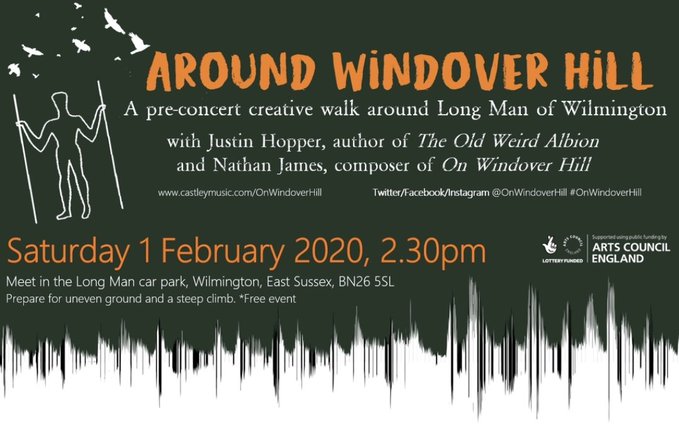
Yesterday, we joined a walk to the Long Man of Wilmington, on the South Downs in Sussex. The walk was led by composer Nathan James, and Justin Hopper, the author of The Old Weird Albion.

EPrcQenWoAQWbeb

The Long Man is a chalk figure etched through the grass into the hillside, below the summit of Windover Hill, revealing the chalk that lies beneath. When and why it was first cut is the subject of myth and speculation – and that brings us neatly to Nathan’s new composition.

P1060405a

On 7th March, Nathan will premier his fantastic new choral work On Windover Hill at Boxgrove Priory, Chichester, Sussex. This has been inspired by the Long Man, its mythology, and the art that has arisen around it, as well as the written history and the geography of the surrounding land. It has a very English feel to it, in the tradition of Vaughan Williams or Holst.

Full details of the work and the performance can be found here. Tickets can also be bought by clicking ‘The Premier’ link in the sidebar there. We have ours, and it would be great to see it sold out!

This walk was by way of a taster for the concert, with a mixture of history and mythology imparted along the way, a poem from Peter Martin, read by himself, and extracts from stories read out by Justin, all of which referenced the Long Man. Also  Anna Tabbush sang two folk songs, one of which was the only song known about the Long Man, appropriately enough called The Long Man and written by the late Maria Cunningham.

P1060395a

I’m not sure How many people I expected to see, but we were around forty, with a surprisingly large number being artists of one sort or another.

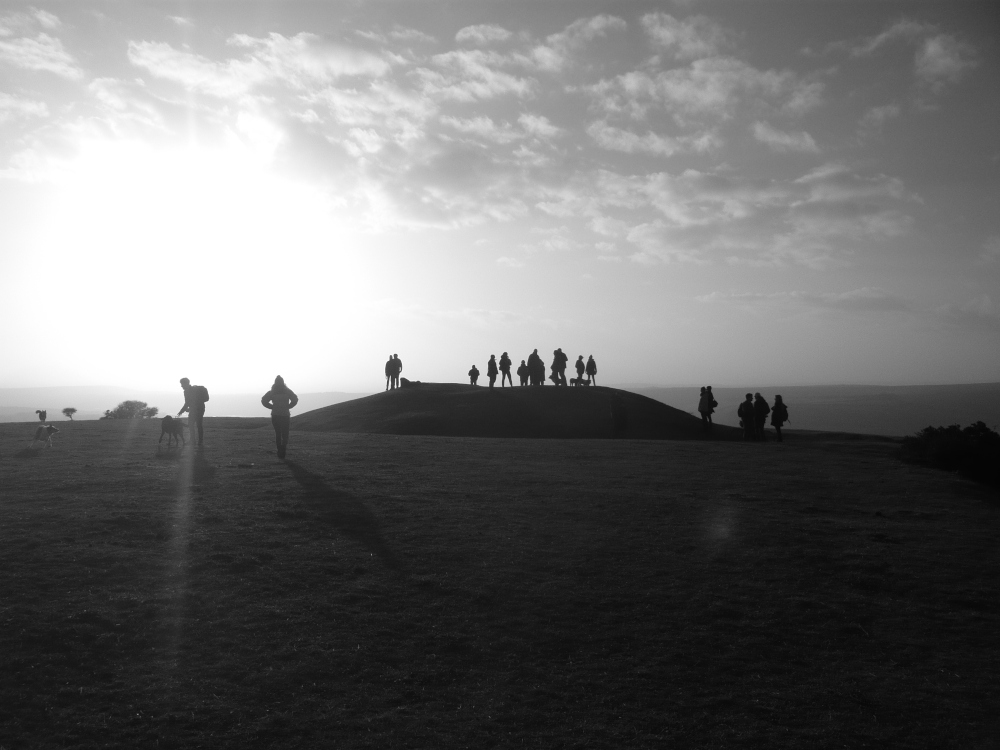
The weather was so much better than we had a right to expect – the forecast had been for clouds and rain, but the clouds cleared during the morning, and we had plenty of sunshine as we ascended, although it rather lived up to its name at the top, with more than enough wind for everyone.

P1060404a

Here, the remains of prehistoric burial mounds sit overlooking the Long Man, and the rest of the surrounding countryside.

P1060403a

Some landscapes seem to muck around with your perception of time, and Downland seems especially prone to this. I’m not entirely sure why this should be, but suspect it is a combination of factors.

It is a very open landscape, and other than the contours of the land and a few trees, frequently the only features that stand out are prehistoric ones, such as barrows and chalk figures. Due to the uncertainty around their origins, these have a timelessness about them, a fluidity when it comes to grasping their history. We see the long view, which perhaps works on our sense of time as well as space. The more recent additions to the landscape are usually in the form of fences, which can easily seem invisible as we look around for something less ephemeral than the open sky to fix our eyes on.

The Downs are an ancient landscape, in any case. When human beings recolonised what is now Britain after the last Ice Age, at first they kept to the higher ground which gave less impediment to travel and settlement than the marshy and thickly wooded lowlands. Most standing stones and burial mounds from the Neolithic or earlier are found on these higher areas.

I do not get these feelings in more recent landscapes. At a medieval castle or manor house, it is easy to imagine the inhabitants baking bread or sweeping corridors; activities as natural to us today as they were then. I feel a comfortable mixture of the old and the new, a recognisable timeline connecting the past with me.

But barrows, standing stones and hillside figures have a purpose alien and unknown to us. Step on the ground near these remains and you can feel the presence of the unknown. No wonder the belief in the past in faeries and elves who inhabited the underground, and who lived essentially out of time.

They offend our carefully erected sense of order and belonging and, perhaps, still pose a barely acknowledged threat to us today.

I might be imagining it, of course, but listening to the extracts from On Windover Hill on the website, I think I recognise that feeling in places, an unexpected musical response to my own feelings. And then Nathan’s description of his creative process on the website echoes some of this too.

I’m hooked!

Who Knows Where The Time Goes?

016a

Today’s mood music is early Fairport Convention while I tinker around with a poem about crows and contemplate a painting of the same. Sandy Denny’s wonderful voice should lift my spirits a bit. The climate crisis and the dreaded ‘B’ word just leave me feeling depressed and listless.

Perhaps I’ll read something.

Or go for a walk.

I’ll catch up with everyone sometime soon.

An Abundance of Greyness

It is a grey, overcast, cool and drizzly August day, and I am feeling particularly flat and uninspired, and disinclined to human company. So in the absence of mountains, what else would I rather do than go for a walk in the woods?

046a

Taking black and white photographs to reflect my mood, naturally…

015a

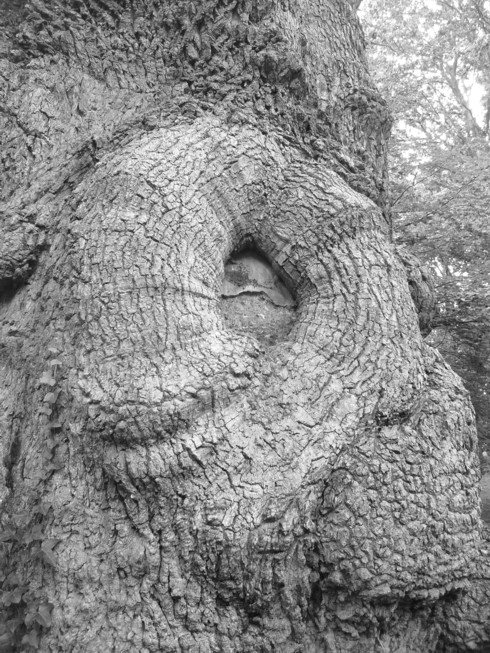
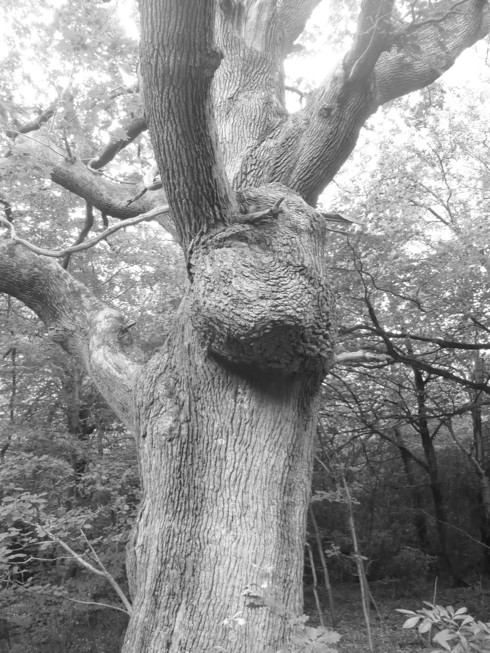
Loving the Oak trees that seem to somehow look as awkward and as out of sorts as I feel…

010a


018a


027a


036a

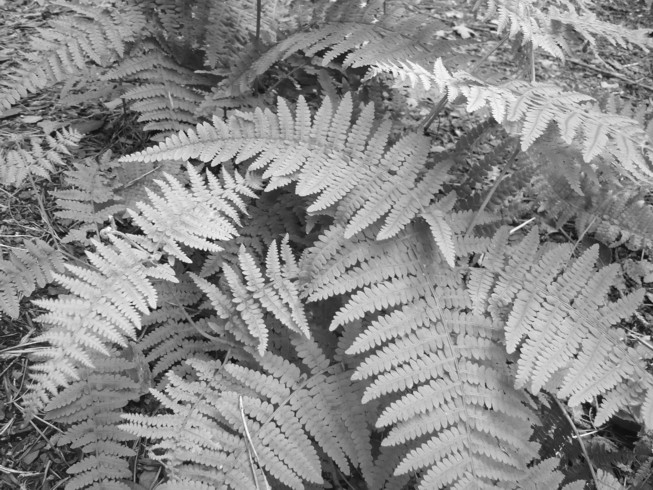
Relishing the lushness of the plants that still seem comparatively fresh…

040a

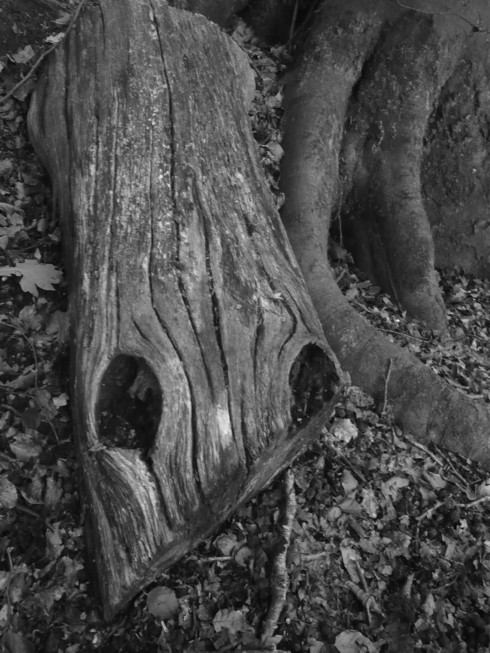
The fantastic shapes of old wood…

050a

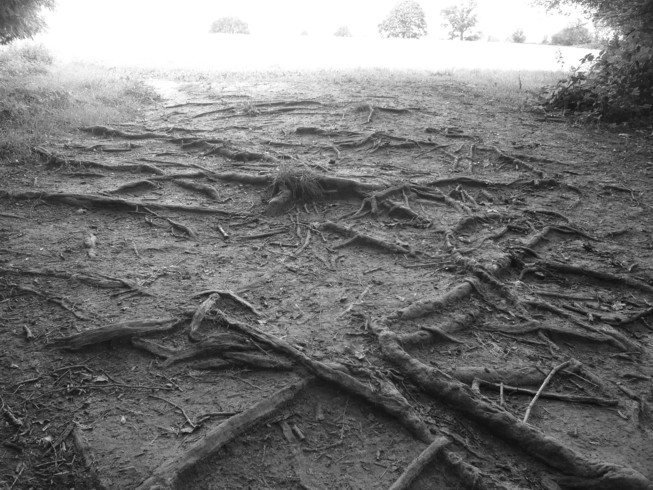
The roots that look as though they might attempt to encircle the earth like Yggdrasil, the mighty tree of Norse legend…

061

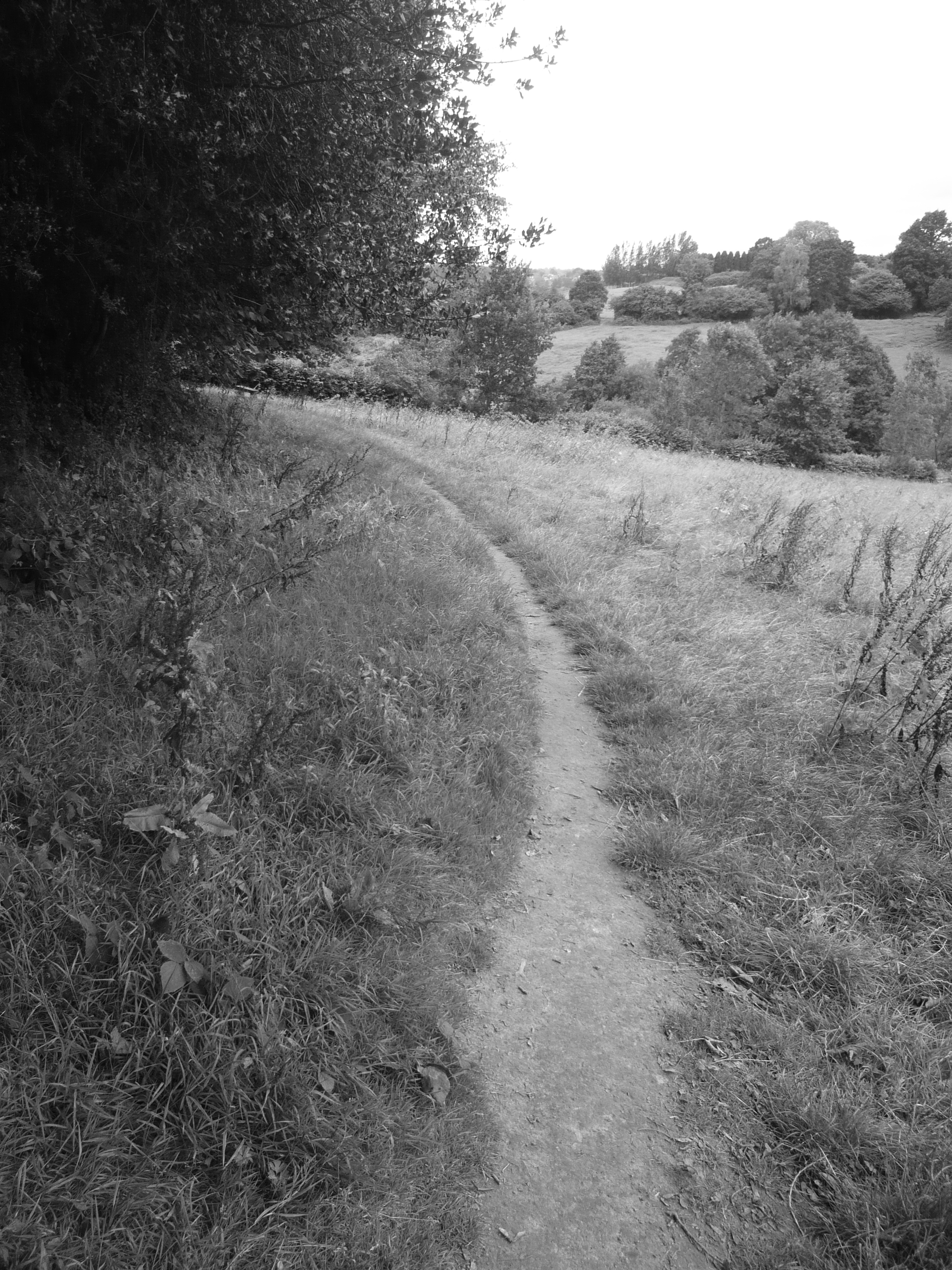
The paths…

044a

And the umbels.