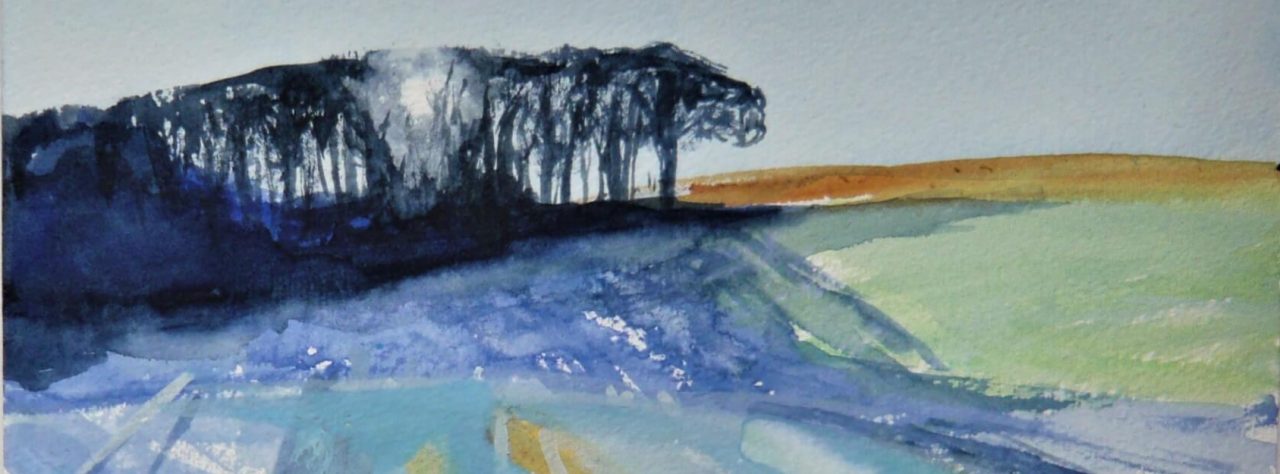
The Expedition Report

As promised in my last post, I attach here a report of my expedition.

On Saturday 30th January 2016, the morning sky cleared and the sun came out. It would be a good walking day.

P1050080

I had thought long and hard over the various logistical challenges of this expedition, and decided eventually, albeit reluctantly, that it would be wise not to attempt it alone. As much as I was loathe to share the glory of this journey, the sensible traveller realises his or her own limitations, and assesses the difficulties and dangers that they are likely to meet. And so I decided that I would take a companion; not only to make the journey more amenable, but also to help with the navigating, act as a safety back-up, and who could act in need as a porter.

We decided to split the tasks. ‘You’re leader,’ my companion Bob said, ‘so you take the big pack with the emergency stuff, and I’ll navigate. It will make life easier for both of us.’ Somehow, that wasn’t quite what I’d planned.

We picked up our packs, said our goodbyes, and set off down the path to the road. ‘We go left here.’ Bob said, turning right. I hesitated. ‘What are you waiting for?’ He asked irritably, turning round.

‘You said left.’

‘Yes. Are you going to stand there all day?’ I shrugged, and then followed him. The first part of our journey presented few difficulties. We turned left at the next junction (‘I said right!’) and followed the road until we had left the town far behind and were surrounded by a sparsely inhabited landscape. Now we needed to find our way down the hill on the other side of the road.

‘It’s not safe to cross here.’ opined Bob.

‘There’s hardly any traffic!’

‘It comes round the corner really quickly. Let’s go on a bit further and find somewhere better.’

‘The corner’s half a mile away! I’m crossing here!’

‘You cross then.’ He sounded sulky. ‘I’ll catch you up.’ He turned away and stomped slowly along the pavement.

I crossed the road, found a bench, and settled down to wait. Minutes passed, and I took out a chocolate bar and ate it. I had a drink of water. I pulled out the guidebook and went over our route again, and then got side tracked and began reading about the dreadful earthquake of 1734 that destroyed so much of Tunbridge Wells. I had another drink of water. I found a newspaper in the side pocket of my pack and did the crossword. As I finished, I looked up, and my companion arrived.

‘Where have you been?’ He looked sheepish.

‘I turned left by accident. Never mind that, I’m here now.’ He sat down beside me. ‘Sorry, I need a drink.’ He took out a flask and poured a little of the contents into the cup.

‘What’s that?’

‘Oh, just a drop of whisky.’

‘That was meant to be for emergencies only!’

‘This is an emergency!’

When we set off again, we were fortunate to find a track that seemed to be going in the right direction. It was no more than twenty foot wide in places, surfaced with a smooth, black layer, and showing occasional white markings roughly in the middle, as if left to guide travellers. Following this, we worked our way down from the ridge and found ourselves in a fairly steep-sided valley. The road bent around to the right and ran along the bottom the valley, following a stream on one side of the road, and an old railway track on the other. There was a signpost beside us, a pub on the left, and a farm on the right. In front of us a church tower showed clearly above the trees.

Bob took out the map and compass, handed me the map and then carefully lined up the edge of the compass with the side of the map. For a moment or two his eyes flickered between the map and route ahead of us, and then he clicked his tongue irritably.

‘I think we’re lost.’

‘Er, the compass needle isn’t pointing north.’

‘Eh? What…’ he fiddled with the compass for a moment. ‘Oh, you had the map upside down, you fool. No wonder!’ He snatched it from my hands, looked at it suspiciously, glanced up at the signpost quickly when he thought I wasn’t looking, and then handed the map back to me. ‘This way. Come on!’

Half a mile along the road, a track turned off to the left and ran under the railway and into a little wood.

‘This way,’ I said.

‘Are you sure?’

‘Yes.’ I went under the bridge and into the woods, to find that the path was a morass of mud. This area is renowned for enjoying (or otherwise) what can be regarded as fiercely localised weather. Even though it was pouring with rain today in the Lake District and in Southern Hungary, the sun stubbornly shone throughout the afternoon on our little expedition. But it seemed as though that hadn’t always been the case recently. This part of our journey should only have taken us about ten minutes, but it was almost half an hour before we crossed the stile in the fence that marked the boundary between where we were at the time and somewhere else.

The next section of the trail took us down a steep and uncertain track, ankle deep in autumn leaves and with little sections of mud here and there underfoot. It proved necessary to watch our footing carefully, and now and again we had no choice but to hold onto the guard rail for a moment. After a minute or two, however, we reached the foot of the slope safely and paused to catch our breath and have a snack.

We checked the map, noticing that we would have to navigate the next section very carefully.

‘I’ll lead this.’ Bob said, starting to take the map from my hands. I slapped him.

‘No, you won’t.’

We passed under the old railway bridge, which incorporates parts of a still older construction. All that remains now is one end of a medieval banqueting hall, complete with shields. In places it is still possible to glimpse traces of what appear to be the original wall paintings. Judging by what remains of the inscriptions, they possibly depict Saint Darren, patron saint of nearby Tonbridge.

P1050081

It is a glorious place in the spring, when the wild marsupial trees are in blossom, but now it was a gloomy place. But still it was with reluctance that we dragged ourselves away from this important historical site, and tramped onwards through the woods.

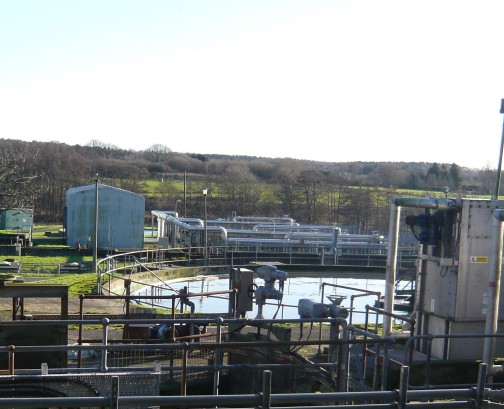
For the next leg of our journey, the path took a great, sweeping loop around a mysterious and secretive area of pipes and tanks and low buildings. The trees creaked ominously overhead. Was it just the wind? Yes, of course it was. It has always had an evil reputation, though. In medieval times, it was a place of alchemy, and rumours still persist that it was in some dark chamber beneath the ground, at this exact location, that an evil sorcerer discovered a magical substance that turned real beer into lager, or false beer as it is properly called, threatening to plunge the whole kingdom into a new dark age.

And at times the traveller of today can almost fancy that a whiff of sulphur or some such odour still overhangs this dreadful place. Several years ago someone tripped over a protruding tree root nearby and hurt themselves, and the rooks call their depressing calls overhead in the gloomy trees.

We were glad indeed to get away from such a terrible place.

P1050085 (2)

Now, on almost the last leg of our journey, our path ran along south-facing hillsides, through one of the small tea gardens that produce our famous Sussex tea, and then dropped down lower to meet the overgrown and largely clogged up remnants of the Bristol to Tunbridge Wells canal. It was still being used to transport coal and gin from Bristol to Tunbridge Wells, with a return cargo of young slaves, as recently as sixty years ago, after which it fell into disrepair as demand for these products fell off.

P1050087 (2)

Care has to be taken along this stretch, as the old towpath along the edge of the canal is quite obvious, but on the other side lies the Great Groombridge Swamp, which has been known to swallow up unwary travellers. Bob was leading at this point, and we were both keen to reach the end, now. I noticed him straying slightly towards the swamp so I called out ‘Just go right, a bit.’

Oops.

A quarter of an hour later I was enjoying a pint of Black Cat Ale, before catching the bus back home to write up my notes and then make a tricky phone call to Bob’s wife.

Still, all expeditions, like life itself, throw up challenges that have to be faced up to.

Disclaimer:

Please note that an expedition of this nature is not one to be undertaken lightly. Should you wish to follow in my footsteps, you are strongly advised to ensure that you have adequate training and suitable equipment for the journey.

I Could Have Been a Travel Writer

Once (upon a time), I had ambitions to be a travel writer.

I’m sure you know the type;

Just twenty minutes after the wedding vows have been exchanged, the long-suffering partner agrees to the explorer high-tailing it out of the conjugal nest for a couple of years, so that they can retrace the steps of some medieval alchemist-poet-knight who drove three thousand goats across six mountain ranges, converted four heathen princes to the True Faith, and conquered Alsace and Mordor on the way.

signpost (2)

Unfortunately, I quickly decided that I was unlikely to ever have the experience to write a travel book. I have never met the Dalai Lama, interviewed an Imam in a mosque in the mountains of Persia, or chatted intimately to local leaders in remote places. I have met very few people in the aid sector, people who have done particularly brave or daring things, or celebrities.

Indeed, I’m not even a celebrity myself, which seems to be a good travel opening nowadays. I’ve never had the resources to spend years at a time living with villagers in remote Angolan jungle clearings, and I’ve not been able as yet to persuade any large companies to sponsor my meanderings.

And this is a great shame, because travelling and getting paid for it is an attractive proposition. I rather got the appetite for it in the years that I worked abroad. Oh sure, most of my time was spent working, but I did get to travel around and see much that I would never had had the chance to see otherwise. In the 1980’s, Oman was pretty well closed to western visitors, other than those like myself who worked there. It was my first real taste of a society that was very different to my own, in a climate also far removed from anything I had experienced before. I loved it, and I got paid well for it.

It did, unfortunately, instil a slight expectation that I could continue to experience this as long as I wished, and like all good things, it came to an end.

Now, when I do travel, I keep a journal. On the other hand, so do most other travellers. And it only takes a quick glance through mine to see that there is not the basis of a best-selling travel book there. It does sometimes seem that to read most published accounts of journeys, unless they were accomplished with the maximum amount of discomfort then they don’t count. Certainly, I’ve had a few uncomfortable long distance bus rides, been too cold or too hot at times, and passed the odd night in some pretty crap hotel rooms, but I don’t think that’s enough to fill a best seller.

On the other hand, I’ve never set off with just a passport and a change of underwear to travel single-handedly across the amazon jungle, or attempted to unicycle around the Mongolian plateau juggling a bowling ball, an egg and a carving knife, so maybe it is my attitude that is at fault.

But I have a plan!

I shall daringly attempt a five mile walk through the English countryside, non-stop and all by myself! No support team, no camera crew, no convenient lift for when the going just gets too hard to bear. There will be nothing other than my own courage and steely determination to get me through the ordeal, except for the prospect of a cold beer at the end of the trail, possibly a pub sandwich and a short ride home on the bus.

I’ve got waterproofs (just in case), a bottle of water, a map, a few snacks, my notebook and camera (for interviewing any gnarled old villagers that I might happen across) and a mobile phone just in case I find myself in any situation that I cannot talk or buy my way out of.

And so, having persuaded my beloved to give me leave of absence for the time it takes me to complete the expedition, I’m off into the comparative unknown.

If this is my last blog post, you’ll know it all went horribly wrong.


The Problem of Historical Truth

In my previous post about the pitfalls of online research, I began by alluding to the unreliability of newspaper reports. If you were to read reports on an important item of news in a number of different newspapers, you frequently might be forgiven for thinking that they were actually talking about completely different events. There will be political bias, of course, and the prejudices and agendas of reporters and editors alike. Are the individuals in an armed insurgency terrorists or freedom fighters? It is a point of view. Are strikers in an industry greedy mischief-making saboteurs, or victimised and mistreated victims of greedy corporations? Again, it is a point of view.

It can be very hard today to see through the fog of opinions and misinformation on any topic. How much more so when we delve back into time?

History is written by the victors. For example, what we know about Caesar’s campaigns in Gaul and Britain were written largely by the Roman conquerors, especially Caesar himself. Most of what we know of the reign of Ashoka, in India, comes from the edicts that he caused to be inscribed upon the remarkable number of rocks and pillars that are still in existence.

023 (2)

Even tales written by the vanquished are likely to be inaccurate, of course. The cruelty of the victors, their barbarity; all of their actions will be exaggerated.

The historian understands that information comes largely from primary and secondary sources. A primary source might be, for example, an account written at the time (Caesar, above) or Parish registers of births, marriages and deaths. These sources are considered to be most likely to be accurate, being compiled at the time of the events described, but clearly they might all be deliberately or accidently falsified. Secondary sources might be newspapers, which are largely made up of analysis and opinion, and therefore considered to be an interpretation of information that has been derived from another (hopefully primary!) source.

A primary source is also referred to as evidence, yet I wonder whether a better distinction would be made if ‘evidence’ referred only to unwritten sources; archaeological remains, buildings, pottery, jewellery and coins and their like, which, whilst needing interpretation, are unlikely to be prey to the kind of distortions that written sources might be. Caesar, after all, might have claimed to take ten thousand prisoners when he only took five hundred, yet pottery of a particular type that is found at a particular spot, tells a story that needs to be interpreted, yet is unlikely to be a falsehood.

We need to be careful, though, when it is interpreted in light of contemporary writing, to avoid the temptation of unconsciously corroborating those writings.

Having written the above, we do have to take a certain amount on trust, because it is not practical to question everything in the world that we come across.

Yet, just because we discover that Troy really does exist, does not mean that all of the stories of the Iliad are now, somehow, all true. That would be like an author writing an incredibly impossible fantasy tale, in which the city of Vienna still exists and features, yet claiming it must be true because Vienna is a real place.

During the first year of World War One, a fictional short story ‘The Bowmen’ was published in the London Evening News by Arthur Machen. In this tale, he describes a battle between English and German soldiers at Mons, in France, in which the beleaguered British were aided by the sudden appearance of phantom archers who intervened to keep the British safe. Although this was fiction, the story quickly ‘went viral’, as we might put it today, and was readily believed by many in Britain. Of course, there was a feeling then that the British were good and the Germans evil, and so it was natural that God might intervene to help and protect them. A far stronger belief in God, in those days, also contributed to the feeling that it was natural to find that a miracle had occurred.

Although Machen republished the tale in a book with a long introduction explaining that it was fiction, and examining reasons the public thought it was true, not only did the belief persist, but further reports of angels on the battlefield began to appear. As a child in the 1960’s, I remember reading an account of this in a comic, with it presented as the truth. In 2001, the Sunday Times reported that photographic evidence to support the story had been discovered, although this was proved to be a hoax.

The Sunday Times also published exerts from Hitler’s Diaries in 1983, until these, too, were proved to have been forged.

Memories are notoriously unreliable. I was reading just a few days ago of an experiment where a group of people were encouraged to discuss childhood memories, with selected members of the group feeding in deliberately false information. After an initial hesitation, it seemed that all of them accepted these false memories as real, even to the extent of agreeing that they had taken part in a balloon ride, when they had not, and describing what they had seen from the balloon, and their feelings during the ride. The point being that they came to believe these were their own, real, memories.

How reliable are our own memories, then? And what can we trust? Clearly, there must be a lot of historical narrative that has been honestly recorded, that is simply not true, and we are unlikely to ever know what it is.

Ho Ho Ho

So, here is the final instalment of my merry Christmas tale. Everything will be resolved satisfactorily, and we’ll all live happily ever after. As if.

Merry Christmas!

Henderson stood there staring at the spot in the middle of the field where the sleigh was no longer standing, but the peasant with the pitchfork was; he was looking up into the sky, as motionless as he had been before, so that Henderson thought at first he must somehow still be frozen in time. He had not noticed the woman following him across the yard, but now she called out ‘Moses!’ and the man turned, saw him, and swung the pitchfork around so that it pointed towards him. Involuntarily, he gave a little yelp, put his hands up and took a few steps backwards as the man stepped towards him, his face expressionless.

Then he turned and ran.

Behind him, he heard the man also begin to run and ahead of him the woman stood grinning at him. He swerved as well as he could, considering his age, his fitness, and the mud, and ran through the gateway.

He stopped for a second to catch his breath, and then began to run again towards the buildings. He had only taken a couple of steps this time, however, when he suddenly saw the cat in front of him. It hissed and took a couple of paces towards him, and then fixed its eyes upon him, crouched lower to the ground and began to run towards him, before launching itself up towards his throat. He backed away, suddenly terrified, and watched the creature sail towards him. He seemed to have plenty of time to take in its evil, soulless eyes; he saw its mouth full of razor-sharp teeth like tiny little yellow daggers, little droplets of saliva clinging to their tips; he even had time to see how its whiskers curved ever so gently backwards in flight, although they had spread out wide as they bristled stiffly.

He had plenty of time. As much as he wanted, it seemed, for the cat had stopped in mid-air, about a foot in front of him. Very slowly, his eyes on the cat, he stepped sideways. Then he reached out and touched it. Its fur still felt soft, but its body, like that of the horse earlier, felt cold, but the weirdest thing of all was that no matter how much he pushed it, he could not get it to move at all. He passed his hands all around it, but it hung there, in the air, in front of his face.

Slowly he turned around, and walked back towards the gateway. He paused and listened, but the world had gone silent again. Entering the field, he saw that the sleigh had returned. It sat on the opposite side of the field, now, where the farmland seemed to turn to woodland. The peasant and the witch had become frozen statues and stood close to the gateway. He scratched his head in bewilderment, and then walked quickly across the grass.

As he reached the sleigh, he noticed some small, fresh, muddy footprints on the running board. At that moment, there was a kind of double thud, and the elves landed beside him.

‘Jeez!’ he gasped, and they burst into spiteful laughter.

‘Boo!’ said one of them.

‘Well, look who it isn’t.’ said the other. ‘You’ve got mud all over your clothes, Fat Boy.’

‘They’ll bill you for that. Dock it out of your wages.’

They seemed none the worse for their experience, he thought bitterly, as he stepped into the sleigh, and sat down.

‘Come on, then.’ he sighed. ‘Let’s go.’ They grinned.

‘Maybe we don’t want to get in.’

‘Oh, stop buggering about! I’ve no intention of sitting here all day.’

‘Well, I don’t suppose you can go back without us.’

‘And we just came back for you! Aren’t we good! I reckon you owe us, Fat Boy.’

‘Actually,’ he said, exasperated, ‘I came to get you before you got involved in a witchcraft trial.’

‘Oh, aren’t you the noble one, then! What brought that on?’

‘Nicol looked up this year and this place on the internet. Seems a bit of a coincidence your arriving here and then the witchcraft trials taking place.’

‘Well, there’s no accounting for the stupidity and ignorance of humans. Anyway, it doesn’t matter what you actually do, because you can’t alter history, Fat Boy.’

‘Oh, really.’ He grinned, after a moment’s thought. The elves glanced at each other, the implication apparently also striking them, and for the first time they looked worried.

‘Wait!’ Quickly, they hopped into the sleigh and took up their positions at the back, where they put their feet up and made themselves comfortable. One of them took a clay pipe out of his pocket, whilst the other grinned at Henderson.

‘Okay, Fat Boy, you can go now.’ He stared at them for a second or two, and then turned around to start up the reindeer. He’d have loved, at that moment, to have just booted them out and taken off, and hang the consequences, but he was, he had to admit, afraid of them. He didn’t have any idea of what they were actually capable of.

He pressed the big green button, and the reindeer exploded into life (once witnessed, never forgotten!). In what felt like no more than five seconds, they were high in the clouds and cruising smoothly.

It wouldn’t take long to get back. He sat musing over how he would be spending Christmas, but at some point, he realised that he had been looking at a vapour trail in the sky above him for a little while, but the implication of that only struck him when the radio on the dashboard, which he hadn’t even noticed before, crackled into life.

‘Attention, unidentified military aircraft: You are violating North Korean airspace. Turn around immediately or you will be shot down. I repeat, turn around immediately, or you will be shot down.’ The elves burst into laughter again.

‘Now you’ve done it, Fat Boy!’

‘Oh, it gets better and better!’

You can’t alter history, but now they were back in 2015, which was the present day. Glancing over his shoulder at the elves, who were looking at each other and giggling, he reached for the satnav over-ride button.

If Nicol wanted to try and get them back this time, he was welcome to try.


Where are those damned elves?

Episode three of my jolly Christmas tale now, and I’m really getting into the swing of it. We’ve had evil elves, a swearing Santa and a peasant with a pitchfork. Now it’s time for a witch.

cat


He held his breath, waiting for the peasant to threaten him with the pitchfork, but then he remembered that he was effectively cocooned within a nanosecond, and that no one could see him. He could sit there for as long as he liked, and nothing outside of the sleigh would change.

Except that he couldn’t. Time was passing within that nanosecond, and he was aging in time with everything back in 2015. He had better get on with it, and look for the elves. Nicol had seemed fairly confident that he had programmed the sleigh to arrive at exactly the same time as the elves would have done, but there was no sign of them from where he was sitting. He got to his feet, intending to step out of the sleigh, but froze as the thought suddenly hit him; ‘If I start walking around this world, won’t time then act on me, and the sleigh simply disappear?

If he stepped out of his cocoon, he was then in a fully functional 1682, wasn’t he? He shivered. ‘Jeez, that was close!’ Or was it? Isn’t that what would have happened each time they got out of the sleigh to deliver the presents? Whatever it was that acted upon the sleigh, it obviously acted upon the occupants, too.

He took a deep breath, and stepped down into the field, although for the moment he kept one hand on the guard rail, as if just having some physical contact with the sleigh would guarantee its protection. Nothing happened. He counted silently to ten, and then let go of the rail. Nothing continued to happen in a comforting way, so he took a few steps forward and then, after a glance back at the sleigh, walked over to where the horse and the bearded man stood like statues in the gloom.

They had passed a few people frozen in time when they had delivered the presents, of course, but he had never had time to look at them closely. Jeez, it was bizarre! It was like looking at statues that had been made to perfectly resemble their subjects in every way. He knew that they were living and breathing, yet there was not a flicker of movement and when, on impulse, he touched the horse’s flank, he immediately drew his hand away with a little involuntary cry; he had expected the warmth of living flesh, but it felt as cold and as solid as marble, as though it really was a statue.

With a last glance at the sleigh, he shivered again, and then walked forward towards a gap he could see in the hedgerow a little way away.

There was a gate, and on the other side was what appeared to be a semi-derelict cottage, with a few small outbuildings that seemed to be in no better state of repair. He stopped to open the gate, and then it struck him how quiet it was. He put his head slightly to one side to listen (people do that, for some reason), and now realised that it was the first time in his life that he had heard total silence. All he could hear was the sound of his own breathing; not because it was loud, but because there was no other sound happening in the whole world. Wow!

He slogged through the mud towards the nearest outbuilding, and looked in through the window. It was too dark to make out anything inside, so he moved towards the doorway. As he went to step inside, there was a sudden hiss, and a black cat shot out of the building, almost cannoning off of his shins. His heart leapt, and then he let out his breath and began to smile, but then he caught his breath again.

He turned around swiftly, but there was no sign of the cat. Suddenly, various odd little gobbets of information in his head began to circle around each other, jumping up and down and waving their arms and trying to get his attention. There were lots of them, but he realised that the ones he particularly noticed were the ones labelled ‘black cats’ and ‘witchcraft’.

‘Load of rubbish!’ He growled to himself, getting in quickly before his conscious mind could speak. ‘Don’t be a pillock!’ But he was spooked, now, and it didn’t reassure him. He told himself firmly that he wasn’t spooked, however, and stepped boldly through the doorway. Immediately, there was a shriek of ‘Lucifer!’ and something tried to squash itself into the darkest corner of the building. He stood rooted to the spot, and, as his eyes slowly adjusted to the gloom, he realised that it was a woman.

‘No no no no no no…’ she whimpered. He took a couple of steps forward and she gave a little scream, but then she caught her breath and said, accusingly, ‘You’re not Lucifer.’ As his eyes slowly adjusted to the semi darkness, he saw that she was painfully thin, dressed in black, with a pale scarf tied around her head, and was wearing a pair of boots that appeared to be far too large for her.

He glanced down at the Santa suit covering his own rather ample girth and agreed with her. ‘No, I’m not Lucifer. Er, why did you think I might be?’

‘Because I just invoked him, of course.’ She sounded disappointed, now.

‘Why did you do that?’ He asked, immediately deciding that it was a pretty stupid question.

She seemed to think so, too. ‘Why does anyone invoke Lucifer, eh? Why do you think?’

‘I…’

‘Goody Smallbrook!’ She hissed. ‘That’s why!’

‘Eh?’

‘Thieving cow! Had half of my turnips this year! She thinks I don’t know that she sneaks into my garden at dead of night, but I does know! And she put a curse on Bob!’

‘Bob?’

‘My goat! Dried up Bob’s milk, she did! She got an evil eye!’

‘Bob… I mean, Bob gives milk?’

‘Not now, she doesn’t! She put the eye on her!’

‘You call her Bob?’

‘I don’t, Moses does.’

Oh, er, right.’

‘Who might you be, anyhow?’ She took a step towards him. ‘Ain’t never seen no one dressed like you.’

‘Well, I…’

‘An’ what you doing here? What do you want?’

‘I’m looking for…er…some elves…’

‘Elves? The fairy people don’t come out in daylight.’ She seemed to be suddenly on the verge of laughter. ‘You need to wait ‘till nightfall. You go away, now.’ He turned, happy to get out of her presence, but immediately she said ‘No, wait. You can stop here with me.’ She smiled, showing one or two discoloured and randomly placed teeth. ‘Moses needn’t know.’

‘Uh, it’s okay.’ He said quickly, stepping outside again. He looked around, but saw no one else, and set off back towards the field where he had landed.

Behind him, the woman came out, and began to follow him.

And now he realised that he could hear birdsong. What was happening? Uneasily, he broke into what could almost have been described as a jog, although it would be more accurate to simply call it a rather fast walk, opened the gate, and stepped into the field.

The sleigh had gone.


Photo credit: ozz13x via VisualHunt.com / CC BY

What Elves?

I may live to regret this, but, here is the sequel to my Christmas short story.

When you get to the end, you might realise that that is not the end, either…

Untitled-Grayscale-01

Henderson who wasn’t really a Santa was having a hard time trying to explain the lack of elves.

‘They fell out of the back?’

‘Yes.’

‘Both of them?’

‘Yes.’

‘Both of them at once?’

He nodded.

‘They both fell out the back, both at once?’

‘Mmm.’

‘That is unusually careless of them.’

‘Is it?’

‘Is it?’ Nicol suddenly shouted. ‘Is it? They’ve been doing this job for almost two hundred years, and I can’t imagine how one of them would come to fall out, never mind both of them! What the hell were you doing whilst this happened? And how come you managed to stay aboard?’

‘I was up the front. They were sitting at the back. Behind me. I didn’t really see what happened.’

‘Alright. Run me through it one more time.’ Henderson shrugged.

‘It’s quite straightforward; we’d done the last drop, we were on our way back and the sleigh did a sharp turn, and, er, they fell out. That’s it, really.’

It really was difficult suppressing a grin.

‘And they fell out.’ Nicol stared at him. ‘They…just…fell…out.’ They looked at each other for a while without speaking. ‘This sharp turn that the sleigh did…’ Nicol looked out of the window for a moment, and then back at Henderson. ‘No one loses both elves! In fact, only once before has anyone even lost one!’

‘How did that happen then?’ he asked, hoping to change the subject, but Nicol was having none of that.

‘So you suddenly cut in the satnav.’ It was impossible to read anything in his face. ‘That’s never a good idea.’ He seemed to be waiting for an answer.

‘What makes you think I did that?’ But he knew that his expression had given him away. He shrugged. ‘It’s possible I did.’ He conceded.

‘It’s possible that you’ll have to go back and find them, then.’

‘Go back?’

‘Yup, go back.’

*

Nicol opened up the laptop that was the only item on the dusty table.

‘I can check the tacho. That should tell us where you were, and also when you were.’

‘I was on the way back, so I presume I was on ‘today’ time.’

‘It doesn’t work like that. We have to stay in time shift all the time we’re away from here, otherwise Air Traffic Control at Heathrow will have kittens. So…let’s see…’ He tapped a few keys. ‘Right, then. It plonked you straight into 1682 as soon as you left your last drop, and you went…’

‘1682? Why on earth then?’ Nicol shrugged.

‘Why any particular time? It’s well over a hundred years before we started. All the run-ins and run-outs take place BS.’

‘BS?’

‘Before Santa. No chance of accidently colliding with yourself in mid-air. Or with anything else. Look at it like radio waves; a radio station gets a particular frequency so that its signal doesn’t interfere with any other radio station. In theory, that is. Every single run-in or run-out gets its own slot – year, month, day, hour, minute and second – so…’ he looked at the screen again, took a biro from one of his trouser pockets, rummaged around in his other pockets for a moment, then brought out a scrap of paper. He put it down on the table and smoothed it out, then carefully wrote down the figures from the screen.

‘Of course, it’s not really like that at all. Now, before we do anything, let me just Google that…oh, this doesn’t look terribly good. In 1682 a couple of strangely dressed creatures were found on a hillside just outside the village of Porton, which is where you were, according to the tacho, which began a frenzy of witch hunting that resulted in…blah, blah, blah…ah, here we are. Yes, two burnings and a hanging.’

‘What?’ Suddenly, he no longer felt like laughing.

‘Yes. Directly responsible for it, I expect. Apparently these creatures were examined by the village priest and someone referred to as a ‘doctor of physic’, who declared them to be ‘imps of Satan.’’

‘Does it say if they were dead?’

‘Nooo…’ he said slowly. ‘It doesn’t. But they’re tough little buggers.’ Unexpectedly, he gave a short snort of laughter. ‘Harder to kill than cockroaches, someone once said.’

‘Perhaps they’d tried.’ Henderson said, with feeling.

‘Be that as it may, we need the little buggers back.’

*

‘I don’t think we’ve ever had to do this before.’ He narrowed his eyes, staring intently at the screen.

‘I think the only way it would work is if we programmed in exactly the same deliveries as today’s. It should then come up with exactly the same route, using the same time shifts.’ He thought for a moment. ‘I’m not actually sure whether or not it’s affected by how long each stop is…I think I’ll have to over-ride the date and time thingy, as well, so it really thinks that it’s nine o’clock this morning.’

‘And then what?’

‘And then I push you out, like the elves.’

What?

‘Not really.’ He looked as though he quite fancied the idea, however. ‘Now…’ He tapped away at the keyboard again, and then leaned forward, his hands resting on the edge of the table, staring at the screen.

‘What did you do before you had computers?’

‘Eh? Oh, it took a lot longer.’ He stared at the screen some more, and then scratched his chin thoughtfully. ‘I don’t understand. What…?’

‘Yes?’

‘It’s not giving me the same…hang on, other than when you lost the elves,’ he glared, ‘did you use the satnav at all?’

‘A couple of times.’

‘Oh, bugger. I don’t suppose you could remember where?’

‘No, sorry…oh, sort of. It was just once. I’m still not sure where, although it was quite early on.’

‘Once. Are you certain of that?’

‘Yes.’

‘Oh, that might not be too bad.’ He stared at the screen a little longer, and then began tapping the keys again.

‘Can’t we just go straight to sixteen whatever you said?’

‘I don’t think so. There doesn’t seem to be an option for that. I’m afraid you’ll just have to sit in the sleigh for seven hours until you get to that point, and then land.’ Henderson stared at him.

‘I can’t help noticing that you say ‘you’ and not ‘we’.’

‘I’m not going. I can’t be gone for that long, I’ve got work to do here. The night shift will be in soon.’

‘What night shift? What about that EU working time stuff you mentioned?’

‘That only applies to the over fifty’s. Tonight’s Santa is a student making a bit of holiday money.’

‘Oh. But, anyway, we can just return to the same time that we left.’

‘Unfortunately, it doesn’t work that way. You have to age exactly the same amount when you’re in time shift as you would here in 2015.’

‘Why?’ He shrugged.

‘You just do. Trust me.’

*

‘What the hell am I doing?’ He asked himself, as the sleigh slowly dropped through the clouds and came to rest in a small, muddy field. The gloom that covered the land reflected his mood pretty well, he thought. He sat still and stared around carefully, half expecting to see the elves lying close nearby; he imagined then stuck head down in the mud, feet kicking ineffectually in the air, and grinned. Then he reminded himself that he was supposedly in 1682, and thought again ‘What the hell am I doing?’

He could not see any elves. The only obvious sign of life was a horse that stood a little way away, apparently staring at him.

And a very large bearded man, who was brandishing a pitchfork.

Dull day

It is a particularly dull and miserable day, today, with unbroken thick grey cloud overhead, an unpleasant, damp cold, and a very thin rain in the air. I read bits of my novel, and I yearn at this moment to be in India. That I am looking through a few of the photographs I took in India, at the moment, does not help.

P1050060

I am now at the stage of giving my short novel its first edit. I have written the book from the point of view of an adult female in a rural community in Northern India. It is primarily about both the relationship between the two main characters; a woman and her daughter-in-law, and about the roles and the treatment of women in a male dominated society. The way that I have written it, it is essential for the reader to be able to get inside the head of one of the main protagonists. So, for this reason, I felt that the narrator had to be one of them.

It is a little unusual, of course, but hardly unheard of, for a writer to write with the voice of someone of the opposite sex, although it is more usual for female authors to adopt the voice of a male narrator, rather than the other way round.

(Is that because we are so shallow and easily understood? Don’t answer that, it might be a post for another time, although if I did attempt to write it, I probably wouldn’t have the courage to finish.)

Anyway, whether this voice I have used in my novel sounds authentic or not, might be quite another matter.

I can imagine several areas where I might have succeeded less well than I would have hoped;

a) It might sound like a male voice, especially to female readers.

b) I may have painted a vague, shallow picture of my narrator, subconsciously avoiding difficulties.

c) I may therefore have painted minor characters more brightly than the protagonists.

d) By doing this, I may present as an arrogant westerner, thereby fulfilling images of ex-colonial stereotypes.

On my CV, however, I do have a few months when I was living and working in a small town in Northern India, much of the time spent in rural areas, amongst a dozen or so visits to India in total.

It probably goes without saying that I also have a keen interest in most things Indian, many books about India and, of course, we all have Google.

And writers do, all the time, write about places and situations that are outside their experience, and it is never really possible for anyone to fully understand the thought processes of someone from another time, another culture, or another gender, and so it is a level playing field in that respect.

So, with a glance out of the window at the gloom outside, I’ll get on with it. I do wonder how many male writers have tried to write with a female voice, though, and how successful they felt they were…

…anyone want to come in at this point?

The First Christmas Present

It’s never too early for the first seasonal short story!

Fat Dude Flying

The First Christmas Present

The old fellow with the white beard and the red jacket leaned queasily over the side of the sleigh, watching the snow covered fields passing below. For a while, the moon was peering out between the clouds and he travelled over a scene of sparkling silver, although the sight did nothing to cheer him up.

He hated heights.

He hated elves, now, too. He’d never met one before today, but he knew now that he hated them. The smug little tossers sat right at the back of the sleigh, eating the mince pies that had been left out for him, and tittering whenever he took a wrong turning.

And he hated children. He especially hated children.


Ever since they took away his benefits and told him he would now be better off, he had struggled for money. Now it was November, and he had decided he had to get a Christmas job. Not that he was looking forward to long nights at the sorting office, or lugging a bloody great bag of Christmas cards from door to door. But it seemed he’d left it rather late, and there was nothing left. At least, nothing for someone of his age. Eventually, he found himself in a tiny little room on the second floor of a run-down office building in a backstreet, the home of an agency that he’d never heard of and with a staff, it appeared, consisting of one gentleman who he initially took to be a caretaker and who introduced himself as Mr Nicol.

‘You’ll do nicely.’ He said. With time-shift, it meant that there was no need to cram all of the deliveries into a single night; they could be spread out over the whole year. In fact, they tended to use two of them, these days.

‘Two of what?’ His mind reeled.

‘Why, Santas, of course. But even then,’ Mr Nicol went on, ‘it’s difficult when one goes sick for two weeks. And so this is where you come in. What is a problem,’ he explained, ‘is E.U. Working Time Directive no.7. This rules out night work for anyone over the age of fifty. So you’ll have to do the deliveries during the day. Still, time-shift takes care of that.’

He still didn’t entirely understand, but he took the job.

The SatNav was crap. It took twice as long. The first time he tried it, he was terrified to find the sleigh suddenly hurtling between buildings that seemed to be no more than a couple of feet apart, at what must have been close on three hundred miles an hour. It then banked and turned in a tiny back garden, subjecting him to a force of about a hundred g, and then shot back down the same terrible alleyway. It then parked itself on the rooftop next to the one that he had just left.

The elves tittered into their hands.

He quickly found it better to just leave it to the reindeer to sort out. They obviously knew what they were doing.

And then it was impossible to tell how much time had gone past. If he noticed the time in any of the houses they visited, it never made any sense. One clock said ten fifteen. Some while later, he noticed one that said nine forty two. The next said four thirty. For a while be began to check the time at each house, but quickly gave up when the times appeared to be completely random. He shrugged. More of this time-shift stuff, he supposed. It made it very hard to decide when he should be on lunch break, and he made a mental note to speak to a union rep. at some point.

Another house. Impossible to know how many he had visited. After the thing with the clocks, he was even wondering whether he still had to visit some of the ones he’d already visited.

No, that was too confusing. He shrugged again, and stepped out of the sleigh. The elves followed him with their sacks, and then they all stepped forward, and next thing they were standing in a hallway, just inside the closed front door. Yes, that was weird, too. The elves obviously knew where they were going; he followed them into a darkened front room where a little glass of liquid stood on the table beside a plate with two mince pies. There was a little note that said ‘For Santa, love Benjy’.

He dropped the mince pies into the bag that he wore around his waist for the purpose, and poured the sherry into the flask. He hated sherry, anyway, so the little tossers were welcome to that. With luck, they’d fall out of the sleigh at some point.

The elves trooped noisily out of the room and up the stairs, reached the landing and opened the first door on the right. Inside, a child was asleep in the bed, a large pillow case draped across the duvet.

‘Greedy little bastard.’ He thought. He picked up the pillow case and held it open, whilst one of the elves seemingly poured in presents randomly from his sack. And then he froze. There was someone coming up the stairs; that wasn’t supposed to happen! All this time-shift stuff was meant to mean that everyone would be asleep from the moment he entered the house until he left again. It all happened in less than a fraction of a nanosecond, in any case.

The footsteps came nearer, and then stopped. A small child appeared at the doorway, but all that he noticed were her sad eyes. She did not seem surprised to see him, nor did she appear overjoyed.

‘You never come to me.’ She said in a quiet, flat voice.

‘I visit all the children!’ He replied, struggling to present himself as jovial.

‘No. You never come to me. You never have.’ He felt himself squirming under her steady gaze.

‘What’s your name?’ He said at last.

‘Mary. I live with my mother. In one of those flats over there.’ She pointed out of the window towards a few yellow lights that seemed to randomly puncture the darkness.

He glanced at the elves, who shrugged unconcernedly, then sighed and pulled a list from his back pocket and put his reading glasses on.

‘I’m sure we, I mean I, do. What’s the address?’ She stepped towards him and gently took the list from his hand, looked at it for a minute and then pointed.

‘There. But you don’t go to our flat; number three.’

He ran his eyes down the list, clicked his tongue irritably, and then looked a second time, certain he must have missed her name. But no, it definitely wasn’t there. He looked up, to meet her gaze again. Oh, hell. He could take one present from, say, three or four others. They would never miss them, and no one would know.

‘We’d know!’ The first elf glowered at him.

‘You can’t do that!’ The other one pouted. He looked from one to the other, and then back to the little girl, and came to a decision. He reached into Benjy’s pillowcase, picked out a couple of presents and held them out to her. She did not move for a moment, but then she gently smiled, reached out, and took the nearest one. Then she turned and left the room, and he heard her footsteps going down the stairs. He darted out to the landing, but already she had vanished.

‘You’ll be in big trouble.’ A spiteful little voice behind him said happily. He said nothing but did the thing with his fingers he had been taught, and they were back in the sleigh again.

It had been their last call. Now he was watching the elves smirking and whispering to each other, as the reindeer ran smoothly through the clouds. Casually, his hand strayed towards the SatNav, and he pressed the ‘over-ride’ button. The sleigh stopped immediately, and spun round a hundred and eighty degrees, catching the elves completely by surprise and throwing them out of the sleigh and into the night sky.

He hated elves.


Photo credit: manmadepants via VisualHunt.com / CC BY-NC-SA

A Day in Ladakh

Wednesday 13th April 2005

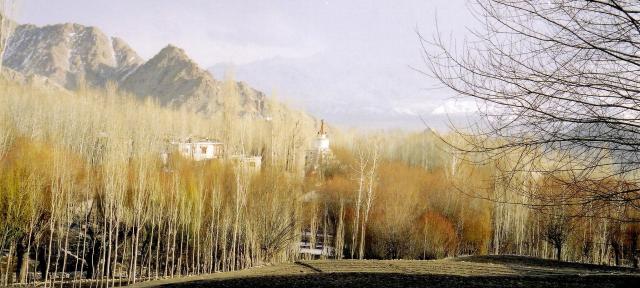
This morning, there is a clear blue sky, with just a couple of clouds sitting on top of the Stok Mountain Range. It doesn’t seem quite as cold in the morning as it has been recently.

I go for breakfast at the Budoshah. I don’t really know why I eat here (I certainly don’t always), unless it’s because the morning sun warms the corner that I’m sitting in. I’m the only person here and when I walk in, the waiter always seems frightened to see customers. When I’m eventually given a menu (and everything is always ‘off’ – it’s a Kashmiri restaurant, so two thirds of their dishes are chicken or mutton. The day before yesterday, people were being told ‘no chicken no mutton’.), I ask for scrambled eggs on toast.

I’m told no, they can’t do it. Fried, boiled or omelette, yes. But the cook obviously can’t scramble them.

And black coffee.

‘Pot?’

How big is the pot? I ask.

‘Ah…I get one’. He disappears back into the kitchen, never to return. I sit back and contemplate the Ladakh Mountains in the sunshine, prayer flags waving lazily beside the temple. With luck, it will be another warm day. I think I’ll catch a bus to Thikse Gompa.

My coffee arrives. In a glass.

The toast arrives with heart-stopping chunks of Ladakhi butter – like everything here that calls for butter. I thought at first that it must be cheese. It seems to be the Ladakhi/Tibetan way. I made a mistake and had a cheese sandwich the other day – the cheese is just like butter, so you can imagine what it was like for my poor western tastebuds. I had to scrape most of it off.

leh street

It’s 12.45, and I’m sitting on a rock in hot sunshine at the foot of Thikse Gompa. The bus ride here was remarkable (and where else in India would you find that the driver would wait a few minutes whilst a passenger nipped off the bus to buy some bread?). All the way here, we passed through this wonderful desert scenery, with fairy-tale castles and palaces and the like clinging precariously to the tops of cliffs.

The Ladakhi buses are like all Indian buses, though. Today’s had plenty of pictures inside and on the windscreen (The Dalai Lama, Buddha, etc.), two vases of flowers and a fancy piece of wooden scrollwork on the dashboard, and several drawers incorporated into this.

At the moment I’m having my apricot and water lunch to the accompaniment of drumming in the background; a ritual going on somewhere. There are so many gompas here, and every private house performs their own pujas, that it could be coming from anywhere.

We passed through Shey on the way here. More of this tomorrow, I think. I intend to spend the day there.

I ‘strolled’ up to the gompa, and was shown around by a monk. We chatted in a mixture of Ladakhi, Hindi and English. He is a Ladakhi, in fact all of the monks here are. There are no Tibetans. In fact, despite the large Tibetan population here, he says that there are only two monasteries with Tibetan Lamas.

Untitled-TrueColor-01

We watched a group of young monks kicking around a football, a hundred metres or more below us.

Do families still send one son to be trained as a monk?

No, but there are still many coming.

I was first shown the giant statue of Maitreya Buddha, which is fairly modern, then the fourteenth century gompa, which is very dark and unlit, which made it difficult to properly see the wealth of thankas and statuary. I had to tell him about my family, job and anything else he could think of. That was quite hard going, and I don’t think we totally managed to get through. A pigeon flew into the gompa and started a discussion (not literally, you understand). In Ladakhi, pigeon is (I think) Po-ro, fairly onomatopoeic. In Arabic, I told him, it’s Bulbul, also onomatopoeic. Possibly it is the same in Hindi and Urdu.

Untitled-Scanned-01

Back for tea and a bucket shower.

Later, I’m walking around the market. How strange to go around market stalls and shops in India, not getting pressured and hassled at all. At times it seems almost unreal. You wonder whether suddenly it’s all going to crash around you and normal India will be resumed as soon as possible. The longer that you spend here, the more laid back you become. I don’t think you can help it! Everyone strolls around smiling and Julay-ing you and each other. I know that Ladakhis consider it the height of bad manners ever to lose one’s temper, but it really does seem unreal. I think it would be easy to just sink into the ambience of it all and find you’d suddenly missed your flight out and had overstayed by weeks, or months…

Andrew Harvey said, and I’ll have to paraphrase because I can’t remember the exact quote, ‘The wonder of Leh is that there is absolutely nothing to do. Nothing to do except slow down, switch off and just observe. Just be.’ I understand that, now. I realise that that is what I have been doing the last few days without realising it.

trees

I had Phung Sha and rice for supper at the Amdo -a Tibetan dish. It is a sort of thick vegetable stew, which I shall certainly have again.

I have always wanted to read Rumi, the thirteenth century Persian mystic and poet, and I picked up a copy today from the little bookshop. I am now wrapped up in my blanket reading it by the light of my candles.

Downstairs, my hostess is singing again. Last night, I tiptoed out to the landing to listen to her singing what I was told this morning were Ladakhi folksongs, and I creep out again to listen now.

This time it’s ‘Bob the Builder’.