New Year’s Essay, 2018

I rarely, if ever, make New Year’s resolutions. I feel that if there is something in my life that needs changing, then it should be addressed straight away, rather than leaving it until an arbitrary date in the future. Of course, for many people it acts as a focus or some other incentive to change old habits, although witness the number of gym memberships that never get used beyond, say, the end of January, and it becomes obvious that what many people need to change most is their resolve.

010a

Possibly jumping the gun a little with this photo…

As an introvert, I am very curious to know whether much of my behaviour is conditioned by my being that, or whether it is my behaviour that causes my introversion in the first place. It’s probably a ‘chicken and egg’ situation, of course, with both applying equally. My introversion is surely driven by those elements of anxiety, my inferiority complex and the depression I’ve always lived with, and, in turn, those things will be reinforced by my chosen introverted lifestyle.

But we are complex creatures. Like Harry Haller in Hermann Hesse’s excellent novel Steppenwolf, each one of us consists of many different personalities. Our characters will be made up of a mixture of the cultivated soul, the wild, untamed soul (the ‘wolf of the steppes’ in Hesse’s book), the dancer, the monk, the shopaholic, the miser…all those elements will be there to a greater or lesser degree. And alongside the Introvert exists also the Extrovert, even if this personality is rather repressed in my case. It is all a matter of balance.

It seems much worse in the winter, too. I am certain I am affected by SAD; it seems entirely logical that I should feel low when the weather is cold and grey and bleak, and perk up when the sun comes out. Perhaps we all do.

Yesterday, the weather was the pits. Cold, grey, and bleak, with added showers of freezing cold rain and a wind that cut through me like a knife. I really felt like crap. But today, I walked out under a clear blue sky, a bright sun glinting off the puddles and the grass rippling in a mild, gentle breeze. These are the moments I need to seize; to wrestle my soul back from the darkness. The moments I need to shake off the black dog and point myself towards the little things I can do to lift myself.

I remind myself that I have a published book that people have been nice about, therefore not all my writing is meaningless drivel. I have sold many paintings, and a lot of people have enthused over them. I can paint, and I don’t need to destroy them all. Family and friends do matter, and they do care about me. There will be warm, sunny days and expeditions.  There will be walks and bottles of wine shared. There will be wonderful books to read and interesting places to visit.

And so, I resolve to fight that bastard black dog for another year.

Oh Heavens, Why On Earth Did I Follow That Blog? – 2

Some while ago I wrote a post explaining some of the reasons why I might occasionally choose to un-follow a blog. Surprisingly, it seemed to strike a chord with a great many readers, and has been my most popular post so far. The link is here if you wish to have a look.

Untitled-Grayscale-02

I thought I’d write a follow up post today, outlining a couple more reasons I might choose to un-follow a blog, or why I might decline to follow it in the first place.

Several times I have been sent invitations to follow a site I have never heard of. The owners of these sites have never had the manners to visit mine, or if they have they have not had the courtesy to acknowledge this in any way. The first I have known of their existence is a WordPress email inviting me to follow them. I will not be visiting their sites, never mind following them.

I have a couple of followers who have followed me, but only ever leave comments that invite me to follow their sites. Again, I shall not visit, for that is just bad manners.

This happens on other antisocial media sites, of course. I get terribly annoyed when someone I’ve barely come across messages me and says ‘I’ve just liked your page, come and like mine’. Er, no. Not until you learn some manners.

Then there are those bloggers who follow me, but only visit me after I have been on their site and left a ‘like’ or a comment. Instantly, they then visit for the first time in a month and ‘like’ three or four (or even more!) posts in the space of a few seconds. There is no way they could have read these posts in that time, of course. It is possible they think they are being polite by doing this, but I’m afraid it feels they only care about getting traffic to their sites.

I would imagine most people blog because they want their posts to be seen and read. Some ‘collect’ likes and followers, but most of us don’t (I do admit I am chuffed when I get a visitor from a fresh country, though, and therefore get a ‘new’ flag on my list!).

And I am extra double chuffed with fresh cream on top and little sprinkles of pure chocolate with the dozens of fantastic bloggers I have got to know since I first joined in with this lunacy a couple of years ago!

Despite the moaning, it was a great decision.

The Travel Bug Bit Me – part 3

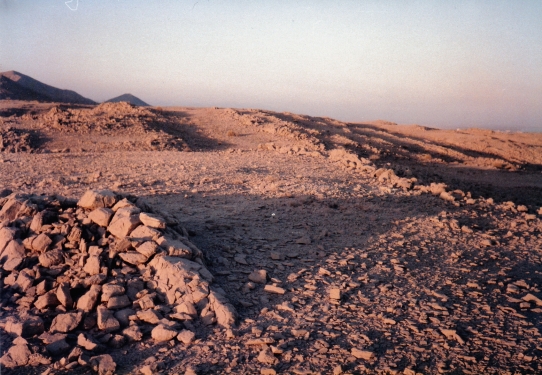
When I lived in Oman, the land around where I lived and worked was all stone desert; hills and valleys of razor sharp broken boulders, water worn stones at the bottom of dry valleys, with occasional villages and settlements and old, crumbling, mud brick forts dating from the time that the Portuguese were there. Almost invisible tracks used by goats and nomads wound their way through this wonderful landscape, or simply followed the routes of the wadis, the dry river valleys. I had a very small scale map of the country, as well as a few very large scale maps that I had pinched from the office where I worked (I did return them when I left). These would consist largely of huge areas of blank paper, with the occasional ‘tree’ or ‘large boulder’ helpfully marked, although they did show the main wadi courses and mountain ridges.

I was very tempted to write ‘here be dragons’ on them occasionally.

img_0001

Never before had I quite understood what silence was. And it was the first place (to be followed by the Himalaya) that I was to truly see a night sky. I was periodically astonished by the desert’s outbursts – blasts of hot wind like an opened oven door; flash floods that appeared from a blue sky in minutes, to ferociously drench the unfortunate climbers on the top of a previously baking jebel (hill); and tiny earthquakes and landslides – I was no doubt fortunate never to witness a serious one. I would overnight in the desert with friends and we would lie on our backs to watch the unbelievable night sky with its thousands of stars, satellites and shooting stars, before ascending a 10,000ft mountain in the morning, or exploring a stretch of uninhabited coastline.

I spent almost every spare hour that I had out in that desert, either trying to find my way across trackless ridges in my jeep, or just walking; walking everywhere within walking distance and discovering just how much there is actually to see in a desert. I was supremely happy in that environment, and some 20 years later when I had to change aircraft in Muscat, I found myself looking out at the purple tinted hazy mountain lines with something very close to homesickness.

Today, even waiting on the station to get a train to go to the next stop, a coffee in hand, a bag over my shoulder with a book in it, I am on a journey. And that journey feels clearly related to the longest journeys that I have ever taken. There can still be the same sense of travelling, of departing and arriving. The search for food and shelter… I think that it shows just how much a journey largely exists in the mind. Often our perceptions of a journey seem to differ from that journey’s reality (as many things do, I suppose). A long, difficult journey can seem to be over quicker than a short, easy one.

Just packing a rucksack, even an overnight bag when I used to have to occasionally stay over where I once worked – a wash bag and towel, sleeping bag and clothes – I feel as though I’m off on a journey. There is a certain amount of excitement…

And I know, too, how smell is such a strong, evocative, sense. Just with the kitchen window open, at 10pm on a slightly rainy October evening, I suddenly catch a scent of something – something cooking nearby, or a hint of smoke, perhaps – and I am instantly transported to Nepal, high in the mountains, remembering an evening with sherpas and villagers beside a river where we ate and then sat around talking and drinking and listening to those sherpas and villagers singing.

Okay, I’m ready to go and pack, now…

The Travel Bug Bit Me – part 2

There never seems to be a better time to set off on a journey, especially a walk, than first thing on an early autumn’s morning. It is late enough in the year to have a proper sparkling dew, usually covering cobwebs draped across bushes, and ideally there will be some bright sunshine, a hint of sharpness and the colours of leaves beginning to turn, berries in the hedgerows, and still an abundance of flowers. This is another hark back to my teenage years, I’m sure. It all seemed quite magical then, and it still does today.

023

I suppose, at the time, it could be said that I had a head full of hobbits. Of my contemporaries at the time, those with itchy feet tended to be either those who read and re-read Kerouac’s ‘On the Road’, and those who did the same with ‘The Lord of the Rings’. I fell squarely into the second camp, never really discovering the appeal of Kerouac. I guess they were largely the crowd who enjoyed ‘Easy Rider’ and wanted to travel Route 66. Later, I read Laurie Lee’s ‘As I walked out one midsummer’s morning’ and found the same atmosphere there. I walked from the London suburbs, where I lived at the time, with a friend down to Hastings. On the way we stopped at a couple of youth hostels, and had a couple of nights wild camping in woods. And everything did seem magical, although apart from the distance in time, I do not know why this should have been. All of the fields and woods, hills and hedgerows, seemed somehow to fill my head and assume a greater importance than anything else in my life at that time. Otherwise I would hitch hike down to the coast, or the West Country, and this would satisfy my sense of adventure, never knowing where I would end up and forever feeling as though I was travelling through an undiscovered land.

I don’t think, as a teenager, that I was ever happier than when I was off for a long walk with friends, or even on my own. I still get that same sense of pleasure when I arrive at my destination after a day’s walking, whether it be the spot that I’ve chosen for my wild camp on a mountain side somewhere, or a bunkhouse or hostel on the edge of a village where I know I can stroll to a nearby pub for a meal and a few pints in the evening. My chosen destinations then tended to be youth hostels, and I remember an awful lot of them fondly, still today. I think that my favourite, then, must have been Land’s End. I wonder how many people now remember the awesome murals that they had over most of the walls, inspired, of course, by Tolkien! The days were spent, whilst strolling through lanes and along footpaths, learning to recognise wild flowers and trees, butterflies, but not so much the birds. Even in those days my eyesight was too poor for that!

‘Rambling’ is used extensively as an insult by many of the climbing fraternity, yet it means no more than long distance walking, at a fairly relaxed rate. My dictionary defines it as walking for pleasure, with or without a definite route. This would seem a fair definition, and includes hill walking, trail walking, any type of walking, in fact. I think that the intended barb is that it is ‘soft’, yet people who would think of themselves as ramblers include very elderly people whom I have observed galloping over the fells at a rate to put roughtie-toughtie young climbers to shame. Its popularity, at least in Britain, stems from the last century when it was taken up by factory and mill workers in the north of England, in particular, as a healthy and cheap form of sport and entertainment. There is a point, in fact, where it merges into climbing, having passed through the scrambling and mountaineering stages.

Is it a coincidence that it seems that most of the best trips that I’ve read about in books have been done by solo travellers? If they have not been strictly alone, then they are using porters or guides who have been employed specifically to help the explorer along his chosen route, rather than suddenly say ‘Ooh, no. I don’t fancy that anymore. Let’s go back now.’

 Most of my own distance walking has been done in my own company. This always has the advantage that I can decide when and where I travel, when to stop for a break, when to go off on a diversion to see a particularly interesting (to me) village or hill or something. I do often miss the company of others when I walk or travel, and enjoy it when I do get it. I find it good to travel with somebody for a while, and then to move on again by myself when we begin to disagree over the route, or want to move at a different rate (or politics or religion intervenes, of course!). I suppose that this is also not entirely disconnected with my love of solitude. When hill walking, especially, I almost resent meeting other people. Especially large groups. Amongst the list of things that I positively hate coming across in any wilderness area, such as discarded lunch wrappers, people bellowing into mobile phones (‘Yes, I’m on the summit, now!’ – do some people have these damn things surgically attached to their heads?), music, for God’s sake – why would anyone want to hike out somewhere remote, where the predominant sounds are bird calls and the wind in the grass, listening to a bloody i-pod? – comes the large group of walkers.

There is no logical reason why I should, and it is certainly not due to a feeling that they have no right to be there. I just crave solitude in those situations. If I was asked to name my favourite day out walking in the hills of Britain, I think that I would unhesitatingly mention a November’s day some years ago, when I walked the Carnedd Horseshoe in North Wales. This particular circular route starts at the village of Bethesda and heads up a gently rising valley onto a ridge until it reaches the mountain of Carnedd Dafydd, where you then amble up to the summit. From there, there is a ridge walk to Carnedd Llewelyn, a shorter ridge to Yr Elen, then gently back down to Bethesda. The day was unusually warm for November, with sunshine and a beautiful clear sky throughout. And although Carnedd Dafydd is the second highest mountain in Wales, after Snowdon, it sees far less traffic of human feet than most other parts of North Wales. Consequently, I had a day’s walking in one of the most beautiful parts of the world, in fantastic weather conditions, without meeting another soul. Perfect.

img

I always used to do this with photos to make up panoramas – it’s a lot easier today!

Some people, although they would prefer to travel in company, choose ‘alone’ because they become good at doing ‘alone’.

I’ve heard it said, and frequently read it, that there is nowhere left on the planet to explore, anymore. I suppose that if what is meant by that is that there are no longer maps of whole countries or continents published that have ‘unexplored’ or ‘here be dragons’ printed over large, blank areas, then, yes, that is so. But if I go anywhere that I have not been to before, especially if I have read little or nothing about it, then I am exploring. I may not be contributing anything towards the sum total of human knowledge, but I am making discoveries for myself.

Thank heaven, though, that there are still areas of the Earth that are wildly beautiful and lawless, where outsiders, especially westerners, fear to tread, and life is cheap but the landscape is breathtaking.

Oh heavens, why on earth did I follow that blog?

Untitled-TrueColor-02

Every now and again I get unfollowed. And every now and again I unfollow a blog. Is it a big deal? Should it be a big deal?

At first, it can seem hurtful to find that someone has unfollowed you on any sort of social media, but really it shouldn’t be. Somehow, I find that I now follow a huge number of blogs, most of which I love, and I do wish I had more time available to read them more fully and comment on them, but I don’t. This means that every now and again I sacrifice one for the common good.

But, never without good reason.

First up, one thing that does irritate me, is when I visit and read a blog, leave a response – sometimes a quite lengthy one – and never receive any sort of reply. One blog that I initially followed was like this, and when I had left several comments that were never even acknowledged, I went through their comments strings and found that they could not be bothered to reply to anyone.

Instant unfollow. I dislike rudeness.

What other reasons?

Okay, so maybe I was attracted to your blog initially by the posts about cuddly kittens and home baking, but now the focus of your posts has shifted to motor vehicle maintenance and origami, and I feel my interest is waning. It’s time to move on. Don’t take it badly – what we had was good, but we all grow and develop and change over the years, and what was once right for both of us now leaves at least one of us empty. I wish you well, but I’m leaving you for another.

A little like the above, perhaps I found your blog through a particular post that interested me, but since then it seems that every post is on subjects that don’t. I’m sorry, I gave it a few months, I gave it a good try, but it’s just not doing it for me. Bye bye.

I unfollowed one blog because every post was a long moan about other people. Sorry, there was no pleasure to be had in reading that one.

Perhaps I notice that where your blog was originally full of carefully argued points and good language, it has become home now to foul-mouthed polemics and crude language in general. Hmm, perhaps you should take this one personally. I won’t be the only one to leave.

So, every now and again I see that my own number of followers has fallen, and that I’ve been unfollowed. My reaction? I do wonder whether I have written something boring or offensive, and occasionally re-read a few of my posts in that light. That’s okay, it’s constructive and encourages me to think about what I’m doing.

Perhaps we should all hope to get unfollowed every now and again, just to make us focus constructively on our posts.


Pitfalls for Writers – no.6: Historical Accuracy


‘Dear Mr. Author.

Whilst reading your book ‘Oh what fun and laughter we had during the time the Black Death wiped out our village’ the other day, I was disappointed to notice that you mentioned July 23rd 1449 as having been a sunny day in your fictitious village. From the descriptions you provide, you have clearly located said village a little to the south of present day Norwich, and my extensive researches prove that July 23rd 1449 would have been a rainy day there.

Yours disgruntledly,

A Pedant.’

How accurate do you need to be, as a writer, with historical facts?

If you are writing a non-fiction book, you have to be scrupulously accurate, no matter what subject it is.

End of.

On the other hand, if you are writing fiction, you have a certain amount of leeway. First of all, though, it is worth saying that if you sell enough copies of your book you will eventually attract correspondents like the fellow above. Is that something to worry about? Only if they get to know where you live, perhaps. Otherwise, send them a nice reply, thanking them for their diligence, and assuring them that you will correct your dreadful fault in the next edition. On the other hand:

‘Dear Mr Author.

The Black Death was actually sweeping the country in 1349, not 1449.

Yours smugly,

A Historian.’

This time, you’ve screwed up.

And yes, it matters.

Very minor inaccuracies are bound to slip through, and very few people will notice them. And if they do, they will not think anything of them.

Except for Arthur Pedant, of course.

The big things are another matter. Imagine reading a novel set in the days around the Russian Revolution, and then the author tells you that the Bolsheviks rose up against the state in 1927 instead of 1917. Or that they were led in the beginning by Stalin. Immediately, the author’s credibility has evaporated, as has their story.

Because the reader no longer believes the author, and they no longer accept their story.

The moral here, then, is don’t skimp on the research!

It is possible to radically change the facts of history, but the difference is that to do this the author must present it as the whole point of the story. In steampunk novels, the whole history of Victorian Britain is altered, but the reader accepts this as it is the premise behind the genre. It is seen not as a mistake, but as a narrative invention.

In many science fiction novels, the premise is a future that is the result of a different history than that which actually happened. For example, the Germans won the Second World War, or of different worlds or dimensions in which history diverges from the accepted version. Again, this is accepted by the reader, as it is the premise that the story is set on.

It is possible to break this rule, but to do so the author has to break it in such a way that it is quickly obvious that they have done it deliberately, and not by mistake.

One might, for example, set a novel in Victorian England that is not steampunk – a detective story, perhaps – but in which Queen Victoria is assassinated in 1860. As this is something that no one could possibly put in by accident, it will be seen as part of the invented narrative and accepted.

Well, probably. Where is Arthur Pedant?

Religion or Philosophy?

Now, here’s a thing.

It is rather a fashion nowadays to declare that religions are all wrong and should be banned, because science and reason have somehow proved that there is no god (they haven’t).

But I would like to consider every religion in the world as a school of philosophy, and consider what I might take from each that would be useful to my life and my development.

Whether there might actually be a god or not then becomes unimportant.

Most Buddhists, for example, would seem a little unsure of whether there is a god or not, but if asked, the majority of them would reply that it does not matter. The argument being that it is impossible to prove either way, and therefore it is impossible to know either way. So why not just live your life as well as you can?

SR312thumb

Traditionally, religions have provided society with a set of moral rules. It may be that these rules were the first imperatives that human beings treat other with decency. Since none of us were around in the long years when our race was evolving speech and higher thought, and learning how to co-operate with fellow members of the tribe and – who knows – perhaps their neighbours, this must of necessity be pure speculation. Yet I find it highly likely these moral codes were the first suggestions that human beings might treat an enemy, for example, with mercy, rather than simply killing them, which might otherwise be the obvious course of action. Morality over expediency, if you like.

Some examples:

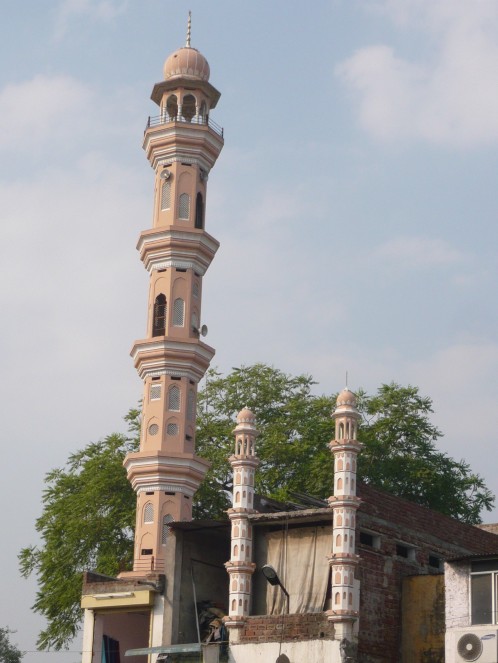
Islam forbids charging interest on loans. How many who have fallen victim to the money-grubbing lowlife that run these ‘payday’ loan companies charging astronomical rates of interest might have sympathy with this view? It teaches also that it is a moral duty to give alms; to help those in need.

112 (2)

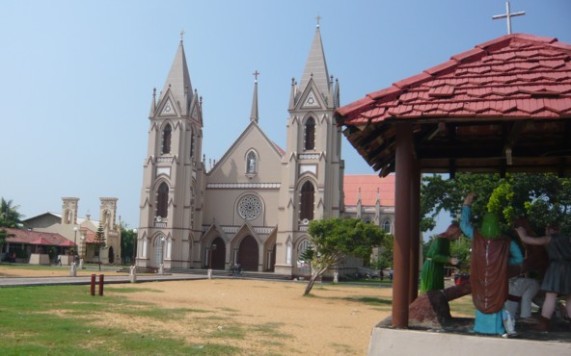
Christianity is big on love and mercy; at least in the New Testament. It teaches tolerance and forgiveness.

Buddhism teaches that to want things is to become enslaved to those desires that can never be satisfied. How much better to live simply and to be content with what we have? It teaches also compassion for all living beings.

Hinduism teaches that all life is sacred, and that we should all refrain from injuring others.

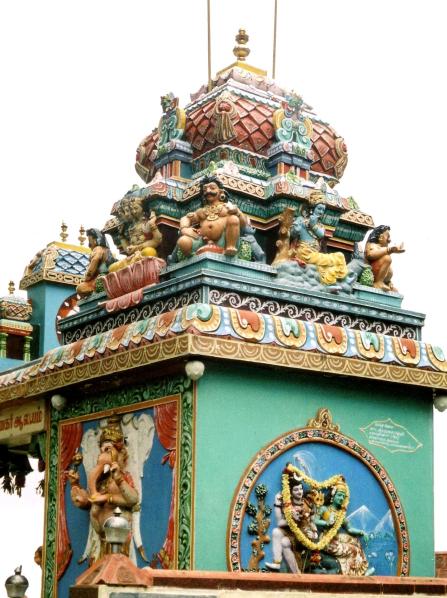
ganesh shrine kodai

These are only the main four faiths in the world today, but every other religion that I have read about also teaches a code of moral imperatives.

And in a world run by huge multi-national companies with no moral compass whatsoever and politicians who only look after their own, where we are continually and aggressively informed that we must worship money and consume more and more pointless trash, and that it does not matter if we destroy the environment just as long as companies make bigger profits, anything that can make us pause to consider what is actually important in life should be encouraged rather than denigrated.

343

It would therefore be ridiculous to simply dismiss out of hand entire canons of work, solely on the grounds that the writers of these philosophies believed in a god whom the reader might not (or does not want to) believe in. Everybody has a spiritual side, whether or not they believe in some sort of god. The spiritual side of a person champions beauty over money, generosity over selfishness, kindness over cruelty. These are values that most of us still claim to value today.

The Language Barrier

As part of its strategy to counter extremism, the British Government has today announced its intention to fund a plan to help all migrants to this country learn English. For once, I think that this is a plan to applaud.

For the inability to speak and understand the language of others around you fosters fear, misunderstanding and distrust.

Having lived in an ex-patriate community myself, I remember how easy it is to become persuaded by others that you are somehow surrounded by ‘enemies’, and to develop a laager mentality. This mindset takes it as a given that everyone outside of the circle does not understand you, they are somehow ‘against’ you, and forever plotting to attack or undermine you, so you sit there muttering darkly about these ‘outsiders’, and voicing your dislike and prejudices against them…it becomes a cycle of mistrust that can possibly become violent.

It is another example of the saying that we hate what we fear, and we fear what we do not understand. And when someone is trapped in a limited social circle because they cannot understand anyone outside of that circle, their chances of becoming a full member of the wider community are severely limited.

Having travelled in non-English speaking countries, I realise how much easier life becomes for me when I make the effort to learn even a small amount of the language.

There will be some who refuse to learn the language on the grounds that they feel that they are there temporarily, possibly working on a short term contract, and can get away with using their own language in a limited circle of work, shopping and socialising.

And there will be some for whom it is a matter of pride to use only their birth language.

I think that both of these viewpoints are mistaken.

Writers understand only too well the importance of language. We worry over whether to use this or that word or phrase to get our meaning across; we worry over whether the way we have worded something may be misunderstood. But when you are attempting to communicate with others in a language that you only vaguely understand, every single conversation is full of these fears.

And when that is the norm, it becomes easier just to avoid any situations where you have to try to use that language.

But it does not actually take much to overcome these fears. Perhaps accepting an invitation to visit to someone’s home, or their place of worship, will lead naturally to conversations where people can learn about each other. But the essential thing is to be able to communicate, which becomes next to impossible without at least a few words of a language in common.

The Problem of Historical Truth

In my previous post about the pitfalls of online research, I began by alluding to the unreliability of newspaper reports. If you were to read reports on an important item of news in a number of different newspapers, you frequently might be forgiven for thinking that they were actually talking about completely different events. There will be political bias, of course, and the prejudices and agendas of reporters and editors alike. Are the individuals in an armed insurgency terrorists or freedom fighters? It is a point of view. Are strikers in an industry greedy mischief-making saboteurs, or victimised and mistreated victims of greedy corporations? Again, it is a point of view.

It can be very hard today to see through the fog of opinions and misinformation on any topic. How much more so when we delve back into time?

History is written by the victors. For example, what we know about Caesar’s campaigns in Gaul and Britain were written largely by the Roman conquerors, especially Caesar himself. Most of what we know of the reign of Ashoka, in India, comes from the edicts that he caused to be inscribed upon the remarkable number of rocks and pillars that are still in existence.

023 (2)

Even tales written by the vanquished are likely to be inaccurate, of course. The cruelty of the victors, their barbarity; all of their actions will be exaggerated.

The historian understands that information comes largely from primary and secondary sources. A primary source might be, for example, an account written at the time (Caesar, above) or Parish registers of births, marriages and deaths. These sources are considered to be most likely to be accurate, being compiled at the time of the events described, but clearly they might all be deliberately or accidently falsified. Secondary sources might be newspapers, which are largely made up of analysis and opinion, and therefore considered to be an interpretation of information that has been derived from another (hopefully primary!) source.

A primary source is also referred to as evidence, yet I wonder whether a better distinction would be made if ‘evidence’ referred only to unwritten sources; archaeological remains, buildings, pottery, jewellery and coins and their like, which, whilst needing interpretation, are unlikely to be prey to the kind of distortions that written sources might be. Caesar, after all, might have claimed to take ten thousand prisoners when he only took five hundred, yet pottery of a particular type that is found at a particular spot, tells a story that needs to be interpreted, yet is unlikely to be a falsehood.

We need to be careful, though, when it is interpreted in light of contemporary writing, to avoid the temptation of unconsciously corroborating those writings.

Having written the above, we do have to take a certain amount on trust, because it is not practical to question everything in the world that we come across.

Yet, just because we discover that Troy really does exist, does not mean that all of the stories of the Iliad are now, somehow, all true. That would be like an author writing an incredibly impossible fantasy tale, in which the city of Vienna still exists and features, yet claiming it must be true because Vienna is a real place.

During the first year of World War One, a fictional short story ‘The Bowmen’ was published in the London Evening News by Arthur Machen. In this tale, he describes a battle between English and German soldiers at Mons, in France, in which the beleaguered British were aided by the sudden appearance of phantom archers who intervened to keep the British safe. Although this was fiction, the story quickly ‘went viral’, as we might put it today, and was readily believed by many in Britain. Of course, there was a feeling then that the British were good and the Germans evil, and so it was natural that God might intervene to help and protect them. A far stronger belief in God, in those days, also contributed to the feeling that it was natural to find that a miracle had occurred.

Although Machen republished the tale in a book with a long introduction explaining that it was fiction, and examining reasons the public thought it was true, not only did the belief persist, but further reports of angels on the battlefield began to appear. As a child in the 1960’s, I remember reading an account of this in a comic, with it presented as the truth. In 2001, the Sunday Times reported that photographic evidence to support the story had been discovered, although this was proved to be a hoax.

The Sunday Times also published exerts from Hitler’s Diaries in 1983, until these, too, were proved to have been forged.

Memories are notoriously unreliable. I was reading just a few days ago of an experiment where a group of people were encouraged to discuss childhood memories, with selected members of the group feeding in deliberately false information. After an initial hesitation, it seemed that all of them accepted these false memories as real, even to the extent of agreeing that they had taken part in a balloon ride, when they had not, and describing what they had seen from the balloon, and their feelings during the ride. The point being that they came to believe these were their own, real, memories.

How reliable are our own memories, then? And what can we trust? Clearly, there must be a lot of historical narrative that has been honestly recorded, that is simply not true, and we are unlikely to ever know what it is.