Where Do The Dead Go?

I know. It’s been a while.

I’ve been thinking about how I publish my poetry and stories, and concluded that the simple way is the best way. I don’t wish to spend a lot of time and money submitting them to competitions and magazines, putting them to one side where they may end up forgotten or just unpublished while I decide to submit them ‘just one more time.’ I’m not interested in putting a lot of time and energy into chasing the best deal or the most prestigious publications.

The whole purpose of writing is firstly for myself, and secondly because (naturally) I’d like to be read. It doesn’t have to be a large audience, I’m quite chuffed when anyone let’s me know they’ve read something of mine and enjoyed it. In which case I might as well just write some more zines and publish work on this blog. It feels like far less pressure. And the novel I’ve finished (Long Shadows) and which is still being edited I might submit to an agent or two, but I’ve no intention of spending months and years trying. If I’ve no luck I will quite quickly just self-publish it.

Anyway, putting my writing where my mouth is, here’s a poem.

Phew!

A mere ten days after mentioning I thought I was close to finishing the final draft of A Good Place, it is, in fact, finished. This is the second novel I have written that’s set in India, this time in a fictitious hill station in the Himalaya, amongst the English diaspora remaining behind after Independence.

Having discarded two previous drafts, the skeleton of the story is now essentially the plot I visualised way back when I started.

There is a lesson in there, somewhere.

It will shortly go off to a couple of beta readers for their comments, and then hopefully after that it will just be a case of one final edit, then the hard part. I intend to at least have a go at finding a publisher and / or an agent.

But for now, I think I’ve earned a beer.

My Virtual Reality

One of the things about growing…older, let’s say…and I’m not saying it’s a good thing or a bad thing, is the growing realisation that we’re never going to live in that place that we are convinced is perfect for us, or have the day to day lifestyle that is everything we want.

One consolation for the writer, even if it’s rather a shallow consolation, is the opportunity to write these places and lifestyles for ourselves. For the last year or so, nearly all my creative writing has been rather experimental, which is one reason I’ve not put much up on here. Rather than focusing on writing the complexities of a story arc, I have been very much concerned with the character of the characters I have written, and possibly even more concerned with the environment they occupy.

In a way, then, I’m exploring different versions of myself – although that, surely, is what all writers do anyway? – and it is instructive how much all of these versions have in common. For anyone who knows me, the information that these scenes involve almost nothing of town or city should come as little surprise. But it’s a learning process, a personal learning process. And even the photos I’ve chosen to accompany this post serve to reinforce what I already know about myself.

And the other strand that occurred to me as I thought about all this, is how it has brought home to me that the priority in my writing – my absolute, number one priority – is that first and foremost I am writing for myself. Whatever I write has to please a rather demanding reader; myself. And if that means my writing is even less ‘commercial’ than it was before, then so be it.

Strangely, this seems to have removed the pressure of time. I’ve always ended a writing day either pleased with the amount I’ve written or berating myself for not having written more. As if that was the sole measure of how successful or productive my day had been! Now, though, writing just for myself, success can be equated with how good I feel the output is; and by ‘good’ I mean quality (as defined by me, for me). So even a few lines that work well may be a good day’s work. I think this time pressure, this fixation with writing a certain amount each day, is a purely commercial pressure; an I-need-to-finish-another-book thing.

So goodbye to that. It’s not for me.

Why You Should Buy Books (especially mine!)

007

Hours of pleasure for the price of a cup of coffee in Bigbucks.

Like any other worker, you pay for my time. Only unlike the decorator, say, you only pay for a tiny fraction of the real time spent creating your book.

And what do you get for this investment?

Why, I bring you a whole, newly created world to explore!

I introduce you to people you never expected to meet, without the inconvenience of having to make small talk with them.

Heroes and villains, fools and wise men.

Perchance I will take you on a perilous voyage, yet you will return safely to the shore.

Encounter your deepest fears, and overcome them.

Know love, and disappointment, happy ever after and abject failure.

See through the eyes of the cruel and the eyes of the kind.

And all this for less than the price of a coffee.

And unlike the decorator, I won’t come and tread paint into your carpet, disappear for two weeks to do another job, leave your kitchen a complete mess, eat all your biscuits or drink all your tea.

I mean, really, what have you got to lose?

The Night Bus

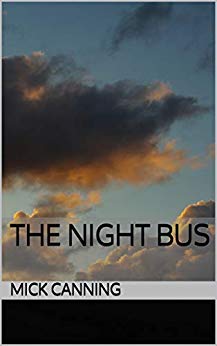
After a day of faffing and kerfuffle (and a little bad language, but not too much) yesterday, I have posted my new book up on Amazon.

312EjL1fieL._SY346_

The Kindle e-book will be released on 30th November and is available to pre-order now. It will take a few days yet for the paperback edition to be ready, as I need to check through a printed proof first. I’ll post when that is done.

The book is in two parts. A collection of seven short – and not so short – stories, which make up the bulk of the book, followed by a selection of recent poems.

I have always enjoyed travel and, one way or another, nearly every piece in here is to do with travel. The only exceptions are a couple of the poems that seemed to fit in among the others for aesthetic reasons.

Some of the stories are quite dark, but the majority of the poems have a lighter touch. In these, especially, I hope that my love of the natural world comes through.

Two of the longer stories are set in India; in one, a young man goes in search of a mysterious destiny, while in the other a travelling Englishman becomes embroiled in a chilling disappearance. One story speaks of the support and comradeship of a close-knit island community while another tells of jealous intelligences far older than mankind.

Of the poems, there is one long piece, which gives the title to this collection and tells of a long journey across India and into the mountains and, among others, one short series of poems about the ancient paths and tracks of Britain.

An early piece of writing advice I was given, and for which I am eternally grateful, was ‘Write the stories and poems you want to read’. This I have done, and I hope you will want to read them too.

Self Publishing – a Blessing or a Curse?

That depends on who you talk to, of course.
pothi edition

The self publishing boom has given rise to the publication of millions of new books, the majority of which would never have been published traditionally because they would be either deemed to be of insufficient interest to return a profit to the publishers or because they were, frankly, just too terrible to see the light of day.

How good a book is can be very subjective in many ways, but certain rules must apply.

If you buy a traditionally published book, you may be reasonably certain that it has been edited and proof-read to a high standard, the printing and layout of the book is of good quality, and the actual contents – plot, dialogue, character development et al – are sufficiently well written as to repay your reading time.

There are no such guarantees with a self published book.

As a member of several Goodreads groups, I receive regular emails which consist largely of other members promoting their books. These promotions frequently consist of a synopsis of the book, extracts, and links. All well and good, but the number of extracts that are poorly written, unedited (it would seem), with poor print layout, and the number of synopses that are equally poor, is very high indeed. Probably the majority, unfortunately. And should I follow the link to the ebook sales site and read a longer extract, frequently this, too, is filled with more of the same errors.

As far as the plot and dialogue and all that goes with that is concerned, I admit that may be partly down to taste. I have no doubt that some poorly written and poorly plotted books still give great pleasure to many readers, and good luck to them. There are certainly examples of the same amongst traditionally published books. And styles go in and out of fashion, anyway.

What I do take issue with, though, is poor, sloppy editing.

Most people cannot afford to pay for professional editing – I certainly can’t. I understand that. It means doing the job yourself, but taking infinite time and care over it. Check it over and over again until it is the best you can do. The odd mistake will slip through, but that happens even in a professionally edited work. Persuade others to act as beta readers for you. They may not be professionals, but they will spot things you don’t. You are too close to the work, anyway.

If you can’t do that, don’t publish the book.

Let’s take layout first. It only takes a careful look at half a dozen professionally published books to get a good idea of what that layout should look like. And you can buy books that supply more detail. If you are serious about your book, you should do that.

Spellcheck is a useful tool, but only if it is used properly. It recognises a correctly spelled word in its database, but has nothing to say about the suitability of its use. I do find it particularly irritating to come across passages where the completely wrong word has been used, no doubt because Spellcheck flagged it up as the correct spelling. Common examples are groyne / groin, sheer / shear, alter / altar etc. etc. etc.

Grammar is the biggest minefield, though. We all get that wrong at times, even the best of us. But at least avoid the biggest howlers – the so-called grocer’s apostrophe, for example. Put the manuscript through a program such as Grammarly, which is free to download, to pick up the majority of the errors.

Another phenomenon I have seen recently is a 4,000 word story published on Amazon as a ‘Novella’. I suppose there’s nothing wrong with selling a story that length, but anything that comes in at 4,000 words is a short story. And quite a short one at that. To describe it as a novella, no matter what price it is being sold at is, quite frankly, a bit of a bloody cheek.

Please don’t do that.

And I’m sure many other readers have their own pet peeves.


Are those blasted kittens still there?

Having posted a few days ago about my inability to finish one project before starting three others, I’ve attempted to organise myself a little to try to deal with that.

And not too long ago, I also posted about my inability – fear almost – to promote myself effectively.

Coincidentally, several days ago I took part in a Webinar aimed at small businesses (theoretically, that includes writers trying to sell books), about using social media effectively, and whilst I was pleased to discover that I seem to be doing a fair bit right already, there are several things that I should definitely change, which I will do shortly.

shark boy crop

Not kittens.

The first thing I’ll do, will be launch my own Author page on Facebook; something I really should have done before now. And to promote it, I plan to serialise a new short-ish story on this blog, over several posts. It’s something slightly different, for me, in that it is a spoof/satire ‘gritty urban detective drama’, but set in Elizabethan England. So, cue daggers, bawdiness, vomit and lots of mud and sour beer.

This will probably be during the second week of next month.

I have also learned a little more about publishing, from the company Wet Zebra at our local writers’ group, and from a few other independent sources, which might possibly lead to my attempting to publish my next book a little differently.

That next book will, I’m now reasonably certain, be The Assassin’s Garden, which has picked up momentum again. If all goes according to plan (!), it will be the first book of a series, stretching in time from the sixteenth century to the late twentieth century, and set variously in Persia, India, Europe and England.

So, what’s it about? I’m so glad you asked. A secret, something stolen, a pursuit, crossing time and continents. Revenge. It has elements of detective story, a bit of classic Gothic horror, a touch of fantasy, a soupcon of sex and violence, some ‘straight’ historical drama, and kittens. Yes, really.

imgp2288

Not a kitten either.

I’m nothing if not ambitious.

And, bearing in mind how easily distracted I am, the research will give me huge opportunities to prevaricate and wander off at tangents to all sorts of odd corners of the internet.

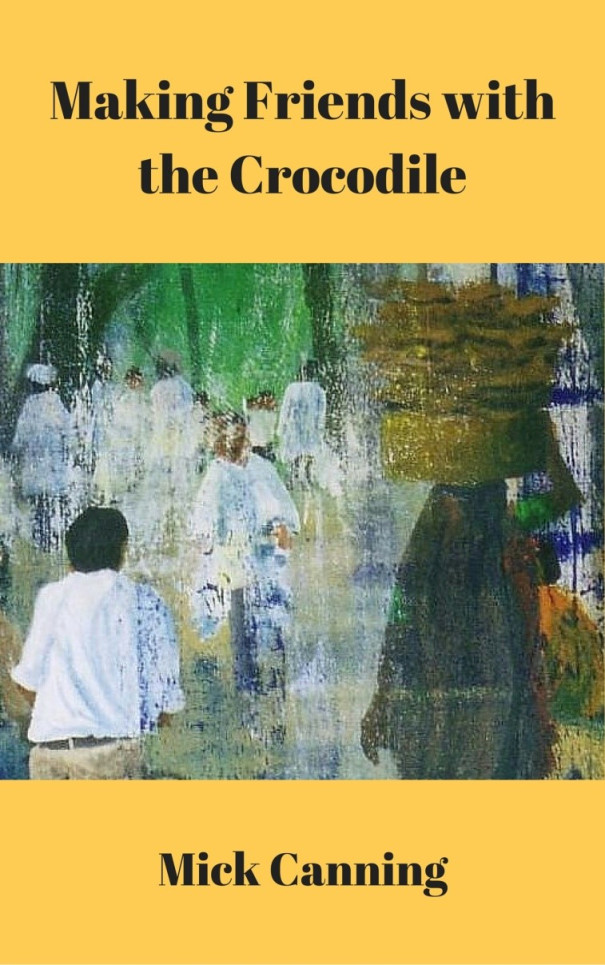
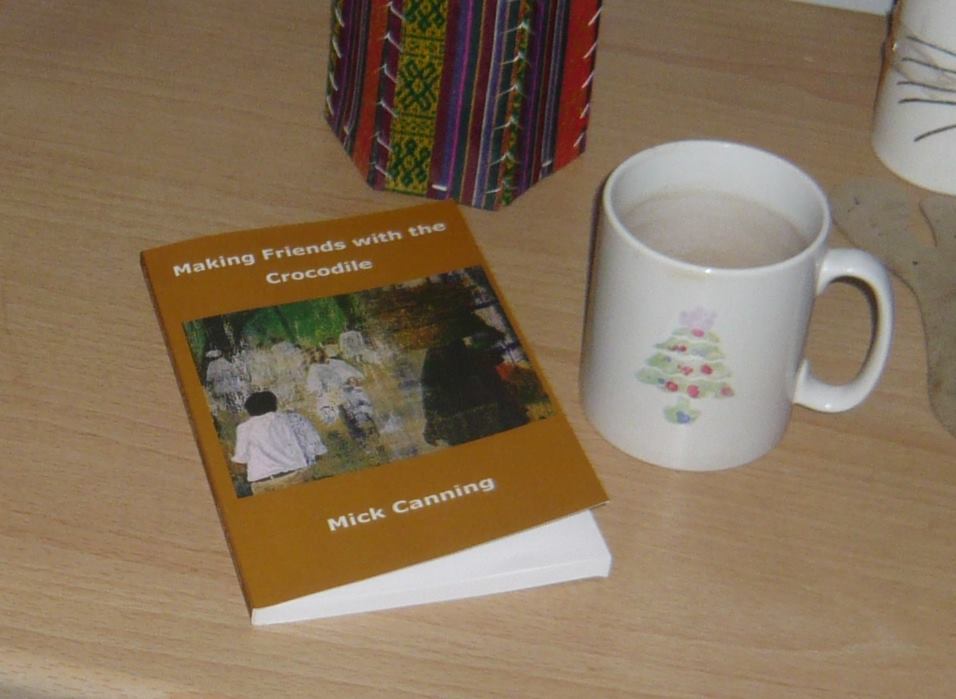
Making Friends with the Crocodile cover

Buy it, read it, make me happy!

And for Making Friends with the Crocodile, my published novel, I am going to re-write the promotional blurb and have another attempt to push it out further into the big, wide, novel-reading world.

The Indian edition of my book is published!

Well, it’s taken me long enough, as I’m sure everyone will agree, but I have finally managed to publish Making Friends with the Crocodile as a Print on demand paperback in India! Hurrah!

It is published by Pothi, and is available on their site, here, and on Amazon.in and Flipkart.

pothi-advertising

It is still available as a Kindle e-book from Amazon, and is also available as an e-book from Kobo, worldwide, for those who do not favour Kindle.

I have been told plenty of times that I need to be more proactive promoting the book, but I’m not terribly good at that. However, this is me having another pathetic stab at it:

Buy it now! It’s great! Please…pretty please…

Oh well, I’m working on it.

Should you be kind enough to buy it, or, indeed, if you have already done so, please consider leaving a review. Reviews encourage others to buy the book, and, on Amazon, once a book has garnered a certain number, then Amazon list it a little more prominently – which is a tremendous help to the author!

And I have been lucky enough to garner some very complimentary and generous reviews, so far. A few excerpts:

‘This beautifully written story, set in a village in Bihar, draws you in from its first page.’

‘Making Friends with the Crocodile is a very fine book. And it takes us into the harsh reality of the life of women in rural India, much more effectively than any official report.’

‘The characters are depicted with obvious respect for a culture that is both beautiful and at times shocking. By the novels finale, though tragic, we are left with a very thought provoking and memorable story.’

‘This is a novel with depth and real emotional involvement. Told simply and with an honesty that defies disbelief at events and attitudes, it packs some serious punches. It’s a story that will live with me for a long time, and one that has materially altered my opinions about certain cultural norms. Researched in real depth and related in language that fits the narrator so well, it’s a very good read.’

‘Mick has delved into the mind of a middle- aged woman living in rural Bihar and has beautifully sketched the love – hate relationship she shares with her daughter in law. The book gives a lot of perspective on the mind-set and predispositions that prevail in the rural north Indian society (which apply, at large to many other parts as well).’

The blurb: ‘Siddiqa was only just into her teens when she was forced to leave her home to live with her new husband and his family in another village. The years have passed, and now Siddiqa has three children of her own. Her grown up son has brought his new wife, Naira, to live with them, so Siddiqa is no longer the lowliest in the household, for she has a daughter-in-law.

Life in rural India is particularly harsh for women. This novel explores themes of female oppression and tradition and asks whether the next generation will find life any easier.

I suppose that at least when I publish my next book, I should have a much better idea of how to go about it.

What a great review for Making Friends with the Crocodile!


Making Friends with the -Crocodile

Somali, at: Somali K Chakrabarti has put up such a generous review of my book, Making Friends with the Crocodile, that I am going to spend the rest of the day puffed up with most unreasonable pride! It comes as I battle with the various internet demons to put up a version on Kobo (ready in a couple of days, I hope), and, finally, a Print On Demand version for sale in India.

My biggest worry when I published the book, was that as a Western male writing in the voice of an Indian female, I would not be able to make it sound realistic, but I finally feel reassured by Somali’s review.

It can be found here: Making friends with the Crocodile


The Book is Released – Hurrah!


Making Friends with the Crocodile‘ is now released!

Making Friends with the Crocodile cover                             POD cover

Kindle edition                                                     Paperback edition

Anyone who has already pre-ordered it on Kindle / Amazon should have received it by now, and in countries where there is no pre-order facility, such as India, the Kindle edition is also now available to buy.

The paperback is available from the Amazon.com, Amazon.ca, Amazon.co.uk and Amazon.eu sites only – this is a quirk of Amazon – but can also be ordered from the estore at CreateSpace, at the following link:

https://www.createspace.com/6301808

And now, I wait to see what people think of the book, with a considerable amount of nervousness.

If you do buy a copy, please consider leaving a review either at Amazon, or on Goodreads, if you are a member (better still, at both!). Reviews are genuinely the lifeblood of a writer, and do help to sell books.

Finally, the blurb again…

‘Siddiqa was only just into her teens when she was forced to leave her home to live with her new husband and his family in another village. The years have passed, and now Siddiqa has three children of her own. Her grown up son has brought his new wife, Naira, to live with them, so Siddiqa is no longer the lowliest in the household, for she has a daughter-in-law.

Life in rural India is particularly harsh for women. This novel explores themes of female oppression and tradition and asks whether the next generation will find life any easier.’