The third Monday in January – Blue Monday – is supposedly the worst day of the year for those who suffer from depression. So here we are on the 20th, Blue Monday. But there is no scientific reason for this date to be singled out, it is just a modern myth invented, apparently, by a UK travel company who presumably intended it to prompt people to take foreign holidays to cheer themselves up. However, I can see some justification for the claim, while also seeing a certain hope. Justification, because I tend to feel depressed and miserable at this time of the year. Tired. Lacking in energy or, indeed, motivation.
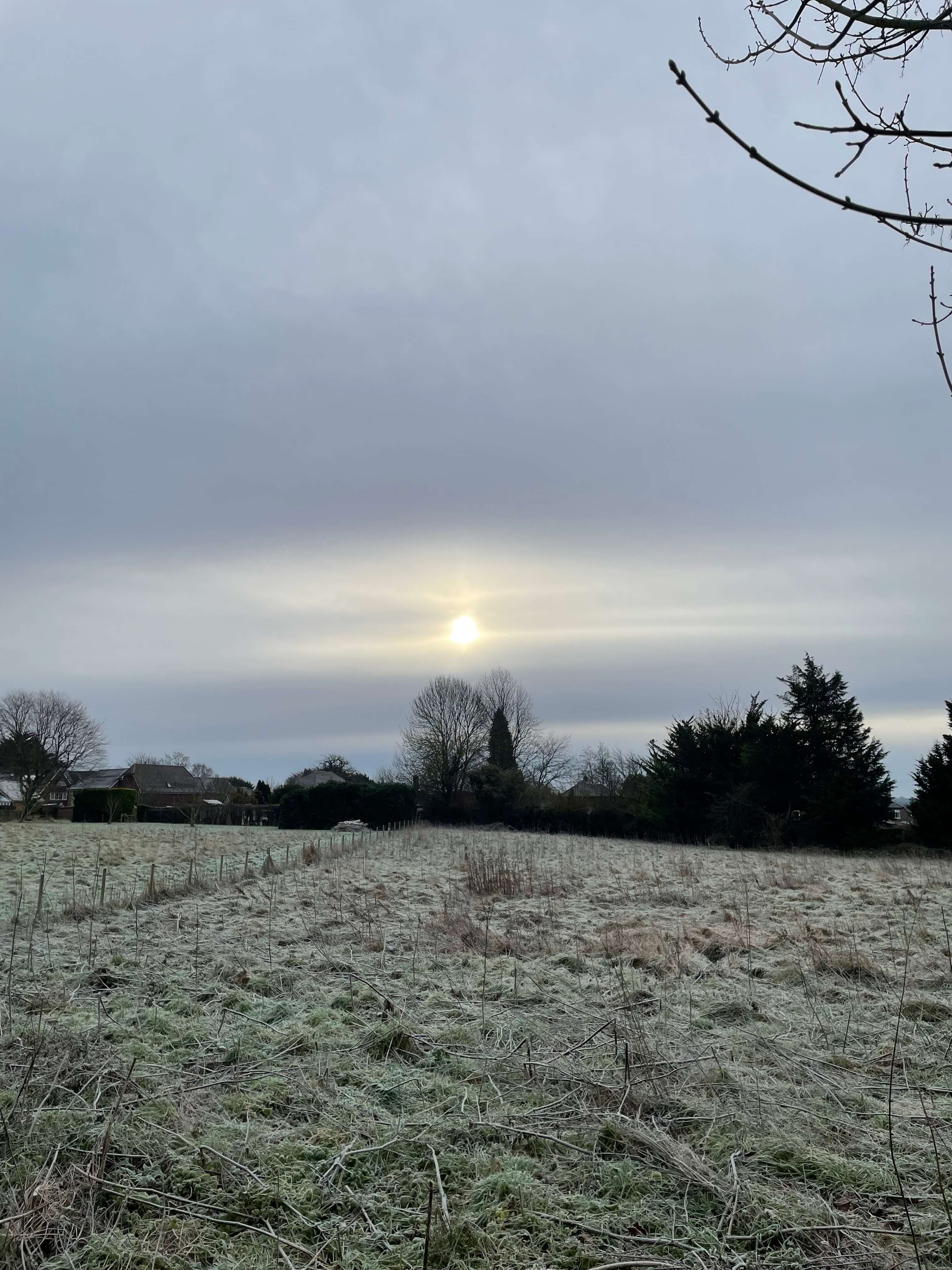
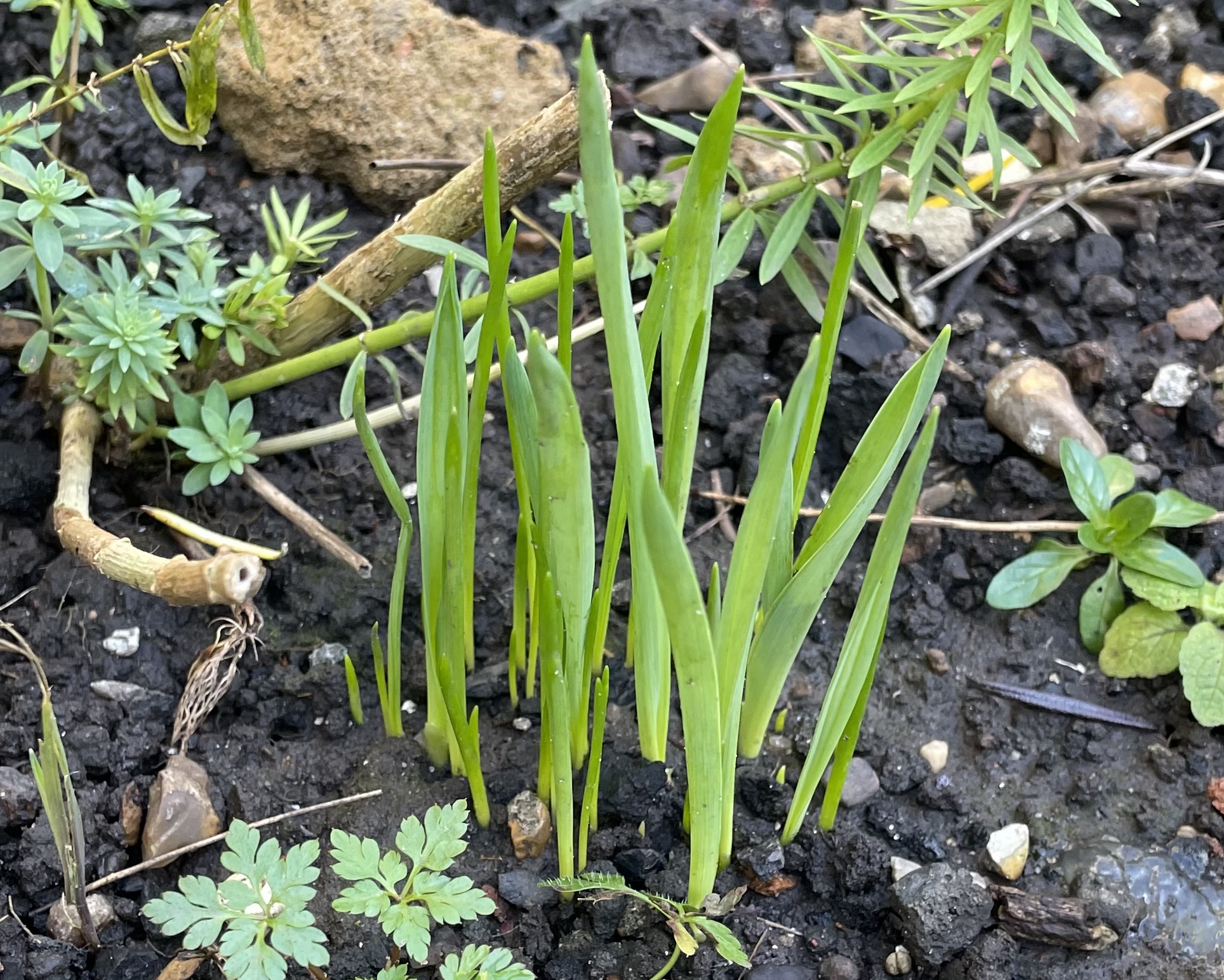
But also a certain hope; by now the daylight hours are lengthening, which becomes apparent when we are fortunate enough to have clear skies around sunrise or sunset. New growth is apparent, with new shoots finding their way up through the earth and leaf or blossom buds swelling on trees and bushes.
I feel so tired at this time of the year. I just feel I need to survive this winter, just get through it. I shall light a fire, wrap up warm, pour a beer and read a pile of books. I am in touch with my inner dormouse and intend to essentially hibernate until Spring.
Today is the shortest day of the year. Where I live, we will get approximately half the daylight hours that we will get during the Summer Solstice. Actually, slightly less. We get up in the dark and it is dark again long before supper time. The weather is cold and predominantly miserable.
But from today the daylight hours lengthen – at first imperceptibly, but gradually it becomes noticeable the hours of daylight are increasing. Finally, there is an end to the relentless lengthening of darkness, and within a few weeks it will become obvious that the world is, indeed, moving towards a time of warmth again.
Yet there are already new plants coming up; new growth that has been prompted by…what? When they broke the surface of the ground a few weeks ago the days were still getting shorter and certainly no warmer. Nature is strong and determined. Winter is never a lifeless time of death and decay. There is dormancy and rest, but also a lot of growth if one takes the trouble to look for it.
I’m thinking longingly of Spring, of renewal and growth. In a couple of hours I’m off to see a mumming play – perhaps I’ll leave you to Google that one – down on the Kent coast. Beer will be involved, of course, in line with the best folk traditions. Old – possibly ancient – celebrations of the turning of the year and the approach of Spring.
Well, it’s blowing a hooley out there at the moment. Winds howling around the eaves of the house and rain spattering the windows. What a miserable winter we seem to be having so far. Not particularly cold, but at times the damp makes it feel about a hundred below zero.
Sort of.
Not a day for going out and achieving stuff. A day for staying in and achieving other stuff. There, that’s me at my literary best. Talking of which, it seems a good day to get some editing done on my novel now I’ve got feedback from my kind beta readers.
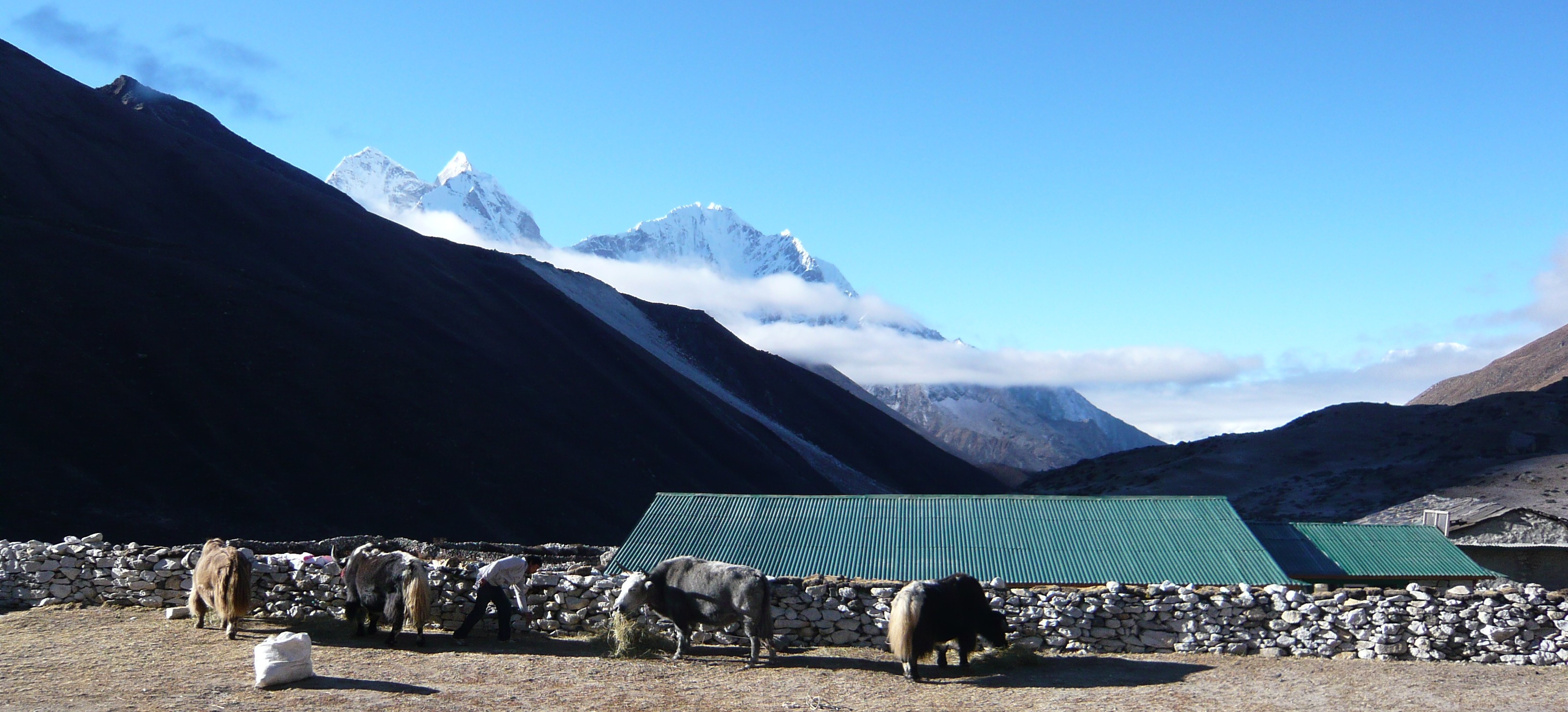
So here’s a picture of some yaks in the Nepalese Himalaya.
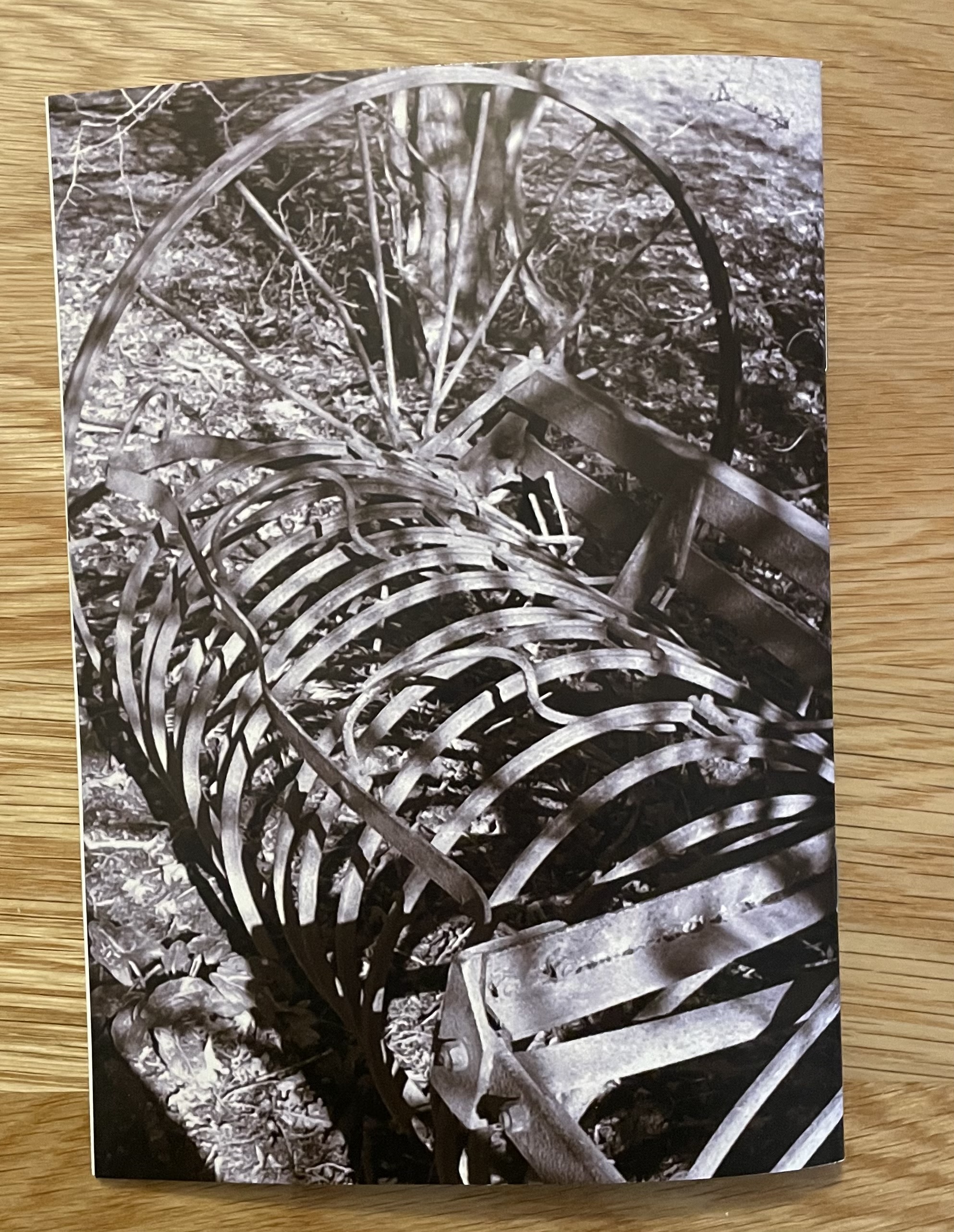
Issue #2 of Echoes and Imaginings has arrived. It’s available both in my Etsy shop or directly from me – message me on the contact page. The format is similar to the first issue, with articles folkloric and psychogeographical. Poetry and photographs. A bit of re-hash from this blog, and new stuff.
And speaking of this blog, I’m slimming it down. It may not be immediately obvious, but I’ve already deleted a third of the posts, with more to go. For all sorts of reasons. Just tidying up, really.
Although not perhaps the first county one would think of when discussing ancient standing stones, Kent does have its share. There are two main sites approximately equidistant on either side of the river Medway in north Kent. The eastern site consists of the remains of two burial chambers (Kit’s Coty House and Little Kit’s Coty House) and the White Horse Stone, all within a kilometre of each other, while the western site consists of the Coldrum Stones (burial chamber) and Addington Long Barrow and Addington Burial Chamber.
The Coldrum Stones
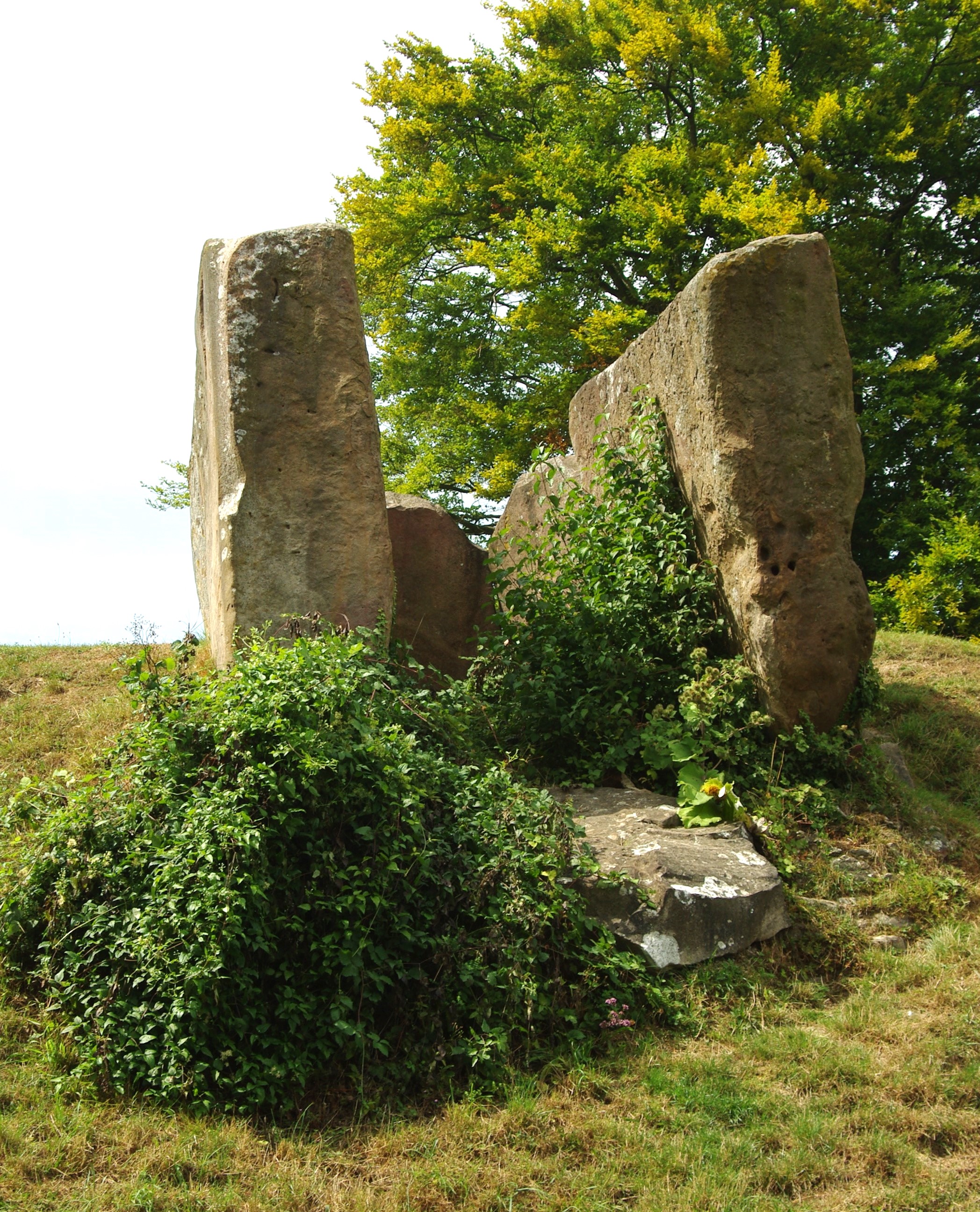
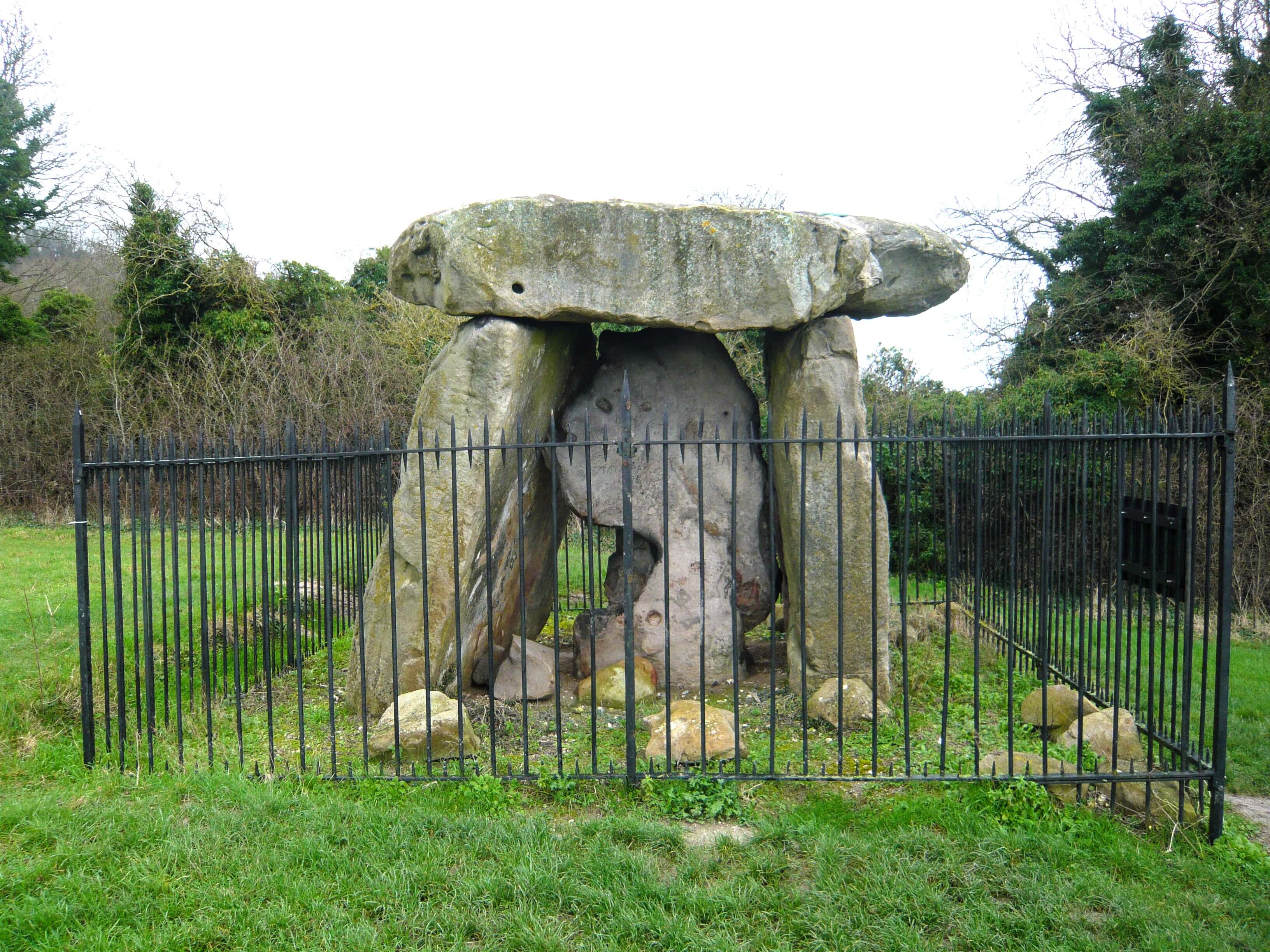
At Little Kit’s Coty House in a light drizzle, I counted seventeen stones, although Donald Maxwell writing in The Pilgrim’s Way in Kent, a short guide published in 1932, claims twelve to fourteen. Various other authorities suggest between nineteen and twenty-one. This is one of those sets of remains that comprise such a jumble of stones it is supposedly impossible to accurately count them – and just to make it harder, they are also supposed to move around (presumably when no one is looking). Thus they are also known by the name The Countless Stones. The largest ones I reckoned were about four meters by two and about three and a half meters by three. The shapes are very irregular, and since they are in a collapsed state there might have been serious damage to some of them. I immediately wondered whether it had originally been the same shape as Kit’s Coty House, a Neolithic chambered long barrow, just a few hundred meters to the north, where the stones are in the form of a dolmen, which would have been a burial chamber at one end of an eighty-four meter mound.
The Countless Stones, or Little Kit’s Coty House
William Stukeley, writing in 1722, recorded that he was told local people remembered a chamber at Little Kit’s Coty House. It had had a covering stone and was pulled down in about 1690.
Both Kit’s Coty House and Little Kit’s Coty House are reckoned to be just under six thousand years old.
Kit’s Coty House
Some nine or ten kilometres away across the Medway Valley are the Coldrum Stones, or Coldrum Long Barrow, dated to between 3985 and 3855 BC. These ones, looked after by the National Trust, are also a burial chamber. Donald Maxwell claimed that there were forty-one stones and that a further fifteen were broken up at an unspecified date during quarrying work. Maxwell also reported a tradition ‘amongst the country people’ that an avenue of stones stretched across the valley from Coldrum to Kit’s Coty, although there is no evidence it ever existed. But coincidence or not, both of these chambers are situated at the same height, about eighty five meters above sea level.
All three burial chambers, then, have been dated to the same period, a thousand years before Stonehenge was built. It seems reasonable, then, to assume they were produced by the same society.
Coldrum has been proved to be a family tomb, the remains of at least 22 people being interred there, with DNA analysis proving their likely close family relationship. Yet amongst these kinsfolk, recent isotopic analysis has shown that maybe the chamber also contained the remains of individuals interred in the fifth to seventh centuries AD.
The White Horse Stone
I say maybe, as there is a very strong caveat connected to this research, and that is that when the human remains were removed in the early twentieth century they were not only not labelled very thoroughly, but they were also passed around several museums and the possibility exists that some bones ended up mis-accredited. Yet it has been proven that some neolithic burial chambers were re-used for burials in the early Anglo-Saxon period.*
The land here has been sculpted by man. Of course, we sculpt the land more and more violently and obviously in the twenty first century, but here, from all these thousands of years ago, are these simple shapes built by ancient folk to inter and celebrate their dead. And these were interactive places. Evidence from other sites shows that some of the bones of these ancestors would be removed at times, although whether as a simple reminder of their elders, or whether for magic or sacred purposes, can only be conjecture. But I like the thought that these bones might be invested with power, that they could be brought into the everyday for protective or ritual purpose.
Now, we view them in a different light, and their sacredness has evaporated. Like a deconsecrated church, but without ever having been formally deconsecrated. It is possible our ancestors would view our visits there as desecration.
But I’m never sure whether you can take any arrangement of stones for granted; they’ve been dismantled in the past, could they have been reassembled?
Incidentally, for those who enjoy Ley Lines, it is worth mentioning that the Ley Line hunter Paul Devereux has described a line passing through The Coldrum Stones and aligning with six nearby churches. Although just to put a dampener on that, perhaps it is also worth mentioning that students at Cambridge University investigated this particular line using computer simulations based on the Ordnance Survey details and concluded that it wasn’t statistically significant – that it was almost certainly just a chance alignment. You takes your pick.
*Research carried out by members of Durham University, Oxford University School of Archaeology and British Geological Survey (Isotope Facility) 2022
Once, I thought I’d write a footpath book, a guidebook for an area I walked frequently and knew well. As well as the practicalities of walking the paths – pointing out turnings that were easy to miss, alternative routes, the geography of the paths – I would also discuss the history and geology of the area, the wildlife and architecture, the folklore…
I’m sure you’ve seen plenty of examples of these books.
But that, naturally, would require me to walk each path carefully noting every point at which I would need to remark on these details. But I know me. I would be coming up to a point where I knew I needed to take note of the vagaries of the route, or points of special interest, and then a mile or two later I’d realise I’d been working on a poem in my head and had forgotten all about the task in hand….I would just find it impossible to keep my focus on the technicalities while walking. And I don’t really do technicalities very well, anyway.
And to have to do this for every step of every part of these routes, well, it’s not what I do. While walking, I’m inclined to drift along, my mind wandering, my focus flitting from one thing to another – whatever catches my eye at the time.
It will just have to go down as another of my discarded projects. The footpath book is for someone else to write.
A mere ten days after mentioning I thought I was close to finishing the final draft of A Good Place, it is, in fact, finished. This is the second novel I have written that’s set in India, this time in a fictitious hill station in the Himalaya, amongst the English diaspora remaining behind after Independence.
Having discarded two previous drafts, the skeleton of the story is now essentially the plot I visualised way back when I started.
There is a lesson in there, somewhere.
It will shortly go off to a couple of beta readers for their comments, and then hopefully after that it will just be a case of one final edit, then the hard part. I intend to at least have a go at finding a publisher and / or an agent.
I’m still here, although you might be forgiven for not realising that.
One or two of you might have noticed, though, that I have been an occasional visitor to your blogs over the last few months, but mostly I’ve kept away from WordPress in that time.
Of course.
Life quite often has a tendency to get in the way of my writing. It gets in the way of most of the things I do, actually.
That’s my excuse.
But I’m still plugging away at A Good Place, my novel set in Northern India about the English left behind after Independence, and am now very close to finishing it. I’m also working sporadically on Echoes and Imaginings Issue 2, now I’ve decided what I want it to be about. It’s gonna take a while to finish, though.
Cos life, you know.
Life getting in the way. What a drag.
But as for posts on here, I just seem to have just run out of ideas for now. It has been rather tempting to post the odd political rant during the last few months, but I don’t do politics on here. It would just make me cross and I’d get into arguments and I don’t want to do that. The point is I haven’t felt I’ve had anything worth writing. And I’m a great believer in that if you haven’t got anything to say, then don’t say it.
I’ve become very bad at taking photographs. Not exactly lazy, it’s more that my focus is on the world around me. More and more now I find that when I’m out for a walk all my senses are tuned into the world around me – sounds, sights, smells – and I feel I just want to take them all in, rather than try to record them. I just want to be in the moment.
And, incidentally, a photograph is a poor substitute. It can never capture a complete experience – the colour is frequently leached out by bright sunshine, I cannot hear the wind in the trees, or smell the scents of autumn. I cannot feel the nip of the sharp early morning air. The sounds surrounding me would all be lost. The leaves suddenly whirling all around me in the breeze. I would lose the deceptive simplicity and is-ness of all this.
And yet, I enjoy photographs. I use them a lot in my writing. How to square the circle? Must I only take photographs on days I set out to focus on photography? They are good memory joggers. You may not get the sounds or scents (or sharp nips), but a photo may well remind you of them. And they can be things of beauty on their own, of course.
I think I need to find a way of taking photographs without disturbing whatever is my current train of thought at the time. A sort of Zen-like process.









 Mick Canning