Kent’s Standing Stones

Although not perhaps the first county one would think of when discussing ancient standing stones, Kent does have its share. There are two main sites approximately equidistant on either side of the river Medway in north Kent. The eastern site consists of the remains of two burial chambers (Kit’s Coty House and Little Kit’s Coty House) and the White Horse Stone, all within a kilometre of each other, while the western site consists of the Coldrum Stones (burial chamber) and Addington Long Barrow and Addington Burial Chamber.

The Coldrum Stones

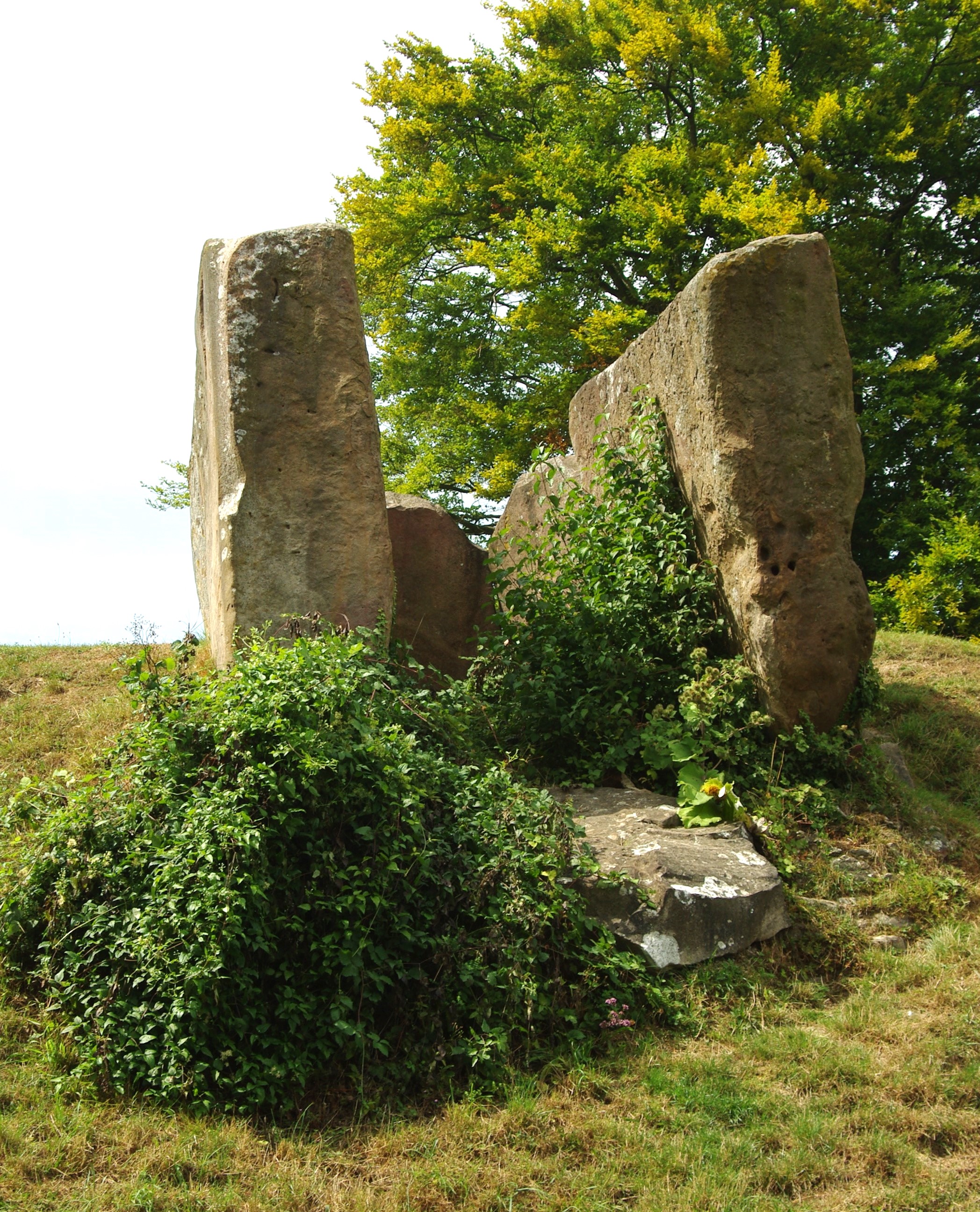
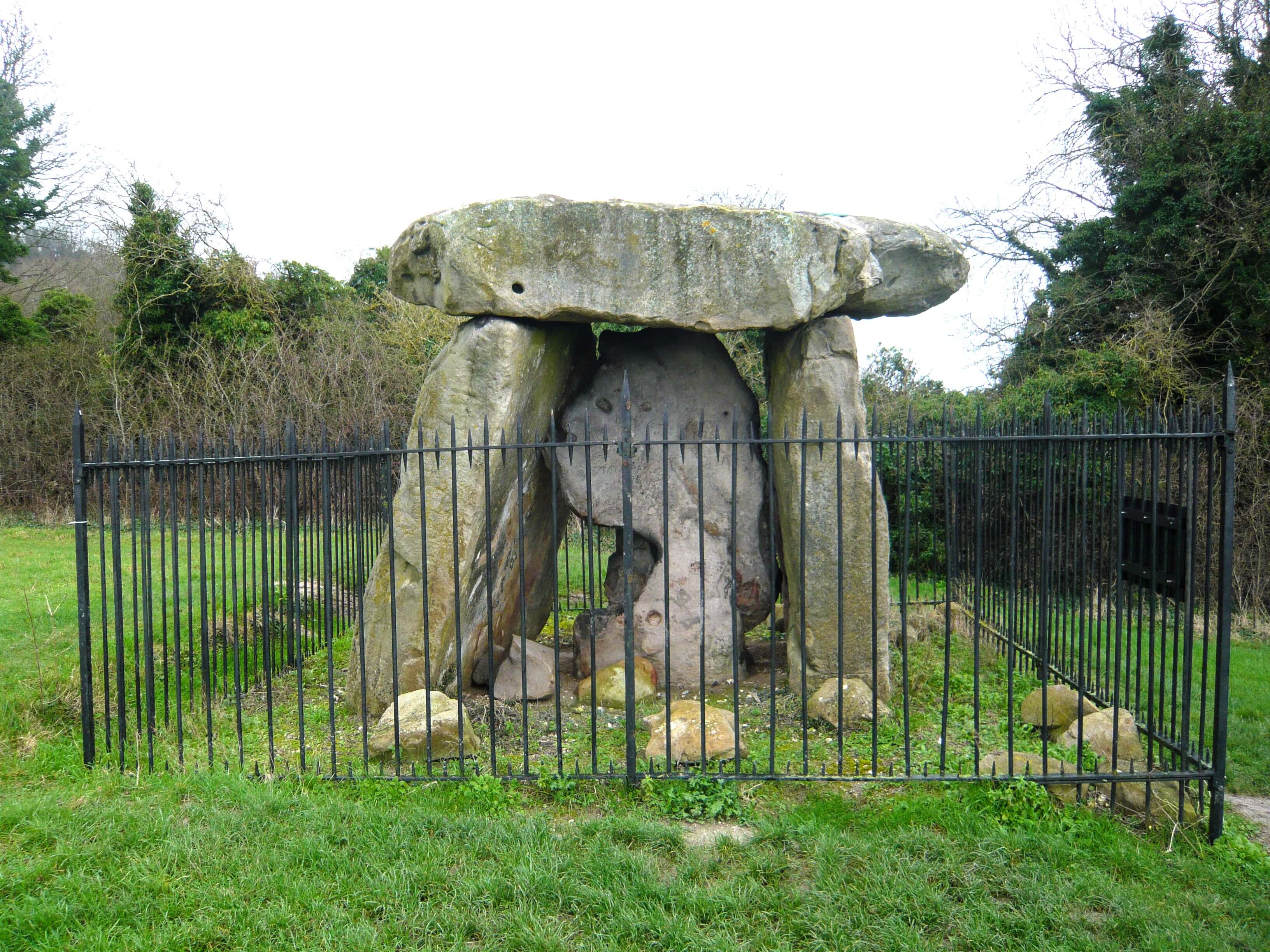
At Little Kit’s Coty House in a light drizzle, I counted seventeen stones, although Donald Maxwell writing in The Pilgrim’s Way in Kent, a short guide published in 1932, claims twelve to fourteen. Various other authorities suggest between nineteen and twenty-one. This is one of those sets of remains that comprise such a jumble of stones it is supposedly impossible to accurately count them – and just to make it harder, they are also supposed to move around (presumably when no one is looking). Thus they are also known by the name The Countless Stones. The largest ones I reckoned were about four meters by two and about three and a half meters by three. The shapes are very irregular, and since they are in a collapsed state there might have been serious damage to some of them. I immediately wondered whether it had originally been the same shape as Kit’s Coty House, a Neolithic chambered long barrow, just a few hundred meters to the north, where the stones are in the form of a dolmen, which would have been a burial chamber at one end of an eighty-four meter mound.

The Countless Stones, or Little Kit’s Coty House

William Stukeley, writing in 1722, recorded that he was told local people remembered a chamber at Little Kit’s Coty House. It had had a covering stone and was pulled down in about 1690.

Both Kit’s Coty House and Little Kit’s Coty House are reckoned to be just under six thousand years old.

Kit’s Coty House

Some nine or ten kilometres away across the Medway Valley are the Coldrum Stones, or Coldrum Long Barrow, dated to between 3985 and 3855 BC. These ones, looked after by the National Trust, are also a burial chamber. Donald Maxwell claimed that there were forty-one stones and that a further fifteen were broken up at an unspecified date during quarrying work. Maxwell also reported a tradition ‘amongst the country people’ that an avenue of stones stretched across the valley from Coldrum to Kit’s Coty, although there is no evidence it ever existed. But coincidence or not, both of these chambers are situated at the same height, about eighty five meters above sea level.

All three burial chambers, then, have been dated to the same period, a thousand years before Stonehenge was built. It seems reasonable, then, to assume they were produced by the same society.

Coldrum has been proved to be a family tomb, the remains of at least 22 people being interred there, with DNA analysis proving their likely close family relationship. Yet amongst these kinsfolk, recent isotopic analysis has shown that maybe the chamber also contained the remains of individuals interred in the fifth to seventh centuries AD.

The White Horse Stone

I say maybe, as there is a very strong caveat connected to this research, and that is that when the human remains were removed in the early twentieth century they were not only not labelled very thoroughly, but they were also passed around several museums and the possibility exists that some bones ended up mis-accredited. Yet it has been proven that some neolithic burial chambers were re-used for burials in the early Anglo-Saxon period.*

The land here has been sculpted by man. Of course, we sculpt the land more and more violently and obviously in the twenty first century, but here, from all these thousands of years ago, are these simple shapes built by ancient folk to inter and celebrate their dead. And these were interactive places. Evidence from other sites shows that some of the bones of these ancestors would be removed at times, although whether as a simple reminder of their elders, or whether for magic or sacred purposes, can only be conjecture. But I like the thought that these bones might be invested with power, that they could be brought into the everyday for protective or ritual purpose.

Now, we view them in a different light, and their sacredness has evaporated. Like a deconsecrated church, but without ever having been formally deconsecrated. It is possible our ancestors would view our visits there as desecration.

But I’m never sure whether you can take any arrangement of stones for granted; they’ve been dismantled in the past, could they have been reassembled?

Incidentally, for those who enjoy Ley Lines, it is worth mentioning that the Ley Line hunter Paul Devereux has described a line passing through The Coldrum Stones and aligning with six nearby churches. Although just to put a dampener on that, perhaps it is also worth mentioning that students at Cambridge University investigated this particular line using computer simulations based on the Ordnance Survey details and concluded that it wasn’t statistically significant – that it was almost certainly just a chance alignment. You takes your pick.

*Research carried out by members of Durham University, Oxford University School of Archaeology and British Geological Survey (Isotope Facility) 2022

Afternoon Light

Late summer afternoon light on the South Downs near Lewes, Sussex. A walk after the rain.

(Click on photograph to see enlargement.)

26th August 2023

I tested one of the few apples on our tree in the middle of the month to see how ripe it was, and it came away from the branch easily. We shouldn’t be picking apples in mid-August, surely? But it’s a poor year, too. There are barely a dozen apples on the tree, whereas last year we must have had at least five times as many. And our crab apple, usually weighed down with fruit which we leave in situ for the birds over winter, is almost equally bare. Our neighbour’s Rowan tree looks beautiful, although Rowan trees always do, but it definitely has fewer berries on it than usual. Our Hazel tree also seems to have far fewer nuts than last year.

And in the wild?

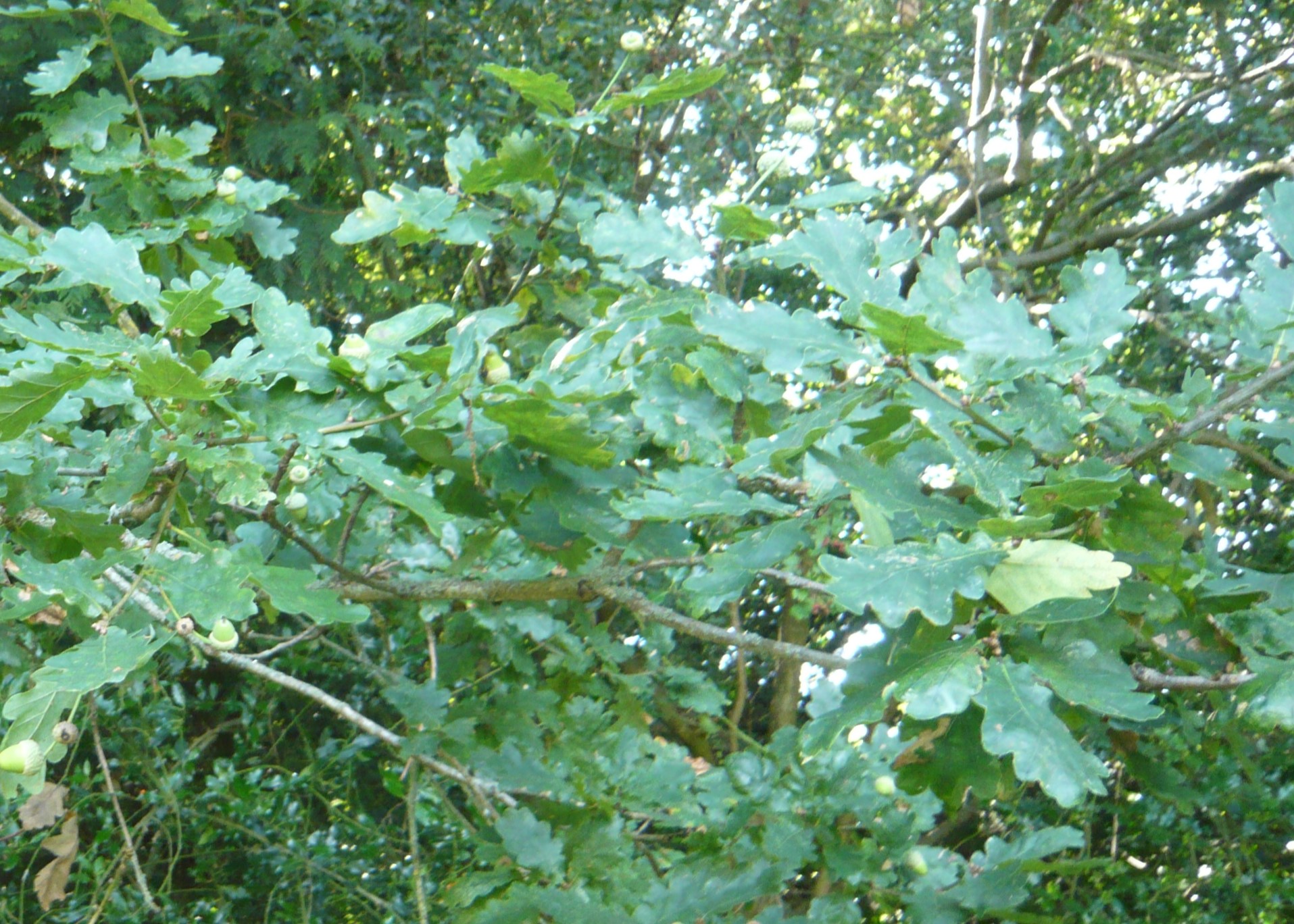
Bit of a mixed bag, really. Some of the hazel trees near us are fairly heaving with nuts, while others have very few. The oaks have a good crop of acorns, but nothing on last year when the woodland floor was covered an inch or two deep. But last year was a spectacularly good mast year. This year the hawthorns have a decent amount of berries but nothing special, much like the elders, while the hollies seem to be loading up with a whole mass of them. That, at least, is the picture in my little corner of South East England. Last winter was quite mild. But even should we have a harsh winter this year, the outlook for wildlife seems not too bad from the nuts and berries perspective.

These things do often seem to follow a cycle of alternate years, although I don’t know why that should be. I had thought the apple blossom was a little late this year, but I really don’t know whether that’s just my imagination.

On Tuesday evening I went for a short walk. It had been a hot day and earlier I had seen three tiger moths, which was rather a treat. By the time I left the house, though, a little before eight, the air was cool, the birdsong seemed a little louder than usual, and there was a magical light in the sky as the sun disappeared below the horizon. The church clock struck eight as it did so. In the woods, there were now patches of sudden night where the trees grew close together, through which the path could be seen like a pale wisp of misty light. By the time the church clock chimed the quarter hour it was quite dark, although patches of daylight still showed in the clearings. Soon there was so little light I headed out of the woods and homeward.

A few minutes before half past, a mixed flock of jackdaws and rooks flew over, the jackdaws chuckling and gossiping noisily as usual as they headed east towards their gathering place on the edge of the town. There, they will be joined by other flocks and once all are there, just before dark, they will all fly off together to their night’s roost.

Although it is still August, the air already seems to have an autumnal feel to it.

At The Hop

I was talking about hop pockets and pokes last week – and pigs, of course, which was how it all started, but forget the pigs for now. Let’s stick with the pokes and pockets. At the weekend we went for a walk through a part of Kent we hadn’t walked for a few years and part of the walk took us through this field:

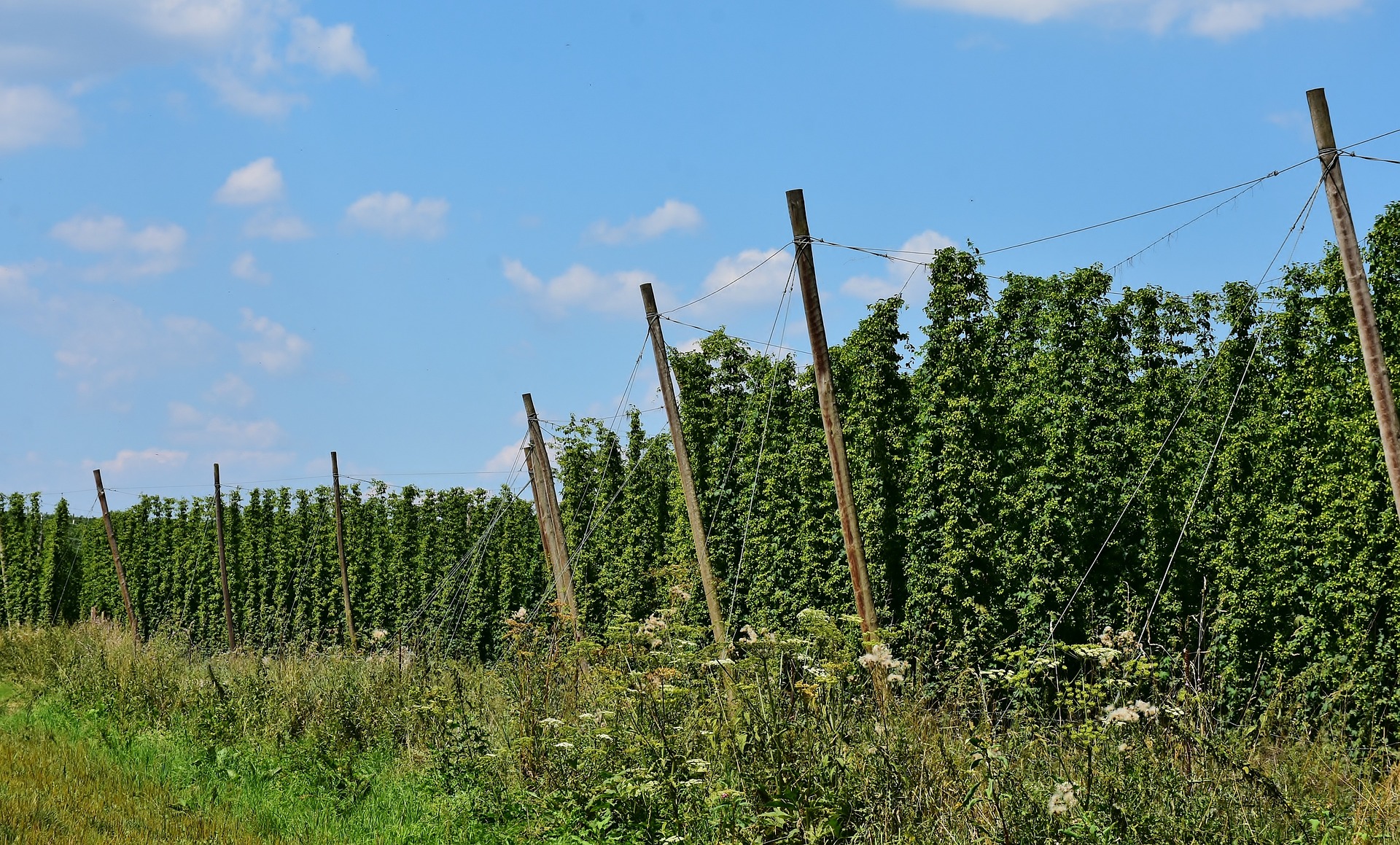
This was a hop garden many years ago. Conveniently close to the oast houses so that as soon as the hops were picked they could be taken in and dried before there was any chance of them spoiling. Taken in bagged up in pokes, and once dried shipped out to the brewers in pockets. A word of explanation for those not familiar with these terms: hops are not grown in fields, they are grown in gardens. Not like your or my back garden, but like a field. But a field full of poles. Hop poles. With huge cable-like wires strung between them to support the hop bines as they grow.

When they are ready for harvesting, the bines are pulled down and the hops picked and put in pokes – large sacks (but you knew that, of course. You remembered it from last week). Then once dried they are shovelled into pockets – another size of sack.

And what are the hops for? Making beer, my friend. Lovely beer.

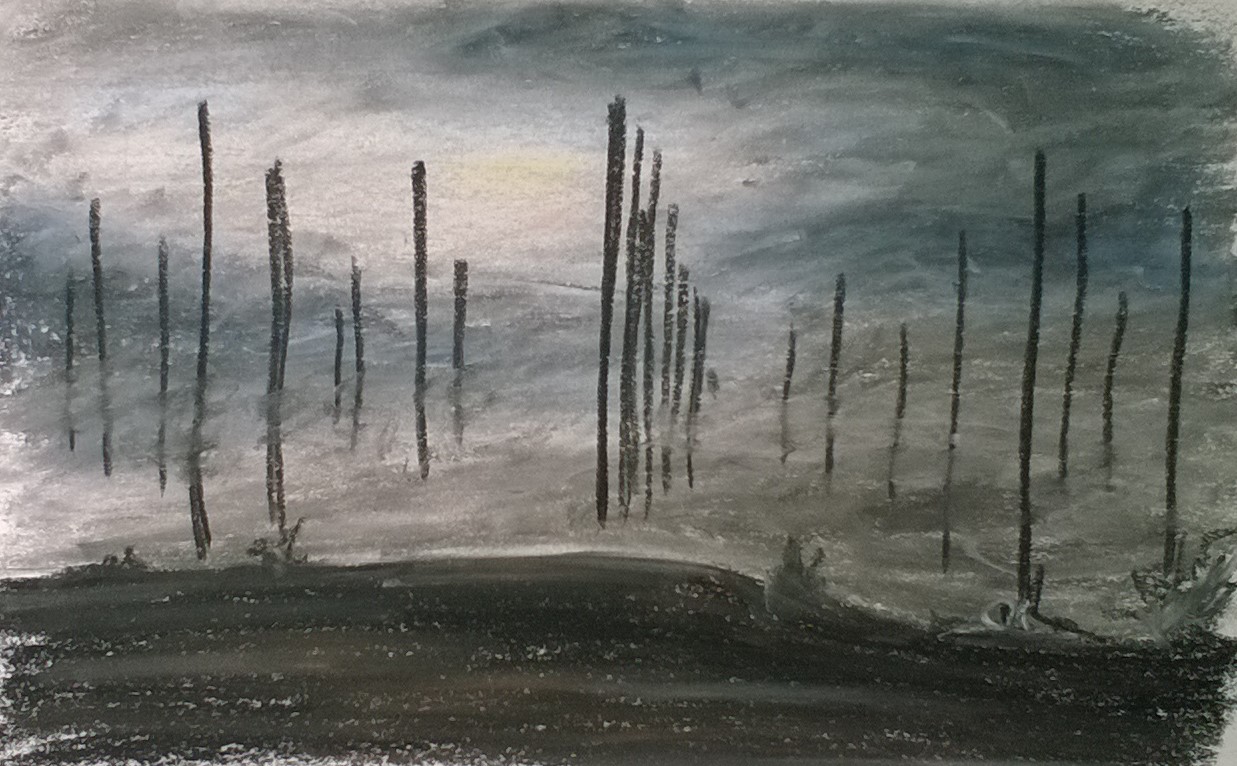
I don’t have a picture of the hop garden from back then, but late one cold, misty, autumn night about thirty years ago, I walked through it and the eeriness was instantly imprinted on me and once I was home I felt compelled to make an oil pastel painting of it (below).

Anyway, as I said I don’t have a photo of the hop garden in question, but this one from Pixabay illustrates very nicely the hop poles and wires with the growing hop bines growing up and across them:

Image by -Rita-👩‍🍳 und 📷 mit ❤ from Pixabay

The poles were supported by wires kept under tension, anchored into the ground around the edge of the garden. Quite a few of these are still in situ around the very edge of the field and just into the woodland and hedgerows bordering it.

In 1872, there were 72,000 acres of land in England growing hops, the majority of these being in Kent, employing over 100,000 seasonal workers at picking time. By 2003, the acreage in Kent was down to just over 1,000 and for the first time ever the county had been overtaken by Herefordshire, which now grew more, although the decline does at least appear to have halted for now. In 2011 there were a total of just over 2,500 acres under cultivation in England but it is such a small number there were fears the industry could die out. Although hops are still used in beer brewing, much of the requirement is imported, especially with a popular shift towards less bitter-tasting beers. But in much the same way that Kent has also lost a huge percentage of its apple orchards, a once rich and diverse farming landscape has become more and more homogenised, with endless huge fields of arable crops and sheep and cattle replacing the hop bines and apple trees.

I spent one autumn apple picking around thirty years ago and the farm I was working on had a large acreage of hop gardens (both apples and hops all sadly gone, now). It was an incredibly busy and bustling time, with our diverse group apple picking – a mixture of locals and Europeans come over for the work – and a traditional mix of workers in the hop gardens; as well as locals, there were a lot of gypsies and possibly still a few people down from London’s East End, which was a traditional way for those workers to make some extra money in the nineteenth and early twentieth centuries. It was busy, noisy, very hard work, and a lot of fun.

And, not surprisingly, there are a number of traditional songs about hop picking. So here is the wonderful Shirley Collins and the Albion Dance Band to perform ‘Hopping down in Kent’ especially for you.

Red Herrings

I had a couple of conversations the other day on detective novels, in which red herrings were mentioned, and it reminded me of something I had been reading a few days before, as well as one verse of an old nursery rhyme, the words recorded in the 1800’s, which goes thus:

The man in the wilderness asked of me
How many strawberries grew in the sea.
I answered him, as I thought good,
As many as red herrings grew in the wood.

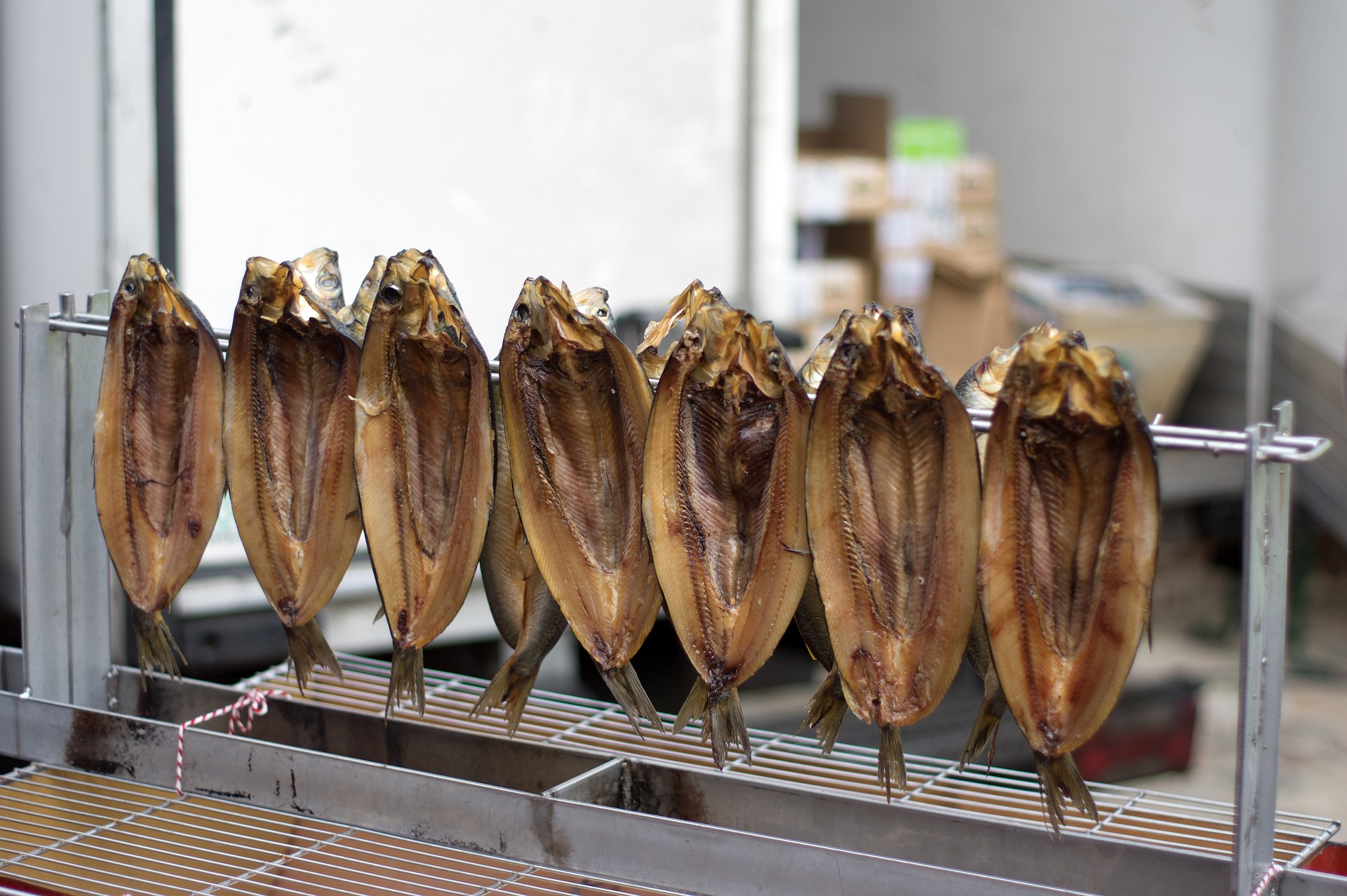
Pixabay image

It is supposedly one of the lesser-known nursery rhymes, but I came across it in one of the books my children had when they were small. Possibly, the Tale of Squirrel Nutkin. Again, there is an old song occurring along the English east coast called the Red Herring, of which these are the first two verses:

1
What shall we do with the red herring’s head?
Oh, we’ll make that into feather beds, and all such things,
We’ve red herrings and heads and feather beds, and all such things.

Chorus
Of all the fish that swim in the sea, red herring it is the fish for me,
And all such things.

2
What shall we do with the red herring’s eyes?
Oh, we’ll make ’em into puddings and pies, and all such things,
We’ve red herrings and eyes and puddings and pies,
Red herrings and heads and feather beds, and all such things.

There seem to be many versions of this, one of which was collected by Cecil Sharp, well-known as one of the first people to travel around England in the early 1900’s collecting and writing down folk songs, afraid they would become lost as, in a rapidly modernising world, fewer and fewer people now sang them.

Unusually (because I never trust it as a source) I looked at Wikipedia which merely defined a red herring as a distraction, or something misleading. It suggests the term came from a strong smelling smoked kipper which could be dragged across a track to put hounds off of a scent.

And what it reminded me of was that a dictionary of the Sussex Dialect, published in 1875 does not have a particular entry for red herring, yet under ‘White-Herring’ is found the definition: A fresh herring, as distinguished from a dried one, which is called a red-herring. Delving a little deeper, we find references to dried, smoked, herrings – named red herrings – in use to mask the scent of trails both literally and figuratively, in a story published by William Cobbett in 1807 and also a couple of references from the 1780’s. There is apparently a bit of disagreement over where the phrase was used first in that context, but that doesn’t seem relevant here, it’s just interesting to find out that red herrings actually exist, and how they came to assume the role they have in literature and everyday conversation.

Shorelarking at Rye

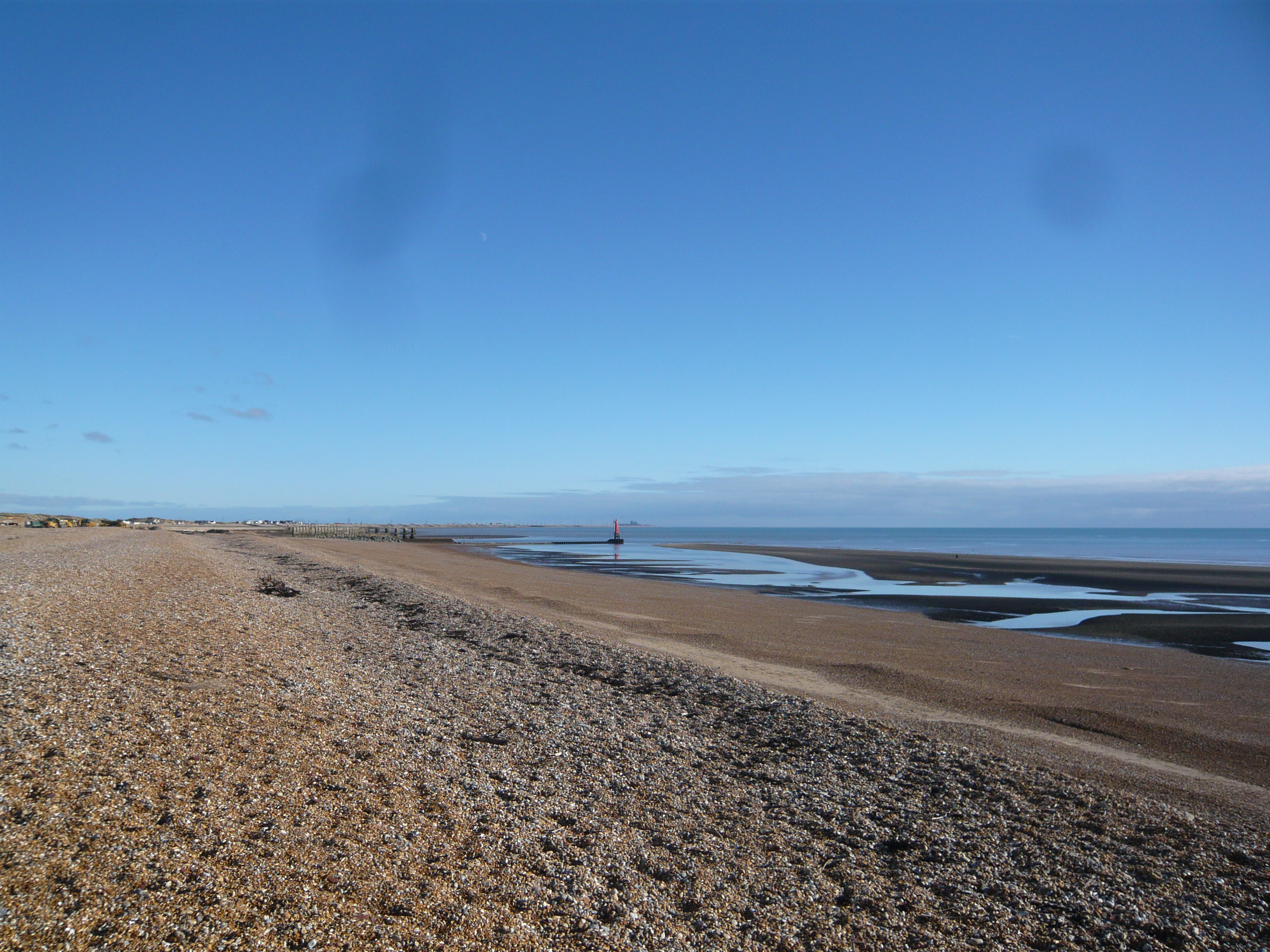
We went down to Rye harbour in Sussex, a few weeks ago, on a beautifully sunny but bitingly cold day. The actual harbour entrance is in the middle distance of the above photo with Dungeness Power Station just visible on the horizon in the distance.

This red-roofed hut sits on the shingle on the approach to the harbour and has become the iconic image that everyone photographs. I resisted the temptation this time, but took this one a few years ago. No one seems certain when it was built, but it was certainly in use from the early 1900’s onwards and was used to store fishing equipment.

The salt marshes behind the harbour constitute a nature reserve and are an important place especially for migrating birds. We walked around the marshes for an hour or so and did see quite a few birds, especially when we spent some while in a hide with the binoculars we’d brought. No close-up photos, because we were too far from the birds and I only had my pocket camera that day, but especially noticeable was was a group of some forty to fifty cormorants.

One of the tasks of the Environment Agency here is to continually move shingle in trucks westwards along the coast to shore up (pun intended) the sea defences. Due to the prevailing winds, longshore drift continually moves shingle eastwards along the coast and without this intervention it would choke the harbour mouth and undermine the sea wall at Pett (to the west). They load up the trucks with shingle from the shore, the trucks drive west and tip it out on the shore. The sea washes it eastwards along the coast again. The trucks load up with shingle from the shore…It almost feels a pointless exercise, but I suppose there’s no real alternative.

But longshore drift means that the shorelark on the South coast of England has a chance of finding rocks and stones (and all sorts of other things) that originated further to the west, and we spent some while searching among the stones here to see what we might turn up.

Shorelarking? It’s like mudlarking, but on the seashore. ‘Larking’ in this sense means looking for…well, anything. Coins, interesting rocks, anything lost or old or, preferably, both. Not that we found much, not that we ever find much, but we don’t do it as seriously as some folk. And as nice as it would be to turn up the sort of finds some people find in the mud of the Thames, we’re not that dedicated. But in the past I have found bits of flint tool while fieldlarking, and usually come home from a walk with an interesting stone or two.

We did find a couple of interesting things that day – they don’t look much, do they? But the grey stone in the centre is possibly a Mesolithic hammer stone, used for shaping flint tools while the nail had a tiny piece of wood still attached, but this crumbled away as soon as I picked it up. How old is it? I’ve no idea. Nails like that were in use from the 1800’s through into the 1900’s but it’s impossible to pin it down further. My immediate thought was it could be part of the beach groyne, but when I looked they seem to be constructed entirely with rivets. Maybe it is from an old shipwreck. The rock at the bottom is simply a lump of sandstone from further west along the coast, a piece of what was called Hastings Sandstone when I studied geology, but now known as the Ashdown beds. Nothing special, again.

Just an interesting few finds on the beach on a cold sunny day before we headed off for a warm drink.

Sickness and Diseases

I’ve mentioned that I’ve been researching my family tree, and a few days ago I was looking for details of one of my ancestors who lived in what was then a small village just outside Norwich. Looking on the parish records not only did I find the entry for his burial, but then noticed that the rector at that time had begun noting down what each person had died of. It was by no means complete, though, because he had added these notes for a year or so and then just stopped. Whether he’d got fed up with it or been told to stop for some reason, I obviously have no idea. But as I glanced through them, I became fascinated by them. I felt they left quite a lot of information about the place and time (rural England in the 1850’s) and thought a bit of it worth sharing.

My ancestor was on page 5 of these records, and the burials had all been conducted by the same rector from the first entry on page one. He added these notes from entry number two, through to twenty nine, then again for number thirty three, and then stopped. This is a summary of the relevant entries:

1   Male     5 weeks   Dec 1851

2   Male       44         Dec 1851      paralysis

3   Male       14         Jan 1852       consumption

4   Male       53         Jan 1852       consumption

5   Male         6         Jan 1852       scarlet fever

6   Male         3         Jan 1852       scarlet fever

7   Female    17         Feb 1852      typhus fever

8   Male        33         Feb 1852      consumption

9   Female    3¾        Jan 1852      scarlet fever

10 Male        53         Feb 1852      liver complaints. Publican.

11 Male        61         Mar 1852      paralysis, consumption

12 Male        19         Mar 1852      consumption 2½ years

13 Female    62         Apr 1852       cancer

14 Female    78         May 1852      old age

15 Male        33         Apr 1852      consumption

16 Male        55         May 1852     decline and heart disease

17 Female    69         Aug 1852      old age

18 Female      5         Aug 1852      inflammation of bowels

19 Female    13         Aug 1852      typhus fever

20 female     21         Aug 1852     consumption

21 Female    76         Aug 1852     coroner’s inquest. Verdict died by visitation of God

22 Male        63        Sep 1852     coroner’s inquest. Verdict died from injury in the head caused by fall

23 Female     71        Feb 1853      paralytic stroke and old age

24 Male         49        Apr 1853      labourer. Decline

25 Female     71        Feb 1853      coroner’s inquest. died by visitation of God, She dropped down dead when in perfect health

26 Male        85         Apr 1853      labourer. Paralysis

27 Male      infant      May 1853      jaundice

28 Female    64         Jun 1853      drowned herself in 11 inches of water. Morbid religious depression. A dissenter. Verdict temp insanity

29 Female   infant     Jun 1853      thrush

After this there are no further comments from the rector, other than:

33 Male        72        Sep 1853      disease of heart

There is quite a lot that is of interest here, and just from a statistical point of view we can see that nine of the burials were children under sixteen – just under a third of the total. Of those six were five or under. Lots of children died in those days. Yet somewhat surprisingly, fourteen of them – roughly half – were over fifty, with four in their seventies and one of eighty five. A very good age for the time. There doesn’t seem much difference in the average ages males and females lived to, although this is a tiny sample, of course. All the rural poor had tough lives, both male and female, which brings us to the comments added by the rector.

Number twenty six really caught my eye. Male, aged 85, a labourer, died of what the rector calls paralysis. No old age pension for them, they worked until they dropped. Number twenty four is also described as a labourer. Obviously the rector felt it worth mentioning, although why just those two, who knows?

Then we have the common diseases we’ve pretty well consigned to the past, now. Scarlet fever. Typhoid. Consumption – properly called tuberculosis. They killed frequently, especially the young.

And when the cause of death couldn’t be determined, even by inquest? ‘Visitation of God’. Although why those ones weren’t just put down to old age I can’t imagine. Unless somebody saw something…

Two more comments I have to mention, though. Number ten, male, age 53, died of liver complaints. The rector had to mention he was a publican, of course.

And then there is number twenty eight. Female, aged 64, drowned herself in 11 inches of water. Morbid religious depression. A dissenter. Verdict temp insanity. The rector belonged to the Church of England, and I’m sure he relished the suggestion that dissenters were mad. All the different denominations of the church seem to regularly go to war with the others, which, if you fancy a bit of a giggle, I satirised here some while ago.

The Compleat Trespasser by John Bainbridge

This time, the review without any distracting rants. Probably.

51pfb0Ihk8L._AC_UY218_

Sub-titled Journeys into Forbidden Britain, it immediately sets out its agenda: it is both a potted history of how the land was stolen from the inhabitants of Britain, and the long struggles to regain access to much of it, with numerous anecdotes of the author’s own escapades trespassing.

The story of how the inhabitants of Britain came to lose their access to the majority of the land is a story that has been repeated throughout most of Europe and beyond. Land forcibly taken by invading armies and distributed partly to their soldiers, but mainly their officials or nobility. Land enclosed by lords and kings for hunting purposes, burning villages and evicting their inhabitants from the land. Land taken by acts of Parliament to further enrich the gentry. Land given by kings to the established church, so that peasants might labour only to feed the rich and corrupt clergy.

Land that has been kept private and jealously guarded both by strict and cruel laws, and by equally cruel methods by the landowners themselves. Thus laws that deemed the starving and dispossessed villager might be executed for taking a rabbit from land he once lived on, to feed his family. Thus the mantrap that would cut a mans leg off. Thus countless thousands beaten and sometimes killed by gamekeepers and owners.

When I attempted to review this a week ago, it ended up turning into a full-blown rant against grouse moors (I do rants so well, these days!), but even today it is not just grouse moors that are fenced off just so the idle rich can enjoy slaughtering wildlife – there is plenty of woodland and more open land enclosed around the country and dedicated to pheasant shooting, for example. There are country houses with huge estates. Land taken by the MOD for training purposes, and never returned. There are many landowners determined to block access to legal rights of way. Although the Countryside Rights of Way act of 2000 was supposed to restore access to most of the countryside, there is still much that is off-limits.

Yet there are good landowners, too. The tales of John’s own trespassing include several encounters with sympathetic landowners happy to see walkers on their land, with the obvious proviso that they cause no damage.

The improved access rights we do have today were earned the hard way. Since Victorian times there have been mass trespasses intended to both bring the issue into the public forum, and to try to force change. The Kinder Trespass of 1932 is probably the most famous, yet many preceded that. It is thanks to the countless trespassers and campaigners of those days that we have improved access rights today.

The book finishes, though, with a plea. Firstly to campaign for further land reform, for better access rights – rights that are enjoyed in Scotland, but not England, Wales or Ireland. And secondly with a warning – the current government campaigned at the last election on a promise to criminalise trespass, so that anyone who deliberately or inadvertently strays from a public footpath onto private land might find themselves on a charge in a criminal court.

Anyone who enjoys the countryside in any form, enjoys spending time there, and walking in it, should read this book. It provides a very good, clear, account of where we are, how we got here, and what has been done to get us someplace better.

But also that we still have some way to go.

On Windover Hill – The Premier

It was Saturday 7th March, and we were in Chichester, Sussex, for the much-anticipated premier of Nathan James’ On Windover Hill cantata.

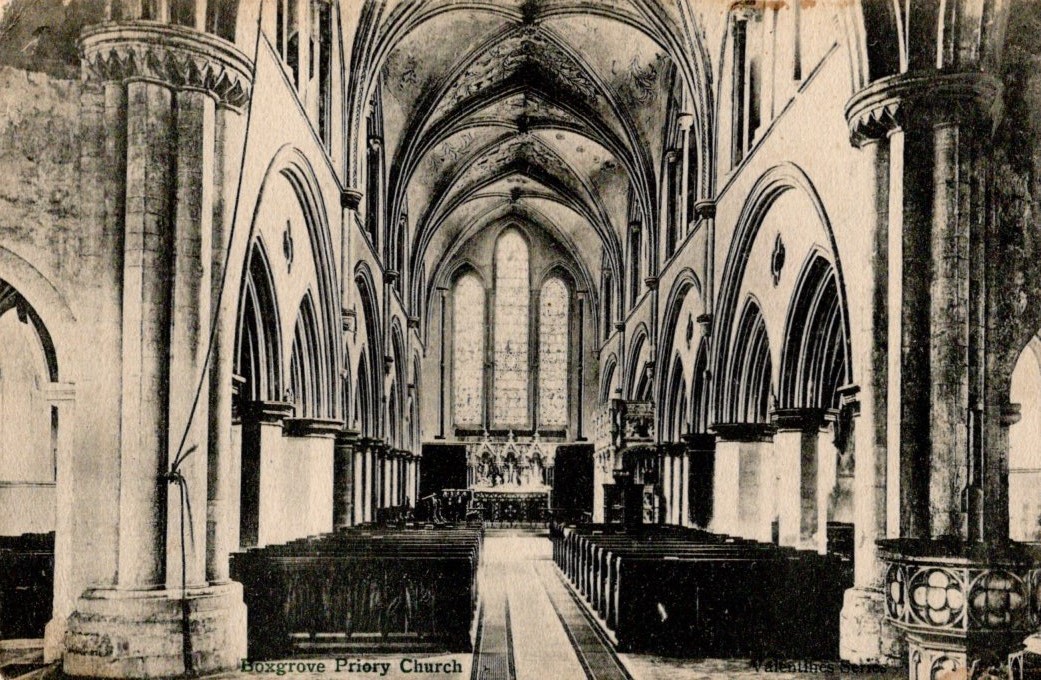
It took place in the church at Boxgrove Priory, in the village of the same name a few miles outside Chichester. Just over a month ago I posted here about a walk we joined at Windover Hill, viewing and discussing the Long Man of Wilmington – the subject of the cantata, which gives some of the background to this work.

Nathan describes this piece as ‘a result of 3 years of writing and research into the ancient figure and how it has inspired writers, poets, artists, and musicians’.

P1060414 (2)

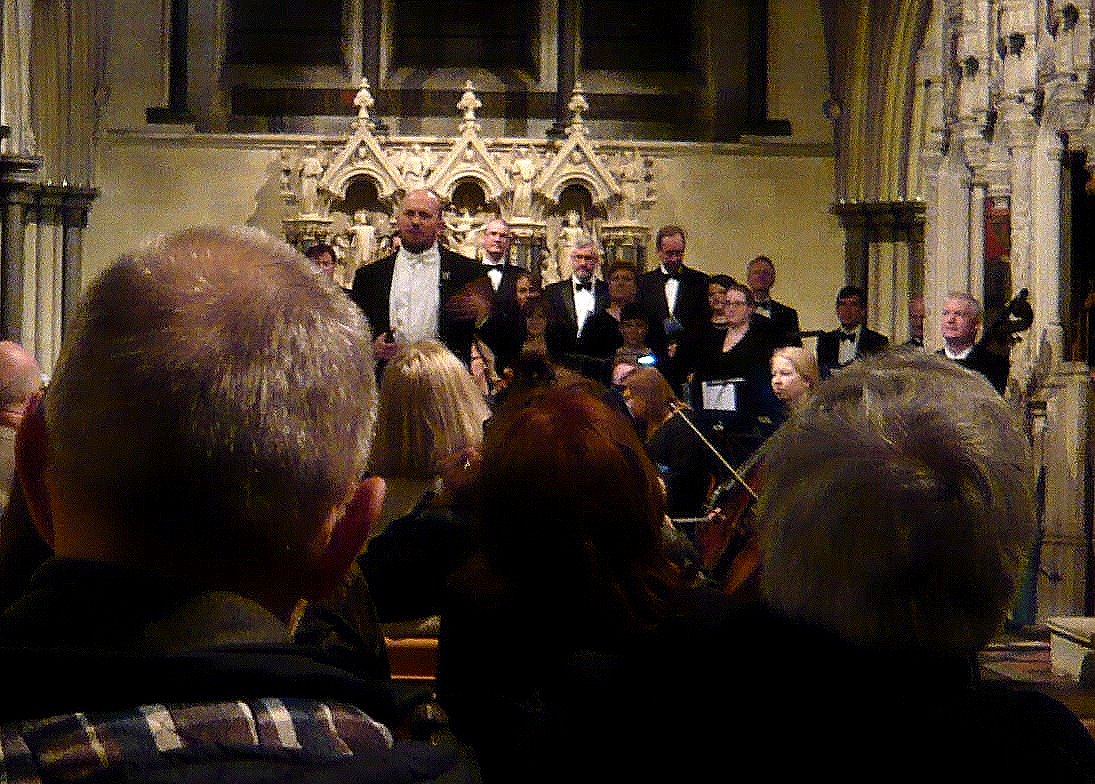
Nathan introducing the cantata

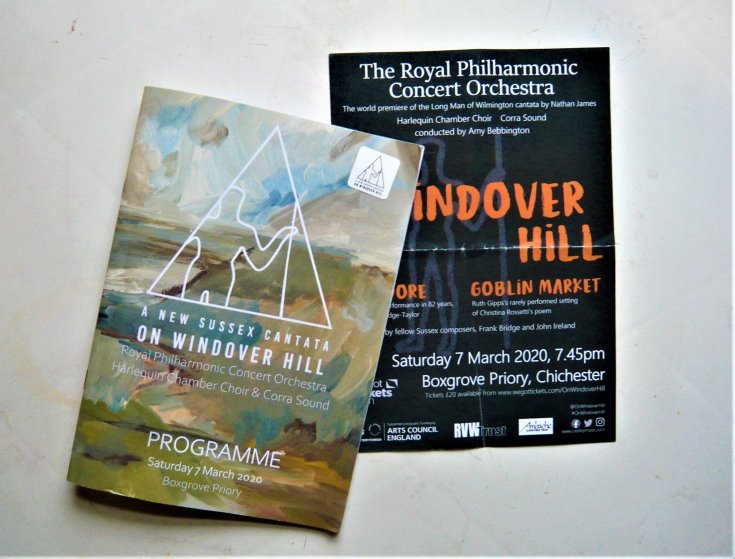
It was performed by the Royal Philharmonic Concert Orchestra, Harlequin Chamber Choir, and Corra Sound, conducted by Amy Bebbington.

P1060417

The cantata is in nine movements, with each movement scored around a piece from various times ranging from c 1340 BC to 1996. These diverse sources include English folk song, poetry, extracts from plays, literature, and even a piece from 14th century BC Egypt, used here because there is a carving on a chair found in the tomb of Tutankhamun which strongly resembles the Long Man.

The music has a very English feel to it, reminding me strongly at times of Vaughan Williams or Holst, another element that contributes to the sense of it being grounded in Sussex.

Much more about the music, and the story of the project, can be found on the On Windover Hill website, here.

Between several of the movements, there were readings chosen to help illustrate aspects of the mythology of the Long Man – poems, excerpts from books and an extract from an article arguing that the Long Man may have been, in fact, a Long Woman. All pieces by writers challenged by the meaning and significance of the figure. At the back of the church, too, there were a range of artworks inspired by the Long Man. And several times during the performance, a couple of dancers took the floor, their actions visually interpreting the subject of that particular movement.

This, what I might term holistic approach to staging the work, contributed strongly to the listeners total immersion in the work without, I think, distracting from it.

As well as the cantata, the program also consisted of several other pieces, all with a Sussex connection. It began with a beautiful piece by Thomas Weelkes (c 1576-1623) Hosanna to the Son of David. Weelkes, the program notes informed us, was frequently in trouble with the ecclesiastical authorities and was ‘noted and famed for a common drunkard and notorious swearer and blasphemer’. Strangely, I immediately felt an affinity to the fellow.

There were pieces, too, by Frank Bridge, John Ireland, an extract from Goblin Market by Ruth Gipps, and a piece largely unknown today: Wyndore (Windover) by Avril Coleridge-Taylor which was its first performance in this country for 82 years.

The acoustics in the church were wonderful, an especially appropriate setting for a choir. It was a hugely pleasurable and satisfying evening.

P1060405a

The Long Man, photographed on the pre-concert walk

img20200310_16283440

During the afternoon before the concert we wandered around Chichester for a while and I bought a few old postcards of Sussex from the indoor market including, by chance, this one of the Priory church, where the concert was held, about a hundred years ago.

It seemed to fit comfortably into the feeling of history, myth and tradition I felt that day.

Review of Wilding by Isabella Tree

I wrote this just over a month ago, and never got around to posting it, for some reason.

91wfR0v1kNL._AC_UY218_ML3_

I have just finished reading Wilding, and I am almost overwhelmed with several feelings. The first is that I need to come back to this book after a month or two and re-read it, since there is just so much to take in. The second is that this book presents so much information that appears new to us in the twenty first century, yet was common knowledge some fifty to a hundred years ago and was hiding all the while in plain sight, as well as some new conclusions that were also, really, hiding in plain sight. And third, a feeling this might just be one of the most important books I have ever read.

This means I am attempting what appears to be ridiculous, and that is to review a book I don’t think I am yet ready to fully appreciate. But first impressions count for a lot, so here goes, although to keep this brief enough for one blog post, I can hardly even skim the surface.

Knepp is an estate in Sussex, England, which the author and her husband farmed for many years the way most farming is done nowadays – intensively. But as returns gradually diminished and the soil became more and more degraded despite the application of the usual chemical cocktails, they decided in desperation to take a leap of faith and re-wild part of the farm. The reasoning was they were going broke farming traditionally, so something new was needed – perhaps something revolutionary. What had they got to lose?

It was a huge learning curve for them, and many of the steps they took had unforeseen consequences. By allowing the land to revert to the condition it would have been in thousands of years ago, they discovered that many of our birds and insects, for example, actually favour environments and foods different to those we have assumed they do. Interestingly, on reading books written a hundred years or so ago about, for example, birds, they were simply rediscovering what was known then, but overlooked since. Just one example – pigeons do not actually prefer the seeds of cereal crops, but wild grass seed. The fact that they eat so much cereal seed today is due to the destruction of the areas of wild grass they would gave grazed before.

Probably the most important conclusion to take from this book is that a return to a more traditional, environmentally-friendly form of farming is not only better for the environment, but in the long term is even better for farmers who might be initially worried about losing out financially. It’s a win-win situation in that it would enable much wildlife to recover from its precarious, endangered, situation, it would reduce the risk of flooding during periods of heavy rainfall, restore soil fertility without pumping massive loads of chemicals onto the land and, consequently, into the water systems, and reward farmers with not only a better environment but healthier crops and stock which, in turn, would be healthier and more nutritious for the consumer.

Along with most others, I have always understood that back in the Neolithic period, when man was first making his mark upon the landscape in what would become Britain, most of the land was covered in thick, dense, woodland. I also understood that the large wildlife here – the megafauna – consisted of the likes of elk, cattle (aurochs), wild horse, mammoth and the such-like. Basically the kind of large animals that graze and browse the open, lightly wooded, grasslands of the African savanna today. Could we really not see the contradiction in this? This strongly suggests that the natural post-glacial vegetation of the British Isles was an open woodland, rich in undergrowth and grass, maintained by the regular grazing and browsing of this megafauna.

And from that, we understand that much of the habitat association we make today with our native wildlife is just plain wrong – we see birds and animals favouring a particular habitat and assume that is their preference, rather than understanding we have forced them into this by removing their real preferred ones.

There is so much to take in and think about in the this book, as I said at the beginning of this post, that a single review can only begin to hint at the mass of information to take in.

If you have any interest at all in our environment and what we have done to it, this book is an essential read.