Review of Masks and Other Stories From Colombia by Richard Crosfield

In Masks and Other Stories From Colombia, Richard Crosfield brings us twenty five tales set in Colombia, the majority of them viewed through the privileged eyes of Printer, a British expatriate.

mask

Printer, we are told, has a good ear for a story, and is much in demand by hosts and hostesses at parties to recount these tales. He also has more empathy and sympathy for the Colombians who surround him than do most of the other cossetted expats. Naturally, this acts as a good device to introduce several of the stories.

Some of the stories are little more than vignettes, bringing the reader into the lives led by the mixture of the very poor, the well-to-do middle class, and the extremely well-off and powerful of Colombian society, as well as the expats among whom Printer lives and works. These appear to do little more than illustrate what the lives of these people are like, yet at the end of each story something has changed; there has been resolution of some kind.

Of the others, some demonstrate that you don’t always require an earth-shattering event to create a satisfactory ending, but just a quiet re-drawing of the landscape. Something has shifted, perhaps so subtly that not all the protagonists have even noticed. But we, the readers, see it clearly.

Yet it is easy for the reader to become lulled into a false sense of security by this, so that we are caught out – shocked, perhaps – when we come to one of the stories that has a more powerful and emotional conclusion.

The temptation when placing stories in a setting that is very different from the writer’s own setting, even when that writer has spent a good deal of time there – perhaps especially when that writer has spent a good deal of time there – is to either set all of them in the almost artificial world inhabited by the expat, or to try to set them in the wider community, a community that perhaps they may not completely understand. Richard has managed successfully to do both, something that demonstrates an easy familiarity with both these worlds.

Throughout the book, we can see that the author’s sympathies lie very much with the underdogs of Colombian society, although the stories never become clichés of the noble poor versus the evil rich. They are told with too much intelligence and enough humour to escape that, and, perhaps above all, the writing itself is easy and a joy to read.

Expect to encounter amateur cricketers and murderous bandits, whores and priests, street kids and artists. And a whole host of others.

This is most certainly a five star read.

My disclaimer – I received a copy of this book having beta read one of the stories for the author, although I was not asked to write a review. But my admiration for the stories and my pleasure reading them is entirely genuine.

Wordy Wednesday 1

Many bloggers post photographs on Wednesday under the heading ‘Wordless Wednesday’. Me? I’m going to write a few posts about words – specifically words in English borrowed from languages of the Indian Subcontinent.

I’m just plain awkward, but you knew that, didn’t you?

I am currently editing the first draft of my novel A Good Place, which is set in a hill station in Northern India. And in that hill station live a number of English who remained behind after Partition.

‘I’m sitting on the veranda of the bungalow in my pyjamas.’ Well, no, no one says that in my book. But if they had, what is the significance of that sentence?

The significance is the number of words borrowed from Indian languages.

Untitled-Grayscale-03

Veranda is an Indian word, but coming originally, perhaps, from Persian. The Oxford Dictionary suggests two derivatives, either from the Hindi (varanda) or from the Portuguese (varanda). Digging a little deeper, if I refer to Hobson-Jobson, the Anglo-Indian Dictionary that was published in 1886 and traces pretty well every word or phrase borrowed from the Sub-Continent, I discover a very long entry on this word. It begins by dismissing the possibility of it being derived from the Persian beramada, and goes on to state that it appears to exist independently in both Hindi, and in Portuguese (and Spanish). It then traces the possible routes the word might have taken to reach the English language, before then saying, surprisingly, that it could have its roots in the Persian after all. This seems quite likely to me, since many Persian words made their way to India especially with the Mughals, and it suggests a possible route to the Spanish peninsular when the Islamic armies arrived in the early eighth century.

I tried typing it into Ngram Viewer. This is an online tool that searches through the entire database of books that Google can access online (including ones still under copyright) published since 1800. Looking at the results for all books in English, it tells me it was barely used in 1800, although it does exist, rises steadily to a peak about 1910, and then falls away slowly, although it is still in common usage. Unfortunately Ngram has not been set up to search books in Indian languages, or even Portuguese. I tried Spanish and the pattern was similar, except that after peaking just before 1910 , it dropped sharply, but since then the trend has been upwards. I then noticed something. I had actually looked at the trend in American English. So I then tried British English, and this gave me a rather different pattern; The curve rose gradually until it peaked in the 1950’s and then fell away sharply. Why? I think it must be due to a surge of historical / biographical / nostalgic writing, both fiction and non-fiction, after the British left India.

Don’t worry, I’m not going to try to go into that sort of detail with other words.

Next, bungalow actually refers to a ‘Bengal style’ house (often with a veranda!) that the British frequently chose to live in.

And pyjamas are loose cotton trousers worn in India which were ‘adapted’ for night wear by Europeans.

Okay, class, lesson over. Be sure to wash your hands before eating your snacks (samosas and pakoras today, of course).

Review of An Atlas of Impossible Longing

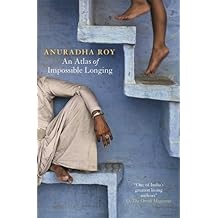
An Atlas of Impossible Longing

A year ago I read The Folded Earth, Anuradha Roy’s second novel, and decided it was so good I would have to read all of the others. And so recently I finished her first book, An Atlas of Impossible Longing. In this, Anuradha Roy tells the story of three generations of a family who have moved from Calcutta to live in a huge, rambling mansion in Songarh, a small town in the hills of Bengal.

Amulya’s wife, Kananbala, hates the isolation of the town, with its lack of fashionable shops and social life, and longs to return to Calcutta. Their oldest son, Kamal, longs for children, and his youngest, Nirmal, is widowed and longs for his unmarried cousin.

Everyone appears to long for something that proves unattainable, and at the centre of the story are two children, thrown together by chance circumstance and then separated by the cultural fears of adults, but who have formed an unbreakable bond that endures through years of separation.

Mukunda is an orphan of unknown caste adopted by the family, and his only companion is Bakul, daughter of Nirmal. They pass their time playing in the grounds of their home or in the woods and fields around the town.

As Bakul and Mukunda grow towards adulthood, their friendship slowly begins to become something more, and Mukunda is sent away to Calcutta by the family, suddenly fearful of the consequences of this.

As the years pass, Mukunda graduates from college and becomes prosperous, even through the years of Partition, without ever returning to see the family who raised him, although he thinks frequently of Bakul. But then chance sends him to Songarh, and he realises he must find out what has happened to her.

The pace of this book is deceptively languid, but this enables Roy to paint the characters and settings in exquisite detail, and for the plot to unfold at an easily assimilable rate.

I feel you always gain more from re-reading a book, and I am longing to do this, to immerse myself again in the rich landscape and characters Roy has created.

Most definitely a five star read.

Review – The Name of the Rose by Umberto Eco


002

Late in the year 1327 Brother William of Baskerville, a Franciscan monk, and Adso, a Benedictine novice, arrive at a monastery in Northern Italy. Winter is rapidly approaching, and so is both a legation led by a notorious inquisitor and another that contains that inquisitor’s implacable enemies. William is to speak in intercession between them.

But once they arrive at the monastery, a series of brutal murders begins, and, at the request of the Abbot, William and Adso are drawn into the investigation.

Every detective story needs a detective, and in The Name of the Rose it is William of Baskerville, who indeed uses logic and observation to make deductions, much like a medieval Sherlock Holmes.

Untitled-Grayscale-01

As the plot develops, there are long theological debates centred around both the poverty of Christ and the question of whether Christ laughed. Questions I have little knowledge of, but which read as authentic to me. But these debates are central to the plot. On the interpretation of Christ’s poverty alone, men and women are accused of heresy and burnt at the stake.

But everything is centred upon the monastery’s library. This library is the greatest library of its time in Europe, containing innumerable rare, important and beautiful volumes. At the centre of the story lies a mysterious and forbidden book, and this book lies at the centre of the labyrinthine library where only the Librarian and his assistant are permitted. But are the murders being committed to get hold of this book or is there another reason? Could they, in fact, be connected with the predictions in the Book of Revelations?

Untitled-Grayscale-02

This is such a well-known book that I found I forgot it was a translation from the original I was reading. Much like the Bible, of course, which point is salient to the monks, and certainly in medieval times this interpretation was a matter of life or death to thousands.

But the translation of  prose does not pose the same problems as the translation of verse, and I don’t suppose the English translation is any different from the Italian original. But the potentials made me smile

As a long book, it provides a canvas for long descriptions, both of the abbey and the associated buildings – essentially a castle – and of the long debates between the monks and the other players. At times there is undoubtedly a temptation to skip some of these, but the reader is adequately rewarded for persevering in that the descriptions paint a powerful picture of the place and time, while the debates tell much about the importance of religion and the ridiculous interpretations of every word of the Bible that quite literally governed the lives and deaths of everyone at that time.

A word about the pace of the book, though. Some readers may find it a little slow (although if those readers skip the debates and longer descriptions it is as fast-paced as any other), but remember it is not just a detective story, it is also a historical novel and moves at the pace one would expect of a book of that genre.

I read this a very long time ago, and although I remember it as having been a very good book, I had forgotten just how good. I will unhesitatingly give it five stars.

And the meaning behind the title? Well, you need to wait until the end to find out, and then you need to understand Latin…

The Collector

Inspiration, writers’ block, ideas…I could write about all or any of these topics. Instead, I thought I’d simply post another poem – plus, of course, a picture (with far better weather than we’re having here) – and let it do the job instead.

337a

I’m a collector of images long stored in my memory,

A desert inferno of razor-sharp rocks.

A mountain breeze rippling an icy cold puddle,

Thick mists and thin soups, flowers, trains, and old shoes.


I’m a collector of memories, both mine and ones borrowed,

The harrowing journey, the lovers’ first kiss.

There’s betrayal and loyalty, flatulence, hope,

There’s a child being born, and a wolf at the door.


I’m a collector of stories, the stranger the better,

Believable, odd, and ridiculous too.

Close to home or historical, alien, fanciful,

Some to keep secret and some I can tell.


I’m a collector of moonbeams and of chance reflections,

A collector of sadness and bittersweet pain.

A collector of strangely shaped stones in a circle,

And dreams that tell stories I don’t understand.


Virtually at Everest – part 2

Part 2 of my virtual trek to Virtual Everest Base Camp, undertaken while my foot is all sympathy-inducing-poorly. Part 1 can be found here

It was interesting watching Bob haggle with our taxi driver, but annoying to have to spend so long finding another taxi. Still, we reached Swayambunath eventually, and began the long climb up the steps towards the temple complex. As usual, we were surrounded by monkeys hoping for tidbits and just generally getting in everyone’s way.

239a

‘Oh, aren’t they cute!’ exclaimed Bob, reaching out to stroke one.

‘I wouldn’t,’ I warned him.

‘Oh, why not?’

‘Well, possibly rabies, for a start.’

We were seated in a taxi heading back towards Thamel inside half a minute.

‘For the last time,’ I said, exasperated, if you just leave them alone they won’t be a problem.’

‘But you said they had rabies!’

‘I only said possibly. It’s fairly unlikely, actually. You just have to be…careful.’

‘Well, you said!’ He folded his arms and stared sulkily out of the window. ‘I don’t think I want to do any more sightseeing!’

He brightened up when we got to the hotel and it was time to pay for the taxi. The driver had asked for 200 rupees when he picked us up, and I had just nodded at him, while Bob crammed himself into the back of the taxi, casting nervous looks outside all the time.

But now Bob decided it was time to haggle. I watched them for a moment, then went to get a drink in the garden. Bob joined me about ten minutes later.

‘What did you pay?’

‘Three hundred,’ he said, triumphantly.

I left him at the hotel and went off for a couple of hours, wandering around the backstreets taking a few photos, visiting shops and cafes, and generally building up my strength for an evening of Bob’s company.

But, in the event, he wasn’t too bad. He seemed to take a liking to the Nepalese beer, and was delighted to find he could get pizza in the hotel restaurant. We had quite a pleasant evening, and turned in early since the following day would be busy.

After breakfast, we walked out into Thamel. I had planned to indulge myself by taking the bus up to Jiri, a trip of one day, and then walking from there, which adds an extra week onto the trek, but is very much off the beaten track as far as regular trekkers go, but since I now had Bob with me, I supposed we’d have to fly into Lukla like everyone else, and leave the Jiri leg of it until another virtual time.

The first thing to do, though, was get him kitted up. Fearing the worst, I asked him what clothes he’d brought with him.

‘T-shirts, shorts, sandals.’

‘Is that it?’

‘Oh, I’ve also got a sunhat!’

‘Right, you’ll need quite a bit, then.’ There are scores of shops selling all sorts of outdoor clothing in Thamel, and I wasn’t worried about being able to find what we wanted. What did worry me slightly, was that Bob is quite tall, and he is also somewhat overweight. The average Nepali is neither, and my fears that the clothing could be a little on the small side for Bob were soon borne out. By lunchtime Bob was the proud owner of some very smart looking trekking trousers that came down no lower than his shins, and a couple of jackets that came down just to the top of his trousers, and the sleeves of which were a good six inches too short.

Still, he seemed happy enough.

‘How are the shoes, Bob?’

‘Well, a little tight, but they’ll do. It’ll only be for a few days, anyway. It was a good idea of yours to cut the holes in the toes.’

‘Um. Well, no one seemed to have anything your size, Bob. Think of them as a type of, er, mountain sandal. And…a few days? No, the trek takes a couple of weeks.’

‘Weeks? I need to get back for work!’

‘Oh, that’s okay. You needn’t come with me. You can stay here at the hotel and then get your flight home.’ He stared at me in a way that made me feel wretched. ‘Look, I’ll change your flight,’ I said at last.

‘Can you do that?’

‘Yes, it’s my virtual trip, this, so I suppose I can.’

I changed his flight, and then booked us both on a flight up to Lukla. The next morning, we were at the airport ready to fly up into the mountains.

‘Is that what we’re flying on?’

Personally, I love the little twin engine planes that do this journey, and hundreds like it all around the Himalaya, but Bob declared he’d only feel safe on a ‘proper aircraft’ – in other words a jet liner.

‘They can’t land in the tiny airfield where we’re going, Bob.’

‘Why not?’

‘Well, it’s, as I said, tiny.’

‘Oh.’

110

He was airsick all the way.

Thank heavens it was virtual sick.

A Poem – ‘Glamour’

Every time I post a poem I insist I don’t write many; that’s it’s not really my forte. And yet, I still write them, despite my doubts.

Although I consider myself a fiction writer, and a writer of short and long stories to be a little more precise, I love poetry. I love its conciseness, its ability to paint pictures and tell stories without telling stories. I feel it is closer to painting than other forms of creative writing.

So here is another offering, called ‘Glamour’.

Untitled-Grayscale-02

Sun-bed ravaged skin dry flaking and decaying,

Masked by layers of painted make-up.

She sets the wig straight with faltering hands,

Since the bloody thing has slid over her eyes again

For the umpteenth time!

Now takes a deep breath,

Then

Checks herself in the mirror across the room,

Turning her head painfully this way a little,

And then that…

‘Shit, I guess that’ll have to do.’

Both hands shaking, she lights a last, final, cigarette,

And,

Her lips pursed and cracking,

She expels the smoke with a wheezing sigh,

And coughs,

One eye still on her reflection.

Then leans back awkwardly against the pillows,

And turns slowly towards the nurse.

‘Do I look good?’ She rasps.

‘Yeah.’

The nurse nods.

‘You look good.’

Bob’s New Hobby

Bob’s wife has been urging him to do more work around the house.

I don’t mean things like the washing up or vacuuming the carpets – God knows, she tried that before, and it ended with her drinking an entire bottle of gin in one sitting – no, I mean the ‘little’ tasks such as putting up shelves or fitting new internal doors or hanging pictures.
066a

Just why anyone would encourage someone like Bob to engage in activities that involve sharp edges, high speed motors, cutting blades, heavy blunt instruments or pointy pieces of metal is totally beyond my comprehension, but who am I to judge these things?

I had occasion to go round to their house recently, and was startled when Bob proudly showed me the shelves he had recently put up in the alcove in the living room. Now, I am certainly not someone who regards himself as a handyman in that respect, and my opinion of DIY is that it is something to be avoided at all costs, but even I could have made a far better fist of it than Bob did.

The shelves contained a few books and two or three very large ornaments which, I suppose, had been chosen due to their shape and mass being such that they were unlikely to slide off of the shelves, despite the unusual slope of those shelves.

‘What do you think?’ he asked, proudly. ‘Gina is very pleased with them.’ He indicated his wife who was standing in the doorway. As I glanced at her, she gave me a look that was nothing if not inscrutable.

‘I’m quite impressed, Bob,’ I said, which was true, since I was unaware of him even changing a fuse before. ‘Is this the first time you’ve put up a shelf?’

‘Oh, no,’ he said, looking slightly hurt. ‘I put a shelf up in the garage, last week.’ I raised my eyebrows.

‘You’ve found a new hobby, then.’

‘I can’t think why I haven’t done this before.’ His enthusiasm was obviously sincere. ‘There is so much to do around here. We’re getting a new kitchen cabinet next week, which will need putting up, and it would cost a fortune to pay some bloke to come and do it, so if I do it we’ll save that money.’ I stared at him, quite unsure what to reply. ‘And Gina wants me to cut the hedge this afternoon,’ he continued. ‘I’ve never really been into gardening, but I’m rather looking forward to it.’

From the living room there came a crash! and the sound of heavy objects hitting a carpeted floor fairly hard. ‘What was that?’

‘Nothing,’ said Gina, mildly. I looked at her sharply, aware that she was usually Bob’s fiercest critic, but she merely smiled at me and sipped her tea. A little later I went out to the garage with Bob.

‘This is the shelf I put up,’ he said, proudly, indicating a plank of wood somehow clinging to the wall just below the ceiling. To get anything down, Bob would clearly have to use a step-ladder.

‘Why so high up?’

‘Gina suggested that it would be a good place to put some of the bigger tools, so they weren’t in the way. I stared up at the shelf from the opposite side of the garage. I could make out a heavy hammer, an electric drill, and…

‘Is that a chainsaw, Bob?’

‘Yes. Gina wants me to take down that old tree at the bottom of the garden. It was a real bargain.’ I stood silently for a moment, as a thought struck me.

‘A bargain? Where did you get it?’

‘At the Saturday market in Umbridge.’ The market was notorious for selling cheap imported electrical goods from the far east, most of which had faulty wiring with no earth, and dubious import licenses, and other, heavier, tools that had been chucked out because they were no longer reliable.

‘Right. Your idea?’

‘No, Gina’s. A friend told her about them.

‘Right. Um. And the hedge this afternoon?’ He indicated a hedge-trimmer that lay on the workbench. It was big. Very big. I don’t really know about such things, but it looked as though it was designed for seriously heavy work. ‘Is that electrical?’

‘No, petrol driven. Same as the chainsaw.’ I scratched my chin thoughtfully, and as I did so I gradually became aware of a muffled sound that was not unlike that of an electric drill, coming through the wall from the house. Bob seemed not to notice it, and I decided not to mention it.

‘Bob, were there any instructions with that?’

‘No, but it’ll be easy enough to operate. These things are all quite similar to each other,’ he said, confidently.

‘Do me a favour,’ I pleaded. ‘At least get a book out of the library on this, and learn how to use it before you start.’ He shrugged.

‘If you think it important.’

‘I do, yes.’

We strolled around the garden, and Bob pointed out the jobs and ‘improvements’ that he had been asked to do. Eventually, and much against my better judgement, I have to say, I offered to come and help him, or to at least keep an eye on him. He smiled broadly at this.

‘Great! I’ll get a few beers!’

‘We can have them afterwards,’ I said, hastily.

We went back indoors. In the living room, the shelves were still up, and still filled with books and ornaments. In fact, Gina was in the process of adding more books as we came in. I stared at the shelves, and I stared at Gina, who returned my stare coolly.

The shelves were now perfectly level.
Vikings

I began writing a short story about Vikings last year, which took a totally unexpected turning and ended up as a different story that I had not foreseen at all.

But what was left over, also unexpectedly, became this poem.

IMG

Untitled-TrueColor-01

IMG01

forest dawn detail


IMG_0001

It is going to be a busy couple of weeks, now, so I probably won’t be able to post or reply to comments as much as I’d like, but I’ll check in whenever I can.

All the best to you all!

In Which Bob’s Wife Goes on Holiday for a Week.

Bob phoned me up.

‘Gina’s gone off on holiday and left me to look after Duncan.’ Duncan is not their pet, although you might assume that from the way he said it, but their son. Now, when I heard that, several questions popped up in my mind. Namely, why had Gina gone off without Bob? Why had she left Duncan with Bob? But mainly, how on earth was Bob going to survive a week looking after himself and Duncan?

009a

Some celeriac. Very nice but totally irrelevant.

There are husbands who are less capable than Bob, but there are not many of them. At least, I think there are.

‘That’s fine, Bob,’ I said, my voice oozing false conviction. ‘You two can have a great time bonding over boy things.’

‘Bonding?’ he wailed. ‘He’s already said he wants me to take him to the football! And he’s hungry!’

Well, Bob does not like football. Basically, he does not understand football. But rather than pursue that line at that point, I said ‘Uh, hungry? When did Gina go?’

‘Monday morning.’ It was now Wednesday.

‘Monday?’ I asked, in genuine surprise. ‘What have you been eating?’

‘Well, we found enough stuff in the larder for lunch – you know, bread and stuff – and we ordered pizzas for supper. I had cereal this morning for breakfast, Duncan wouldn’t eat anything.’

‘Why not? What’s wrong with toast?’ There was a brief silence.

‘Well, actually, the toaster…um…you know…caught fire.’

‘Oh.’ A thought struck me. ‘And yesterday?’

‘Er, cereal, and, er, sandwiches…’

‘And supper?’

‘Oh, we both fancied pizza again, you know. Really fancied it. Um, they’re very good, those ones…’

‘Bob…’

‘Yes?’

‘Would you like one of us to go shopping with you?’

In the end, we both went round. The kitchen looked as though it belonged in a student squat. The draining board was temporary home to four pizza boxes, several bowls and plates and a host of dirty knives, forks and spoons. There were also three pieces of burnt toast and two pieces of very burnt toast.

The toaster was sticking out of the top of the bin, and the air was perfumed with the delicate scent of smoke.

There was no sign of Duncan.

For some reason, my wife never really seems to have taken to Bob. She narrowed her eyes and fixed him with what I can only describe as displeasure, and suggested that if he would like any help at all with the bloody shopping list, then he might clear up his bloody kitchen immediately, a tactic that actually proved most effective.

He had finished that, and the shopping list had been compiled (No, you can’t possibly live on pizza for a week!), when Duncan walked into the kitchen.

‘Oh, hi!’ he said to us, in a friendly, distracted way, before looking at Bob. Duncan is a perfectly affable fifteen year old, who unfortunately takes more after his father than his mother. He had an instruction book in his hand.

‘I’ve got it Dad, look!’ he said, pointing to the open page. ‘You can do toast under the grill – it’s that thing at the top. I’ve seen Mum using it for something or other – cheese on toast, I think.’

‘Well done!’ said Bob. ‘How does it work?’

‘Um…’ Duncan stared at the page for a moment, turned it over and looked at the other side, and then turned back. ‘Not sure. You’d better take a look.’

We slipped silently out of the house while they studied the booklet.

That week, Bob seemed to drop by our house an unusual amount, generally just for a chat – just to pass the time of day – but there was always an odd question somewhere in the conversation.

‘Where has Gina gone, Bob?’

‘She’s staying in Oxford. Wants to see lots of the churches around there, apparently.’

‘Pity about the weather.’ Outside it was bucketing down. ‘The forecast is for more of this all week.’

‘I know. I’m surprised she didn’t take her waterproofs. They’re still hanging up under the stairs.’

‘Perhaps she forgot.’

‘I expect so. Er, if you were Gina, where would you put spare batteries?’

The day before Gina was due to return, Bob decided to clear up the house. To be fair to him, we didn’t prompt him this time. I think it might have had a little more to do with fear of what Gina might say when she returned to something that resembled a municipal rubbish tip under her own roof. But it all seemed to go well and when he nervously asked us to have a look, clearly worried he might have missed something, we were surprised to see the house had even been vacuumed.

‘That was Duncan.’ The boy went up in my estimation.

‘The only thing that didn’t go right was the washing,’ Bob said reluctantly.

‘In what way?’

‘Well, I put the wash on (he seemed proud of having mastered the terminology), but something went wrong.’ There was a washing basket in the corner, the floor was covered in water, and the clothes it contained were clearly still soaking wet. My wife picked out a shirt and held it up.

Not only was it still dripping with water, but appeared to be for a small child.

‘How did you manage that? Those clothes are completely ruined!’ He looked hurt.

‘Don’t blame me, it was the damned washing machine! I left it on whatever setting it was that Gina last used, put the clothes and a washing tablet inside, and just switched it on.’ He pointed at the offending appliance.

‘Even I know that’s the dishwasher, Bob.’ I said. Inexplicably, he looked relieved.

‘Oh, that’s okay, then. I was worried it might have been on the wrong setting.’

Gina came back in the evening. Despite the week of heavy rain, it must be said that she had somehow managed to pick up a most impressive suntan.