We were in Cordoba in April. And we naturally visited the Mezquita (Spanish for mosque), a mosque repurposed as a cathedral in the sixteenth century. In this post, I’m focussing on the Islamic architecture – the parts that really interested me.
Regrettably, we had both been ill since before we left The UK and I was still feeling pretty grim throughout this part of our journey. This definitely impacted upon our enjoyment of the trip and I certainly fancy a revisit at some point. (It’s also worth mentioning we did the entire journey by train, which was comfortable, efficient, and more environmentally friendly than flying. That’s not relevant to this post, though.)
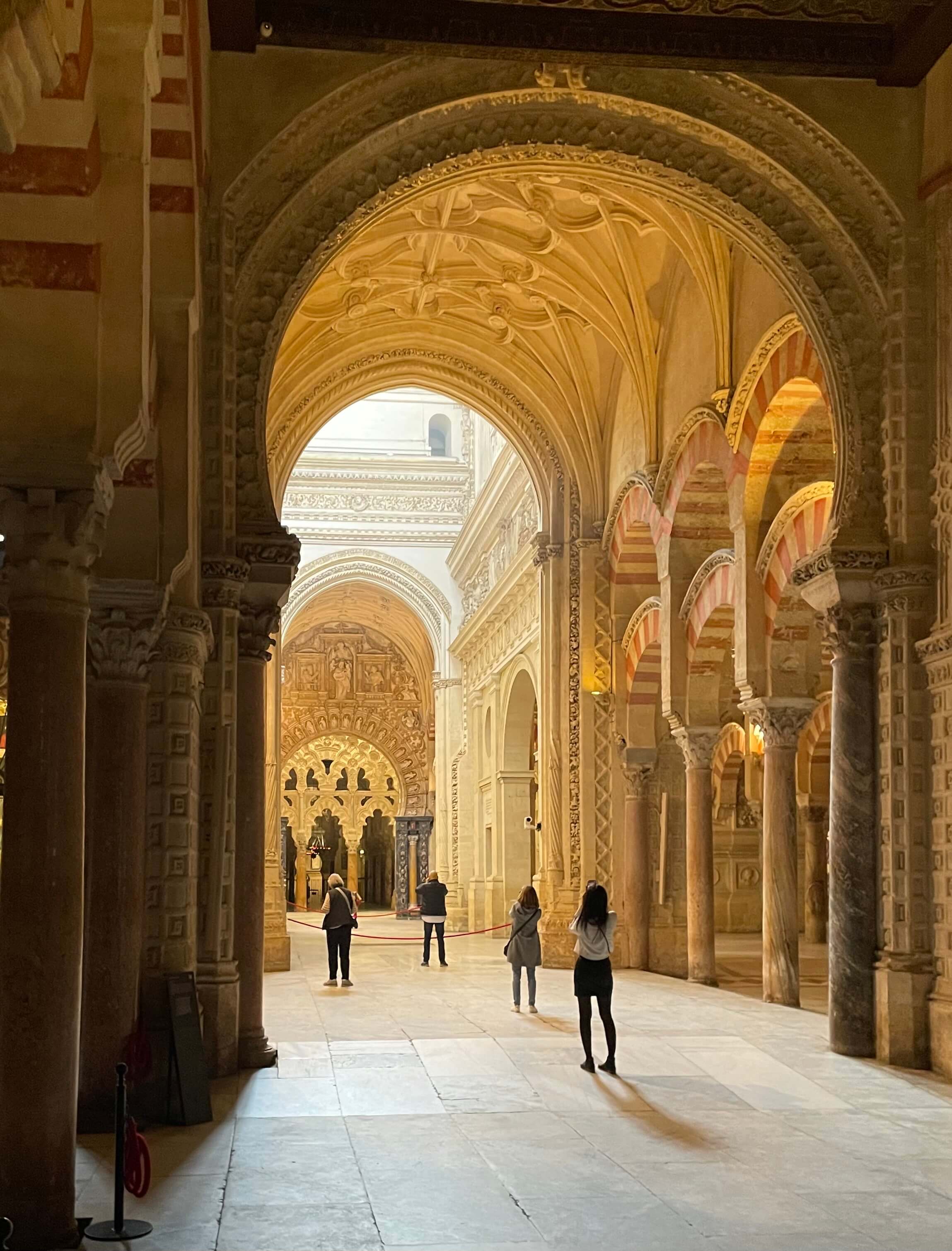
The forests of columns and archways are probably what the Mezquita is best known for.
I think the light almost gives this the quality of a Renaissance painting.
The Islamic world does amazing architecture. Arches, columns, and domes are the mainstay of their construction, but the decoration is also remarkable. The prohibition on depicting anything in the natural world means that paintings and carvings are invariably geometrical, intricate and inventive.
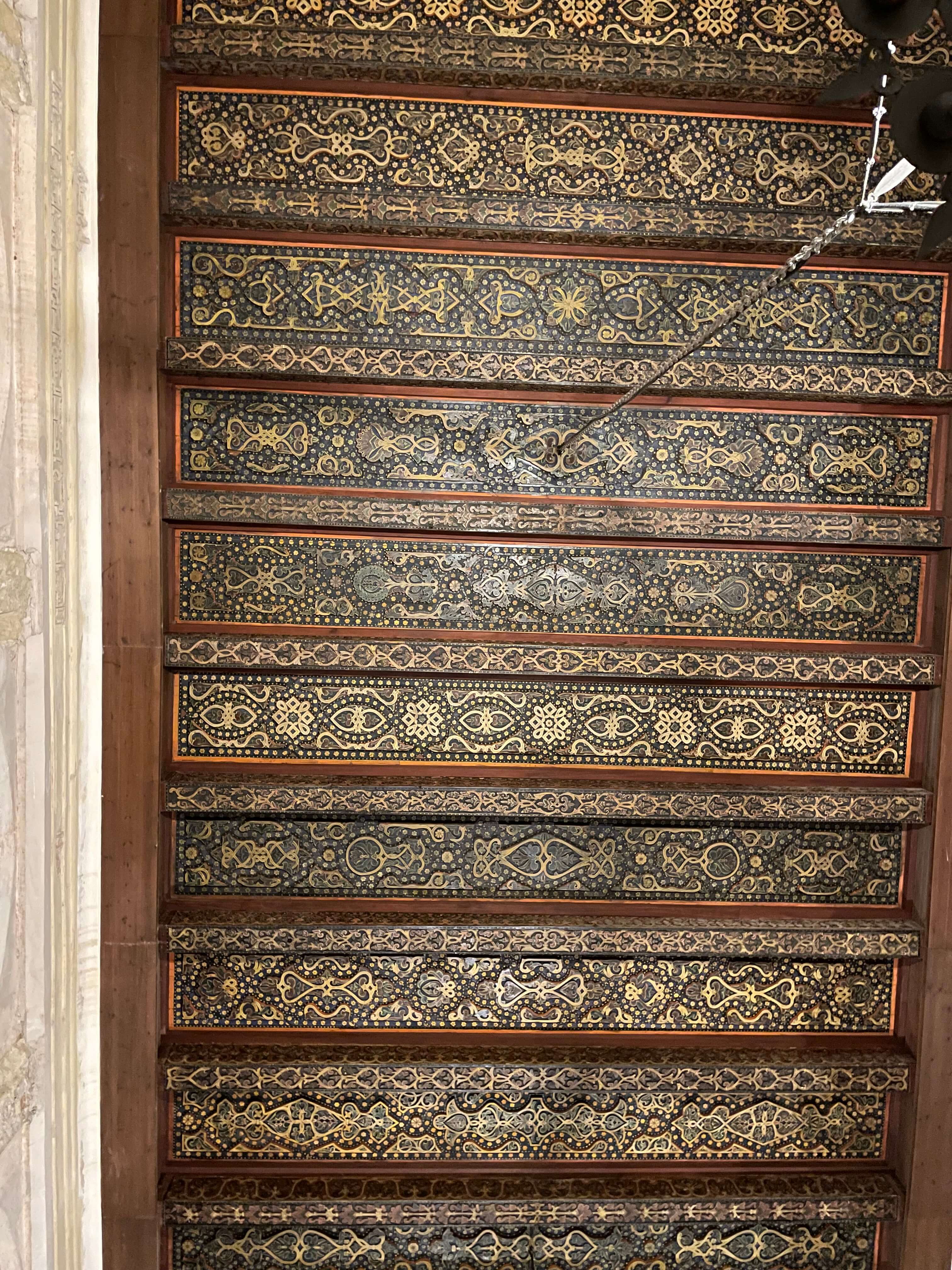
These type of decorated ceilings are common in the Islamic world.
This part of the roof is a whole other thing, though. The dome sits on top of a series of squinches, an architectural development allowing the transition from a square space to one where a circular dome can be supported (I’ve come across squinches before, in India. If you’re curious, the post is here). The decoration is glorious!
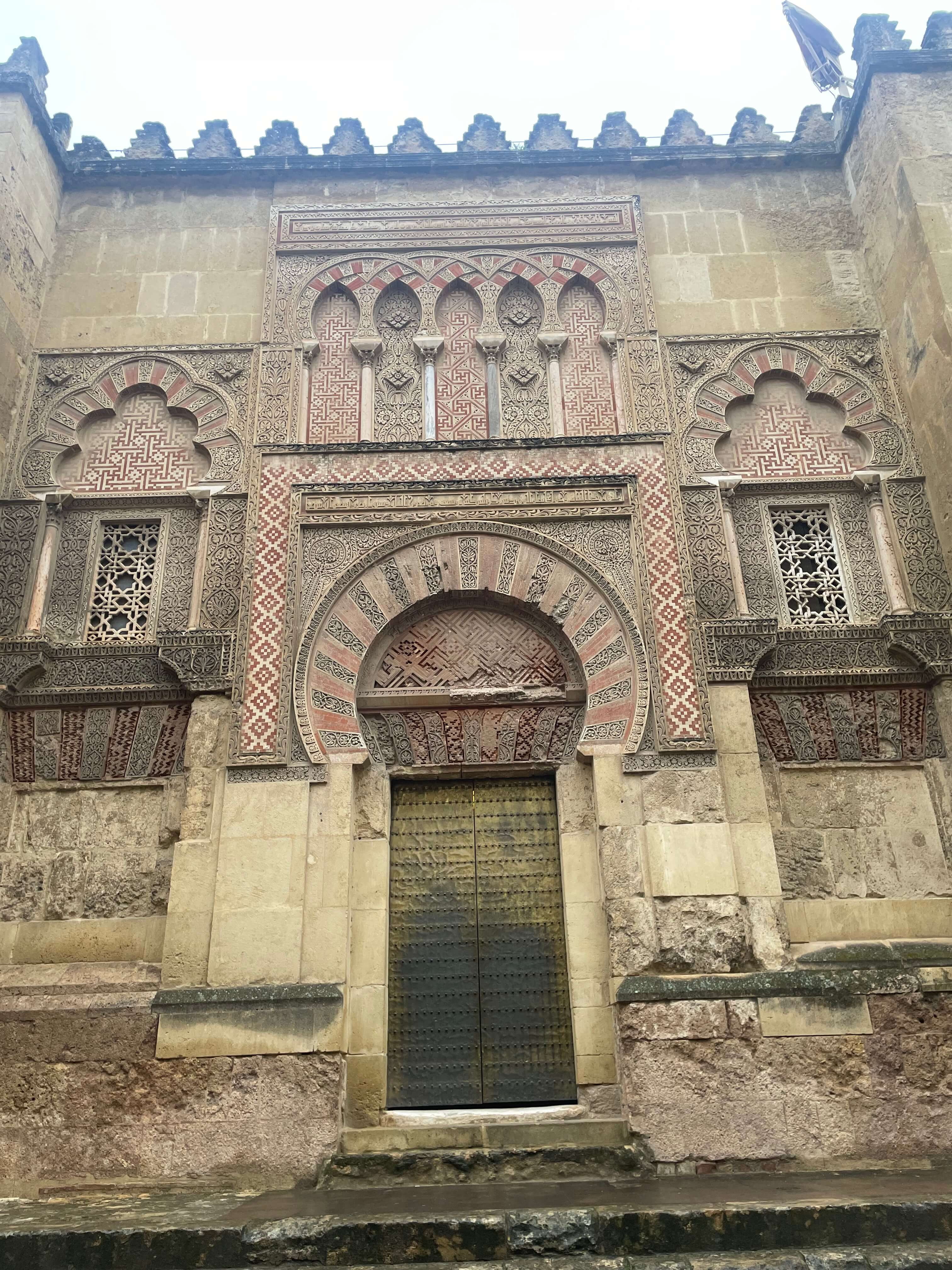
We had some rain, but sometimes buildings look even better in the rain. Well, that’s what I think, anyway.
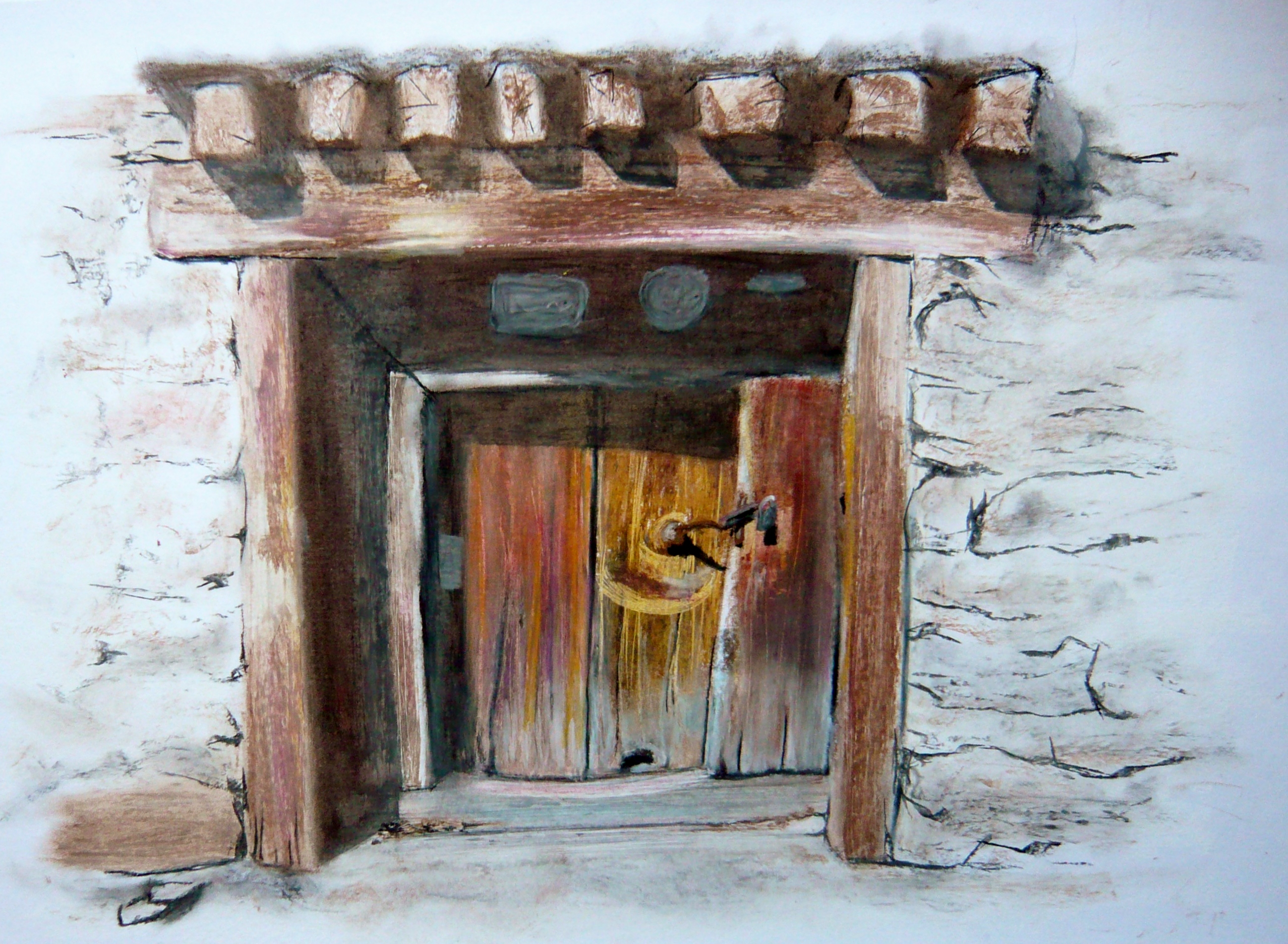
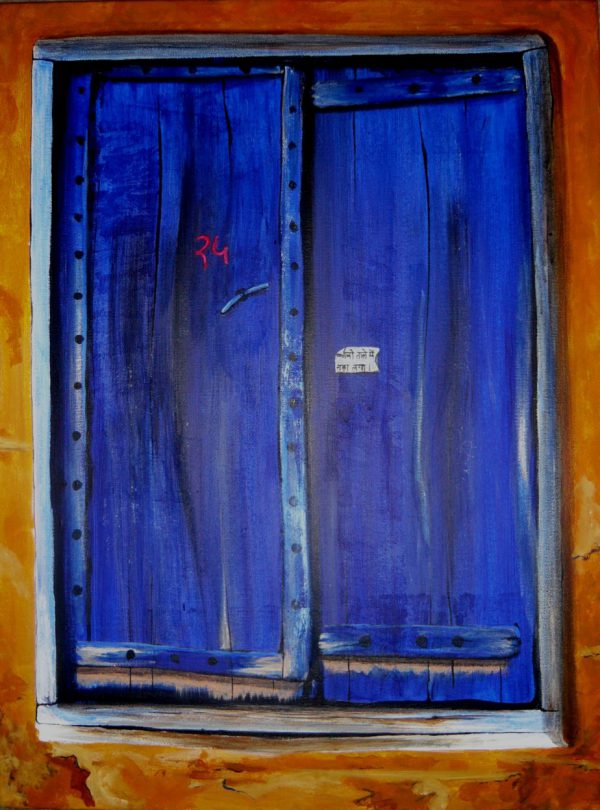
Nepalese Village Door 22ins x 15ins Oil Pastels on paper 2014
My interpretation of the door to a house in the village of Khumjung, Nepal, high in the Himalaya on the Everest Trail. I was pleased with how this turned out and I’m thinking I should try one or two more similar paintings.
Yes, you heard me correctly. a monk. Regular readers of this indulgence will know I pour scorn on organised religion, but also that I have a hankering for the simple life and for solitude. I would love to be disciplined enough to do without fripperies, but I never quite seem to get there. Obviously social media would also have to go if I was a monk. In fact, even if I didn’t become a monk, I think perhaps social media should go. That would be good for me.
But not books, of course. They’re Important.
In another time, a time when belief in the predominant religion was a given, I would have had no problem in becoming a monk. But since I don’t have that belief, it sounds like a contradiction to say that to me the spiritual side of life is extremely important, but the spiritual is, to me, separate from religion. I view the spiritual side of me as being that part that yearns for simplicity, for art, for the minimum possessions required for life, and to be surrounded by nature. Incidentally, I also understand that monks are given a daily ration of beer or wine.
That also sounds good.
And because I was fortunate to have been born in an age of scientific enquiry when most people no longer blindly accept religious dogma, but are generally prepared to question it, I am free to make choices based on my own conscience and on what I consider important.
But I could almost, under certain circumstances, become a Buddhist monk, even in this life. I have said before how I am attracted to Buddhism, although as a philosophy rather than as a religion. I like the way the emphasis is on yourself to make your best life. Gods don’t have to be involved.
I have twice spent a week in that sort of environment – one time a week of Zen meditation, which was very hard work but left me with a great feeling of clear-headed calm, and once on a retreat at a Benedictine monastery where I made a point of attending a simple morning service each day and spending the rest of the day in thought and writing and painting and gently wandering around the extensive grounds. As a panacea for the stresses of modern life it was difficult to beat. I could, as I said, see myself in another life settling into the routine there on a permanent basis. But not in this life.
Those of us who call ourselves creatives, why do we create? Why do we have this need to make things? I know the usual answer is we write / paint / carve / whatever it is we do, because we have to, because there is something inside of us that needs to find an outlet. But what is that something? In my case, as well as a storyline it is frequently a place where I have spent some enjoyable time. It provides me with a comfortable setting in which to tell a story.
Most of what I do, certainly the work I feel is my best, my most successful (in the sense of expressing what I want to express), falls into that category. My long poem The Night Bus, for example, was the result of a thirty year (admittedly intermittent) search for a way to record my experience of a long bus ride across Northern India into Nepal. I attempted prose and paintings without success, although through this I did develop a style of painting I went on to successfully use on many Indian paintings, and had long given up on the project when chance showed me a way into the poem. The poem I completed succeeds in conjuring up (for me) the impressions and feelings I had on that journey; I can relive the journey again by re-reading the poem. Whether it conveys anything of that to other readers, I naturally cannot know.
And my stories, too. I look through Making Friends With The Crocodile, and I am in rural Northern India again. I re-read The Last Viking and can easily feel myself on an island off the west coast of Scotland. This is not to imply any intrinsic merit to my writing, other than its ability to transport myself, at least, into the setting I am attempting to describe.
These stories are a composite of three basics: a setting, as mentioned already, a storyline – and again this needs to be something important to me, or I find it pretty well impossible to put my heart into it, and strong, convincing, characters.
It is useful, then, to know where lots of my writing comes from, and what shapes it, what drives it. I have long suspected that this is frequently nostalgia and, recognising that, have wondered whether this might be a bad thing. Nostalgia, after all, has a rather bad press…does it just mean I am living in the past because I am viewing it through rose-tinted spectacles? As a way of not addressing issues of today I should be tackling?
This yearning for nostalgia, though, is a desire for something we see as better than what we have now. To write passionately about something it needs to be something I feel strongly about. Obviously this can also be something we find frightening or abhorrent – dystopian warnings about the future or anger about injustices, for example – but even in those cases the familiar provides a cornerstone of safety, even if only by way of comparison.
This is also true when I paint. I am not someone who can paint to order – if I’m not inspired, it does not work. A number of difficult commissions have proved that point to me. I paint what I like, what moves me. After all, whatever I am creating, it should be foremost for myself.
That book, then…
I began writing it about five years ago for all the wrong reasons. I had self-published Making Friends With The Crocodile and decided my next story should also be set in India, and as a contrast decided to write about British ex-pats living in a hill station in the foothills of the Himalaya. I wanted to write about India again. The trouble was, I had no idea what story I was going to tell. I had no stories that might slot into that setting I felt in any way driven to write; it just seemed to feel appropriate at the time. I was pleased by the reception the first book had and felt I ‘should’ write this one.
What could possibly go wrong?
I spent time putting together a plot, with which I was never wholly satisfied, and began writing. Really, I should have seen the obvious at that point and bailed out. But I carried on, and twice reached a point where I thought I had the final draft.
My beta reader then proceeded to point out all the very glaring faults.
So twice I ripped out a third of it and chucked it away, then re-plotted the second half of the book and got stuck into the re-write. I’m sure you can see part of the problem at this point – I wanted to hang onto as much of the story as I could, instead of just starting completely afresh. And now here I am trying to finish the final draft for the third time, as my February project for this year. And it’s just not working for me. But at this point, after well over a hundred and fifty thousand words (half of which I’ve discarded) I just feel I’ve invested too much time and effort in it to abandon it now. Somehow, it has to get finished. I do have an idea for a couple of quite drastic changes which I’ll try this week, but unless I feel I’m making some real progress I’ll then happily put it aside for a while and concentrate on next month’s project: painting and drawing.
And, to be honest, if it eventually ended up as a story of less than ten thousand words, and if I felt satisfied with it, then I’d take that as a result, now.
And the moral of all this? I’m sure there was a point after a couple of months when I knew I shouldn’t have been writing this book. I should have binned it there and then and saved myself a lot of fruitless trouble, but stubbornly ignored the warning signs.
Today’s mood music is early Fairport Convention while I tinker around with a poem about crows and contemplate a painting of the same. Sandy Denny’s wonderful voice should lift my spirits a bit. The climate crisis and the dreaded ‘B’ word just leave me feeling depressed and listless.
I paint quite a few doors – they are a favourite subject of mine. Although if you mention that to my wife, she will sniff ‘You’re joking! I can’t even get him to paint a shelf!’
We’ve had cold, bright, sunny days. We’ve had cold snowy sleety days. And today we have lashing rain and wind. It’s milder than it was, but as miserable as sin and the wind still cuts through you!
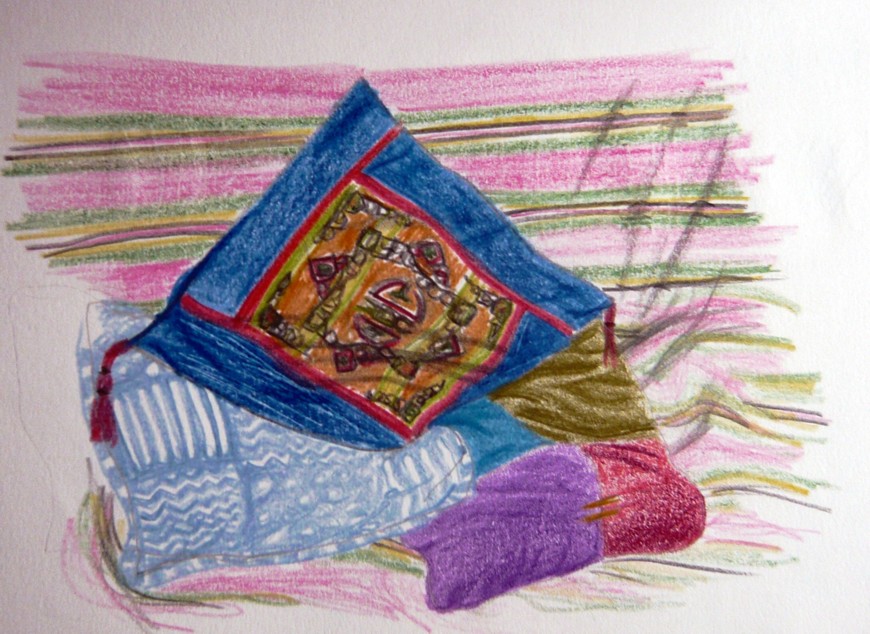
So here is a sketch for the day – cushions on the sofa to remind me of Nepal, since the top one came from there:
And here is a haiku for the day, to remind me of summer:
Amidst the traffic,
In the still airs above me,
A lark dripping down.
And a thought for the day? Another haiku, to remind me to slow down sometimes:
Obsession with time
Is climbing trees in autumn
To get down the leaves.
And today I begin the first edit for A Good Place – initially reading it through and thinking about the voice, the narration, to see if it works for me. Next, another read to look for flaws in the plot, redundancies, things to add and take out. Finally, try to knock the grammar into shape. If I’m happy with that, then it’s on to the beta readers.
It was bitterly cold but sunny first thing yesterday morning, but after a couple of hours the air had warmed up enough to tempt me out. I was due a walk anyway, having not even left the house the previous day.
Every year there is a point somewhere around the middle of February when I feel the warmth of the sun for the first time that year, but yesterday morning there was already a hint of that.
It wasn’t cold enough to freeze the ground, except in a few particularly exposed places, and so it was very muddy underfoot. Therefore it was a delight to occasionally walk through drifts of last years leaves.
And there was so much birdsong. So much so that it became a background noise that was easy to filter out after a while, except when a particularly loud or unusual song caught my attention. Not that I do that deliberately, since birdsong is one of the delights of the countryside. At some point or another when I’m out, I can usually hear the rooks, but maybe because of the sun and the noise from the other birds they seemed to be silent. I’ve always associated them with cloudy skies for some reason, perhaps because I’m so used to hearing them on moorland and in the hills and mountains.
But I’m sure they like a sunny day every bit as much as the next bird.
This morning is cloudy again and the rooks are back. Outside I hear crark crark crark, and the occasional cronk. There is rain and sleet forecast for later, so I go into town in the morning. By the time I get home, the sky is already full of dark clouds and threatening to drop some weather soon.
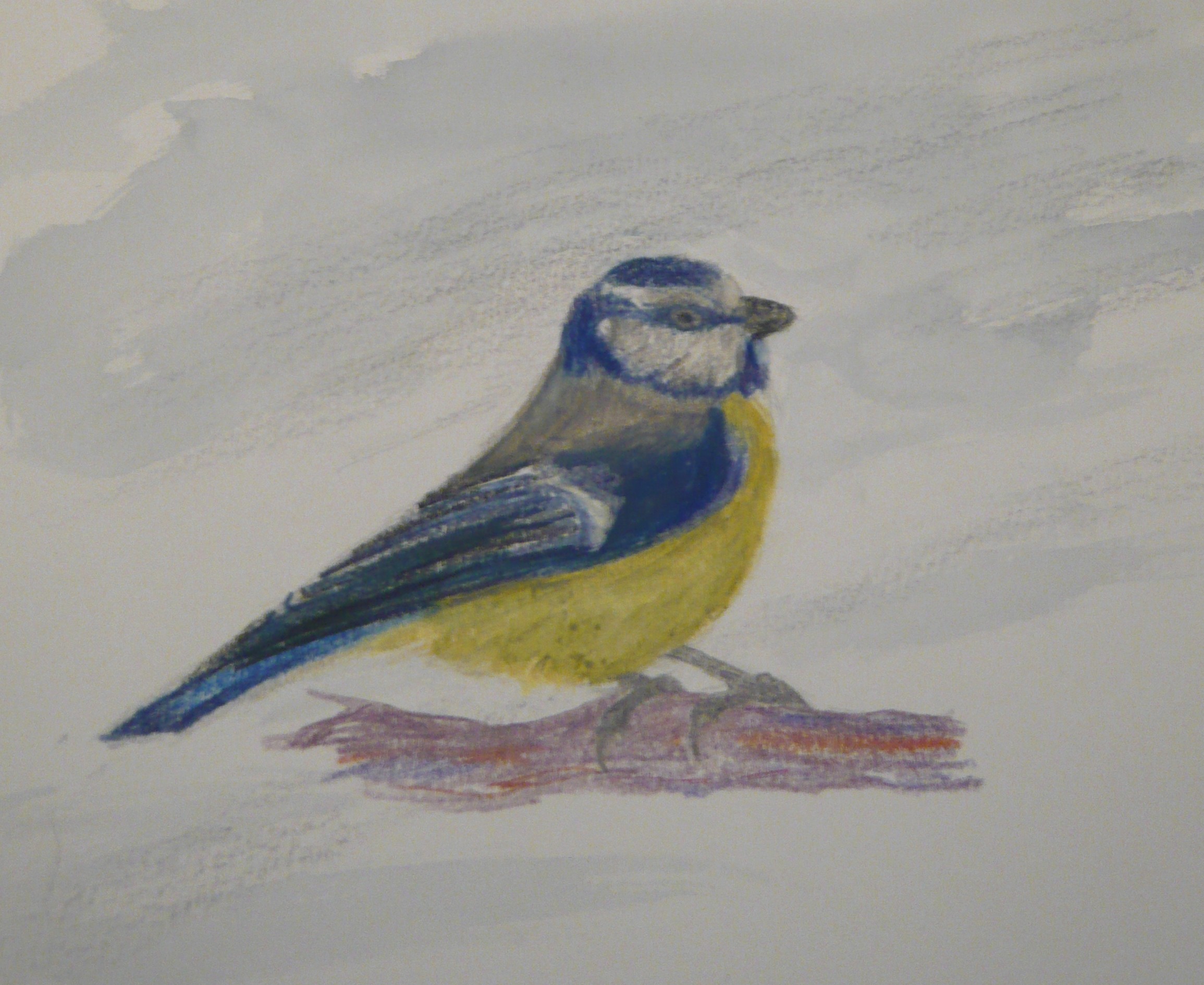
The afternoon, then. I partly spent painting this little fellow:
The blue tit is one of the few British birds whose population seems to be increasing slightly at the moment, in contrast to most whose populations have fallen – sometimes dramatically – over the last few years. We seem to be losing lots of the birds I took for granted as a child, which is such a sad thing. As a race, we seem to be so damned good at exterminating other creatures.
A few days ago, I made the decision to retire from my present job.
It is something I have been brooding over for some while, and having a little time and space to think while I walked on Dartmoor last week enabled me to finally accept a decision I had really come to some time before.
For a long time I have instructed groups in an outdoor environment, in activities such as climbing, canoeing, navigation and team building. As I have got older, though, I have naturally found these activities both physically and mentally more demanding. After all, when you are responsible for people’s safety as well as teaching them skills, there is an added pressure on everything you do.
A number of other stresses in my life over the last year or so have not helped, especially as they are still ongoing.
So as well as a sense of regret, there is certainly a great feeling of relief. Regret, because I have had a huge amount of both pleasure and satisfaction from this work, which has carried me through those times when I felt it was becoming all too much, but relief that now it is time to call it a day, as I have reached the point where I know I cannot carry on for much longer.
I love being in an outdoor environment. It is why I choose to go to hills and woods and mountains rather than towns and cities, and this was instrumental in my deciding to teach these activities in the first place. But the obverse of that coin is that so often I am unable to really enjoy being there, since I am entirely focused on my group and the activities – which is how it should be, of course.
One thing I shall look forward to, then, is being able to enjoy that environment every time I am there, without constantly having to check everyone is safe, or ensuring the activities are taking place as they should be.
While I intend to bring a greater focus to my writing, and also to my painting, I will also have to find something to bring in a little money for the next couple of years until I reach the state retirement age. I’ve no idea what that will be, yet.
Essentially, I just feel burnt out. It is a very intensive job, in the way that care work, for example, can be, and I know it is the right time to go. Otherwise, there is the risk I will begin to run sessions that no one will want to take part in.
And that’s not the way I want it to finish. Far better that people should ask why I am going, than they should ask why I have not gone before now.
My reader will probably not be too surprised to learn that I have been on retreats a couple of times.
After all, someone who gripes about the rush and noise and pressures of the modern world, and who has anxiety issues, tends to spend quite a lot of time yearning for silence and solitude. Because there are, quite frankly, times when everything just gets too much to cope with.
Obviously there are many ways this might be achieved; perhaps I could commit a serious crime and then misbehave in gaol – that would probably lead to a good long spell in solitary, although I can think of several reasons why this might not be the ideal solution.
I could lock myself in a room and refuse to come out – from experience, though, that just leads to unpleasantness and tears. It worked tolerably well when I was a child, but as an adult I can see why it might not look so good.
Whenever I get the opportunity I go for a long walk. Unfortunately, if it is near my home I tend to be surrounded by dogs and dog walkers – not that’s there’s anything wrong with them, I hasten to add, but it’s hardly peaceful. There are several dog owners around here whose voices can not only be heard several counties away because of the sheer volume, but can also smash windows by pitch alone. And I soon get back to roads and so-called civilisation, no matter which route I take.
Then there are lots of other walkers bellowing into mobile phones: ‘Yes, it’s lovely and peaceful out here! Now, let me just yell a few personal and private details at you and anyone else within earshot! What? Yes, I’m still a complete tosser! Why do you ask?’
Going further afield takes more time, and that’s no good if I need a quick fix of silence, so generally I’m stuck with the dog walkers and the tossers.
So, retreats. Other than the meaning of legging it from a superior military force, a retreat is defined as withdrawing to a quiet / peaceful place. There is also the implication of it being a place to indulge in contemplation.
Yes, that’s exactly what I had in mind. Don’t mind if I do.
My first retreat was at an abbey not terribly far from where I live. Although I am not a Christian, I enjoyed a short week of taking quiet walks in the grounds of the abbey and the countryside beyond, reading, rising early and taking a silent breakfast with the monks, and even attending one of the services each day.
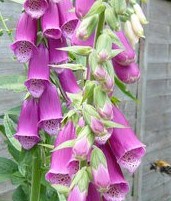
Some of the time I spent painting watercolours which I have long lost. Since at least one was of foxgloves, here’s a photo of some just so you can imagine how incredibly good the paintings were!
The other retreat was in the North of England, and consisted of a week-long period of meditation with a Buddhist group. This was very hard work, but I did finish the week feeling refreshed.
Of course, it is perfectly possible to organise one’s own retreat by finding somewhere quiet and secluded and staying put for a week or however long one fancies (a year, perhaps?).








 Mick Canning