Cordoba

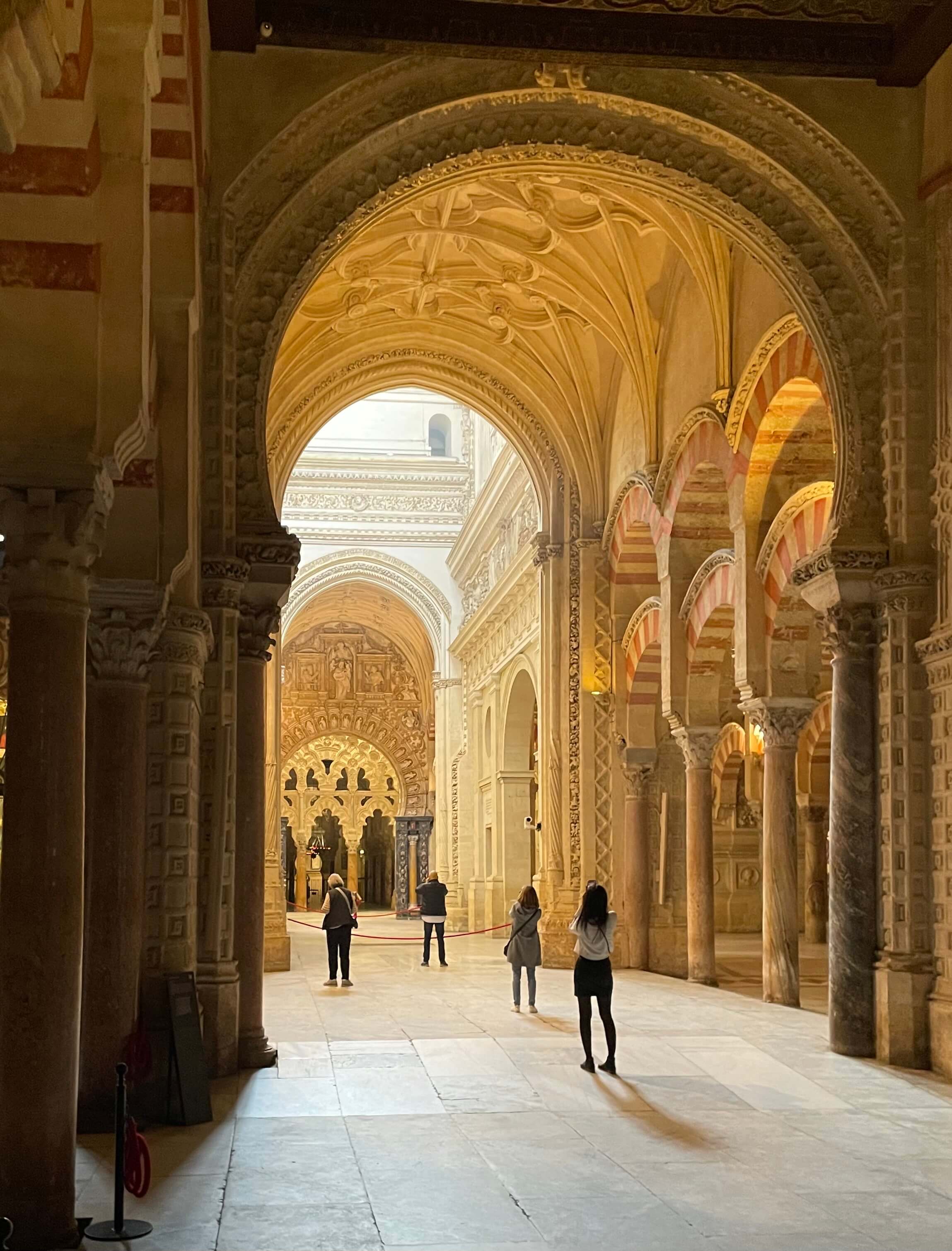
We were in Cordoba in April. And we naturally visited the Mezquita (Spanish for mosque), a mosque repurposed as a cathedral in the sixteenth century. In this post, I’m focussing on the Islamic architecture – the parts that really interested me.

Regrettably, we had both been ill since before we left The UK and I was still feeling pretty grim throughout this part of our journey. This definitely impacted upon our enjoyment of the trip and I certainly fancy a revisit at some point. (It’s also worth mentioning we did the entire journey by train, which was comfortable, efficient, and more environmentally friendly than flying. That’s not relevant to this post, though.)

The forests of columns and archways are probably what the Mezquita is best known for.

I think the light almost gives this the quality of a Renaissance painting.

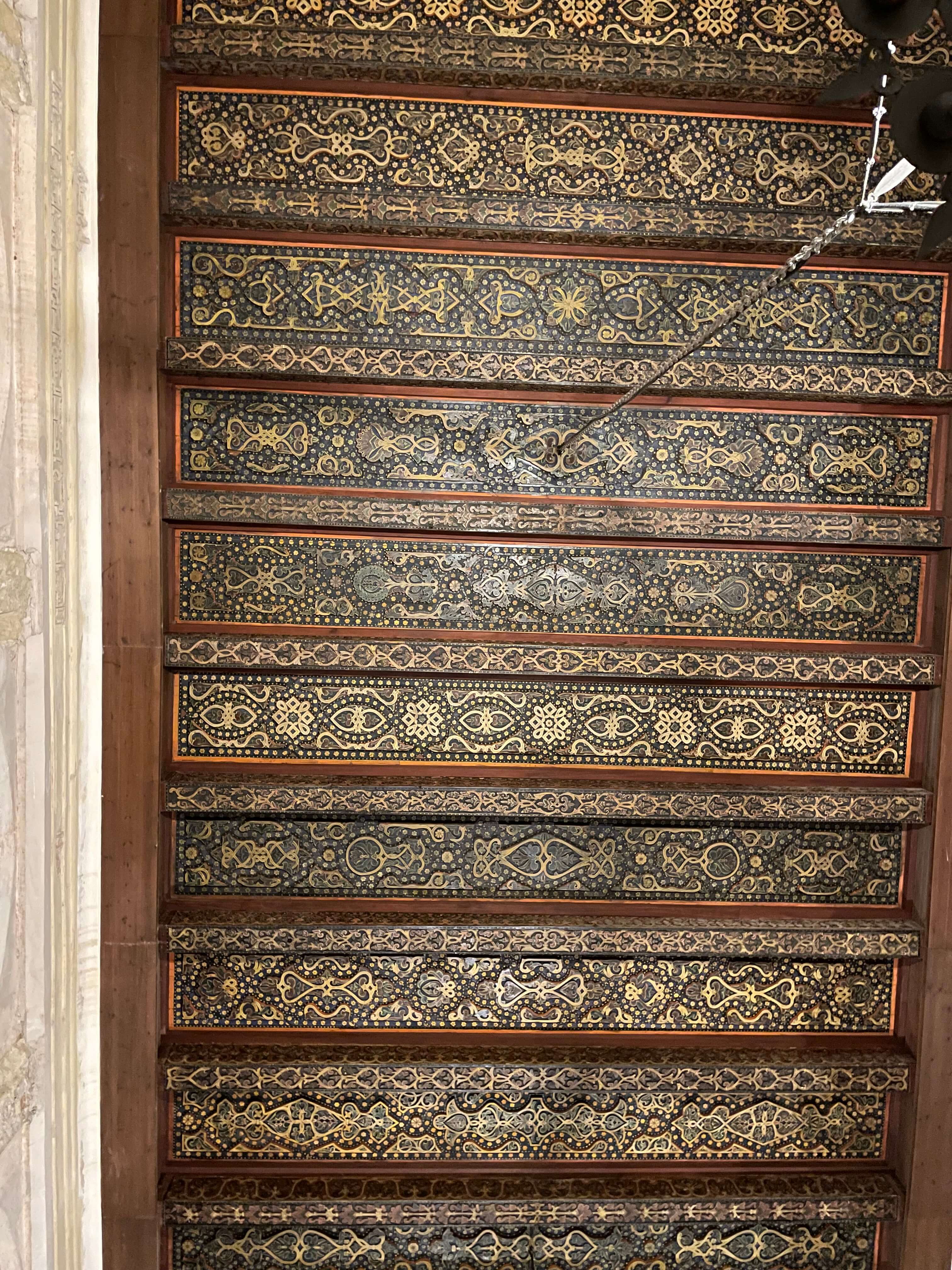
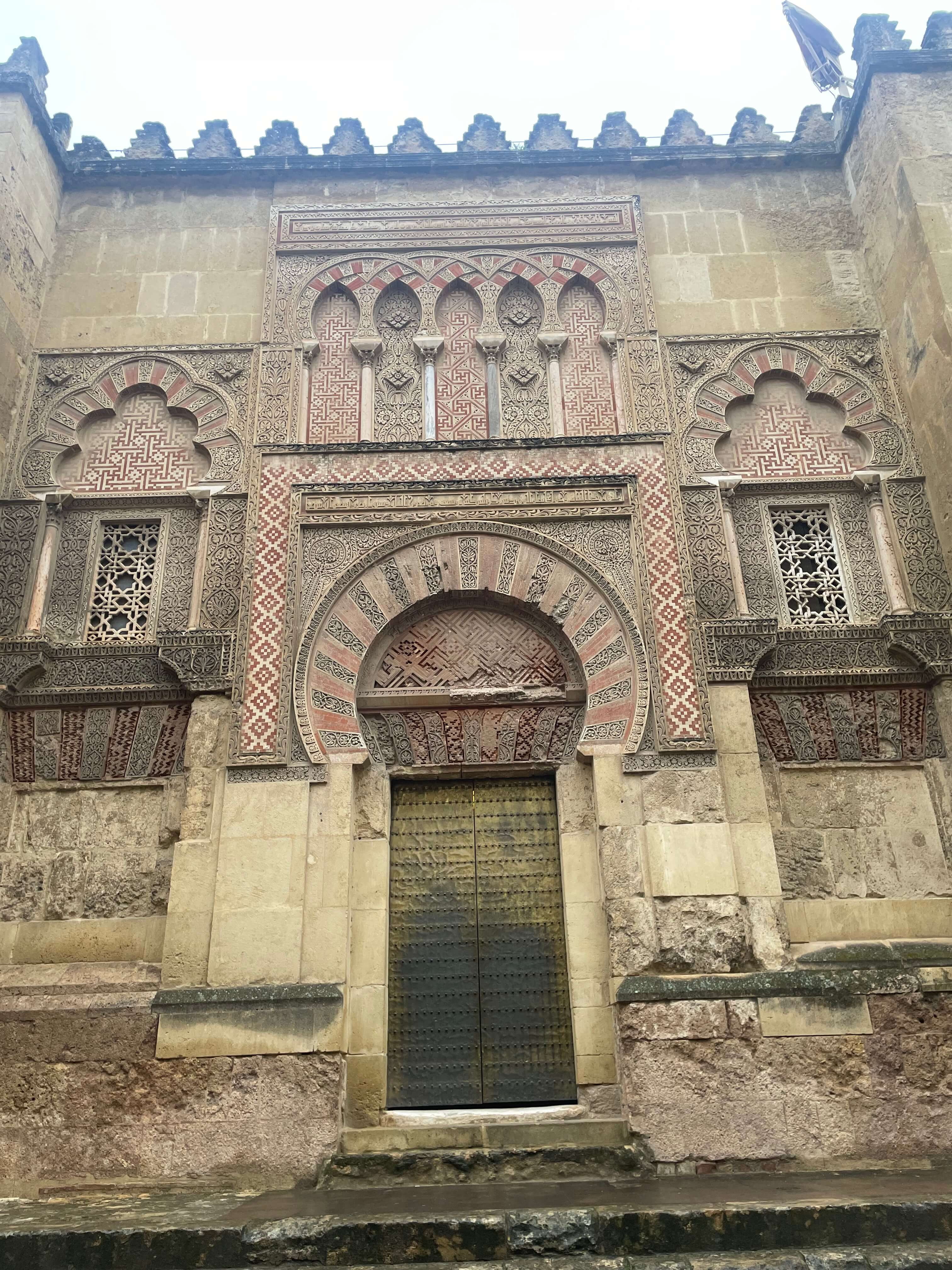
The Islamic world does amazing architecture. Arches, columns, and domes are the mainstay of their construction, but the decoration is also remarkable. The prohibition on depicting anything in the natural world means that paintings and carvings are invariably geometrical, intricate and inventive.

These type of decorated ceilings are common in the Islamic world.

This part of the roof is a whole other thing, though. The dome sits on top of a series of squinches, an architectural development allowing the transition from a square space to one where a circular dome can be supported (I’ve come across squinches before, in India. If you’re curious, the post is here). The decoration is glorious!

We had some rain, but sometimes buildings look even better in the rain. Well, that’s what I think, anyway.

Found – One Muse

‘Oh, you’re back.’

‘Well, not really. I’ve been here all the time. I just didn’t have anything to say to you, that’s all.’

‘Why on earth not?’

‘For a start, you don’t listen to me. You keep fannying around with that novel that your heart’s not in, anyway. What is it that you actually want to write? Not that one, at least at the moment.’

‘I’d love to finish it, actually, just get it out of the way.’

‘It’ll still be there when you’re ready to finish it – if you ever are. And if you’re not, it doesn’t matter. Surely you’ve got other stuff you’d rather be working on?’

‘I…’

‘Like, your poetry’s pretty crap, but you enjoy writing it.’

‘Hey! I…’

‘Then there’s the other novel, the one you’ve been faffing around with for years.’

‘Yes…’

‘So work on that one, since you actually do like it, and do a few paintings, for God’s sake. You’ve been saying you’re going to, well get on with it.’

‘I thought a muse was meant to be an inspiration, not a nag.’

‘A muse,’ she replied tersely, ‘will say whatever she thinks necessary to get her author off his lazy butt! Now, what about this pamphlet or brochure you’re meant to be doing at the moment?’

‘The zine?’

She visibly cringed.

‘Yes…that. As far as I can see you’ve been tinkering with it for months but you’ve nothing to show for it.’

‘I…’

‘You seem to have decided on a few of the poems you want to put in it, and a short story, but you haven’t rewritten the essays you wanted to use, haven’t sorted out the photographs and done nothing towards the artwork. You’ve not even decided on a title for the thing yet!’

‘I’ve…’

‘Yes, and that’s another thing. You keep jumping from one thing to another, and never completing anything.’

‘I’ve always thought it’s good to have a couple of projects on the go. When I get stuck on one I can go and work on another.’

‘Yeeessss….a couple you say. Exactly how many have you got on the go at the moment?’

‘Ah, er, I’m not sure…’

‘No? Well roughly how many?’

‘Er…’

‘Very roughly? You don’t actually know, do you? Just finish something! What about the short poem’ -*cringe* – ‘zine you’ve got in bits? As far as I can tell it’s nearer completion than the other one.’

‘Um, I suppose I could…’

‘And I’m not some lifestyle guru, but get out and go for more walks. And listen to more music and read some more books. You’re not reading very much at the moment, are you? And read something you want to read and listen to something you want to listen to. Not because you think you ‘ought’ to, whatever the hell that means. And stay off fricking social media, too. It’s poisonous.’

‘That’s certainly true.’

‘So just see that you do, or I really will be off. I’ll be checking up on you more regularly, now. I can see it’s the only way.’

She’s a tough, unforgiving, so-and-so, my muse.

At Tunbridge Wells Literary Festival

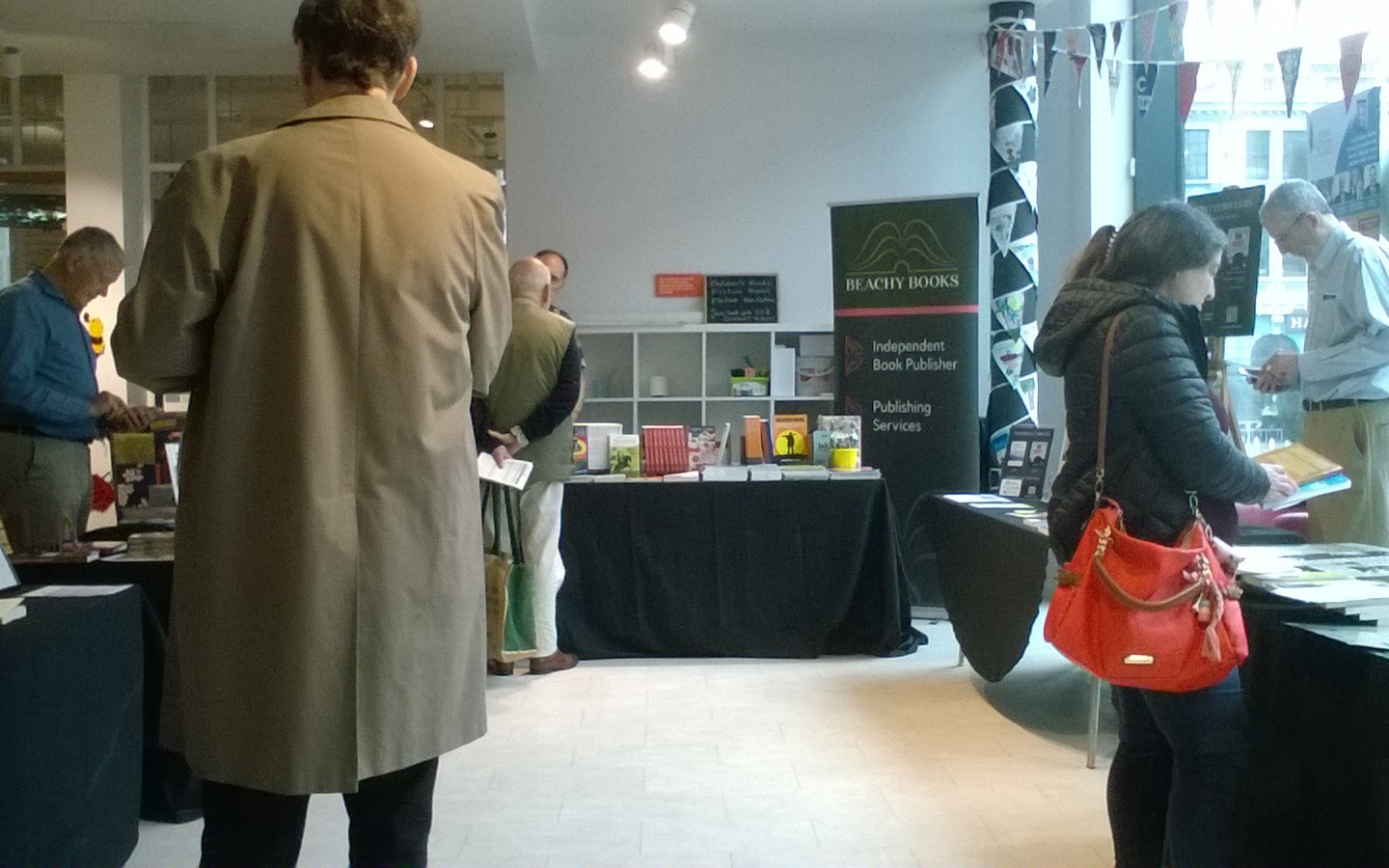
Tunbridge Wells now boasts a literary festival. Over four days this year it hosts talks from well-known writers such as Michael Rosen, Michael Parkinson and Sheila Hancock. But not just the big names.

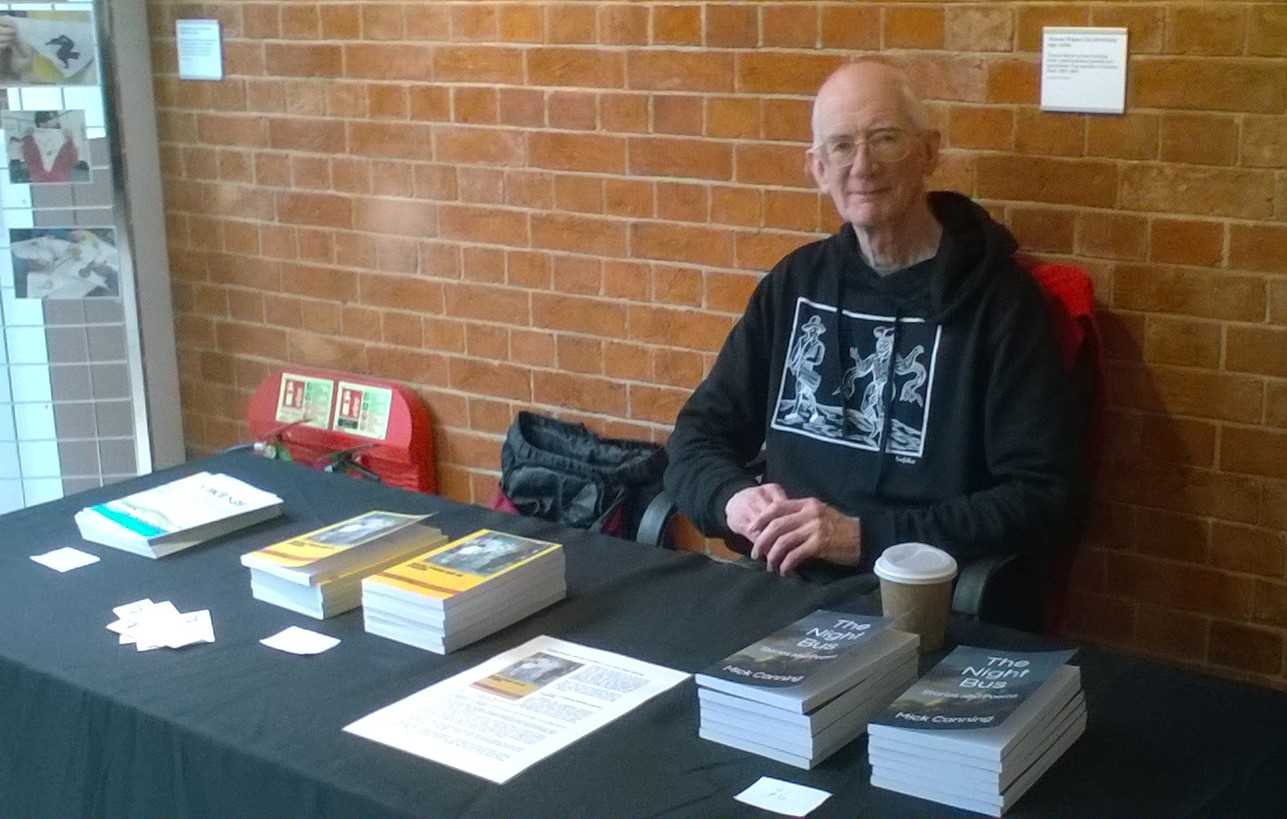
Yesterday was the day local writers could book a table and hawk their wares. It’s been some time since I’ve taken part in one of these, in fact, I’ve only done it once before, I think. When I used to regularly have paintings in exhibitions, I spent a lot of time essentially doing the same thing – chatting to other painters, talking to members of the public who might buy a painting and generally ‘networking’ (I still find that a slightly silly word). Although talking about Making Friends with the Crocodile did have another effect – it reminded me again that I’m beginning to feel I ought to take one final trip to India, sometime.

Anyway, I think I should probably do one of these more often. Did I sell armfuls of books? No, but I sold a few. I had some good conversations with members of the public and other writers, It also seems to have the effect of energising my commitment to writing, which is something that happened to my painting at exhibitions, too. Talking about my books and projects encourages me to focus afresh on them and, basically, get my finger out and get on with it, which can’t be a bad thing.

So, I’d better get on with it.

Some Diary Extracts

April 10th 2022:

A few days ago I dug out all the pastel paintings I have hanging around and put them to one side, the intention being to chuck them all out. As part of managing to get my creative side working properly again, I feel I need to clear out the majority of my old work. I think it is simply preventing me from getting going again – as well as taking up space we don’t really have spare. I’ve always been a little reluctant to just destroy a painting I think I might be able to sell at some point, but that’s something that doesn’t matter to me in the same way any longer.

It’s much the same with writing. Nice if someone buys it and nice, of course, if someone reads it and likes it and, hopefully, gets something from it. But not important in the same way as it used to be. I’ve never wanted to be famous, or sell millions of books (much the same thing, of course), and perhaps this is part of that. If the poetry I’m currently writing is any good, I would like someone to publish it, and if a small audience appreciated it and thought it worthwhile, well, I’d be tickled pink. But it’s not that important.

If I paint again, or carve wood, it will be entirely for me. If someone likes a painting, then perhaps I’ll simply give it to them. I appreciate this isn’t a philosophy that most creatives could adopt, but it’s what I feel I should like to do at the moment.

Wall painting in Amberley Church, Sussex. It dates from around 1300AD, was whitewashed over around 1550, and restored in 1967.

April 11th 2022:

We’re off to Amberley for a couple of days. We should have been walking the South Downs Way at the moment, but Covid has left us too tired for that, so we cancelled our various bookings. But to give ourselves a short break, we kept the Amberley one and booked an extra night.

Yesterday I contemplated completely coming off the internet for a matter of all of about half a second. I find it a huge distraction and much of it incredibly annoying, but like most folk I’m in too deep to extricate myself. We’ve arranged our lives around it over the past twenty years especially, and in my own case I keep in touch with many people that way, I have my blog, which I don’t think I’m ready to give up yet, rely upon it for booking trains and finding train and bus timetables, use it for family research, writing research, and to find and order books and music. None of these would be insurmountable problems, but cumulatively it would just be too much hassle to do without.

But even when I’m using my laptop for writing, I get too easily distracted by the internet and I feel a little like those people who walk through lovely scenery staring down at their mobile phones.

April 15th 2022:

Sunny and clear this morning and the forecast is that the day will be warm and bright. Having had quite a busy day yesterday, I felt quite run down in the evening and this morning feel very tired despite having slept well. It is four weeks until we go to Coll and I hope I’ve got some energy back by then.

It is sunny and, dare I say it, warm all day and despite this being Easter Bank Holiday weekend, the forecast is that it will continue this way.

Strange powers are at work.

Happy New Year!

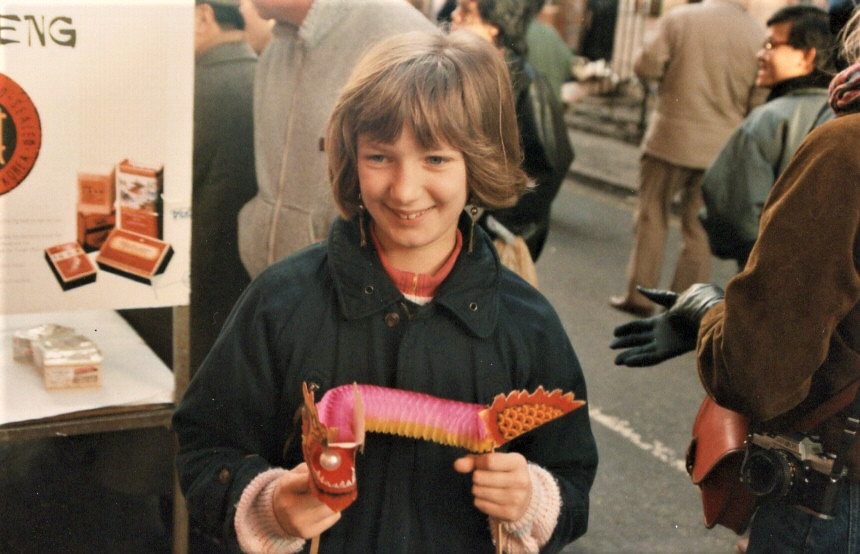
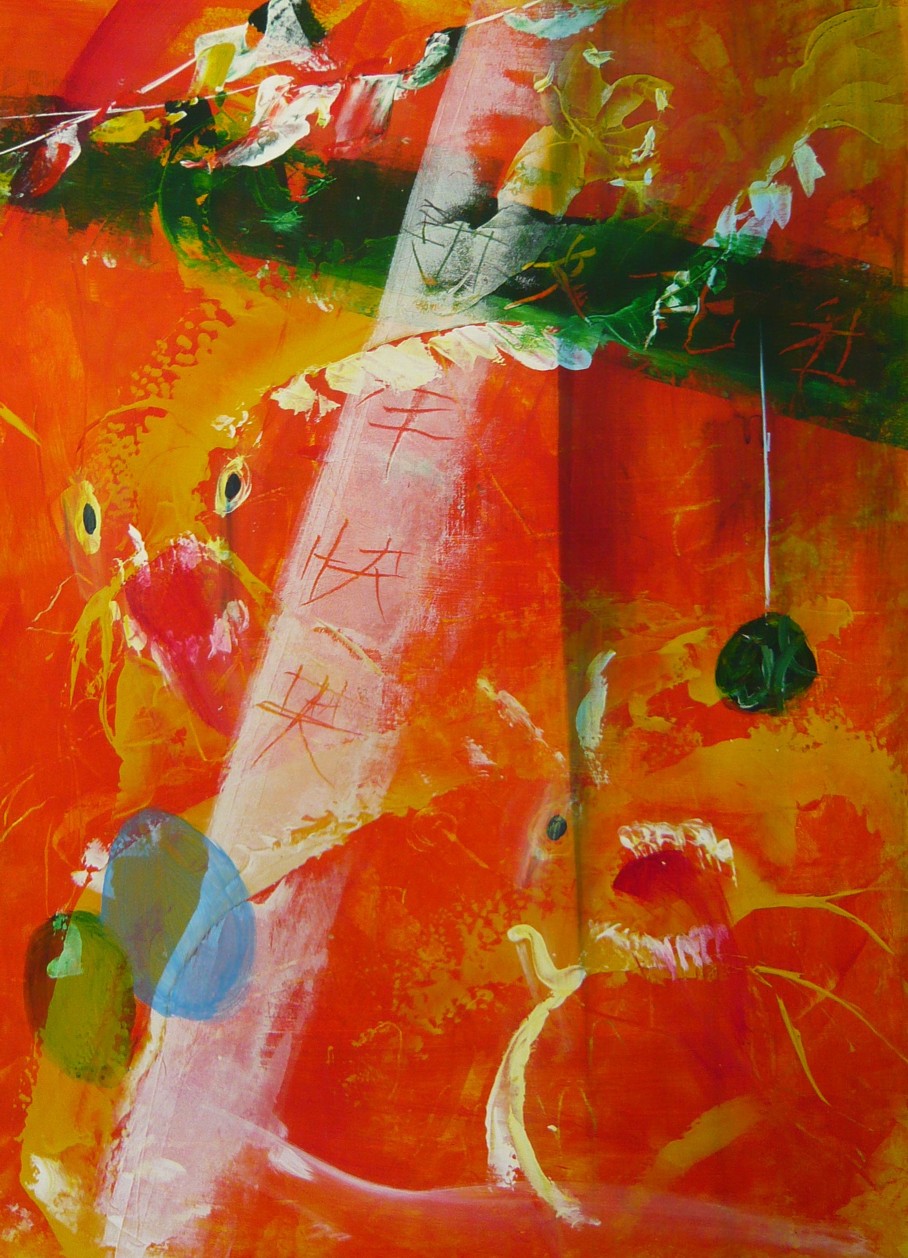
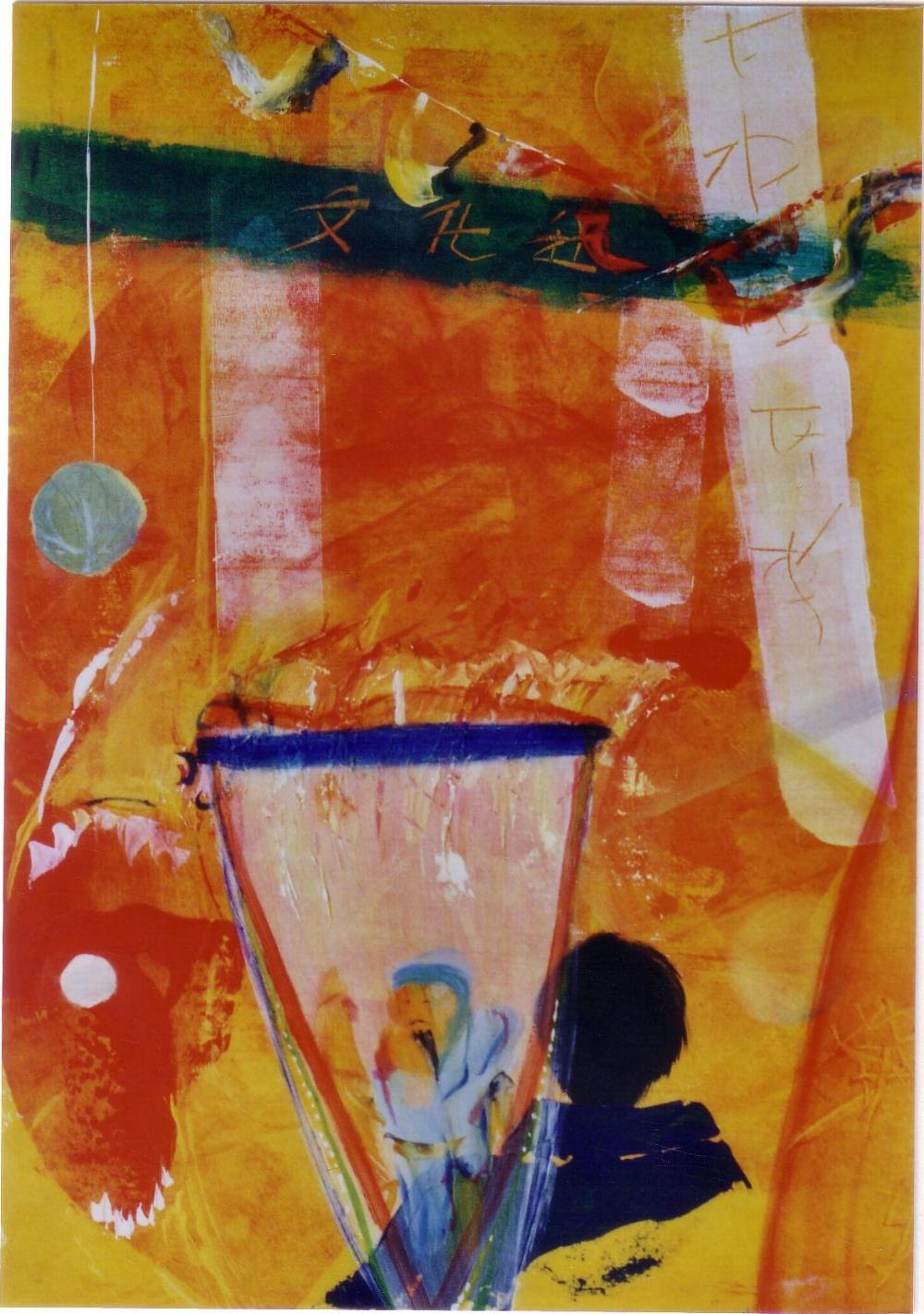
Chinese New Year, that is. The year of the Ox. Here are a few pictures I’ve taken of Chinese New Year celebrations in the past. With Lockdown, I don’t suppose there’ll be too many going on this year, at least outside of China.

First of all, some from London about thirty years ago:

Chinese New Year 2013 in Kolkata:

And a couple of my own paintings:

Gong Xi Fa Cai!

David Nash and Impermanence

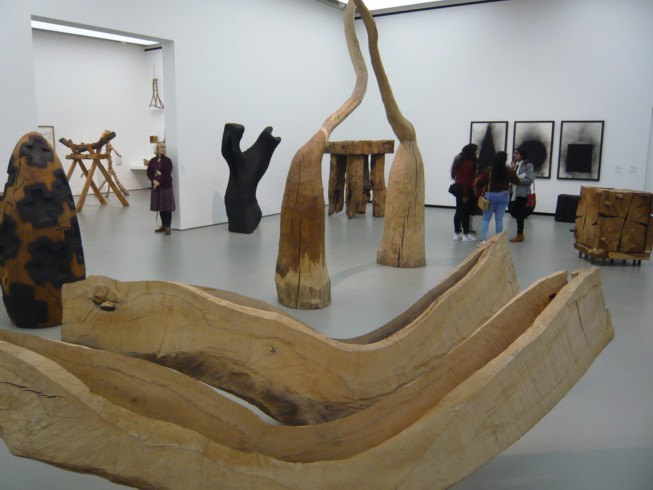
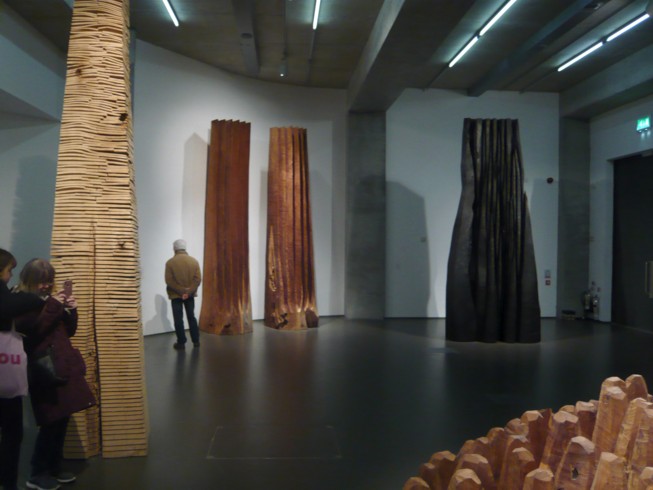
A few days ago we went to the Towner Gallery in Eastbourne, Sussex, specifically to see the Eric Ravilious paintings and prints on permanent exhibition there. There was also a large exhibition by the sculptor David Nash, who works with wood on a large scale. The fact that the whole exhibition, which also included a gallery of paintings, prints and a couple of small installations, and was intended to highlight the effects of the Climate Crisis, was the first one ever curated by Caroline Lucas M.P. of the Green Party was an added bonus for me.

007a


002a

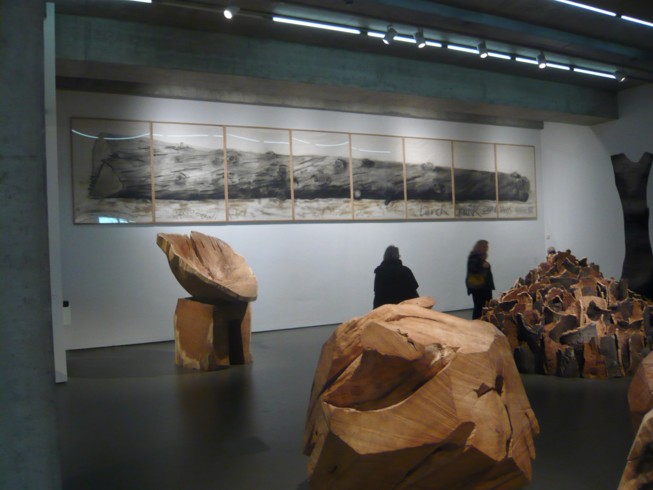
As much as I enjoyed the Ravilious, I was blown away by Nash’s sculptures. To see wooden sculptures on that scale is unusual in itself – usually that would be the preserve of stone or metal – but that very scale plays tricks with the mind and the eye. Boxes and bowls many times larger than one would expect meet the eye as you walk around the galleries, and many of the pieces also deceive where perhaps one looks to be made from several separate pieces of wood, but on closer inspection are carved from a single block like the boat shapes in the top picture, or the ‘stack’ in the one below that.

Much of the work is left rough-hewn, but even this can be deceptive. Some pieces have been carefully finished to give that appearance.

Sculpture is the art form that seems to exist to interact with the natural world. A number of the works here are based on natural forms, but there are also stories of projects Nash has undertaken where his sculpture is either living, in the form of carefully planted and managed groves of trees, or interact in other ways.

004a

‘Boulder’ is one such project. One of the first large-scale pieces Nash made was to cut a boulder-shaped chunk from a tree (illustrated at the top of Nash’s charcoal drawing above) in 1978. This was then transported to a stream near to where he lives and works, in the Welsh hills, and rolled into the water. Since then, it has slowly made its way downstream until it reached the estuaries and inlets of the sea, where it finally disappeared in 2015. Nash documented its travels in a series of photographs and films made regularly all the while, and presented in the exhibition as a film.

006a


003a


003b

Nash’s sketch of a Larch trunk

It feels as though there is something of this meeting of art and the natural world in old ruins overrun with scrub and grass. They frequently seem to have a sculptural quality that complements the landscape around them, in a way that more pristine buildings do not.

And I like the sense that an artwork, like a ruined building, is not permanent and that eventually the natural world will absorb it back into itself. That it will reclaim it. Perhaps the artist and the environmentalist in me merge here.

My own sculptures are in wood, and some of them are set out in our garden where they gradually degrade over the years through the action of sun and rain, until they appear strangely like some weird plants that have sprouted unexpectedly there.

Leh Old Town

Fourteen years ago I went up to Ladakh, in the Northern Indian Himalaya. Crikey, fourteen years! Where did that go?

025a

This is a painting I made in ink and watercolours of an area of the Old Town of Leh, the Main Town of Ladakh. It shows part of a Buddhist shrine, next to another old building. Most of the buildings are a mixture of stone and wood, the wood frequently carved and / or painted.

Although there were quite a few new buildings in the town, the majority of them were old and the whole town had the feel of belonging to another century. I travelled in early April, before most visitors arrive and when Ladakh is still bitterly cold and wintry – certainly overnight. During the day the temperature just sneaked a little above freezing. This meant that I seemed to be the only Westerner there – I certainly don’t remember seeing any others – and I was never hassled by touts of any description, possibly because it was still too early.

But, above all, the people were among the friendliest I have ever met.

Regretfully, I doubt I’ll get another chance to go there, but it is certainly a very special place!

Picture available on my Etsy shop site here

Clouds

It’s one of those days, today, when the clouds are thick and dark and slightly threatening, but are shifting rapidly across the sky and continually changing shape in a rather exciting way.

I’ve always loved clouds.

When I was young, I was always very conscious of the sky. I still have a copy of a poem I wrote when I was fifteen or sixteen, which I won’t reproduce here, but was titled ‘Clouds’ and compared their shifting shapes with dreams and ambitions. Quite prescient, in my own case, as it happens, but I’ll not go into that now.

045b

I wonder whether the average fifteen or sixteen year old even sees the sky on a day to day basis, now. After all, you tend to look down at your ‘smart’ phone, do you not?

034a

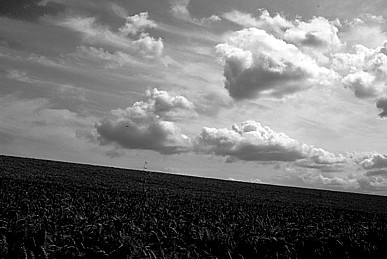
Summer clouds…

When I dream about getting away from the daily grind, running away from it all, whatever you care to call it, the image in my head is always a compound of the Himalaya, and clouds. Or English Downland, and clouds. Anywhere remote and away from crowds, really. With clouds.

Ethereal, ephemeral, forever changing shape, never boring.

Untitled-Grayscale-01a

Dramatic clouds…

IMGP2317a

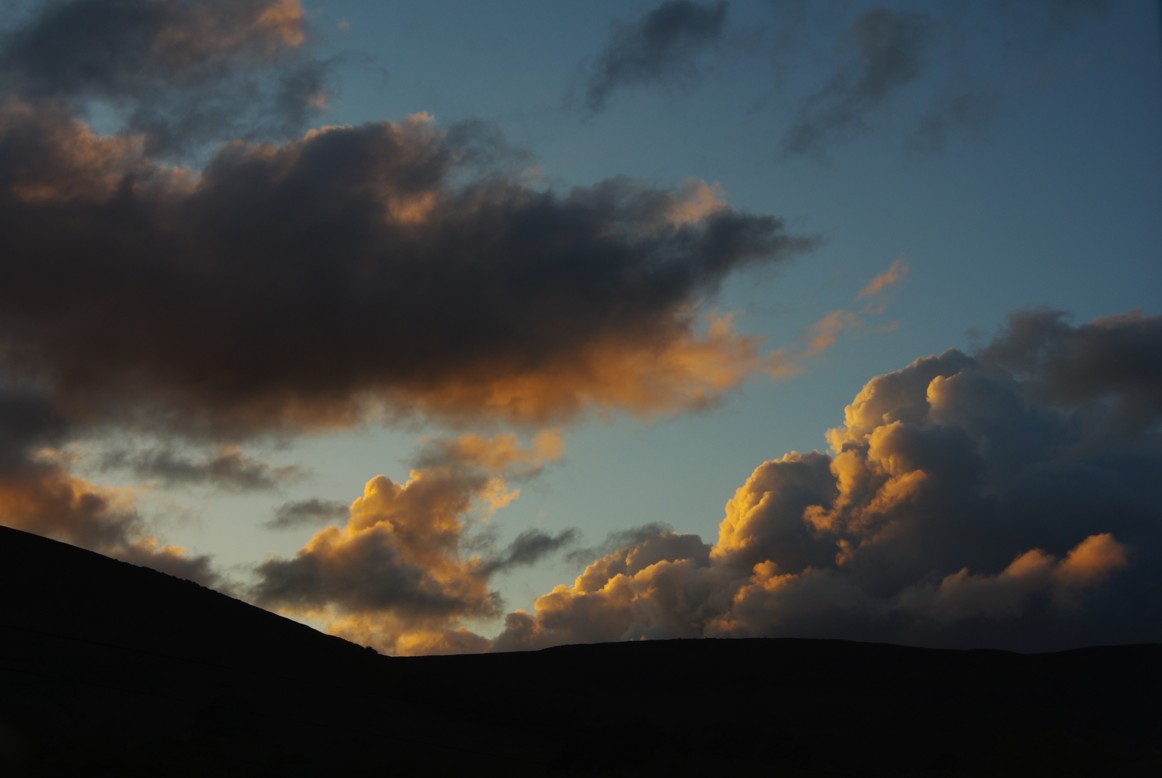
Clouds like a painting on a masterpiece by Leonardo Da Vinci…

dusk

Clouds in my own paintings…

I’m tinkering around with a short(ish) story absolutely stuffed full of clouds at the moment, too. perhaps that’s what led me here.

In which case, I’d better chuck in one more…

Untitled-Grayscale-02

From Nepal in 1988. *Sigh*.

Responsible Travelling – Part 1

In a way, this could be titled ethical travelling, but I would like it to cover cultural issues as well as environmental and other ethical concerns. I don’t particularly like proselytising, but I think that we all need to be responsible for our actions: it makes for a happier world for all concerned.

156

So, in no particular order…

Trekking

First of all, when arranging a trek, please try and have a look at the ethical policy of your chosen company. Nowadays, many have a policy of ensuring that porters are properly paid and treated, food is sourced wisely and money makes its way back into the local community. The guides / cooks / sherpas or what-have-yous should be trained to ensure that the environment is treated with respect during the trek. Personally, I feel that from a selfish point of view it makes sense to choose a company that follows these guidelines, because I feel that I will be treated better by them, too. It should not be much more expensive, either.

Secondly, it is not all up to them. One of the most important things we can all do is avoid littering villages and countryside as we trek. Apart from the unpleasantness of spectacular scenery ruined by plastic bags and used loo paper, we can hardly criticise local laxness in this area if we are guilty of the same ourselves.

Deforestation is a major problem in the mountains now, which can only get worse with the effects of global warming. Consequently, anything that we can do to minimise the burning of wood is important, so please do not insist on unnecessary fires to sit around or warm up. You should have brought sufficient clothing on the trek for that. And it seems a minor thing, but if a group of trekkers turn up at a tea house and insist on lots of different dishes, then that will involve a lot of extra firewood to cook them. Try and have the same dish, if possible.

Shopping

Ah, yes. Such an important part of our visit, really. The ultra-cheap clothes, the amazing antique statues, the cheap religious paintings…unbelievable bargains, compared to what we would pay in the west…

…and rather a minefield, unfortunately. Those cheap imitation brand names, as we should all know by now, are usually produced in sweatshop conditions, conditions that would often justify being described as ‘slavery’. As well as being, usually, rather inferior quality. Difficult to avoid them all; after all, who is to say we shouldn’t be buying those attractively embroidered ‘I did the Everest Trail 2017’ or suchlike t-shirts for the equivalent of a couple of dollars?

Well, there is a world of difference between the genuine sweatshop (if I can use such a phrase) and the family sitting around their sewing machines under a tarpaulin beside the stall producing their goods. The latter may be working hard for a poor return, but may be infinitely better off than those with no work and certainly better off than the sweatshop labourer who will earn far less, in conditions far worse. Even today, unfortunately, some of them are bonded labourers.

The antiques…if you go to the Kathmandu valley, you will in many places find the remains of religious statues that have been stolen from their sites beside roads or outside temples. These statues usually find their way to the west to ‘collectors’, or may be sold off to tourists who know no better. In many countries you will need an export licence from the authorities to take antiques over 100 years old out of the country simply to attempt to prevent this sort of desecration. Invariably it is possible to buy modern copies of these items – handcrafted and as beautiful as the originals. It is better for everybody if the traveller contents themselves with these, not least because the smuggler can be hit with a hefty fine or prison sentence. It is also worth mentioning that many of the ‘antiques’ are fakes, in any case.

And the religious paintings. Again, in Kathmandu, Thankas, the paintings that hang in temples, are frequently offered for sale. And again, if genuine, should not be sold. They have probably been stolen. Wherever they are offered for sale, however, there will be bright new paintings for sale – equally beautiful, well made and far cheaper. Spend your rupees on them and support the craftsmen that make a living that way.

BIG or small?

Staying with the shop theme, it seems fairly obvious that by buying from the little shop rather than the supermarket you will be far more likely to be putting money back into the local community. All well and good. Inevitably, though, it is never quite as straightforward as that. Moving south across the border to India, we may find that in the market that we are searching for souvenirs, as well as local traders there may be traders from Tibet or Nepal, Kashmiris and dealers from the city. How you wish to spend your money may pose a dilemma that I cannot solve for you. But at least give it some thought!

The same situation can arise with hotels and trekking companies. I feel that in that situation, the small company or hotel is likely to get my rupees, since, unless I know otherwise, they are more likely to put money back into the local community.

Water, water everywhere…

…but most of it comes in plastic bottles which end up littering the environment, or refilled by unscrupulous rascals with what could be contaminated water, to be sold on again. Avoid this if you can (not always possible, I admit) by taking water purifying tablets and using the local water – read the instructions carefully to see exactly what is required – or using the boiled and filtered water available in some places (See info in places such as Lonely Planet guide books). If you buy plastic bottles, scrunch them up before disposal to prevent their re-use.

In some places, such as Ladakh, you can find environmentally minded laundry shops, where the soapy water is disposed of properly, rather than just poured into local streams. May they prosper and multiply!