I Am The Wind

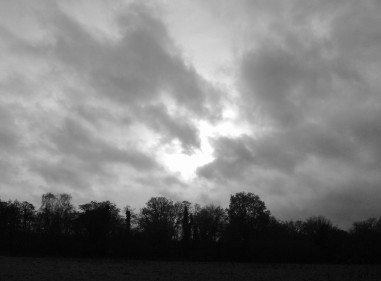
Untitled-Grayscale-01

I clatter dry leaves along dusty footpaths

And bear burdens far greater

Than mere birds and clouds.


On high, cold, moors I blow

In the hollow eyes of sheep, inert and prone,

And ruffle the hissing grass over barrows

Of long-dead chieftains.


From the fading fires of the sick and the dying

I blow prayers in the smarting eyes

Of disinterested and uncaring gods.


I steal your thoughts.

The Night Bus

After a day of faffing and kerfuffle (and a little bad language, but not too much) yesterday, I have posted my new book up on Amazon.

312EjL1fieL._SY346_

The Kindle e-book will be released on 30th November and is available to pre-order now. It will take a few days yet for the paperback edition to be ready, as I need to check through a printed proof first. I’ll post when that is done.

The book is in two parts. A collection of seven short – and not so short – stories, which make up the bulk of the book, followed by a selection of recent poems.

I have always enjoyed travel and, one way or another, nearly every piece in here is to do with travel. The only exceptions are a couple of the poems that seemed to fit in among the others for aesthetic reasons.

Some of the stories are quite dark, but the majority of the poems have a lighter touch. In these, especially, I hope that my love of the natural world comes through.

Two of the longer stories are set in India; in one, a young man goes in search of a mysterious destiny, while in the other a travelling Englishman becomes embroiled in a chilling disappearance. One story speaks of the support and comradeship of a close-knit island community while another tells of jealous intelligences far older than mankind.

Of the poems, there is one long piece, which gives the title to this collection and tells of a long journey across India and into the mountains and, among others, one short series of poems about the ancient paths and tracks of Britain.

An early piece of writing advice I was given, and for which I am eternally grateful, was ‘Write the stories and poems you want to read’. This I have done, and I hope you will want to read them too.

Review of The New Asylum by Frank Prem

48274258._SY475_

This is Australian poet Frank’s third collection of poems, and in a way this is a return to the narrative arc of his first collection; Small Town Kid, after the heartbreak of his second collection, Devil in the Wind, which dealt with the horrors of the bush fires in Australia on what became known as Black Saturday in February 2009

Not only is this a personal, time-ordered narrative like Small Town Kid, but it takes up Frank’s life where that collection left off, with his taking a job at the institution in his home town housing people with mental health problems. At that time (around forty years ago), these institutions were generally known as ‘mental asylums’ although that name, as well as a lot of the attitudes that coloured people’s ideas of them, have supposedly been consigned to history.

These poems take us on Frank’s journey from his visits to the institution where both his parents worked, then as naive and wide-eyed Trainee Psychiatric Nurse through to today, introducing us to a wonderful collection of colourful, sad, genial, well-meaning and, yes sometimes, mad characters, both staff and residents of the institution and, latterly, the hostel that acts as a ‘half-way house’ between incarceration and release.

All these characters are realistically and sympathetically drawn, and I suspect that not a few readers will be surprised at the humour (occasionally black) and warmth that comes through from the average day in their lives. Frank does not shy away from showing the attitudes prevalent in those earlier days, when patients were severely regimented and often treated less than sympathetically, although I suspect there is much he does not reveal. But where he is at his best, I feel, is in depicting the almost unutterable sadness of many of the inmates. In ‘Huntington’s Marionette’ it is for the young victim of this, one of the cruellest of all diseases, In ‘Lost: One Cockerel’ it is for another youngster, this time a young man with his mind destroyed by illicit drugs. Then there are the families of these victims, often victims themselves in so many ways – dealing with loss or aggression, blame, or just the horror of watching a loved one disintegrate before their eyes.

And the institution is frequently under-staffed and the staff are over-worked, a situation all too familiar to anyone working in public health today as well as then. The final poem  ‘Still its Creature’ is the book’s epilogue, and it is worth quoting the first few lines..

in aftermath

it seems so clear

there are few mental-health

happy endings

and there are no

simple cures

I give this five stars out of five.

All The Lost Words

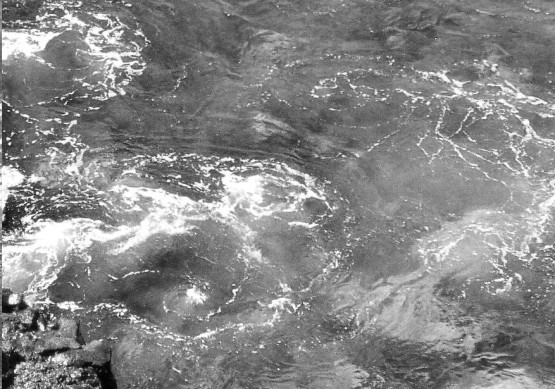
Untitled-Grayscale-03

Last night I dreamed I sank into the depths of some great ocean.

I went down, right down to the bottom of the sea and

There I saw a wooden chest.

And then a mermaid appeared and smiled, and indicated

That I should open it.


But having done as she had asked,

I thought at first I had made a mistake,

For I beheld countless stars shining in the depths of the chest,

Which appeared to be as large and as wide as the sky.

And even as I thought this, those stars rose up and surrounded me

And then, dismayed, I saw them floating up until they reached

The surface of the sea,

Where they were taken by the tides and currents

And swept away to every corner of the Earth.


***


When I awoke, I felt sad for the loss of those stars.

But then I realised it had been a dream, and

I fell asleep again and dreamed I laboured down a mine.

And I was hot and weary and grimy as I crawled

Through low passages, searching for precious stones.

It was tiresome work but finally,

Rounding a corner, I saw a distant glow and

As I drew near, I saw a gem that shone amidst the darkness.

I found then I carried pick and hammer, and

Any number of chisels, so I set to work.


After much labour I held the gemstone in my palm and

The light from this treasure seemed to flow out from my hand,

And illuminate every corner of the mine.

This gladdened my heart, but one appeared who I had been dreading,

Although I had not known it until that very moment,

And they took the jewel from my hand and disappeared,

I knew not where.


***


And so again I awoke and then

I slept a third time – troubled sleep! – this time

I dreamed I walked on crowded streets

And watched the many who surrounded me

And listened to their talk.

These were the conversations carried on

By every man and woman who had ever lived,

Or ever would.


But after time their speech became confusing;

I could no longer distinguish any words, and then

The world fell silent, although they still spoke,

And still I watched and found that I could see their speech,

And all their conversations floated on the breeze

Before me,

For their speech was made of stars and gemstones,

Mingled now with flowers and with ash.

Mingled now with night soil and with butterflies.


And I was content with that, and now slept deeply.


A Thought

Without Compassion I am Nothing

001a

Without compassion I am nothing.

For pity is not compassion,

It is no more than a patronising aloofness

That demeans the recipient.

But compassion encourages action.


Without compassion I am nothing, yet

Without anger I have one hand tied behind my back.

I must not lose my sense of indignation

At injustice, for without anger,

Nothing will be changed.


Without compassion I am nothing,

Yet without wisdom my anger will be directionless,

Blindly striking out to hurt both enemy and friend.

And doing more damage than any original wound.


Without compassion,

I am nothing.


Review of Devil in the Wind by Frank Prem

44440062

Like Frank’s previous book, Small Town Kid, this collection of poems tells a story of rural and small town Australia. But the similarities between the two books end there.

Whereas the previous collection was a celebration of boyhood in Frank’s hometown, this is an account of the dreadful bushfires of February 2009 that swept through parts of Southern Australia, the area that is home to the author, killing 173 people and leaving a huge area a fire-blackened moonscape.

The poems are a mixture of first-hand accounts, from those who ran desperately from the flames, saving what they could and suddenly terrified at the unbelievable size of the fire and the terrible speed the flames moved at, from firefighters who fought the flames like small companies of soldiers attempting to halt the progress of an overwhelmingly large army, until they literally dropped from exhaustion, from the fire-spotters, and from the frightened friends and relatives trying to raise loved ones down unresponsive phonelines.

In many ways, this is a very difficult book to read, although it is important to do so, especially for those of us fortunate enough to have never had to live through events as terrifying as those described in its poems. It is full of raw emotion and naked detail, traumatised victims and quiet heroes.

At times, I found it essential to look away and take a breather, much as the firefighters had to do, as the emotion became just too much for me.

Poetry is an immensely personal art form. Even when the subject is neither the poet nor the reader, intense emotions come through. Presented in this form, these accounts are shocking. I cannot tell whether they would have felt as shocking had they been prose, but the sparse brevity of the language confronts you almost aggressively, defying you to ignore what they say. Each one seems to scream ‘Listen to me! Don’t you dare turn away until I have finished!’

It is extremely rarely that I would suggest a book should be required reading, but I genuinely think Devil in the Wind should be and is unquestionably a five star read.

Aggie

Aggie sits smile-chuckling at nothing much on TV today.

She’s made her shopping list,

And tidied her room.

She cried a little when Patrick called her stupid,

But she seems to forget him when children’s TV comes on.


It’s on the television screen that life makes sense to her.


Aggie, did you put that food in the waste?

No! Aggie is a good girl! Large-eyed-scared.

I smile easily. Soothingly. Of course you are, Aggie.

The same ritual every evening. But I wonder

Just what happened in that huge, rambling institution

She called home.


It’s then I think, for the hundredth time,

Of the pages in her file, the report from the hospital,

By the doctors and the clinicians,

With their tests and scans and

‘I can find no evidence…’


By all accounts a normal child,

Who, just after the war


Got into trouble.

She was sent away for her own good!


A cousin, sharp-spiteful,

But who refuses to say any more.

None of my business, or of yours!


‘There is evidence of a number of fractures,

The upper left radius, several ribs,

The right fibula, particularly poorly healed…’


Have you seen my baby? Asks Aggie, suddenly.

What baby’s that, Aggie?

Distracted-distant.

I have to do the medication, right now.

I’ll talk to you later.


‘There appears to be no reason for her disability,

No birth trauma, no accident,

No diagnosis…’


It’s Aggie’s seventieth birthday, tomorrow.

What would you like to do, Aggie?

Do you want to go somewhere?


Aggie nods.

There is something she’d like to do,

But the words won’t come and the more she tries,

The harder it seems to get, and so

She gets distressed, and cries and runs off

Slipper-slapping to her room.

The door slams.


‘Aggie spends a lot of time crying…’


The New Viking

Untitled-TrueColor-01

Long, long ago, (although not in a galaxy far, far away) I posted a poem about Vikings which was called, astonishingly, Vikings. (It can be found here should you wish to re-visit it.

This is a rather tongue-in-cheek follow up.

The New Viking, a Reformed man


He brought death and terror to these Saxon lands,

Taking iron and fire to fearful hamlets,

But he was defeated by a woman,

A yellow-haired woman, soft and pliant.

And now the screams of battle are the

Bloodcurdling cries of infants.


He beats his sword into a ploughshare,

And grows rows of turnips and cabbages.

His axe cleaves firewood.

Maybe he’ll name his house ‘Dunplundering’.


He no longer lives within sight of his beloved sea,

But he watches trees ripple in the wind;

An ocean of billows topped with brilliant green spume.


Casting long shadows in warm sunlight,

These immobile giants roaring and sighing,

Desperately attempting to free themselves

Of their earthen shackles

Feel uncomfortably close to home.


Those northern winters still call him.

The fire, the mead, the fighting,

The tales of monsters and warriors.


Hamstrung by instinct

He shifts uneasily, guiltily, on his chair by the hearth.

His sword fingers twitch and tap and he

Looks for reasons to pick arguments

With his neighbours.


Anything would do.

Restless Wind

107b

Some people need the familiar,

Finding in it safety and comfort.

But some see it as a constraint,

Suffocating them like the walls of a prison.


And the same wind that blows

Through both their houses

Causes one man to close his door,

While the other throws his wide open.

Spain 2

It was after posting my series of poems ‘The Old Way‘, last week, and also mentioning that I’d almost completed a very long poem on a very long bus journey, that made me think of travel again. Not that that is unusual, of course. I’d nip off on another journey at the drop of a hat if I had the chance, but for the time being we can’t afford to do that.

But, I am planning to publish those poems and a whole lot more, plus a few short stories, in a book some time later this year, as well as the Indian novel I’m currently editing – A Good Place. Two book in one year! We’ll see how that pans out…

But…Spain. Mallorca, this time, to be precise. Mallorca is the largest of the Balearic islands and lies in the Mediterranean Sea about a hundred miles east of the Spanish city of Valencia.

If you were to do a Google search for Mallorca (Go on, now I’ve mentioned it you can’t resist, can you?), you would be forgiven, looking at the results, for thinking there was nothing on the island other than the city of Palma, beaches, swimming pools, hotels and night clubs.

And you would be very wrong.

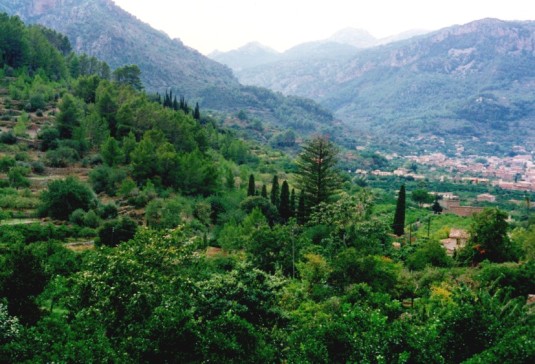
Certainly, there’s plenty of that if you want it, but there is also the rest of the island, which measures approximately fifty miles by forty miles, and contains some surprisingly big hills and mountains, small villages and towns, orchards, fields and woodlands, hiking trails and Roman and Moorish remains.

img20190320_11402114

I’ve only had one visit there, and after flying into Palma I took the train up into the Tramuntana, the range of mountains on the north west of the island, to the little town of Soller. From there I walked up into the mountains themselves and spent the next couple of days just wandering around and exploring, sleeping overnight in a stone refuge.

img20190320_11394102

Luxury holiday accommodation at about 2000ft.

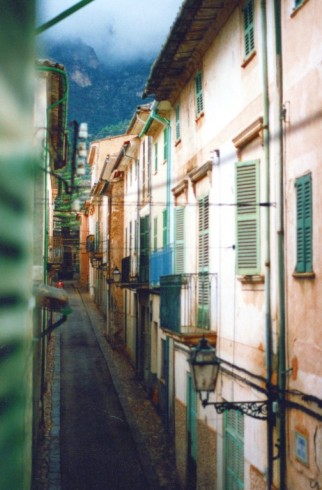
But there was a lot of rain arriving, and I retreated back to Soller for the remainder of my week, finding a room in a cheap backstreet hotel and spending the days exploring the lower hills and villages, and some of the coast nearby.

img20190320_11335509.jpg

Lots of rain arriving.

img20190320_11421944

View from the window of my other luxury holiday accommodation in Soller. Lots of rain still arriving.

img20190320_11302033

But it wasn’t all rain. There were lots of little villages to explore…

img20190320_11410230

Farms, and hills to wander around in…

img20190320_11311220

img20190320_11332135

img20190320_11414759

Village church

…and lots of bread and cheese and fruit and wine to enjoy. Not that you need to see a picture of that.