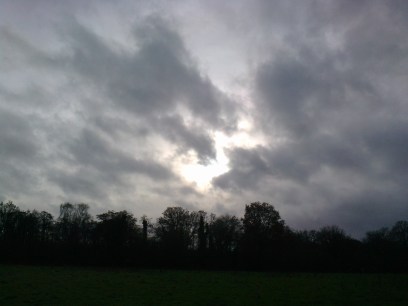
Roaring in rustling and
Tossing trees,
Wailing and moaning
In whipping wires.
A strident, insistent,
Car alarm.
An upset bin, with
Unwanted plastics…
Scraping,
Scratching,
Tumbling,
Chasing along the road.
Aggrieved air
With attitude.

Roaring in rustling and
Tossing trees,
Wailing and moaning
In whipping wires.
A strident, insistent,
Car alarm.
An upset bin, with
Unwanted plastics…
Scraping,
Scratching,
Tumbling,
Chasing along the road.
Aggrieved air
With attitude.
We’ve had all sorts in the last week.
We’ve had cold, bright, sunny days. We’ve had cold snowy sleety days. And today we have lashing rain and wind. It’s milder than it was, but as miserable as sin and the wind still cuts through you!
So here is a sketch for the day – cushions on the sofa to remind me of Nepal, since the top one came from there:

And here is a haiku for the day, to remind me of summer:
Amidst the traffic,
In the still airs above me,
A lark dripping down.
And a thought for the day? Another haiku, to remind me to slow down sometimes:
Obsession with time
Is climbing trees in autumn
To get down the leaves.
And today I begin the first edit for A Good Place – initially reading it through and thinking about the voice, the narration, to see if it works for me. Next, another read to look for flaws in the plot, redundancies, things to add and take out. Finally, try to knock the grammar into shape. If I’m happy with that, then it’s on to the beta readers.
Hope you all have a good day.
Be kind.
Achieve wisdom and exercise that skill.
The world has always been filled
With angry greedy people.
You cannot legislate them away,
Or hope that they will die out.
The world has always relied on people
Who are kind and wise,
To act as counterbalances to these others.
Unfortunately, the World supply of angry greedy people
Appears to be limitless,
So there will always be a need for kindness and wisdom.
You might just save the world.
I posted this poem a year or so ago, and I think it bears re-posting again now. In fact, I think I should post it repeatedly every year until everybody understands the situation most of these people find themselves in through no fault of their own.

The first time she ever set eyes on the sea,
She was forty seven.
It was a long road there.
She set off with little enough,
And arrived with much less.
She had a home, once.
A house,
In a well-to-do area of the city.
Life was good.
But fear came,
In the form of bullets, shells and bombs.
Once, gas.
Then everyone lived in fear.
Her house is rubble, now.
Memories and possessions buried,
Alongside her husband.
Alongside her daughter.
Alongside her middle son.
Her hands are scarred from the digging.
For weeks,
Her palms were raw and bloody,
from blocks of masonry,
Too large to move.
Dust and tears.
It was bad enough to lose everything,
But when you’re caught in the cross-fire,
And the food runs out,
What else can you do?
Her eldest son paid for the crossing,
With borrowed money.
Somewhere,
He is ‘paying off’ the loan.
A bonded labourer.
A slave.
She fears for him.
Her youngest son was washed away.
The dinghy was too small,
The passengers too many.
Fear.
You could smell it,
Alongside the despair.
The panic.
There were fewer of them when the sun rose.
There is shelter here,
Of a sort.
But when the wind blows she shivers,
Drawing near to the oil drum blaze.
There is food,
Once a day.
Of a sort.
There was a welcome.
She soon learns what sort.
Now, she walks down to the sea.
She wonders whether she should,
Whether she should just,
Just, slip under,
The waves.
I was writing a haiku yesterday, and decided to go the extra mile with it. Traditionally in Japan these poems were sometimes written in the form of tanka, which are essentially poems of five lines rather than three, with a syllable count of 5/7/5/7/7.
They could also be written as linked verse, with one or two poets writing haiku, and others supplying the two remaining lines between each haiku.
I’ve gone down the linked verse route, and also given myself the remit that each verse (of two or three lines) must contain a word or sentiment linking it to those either side – something that was also commonly done.
Yesterday was cold and miserable, hence the results.
It’s my first attempt – please don’t be too harsh!

The flowers have gone.
Crumbling stems standing askew,
In waterlogged soil.
Outlined against the grey sky,
Old willows by the stream.
Ten thousand leaves are
All that remain of autumn.
Wistful nostalgia.
Memories of warmer days,
Are all but forgotten now.
Wrapped up warm and snug,
Watching the grey willows weep.
Hands in my pockets.
Leaves fall slowly through the air,
Onto silent black waters.
Now a gust of wind
Swirls leaves around and around.
Racing each other.
Shifting clouds race overhead,
Sudden drizzle on the breeze.
Spiteful winter day,
Grasses shiver in the wind.
Low sunlight dazzles.
Walking in meditation,
Clouds unexpectedly clear.
Sudden bright sunshine
Reminds me the cold Winter,
Will change into Spring.
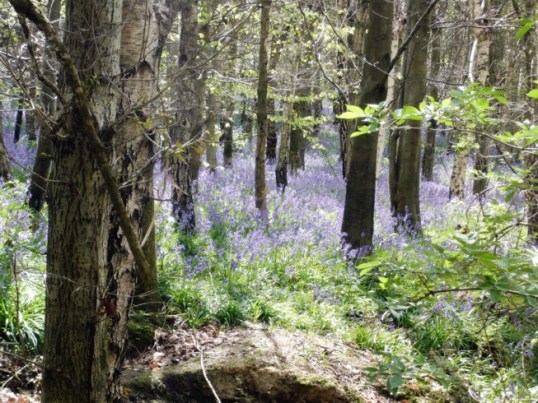
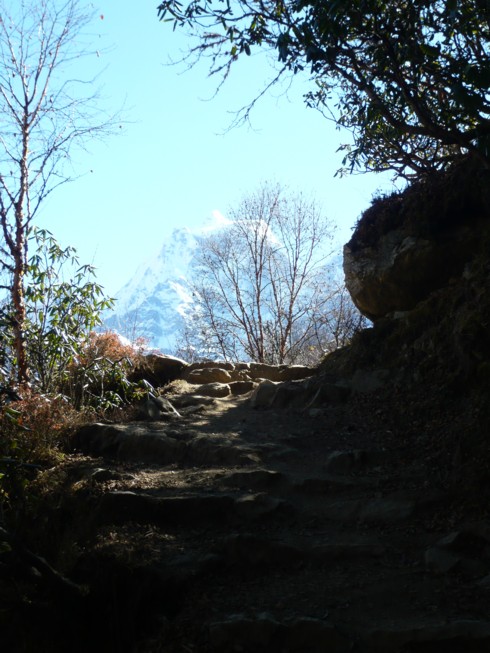
Pandering to my Inner Vagabond, here…
If I could just wave a wand,
I would wander the world.
With my notebook in hand,
And a bag on my back.
I would sleep under hedges,
In hotels and haylofts.
Drink beers under trees,
And eat cheese on the moor.
I’d watch clouds over hilltops,
And boats on the ocean.
Shapes and shadows at sunset,
A moon with a view.
And I’d write trivial poems
Of snowfall and sunlight,
Birds singing at dawn
And the sounds of a stream.
There’s the lure of a skyline,
And skylarks above me,
Wine and wood smoke my welcome
At the end of the day.
To travel, to journey,
There’s magic in wandering
Over moorland and downland,
Through woods and through fields.
The world’s full of wonders
All waiting for wanderers.
Let me follow these paths
For as long as I can.

While tweaking some stuff around on my site today I slightly updated my Gravatar profile to include my personal mantra, which is ‘Be Kind’.
Having done that it seems a good idea to post this poem, The Stranger
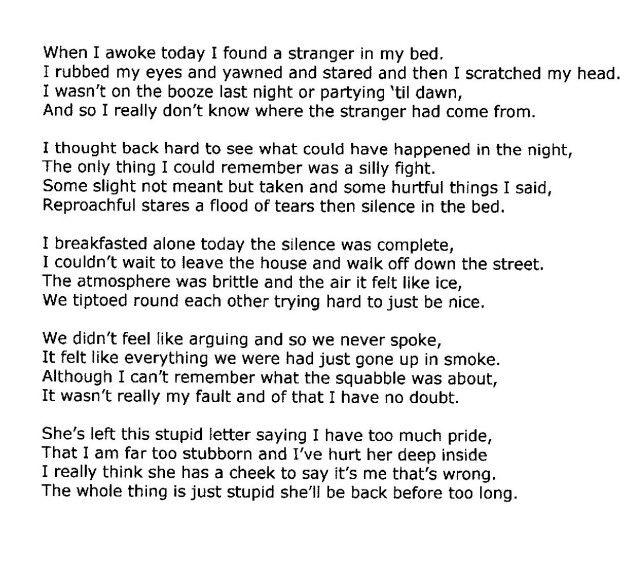
I’ve been away from the computer for most of the last week, but now I’m back with a slightly longer poem than I usually write.

At five o’clock the fire is lit.
Around the table we all sit,
With buttered bread and eggs and ham,
With cups of tea and cake and jam.
The idle talk is of the day,
The work now done, the latest play,
And ‘Anything to watch tonight?’
Or in the warmth and soft lamplight,
Perhaps we’ll read and play a hand,
Of whist, or bridge, you understand.
And ‘Don’t forget, at half past nine,
The radio – it’s music time.’
Then bank the fire, put out the lights,
The household settles for the night.
The heat blasts out in every room,
And lights and games and TVs soon
Take over so completely that
It’s pointless even trying to chat.
The sounds of gunfire, screaming cars,
Exploding buildings, and on Mars
The aliens armed with laser beams,
Are killed on several different screens
In different rooms by different boys,
With highly deadly killing toys.
The evening mealtime’s such a treat,
With pizza, chocolate, crisps and sweets.
Although it seems they all are eating
Different things at different sittings.
‘A cup of cocoa? I don’t think
That that will do, an energy drink
Is what I need, the evening’s young,
And there’s still much that’s to be done.
And if I cannot concentrate,
Upon this game, it’ll be too late,
The zombies will have won and then
I’ll go back down to level ten.’
It’s one o’clock, they still can’t sleep.
There’s not much point in counting sheep,
‘cause they’re all battery-powered toys,
Just so much electronic noise
And moving parts all running round,
And round and round and round and round.
I’m standing now beneath night skies,
Pale silver light from fresh moonrise.
I’ve walked for almost half a day,
It takes that long to get away
now, searching for a quiet place
Where I can pause and have some space.
I’m thinking how it used to be,
At five o’clock, the time for tea.
It seems to me that what we’ve gained,
Is not worth any of the pain.
And even more what we have lost,
We should have saved at any cost.
But anyway, now it’s just me
I have my flask, I’ll pour my tea.
It’s October.
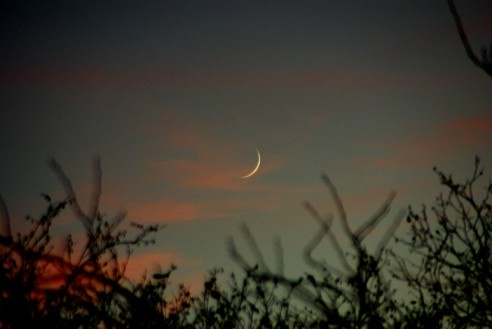
That must mean it’s autumn. It certainly feels like it, now. So here’s a little poem for when the days are drawing in and it’s becoming colder and darker outside.
Keep watch at the window in the Westering light,
On the distant hill in the approaching night,
Under darkling clouds, over dew-touched heath,
Where the flowers of summer are now touched by death,
I’ll be coming home in the fading light.
Keep watch at the window in the fading light,
You’ll see me walking when the moon is bright,
My shadow before me coming down the hill,
My breath opaque in the air now chill,
I’ll be coming home in the last of the light.
Keep watch at the window in the last of the light,
When I’m weary you’ll see me come into sight,
Drawn by the firelight and the thought of wine,
By the thought of you; so glad you’re mine!
I’m home now, let’s shut out the night.

After my previous post, it seems entirely apt to post a review, today.
Writers rely upon reviews to sell books. To spread the word. And I am conscious how bad I am at leaving reviews – mainly because I’m not very good at writing them. But I Shall Try To Do Better!
To start with, this is the review I left on Goodreads some time ago for a book that is already very well-known.
This book begins, then, full of rich, playful language as it sets the scene and gradually introduces the players.
To begin at the beginning:
It is spring, moonless night in the small town, starless and bible-black, the cobblestreets silent and the hunched, courters’ -and -rabbits’ wood limping invisible down to the sloeblack, slow, black, crowblack, fishingboat-bobbing sea. The houses are blind as moles (though moles see fine to-night in the snouting, velvet dingles) or blind as Captain Cat there in the muffled middle by the pump and the town clock, the shops in mourning, the Welfare Hall in widows’ weeds. And all the people of the lulled and dumbfounded town are sleeping now.
I have heard poems by Dylan Thomas read by Richard Burton – the actor, not the nineteenth century explorer – and his warm, mesmeric, lilting tone suits the poetry like no other voice I could imagine. Now, I cannot read any Dylan Thomas without hearing it read in his voice.
(I want my work read like that. There is a man I know with a wonderful voice; mellifluous and rich and deep, like Burgundy and dark chocolate. Not Welsh, but very English, who I shall attempt to trick into reading one of my poems or short stories out loud, one day.)
So, to the poem, or play, if you will, for it is a play, first and foremost, told as a prose poem. The play is full of wonderful voices, the voices of a plethora of small-town characters; all of them realistically drawn with their dreams and vices and foibles, and depicted with great humour, but also with sadness. Sadness, for there is resolution for most of the characters, and for some their dreams come true, but others are disappointed.
All of these characters love and hate and desire each other, they reminisce, they have ambitions. In this play, they all have their day. In this place, each one gets to tell their story, or have it told for them.
From the very beginning, the language is rich like double cream and brandy butter; too rich, perhaps, for certainly by the time I had begun to near the end it had become too much. I found myself yearning for more plain, simple language. I wanted a few bread and water phrases.
But the words invite you to savour them slowly – in fact, they demand it. Perhaps the secret, then, is to read this little and often; to dip into it and immerse yourself in the language.
I really wanted to give this masterpiece four and half stars out of five, but without that option, I give it five, although with the caveat above.
 Mick Canning