Wandering

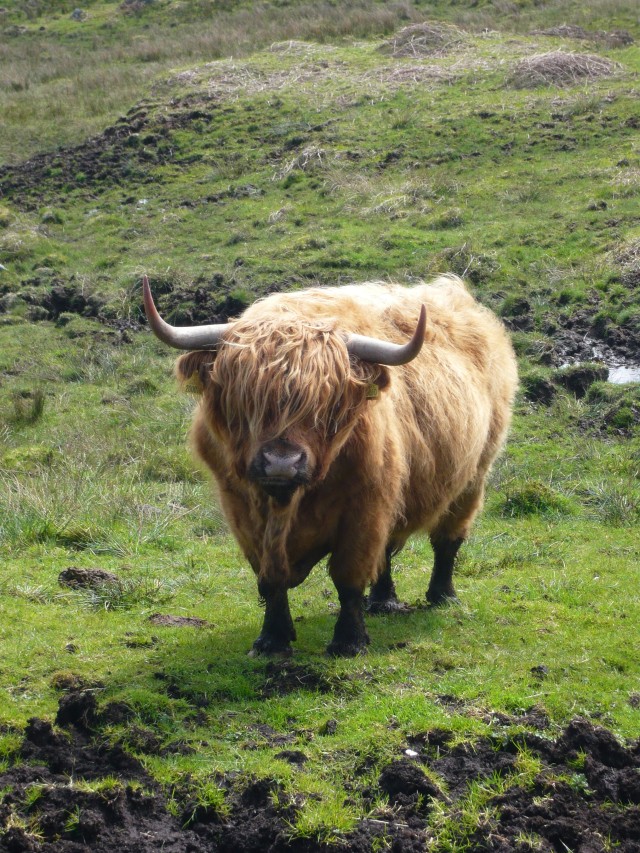
I’m posting this poem again, as it rather illustrates what I’ve personally found particularly frustrating during the recent lockdown. We can go for longer walks now, it is true, but that’s still not the same.

015a

If I could just wave a wand,

I would wander the world.

With my notebook in hand,

And a bag on my back.


I would sleep under hedges,

In hotels and haylofts.

Drink beers under trees,

And eat cheese on the moor.


I’d watch clouds over hilltops,

And boats on the ocean.

Shapes and shadows at sunset,

A moon with a view.


And I’d write trivial poems

Of snowfall and sunlight,

Birds singing at dawn

And the sounds of a stream.


There’s the lure of a skyline,

And skylarks above me,

Wine and woodsmoke my welcome,

At the end of the day.


To travel, to journey,

There’s magic in wandering

Over moorland and downland,

Through woods and through fields.


The world’s full of wonders

All waiting for wanderers.

Let me follow these paths

For as long as I can.

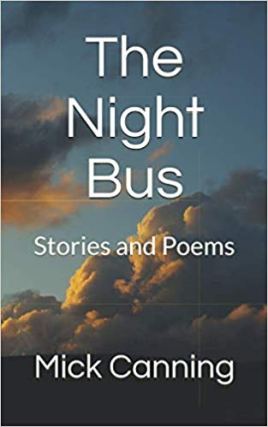
The poem can be found in my collection The Night Bus, which is available here. should your interest have been piqued by this…

The Compleat Trespasser by John Bainbridge

This time, the review without any distracting rants. Probably.

51pfb0Ihk8L._AC_UY218_

Sub-titled Journeys into Forbidden Britain, it immediately sets out its agenda: it is both a potted history of how the land was stolen from the inhabitants of Britain, and the long struggles to regain access to much of it, with numerous anecdotes of the author’s own escapades trespassing.

The story of how the inhabitants of Britain came to lose their access to the majority of the land is a story that has been repeated throughout most of Europe and beyond. Land forcibly taken by invading armies and distributed partly to their soldiers, but mainly their officials or nobility. Land enclosed by lords and kings for hunting purposes, burning villages and evicting their inhabitants from the land. Land taken by acts of Parliament to further enrich the gentry. Land given by kings to the established church, so that peasants might labour only to feed the rich and corrupt clergy.

Land that has been kept private and jealously guarded both by strict and cruel laws, and by equally cruel methods by the landowners themselves. Thus laws that deemed the starving and dispossessed villager might be executed for taking a rabbit from land he once lived on, to feed his family. Thus the mantrap that would cut a mans leg off. Thus countless thousands beaten and sometimes killed by gamekeepers and owners.

When I attempted to review this a week ago, it ended up turning into a full-blown rant against grouse moors (I do rants so well, these days!), but even today it is not just grouse moors that are fenced off just so the idle rich can enjoy slaughtering wildlife – there is plenty of woodland and more open land enclosed around the country and dedicated to pheasant shooting, for example. There are country houses with huge estates. Land taken by the MOD for training purposes, and never returned. There are many landowners determined to block access to legal rights of way. Although the Countryside Rights of Way act of 2000 was supposed to restore access to most of the countryside, there is still much that is off-limits.

Yet there are good landowners, too. The tales of John’s own trespassing include several encounters with sympathetic landowners happy to see walkers on their land, with the obvious proviso that they cause no damage.

The improved access rights we do have today were earned the hard way. Since Victorian times there have been mass trespasses intended to both bring the issue into the public forum, and to try to force change. The Kinder Trespass of 1932 is probably the most famous, yet many preceded that. It is thanks to the countless trespassers and campaigners of those days that we have improved access rights today.

The book finishes, though, with a plea. Firstly to campaign for further land reform, for better access rights – rights that are enjoyed in Scotland, but not England, Wales or Ireland. And secondly with a warning – the current government campaigned at the last election on a promise to criminalise trespass, so that anyone who deliberately or inadvertently strays from a public footpath onto private land might find themselves on a charge in a criminal court.

Anyone who enjoys the countryside in any form, enjoys spending time there, and walking in it, should read this book. It provides a very good, clear, account of where we are, how we got here, and what has been done to get us someplace better.

But also that we still have some way to go.

Ghost Roads

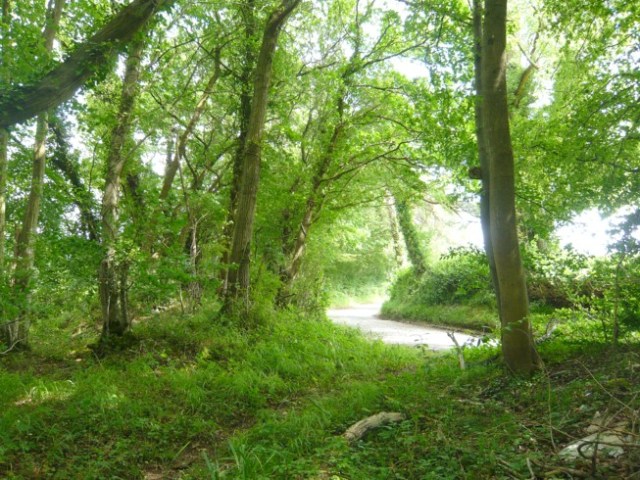
I love old roads that have fallen into disuse, or been relegated to the role of footpath.

There is one a few miles away on the edge of the next town. It used to be part of the road running from London to Hastings, but when the ‘A’ road that now serves that purpose was built, it not only rendered it redundant for the purposes of long distance travel, but the new cutting actually sliced through it, so it now ends at the top of a hill. From that point, there are only a couple of footpaths leading away in different directions.

Almost fifty years ago (really? Ye Gods!) I cycled along there on my way to the coast from the London suburb in which I lived as a teenager. Many of the roads I used that day are now very much wider, and all are much busier, save the one on the edge of that town. When I walk there from my house, it feels that for that part of the walk I am on a ghost road. I can still think myself onto my cycle, into that year, and the absence of traffic feels weird. If I think hard, I can almost feel spectral traffic going past. What adds to that effect, is that I often walk that way in the evening and the light – or lack of it – only encourages those feelings.

I think of it as a Ghost Road, but that definition really refers to a road that is haunted. Such a road is the B3212 that crosses Dartmoor, and on the stretch between Postbridge and Two Bridges it passes the cluster of buildings known as Powdermills. Powdermills is so-called because most of it was built for the manufacture of gunpowder. The buildings are spaced far apart in case of accidents (translation: the gunpowder blowing them to Kingdom Come), and for the same reason the roof of each building was of tarred paper. This allowed the blast of an accident to disperse upwards, hopefully giving the occupants of the building a slight chance of survival.

Anyway, there were many such accidents and many deaths. The B3212 is supposedly haunted at the bend nearest Powder Mills, just where it passes over the Cherry Brook, by a pair of hairy hands that try to wrench the steering wheel of unwary drivers that pass that way, causing them to crash. I admit to occasionally slowing down at that point and taking my hands off the wheel to see if anything happened.

It didn’t.

But I still like to think a Ghost Road is one that has fallen into partial or complete disuse. Perhaps old Roman roads that survive as footpaths are ghost roads; there are certainly stories around the country of spectral Roman legions marching along them at the dead of night.

046a

I think there is something magical about any road falling into disuse and gradually becoming overgrown. A road constructed for wheeled traffic used only by foot traffic. It has a special feel when you walk it, different to the feel of other footpaths.

A country lane at night can feel like a Ghost Road, especially in the light of a full moon.

Another type of Ghost Road is the ancient trackway. These paths criss-cross the British countryside and are often of great antiquity. Formed originally by the passage of feet, both human and animal, but used later by carts and other four-wheeled vehicles. These also seem to have that magical feel, although in this case I feel I’m sharing the passage with the ghosts of countless other travellers over thousands of years.

And in the midst of the lockdown during the Covid-19 pandemic we seemed to acquire a few more of these Ghost Roads – an unexpected benefit of the pandemic, in my opinion. It seems a real shame they have become busy again.

Rant Inspired by The Compleat Trespasser by John Bainbridge

Ooh, I liked this book.

51pfb0Ihk8L._AC_UY218_

My intention was to review it today, but as I was writing the review it gradually turned into a polemic against grouse moors and the people who own them. So I’m going to run with that and write the review (properly) next week instead.

So, why is this about grouse moors? Well, in The Compleat Trespasser, grouse moors are one of the habitats John mentions in relation to trespassing.

There’s so much to detest about grouse moors.

Firstly, the fact that they tend to be very large areas of land owned by one rich person who wants to keep everyone else off that land; land that is, to use the hackneyed but nonetheless accurate phrase, the birthright of everyone in this country. Land that has, like much other land, been stolen from us originally by force and then passed around from one rich and powerful person to another. Land that, at one time, people would have depended upon for their livelihoods in a multitude of forms, whether it was growing food, gathering wood for shelter or for fire, fodder for their livestock, or somewhere to live.

Secondly, that same owner does everything in their power to destroy all wildlife other than the grouse they protect, so those grouse can then be killed either by their rich chums, or by others who can afford to pay for the pleasure of killing other creatures. Foxes, rats, rabbits, badgers, crows, hawks…the list is pretty well endless. Trapped, poisoned, shot…the result being a landscape as devoid of life as any desert. And I hate that arrogance that says ‘all these wild animals are my property.’

Thirdly, the drab uniformity of the landscape. Nothing but heather growing, and that burned in ten year cycles to maintain that barren uniformity. And this in turn contributes to accelerated run off and flooding in periods of heavy rainfall, affecting land lower down – often villages or small towns.

And, I daresay, the lack of cover makes it easier for the gamekeepers to watch for intruders.

But, at last opinions are beginning to slowly, but surely, turn against these dreadful habitats and their dreadful owners. I’m sure it will take a while yet, but I’m hopeful that in my lifetime we will see a ban on commercial grouse moors and the beginning of their re-wilding.

Vikings

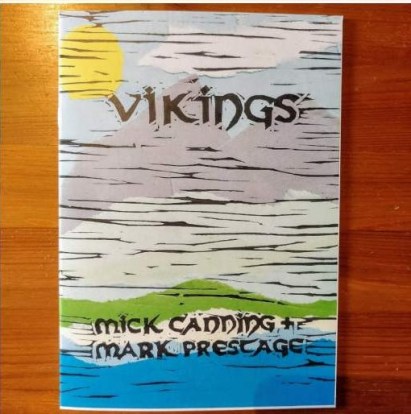
Allow me to introduce a new joint venture, a magazine (or zine, as I’m informed we hip youngsters now say):

img_20200601_202436_133d

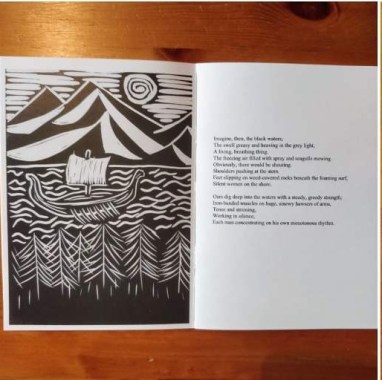
The final poem in my recent collection, The Night Bus, is a poem called Vikings, and it is reproduced in this here zine with a series of super illustrations.

41XAtkb6ssL._SX311_BO1,204,203,200_

This is a collaboration between myself and my talented friend Mark Prestage. As already indicated the poem is mine, while Mark designed, cut and printed the linocuts.

img_20200601_202436_133c

Mark also did the hard work of putting the zine together, while I just sat around and drank beer. The zine is printed on 16 pages of high quality paper, in a preliminary edition of 40 numbered copies.

img_20200601_202436_133b

In the UK the price is £4.50 including postage and packaging, and it can be ordered from my Etsy site: here, or directly from me (just email me) using Paypal. Unfortunately the cost of postage overseas makes it impractical to offer outside of the UK (typically doubling the cost of the zine, or even more).

If people make lots of approving noises, we have ideas for similar projects in the future.

Mark also blogs here: drifting in lower case and twits: twit and is well worth a visit.

Flint Flakes and Very Big Snails

We are now allowed to go out to exercise for an unlimited amount of time each day.

This may not have been top of everyone’s Relaxing-the-Lockdown-Rules-Wish-List, but other than the opportunity to finally begin to see some family and friends, I think it was top of mine. On this first day of slightly increased freedom, I take camera and notebook and go off for a longer walk than I’ve been used to this last couple of months. Nothing particularly long, but it feels good to know there is no reason at all for me to limit my walk or have to justify it to anyone.

Naturally, there are other walks I want to do even more, but I’m still reluctant to use public transport to get to somewhere I want to walk and, to be quite frank, the government has not made it clear whether I’m allowed to (although they’ve given the police a major headache if they want to try to control it). So for the moment, the South Downs will have to wait.

But now I am thinking of a walk I did almost exactly a year ago, to reacquaint myself with an area of the North Downs I lived close to a long time ago. I planned to walk along an ancient trackway running along part of the ridge of the Downs, and marked as such on the Ordinance Survey map. This is an area where many Roman remains have been found over the years, mainly in the wide river valley nearby, but I had no idea how old the trackway was thought to be, whether it pre-dated the Romans or was more recent.

But many of these routes were in use long before the Romans arrived, since the early Britons found the lower lands were frequently too marshy and thickly wooded for either easy settlement or for travel. And so it is highly likely this route is several thousand years old. One of the Old Ways. And just walking along it gives me a sense of continuity with the past.

In a wooded area the footpath passed a wide, shallow pit, although there was nothing marked on my map. Mindful that it was always possible it had been dug out by early settlers mining flints, I stopped and poked around in a few areas of exposed earth until I found a couple of flint flakes that appear to have been worked.

P1060431 (2)

To my un-scholarly eye one flake appears to just be a waste flake struck off the flint being knapped (R), but the other could be the tip of perhaps a knife that was being worked but broke in the process, or even a stone chisel (L).

Having adjusted the focus of my eyesight, as it were, to looking for worked flints, I almost missed the fact that the obvious snail shell partially revealed nearby was larger than it should have been, measuring about 5 cm across.

The Romans brought all sorts of goodies to Britain, including a large edible snail (there’s no accounting for tastes) that we now call the Roman Snail. Although found over much of Europe, they have become rare in recent times. In the UK, too, they are now only found in a few areas, including parts of the North Downs, and are protected under Schedule 5 of the Wildlife and Countryside Act making it illegal to kill, handle or possess them without a licence.

The shell I found obviously belonged to one that had long ago gone to meet its maker (or maybe a few herbs and a thick gravy), although I had no way of telling how long ago.  Whether there is still a population of living snails in that area I don’t know either, since that is information that tends to be kept as secret as possible.

But both the finding of the flint flakes and the snail shell seemed to reinforce that feeling I had of continuity with the past.

Where’s Bob?

I did say I would go and see what Bob has been up to, didn’t I? I haven’t forgotten, but I’m afraid I have to tell you the news isn’t good. I tried to phone him but got no answer, which is unusual as he is one of those people who has to answer their mobile when it rings no matter what else he might be doing. In fact, I don’t think I could begin to tell you the number of times he has told me off for not answering my phone when he calls me.

‘I tried calling you this morning!’ he would say, huffily, when he got hold on me later that day.

‘I know. I was too busy to take the call.’

”You know? you know? Why couldn’t you take it?’

‘Well, if you want to know, I was twenty foot up the top of a rickety ladder balanced precariously on a loose boulder and hanging on with one hand trying to return a baby golden eagle to the nest it had fallen out of, while both the parents were clawing at my face with their talons and shrieking furiously, under the impression I was trying to harm their chick.’

‘Pretty poor excuse if you ask me,’ he’d sniff. ‘So why didn’t you call me back afterwards?’

‘I wasn’t allowed to in the operating theatre.’

‘And you call yourself a friend?’

Anyway, I couldn’t get him. the phone rang and rang and Bob didn’t answer.

So I phoned Gina, his wife.

It turns out he is in hospital, but fortunately nothing to do with the Corona Virus. It seems he was out for his permitted walk and was taking a short cut through a field. Unfortunately, he only noticed there was a bull in the field when it began chasing him. Wisely, he legged it pretty quickly. And he had almost reached the fence and safety when he heard a text arrive on his phone, and naturally stopped there and then to read it.

047

It could happen to anyone.

Lockdown Stream of Consciousness

107 (2)

Here we are in week whatever it is of Lockdown, and I have to say I’m finding it ever so difficult to dream up a new blog post. It’s not that I’m having any difficulty writing, as I’m making good progress with one of my novels. I timetable my day so I write in the morning and don’t allow myself to look at the internet until after lunch. I go out and walk each day, I’m eating well. And I don’t mind the idea of Lockdown as such, since I’m quite a solitary person at the best of times; fond of my own company and never at my best with groups of people.

When it comes to writing a new post, though, I just seem to dry up. I think one reason for this is the major change to everyone’s lifestyles that this crisis has demanded. Not so much the changes to mine, strangely enough, but those of other people. I look at some of the posts I have partly written and think they seem somehow too trite for today. Some others are about journeys or visits to places I love, and I don’t seem to have the heart to finish them. Perhaps it’s all a bit too raw, too painful. I rarely write political pieces, and have even less enthusiasm at the moment than usual. Again, the politics are either too trite, or just incredibly infuriating. And there are more than enough bloggers covering the infuriating stuff, even if I wanted to.

Write a parody? I do, occasionally. But a parody of the Coronavirus Crisis seems tasteless, and both our inept government and the unpleasant fool in the White House are already parodies of themselves. I could do a humorous one later, I suppose. I might go and see what Bob is up to…

But I don’t feel I’ve anything original to offer at the moment, and I’m generally a subscriber to the school of thought that states if you have nothing to say, then it’s best not to say it.

So I thought today I’d pick a random photograph I haven’t posted before and put that up, and just go with a stream of consciousness, and see where it led me.

It turns out it led me here.

The Great Sandwich Schism – Again

Well, I don’t know about you, but what with you-know-what and the lockdown I feel a bit bleurgh at the moment, so to try to inject a little cheer – or whimsy, anyway – I thought I’d re-post an old one:

Once upon a time, a long, long time ago, God created the world. And he looked upon the world and said ‘Well, so far so good’.

And the world was full of beautiful things and good things and a great bounty of useful things that humans would later ransack and destroy in the name of greed, although that is a story for another day.

But when the people whom God had created looked upon his great works, they said unto Him ‘How might we thank you, oh God? How might we show our gratitude for your benevolence?’

And God replied ‘Oh, I don’t know. I really wish you wouldn’t bother. But if you must, just make me a sandwich, or something. I’m feeling a bit peckish after all that creating.’

013

And so the people made haste to slice bread and find Good Things to become a tasty and delicious filling for the sandwich they had made for their God. And there arose minor disputes such as whether ham and cheese really went together in a sandwich, or whether mayonnaise actually counted as food, but the people settled their quarrel in an amicable fashion and so the sandwich was created and placed upon a golden plate that was decorated with the names of angels and archangels, and set about with small mountains of salad and just a little dash of mustard in case God should fancy some.

And then one among them rose up and said ‘Wait, for we must cut this sandwich before we present it to our God, unless it be a bit too large for him to handle and he drop pieces of cheese from the sides or drip mayonnaise in his holy lap.’

And all at once there arose discord, for some were found who would cut the sandwich in a diagonal fashion, and yet others who declared that would be an affront to His holiness and that the only Right Way would be to cut the sandwich into equal rectangles.

And lo, the factions took up weapons and fought, yea, even in the Holy Kitchen, and they did massacre one another and each declared that the other faction was a worshipper of Satan, who was completely bemused by all this, since he had no followers (not even on Facebook), and they did create rival churches and rival nations and declared undying enmity against each other, spending the next few thousand years thinking up new and more imaginative ways to hate and kill and destroy each other.

And God groaned and held his head in his hands and said ‘Oh verily, what a cock-up this has become. I think I shall destroy the lot of them.’

Lost and Found in Translation

Untitled-Grayscale-02

I have read many novels, short stories and poems translated into English from other languages, but I wonder how much of what I read is true to the original intentions of the authors?

The Argentinian writer Jorge Luis Borges wrote many short stories and poems, all of them in his native Spanish. Although I did buy one collection in Spanish, my own knowledge of that language has always been too poor for me to do anything other than read it slowly and laboriously and, undoubtedly, to miss many of the nuances in the writing. So for that reason, I’ve had to read them in translation.

And in any case, even if I spoke Spanish well I could do little more than read it as translation in my head. Unless I spoke it like a native speaker, I would still likely miss much that the author intended to convey.

And so I buy translations.

Zima Junction by the Russian poet Yevgeny Yevtushenko is a long poem that tells of the poet’s visit to his home town in Siberia, having left some years before to go to live and work in a city. It is a beautiful depiction of rural life in Russia at the time, seen afresh after a gap of several years away, and describes the poets now ambiguous relationship with it.

Long poems can be good vehicles for describing journeys; my own poem The Night Bus does just that, and was written because in that instance I could not find any other medium that worked as well to convey what I wanted to say.

Another favourite of mine is Dart by Alice Oswald, which describes a journey from the source to the sea along the River Dart in Devon, England. She gives voices to the various people encountered along this journey, and to the animals living there…Since it is written in English, I am not left with any worry I am missing things the poet wanted to say, other than perhaps my own occasional inability to understand her.

I have a book of poems from North East India. It is an anthology that I bought in India, with contributions from a huge number of poets. A few of them wrote in English, but the majority of them wrote in other languages – some in Bengali, but the majority in one or other of the plethora of languages to be found in the North East States. And, sadly, most of the translations appear to have been done as a straightforward translation word for word, with no thought given to the feeling of the poem. Any rhythm the poems may originally have had seems to have been lost. The sentences are often clunky and uncomfortable to read. Their meanings have become lost in translation.

But Zima Junction has a natural and comfortable rhythm

The translator of a poem has, to my mind, a task that is more difficult than the translator of prose. Yet, paradoxically, they also have more freedom. More difficult, because they have to get across to the reader ideas or meanings that may be partly concealed in idiomatic language used by the author that perhaps we have no parallel for in English, and hence they may have to completely alter the structure of that part. This will affect a line of poetry far more than it would a line of prose. Immediately, the rhythm of the poem is disrupted, the word count of the line changed.

Yet the reader of a poem has a right to expect a poem. And so, strangely, the translator has the freedom to re-write the poem. In the need for the end result of their translation to be a poem, they may have to completely alter much of the structure to enable the translated words to reassemble themselves as a poem. And so the translators of poems must, by essence, be poets themselves.

So to return to Borges and Yevtushenko, when I read the poems I do wonder whether I am actually reading their poems, or someone else’s?