Edale

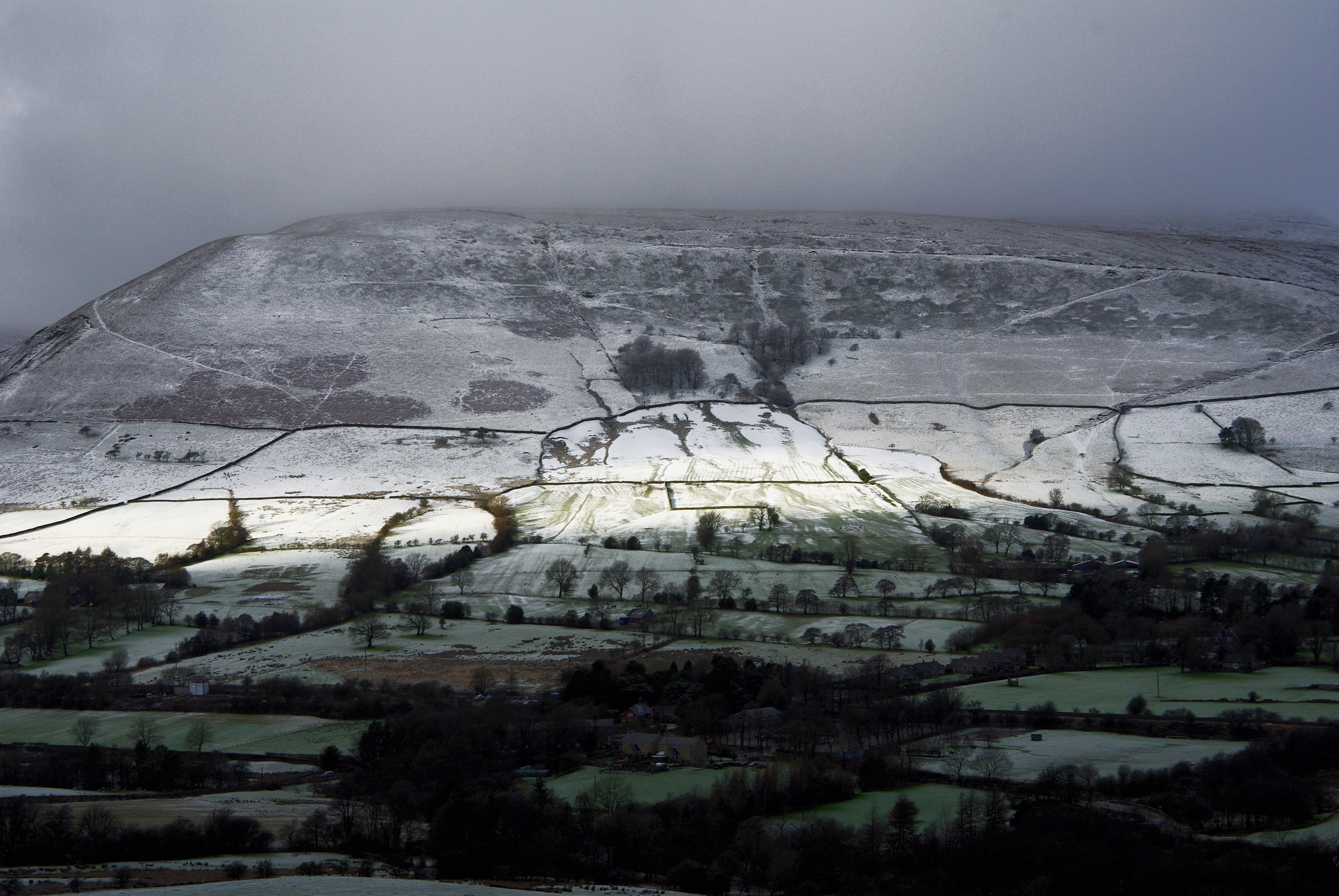
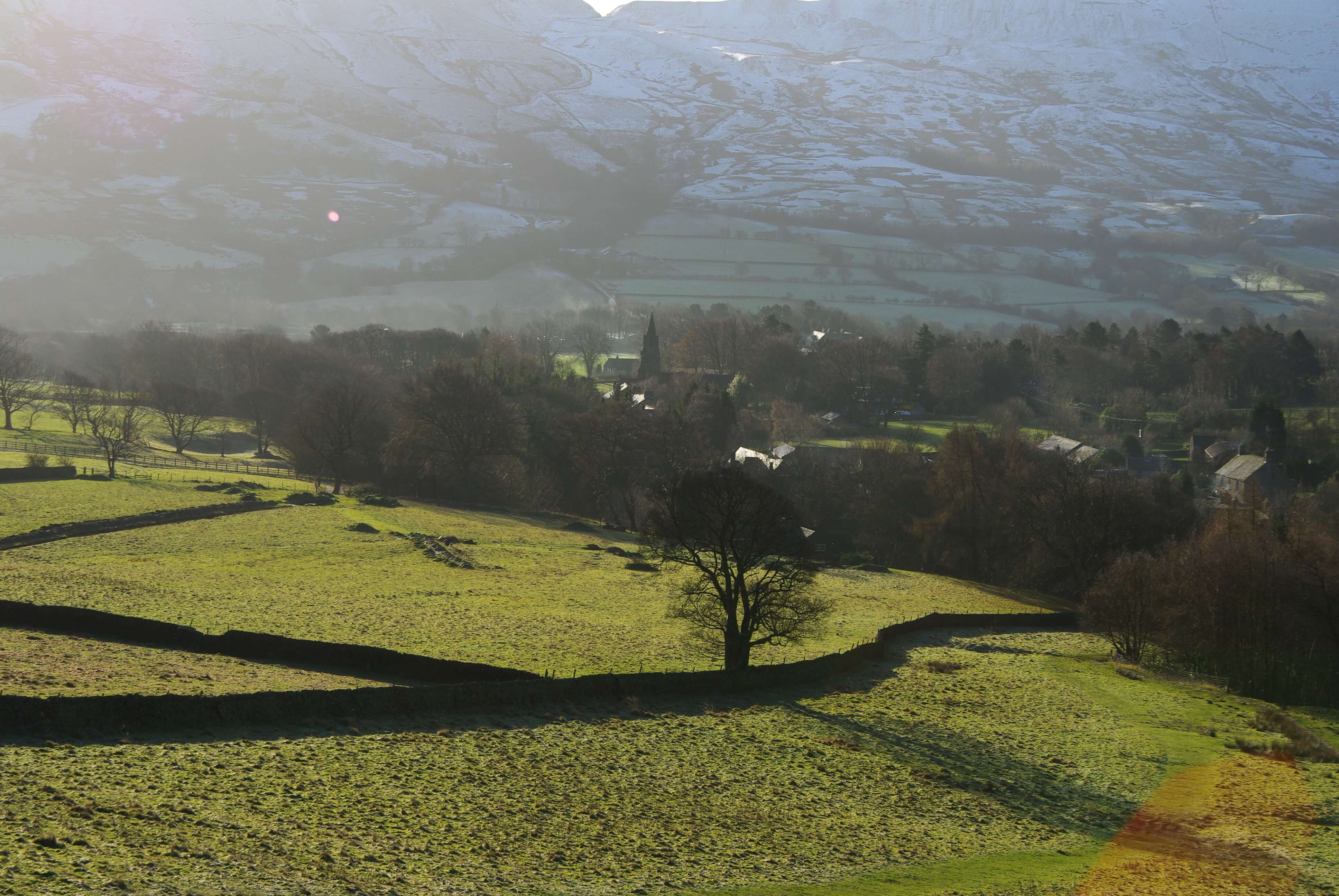
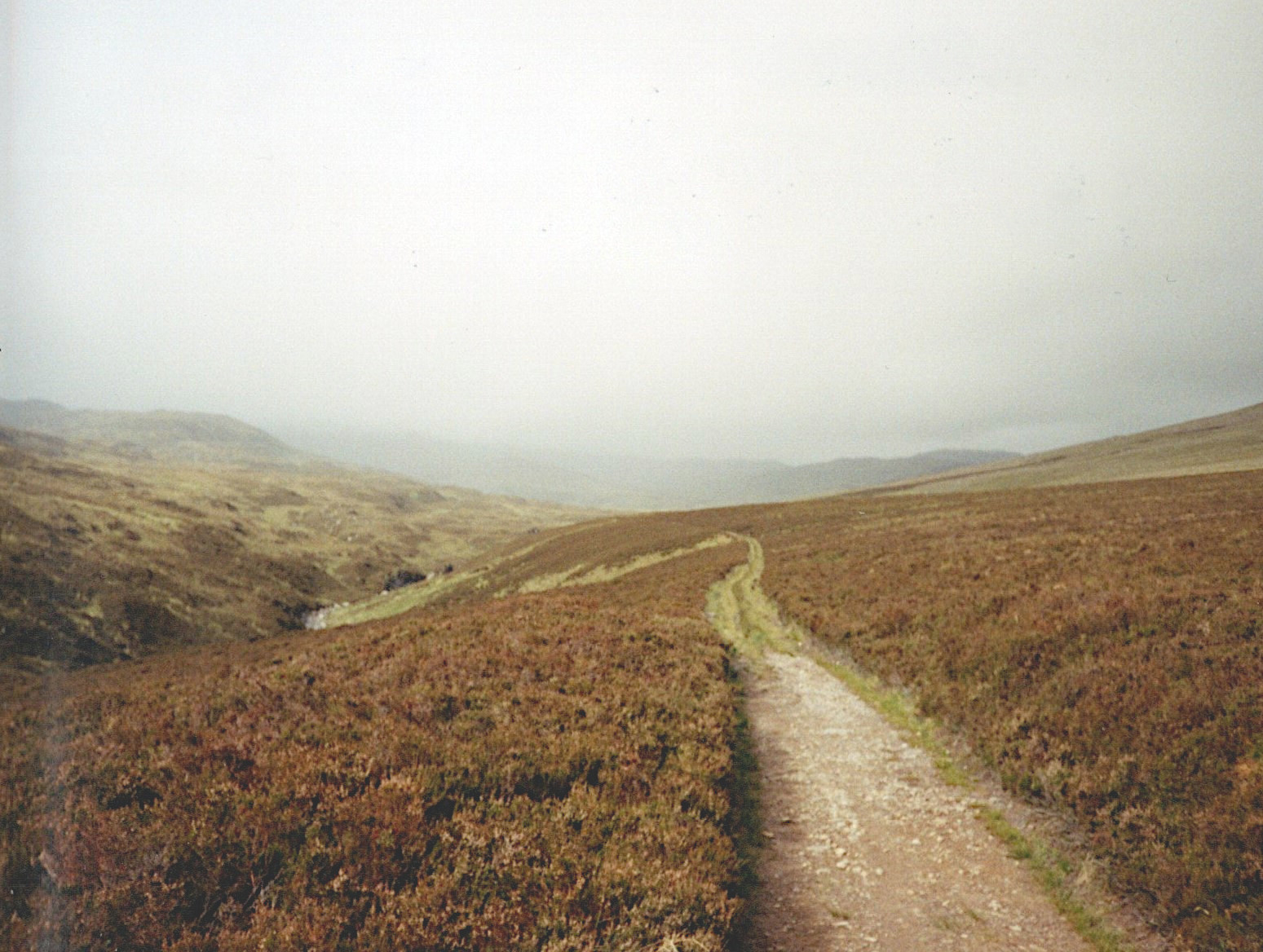
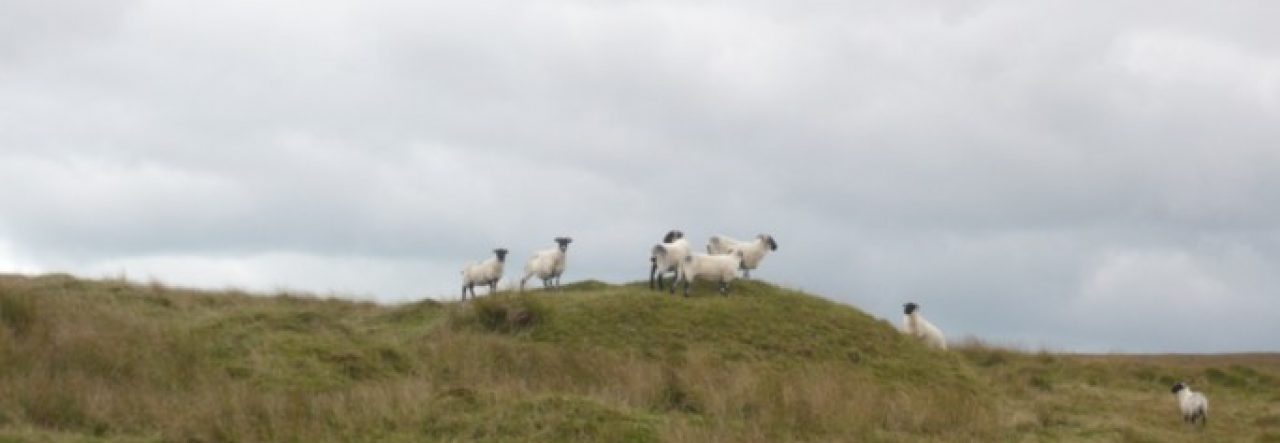
Since it’s a nice sunny and warm Summer’s day, I thought I’d put up a few photos of Edale, in the Peak District.

In Winter.

Just because.

A Nine Daies Wonder

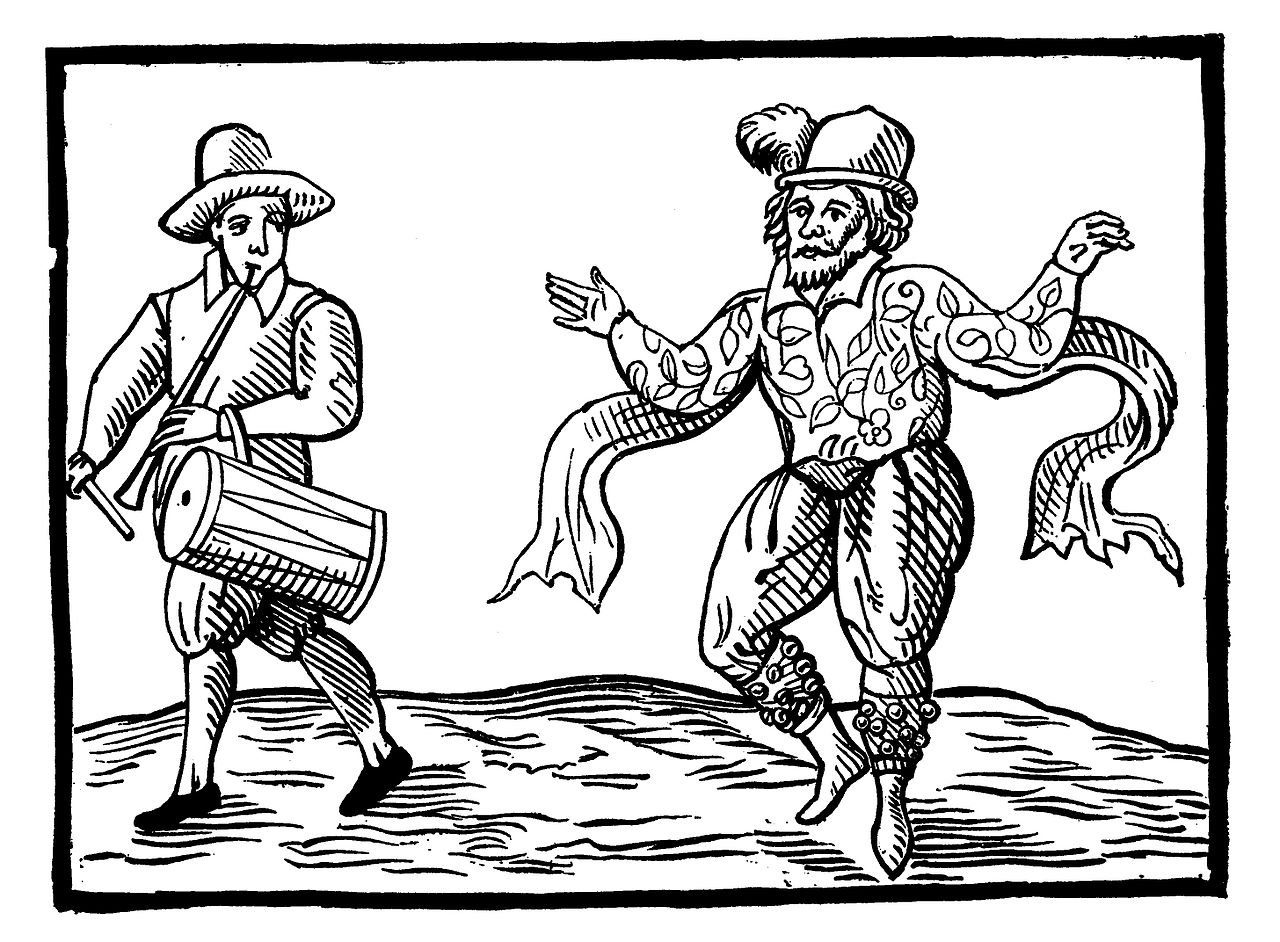
In February 1600 Will Kemp Morris-danced his way from London to Norwich, a distance of approximately a hundred miles.

Kemp (or Kempe), born around 1560 and died, probably of the plague. in 1603, was an actor, dancer and all-round clown. A member of Shakespeare’s company, Chamberlain’s Men, he regularly played the role of the clown in Shakespeare’s plays. He undertook his famous dance after some sort of disagreement within Shakespeare’s company as a result of which Kemp took his shares and left. Although we don’t know what form this disagreement took, it is widely assumed Kemp was very much a scene-stealer who was apt to improvise during a performance – possibly Shakespeare was alluding to Kemp when he has Hamlet declare ‘let those that play your clowns speak no more than is set down for them’. Kemp also had a tendency to dance jigs at the end of a performance that critics declared ruined the mood of a tragic performance.

Afterwards he described his dance as a ‘nine daies wonder’ in a booklet he published, although it actually took him twenty eight days to accomplish as he rested up for a while between each day dancing,

By the time he had joined Chamberlain’s Men, he was already famous for his acting and dancing. He had toured the Low Countries (now referred to as Benelux) and Denmark 1585-86 as a performer with the Earl of Leicester’s Men, performed frequently as a solo dancer and actor – usually performing clownish parts – and his improvised jigs were renowned for being frequently both ridiculous and lewd, which might go some way to explaining the rift with Shakespeare’s company, who by then were attempting to attract a more refined audience.

The dance from London to Norwich was performed as a publicity stunt and also as a way for Kemp to raise money by betting on himself to complete the journey. He was accompanied by a Thomas Slye, who played both the tabor (a small drum) and a fife to accompany the dance steps, and George Spratt who acted as overseer to the spectacle. Kemp wore a feathered cap, a slashed doublet with streamers attached to the shoulders, slashed breeches, and with clusters of jingle bells around his ankles and calves. A large crowd assembled to watch him set off from London at seven in the morning on February 10th 1600, and he continued to attract great crowds the length of his journey, which he completed on March 9th. He wrote the booklet later, as a riposte to those who doubted he had completed the journey.

This isn’t the origin of the phrase nine days wonder, incidentally, that goes back to at least the early thirteen hundreds.

The tune Kemp’s Jig appears in John Playford’s The English Dancing Master of 1651 and is attributed to John Dowland, but it is known that Kemp himself composed some jigs – four examples survive today. Whether Dowland (if it were he) wrote the jig to honour this journey, however, or whether it was a more generic tribute, we don’t know.

The journey, though, was quite an achievement.

I know this is all a bit niche, but having bought myself a sweatshirt featuring the image, I decided to learn a bit more about Mr Kemp and this is the result of that. I already knew about his dancing from London to Norwich, but I knew little about him beyond that.

In Another Lifetime I Could Have Been…(3)

…a tramp.

My wife often says I’m in touch with my inner vagabond. I’m taking that to mean that I enjoy walking, unless she’s referring to something else. My dress sense, for example. But yes, I love walking, especially long distance walking, but most of all I like to simply wander. There is a tremendous pleasure to be had by just setting off for a long walk without any particular destination in mind. Taking the more interesting-looking path as we go.

Of course, it’s not always possible to travel this way. We need to have some sort of destination in mind unless we’re prepared to just settle down to sleep wherever we find ourselves at nightfall. Usually we don’t have the time and the freedom to travel like this. Some people may also find it unnerving not to have board and lodging all planned in advance.

I’ve only done it occasionally, I must admit, but found it remarkably liberating when I did. There was no pressure to reach a particular destination by nightfall, I just had the freedom to wander along at my own pace until I felt I’d had enough for the day.

Even then, of course, some planning had to be done. Would I carry food or rely on reaching somewhere I could get a meal of some sorts? Would I carry shelter? Extra clothes?

But that is not exactly tramping, of course. It is just an exercise to be enjoyed (or otherwise) for a short period. It’s not a permanent lifestyle.

I’m sure that very few folk have deliberately chosen tramping as a lifestyle, but I’m aware there are some who have. This leads to the obvious question – why? I suppose all of us, at some time, wonder what is really important in life? Riches and property are, indeed, a burden in many ways, as well as conferring the obvious advantages in life. Some people just didn’t want that lifestyle. Some didn’t want the responsibilities of a settled life, with or without a family. There were always some folk who could just never settle anywhere for long. Most, though, would have ended up tramping through loss of employment and / or home.

Certainly I understand the difficulties of the tramping life, especially when one is no longer young. And I certainly wouldn’t want to be trying to survive as a homeless person in a city – rightly or wrongly, I think of tramping as a rural phenomenon. The whole point of it was to be on the move, rather than staying in one place. I doubt it would be possible today, with so many laws against that kind of lifestyle. There were, of course, laws against it in the past, too, but almost certainly much harder to enforce. I think, too, society is just ordered differently today. We think differently to how we did fifty or a hundred years ago. A tramp turning up at a farm today looking for a couple of hours work in return for a meal would get short shrift, and I can’t imagine any householder regarding one with anything other than hostility.

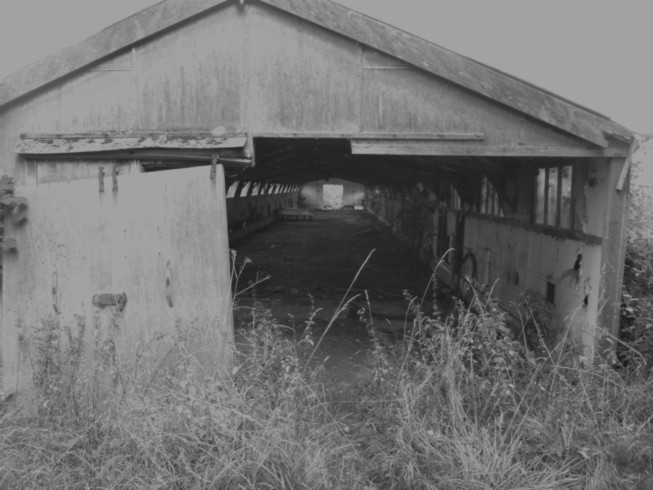
Again, I can’t imagine anyone choosing that lifestyle through the winter. But tramps used to learn of places they could settle for the winter, often carrying out odd jobs in return for permission to sleep in a shed or a barn and the odd meal. In this post I’m talking specifically about Britain, but I suspect it applies equally to hobos in America, swagmen in Australia, and possibly others I’m not aware of elsewhere.

And it would be unlikely to be a long life. But there were always some who chose it as a way of life rather than being forced into it by circumstances, and in another time I might possibly have been one of those.

Some Nepalese Photos

It seems unbelievable (to me, that is), but it’s now fifteen years since I last visited Nepal. This is just a selection of some of my favourite photos from my trips there. Some you’ve already seen, some you haven’t.

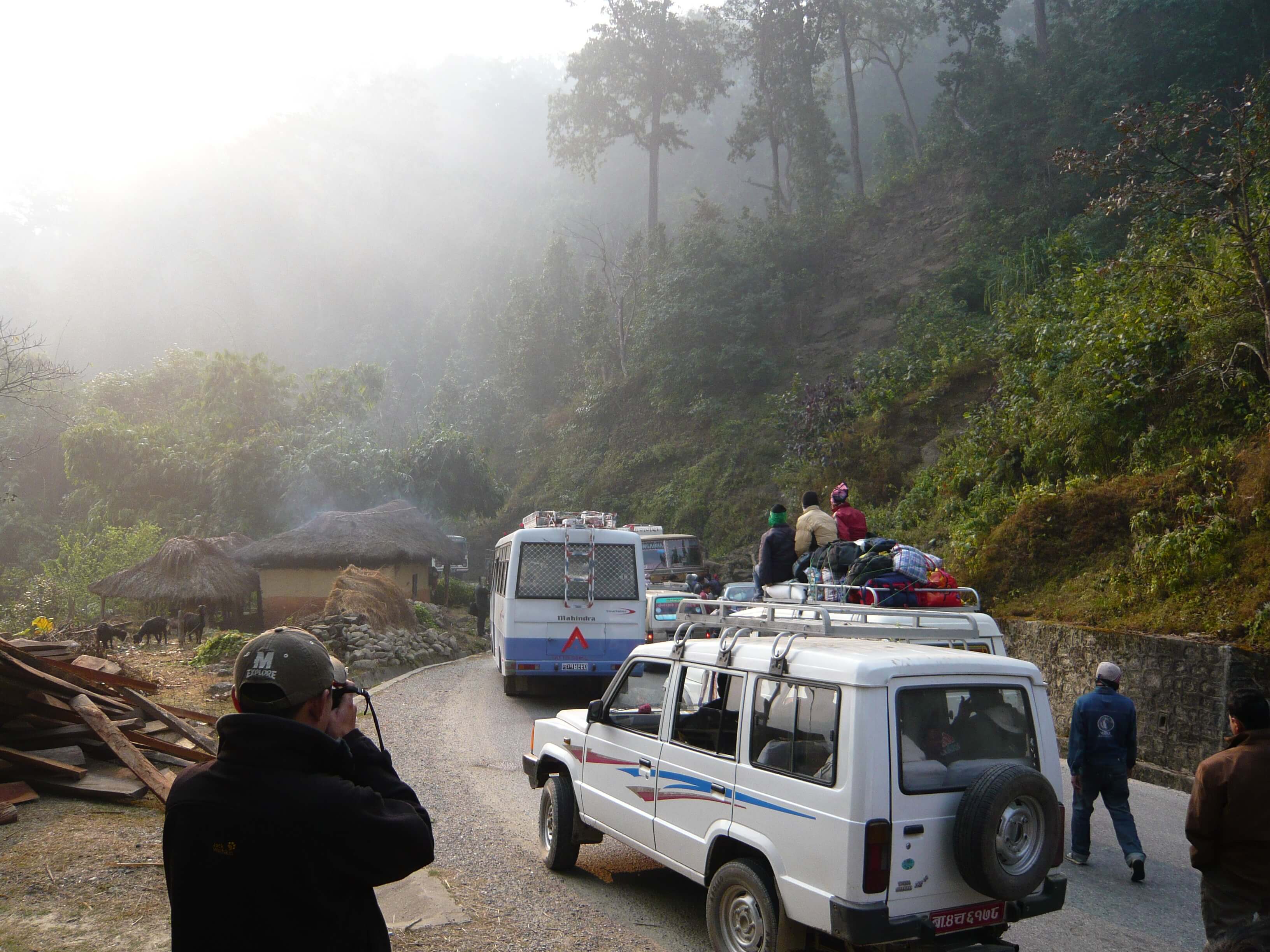
Travelling from India to Nepal

Temple in Swayambunath, Kathmandu Valley

Carved wooden window, Kathmandu

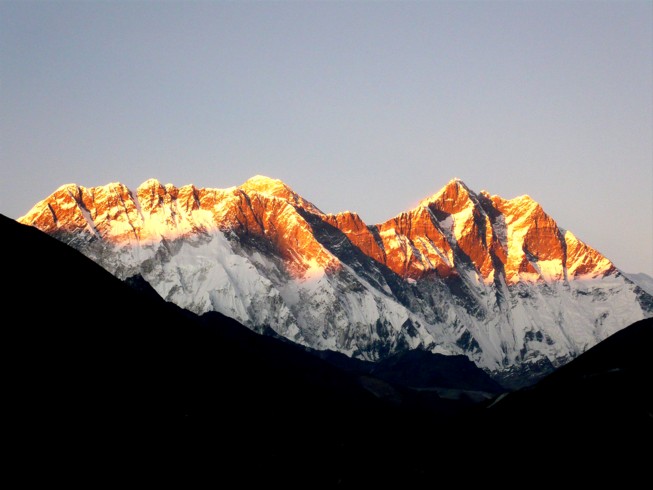
Sunset light on Everest.

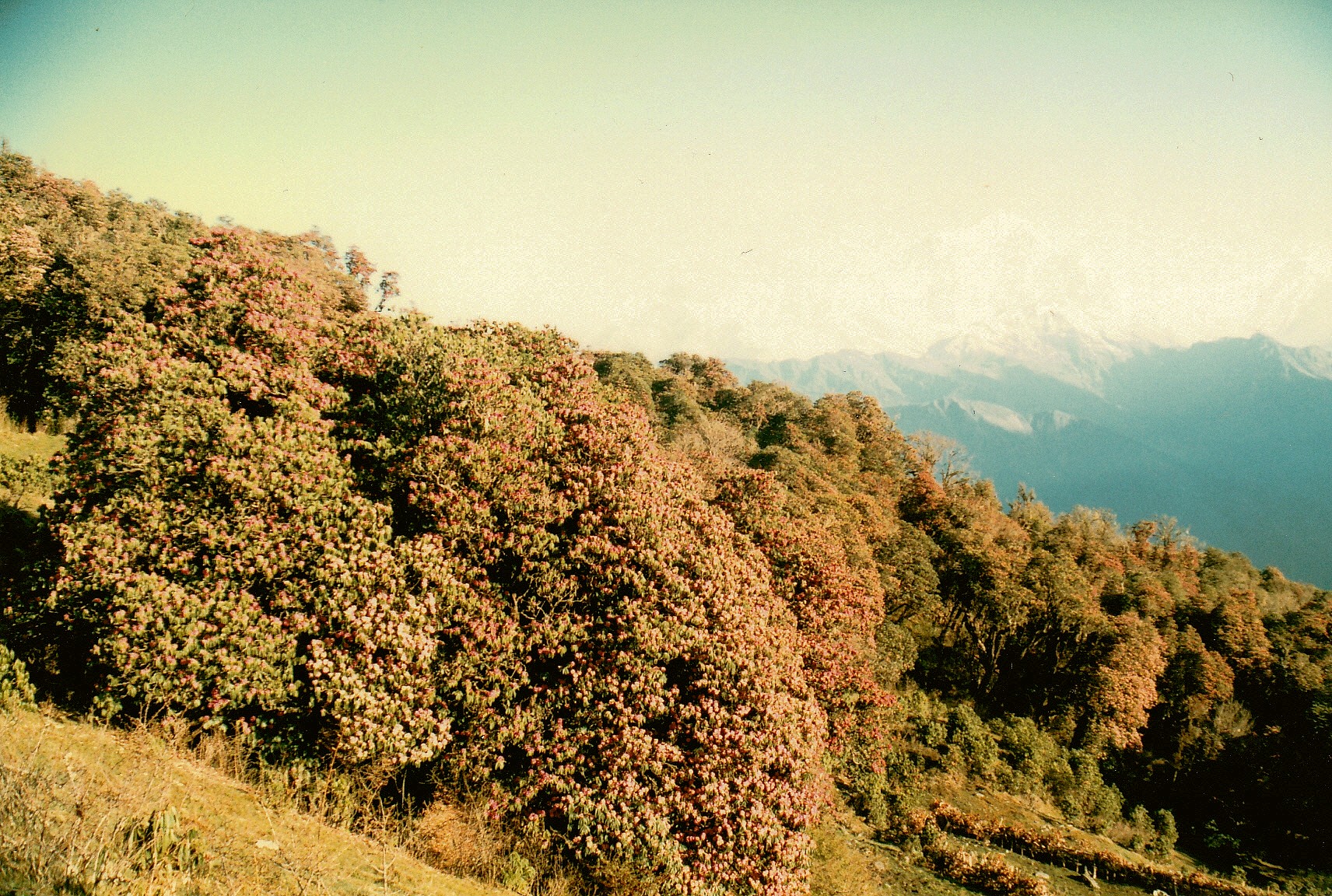
Rhododendron forest, Poon Hill

Carrying a load…

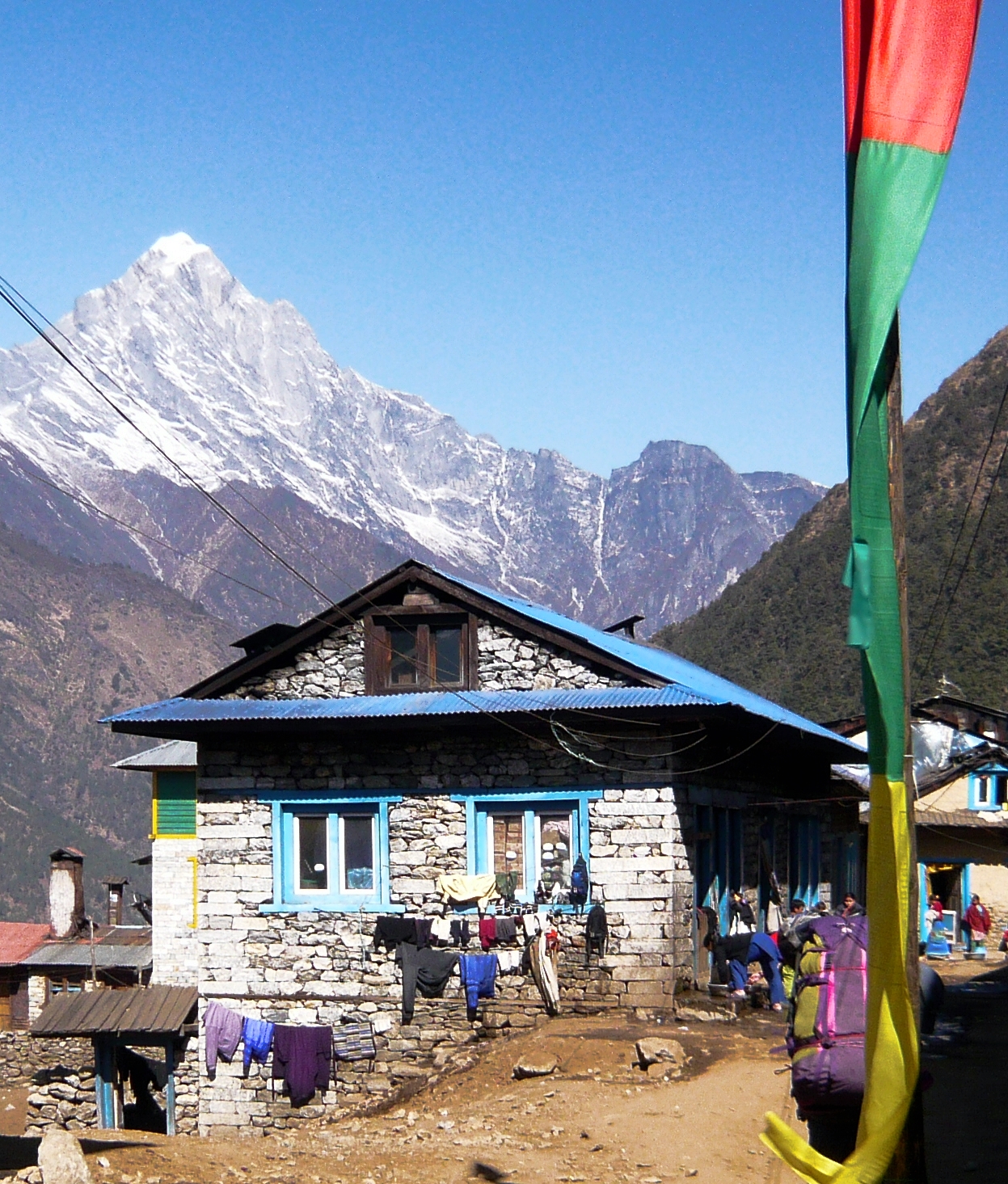
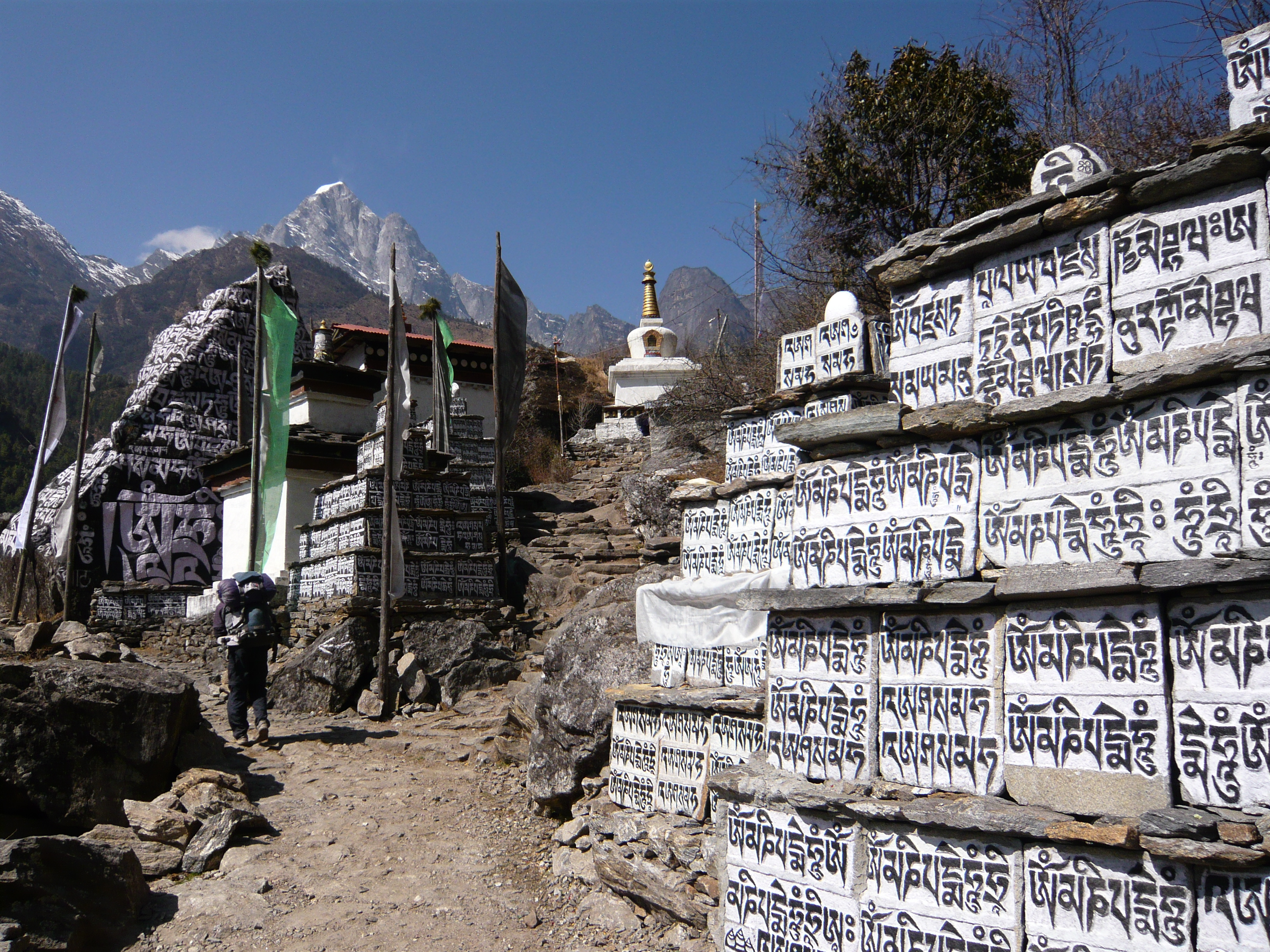
Wall of carved mani stones

A Bit of Digging

Well, they arrived yesterday.

I have finally got my family history book formatted and printed, and I reckon it looks quite decent. So all I need to do now is to get it posted out to family members.

While researching all this, I naturally made a lot of discoveries. Some were certainly more unexpected than others, though. From previous research my father had done, we already suspected that my great grandfather had changed his name, possibly on a whim, from Prater to Canning. I was able to confirm this by, amongst other things, a comparison of various dates of birth in his family. This immediately removes the possibility of my searching back to see whether my name has any noble / famous / important roots. This is something that matters a lot to some people, although obviously only along the male line, which is why it seems to matter much more to men.

Although I turned it up too recently for the book, I have learned details about my father’s life in WWII which I would otherwise never have come to know. I had no idea – and seemingly nor had anyone else in the family – that from 1940 until joining the regular army in 1943 and being posted to India and Burma, he had been part of what had been dubbed ‘Churchill’s Secret Army’, soldiers trained to operate behind enemy lines in the event of a German invasion of Britain. Fulfilling the same role as the French Resistance, they would have carried out acts of sabotage and hit-and-run attacks to slow the enemy advance. it was only after that threat had receded that he joined the ‘Regulars’.

And then, less unexpectedly, there were the stories of extreme hardship: the early deaths, the poverty, the workhouse, tuberculosis and pleurisy…

Of course, if it was possible to search back far enough, we would all find we had a common early human ancestor, which gives the lie to the importance of race.

Does any of this research really matter? Well, in some ways, no. Does it sound crazy if I say that despite all my work, it does not matter that much to me? I’m very much in two minds over this. A lot of this felt more like an intellectual exercise than a personal quest. It was interesting to find out where my great grandparents and their parents had lived, for this felt just close enough to be a part of me. But before them? And especially when I could discover nothing more than their names and some vague dates? No, not really. Throughout this project I have been especially keen to be able to put names to old photographs, for this seemed the only way to make these people come alive again, or at least begin to. That I’ve been able to positively identify some of them feels more satisfying than pushing a line back another hundred years, although I do have nearly every branch back at least to the 1700’s, but in every case it is the stories I’ve found out about these people that matter.

But back to my question. Does any of this research matter? I do think it has the potential to bring us a little closer to our families by emphasising our shared history, and I’ve greatly enjoyed long discussions with cousins about our various researches and discoveries. But beyond that? Well, I’ve enjoyed learning the social history involved with my family, the realities of how people actually lived in the towns and countryside over the last few hundred years. And as well as emphasising my connection to my extended family it has also, as I wrote a few month ago, given me a greater sense of connection to the land where I live.

I have enjoyed exploring the past, but I’m not going to live there.

In Another Lifetime I could Have Been…(2)

…a monk.

Yes, you heard me correctly. a monk. Regular readers of this indulgence will know I pour scorn on organised religion, but also that I have a hankering for the simple life and for solitude. I would love to be disciplined enough to do without fripperies, but I never quite seem to get there. Obviously social media would also have to go if I was a monk. In fact, even if I didn’t become a monk, I think perhaps social media should go. That would be good for me.

But not books, of course. They’re Important.

In another time, a time when belief in the predominant religion was a given, I would have had no problem in becoming a monk. But since I don’t have that belief, it sounds like a contradiction to say that to me the spiritual side of life is extremely important, but the spiritual is, to me, separate from religion. I view the spiritual side of me as being that part that yearns for simplicity, for art, for the minimum possessions required for life, and to be surrounded by nature. Incidentally, I also understand that monks are given a daily ration of beer or wine.

That also sounds good.

And because I was fortunate to have been born in an age of scientific enquiry when most people no longer blindly accept religious dogma, but are generally prepared to question it, I am free to make choices based on my own conscience and on what I consider important.

But I could almost, under certain circumstances, become a Buddhist monk, even in this life. I have said before how I am attracted to Buddhism, although as a philosophy rather than as a religion. I like the way the emphasis is on yourself to make your best life. Gods don’t have to be involved.

I have twice spent a week in that sort of environment – one time a week of Zen meditation, which was very hard work but left me with a great feeling of clear-headed calm, and once on a retreat at a Benedictine monastery where I made a point of attending a simple morning service each day and spending the rest of the day in thought and writing and painting and gently wandering around the extensive grounds. As a panacea for the stresses of modern life it was difficult to beat. I could, as I said, see myself in another life settling into the routine there on a permanent basis. But not in this life.

Nepal – Annapurna Region (Reblog)

In 1988 I went to Nepal for the first time, travelling by bus from Delhi to Kathmandu. Although the trip took almost 2 days, and the bus was particularly uncomfortable, it was one of the most spectacular journeys I have ever taken, and a most remarkable experience.

And then I trekked the Annapurna circuit, still considered by many to be one of the 10 classic treks of the world. It took 24 days to complete, and from the time we left Ghorka, until the day we walked down into Pokhara, we were travelling entirely on footpaths and saw no vehicles of any description.

Part of the walk is now over a new road, and whilst this is surely welcome to the inhabitants of the region, I suspect that it takes away a little of the magic of the trek.

village_1.jpg

Village near Manang (posibly Mungji), on the Marsyandi River, close to the Annapurnas. In many ways, a typical Nepalese mountain village, it is built on man-made terraces, up steeply sloping mountainside, to avoid using any of the precious farmland available in the valley.

IMG_0001.jpg

View from Poon Hill. Poon Hill lies a little to the west of Ghorapani on the river Ghora (pani being water), west of the Annapurnas. Sunrise there consequently occurs behind the Annapurna peaks, including the spectacular Machhapuchhare, or ‘fishtail’ peaks. That said, this shot was taken towards the west, looking across the Kali Gandaki valley.

IMG_0002.jpg

This is dawn, though. Machhapuchhare and its double peak are shown clearly on the left.

IMG_0003.jpg

Mountains and glacial lake from the village of Manang.

img_0004

Lower down, the land is heavily terraced, fertile land being at such a premium that every available bit is used. These rice paddies are near the village of Chepe Ghat, on the Marsayandi River.

chorten_2.jpg

Chorten. Chortens, or stupas as they are also commonly known, usually contain relics of saints or priests. The original stupas held relics of the Buddha, such as at the Temple of the Tooth, at Kandy, Sri Lanka.

IMG_0005.jpg

Mountains near the village of Muktinath. In the rain-shadow, here, the landscape is that of a high altitude desert.

IMG_0006.jpg

Mani stones on the Annapurna trail. Mani stones may be carved, painted or both, and serve a similar function to prayer flags, in that they either have a prayer or mantra carved on them (typically ‘Om Mani Padme Hum’ – from which the name ‘Mani Stone’ comes from – meaning ‘Hail to the jewel in the heart of the lotus’ i.e. The Buddha) or they may have a picture of the Buddha himself. Although they may be encountered singly or in small numbers by shrines or at Gompas, at times they make up huge walls containing many hundreds of stones, some of which may have been there for hundreds of years. These walls, like shrines or any other Buddhist relics encountered here, are passed on the left.

IMG_0007.jpg

Houses at Manang.

IMG_0008.jpg

The Upper reaches of the Marsayandi, looking down to Manang.

IMG_0009.jpg

Snowed in below Thorung La. Not an unusual occurrence. Thorung La is at 5415m (17,700ft). We arrived at our campsite early afternoon with the ground clear of snow and the sun out. This was the scene a couple of hours later, delaying our crossing the pass (‘La’ is Tibetan for ‘Pass’) by 24 hours.

IMG_0010.jpg

Crossing Thorung La. On the day we crossed the pass, we left camp just after 4 in the morning, and were down the other side by late afternoon.

IMG_0011.jpg

Looking west (and down!) from Thorung La). On this side of the pass there is far less precipitation and the land is noticeably drier. This is looking towards Muktinath.

In Another Lifetime I Could Have Been…(1)

…a folk musician.

There are any number of reasons why I haven’t become one in this lifetime, only one being a lack of any obvious talent. Perhaps if I hadn’t gone abroad when I did, I might have inveigled myself into a group of musicians and played a little more, and a little more regularly. Perhaps if I’d practised more I’d have been a little better! Perhaps if I’d actually learned to read music properly I could have learned more tunes properly. Who knows?

I could play both the guitar and mandolin fairly competently, if nothing more. It has been many years now, though, since I owned either – or a fiddle or a whistle either, come to that, both of which I had pretensions of being able to play, at least a little. I still play a pretty mean air mandolin, though, and my air guitar licks would put Richard Thompson to shame, although so far I’ve had limited success with my Henry Parker air guitarwork – unfortunately he uses a different tuning. I am occasionally tempted to buy another mandolin, or perhaps a guitar, but if I’m realistic I have to admit I would never devote the time to them that would be required. It’s going to remain one of those dreams realised only in my imagination.

But a note for that other lifetime: I’m not one of those folk who have to be the very best at whatever they attempt, otherwise they feel it isn’t worth the effort. I wouldn’t have to be a star, I’d be content to be a session musician, a backing musician. Just to make a living doing something you love is awesome and something not given to many. Or not even to make a living, perhaps, just to make music with others is a delight and I could still be happy with it being a spare time occupation.

So, sticking to going to gigs and listening to CDs this time around.

Old

God’s bones.

Cold stone skin covering

A hewn wooden ribcage that

Conceals a petrified heart.

A fossilised giant wallowing in a garden

Growing nothing but death.

.

We know we will get old

But it takes you by surprise all the same.

Perhaps we refuse to see the signs –

Unexpected offers of assistance,

A sudden inability to run for the bus and

A need to take more frequent breaks.

We become fragile,

And lose confidence in our abilities.

.

Perhaps we lack courage, but

Must we resort to this?

.

Really, only the young want to live forever.

Oh, the tedium of eternity

Where angels yearn for the peace of annihilation!

We have a choice;

At the end we have a chance to be brave.

At Tunbridge Wells Literary Festival

Tunbridge Wells now boasts a literary festival. Over four days this year it hosts talks from well-known writers such as Michael Rosen, Michael Parkinson and Sheila Hancock. But not just the big names.

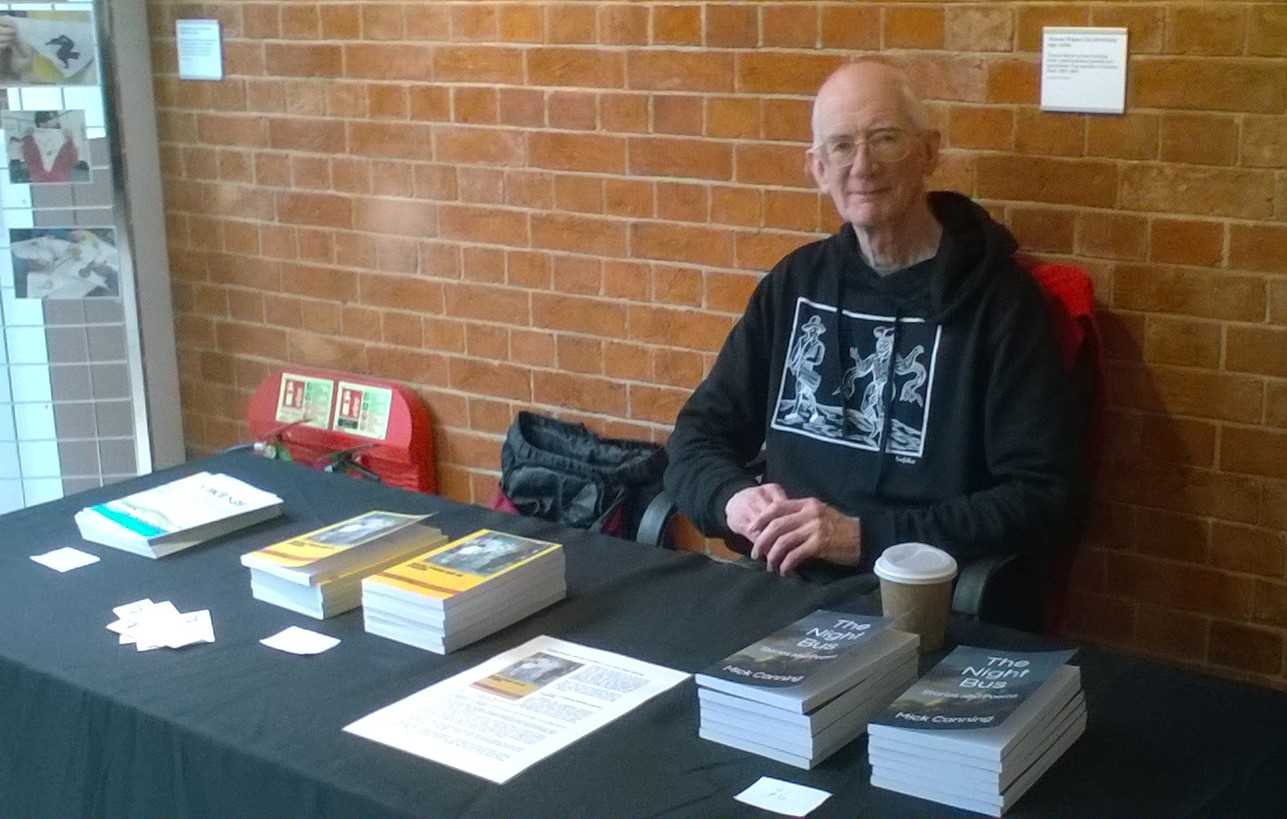
Yesterday was the day local writers could book a table and hawk their wares. It’s been some time since I’ve taken part in one of these, in fact, I’ve only done it once before, I think. When I used to regularly have paintings in exhibitions, I spent a lot of time essentially doing the same thing – chatting to other painters, talking to members of the public who might buy a painting and generally ‘networking’ (I still find that a slightly silly word). Although talking about Making Friends with the Crocodile did have another effect – it reminded me again that I’m beginning to feel I ought to take one final trip to India, sometime.

Anyway, I think I should probably do one of these more often. Did I sell armfuls of books? No, but I sold a few. I had some good conversations with members of the public and other writers, It also seems to have the effect of energising my commitment to writing, which is something that happened to my painting at exhibitions, too. Talking about my books and projects encourages me to focus afresh on them and, basically, get my finger out and get on with it, which can’t be a bad thing.

So, I’d better get on with it.