Wordy Wednesday 2

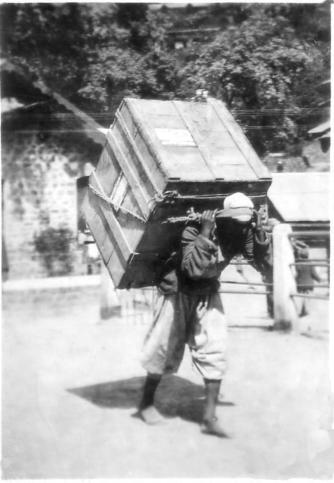
Coolie – now there is a word that is remarkably offensive; offensive not so much because of what it is, but the implications behind it.

coolie 1

The Oxford Dictionary defines the word thus: unskilled native labourer in eastern countries and gives the word’s origin as perhaps from Kuli, an aboriginal tribe of Gujarat, India.

Hobson-Jobson, the 1886 Anglo-Indian Dictionary, has rather more to say upon the matter.

It gives the spelling as ‘cooly’ and the definition as follows: a hired labourer, or burden-carrier; and, in modern days especially, a labourer induced to emigrate from India, or from China, to labour in the plantations of Mauritius, Reunion, or the West Indies, sometimes under circumstances, especially in French colonies, which have brought the cooly’s condition very near to slavery.

It goes on to give further definitions and details of the word, and then makes several suggestions for its origin. One possibility, agreeing with the Oxford Dictionary, is that it derives from Koli, the name of a caste or race in Western India who frequently carried out these tasks and who, the dictionary reports, had long held a reputation for ‘savagery, filth and general degredation.’ This would make its origin analogous to that of slave, which is presumed to come from the racial term Slav.

But it suggests the waters are rather muddied by a couple of similar words in the Sub-continent: In Southern India a Tamil word Kuli signifying ‘hire’, and Khol is a Tibetan word for slave.

And then there is also a Turkish word kol meaning a slave while, more specifically, kuleh  means ‘a male slave, a bondsman’.

But back to the implication. It is impossible to get away from the colonial undercurrents with this word, as brought out in the Hobson-Jobson definition above. So to use the word to describe a person or persons today, is to call them a servant or slave of a foreign overlord.

Bihari Door

I paint quite a few doors – they are a favourite subject of mine. Although if you mention that to my wife, she will sniff ‘You’re joking! I can’t even get him to paint a shelf!’

bihari door

Bihari Door – Acrylic on canvas, 18ins x 24ins.


Pictures available on my Etsy shop site here

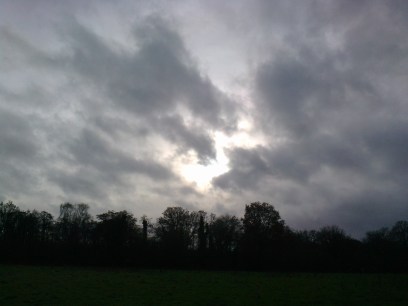
Wild And Windy Weather

017

Roaring in rustling and

Tossing trees,

Wailing and moaning

In whipping wires.


A strident, insistent,

Car alarm.


An upset bin, with

Unwanted plastics…


Scraping,

Scratching,

Tumbling,

Chasing along the road.


Aggrieved air


With attitude.


Wordy Wednesday 1

Many bloggers post photographs on Wednesday under the heading ‘Wordless Wednesday’. Me? I’m going to write a few posts about words – specifically words in English borrowed from languages of the Indian Subcontinent.

I’m just plain awkward, but you knew that, didn’t you?

I am currently editing the first draft of my novel A Good Place, which is set in a hill station in Northern India. And in that hill station live a number of English who remained behind after Partition.

‘I’m sitting on the veranda of the bungalow in my pyjamas.’ Well, no, no one says that in my book. But if they had, what is the significance of that sentence?

The significance is the number of words borrowed from Indian languages.

Untitled-Grayscale-03

Veranda is an Indian word, but coming originally, perhaps, from Persian. The Oxford Dictionary suggests two derivatives, either from the Hindi (varanda) or from the Portuguese (varanda). Digging a little deeper, if I refer to Hobson-Jobson, the Anglo-Indian Dictionary that was published in 1886 and traces pretty well every word or phrase borrowed from the Sub-Continent, I discover a very long entry on this word. It begins by dismissing the possibility of it being derived from the Persian beramada, and goes on to state that it appears to exist independently in both Hindi, and in Portuguese (and Spanish). It then traces the possible routes the word might have taken to reach the English language, before then saying, surprisingly, that it could have its roots in the Persian after all. This seems quite likely to me, since many Persian words made their way to India especially with the Mughals, and it suggests a possible route to the Spanish peninsular when the Islamic armies arrived in the early eighth century.

I tried typing it into Ngram Viewer. This is an online tool that searches through the entire database of books that Google can access online (including ones still under copyright) published since 1800. Looking at the results for all books in English, it tells me it was barely used in 1800, although it does exist, rises steadily to a peak about 1910, and then falls away slowly, although it is still in common usage. Unfortunately Ngram has not been set up to search books in Indian languages, or even Portuguese. I tried Spanish and the pattern was similar, except that after peaking just before 1910 , it dropped sharply, but since then the trend has been upwards. I then noticed something. I had actually looked at the trend in American English. So I then tried British English, and this gave me a rather different pattern; The curve rose gradually until it peaked in the 1950’s and then fell away sharply. Why? I think it must be due to a surge of historical / biographical / nostalgic writing, both fiction and non-fiction, after the British left India.

Don’t worry, I’m not going to try to go into that sort of detail with other words.

Next, bungalow actually refers to a ‘Bengal style’ house (often with a veranda!) that the British frequently chose to live in.

And pyjamas are loose cotton trousers worn in India which were ‘adapted’ for night wear by Europeans.

Okay, class, lesson over. Be sure to wash your hands before eating your snacks (samosas and pakoras today, of course).

Sketch n’ Haiku Day

We’ve had all sorts in the last week.

We’ve had cold, bright, sunny days. We’ve had cold snowy sleety days. And today we have lashing rain and wind. It’s milder than it was, but as miserable as sin and the wind still cuts through you!

So here is a sketch for the day – cushions on the sofa to remind me of Nepal, since the top one came from there:

002

And here is a haiku for the day, to remind me of summer:

Amidst the traffic,

In the still airs above me,

A lark dripping down.

And a thought for the day? Another haiku, to remind me to slow down sometimes:

Obsession with time

Is climbing trees in autumn

To get down the leaves.

And today I begin the first edit for A Good Place – initially reading it through and thinking about the voice, the narration, to see if it works for me. Next, another read to look for flaws in the plot, redundancies, things to add and take out. Finally, try to knock the grammar into shape. If I’m happy with that, then it’s on to the beta readers.

Hope you all have a good day.

Be Kind


209a

Be kind.

Achieve wisdom and exercise that skill.

The world has always been filled

With angry greedy people.

You cannot legislate them away,

Or hope that they will die out.

The world has always relied on people

Who are kind and wise,

To act as counterbalances to these others.

Unfortunately, the World supply of angry greedy people

Appears to be limitless,

So there will always be a need for kindness and wisdom.


You might just save the world.


Review of An Atlas of Impossible Longing

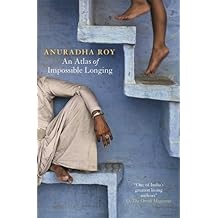
An Atlas of Impossible Longing

A year ago I read The Folded Earth, Anuradha Roy’s second novel, and decided it was so good I would have to read all of the others. And so recently I finished her first book, An Atlas of Impossible Longing. In this, Anuradha Roy tells the story of three generations of a family who have moved from Calcutta to live in a huge, rambling mansion in Songarh, a small town in the hills of Bengal.

Amulya’s wife, Kananbala, hates the isolation of the town, with its lack of fashionable shops and social life, and longs to return to Calcutta. Their oldest son, Kamal, longs for children, and his youngest, Nirmal, is widowed and longs for his unmarried cousin.

Everyone appears to long for something that proves unattainable, and at the centre of the story are two children, thrown together by chance circumstance and then separated by the cultural fears of adults, but who have formed an unbreakable bond that endures through years of separation.

Mukunda is an orphan of unknown caste adopted by the family, and his only companion is Bakul, daughter of Nirmal. They pass their time playing in the grounds of their home or in the woods and fields around the town.

As Bakul and Mukunda grow towards adulthood, their friendship slowly begins to become something more, and Mukunda is sent away to Calcutta by the family, suddenly fearful of the consequences of this.

As the years pass, Mukunda graduates from college and becomes prosperous, even through the years of Partition, without ever returning to see the family who raised him, although he thinks frequently of Bakul. But then chance sends him to Songarh, and he realises he must find out what has happened to her.

The pace of this book is deceptively languid, but this enables Roy to paint the characters and settings in exquisite detail, and for the plot to unfold at an easily assimilable rate.

I feel you always gain more from re-reading a book, and I am longing to do this, to immerse myself again in the rich landscape and characters Roy has created.

Most definitely a five star read.

A Walk And Other Things

It was bitterly cold but sunny first thing yesterday morning, but after a couple of hours the air had warmed up enough to tempt me out. I was due a walk anyway, having not even left the house the previous day.

Every year there is a point somewhere around the middle of February when I feel the warmth of the sun for the first time that year, but yesterday morning there was already a hint of that.

It wasn’t cold enough to freeze the ground, except in a few particularly exposed places, and so it was very muddy underfoot. Therefore it was a delight to occasionally walk through drifts of last years leaves.

And there was so much birdsong. So much so that it became a background noise that was easy to filter out after a while, except when a particularly loud or unusual song caught my attention. Not that I do that deliberately, since birdsong is one of the delights of the countryside. At some point or another when I’m out, I can usually hear the rooks, but maybe because of the sun and the noise from the other birds they seemed to be silent. I’ve always associated them with cloudy skies for some reason, perhaps because I’m so used to hearing them on moorland and in the hills and mountains.

But I’m sure they like a sunny day every bit as much as the next bird.

This morning is cloudy again and the rooks are back. Outside I hear crark crark crark, and the occasional cronk. There is rain and sleet forecast for later, so I go into town in the morning. By the time I get home, the sky is already full of dark clouds and threatening to drop some weather soon.

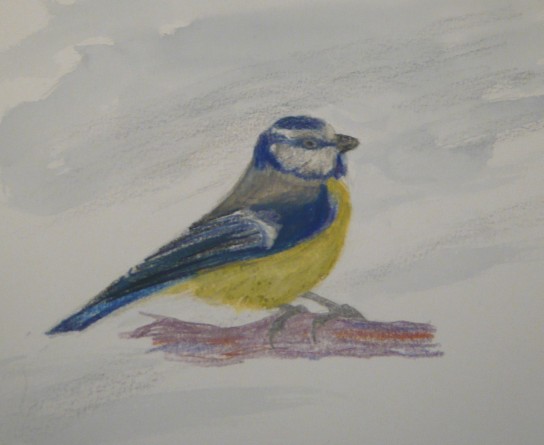
The afternoon, then. I partly spent painting this little fellow:

035

The blue tit is one of the few British birds whose population seems to be increasing slightly at the moment, in contrast to most whose populations have fallen – sometimes dramatically – over the last few years. We seem to be losing lots of the birds I took for granted as a child, which is such a sad thing. As a race, we seem to be so damned good at exterminating other creatures.

Refugees

I posted this poem a year or so ago, and I think it bears re-posting again now. In fact, I think I should post it repeatedly every year until everybody understands the situation most of these people find themselves in through no fault of their own.

Untitled-TrueColor-01

The first time she ever set eyes on the sea,

She was forty seven.


It was a long road there.

She set off with little enough,

And arrived with much less.


She had a home, once.

A house,

In a well-to-do area of the city.

Life was good.


But fear came,

In the form of bullets, shells and bombs.

Once, gas.

Then everyone lived in fear.


Her house is rubble, now.

Memories and possessions buried,

Alongside her husband.


Alongside her daughter.


Alongside her middle son.


Her hands are scarred from the digging.

For weeks,

Her palms were raw and bloody,

from blocks of masonry,

Too large to move.


Dust and tears.


It was bad enough to lose everything,

But when you’re caught in the cross-fire,

And the food runs out,

What else can you do?


Her eldest son paid for the crossing,

With borrowed money.


Somewhere,

He is ‘paying off’ the loan.

A bonded labourer.

A slave.


She fears for him.


Her youngest son was washed away.

The dinghy was too small,

The passengers too many.

Fear.

You could smell it,

Alongside the despair.

The panic.

There were fewer of them when the sun rose.


There is shelter here,

Of a sort.

But when the wind blows she shivers,

Drawing near to the oil drum blaze.


There is food,

Once a day.

Of a sort.


There was a welcome.

She soon learns what sort.


Now, she walks down to the sea.


She wonders whether she should,

Whether she should just,

Just, slip under,

The waves.


Do It Tomorrow

IMGP2317

We have all been encouraged to think

That our time is so important.

Yet it is only when we become old,

And we have so much less of it left,

That we realise this is not the case.


We’ve been told we must save time,

Instead of using it and moving on.

How precious time is,

As if it were a commodity we might hoard

And use when we need it most.


Instead of squandering it on what makes us happy,

And filling it with unimportant things.


But I say, let what you’re doing fill your time.

If you’re washing up,

Then let your plates be the cleanest.

And if you’re looking at the winter sun on frosty leaves,

Well, let that be the best experience you have ever had.


Sometimes I have these flashes,

When I think I’ve understood something deep and profound.

And usually it means an evening drinking wine,

Or half an hour sitting on a sunlit hillside.

But I do wonder what we’re all so busy chasing.


And if you think this lesson worth remembering,

There’s no better time than now.