Annapurna Circuit, Nepal – 4

Part Four – from 30 years ago.

IMG_0037

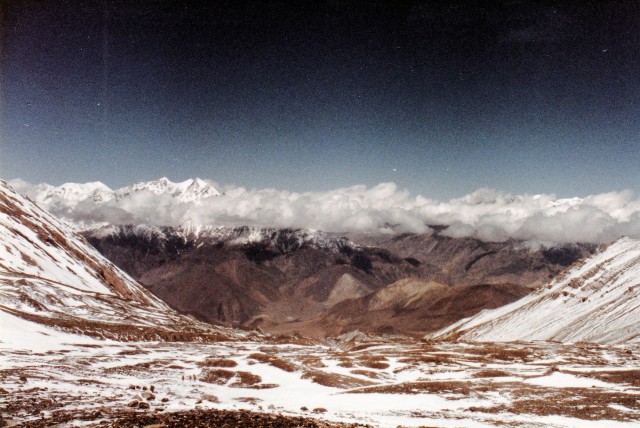
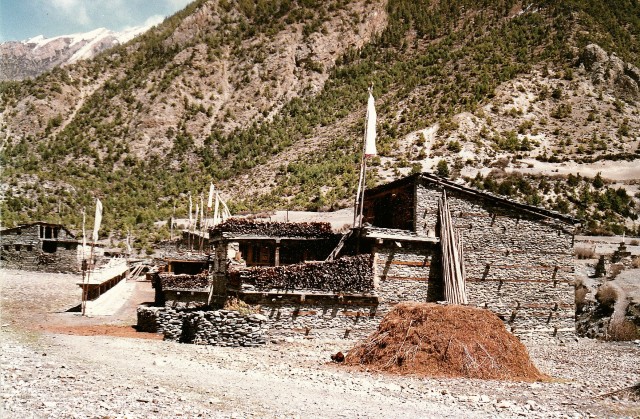
On the western side of Thorung La, the climate is much drier and in places the scenery is very much that of a desert landscape.


IMG_0039

As you descend, though, you soon come across settled areas where meltwater from the snows and glaciers higher up enable vegetation to grow.
 

IMG_0038

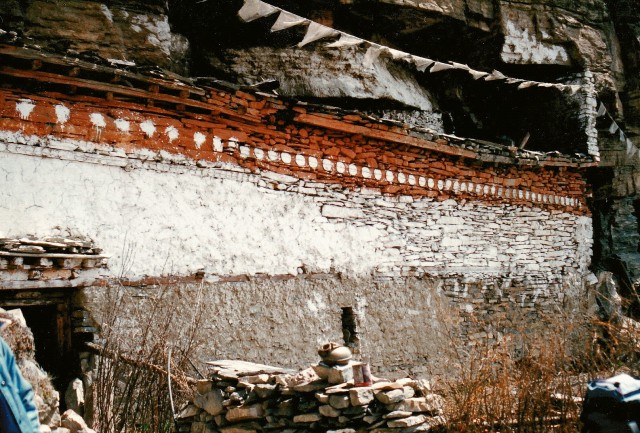
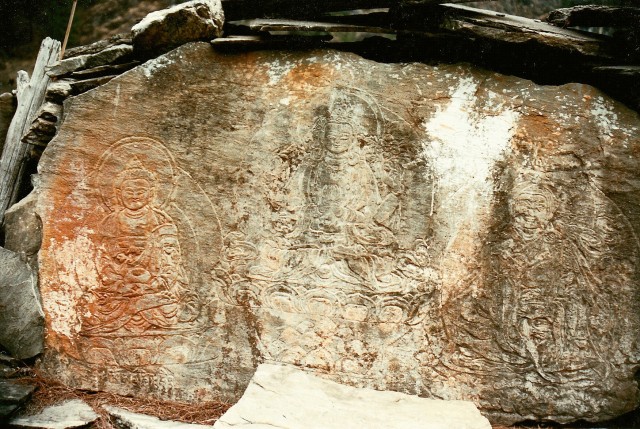
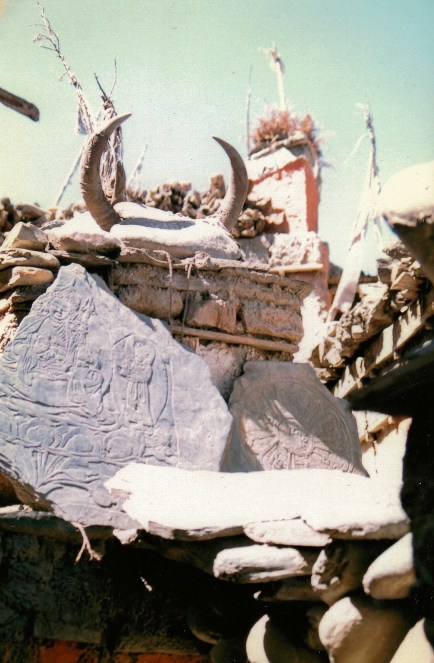
Mani stones plus a fine set of argali horns on top of a wall in Kagbeni. The argali are the wild sheep of the Himalaya.


IMG_0040

In Tukuche, at 2590m – less than half the altitude of Thorung la, which we had crossed just two days before.


IMG_0041

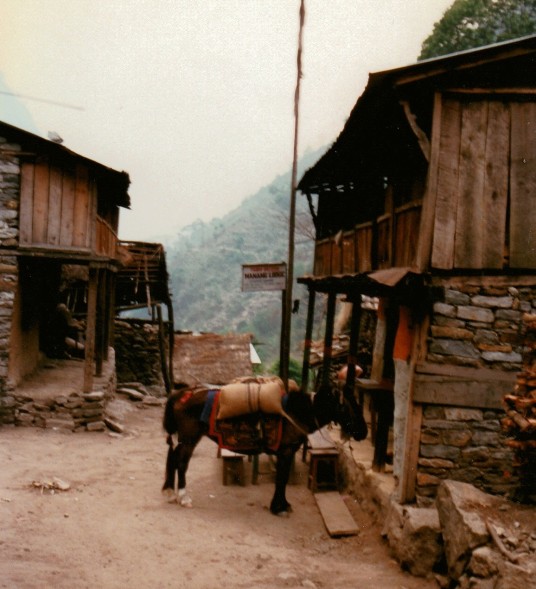
It was in places like this, that we really felt we could be in another century. Buildings of stone and beautifully carved wood, ponies for transport, no wheeled vehicles, and the two fellows to the right of the picture are busy crushing lengths of bamboo to a fibrous pulp, ready to make into paper.

It was in places like these, actually, that I felt I could just leave the world behind and spend the rest of my life. Yes, totally impractical, I know, but…


IMG_0042

We came for the high peaks, but the mountains lower down have a breathtaking beauty of their own.


IMG_0043

Sunrise on Poon Hill is a treat most trekkers ensure they don’t miss. Unrivalled mountain views, and in the spring the massed flowers of the rhododendron forests.


IMG_0044

Ah, yes. Did I just mention the rhododendron forests?


IMG_0045

Photos just don’t seem to do them justice.


IMG_0046

And then a few days later it was over, and we were back in Kathmandu…

…and that is a different kind of wonderful…
Annapurna Circuit, Nepal – 3

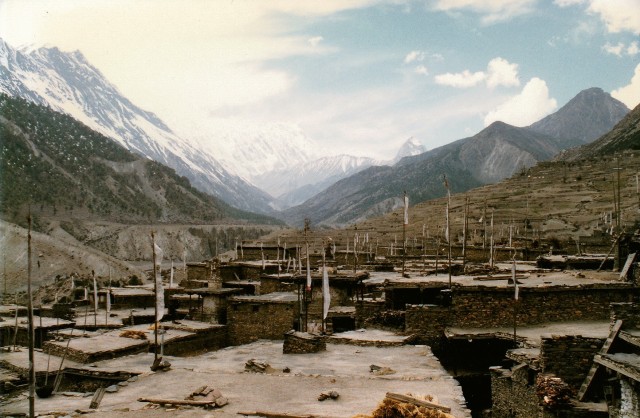
At Manang, we pitched our tents on the flat roofs of the buildings…

IMG_0028

…essentially, it is the only flat area in the village that doesn’t either have someone living on it or crops growing on it.


IMG_0029

A Buddhist temple in Manang. We took care to visit the priest and receive his blessing for the crossing of the pass in a few days time. The high pass- Thorung La – is at 5416m and  is the highest pass in the world, and who knows what the weather and fate might decide to throw at us.


IMG_0030

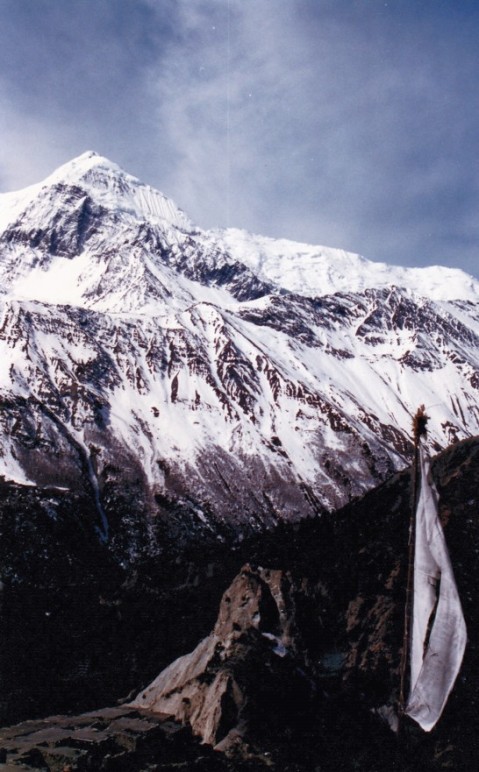
A view of Annapurna I (I think!) from Manang. Annapurna I is the tenth highest mountain in the world, but also one of the most dangerous. The reason for my uncertainty is that the route of the trek takes us around some twenty or so peaks, including Annapurnas I – IV, Gangapurna, Tara Kang and Khangsar Kang, all of which can be seen from the Manang part of the trail.


IMG_0031

Nomadic herders’ camp above Ledar, at about 4300m. Theirs is not an easy life.


IMG_0032

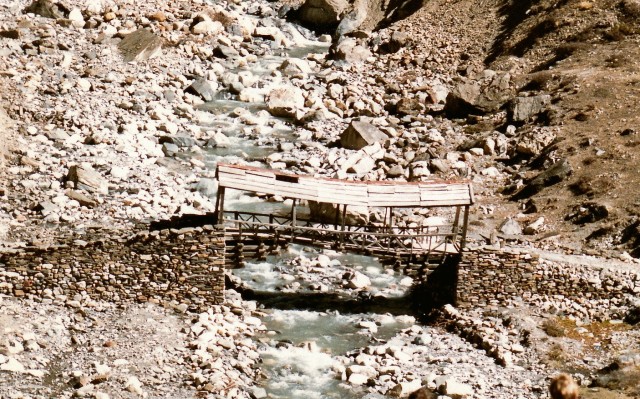
Bridge across the Khone Khola, near where we camped before crossing the pass. The bridge is covered to protect it from snowfall.


IMG_0033

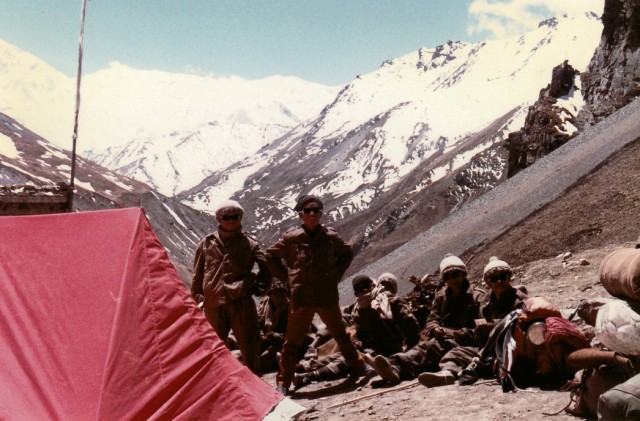
The porters at Thorung Phedi, where we camped before crossing the pass.


IMG_0034

A couple of hours later…


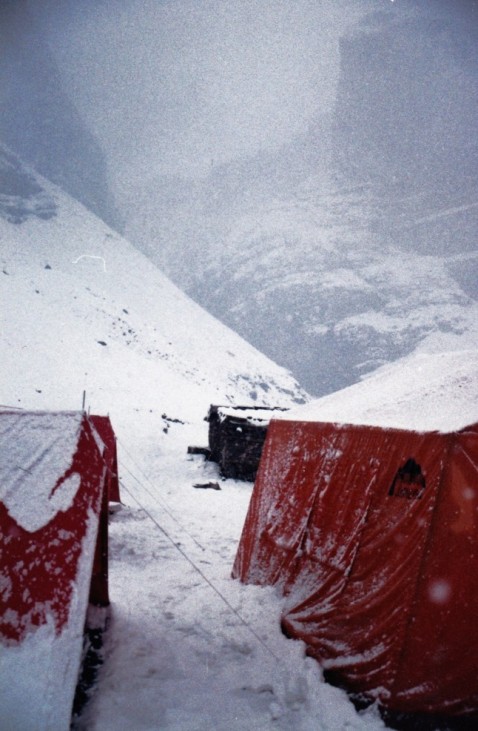
IMG_0035

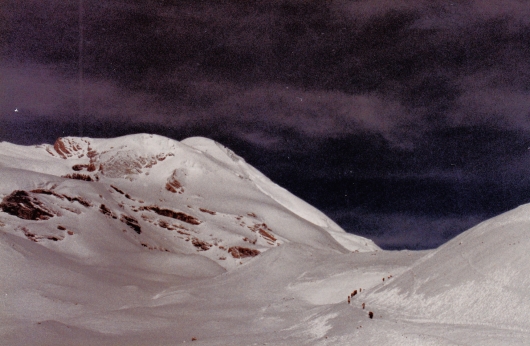
We were snowed in the next day (and you can get very bored stuck in a tent for a day), but the following day we set off at dawn to cross the pass (Note the small figures passing the first rock).


IMG_0036

Some of the rocky, icy, snowy, lumpy bits beside us as we crossed the pass.


IMG_0011

After several hours hard slog through the snow, and the pass crossed, we began descending the western side down towards the village of Muktinath.

Annapurna Circuit, Nepal – 2

We followed the Marsayandi River for most of the first half of the trek, from the second or third day until we left it at Manang to head for the high pass – Thorung La. More about that next time, though. Not much chat on this post, I’ll let the photos do the talking.

On a technical note, I have slightly boosted the yellows on some of these photographs, as this is the main colour that age seems to have leeched out. Unfortunately I can’t do much about those photos that are slightly out of focus (I blame my poor eyesight) or the scratches and other blemishes that show up here and there. It was quite difficult to keep dust and grit out of the camera, and back in those days we used, well, you know, film. Film doesn’t like dust and grit, especially when you wind it on.

school

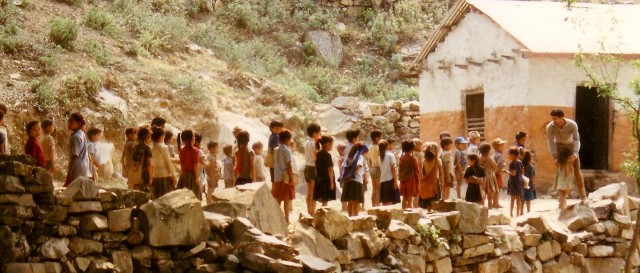
We passed a school…


IMG_0020

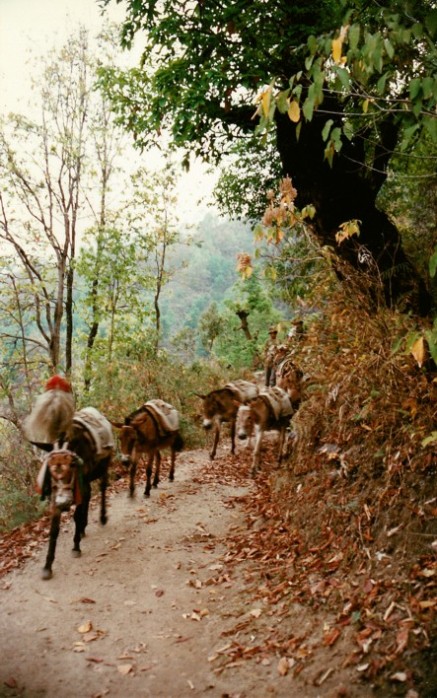
And a pony train returning empty from the mountains to pick up more goods…
 

IMG_0017

After leaving Bahundanda…


IMG_0018

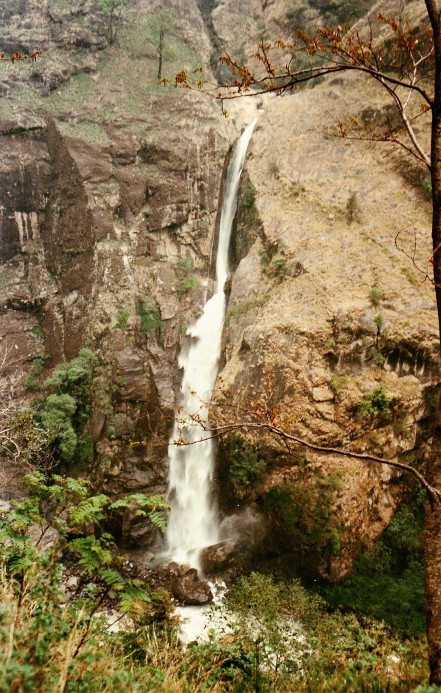
…we began passing high waterfalls. This one was just outside Sattale.


IMG_0019

In Sattale, where we camped on our sixth night.


IMG_0021

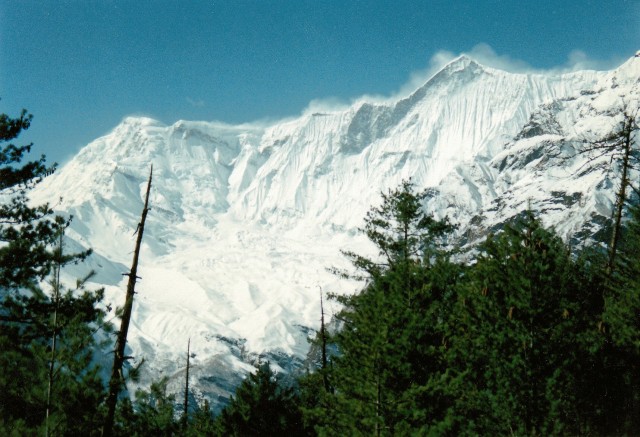
In Chame, we passed this beautifully carved mani stone. Chame sits at an altitude of 2670 metres, and the following day we were climbing steeply up to Pisang, at 3300 metres, and now we began to see the Big Stuff (this is a technical term, of course).


IMG_0023

The Big Stuff, although there was plenty more Much Bigger Stuff to come.


IMG_0024

And at Pisang we spent Night Nine of the trek.


IMG_0025

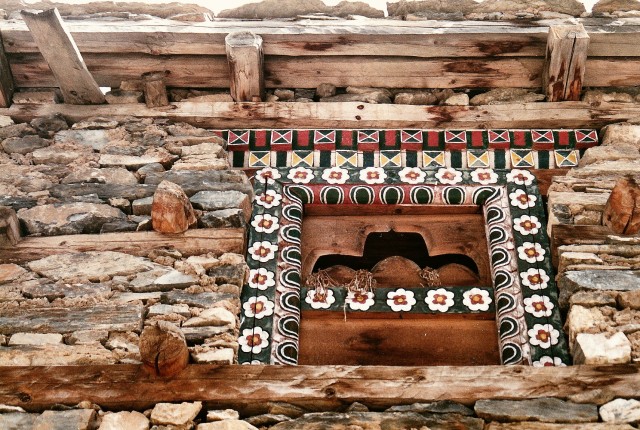
Carved and painted window in a house at Pisang.


IMG_0026

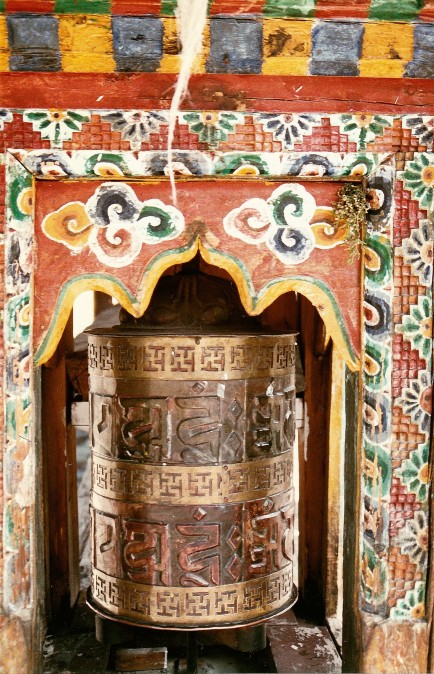
Large Prayer Wheel at Pisang.


IMG_0027

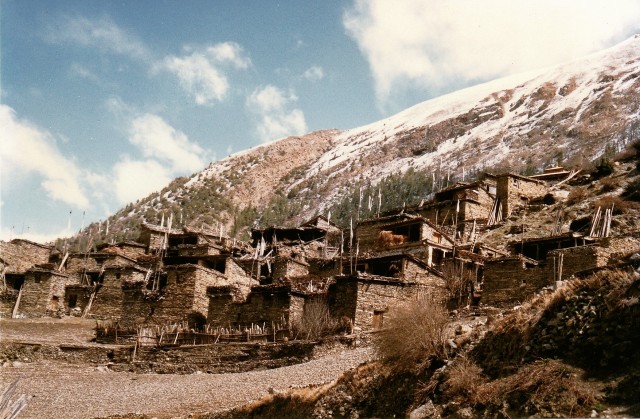
Pisang Village.


Annapurna Circuit, Nepal -1

In 1988 – thirty years ago! – I walked the Annapurna Circuit. This has long been regarded as one of the top ten walks in the world, and is certainly the walk I have enjoyed most. I put up a post about the circuit a year and a half ago (here) should you wish to read it, but as a celebration of that anniversary, I thought I would put up some more photographs over several posts.

Today, they are all from our second day’s walk.

IMG_0016

We camped the whole way, since there was virtually no accommodation on the route then. It was sometimes possible to sleep on the floor of a tea-house, but that usually meant an uncomfortable night in a very smoky atmosphere, and probably not a great deal warmer than a tent. It meant we were travelling with four guides, a couple of cooks, a couple of ‘kitchen boys’, and an average of fifteen to twenty porters (every so often one or two would leave, and others get hired from a village we were passing through).

IMG_0012

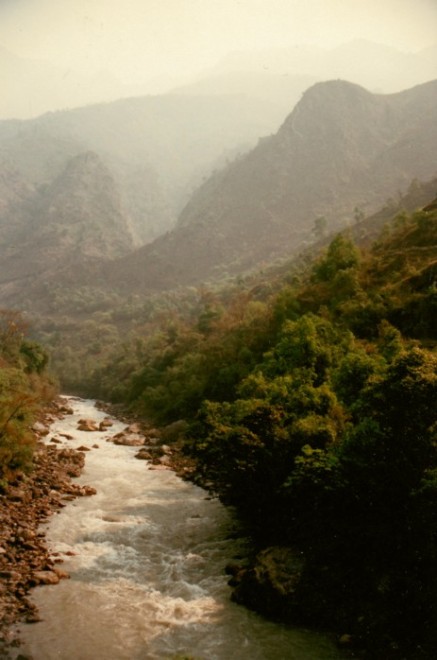
We began our walk from Gorkha, walking through the Terai – the sub-tropical forest region that stretches across most of Southern Nepal and much of the Himalayan Foothills of Northern India. This was a land of small rural villages, terraced fields carved painstakingly out of the hillsides, and, naturally, wooded hillsides.

Much of the woodland had already gone, cut both as clearance for fields and for fuel and fodder. It was already leading to much soil erosion and the degradation of the remaining soils. With the passage of thirty years, this can only have got worse.

On day 2 we walked from our campsite beside the Dharandi Khola to the settlement of Chepe Ghat.

IMG_0013

Transport in these areas was entirely by foot, usually in the form of porters who carried massive loads upon their backs. Occasionally by pony, or by bullock, but never by yak – they do not survive at these comparatively low altitudes. In 1988, walking the Annapurna Circuit was entirely on tracks and paths, since there were no roads of any description on our route. Today, there are motorable roads along part of it, but back then we did not see or hear a motorised vehicle for the duration of the trek.

IMG_0014

Building materials in these areas were, and predominantly still are, wood, thatch, and mud. Stone was used only in larger settlements.

The boy pictured above, incidentally, will now be in his late thirties.

IMG_0015

Wooded hillsides, with the terraced fields belonging to a nearby village encroaching.

IMG_0004

Rice paddy – terraced fields flooded for the planting of rice, the staple crop of the Nepal Lowlands.

Just Playing…

Take one photograph, play around with it a little, create 3 new ones, all different.

Add some autumn haiku, since it’s almost spring.

That was fun.

001b

Yellow maple leaves

Rattling wildly in the wind –

Autumn’s prayer flags


001c

Obsession with time

Is climbing trees in autumn

To get down the leaves.


001d

The last yellow leaf

Hovers above the brambles

Waiting for the wind.

All Hail The Conquering Hero!

I’ve never wanted to ‘conquer’ mountains.

img_0010

Or any other parts of the world, really.

I’ve always felt this was the wrong way to think of a journey. It was ridiculous to think I could impose my will upon a mountain, or on a desert, or indeed upon any part of my route. That I could, perhaps, somehow bend it to my will.

I feel it is more a case of preparing as best as possible, including mentally, and then perhaps said mountain will tolerate my presence; will allow me passage.

‘Conquering’ also carries the implication of invasion, of fighting, of strife. That is not the sort of relationship I want with mountains, or with any other place I choose to travel.

Certainly, in the past I have travelled at least partly with that mindset at times.

IMG_0005

Some of you may recall I wrote about an extremely foolish journey I took in Oman when I lived there almost 30 years ago (Mr. Stupid Goes For a Walk). Although I was running low on water, I pushed myself to the limit to reach the final ridge of hills on the route I had decided I was going to achieve one day, nearly killing my stupid self in the process. And although I achieved my aim, I didn’t feel victorious.

Only a bit stupid.

I prefer instead to think of myself as a visitor. And as a visitor, I need to have some manners. You do not expect to find the visitors pushing through your house and demanding to see this or to be given that, so I don’t.

I am not out to break records, nor to prove how tough I am.

This does not imply a lack of ambition, nor a lack of determination. Indeed, I have both – it’s just that the mindset is a little different. In particular, I give myself different priorities. I want to reach my goal, but if I don’t it does not matter. I think I’m more attuned to my own safety, and perhaps that of others. I hope I can be receptive to the feelings of others, too.

A good example in the climbing world is that of the mountains in Nepal that climbers are forbidden to reach the summit of, due to the belief that they are the abode of gods. Theoretically, a climber will stop some 10 meters or so short of the summit. Opinion is naturally divided over whether a climber would, or wouldn’t, in the absence of any witnesses, respect that ban.

I would respect it every time.

The mountains, of course, are inanimate. They do not wish me harm or otherwise. Neither do deserts or oceans. Even the most inhospitable of landscapes is neutral. It does not care whether I succeed in my aim to reach or traverse a particular part of it, and it will not hinder or help me in the attempt.

154

My feelings about a landscape are just my reactions to it, and if I should choose to give this landscape a kindly or vindictive character, I am only projecting my own feelings onto it.

This may give me comfort, or otherwise, but will make no material difference.

Maybe I am simply suggesting it’s good to travel with humility.

I have touched upon that before!

The Beastie From The Eastie

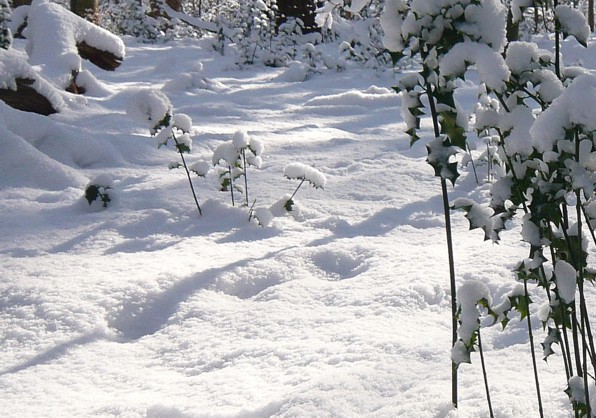
Yes, we’ve had some snow.

And oddly, despite this being the UK, lots of things are still working.

Although, to glance at the newspapers you could be forgiven for thinking the End Of The World was here.

But the sun was out this morning, so I wandered out for a bit of a bimble in the countryside.

view

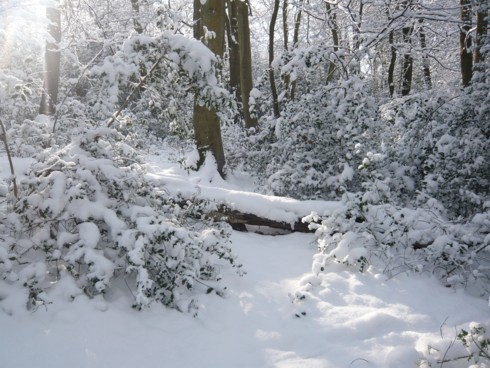
Fresh snow always feels magical.

I suppose this is because it is a pure white, because it sparkles in the sun and even in the night time it appears to glow.

It covers things up, but sits lightly upon them.

There is a purity to fresh snow that causes the landscape to feel cleaner and purer, too.

While the snow is falling, sound seems to be muffled and absorbed, so that one exists in a silent wonderland.

Shadows

It transforms a dull winter landscape into something bright and very special.

some paths are still clear

Some of the paths are still easy to find,

Some paths are less obvious

While others have become less obvious.

tracks

The animals have their own paths, that we are often unable to tread.

view 2

But there is a silence over everything, and every now and again a breath of wind sends a thousand sparkling snow diamonds drifting down through the branches of the trees.

some things are hidden

The snow hides much…

Footprints

But it reveals where we have been.

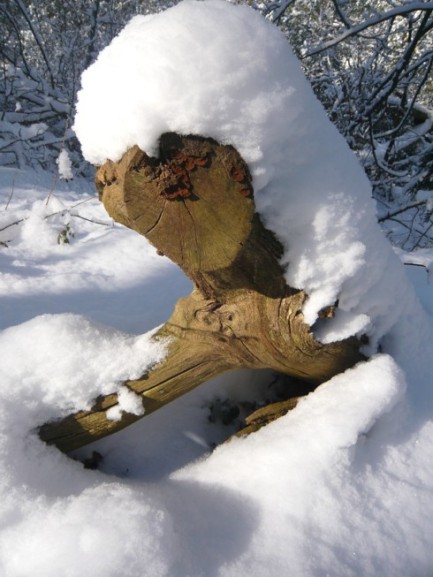
Some shapes become more mysterious

And it makes some shapes more mysterious.

Supermarket Gripes

P1040982b

I haven’t had a good rant for a while, so best I put that right.

I had cause to go into a large store of a well-known supermarket a while ago.

Make that a very large store.

An extremely large store. Obscenely large.

It was like a medium sized city inside.

Or possibly a large cathedral, which would feel more appropriate, since these things are the glorification of the worship of money. How so? This store, like most others of its hateful ilk, does not simply sell food, any more.

Oh no.

It sells clothes. It sells white goods. DVDs and CDs. Computers and accessories. Mobile phones. Books, stationery, and greetings cards. Items of furniture. Garden items. DIY stuff. It has started its own bank and offers everything from insurance policies to bank accounts. The list seems endless. If I had wanted a lighthouse or a wolf they would probably have got me one from out the back.

There seems to be very little that it does not yet sell, although I have no doubt that it will only be a matter of time before those few gaps are filled.

Its business plan is simple – put every single other type of shop out of business, and corner the market in everything.

I had the strangest feeling – the feeling that I was somehow diminished, just by being in there.

And the food items? The reason I went in there in the first place?

Apparently it is essential that we are able to choose from well over a hundred types of cheese which particular one we need – strong, very strong, beat your brains in, mild, sliced, grated, chopped in cubes, turned into string, low fat, no fat, cows’ milk, sheeps’ milk, antelopes’ milk, crocodiles’ milk, virtual cheese, and all produced by four or five different companies.

And that’s just the cheddar.

Its website tells me that it sells 343 different cheese products. I’m all for choice, but, good grief!

Interestingly, looking at a website for a rival big multinational, I find they sell 344 of these products. Perhaps I should go there, instead? I wouldn’t want to miss out on a shopping opportunity. They might be able to offer me a better ‘shopping experience.’ For my ‘shopping solutions.’

Why do advertising agencies have to come up with that drivel?

And that brings me to another interesting thought.

There is the push to encourage all shoppers to use the ‘self’ check-outs, but at least they seem to have reined back a little on the verbal persuasions. I was standing in line at my ‘local’ small branch last year, when I was approached by a member of staff who suggested I use a ‘self’ check-out.

‘No thanks.’ I said.

‘It’s okay,’ he told me, ‘I’ll show you what to do.’

I can see perfectly well what to do. I don’t intend to use it.’

‘Why not, sir?’

‘Because it’s sole purpose is to take away your jobs.’

‘That’s not so…’

‘I suggest you look at their website, then. Because I have. It clearly states that is one of the advantages of buying one.’

Damn the lot of them.

Fate

There is no such thing as fate; not in the sense that something was somehow pre-ordained to happen to us. Always, we have free will.

Always, we can make our own choices.

Untitled-Grayscale-02

People sometimes talk about momentous decisions, about arriving at a crossroads and having to make a choice of some sort, but every moment in life is, in reality, one such crossroads. Even the smallest choices, such as whether to have tea or coffee, or whether to cross over to walk on the sunny side of the street, might have major consequences. Consequences we cannot foresee.

And we do not see the consequences of an alternative choice, because we always make the choice and move on; we can never go back and make a different decision and thereby see how things might have turned out so differently.

And sometimes, those decisions we assume are going to be momentous, are nothing of the sort.

Being in the wrong place at the wrong time is not fate, it is chance.

Fate itself is no more than chance.

It is the path that we have chosen, and every single moment we can make choices that will change our lives for ever.

Exciting, huh?

The Collector

Inspiration, writers’ block, ideas…I could write about all or any of these topics. Instead, I thought I’d simply post another poem – plus, of course, a picture (with far better weather than we’re having here) – and let it do the job instead.

337a

I’m a collector of images long stored in my memory,

A desert inferno of razor-sharp rocks.

A mountain breeze rippling an icy cold puddle,

Thick mists and thin soups, flowers, trains, and old shoes.


I’m a collector of memories, both mine and ones borrowed,

The harrowing journey, the lovers’ first kiss.

There’s betrayal and loyalty, flatulence, hope,

There’s a child being born, and a wolf at the door.


I’m a collector of stories, the stranger the better,

Believable, odd, and ridiculous too.

Close to home or historical, alien, fanciful,

Some to keep secret and some I can tell.


I’m a collector of moonbeams and of chance reflections,

A collector of sadness and bittersweet pain.

A collector of strangely shaped stones in a circle,

And dreams that tell stories I don’t understand.