In Another Lifetime I Could Have Been…(3)

…a tramp.

My wife often says I’m in touch with my inner vagabond. I’m taking that to mean that I enjoy walking, unless she’s referring to something else. My dress sense, for example. But yes, I love walking, especially long distance walking, but most of all I like to simply wander. There is a tremendous pleasure to be had by just setting off for a long walk without any particular destination in mind. Taking the more interesting-looking path as we go.
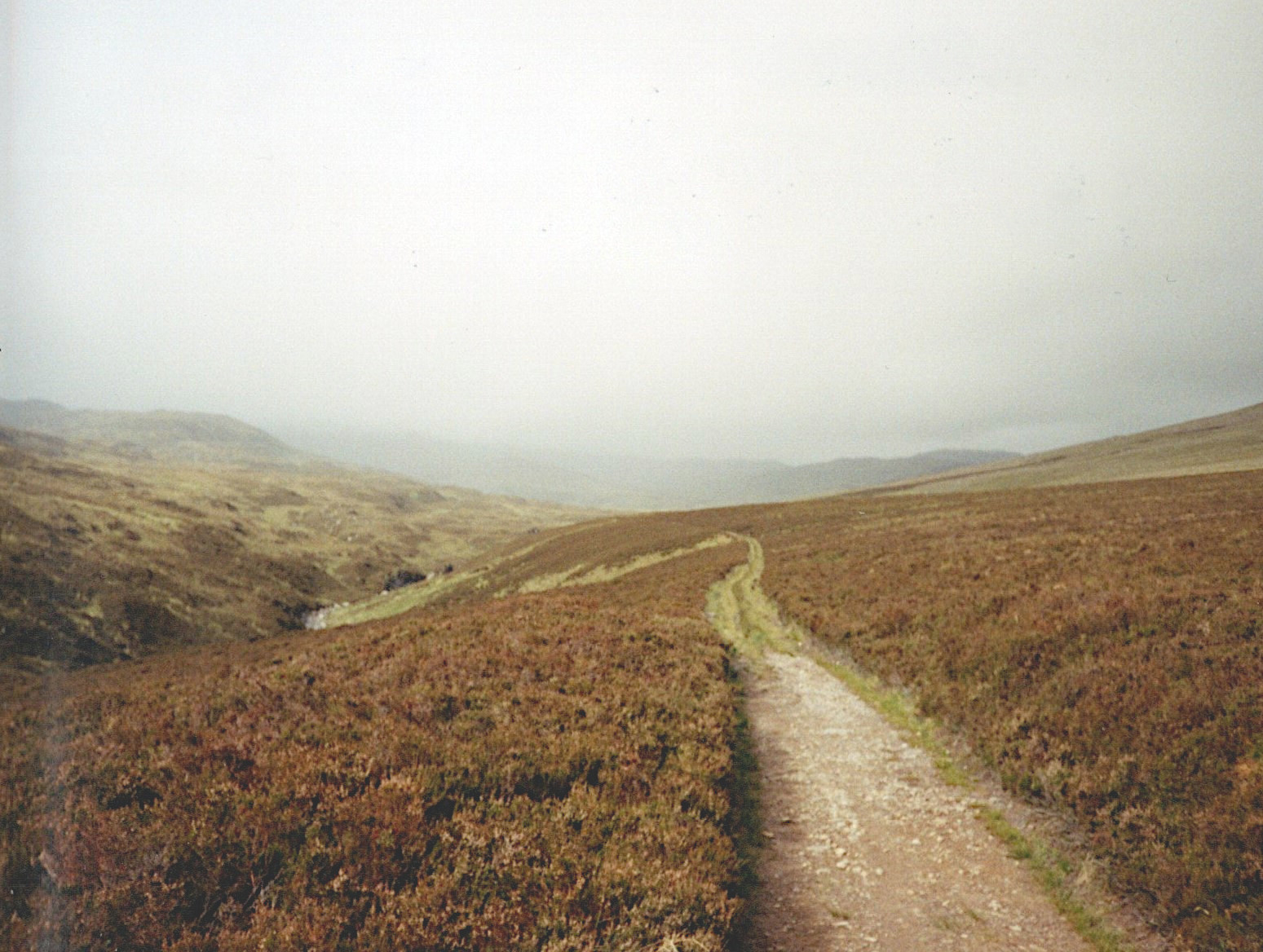
Of course, it’s not always possible to travel this way. We need to have some sort of destination in mind unless we’re prepared to just settle down to sleep wherever we find ourselves at nightfall. Usually we don’t have the time and the freedom to travel like this. Some people may also find it unnerving not to have board and lodging all planned in advance.

I’ve only done it occasionally, I must admit, but found it remarkably liberating when I did. There was no pressure to reach a particular destination by nightfall, I just had the freedom to wander along at my own pace until I felt I’d had enough for the day.

Even then, of course, some planning had to be done. Would I carry food or rely on reaching somewhere I could get a meal of some sorts? Would I carry shelter? Extra clothes?

But that is not exactly tramping, of course. It is just an exercise to be enjoyed (or otherwise) for a short period. It’s not a permanent lifestyle.

I’m sure that very few folk have deliberately chosen tramping as a lifestyle, but I’m aware there are some who have. This leads to the obvious question – why? I suppose all of us, at some time, wonder what is really important in life? Riches and property are, indeed, a burden in many ways, as well as conferring the obvious advantages in life. Some people just didn’t want that lifestyle. Some didn’t want the responsibilities of a settled life, with or without a family. There were always some folk who could just never settle anywhere for long. Most, though, would have ended up tramping through loss of employment and / or home.

Certainly I understand the difficulties of the tramping life, especially when one is no longer young. And I certainly wouldn’t want to be trying to survive as a homeless person in a city – rightly or wrongly, I think of tramping as a rural phenomenon. The whole point of it was to be on the move, rather than staying in one place. I doubt it would be possible today, with so many laws against that kind of lifestyle. There were, of course, laws against it in the past, too, but almost certainly much harder to enforce. I think, too, society is just ordered differently today. We think differently to how we did fifty or a hundred years ago. A tramp turning up at a farm today looking for a couple of hours work in return for a meal would get short shrift, and I can’t imagine any householder regarding one with anything other than hostility.

Again, I can’t imagine anyone choosing that lifestyle through the winter. But tramps used to learn of places they could settle for the winter, often carrying out odd jobs in return for permission to sleep in a shed or a barn and the odd meal. In this post I’m talking specifically about Britain, but I suspect it applies equally to hobos in America, swagmen in Australia, and possibly others I’m not aware of elsewhere.
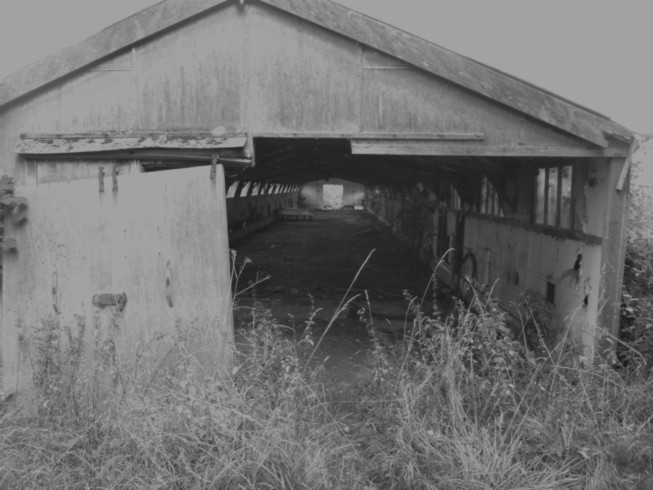
And it would be unlikely to be a long life. But there were always some who chose it as a way of life rather than being forced into it by circumstances, and in another time I might possibly have been one of those.

A Bit of Digging

Well, they arrived yesterday.

I have finally got my family history book formatted and printed, and I reckon it looks quite decent. So all I need to do now is to get it posted out to family members.

While researching all this, I naturally made a lot of discoveries. Some were certainly more unexpected than others, though. From previous research my father had done, we already suspected that my great grandfather had changed his name, possibly on a whim, from Prater to Canning. I was able to confirm this by, amongst other things, a comparison of various dates of birth in his family. This immediately removes the possibility of my searching back to see whether my name has any noble / famous / important roots. This is something that matters a lot to some people, although obviously only along the male line, which is why it seems to matter much more to men.

Although I turned it up too recently for the book, I have learned details about my father’s life in WWII which I would otherwise never have come to know. I had no idea – and seemingly nor had anyone else in the family – that from 1940 until joining the regular army in 1943 and being posted to India and Burma, he had been part of what had been dubbed ‘Churchill’s Secret Army’, soldiers trained to operate behind enemy lines in the event of a German invasion of Britain. Fulfilling the same role as the French Resistance, they would have carried out acts of sabotage and hit-and-run attacks to slow the enemy advance. it was only after that threat had receded that he joined the ‘Regulars’.

And then, less unexpectedly, there were the stories of extreme hardship: the early deaths, the poverty, the workhouse, tuberculosis and pleurisy…

Of course, if it was possible to search back far enough, we would all find we had a common early human ancestor, which gives the lie to the importance of race.

Does any of this research really matter? Well, in some ways, no. Does it sound crazy if I say that despite all my work, it does not matter that much to me? I’m very much in two minds over this. A lot of this felt more like an intellectual exercise than a personal quest. It was interesting to find out where my great grandparents and their parents had lived, for this felt just close enough to be a part of me. But before them? And especially when I could discover nothing more than their names and some vague dates? No, not really. Throughout this project I have been especially keen to be able to put names to old photographs, for this seemed the only way to make these people come alive again, or at least begin to. That I’ve been able to positively identify some of them feels more satisfying than pushing a line back another hundred years, although I do have nearly every branch back at least to the 1700’s, but in every case it is the stories I’ve found out about these people that matter.

But back to my question. Does any of this research matter? I do think it has the potential to bring us a little closer to our families by emphasising our shared history, and I’ve greatly enjoyed long discussions with cousins about our various researches and discoveries. But beyond that? Well, I’ve enjoyed learning the social history involved with my family, the realities of how people actually lived in the towns and countryside over the last few hundred years. And as well as emphasising my connection to my extended family it has also, as I wrote a few month ago, given me a greater sense of connection to the land where I live.

I have enjoyed exploring the past, but I’m not going to live there.

Review of Shadowlands by Matthew Green

In this book Matthew Green charts the decline and eventual abandonment of eight British settlements; a diverse selection ranging from the Stone Age settlement of Skara Brae in the Orkneys, through several Medieval villages and cities and up to the twentieth century, to an area emptied of its inhabitants during the Second World War and a village that was abandoned when the valley it inhabited was flooded to create a reservoir – although in that case ‘abandoned’ is the wrong word, since that particular story is a harrowing tale of folk driven from their homes at the diktat of decision makers far away, not even of their own country.

In each chapter he tells the story of the decline of the settlement drawing upon written records for all but the oldest, Skara Brae, for which he relies upon archaeological evidence, and some of the more recent, for which he uses a mixture of eye-witness accounts and the testimonies of those who had heard their stories at first hand. Of all the stories here, that of Dunwich is probably the most famous, with its myths of bells from long-drowned churches being heard far out under the waves, although the popular description of Dunwich as a ‘drowned city’ is inaccurate, as it fell away into the sea as the cliffs beneath it were eroded away. But much is known of Dunwich, with many extant records and maps of the city, enabling Matthew to chart its decline and eventual end in some detail.

Hirta is the biggest island of the St Kilda archipelago and was occupied for at least two thousand years until 1930, when the final thirty six islanders voted to leave. By then, most of the families and younger residents had left for the mainland, and their traditional way of life had become unsustainable. Until a couple of hundred years ago the islanders were virtually cut off from the rest of Scotland, due to the distance and the difficulty of making a landing at the island. Existing almost exclusively on a diet of seabirds (remarkably, they were apparently lousy fishermen!), the islanders lived a remarkably difficult life and it is no surprise that as they were exposed more and more to the outside world, more and more of the islanders opted to leave for a better life.

I found I was drawn deep into these stories not just because I found them so fascinating, but also because of Matthew’s skilful and easy style. A very well researched and beautifully presented book, I’d definitely give it five stars out of five.

Rain of a Completely Different Water

About an hour after I wrote my previous post, we finally had some serious rain. Real, well-intentioned rain. Rain that took its responsibilities seriously. It even managed a little bit of thunder thrown in every now and again, although nothing too strenuous. So as soon as I published that post, really, it had been overtaken by events. Because the trouble with writing about rain, especially in Britain, is that by the time you’re done, it’s doing something quite different and making you look a bit foolish.

And this morning we have a light, steady rain again, but this time it feels very different to that of yesterday. Perhaps it’s just because the last twelve hours have been wet, and this weather has now established itself as a new, if temporary, normal. The day is bright and grey and, I have to admit, I love it. At this time of year the greens of the countless new leaves on all the trees and bushes and smaller plants glow with a wonderful brightness, even under the grey and the gloom. It is a day to put on boots and a light waterproof (it’s still very warm) and go out for a long wander.

So that is what I think I’ll do.

Winter – 4

Mid-winter is the nadir of the year, and although winter does not ease its grip on the land for several months yet, at least the long, slow, lengthening of the days begins.

I have no idea how arbitrary the date of 25th December is for our celebration of Christmas day (Orthodox Christians celebrate it on January 7th, due to the difference between the Julian (old) calendar and the Gregorian (new)), but it seems to equate well to the winter solstice on 21st December, in that by the 25th it would be apparent to observers that the days were just beginning to lengthen. Is that when our ancestors celebrated? Did they all collectively hold their breath until the priests could confirm the days were getting longer again? Or did they just work on the basis of ‘it’s the Solstice today. Let’s go for it!’? I’m inclined to think it would be more the latter, with the priests declaring ‘It’s today! Time for excessive eating, drinking and unbridled sex!’

Or perhaps a bit of chanting and a sacrifice or two. Who knows?

Would our Neolithic ancestors have kept a calendar in the sense of checking off every day the way we do? I suspect not. Tools such as aligned stones would have done the job for them, confirming it was now the shortest day or the longest one. I don’t suppose there would have been any need for more refined measurements – it would be obvious to them when fruit or nuts or grain were available to be gathered. Obvious when they would need to slaughter livestock. And for that reason, I think points in time such as the solstices would be marked purely by ritual and / or celebration.

We don’t really know how they marked it, of course. We know a lot about how the Victorian writers supposed it was marked – the sacrifices, the wild dances, the bacchanalia, (and it is curious how many of their illustrations seemed to include young maidens dancing wildly in flimsy shifts) – and there is more than enough written about variations on this theme by those who see themselves today as druids, as followers of the old religion. What this old religion is, though, is a somewhat hazy and fluid animal, dragging in everything and anything from ley lines and animist gods through to Morris dancing, via witchcraft, mind-enhancing drugs, depending on who you speak to. Again, we don’t know.

In many ways, it drops comfortably into the melange of New Age beliefs, essentially being whatever the believer wants it to be…although that is something most of us could also plead guilty to, no matter what religion, if any, we follow.

It may well have been marked differently in different parts of the country (I’m really just thinking of Britain, at the moment) – different rituals in the much milder climate of the south west than in the far harsher one of the north, for example. And over the millennia they probably will have changed, being influenced by both outside factors (contact with others who did things differently, perhaps the slow change of climate) and inner ones (changing ideas about gods, relationships to ancestors, size of population).

But when Christianity came along, it substituted its own story of hope and celebration for what was there before, which is why we have it then rather than around March, which is when the internal evidence of that particular Bible story would place it. As the followers of every new religion always do, they found it impossible to prevent an old festival taking place, so instead they usurped it for their own ends.

The Compleat Trespasser by John Bainbridge

This time, the review without any distracting rants. Probably.

51pfb0Ihk8L._AC_UY218_

Sub-titled Journeys into Forbidden Britain, it immediately sets out its agenda: it is both a potted history of how the land was stolen from the inhabitants of Britain, and the long struggles to regain access to much of it, with numerous anecdotes of the author’s own escapades trespassing.

The story of how the inhabitants of Britain came to lose their access to the majority of the land is a story that has been repeated throughout most of Europe and beyond. Land forcibly taken by invading armies and distributed partly to their soldiers, but mainly their officials or nobility. Land enclosed by lords and kings for hunting purposes, burning villages and evicting their inhabitants from the land. Land taken by acts of Parliament to further enrich the gentry. Land given by kings to the established church, so that peasants might labour only to feed the rich and corrupt clergy.

Land that has been kept private and jealously guarded both by strict and cruel laws, and by equally cruel methods by the landowners themselves. Thus laws that deemed the starving and dispossessed villager might be executed for taking a rabbit from land he once lived on, to feed his family. Thus the mantrap that would cut a mans leg off. Thus countless thousands beaten and sometimes killed by gamekeepers and owners.

When I attempted to review this a week ago, it ended up turning into a full-blown rant against grouse moors (I do rants so well, these days!), but even today it is not just grouse moors that are fenced off just so the idle rich can enjoy slaughtering wildlife – there is plenty of woodland and more open land enclosed around the country and dedicated to pheasant shooting, for example. There are country houses with huge estates. Land taken by the MOD for training purposes, and never returned. There are many landowners determined to block access to legal rights of way. Although the Countryside Rights of Way act of 2000 was supposed to restore access to most of the countryside, there is still much that is off-limits.

Yet there are good landowners, too. The tales of John’s own trespassing include several encounters with sympathetic landowners happy to see walkers on their land, with the obvious proviso that they cause no damage.

The improved access rights we do have today were earned the hard way. Since Victorian times there have been mass trespasses intended to both bring the issue into the public forum, and to try to force change. The Kinder Trespass of 1932 is probably the most famous, yet many preceded that. It is thanks to the countless trespassers and campaigners of those days that we have improved access rights today.

The book finishes, though, with a plea. Firstly to campaign for further land reform, for better access rights – rights that are enjoyed in Scotland, but not England, Wales or Ireland. And secondly with a warning – the current government campaigned at the last election on a promise to criminalise trespass, so that anyone who deliberately or inadvertently strays from a public footpath onto private land might find themselves on a charge in a criminal court.

Anyone who enjoys the countryside in any form, enjoys spending time there, and walking in it, should read this book. It provides a very good, clear, account of where we are, how we got here, and what has been done to get us someplace better.

But also that we still have some way to go.

Review of Wilding by Isabella Tree

I wrote this just over a month ago, and never got around to posting it, for some reason.

91wfR0v1kNL._AC_UY218_ML3_

I have just finished reading Wilding, and I am almost overwhelmed with several feelings. The first is that I need to come back to this book after a month or two and re-read it, since there is just so much to take in. The second is that this book presents so much information that appears new to us in the twenty first century, yet was common knowledge some fifty to a hundred years ago and was hiding all the while in plain sight, as well as some new conclusions that were also, really, hiding in plain sight. And third, a feeling this might just be one of the most important books I have ever read.

This means I am attempting what appears to be ridiculous, and that is to review a book I don’t think I am yet ready to fully appreciate. But first impressions count for a lot, so here goes, although to keep this brief enough for one blog post, I can hardly even skim the surface.

Knepp is an estate in Sussex, England, which the author and her husband farmed for many years the way most farming is done nowadays – intensively. But as returns gradually diminished and the soil became more and more degraded despite the application of the usual chemical cocktails, they decided in desperation to take a leap of faith and re-wild part of the farm. The reasoning was they were going broke farming traditionally, so something new was needed – perhaps something revolutionary. What had they got to lose?

It was a huge learning curve for them, and many of the steps they took had unforeseen consequences. By allowing the land to revert to the condition it would have been in thousands of years ago, they discovered that many of our birds and insects, for example, actually favour environments and foods different to those we have assumed they do. Interestingly, on reading books written a hundred years or so ago about, for example, birds, they were simply rediscovering what was known then, but overlooked since. Just one example – pigeons do not actually prefer the seeds of cereal crops, but wild grass seed. The fact that they eat so much cereal seed today is due to the destruction of the areas of wild grass they would gave grazed before.

Probably the most important conclusion to take from this book is that a return to a more traditional, environmentally-friendly form of farming is not only better for the environment, but in the long term is even better for farmers who might be initially worried about losing out financially. It’s a win-win situation in that it would enable much wildlife to recover from its precarious, endangered, situation, it would reduce the risk of flooding during periods of heavy rainfall, restore soil fertility without pumping massive loads of chemicals onto the land and, consequently, into the water systems, and reward farmers with not only a better environment but healthier crops and stock which, in turn, would be healthier and more nutritious for the consumer.

Along with most others, I have always understood that back in the Neolithic period, when man was first making his mark upon the landscape in what would become Britain, most of the land was covered in thick, dense, woodland. I also understood that the large wildlife here – the megafauna – consisted of the likes of elk, cattle (aurochs), wild horse, mammoth and the such-like. Basically the kind of large animals that graze and browse the open, lightly wooded, grasslands of the African savanna today. Could we really not see the contradiction in this? This strongly suggests that the natural post-glacial vegetation of the British Isles was an open woodland, rich in undergrowth and grass, maintained by the regular grazing and browsing of this megafauna.

And from that, we understand that much of the habitat association we make today with our native wildlife is just plain wrong – we see birds and animals favouring a particular habitat and assume that is their preference, rather than understanding we have forced them into this by removing their real preferred ones.

There is so much to take in and think about in the this book, as I said at the beginning of this post, that a single review can only begin to hint at the mass of information to take in.

If you have any interest at all in our environment and what we have done to it, this book is an essential read.

Wordy Wednesday 5

Words.

land

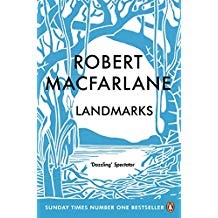
On World Book day I blogged about the wonderful collaboration between Robert Macfarlane and Jackie Morris, The Lost Words, and in this I suggested that perhaps it grew out of Robert Macfarlane’s book Landmarks.

But Landmarks is a marvellous book in its own right, and has much the the same aim as The Lost Words, in that it introduces the reader to scores of words it is unlikely they will have come across before.

These are almost exclusively words from Britain used to describe objects and phenomena in the natural world, be it a word peculiar to East Anglia for a small stream (a currel, since you ask), a word from Sussex for a heap of dung (a maxon), or, from Suffolk, a measure of herrings or sprats (a cade).

Most of these are obscure because they are words in local dialect, and therefore only used in a small number of places, or have fallen into disuse and been virtually lost over the years, or are very specialised words that it is unlikely the majority of people would ever come across.

The book is filled with background stories by the author, either of his own experiences or those of other writers and scholars with a deep love and understanding of words and the natural world, which makes the whole book far more than simply a glossary of lost words.

The reader is introduced to a wealth of knowledge and experience on all aspects of the subject, from seas and rivers to woodlands and mountains, farmed land, the strange no-man’s land at the edge of settlements, and even deep underground.

Personally, I have been trying to drop the word smeuse into conversations since reading the book. It is a Sussex word, and so was / is in use fairly locally to me and means…well, read the book and find out what it means.

Oh, and maxon. Naturally.

Certainly a five star read.

World Book Day

World Book Day, celebrated today, 7th March, has the declared aim: Our mission is to give every child and young person a book of their own.

It is celebrated in the UK, although I have no idea whether this is an idea that has been taken up elsewhere, and would be interested to find out.

Schools, in particular, seem to have embraced the idea, with children encouraged to attend classes dressed as their favourite book or literary character. Thus hundreds of Harry Potters and Willy Wonkas and Very Hungry Caterpillars march into schools across the country once each year.

A splendid thought!

Which brings me to a marvellous project aimed at schools across the country.

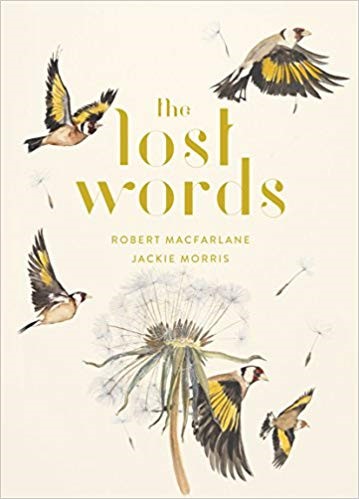
Growing, in a way, out of Robert Macfarlane’s brilliant book Landmarks is The Lost Words, a collaboration between Robert Macfarlane and artist Jackie Morris. I can do no better than to quote Jackie Morris on the reasons: It had come to the attention of some who work in the world of words that certain words were slipping out of common usage. As a result when it came to amend the junior dictionary for a new edition these words were gone… These words included bluebell, conker, heron, acorn and perhaps the one that cut the deepest for me, kingfisher.

lost words

So The Lost Words is aimed towards children, to encourage them, through the words and paintings of the book, to discover the natural world that so many of them know nothing of.

So many grow up today without any meaningful contact with the natural world, and this book aims to encourage them to know and to love and protect it.

And the project – the campaign, really, in a very ad hoc way, is to raise money where necessary to place a copy of the book in every school in Britain. It has already been achieved in Scotland, I understand, and hopefully, it will soon be achieved in every other school in Britain.

Pitfalls for Writers – no.6: Historical Accuracy


‘Dear Mr. Author.

Whilst reading your book ‘Oh what fun and laughter we had during the time the Black Death wiped out our village’ the other day, I was disappointed to notice that you mentioned July 23rd 1449 as having been a sunny day in your fictitious village. From the descriptions you provide, you have clearly located said village a little to the south of present day Norwich, and my extensive researches prove that July 23rd 1449 would have been a rainy day there.

Yours disgruntledly,

A Pedant.’

How accurate do you need to be, as a writer, with historical facts?

If you are writing a non-fiction book, you have to be scrupulously accurate, no matter what subject it is.

End of.

On the other hand, if you are writing fiction, you have a certain amount of leeway. First of all, though, it is worth saying that if you sell enough copies of your book you will eventually attract correspondents like the fellow above. Is that something to worry about? Only if they get to know where you live, perhaps. Otherwise, send them a nice reply, thanking them for their diligence, and assuring them that you will correct your dreadful fault in the next edition. On the other hand:

‘Dear Mr Author.

The Black Death was actually sweeping the country in 1349, not 1449.

Yours smugly,

A Historian.’

This time, you’ve screwed up.

And yes, it matters.

Very minor inaccuracies are bound to slip through, and very few people will notice them. And if they do, they will not think anything of them.

Except for Arthur Pedant, of course.

The big things are another matter. Imagine reading a novel set in the days around the Russian Revolution, and then the author tells you that the Bolsheviks rose up against the state in 1927 instead of 1917. Or that they were led in the beginning by Stalin. Immediately, the author’s credibility has evaporated, as has their story.

Because the reader no longer believes the author, and they no longer accept their story.

The moral here, then, is don’t skimp on the research!

It is possible to radically change the facts of history, but the difference is that to do this the author must present it as the whole point of the story. In steampunk novels, the whole history of Victorian Britain is altered, but the reader accepts this as it is the premise behind the genre. It is seen not as a mistake, but as a narrative invention.

In many science fiction novels, the premise is a future that is the result of a different history than that which actually happened. For example, the Germans won the Second World War, or of different worlds or dimensions in which history diverges from the accepted version. Again, this is accepted by the reader, as it is the premise that the story is set on.

It is possible to break this rule, but to do so the author has to break it in such a way that it is quickly obvious that they have done it deliberately, and not by mistake.

One might, for example, set a novel in Victorian England that is not steampunk – a detective story, perhaps – but in which Queen Victoria is assassinated in 1860. As this is something that no one could possibly put in by accident, it will be seen as part of the invented narrative and accepted.

Well, probably. Where is Arthur Pedant?