The Sussex Downs Murder – Not Really A Review

24958623

For anyone who loves the English South Downs – and whodunnits – this book makes an interesting read.

On the one hand, it is a fairly average 1930’s detective murder mystery, although I have certainly read much worse, but on the other it provides some marvellous insights into the South Downs in the area specifically around Chanctonbury Ring in that time, which is really what took my interest.

Personally, I prefer murder mysteries involving ‘normal’ people, rather than the typical country house full of assorted Colonels and ladies and royalty and such-like, so popular at the time – other than the thought of bumping off the Upper Classes, of course! But this book delivers in that it is set on a downland farm, where the farmer goes missing, believed murdered. It even has, as a cover, an adaptation of one of the fabulous Leslie Carr railway posters of the 1930’s – what’s not to like?

The introduction mentions its ‘sense of place’, and the writing seems to me especially good at conveying an accurate feel of the landscape. One thing that comes over very strongly is the emptiness of the countryside at that time. The Downs have been sparsely inhabited since Roman times; before then, much of the population chose to live on the higher, drier, lands of the chalklands of South and South East England, away from the forested and frequently marshy lower areas where travel was difficult and clearance very hard work. After the arrival of the Romans, however, all this changed, and since then the chalklands have been left largely to a small population living mainly by farming sheep.

We now have many people visiting for leisure purposes and on fine days popular routes such as the walk to Birling Gap from Eastbourne (or from convenient car parks much closer!) may easily see hundreds of visitors striding along the footpaths and hanging off the edge of the cliffs taking selfies (other stupid ways to kill oneself are available). On the same day, though, nearby footpaths may see no visitors at all. It is still a sparsely populated area.

John Bude evokes this sense of emptiness well. His descriptions of the roads and paths on and around the area really allow the reader to feel this. His characters walk the lanes and roads of the downs frequently without meeting anyone else on their journeys. Farms and houses are ‘isolated’, and even at a time when most people would travel by public transport to cover any distance, the population is so small that when questioned by the detective on the case, a bus conductor can remember who was on his bus several weeks before.

There are four lime kilns near Washington, on the edge of the area described in the story, which I suspect were the inspiration for the lime kiln featured on the farm in the book. No spoilers, but you might well guess their relevance to a murder mystery.

But it is the descriptions of the roads and paths that particularly take my interest, roads and paths virtually empty of footfall or traffic even during the day, emphasising how lightly populated the area was, and still is today, to a degree. Other than popular footpaths such as the long distance South Downs Way, and those footpaths running between popular tourist spots, it is still easy to find solitude in this quiet area of the otherwise heavily populated South East England.

Sojourn on Dartmoor

I’ve been on Dartmoor. My goodness, it was nice to get away.

016a

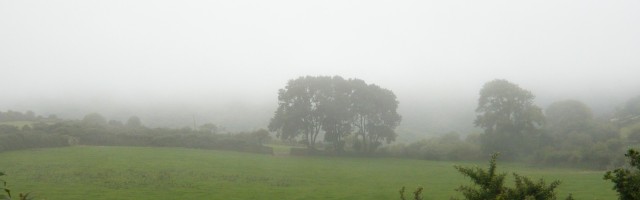
Dartmoor is frequently misty and moody, as it was on one walk.

021a

Yet it can often be fine and sunny. But whichever it is, I always think of it as unfailingly beautiful.

049a

The sheep get everywhere, including on the top of old spoil heaps from derelict mine workings.

036a

Hooten Wheals is one such disused mine, with a plethora of remnants of old buildings and machine structures still extant. I believe the circular structures are the remains of buddles, circular shallow settling tanks used to extract the minerals from the rock.

056a

There are also plentiful remains of farms, houses and all sorts of settlements, from prehistoric times through to the recent past. These buildings at Swincombe are probably not particularly old.

052a

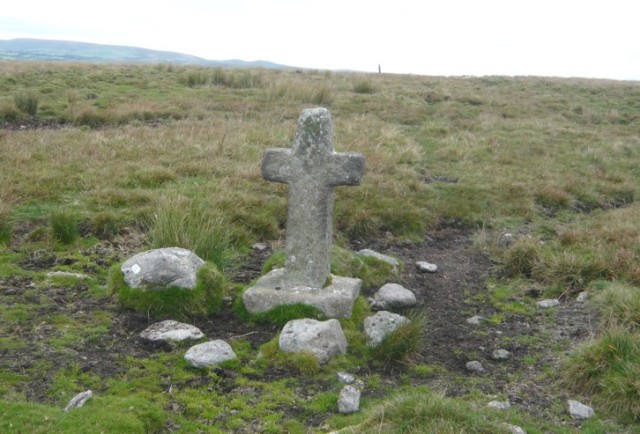
Old stone crosses are found all over Dartmoor. Their uses include marking the boundaries of the influences of various abbeys and waymarking paths. This one (and the one in the distance) are on Ter Hill.

042a

And because Dartmoor is so open, you get skies.

Wonderful skies.

Sound The Retreat!

My reader will probably not be too surprised to learn that I have been on retreats a couple of times.

After all, someone who gripes about the rush and noise and pressures of the modern world, and who has anxiety issues, tends to spend quite a lot of time yearning for silence and solitude. Because there are, quite frankly, times when everything just gets too much to cope with.

Obviously there are many ways this might be achieved; perhaps I could commit a serious crime and then misbehave in gaol – that would probably lead to a good long spell in solitary, although I can think of several reasons why this might not be the ideal solution.

I could lock myself in a room and refuse to come out – from experience, though, that just leads to unpleasantness and tears. It worked tolerably well when I was a child, but as an adult I can see why it might not look so good.

Whenever I get the opportunity I go for a long walk. Unfortunately, if it is near my home I tend to be surrounded by dogs and dog walkers – not that’s there’s anything wrong with them, I hasten to add, but it’s hardly peaceful. There are several dog owners around here whose voices can not only be heard several counties away because of the sheer volume, but can also smash windows by pitch alone. And I soon get back to roads and so-called civilisation, no matter which route I take.

Then there are lots of other walkers bellowing into mobile phones: ‘Yes, it’s lovely and peaceful out here! Now, let me just yell a few personal and private details at you and anyone else within earshot! What? Yes, I’m still a complete tosser! Why do you ask?’

Going further afield takes more time, and that’s no good if I need a quick fix of silence, so generally I’m stuck with the dog walkers and the tossers.

So, retreats. Other than the meaning of legging it from a superior military force, a retreat is defined as withdrawing to a quiet / peaceful place. There is also the implication of it being a place to indulge in contemplation.

Yes, that’s exactly what I had in mind. Don’t mind if I do.

My first retreat was at an abbey not terribly far from where I live. Although I am not a Christian, I enjoyed a short week of taking quiet walks in the grounds of the abbey and the countryside beyond, reading, rising early and taking a silent breakfast with the monks, and even attending one of the services each day.

foxglove

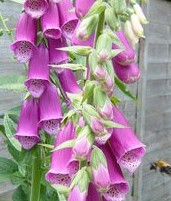
Some of the time I spent painting watercolours which I have long lost. Since at least one was of foxgloves, here’s a photo of some just so you can imagine how incredibly good the paintings were!

The other retreat was in the North of England, and consisted of a week-long period of meditation with a Buddhist group. This was very hard work, but I did finish the week feeling refreshed.

Of course, it is perfectly possible to organise one’s own retreat by finding somewhere quiet and secluded and staying put for a week or however long one fancies (a year, perhaps?).

Perhaps I should do that soon.

South Downs Way 4 – Amberley to Winchester

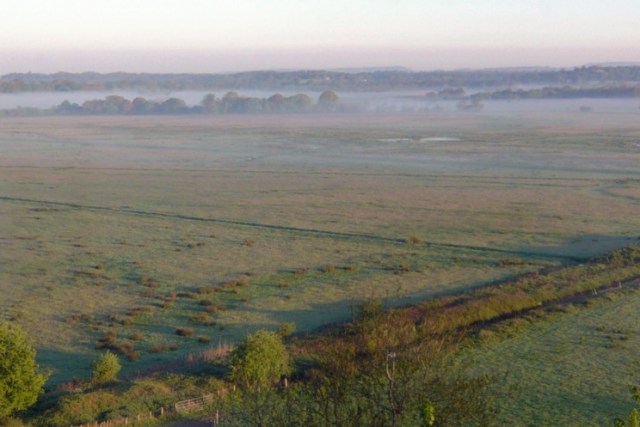
Our room looked out over what is called Amberley Swamp. We slept with the curtains open, and were woken by the pre-dawn light, although the bluey greys and purples soon gave way to greens and yellows in the low morning sun.

109a

But once the sun was up, the mist contrived to linger for a while longer and the cool, still air was filled with the cries of unseen birds. Later, as we left Amberley and approached the first steep climb of the day, we saw a yellowhammer on a gatepost singing its traditional ‘a little bit of bread and no cheese’ song.

113a

I tried to get a photo of the little perisher, though I wasn’t very successful.

This is all about the sheep, by the way.

085

Baaa!

The South Downs landscape as we know it today was largely formed by sheep. I don’t mean that large flocks of sheep sat down and planned it as a kind of Rural Development Project, but that for certainly more than a thousand years it was grazed by huge flocks of sheep whose dung helped improve the soil so that in places crops might also be grown. This led to the felling of virtually all tree cover (originally, the Downs were forested, as was most of Britain) and the establishment of the large grassland areas we associate with the Downs today.

Fans of Terry Pratchett will recall that the Mistress Weatherwax series was set in a part of Discworld that bears a large resemblance to the Chalk Downs of England. No coincidence, I am sure, as he hailed from the Wiltshire area which includes, of course, Salisbury Plain. When I read these books, I get the sense that in describing that area, he is writing of an area that is dear and special to him. There are rolling Downs and sheep and a witch who is also a shepherd living in a shepherd’s hut, which is a caravan but not as we know it, Jim.

Shepherd’s huts were the most basic of boxes on wheels, usually with a tiny shuttered glass-less window, a bunk bed, a small wood burning stove and pretty well not much else. The  hut would be up on the downs (there’s an oxymoron that’s not an oxymoron for you) for most of the year, and the shepherd would live up there looking after the sheep. Probably no chance of a day off or a night out, month after month. It was a tough life, and not at all romantic. Even getting hold of water would be a problem, with the general lack of any water at all on top of the Downs, unless they parked up near a dew pond (see part 1).

There used to be one in the grounds of the Visitor’s Centre at Exceat, near Seaford, although I’ve no idea if it is still there now.

A number of companies now make shepherd’s huts for trendy well-off folks with a bit of garden to shove them in, and charge quite a lot of money, and they are frequently much larger than the originals would have been, and fitted out in some luxury – a far cry from how they would have been when built on the farm for the shepherd. Perhaps they need a new name for them: Mock Shepherd’s Huts, perhaps.

A quick look at what Professor Google comes up with when you enter ‘Shepherd’s hut’ into the search engine reveals an overabundance of words like ‘luxurious’, ‘style’ and ‘cool’ and ‘glamping’…you get the idea.

In the first post of this series, I mentioned I had once intended to start an outdoor adventure company, which never happened. Had I done so, it was to be called Red Kite Outdoors. I mention this, as we saw a number of Red Kites towards the end of our walk. Which gives me an opportunity to include a second poor quality photo of a bird in this post.

There, don’t say I never do anything for you.

141a

A Red Kite – just out of range of my camera.

As planned, on the last day we reached Winchester.

We cheated, incidentally. We were so tired after the penultimate day, we walked an easy path for 3 miles or so into the village / small town of West Meon, went for coffee there, had lunch, and then took the bus to Winchester.

We don’t care!

155a

An easy path

After finding our AirBnb guesthouse (pretty damn good, actually) we went and had a look in the cathedral. It is pretty close to the end (or start) point of the walk, after all.

166b

An arty farty reflective light shot of the cathedral that shows nothing of the cathedral

We stood around in the Cathedral as the choir went through their practice before Evensong. I do not know what piece they were singing, but it was a beautiful, haunting, ethereal piece. It was tempting to stay for Evensong, just to hear them sing again, but we had an appointment with a celebratory supper which I was reluctant to delay.

168a

What better way to celebrate our arrival in Winchester?

South Downs Way 1 – Eastbourne to Steyning

Once upon a time, or five or six years ago, if you prefer, I thought I would start up my own outdoor adventure company. It never happened in the end, largely due to the cost of insurance. However, if I had gone through with it I have to admit it would have been largely so I could go on long distance trails both in the UK and overseas without having to pay for it.

Oh, well. It was a nice idea.

The South Downs Way is a long distance footpath of one hundred miles in length, running from Eastbourne to Winchester, or Winchester to Eastbourne, if you must, along the top of the South Downs.

Hence the name.

We walked it in May.

It is usual, when writing about a journey – especially a long distance walk – to write in some detail about the scenery and the route, in sequential order. I don’t think I’ll do that this time. Instead I’ll probably jump about all over the place writing about odd things we found particularly interesting.  And post one or two photos of the stunning scenery…

039a

Such as this one.

So, a few points of interest.

This, then, is a dew pond:

043a

Chalk is a porous rock, allowing any rainfall to rapidly soak away, so the only way of providing water on the top of the downs is by artificial means. Dew ponds have been made up there for hundreds of years; a hollow is dug and lined with clay, which then fills naturally when the rain falls. Dew is probably not a significant contributor, despite the name. The downside to this simple system is should the pond dry out, then the clay, too, will dry out. When this happens, it will shrink and crack, and subsequent rainfall will leak out.

And while on the subject of rainfall, we didn’t have glorious weather all the way:

053a

We were forced to seek refuge in a convenient pub at the Devil’s Dyke for a couple of hours, but we made the best of it. This was clearly A Good Move because although it was still pouring with rain when we eventually left the pub, it began to clear up in about an hour and then we had sunshine for the rest of the day.

008a

These are cowslips. The word comes from the Old English cuslyppe, which means cow dung, because, yes, that’s where they like to grow, apparently. Years ago, before the coming of intensive farming practices and industrial weedkillers, our fields were full of cowslips, but they seem to be met with now primarily in the more open landscapes – like downland. For the first few days of our walk, especially, we saw lots of cowslips.

We had a rest day at Steyning, although we stayed at nearby Bramber.

050a

Bramber Castle is a strange and mysterious place, which magically energises the over sixties and causes them to revert to their childhood.

Although not for long, sadly.

Clouds

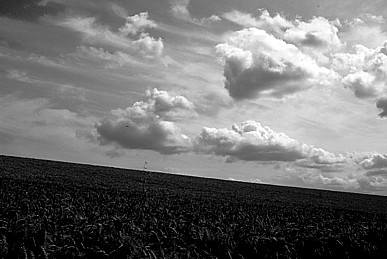
It’s one of those days, today, when the clouds are thick and dark and slightly threatening, but are shifting rapidly across the sky and continually changing shape in a rather exciting way.

I’ve always loved clouds.

When I was young, I was always very conscious of the sky. I still have a copy of a poem I wrote when I was fifteen or sixteen, which I won’t reproduce here, but was titled ‘Clouds’ and compared their shifting shapes with dreams and ambitions. Quite prescient, in my own case, as it happens, but I’ll not go into that now.

045b

I wonder whether the average fifteen or sixteen year old even sees the sky on a day to day basis, now. After all, you tend to look down at your ‘smart’ phone, do you not?

034a

Summer clouds…

When I dream about getting away from the daily grind, running away from it all, whatever you care to call it, the image in my head is always a compound of the Himalaya, and clouds. Or English Downland, and clouds. Anywhere remote and away from crowds, really. With clouds.

Ethereal, ephemeral, forever changing shape, never boring.

Untitled-Grayscale-01a

Dramatic clouds…

IMGP2317a

Clouds like a painting on a masterpiece by Leonardo Da Vinci…

dusk

Clouds in my own paintings…

I’m tinkering around with a short(ish) story absolutely stuffed full of clouds at the moment, too. perhaps that’s what led me here.

In which case, I’d better chuck in one more…

Untitled-Grayscale-02

From Nepal in 1988. *Sigh*.

4th February 2017

I was reading through my travel journal for 2005, yesterday.

IMG_0002

The Bodhi Tree at the Mahabodhi Temple, Bodhgaya

On 16th March I arrived at Bodhgaya, for my second visit to this lovely small town. Because I was going to be away from England for my eldest daughter’s birthday, she had asked me to write and send her a poem. I wrote this in the evening after visiting the Mahabodhi Temple, and after meeting with Indian friends I had not seen for a year, and thought it entirely suitable to dedicate to her and to send her.

There is a crazy wisdom here;

I am at the heart of all things Buddhist.

Good friends make life bearable.

Gentle people give me hope.

An unexpected friend gives me unlooked-for joy.

I am here,

This is the eye of the hurricane.

The still point in the centre of the universe.

My hope for the world,

My hope for you.

Unquenchable love.

I don’t write a great deal of poetry, because I don’t feel it is really my forte, but in the light of current events around the world, it seems worth posting here. I revised it a little before I sent it, but this was the original draft.

Sending everyone hopes and thoughts of friendship, peace and tolerance.


Wow, What a book #2

To continue with the 10 books that have most influenced my life.

My second choice is The Lord of the Rings, by J R R Tolkien.

Image result for the lord of the rings book cover

I suspect that very few readers are unaware of the story of The Lord of the Rings, having either read the book, seen the film, or both. And at this point, it might be a good idea to just make it clear that I am talking about the book here, and not the Peter Jackson films, or even the ill-fated attempt at animating the entire book in 1978, an attempt that got as far as the first book, and was, to be honest, rather dreadful. Let me content myself by just saying it was a bit ‘Disney’. I’m not that mad on the Peter Jackson films either, to be honest, but back to the book.

So, I’m not going into any great detail about the story, but, in a nutshell, it involves a quest to destroy a ring that gives great power to the wearer, but inevitably corrupts and destroys them. It’s maker, Sauron, is attempting to find it, and the free peoples of the world must not only keep it from him, for if he recovers it it he will then have power to enslave the entire world, but also take it to the fiery mountain, Mount Doom, where it had been forged, to cast it into the flames and destroy it.

Mount Doom is, inconveniently, inside Sauron’s heavily fortified and guarded kingdom.

Elves, dwarves, men, wizards, hobbits, orcs…you all know it, don’t you?

As readers, we are all different. Some of us like a plot that gallops along so fast that we can barely keep up, with writing that limits itself to the action and no more than the minimum descriptions necessary.

Others, like me, enjoy the scenery and the atmosphere of the described world almost as much as the plot itself – join the Slow Book Movement now! Just send a completed application form to…sorry, wrong place. Where was I? Oh yes, most readers like a mixture of the two, of course.

But as one of these Slow Readers, there is a massive amount in this book that appeals to me. When I read descriptions of the hobbits setting off to walk through woods and fields as the sun comes up through early autumn mists, I might have been reading a description of a morning when I had done just that whilst wild camping in the countryside in my part of England. I have always loved walking on footpaths and through fields and woods, and disliked roads and towns.

The countryside Tolkien described around the Shire – the home of the hobbits – might have been my countryside. there were chalk downs and woods and streams, even one or two names (for example Michel Delving) that could have been local.

There were other woodlands in the book, and if they were described as magical, then that was little more than I naturally felt about woodlands anyway. Aren’t they all magical?

And, on top of all that, there were mountains. Today, I love mountains! But I had never seen one at this point, and suddenly I wanted to go and climb one. There were inns and beer, adventure and song, friendship and dangers. What was not to like?

The whole book is really made up of three books, and the first book, which has always been my favourite, is the one which is mainly set in this land that I could almost identify. This was not the first fantasy book that I had read, but it was, and still is, the one whose descriptions have the greatest power to draw me in. It is the one that, to me, seems the most real.

All of this, with the themes of courage and friendship, self sacrifice and loyalty, and the message that good will eventually triumph over evil, come together in a mixture that is in just the right proportions to appeal to me.

But how has it actually influenced me?

For a start, when I began to write, everything that I wrote seemed to be influenced by that book. This was not actually a good thing, because other than The Lord of the Rings, I don’t really enjoy fantasy! But I wrote that way for a long while.

Today, though, what remains is the descriptive writing. I wonder whether I might otherwise have been a very different reader and writer, since before I read LOTR, I read mainly detective stories and adventure novels.

And I explored a lot of the Middle English literature that influenced Tolkien, from Beowulf to Sir Gawain and the Green Knight, which I suppose not too many people do today.

I visited mountains because of that book.

And a measure of how strong this appeal was (and remains) is that I have probably read the book about twenty times. The last but one time, though, was around twenty years ago. When I decided to re-read it last year, I did wonder whether I would be disappointed. I strongly suspected that I might have ‘grown out of it’.

I needn’t have worried.

I enjoyed it just as much as I ever had; I noticed one or two details I had either forgotten or never really noticed in the first place, and I found myself drawn in every bit as strongly as I had been before.

I loved it.