Go On A Journey!

Everyone should go on a journey; a journey of discovery.

Even if they only do it once.

The journey will be different for everyone. No two journeys will be the same. But what they will have in common is that they will all be journeys where the traveller discovers something about themselves, as well as the environment where they have chosen to journey. The essence of the journey is that it gives the traveller both time and space to think; that on the journey they allow themselves to be open to new sights and thoughts and people.

boat

For some, it will be a carefully curated tour to a country with a different culture to their own. Perhaps a Westerner travelling to Nepal or Cambodia, or an Indian visiting Spain or Iceland, with a carefully prepared itinerary designed to help them get the most out of their journey.

For some, it could be much the same, but as an independent traveller. They would have the flexibility to either keep to a strict itinerary, or to go off somewhere new as the whim takes them. Because everyone’s sense of adventure is different.

For some, it will be a long, long trek through difficult terrain, pushing themselves physically and mentally every step of the way.

img_0010

For some, it might also be a long journey, but under easier conditions, where the aim is more one of contemplation, perhaps a pilgrimage of sorts.

For others, the difficult terrain might be that of their prejudices and fears – the terrain of the mind.

006-2

What starts as a pilgrimage might end up in your discovering that you do not believe in God; well, that is fine. Remember, it is perfectly possible to be a spiritual person without believing in any god.

Although what ‘spiritual’ actually means is not so easy to nail down. I think of it as pertaining to the spirit, rather than to material things. In that sense, I would associate altruism with the spiritual, and greed with the material. A sense of calm and peace with the spiritual, a rowdy hedonism with the material.

For some, the journey might be from their house to a town or village a few miles away, and the journey might take no longer than a day.

034a

It is essential, though, that the journey is undertaken for the sake of the journey. The destination is, in some ways, unimportant. It is what happens on that journey that matters.

Many, perhaps, will journey without realising that they have done so, or arrive at their destination not realising that is what it is. They might only realise later.

Some will arrive at a totally unexpected destination, and perhaps that is the best destination of all.

Go on, then, off you go!

The Great Sandwich Schism

Once upon a time, a long, long time ago, God created the world. And he looked upon the world and said ‘Well, so far so good’.

And the world was full of beautiful things and good things and a great bounty of useful things that humans would later ransack and destroy in the name of greed, although that is a story for another day.

But when the people whom God had created looked upon his great works, they said unto Him ‘How might we thank you, oh God? How might we show our gratitude for your benevolence?’

And God replied ‘Oh, I don’t know. I really wish you wouldn’t bother. But if you must, just make me a sandwich, or something. I’m feeling a bit peckish after all that creating.’

013

And so the people made haste to slice bread and find Good Things to become a tasty and delicious filling for the sandwich they had made for their God. And there arose minor disputes such as whether ham and cheese really went together in a sandwich, or whether mayonnaise actually counted as food, but the people settled their quarrel in an amicable fashion and so the sandwich was created and placed upon a golden plate that was decorated with the names of angels and archangels, and set about with small mountains of salad and just a little dash of mustard in case God should fancy some.

And then one among them rose up and said ‘Wait, for we must cut this sandwich before we present it to our God, unless it be a bit too large for him to handle and he drop pieces of cheese from the sides or drip mayonnaise in his holy lap.’

And all at once there arose discord, for some were found who would cut the sandwich in a diagonal fashion, and yet others who declared that would be an affront to His holiness and that the only Right Way would be to cut the sandwich into equal rectangles.

And lo, the factions took up weapons and fought, yea, even in the Holy Kitchen, and they did massacre one another and each declared that the other faction was a worshipper of Satan, who was completely bemused by all this, since he had no followers (not even on Facebook), and they did create rival churches and rival nations and declared undying enmity against each other, spending the next few thousand years thinking up new and more imaginative ways to hate and kill and destroy each other.

And God groaned and held his head in his hands and said ‘Oh verily, what a cock-up this has become. I think I shall destroy the lot of them.’

Responsible Travelling – Part 1

In a way, this could be titled ethical travelling, but I would like it to cover cultural issues as well as environmental and other ethical concerns. I don’t particularly like proselytising, but I think that we all need to be responsible for our actions: it makes for a happier world for all concerned.

156

So, in no particular order…

Trekking

First of all, when arranging a trek, please try and have a look at the ethical policy of your chosen company. Nowadays, many have a policy of ensuring that porters are properly paid and treated, food is sourced wisely and money makes its way back into the local community. The guides / cooks / sherpas or what-have-yous should be trained to ensure that the environment is treated with respect during the trek. Personally, I feel that from a selfish point of view it makes sense to choose a company that follows these guidelines, because I feel that I will be treated better by them, too. It should not be much more expensive, either.

Secondly, it is not all up to them. One of the most important things we can all do is avoid littering villages and countryside as we trek. Apart from the unpleasantness of spectacular scenery ruined by plastic bags and used loo paper, we can hardly criticise local laxness in this area if we are guilty of the same ourselves.

Deforestation is a major problem in the mountains now, which can only get worse with the effects of global warming. Consequently, anything that we can do to minimise the burning of wood is important, so please do not insist on unnecessary fires to sit around or warm up. You should have brought sufficient clothing on the trek for that. And it seems a minor thing, but if a group of trekkers turn up at a tea house and insist on lots of different dishes, then that will involve a lot of extra firewood to cook them. Try and have the same dish, if possible.

Shopping

Ah, yes. Such an important part of our visit, really. The ultra-cheap clothes, the amazing antique statues, the cheap religious paintings…unbelievable bargains, compared to what we would pay in the west…

…and rather a minefield, unfortunately. Those cheap imitation brand names, as we should all know by now, are usually produced in sweatshop conditions, conditions that would often justify being described as ‘slavery’. As well as being, usually, rather inferior quality. Difficult to avoid them all; after all, who is to say we shouldn’t be buying those attractively embroidered ‘I did the Everest Trail 2017’ or suchlike t-shirts for the equivalent of a couple of dollars?

Well, there is a world of difference between the genuine sweatshop (if I can use such a phrase) and the family sitting around their sewing machines under a tarpaulin beside the stall producing their goods. The latter may be working hard for a poor return, but may be infinitely better off than those with no work and certainly better off than the sweatshop labourer who will earn far less, in conditions far worse. Even today, unfortunately, some of them are bonded labourers.

The antiques…if you go to the Kathmandu valley, you will in many places find the remains of religious statues that have been stolen from their sites beside roads or outside temples. These statues usually find their way to the west to ‘collectors’, or may be sold off to tourists who know no better. In many countries you will need an export licence from the authorities to take antiques over 100 years old out of the country simply to attempt to prevent this sort of desecration. Invariably it is possible to buy modern copies of these items – handcrafted and as beautiful as the originals. It is better for everybody if the traveller contents themselves with these, not least because the smuggler can be hit with a hefty fine or prison sentence. It is also worth mentioning that many of the ‘antiques’ are fakes, in any case.

And the religious paintings. Again, in Kathmandu, Thankas, the paintings that hang in temples, are frequently offered for sale. And again, if genuine, should not be sold. They have probably been stolen. Wherever they are offered for sale, however, there will be bright new paintings for sale – equally beautiful, well made and far cheaper. Spend your rupees on them and support the craftsmen that make a living that way.

BIG or small?

Staying with the shop theme, it seems fairly obvious that by buying from the little shop rather than the supermarket you will be far more likely to be putting money back into the local community. All well and good. Inevitably, though, it is never quite as straightforward as that. Moving south across the border to India, we may find that in the market that we are searching for souvenirs, as well as local traders there may be traders from Tibet or Nepal, Kashmiris and dealers from the city. How you wish to spend your money may pose a dilemma that I cannot solve for you. But at least give it some thought!

The same situation can arise with hotels and trekking companies. I feel that in that situation, the small company or hotel is likely to get my rupees, since, unless I know otherwise, they are more likely to put money back into the local community.

Water, water everywhere…

…but most of it comes in plastic bottles which end up littering the environment, or refilled by unscrupulous rascals with what could be contaminated water, to be sold on again. Avoid this if you can (not always possible, I admit) by taking water purifying tablets and using the local water – read the instructions carefully to see exactly what is required – or using the boiled and filtered water available in some places (See info in places such as Lonely Planet guide books). If you buy plastic bottles, scrunch them up before disposal to prevent their re-use.

In some places, such as Ladakh, you can find environmentally minded laundry shops, where the soapy water is disposed of properly, rather than just poured into local streams. May they prosper and multiply!
 

Indian Salt Miners

salt-workers

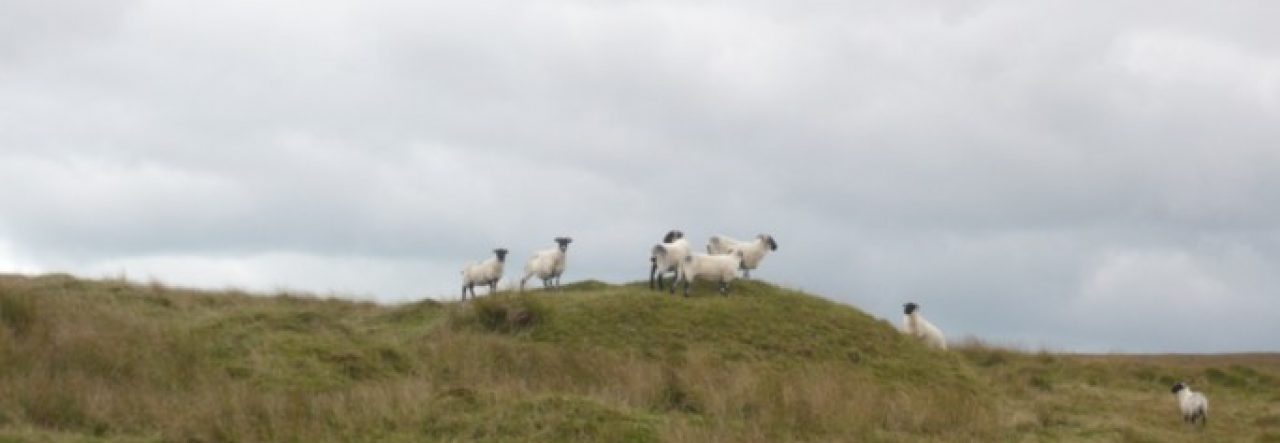
Salt workers pose for a photograph at the salt pans near Marakkanam, just north of Pondicherry (now renamed Puducherry, its original name before the French arrived, although everybody continues to refer to it as Pondicherry, or just ‘Pondi’). The sea is allowed to flow into ‘pans’ (not unlike paddy fields) and then it evaporates over several days under the hot sun, leaving behind a layer of salt which is gathered by hand. Salt has been gathered this way in India since time immemorial.

Even when I took this photograph in 2006, on my first visit to South India, it struck me as a harsh environment in which to have to earn a living. Since then, I have learned more.

Salt is, and always has been, an essential commodity, especially for a population living in hot conditions, but when the British in India imposed a salt tax, this eventually led to the ‘Salt March’ led by Gandhi to Dandi, on the Gujarat coast, where he symbolically gathered salt at the coast after a 200km march, an action that contributed to the loosening of the hold that the British Raj held on India.

In Gujarat alone, approximately 112,000 labourers are employed in the industry (Gujarat State Law Commission figures).

In all, there are approximately 1,000,000 people employed across a total of nine states harvesting salt. Typically, women and girls make up most of the workforce.

But the conditions that the salt miners labour under today are little better than they were then.

They suffer eye problems and blindness from constant exposure to the sun reflected off of the brilliant white of the salt pans. Skin lesions from the salt are common. After a while, feet become septic and absorb salt; so much so, that according to some accounts even after death the salt content in their limbs are so high that hands and feet are difficult to burn during cremation (Daily Telegraph 24/2/10).

In addition, the labourers suffer from many of the other problems common across the labour force, such as exploitation by contractors and money lenders, and poor educational opportunities for their children. There is often inadequate housing, drinking water and food, and an absence of primary healthcare (Indian Express 26/4/16).

It is frequently said that saltpan workers have three ways to die: first gangrene, second TB (tuberculosis) or third blindness.

Their life expectancy is 50 – 60 years.

The hardships and problems they face are slowly being brought to the public’s attention, but clearly there is still a very long way to go before they enjoy what most would regard as decent working conditions.

Wow, What a Book #3, #4, #whatever

Well, Saturday already. Seems only yesterday it was Friday *sigh* I suppose I’d better get on with it.

I don’t think I’ll do ten of these after all, because I rather run the risk of listing books just because I like them, rather than because they have had a real and measurable influence on me. So today I present the final three.

1. Silent Spring, by Rachel Carson.

Image result for silent spring

I read this book when I was in my mid twenties, and it really did open my eyes to what we as a species were doing to the planet. Up until that point, I had not really understood the impact that we were having on the environment. Shocked, I became interested in learning more, and then even more shocked as I learned what food and drink manufacturers put in their products for us to consume. At that time, one of them was the nasty compound dropped by the Americans on Vietnam during the Vietnamese War; a defoliant that was known to be carcinogenic.

It was used as orange food colouring.

I got hold of a list of all the ‘E’ numbers that were permitted additives, and which the industry certainly didn’t want us to know about. Certain ones were very nasty indeed. It was at this point that I became very keen on reading the labels on food and drink packaging.

I became involved with various pressure groups, such as Greenpeace.

That book changed my life.

2. The Razor’s Edge by W Somerset Maugham.

download

In some ways, this could lay claim to be the book that has had the greatest influence on my adult life, but in a different way to Silent Spring.

I’d always tried to be a reasonably decent human being, but reading this made me rethink the way that I wanted my life to be. It is the story of a man who returns from the first world war and begins to question his place in society. He finds the trappings of modern western life, and its values, empty and meaningless – its focus on making money, selfishness and greed. He then searches for something meaningful in his own life, through education, religion and travel, and explores his relationships to others.

The message in this book immediately resonated with me; that there is much more to life than the pursuit of money, essential though some of it it might be to my survival. Other people mattered. Helping others was important. What is called the spiritual life, whether or not you believe in a god or not, was an important part of us all.

5. The War of the Worlds by H G Wells.

hgg

Are you serious? you ask. How could this book be an influence on your life? One of the first science fiction books, and admirable for that, but an influence?

Well, it is easily told, and the answer will probably surprise you. This book provided the initial impetus for me to become a vegetarian.

Yes, a vegetarian. There is a passage in the book where the narrator recoils with disgust as the Martians take the blood from still-living humans for their nutrition, but then comments that it was probably the same reaction as an intelligent rabbit would feel observing our own eating habits. That made me consider whether it was necessary for me to eat meat, and I came to the conclusion that no, it was not.