Wordy Wednesday 2

Coolie – now there is a word that is remarkably offensive; offensive not so much because of what it is, but the implications behind it.
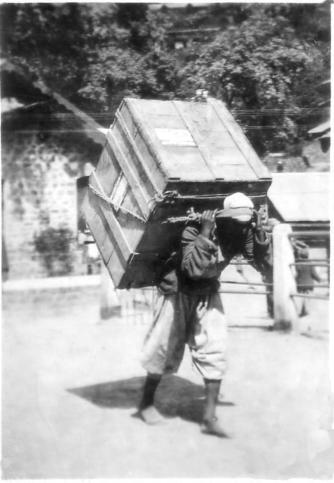
coolie 1

The Oxford Dictionary defines the word thus: unskilled native labourer in eastern countries and gives the word’s origin as perhaps from Kuli, an aboriginal tribe of Gujarat, India.

Hobson-Jobson, the 1886 Anglo-Indian Dictionary, has rather more to say upon the matter.

It gives the spelling as ‘cooly’ and the definition as follows: a hired labourer, or burden-carrier; and, in modern days especially, a labourer induced to emigrate from India, or from China, to labour in the plantations of Mauritius, Reunion, or the West Indies, sometimes under circumstances, especially in French colonies, which have brought the cooly’s condition very near to slavery.

It goes on to give further definitions and details of the word, and then makes several suggestions for its origin. One possibility, agreeing with the Oxford Dictionary, is that it derives from Koli, the name of a caste or race in Western India who frequently carried out these tasks and who, the dictionary reports, had long held a reputation for ‘savagery, filth and general degredation.’ This would make its origin analogous to that of slave, which is presumed to come from the racial term Slav.

But it suggests the waters are rather muddied by a couple of similar words in the Sub-continent: In Southern India a Tamil word Kuli signifying ‘hire’, and Khol is a Tibetan word for slave.

And then there is also a Turkish word kol meaning a slave while, more specifically, kuleh  means ‘a male slave, a bondsman’.

But back to the implication. It is impossible to get away from the colonial undercurrents with this word, as brought out in the Hobson-Jobson definition above. So to use the word to describe a person or persons today, is to call them a servant or slave of a foreign overlord.

Bihari Door

I paint quite a few doors – they are a favourite subject of mine. Although if you mention that to my wife, she will sniff ‘You’re joking! I can’t even get him to paint a shelf!’

bihari door

Bihari Door – Acrylic on canvas, 18ins x 24ins.


Pictures available on my Etsy shop site here

Wordy Wednesday 1

Many bloggers post photographs on Wednesday under the heading ‘Wordless Wednesday’. Me? I’m going to write a few posts about words – specifically words in English borrowed from languages of the Indian Subcontinent.

I’m just plain awkward, but you knew that, didn’t you?

I am currently editing the first draft of my novel A Good Place, which is set in a hill station in Northern India. And in that hill station live a number of English who remained behind after Partition.

‘I’m sitting on the veranda of the bungalow in my pyjamas.’ Well, no, no one says that in my book. But if they had, what is the significance of that sentence?

The significance is the number of words borrowed from Indian languages.

Untitled-Grayscale-03

Veranda is an Indian word, but coming originally, perhaps, from Persian. The Oxford Dictionary suggests two derivatives, either from the Hindi (varanda) or from the Portuguese (varanda). Digging a little deeper, if I refer to Hobson-Jobson, the Anglo-Indian Dictionary that was published in 1886 and traces pretty well every word or phrase borrowed from the Sub-Continent, I discover a very long entry on this word. It begins by dismissing the possibility of it being derived from the Persian beramada, and goes on to state that it appears to exist independently in both Hindi, and in Portuguese (and Spanish). It then traces the possible routes the word might have taken to reach the English language, before then saying, surprisingly, that it could have its roots in the Persian after all. This seems quite likely to me, since many Persian words made their way to India especially with the Mughals, and it suggests a possible route to the Spanish peninsular when the Islamic armies arrived in the early eighth century.

I tried typing it into Ngram Viewer. This is an online tool that searches through the entire database of books that Google can access online (including ones still under copyright) published since 1800. Looking at the results for all books in English, it tells me it was barely used in 1800, although it does exist, rises steadily to a peak about 1910, and then falls away slowly, although it is still in common usage. Unfortunately Ngram has not been set up to search books in Indian languages, or even Portuguese. I tried Spanish and the pattern was similar, except that after peaking just before 1910 , it dropped sharply, but since then the trend has been upwards. I then noticed something. I had actually looked at the trend in American English. So I then tried British English, and this gave me a rather different pattern; The curve rose gradually until it peaked in the 1950’s and then fell away sharply. Why? I think it must be due to a surge of historical / biographical / nostalgic writing, both fiction and non-fiction, after the British left India.

Don’t worry, I’m not going to try to go into that sort of detail with other words.

Next, bungalow actually refers to a ‘Bengal style’ house (often with a veranda!) that the British frequently chose to live in.

And pyjamas are loose cotton trousers worn in India which were ‘adapted’ for night wear by Europeans.

Okay, class, lesson over. Be sure to wash your hands before eating your snacks (samosas and pakoras today, of course).

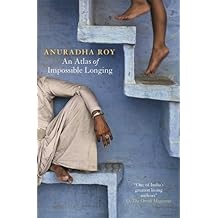
Review of An Atlas of Impossible Longing

An Atlas of Impossible Longing

A year ago I read The Folded Earth, Anuradha Roy’s second novel, and decided it was so good I would have to read all of the others. And so recently I finished her first book, An Atlas of Impossible Longing. In this, Anuradha Roy tells the story of three generations of a family who have moved from Calcutta to live in a huge, rambling mansion in Songarh, a small town in the hills of Bengal.

Amulya’s wife, Kananbala, hates the isolation of the town, with its lack of fashionable shops and social life, and longs to return to Calcutta. Their oldest son, Kamal, longs for children, and his youngest, Nirmal, is widowed and longs for his unmarried cousin.

Everyone appears to long for something that proves unattainable, and at the centre of the story are two children, thrown together by chance circumstance and then separated by the cultural fears of adults, but who have formed an unbreakable bond that endures through years of separation.

Mukunda is an orphan of unknown caste adopted by the family, and his only companion is Bakul, daughter of Nirmal. They pass their time playing in the grounds of their home or in the woods and fields around the town.

As Bakul and Mukunda grow towards adulthood, their friendship slowly begins to become something more, and Mukunda is sent away to Calcutta by the family, suddenly fearful of the consequences of this.

As the years pass, Mukunda graduates from college and becomes prosperous, even through the years of Partition, without ever returning to see the family who raised him, although he thinks frequently of Bakul. But then chance sends him to Songarh, and he realises he must find out what has happened to her.

The pace of this book is deceptively languid, but this enables Roy to paint the characters and settings in exquisite detail, and for the plot to unfold at an easily assimilable rate.

I feel you always gain more from re-reading a book, and I am longing to do this, to immerse myself again in the rich landscape and characters Roy has created.

Most definitely a five star read.

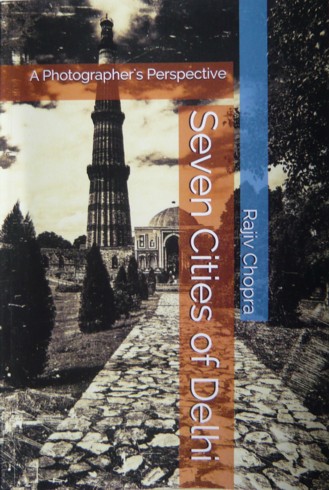
Seven Cities of Delhi by Rajiv Chopra


001

On my first visit to Delhi, almost thirty years ago, I was overwhelmed by the huge numbers of monuments there, such as the Red Fort and Purana Qila. I found the area around Paharganj to be chaotic and exciting and everything an inquisitive Westerner could wish for – a mixture of smells of food and incense and, yes, sewage. A mixture of ugly concrete buildings and beautiful dilapidated buildings left over from the British Raj and often much earlier. Milling crowds of people and cows and rickshaws and bicycles and autos, and history, history, history.

Chadni Chowk was incredibly crowded, the Lodi Gardens completely deserted. The Jama Masjid crowded by tourists and worshippers alike, the Janta Manta often almost empty.

There is so much history everywhere you turn in Delhi.

Other Westerners I met tended to be highly disparaging of Delhi, which was something I couldn’t completely understand since many of these same Westerners seemed to praise Mumbai and Kolkata for the very reasons they hated Delhi.

Yet Delhi is, I think, one of the most exciting and interesting cities I have ever visited. From a historical viewpoint alone, it has over ten thousand listed monuments.

Ten thousand!

Rajiv Chopra is a Delhi based photographer with a passion for recording both the historical Delhi and the street life he comes across from day to day. In this book, he has combined his photographs with a little of the history of the seven historical cities that constitute Delhi, and also a perspective of the differing processes that photography has passed through from its invention up to the present day.

To illustrate all these factors, his book is split into seven sections – one for each of the historical periods – and in each section he has outlined one of these photographic processes so that, for example, in the section covering the first city, Mehrauli, he speaks of daguerrotypes. And then his own photographs he processes through Photoshop to simulate the effects of these processes.

This is not a long book, but it does not pretend to do more than act as an introduction to the history of Delhi. And in this it certainly whets the appetite for more, and then for anyone with even a passing interest in photography it gives a concise and potted description of these photographic processes. Finally the photographs themselves complement the text perfectly.

I unhesitatingly recommend this book for anyone who wants to know a little of the history of Delhi, and who enjoys photographs that give a real flavour of the history of that magnificent city.

Five stars out of five.

You can find Rajiv’s website and blog here

Annapurna Circuit, Nepal – 5: A Life Less Lived?

It could have happened.

Everybody needs a challenge.

198a

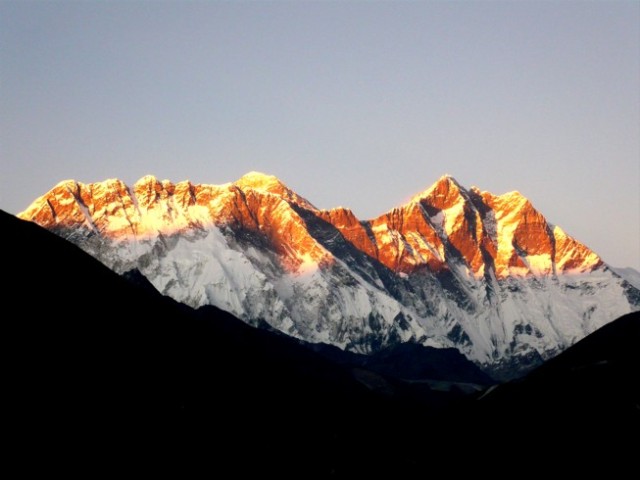
Sunset on Everest and Nuptse from Tengboche, Nepal.

Well, most do. I guess there are a few people who are so content with their lot they have no wish to stray out of the round of their day to day life, but I think they must make up a tiny minority.

And while it is a great achievement to be satisfied with your life, and not to constantly want a more expensive car, or clothes or jewellery, we all need something to strive for, otherwise we tend to stagnate.

Even the most altruistic, who might strive to eradicate poverty, or bring justice where there is none, need a more personal challenge sometimes.

For some it might be speed – the need to have a go on a fast motor cycle or racing car somewhere. Maybe to try a bungee jump. To feel the adrenaline surge that comes with the mixture of excitement and fear.

shakira

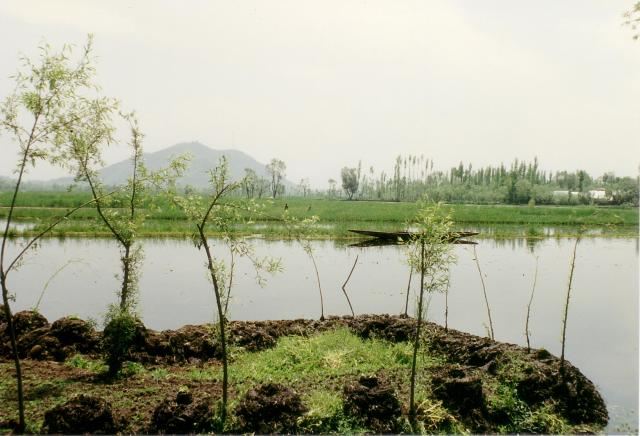
On Lake Dal, Srinagar, Kashmir, India.

For others it might be the very opposite. Many of us need the opportunity to spend time away from the 21st century. Those of us who do not like the noise and speed and intensity of our modern life, need to find respite in places like the mountains, or deserts, or somewhere else remote from modern life. Woodlands at night, perhaps, or a windswept beach on an island. The challenge is frequently to find these places or to access them. Perhaps even to make the time to do so.

img_0012

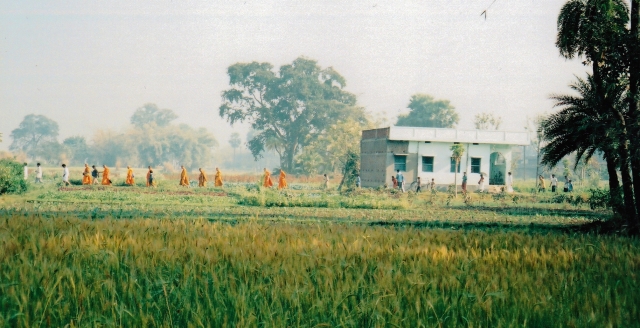
Monks on their way to morning Puja, Bodhgaya, India.

Those are the sort of places I need, and where I often feel I can do my best creative work. The only places I feel I can really relax.

And the reason I had to walk the Annapurna Circuit.

Just while putting together this set of posts, at times I have looked around the room at the photographs of the Annapurnas, the maps, then at my rucksack in the corner, and felt an almost irresistible urge to just…go.

This sense of adventure is frequently in conflict with the other strands of my life, though, because (like most people) my lack of money and the demands of work and family, and other commitments, prevent me just scooting off for a week or month away whenever I feel like it.

105

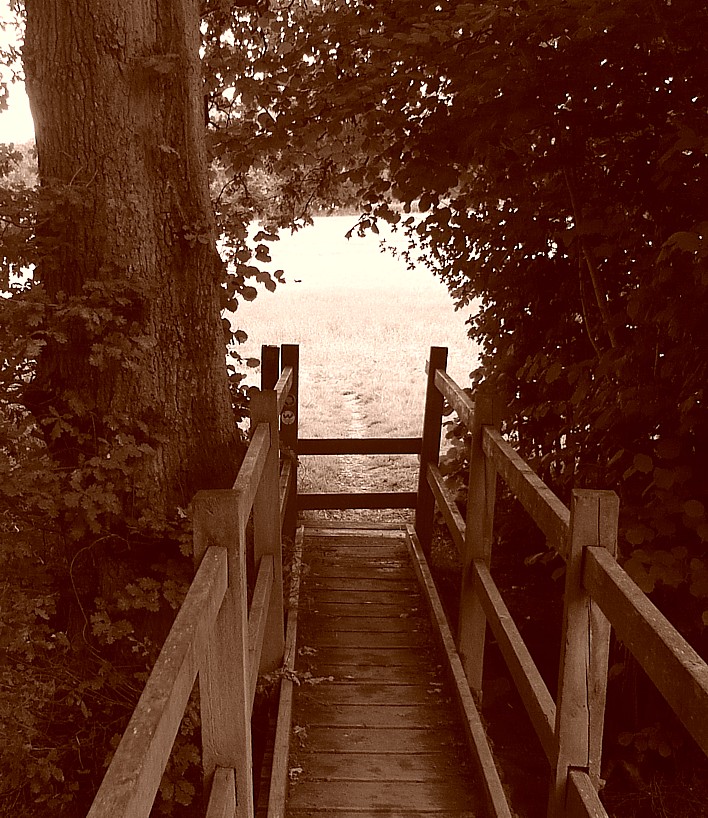
A track through fields and woods a mile or so from where I live.

But I have always tried to take the opportunity to go off to these places when I could, as I reasoned that I couldn’t know how long I would still be able to.

What made me determined to do this was a missed opportunity when I was working temporarily in Peru. I knew that when I finished my six week stint and returned to UK, I might no longer have a job. So when I was offered the chance to stay on for a week to visit Cuzco and Machu Pichu with friends I declined, even though it would only have cost about a hundred dollars for the whole trip. And I regretted it ever afterwards.

179

Little Adam’s Peak, Ella, Sri Lanka.

I have no intention of looking back on my life later and wishing I had done these things when I had the opportunity.

Annapurna Circuit, Nepal -1

In 1988 – thirty years ago! – I walked the Annapurna Circuit. This has long been regarded as one of the top ten walks in the world, and is certainly the walk I have enjoyed most. I put up a post about the circuit a year and a half ago (here) should you wish to read it, but as a celebration of that anniversary, I thought I would put up some more photographs over several posts.

Today, they are all from our second day’s walk.

IMG_0016

We camped the whole way, since there was virtually no accommodation on the route then. It was sometimes possible to sleep on the floor of a tea-house, but that usually meant an uncomfortable night in a very smoky atmosphere, and probably not a great deal warmer than a tent. It meant we were travelling with four guides, a couple of cooks, a couple of ‘kitchen boys’, and an average of fifteen to twenty porters (every so often one or two would leave, and others get hired from a village we were passing through).

IMG_0012

We began our walk from Gorkha, walking through the Terai – the sub-tropical forest region that stretches across most of Southern Nepal and much of the Himalayan Foothills of Northern India. This was a land of small rural villages, terraced fields carved painstakingly out of the hillsides, and, naturally, wooded hillsides.

Much of the woodland had already gone, cut both as clearance for fields and for fuel and fodder. It was already leading to much soil erosion and the degradation of the remaining soils. With the passage of thirty years, this can only have got worse.

On day 2 we walked from our campsite beside the Dharandi Khola to the settlement of Chepe Ghat.

IMG_0013

Transport in these areas was entirely by foot, usually in the form of porters who carried massive loads upon their backs. Occasionally by pony, or by bullock, but never by yak – they do not survive at these comparatively low altitudes. In 1988, walking the Annapurna Circuit was entirely on tracks and paths, since there were no roads of any description on our route. Today, there are motorable roads along part of it, but back then we did not see or hear a motorised vehicle for the duration of the trek.

IMG_0014

Building materials in these areas were, and predominantly still are, wood, thatch, and mud. Stone was used only in larger settlements.

The boy pictured above, incidentally, will now be in his late thirties.

IMG_0015

Wooded hillsides, with the terraced fields belonging to a nearby village encroaching.

IMG_0004

Rice paddy – terraced fields flooded for the planting of rice, the staple crop of the Nepal Lowlands.

Prayer Flags

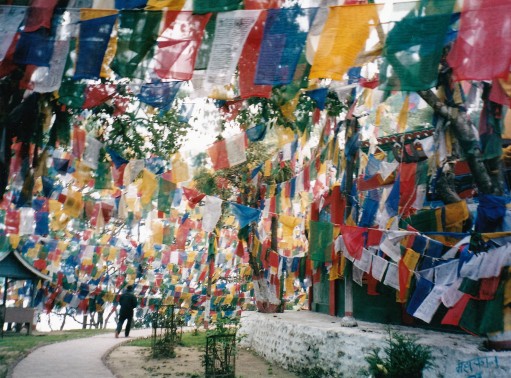
Prayer flags are found wherever Tibetan Buddhism is found. As they flutter in the breeze, they use this wind to send blessings out into the world. Through many parts of the Himalaya they adorn monasteries and humble homes, chortens and bamboo flagpoles. They are tied in their hundreds and thousands to bridges, above mountain peaks, and in the courtyards of every conceivable building.

Elsewhere, they are to be found wherever exiled Tibetans live, and wherever their school of Buddhism flourishes.

The makers of the flags intend the prayers and blessings that adorn them not for their own benefit, but for the benefit of all beings.

eleven

Prayer flags in the Yumtang Valley, Sikkim, India.

prayer flags

Prayer flags, Observatory Hill, Darjeeling, India.

IMG_0005

Prayer flags outside a monastery in Sikkim, India.

106a

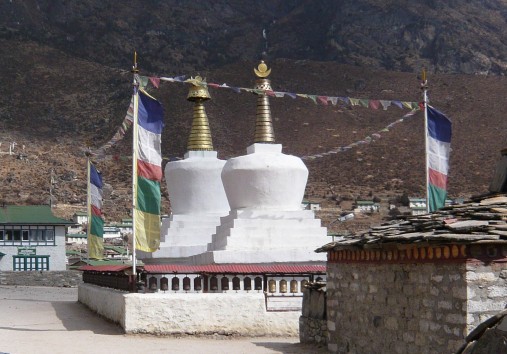
Prayer flags adorn a pair of chortens and walls of prayer wheels in Khumjung, Nepal.

139a

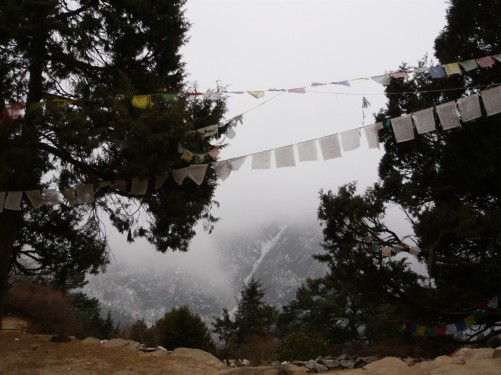
Prayer flags at Tengboche, Nepal.

141a

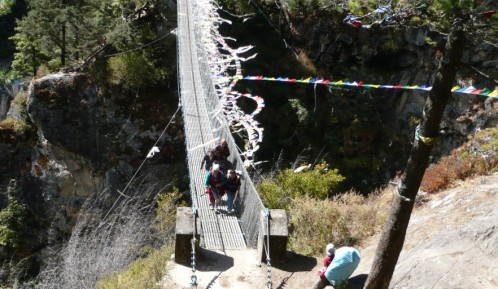
And adorning a bridge of the Dudh Khosi, again in Nepal.

Kanchenjunga

071a

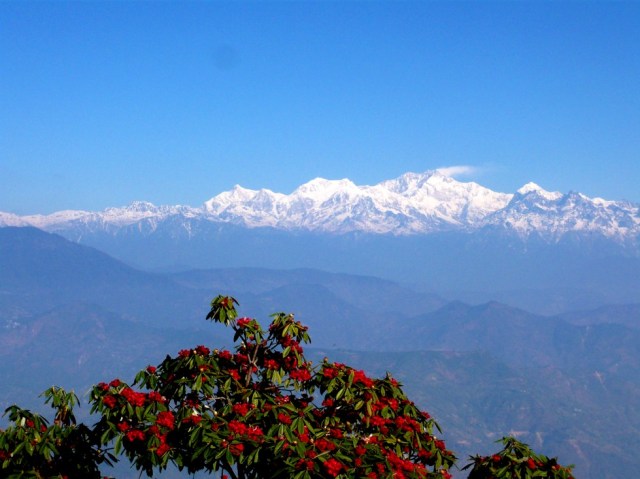
Kanchenjunga, the third highest peak in the Himalaya (and the world) taken from Observatory Hill, Darjeeling. It is the peak right of centre, with the spindrift blowing from the summit.

Have a great Thursday.

Just Look at Ghat!

Ouch! Probably my worst title yet!

I can’t help it…I’ve not been well…

…well, only a cold, but you know what we men are like.

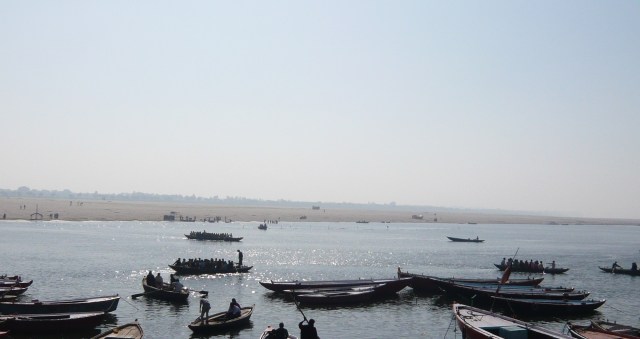
In another attempt to feel instantly better, I’ve nipped across to North India (only in my imagination, unfortunately), to picture Kedar Ghat, on the banks of the Ganges, in Varanasi.

056a

Ghats, a Hindi word, are sets of steps leading down to a river (and also mountain ranges or passes – The eastern and Western Ghats in Central India). It has also come to mean a level place at the edge of a river where Hindus cremate their dead.

In Varanasi, there are between 84 and 87 ghats, depending upon who you get this information from,. The Manikarnika Ghat, or Ghats (possibly this is the origin of the confusion over the number) is the ‘burning ghat’, where cremations are carried out 24 hours a day, all through the year. The source fire there has supposedly been burning for thousands of years, but photography is actively discouraged, hence my only shot is one taken from a distance.

046a

Of course, the ghats are also used for bathing. Hindus bathe en masse there, as a dip in the Ganges is meant to wash away sins. Important pujas (ceremonies) take place at sunrise and sunset. Boat trips to view the ghats are very popular, and finally much of the city’s laundry gets done at the dhobi ghats (dhobi meaning laundry).

040a

Namaste!