A Day in Ladakh (2)

I’ve posted (and re-posted) a few times over the years about my trip to Ladakh in 2005. So here’s another extract from my journal for one of the days I spent there.

For those not in the know, Ladakh is high in the Indian Himalaya to the west of Tibet, with which it shares many characteristics, not only of geography but also the ethnic makeup of its people. In fact, since the Chinese invasion of Tibet, it is frequently said that Ladakh is more Tibetan than Tibet. The climate is not dissimilar, either, and although I visited in April that is still well before the main tourist season, and I don’t recall seeing any other tourists during my stay there.

Sunday 10th April 2005

I slept well. No alarms during the night! (I had had a very bad headache the previous night which I put down to altitude sickness) Then up at 6.30 to a fresh snowfall – just a sprinkling of powder on the ground. The skies are clear, though, and the Stok Mountains look wonderful in the sunshine. In fact, they’re going to get photographed right now.
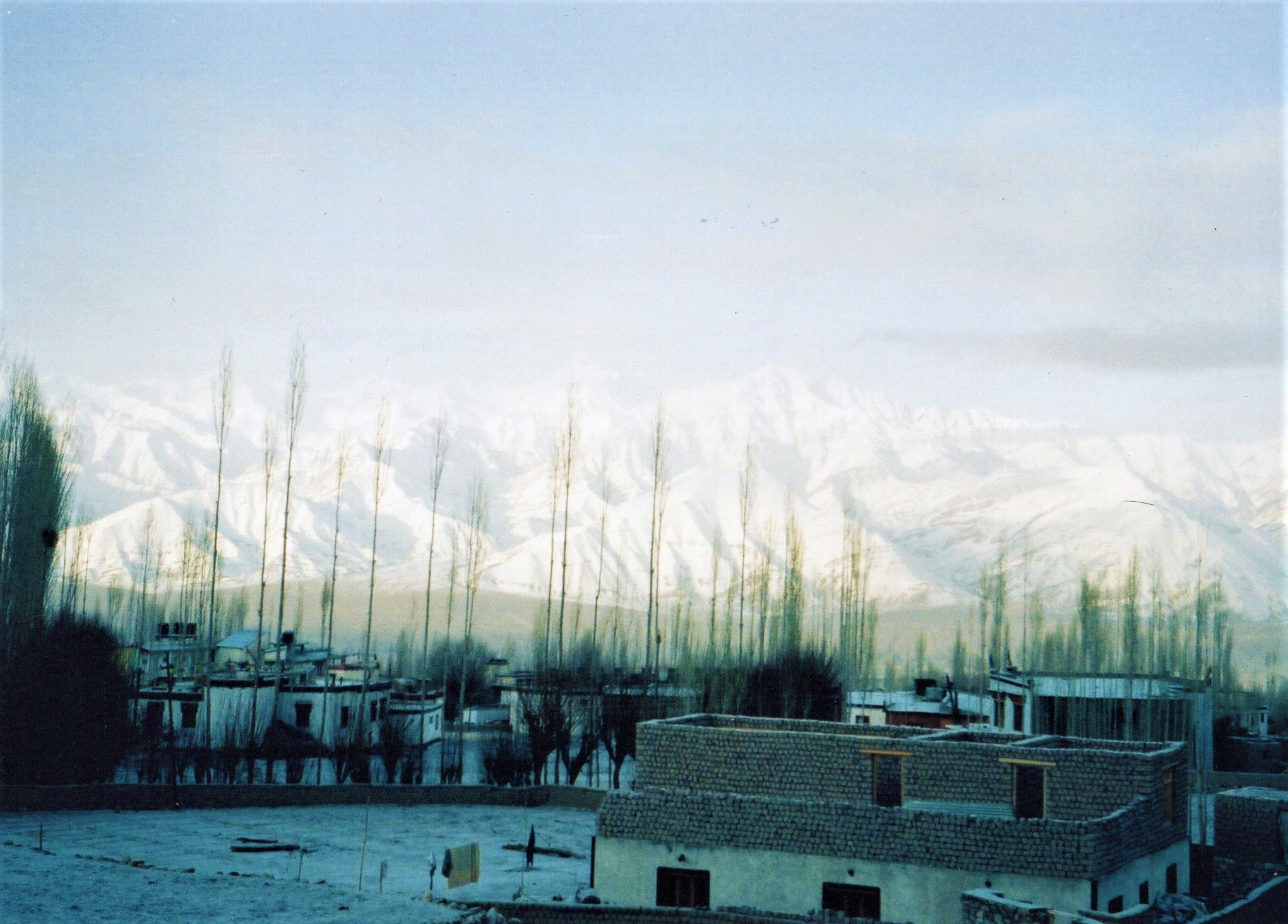
I go out for breakfast and it’s quite mild. Soon last night’s snow has already gone. A few shops are slowly opening – no internet as yet, but I’ll mooch this morning. I’m sure that I can find something.

To use the internet, I need to find a place that is both open and with a generator. This looks as though it might take some time! Never mind, I’ve got a woollen scarf from the Ladakhi Women’s co-op, so a good start to the day.

As well as the scarf I also bought a bag of the dried apricots (organic, ‘solar-dried‘) Ladakh is famous for, and at last a singing bowl. I’m sure I paid more than necessary, but he came down RS 200/-, so what the heck. I think we were both happy with the deal. And it’s a nicer one than any I saw in Bodhgaya.

After a Ladakhi lunch of apricots, apple juice and water, – not that I suppose for one moment that is what a Ladakhi might have for lunch, only that it is all locally produced – I headed north past the Shanti Stupa towards the first line of hills. Reached there at 1.15pm and stopped there for a breather. Silence, apart from the pounding of the blood in my head. Absolute silence. After a few minutes the call of the muezzin drifts up from Leh, from the Jama Masjid. Then a few bird calls from the crags. Perfect peace. A perfect desert landscape, with pockets of snow. I’m sitting on a boulder, warmed by the sun, my feet in patches of fresh snow.

1.50 and I am at the col. A lot higher than the fort at Namgyal Tsemo Gompa, with a fantastic view north up the valley towards the Kardang-la.

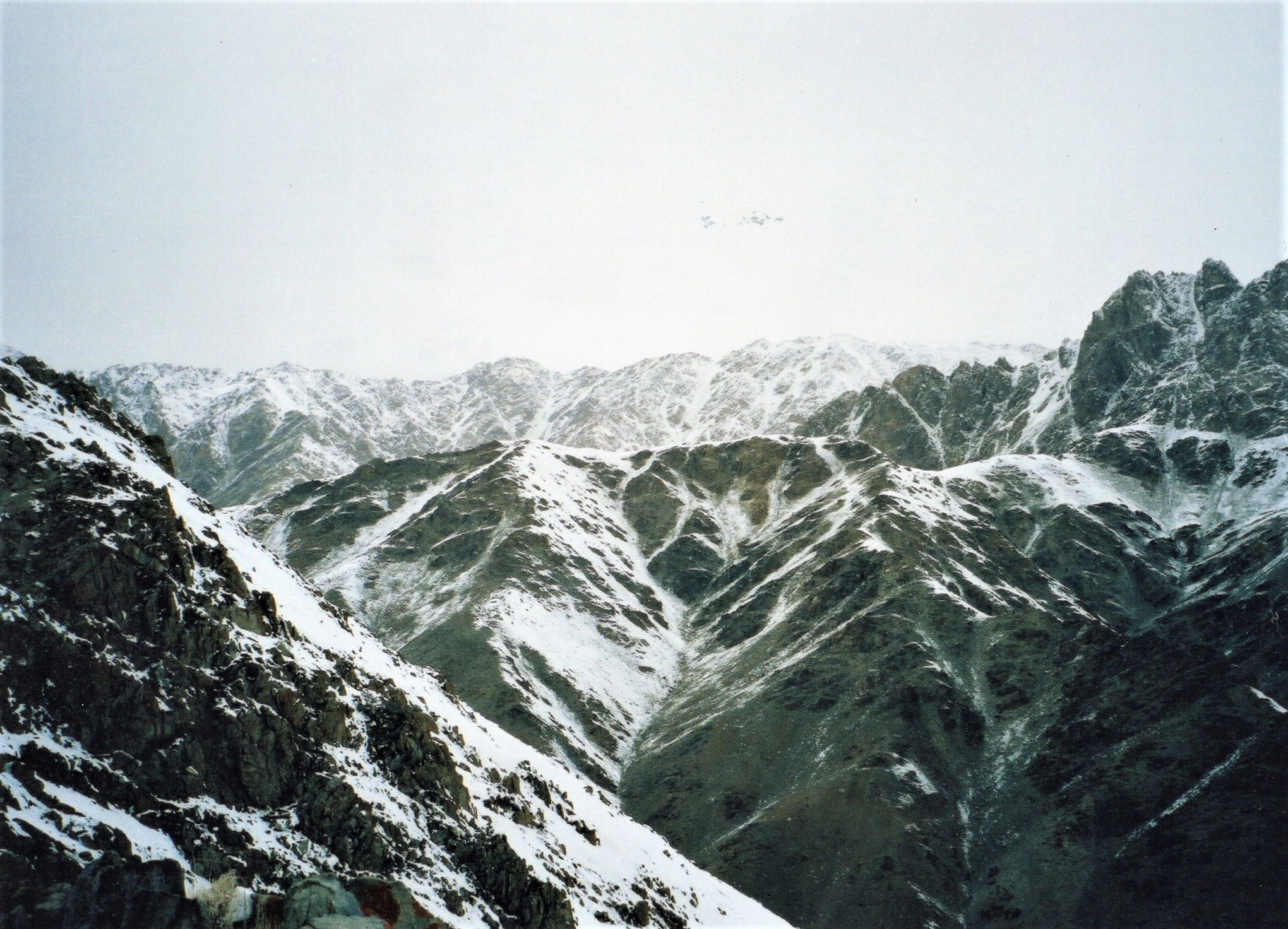
2.45 and I am at what appears to be the highest point. There is another peak some way to the west, but this one has a cairn, walls and prayer flags, so I’m taking it to be the highest. At a rough guess, I’ve climbed about seven to eight hundred metres. The views are out of this world. More side valleys to the north and I’m up in the snow here. On the northern sides it is quite thick and I am feeling quite light-headed. It was worth coming to Ladakh just for this alone! Stunning!
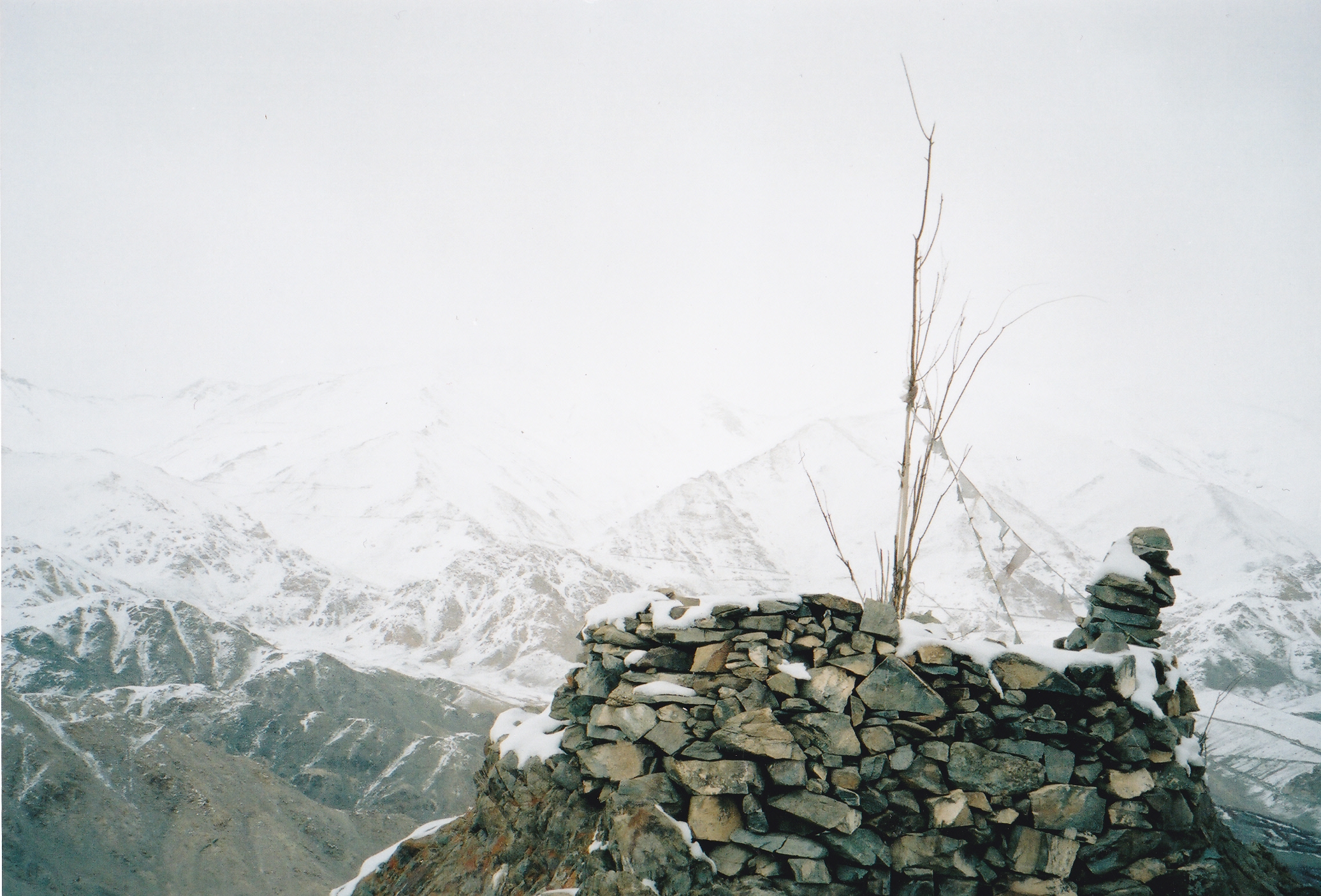
Very reluctant to start heading down, but a few flakes of snow convince me that it’s time to go.

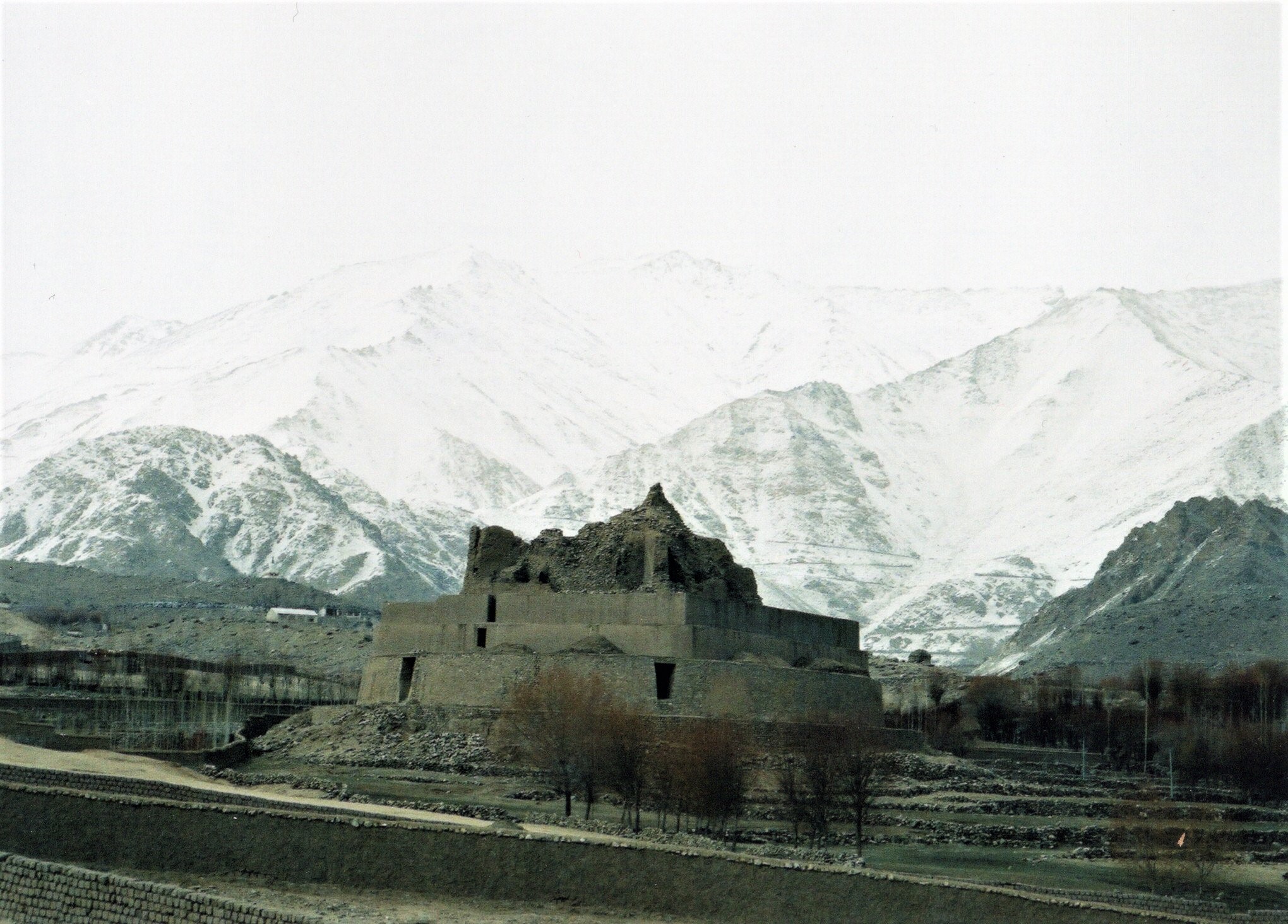
Down to the road just before 4.00, then head up the road to have a look at what appears to be a half reconstructed fort. When I get there, there is nothing to indicate what it is, just a sign warning people that it is of historic interest, so don’t go knocking it over. I guess that it might be Tisseru Stupa, although it does not really look that much like a stupa to me.
I then head back to the guesthouse, feeling a bit weary. Wander out into town and end up eating thukpa in a Tibetan restaurant.

Back again for the evening. It’s getting cold!

Looking at my map, there is a peak a couple of kilometres north of Leh, marked at 4150m. It’s in the right place and is about the right height, so I’m bagging it.
India – My First Time 2 (reblog)

The second and final part of an early travel post:

A few more photographs from 1989 (my apologies for the quality of some of them – all I had with me was a very cheap camera):

After a few days in Delhi, I went to Srinagar, in Kashmir. I took the bus that went through Jammu, and 24 hours after leaving I was deposited in Srinagar.

On the way, I did one of the most stupid things I have ever done in India.

The bus was packed. I think that I was the only westerner on the bus, but I liked it that way. On a 24 hour bus trip, it is pretty well impossible to ignore your neighbours for the entire journey, and so I spent much of the time chatting with the chap sitting next to me, and the ones across the aisle. When the bus halted to allow us to get some food, we sat at the side of the road together munching on the samosas, pakoras and newspaper twists full of nuts that we had bought.

When it started up again, we chatted long into the night before falling asleep.

And at the first stop just after dawn, at another cluster of roadside stalls for breakfast, I joined them at the broken water pipe beside the road where we all brushed our teeth.

Maybe if I had spent longer than just a few days in India by then, the consequences would not have been so violent. But as it was, my stomach had clearly not yet adjusted to Indian bacteria.

And maybe if I had spent longer in India I would have realised that it was not a clever thing to do in the first place.

IMG

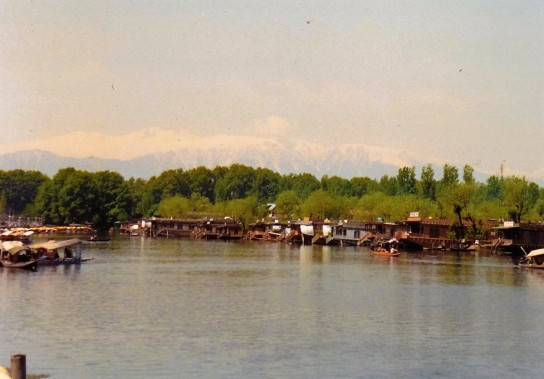
In Srinagar, I stayed on a houseboat on Lake Dal. I no longer remember what it was called, but I was the only guest, and I had the place to myself. These wonderful floating mini-palaces are a relic of the days of British India, when the local Prince refused to allow the British to purchase land to build houses. They got around this by causing the construction of houseboats to stay on, instead. Made from wood, beautifully carved, and furnished opulently throughout, they seemed to me to be unspeakable luxury after my 24 hour bus journey.

The rapidly multiplying bacteria in my stomach, though, were clearly in a hurry to join all of their friends in the Lake. But for someone feeling poorly and reluctant to stray too far from a bathroom for a few days, the houseboat could not have been better. I had my meals cooked for me, and any little treats I fancied I could buy from one of the many shikaras that continually paddled up to the houseboat. These little boats, which also acted as water taxis, sold chocolate, flowers, fruit and vegetables, cigarettes, snacks, flowers, newspapers and yet more flowers.

I passed much of that time on the deck or on the roof reading, or chatting with the folks around me on the nearby boats or on the shikaras.

After a few days I recovered enough to explore the area a little. I walked many of the paths around the lake, which is a more complex shape than the visitor first realises. I would frequently find myself on causeways or small spurs of land sticking far out into the lake. I wandered around the Shalimar and Nishat gardens, and I walked up the long, winding path to the Shankaracharya Temple, on the hill of the same name.

This was March, 1989, and even someone as unobservant as me could not fail to spot the signs of unrest. Once or twice in the evenings I heard what might be shots or small explosions in the distance, which my host casually dismissed as ‘bandits’. On one occasion, walking through Srinagar I found the road blocked outside a mosque, where there was lots of shouting and a large police presence; although on reflection, I have seen much the same thing outside the rail ticket reservation office in Kolkata, and perhaps I should not make too much of it as an incident.

It was only a few short weeks later, however, that the insurgency began in earnest. For a long time there would be very few further visitors to the lovely Vale of Kashmir.

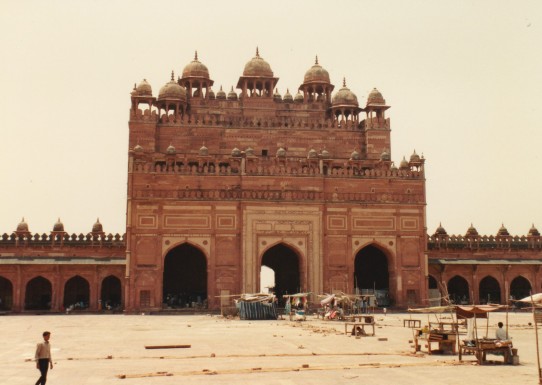
After a week, I returned to Delhi and then headed immediately to Agra, to see the Taj Mahal. I chartered a car and driver, because I wanted to also visit Fatehpur Sikri on the way.

IMG_0002

Fatehpur Sikri was built by the emperor Akbar in the sixteenth century. His intention was to create a new capital city that honoured a Sufi Saint whose blessing the emperor believed had given him a male heir. This site was chosen, as it was close to the dwelling of the saint. Unfortunately, the area suffered from water shortages, and the city was abandoned shortly after the emperor died, after only 13 years occupation.

There remains the magnificent, well preserved, fortified city that I wanted to wander around for a few hours. Inside, there were a few stalls selling souvenirs and drinks, and a number of other visitors looking around, but generally there was an impression of peace and emptiness. I have not been back since, but I believe that it is now far more crowded, and that there are far more touts and hawkers on the site.

IMG_0003 (2)

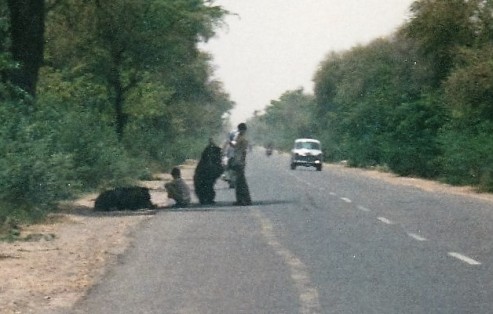
Performing bears at the side of the road. The cruel practice of dancing bears was made illegal in India in 1972, but was certainly still common in 1989. These ones were at the side of the road not far from Fatehpur Sikri, on my way to Agra.

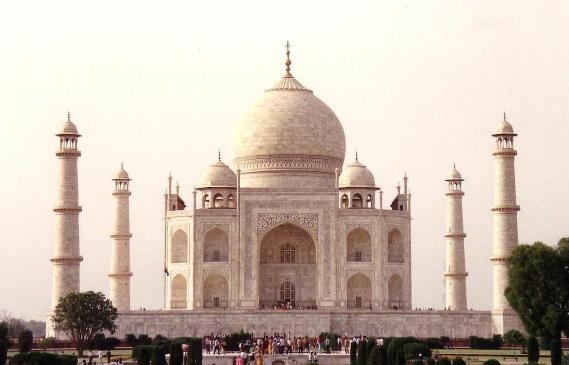
In Agra itself, I visited the Taj Mahal.

the_classic

There are plenty of people who will tell you that it is over-hyped, and that there are many greater buildings in the world. It is possible, also, that some of these people have actually been to Agra.

It may be that there are some buildings that are more impressive, but how can you measure such things?

My first sight of it, as I walked through the gateway, made me catch my breath and stop still. For a moment, I could not believe how lovely it was. I then spent a long time wandering around the site, and I still think it one of the most beautiful and magnificent buildings that I have ever seen. I watched the afternoon light fade and die, and the sun go down, and the building seemed to glow and shimmer and almost float before me.

I left when they threw us all out at dusk, knowing that I had just seen something very special.

India – My First Time 1 (reblog)

As promised, a repost of one of my early travel posts. This is part one of two, so I’ll re-post the second one shortly:

Just a few photos this time, taken on my first proper trip to India. On the only previous visit, in 1988, I had spent a manic 18 hours in Delhi, and then taken a long bus journey to Nepal. That was a journey that really should be the subject of a blog itself, sometime.

On the following year, then, I returned to India, intending to spend rather longer there this time. As it turned out, I had to return to England after a few weeks, but the short time that I was in India whetted my appetite for more. It is said that western visitors to India tend to fall into one or the other of two categories. Either they fall in love with the country, and return whenever they can, or they swear never to go within a thousand miles of it ever again.

I’ve been back about ten times.

Delhi Red Fort 1

The Red Fort (1989)

I arrived in Delhi with a copy of Lonely Planet’s ‘West Asia on a Shoestring’. In those days, the Lonely Planet tomes really were aimed at backpacking budget travellers, with their recommendations for rooms tending to be dormitories and really cheap hotels. My flight arrived in the late afternoon, so that not only was I weary from the long journey, but the light was already fading when I walked out of the airport. In the chaotic maelstrom outside of passengers and taxi drivers fighting over them, I managed to remain calm enough to locate the corner where the buses of the Ex-Servicemen’s Air Link Transport Services waited. I think they are still in operation today (I’m sure someone will tell me), with their yellow (I think) buses providing a cheap link into the centre of Delhi where I was heading.

I was dropped off near the hotel I had decided to use, the Ashok Yatri Niwas, which stood at the junction of Janpath and Ashoka Road. It has long gone, now; a great concrete monster of a place with cement beds and lifts that seemed to take half a day to do the full journey up to the top floor. I don’t think that many people mourn its going, but I was reasonably comfortable there for a couple of nights. It was where I had stayed the previous year for the one night I was in Delhi. There was hot water in the bathroom, as long as you rose early enough, and I remember the cafeteria being fairly basic, but adequate. For someone on a tight budget, it was fine. Back then, it was a case of turn up and hope there was a room, especially if you had just arrived in the country. There was no email in those days. But it was pretty big, and there was room for me.

Unlike my previous flying visit, I now had time to wander about and savour everything around me. And for the first time, it really did seem an alien and exotic society. I had enjoyed browsing in the souks (bazaars) when I had lived in Oman, and also out in the little villages there, but my first taste of India seemed to me to be as exciting and exotic as it got. Everywhere I went, I was surrounded by the noise of traffic and the odours of exhaust fumes. But the traffic was different; the buses appeared to be almost falling to pieces, loud and fierce, with people hanging off the outside as well as being crammed inside behind open, barred, windows. I saw autos everywhere; the little three-wheeled taxis that buzzed like wasps through the traffic, squeezing through every available gap. Amongst this impatient, petulant, hooting traffic, carts pulled by horses or buffaloes plodded. Motorbike riders forced their way through, and cyclists cautiously weaved their way along. Everywhere, pedestrians took their lives in their hands to cross the roads, but the traffic all swerved out of the way for the cattle that wandered imperiously through the streets, ignoring it all.

Incredibly, through the traffic pollution so thick that you could grab handfuls of it out of the air, there were dozens of other smells assailing me everywhere I went. I was tempted every few steps by cooking foods, and then I might pass a doorway and a strong smell of incense would waft out. Seconds later, I would suddenly wrinkle my nose as I passed a pool of sewage on the sidewalk, but then immediately I might pass a fragrant flower stall.

delhi_gate

Delhi Gate, in the old city near Chandni Chowk. (1989)

There were temples everywhere, and a shrine of some description every few steps. Here and there were green and white mosques, stalls of old sacking and weathered boards set up outside gleaming new metal, glass and concrete shops. There were holy men jostling office workers, great hump-backed cattle and pariah dogs in corners or in the middle of the footway, beggars, shoe shiners, touts and hustlers, people in a hurry and idlers passing the time of day. I was urged to discretely change money, buy drugs, see pornographic videos, have a massage, change hotels, visit ‘my brother’s’ shop or book a trip to another part of India.

It was dirty, colourful, loud, exciting, and different and I loved it.

I walked everywhere I could, not just because I was on a tight budget, but it is always how I have got to know a place. I went to the Red Fort, on my first full day there, enjoying the relative peace and quiet inside, and it was here that I discovered Mogul architecture: The beautiful soft red stone and the marble, the carvings and inlay, the arches and columns…the only time I’d seen architecture that beautiful, before, was in Grenada, in Spain.

And now, looking at the photos I took, I am struck by an odd discrepancy. In my memory, one of the defining things about Delhi when I arrived was the incredible press of traffic. In my photos, though, there are comparatively few people, and even less traffic. Is my memory at fault? Is it just that there were obviously far fewer people in India 30 years ago? Perhaps it is chance alone.

But I think I’ll return to the architecture at a later date.

A Busy Time in West Bengal

For the last couple of months, during Lockdown and its easing, I have spent an awful lot of time up in the Himalayan foothills of West Bengal.

bookshop (2)

Okay, that’s not strictly true, but for most of that time I have spent my working day revising, re-writing, and editing A Good Place, my novel set in a fictitious hill station there. I have some new characters to weave in, some old ones to remove, and the story line to alter in several major ways, including a different ending.

I finished the first draft some nine months ago, but there were parts I didn’t feel entirely satisfied with then, and my beta reader unerringly picked those out for major revision. I then spent a while thinking about the story line and took out nearly all the final third of the book and chucked it.

That left me with a lot to rewrite.

Much of the problem stemmed from the fact that after I published Making Friends With the Crocodile, which is set in an Indian village with peopled with all Indian characters, I wanted to write a novel dealing with the British who remained behind in India after partition. A kind of balance to my writing. That was all well and good, but I began writing the novel before I was completely satisfied with the story line, and the more I wrote of it the less I liked it. So I kept changing the story line as I wrote rather than doing what I really should have done, which was delete the whole thing and go away and write something completely different, waiting until I knew what I really wanted to write. But I’m now content that I have the story I want to tell, rather than Just A Story.

Consequently, I have been virtually living in West Bengal during these days, inevitably leading to yearnings to be there in person. Which does nothing to ease the feelings of frustration at enduring the travel restrictions of Lockdown.

050a

However, one of the advantages of having several projects on the go at once, which I always have, is that I can switch to another for a while when I need to. Last week, then, I spent one day giving a final edit to a short story which gave me the opportunity to spend the day (in my head!) in rural Sussex, which was very welcome. Especially as that is somewhere we can get to now, with a minimum of hassle.

And A Good Place? I’m glad you asked. I think I’m close to finishing the second draft, which will be a blessed relief.

Just so long as my beta reader doesn’t throw her hands up in horror when she reads it…

Lost and Found in Translation

Untitled-Grayscale-02

I have read many novels, short stories and poems translated into English from other languages, but I wonder how much of what I read is true to the original intentions of the authors?

The Argentinian writer Jorge Luis Borges wrote many short stories and poems, all of them in his native Spanish. Although I did buy one collection in Spanish, my own knowledge of that language has always been too poor for me to do anything other than read it slowly and laboriously and, undoubtedly, to miss many of the nuances in the writing. So for that reason, I’ve had to read them in translation.

And in any case, even if I spoke Spanish well I could do little more than read it as translation in my head. Unless I spoke it like a native speaker, I would still likely miss much that the author intended to convey.

And so I buy translations.

Zima Junction by the Russian poet Yevgeny Yevtushenko is a long poem that tells of the poet’s visit to his home town in Siberia, having left some years before to go to live and work in a city. It is a beautiful depiction of rural life in Russia at the time, seen afresh after a gap of several years away, and describes the poets now ambiguous relationship with it.

Long poems can be good vehicles for describing journeys; my own poem The Night Bus does just that, and was written because in that instance I could not find any other medium that worked as well to convey what I wanted to say.

Another favourite of mine is Dart by Alice Oswald, which describes a journey from the source to the sea along the River Dart in Devon, England. She gives voices to the various people encountered along this journey, and to the animals living there…Since it is written in English, I am not left with any worry I am missing things the poet wanted to say, other than perhaps my own occasional inability to understand her.

I have a book of poems from North East India. It is an anthology that I bought in India, with contributions from a huge number of poets. A few of them wrote in English, but the majority of them wrote in other languages – some in Bengali, but the majority in one or other of the plethora of languages to be found in the North East States. And, sadly, most of the translations appear to have been done as a straightforward translation word for word, with no thought given to the feeling of the poem. Any rhythm the poems may originally have had seems to have been lost. The sentences are often clunky and uncomfortable to read. Their meanings have become lost in translation.

But Zima Junction has a natural and comfortable rhythm

The translator of a poem has, to my mind, a task that is more difficult than the translator of prose. Yet, paradoxically, they also have more freedom. More difficult, because they have to get across to the reader ideas or meanings that may be partly concealed in idiomatic language used by the author that perhaps we have no parallel for in English, and hence they may have to completely alter the structure of that part. This will affect a line of poetry far more than it would a line of prose. Immediately, the rhythm of the poem is disrupted, the word count of the line changed.

Yet the reader of a poem has a right to expect a poem. And so, strangely, the translator has the freedom to re-write the poem. In the need for the end result of their translation to be a poem, they may have to completely alter much of the structure to enable the translated words to reassemble themselves as a poem. And so the translators of poems must, by essence, be poets themselves.

So to return to Borges and Yevtushenko, when I read the poems I do wonder whether I am actually reading their poems, or someone else’s?

The Night Bus

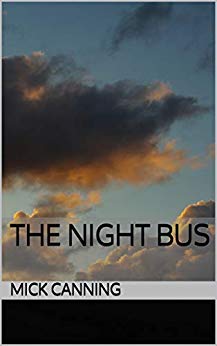
After a day of faffing and kerfuffle (and a little bad language, but not too much) yesterday, I have posted my new book up on Amazon.

312EjL1fieL._SY346_

The Kindle e-book will be released on 30th November and is available to pre-order now. It will take a few days yet for the paperback edition to be ready, as I need to check through a printed proof first. I’ll post when that is done.

The book is in two parts. A collection of seven short – and not so short – stories, which make up the bulk of the book, followed by a selection of recent poems.

I have always enjoyed travel and, one way or another, nearly every piece in here is to do with travel. The only exceptions are a couple of the poems that seemed to fit in among the others for aesthetic reasons.

Some of the stories are quite dark, but the majority of the poems have a lighter touch. In these, especially, I hope that my love of the natural world comes through.

Two of the longer stories are set in India; in one, a young man goes in search of a mysterious destiny, while in the other a travelling Englishman becomes embroiled in a chilling disappearance. One story speaks of the support and comradeship of a close-knit island community while another tells of jealous intelligences far older than mankind.

Of the poems, there is one long piece, which gives the title to this collection and tells of a long journey across India and into the mountains and, among others, one short series of poems about the ancient paths and tracks of Britain.

An early piece of writing advice I was given, and for which I am eternally grateful, was ‘Write the stories and poems you want to read’. This I have done, and I hope you will want to read them too.

Review of You beneath Your Skin by Damyanti Biswas

YBYS high res front

First, a disclaimer: I received an Advance Reading Copy of this book with no obligation to post a review.

A psychological crime procedural novel set in Delhi, You Beneath Your Skin quickly paints a vivid picture of the streets, drawing the reader into a dark and desperate world. Although Indian society is divided into the haves and the have-nots more starkly than many, here the two worlds soon collide.

The central character, Anjali, is the divorced mother of a teenaged boy with a form of high-functioning autism that makes him extremely challenging and demanding. She is having a long-term affair with Jatin, who is both the Special Commissioner of Crime in the Delhi Police Force, and the married brother of her best friend, Maya.

Jatin has been charged with investigating a crime supposedly committed by an opposition member of Parliament, but while the government want a conviction, the politician has friends who will pull strings to ensure it is hushed up. The crime under investigation never made clear, but this conflict has resulted in pressure being brought on Jatin to have the case dropped. On top of this, a series of brutal murders are being carried out in the slum areas of Delhi, and although there are elements of the police and the wider establishment who don’t consider them worth investigating, Jatin and his team are determined to track down the perpetrators.

As the tension increases, and the investigations unexpectedly threaten to draw in more of the central characters, one of them is suddenly the victim of an acid attack. And from now on, there are two main storylines, one being the on-going police investigations into the murders, and the other following the victim of the acid attack and the search for reasons and answers to that.

The unfolding storyline, the large cast of different characters and the continuing atmosphere of menace is handled skilfully throughout. Both the brutality both of the criminal underworld and of the police themselves is an ever-present threat, as is both the desperation felt by the poor and the sense of privilege and entitlement by the rich and powerful. And throughout it all, the misogyny intrenched in Indian society overlays everything that happens.

Damyanti Biswas is a Delhiite, writing with the knowledge and authority of someone who knows their area intimately. This a remarkable achievement for a debut novel, powerful and fluent. I was hooked from the beginning, sympathising with the characters and intrigued by the twists and turns of this powerful plot.

Acid attacks are a horrendous phenomenon, scarring and disfiguring, and even killing the victim. I think that many people view them as almost ‘minor’ crimes, and assume that the victim merely suffers a bit of pain and discomfort, and a bit of damage to their skin, but these attacks can inflict injuries as terrible as the burns from fires, and cause almost unbearable pain. Yet partly because of the easy availability of corrosive liquids, they have become almost commonplace in some ways, being used as revenge for perceived slights and ‘dishonours’ as well as for gangland feuds.

This novel, as well as relating an excellent detective story, is also Damyanti’s vehicle to help bring understanding of this horror to the attention of the wider world.

I would certainly give this book five stars.

The Joy of Unknowing (2)

As soon as I had written my last blog post, I thought of this piece I wrote quite a long time ago which offers a similar take on travel and navigation. I am tempted to tidy it up a bit and perhaps update it to mention GPS, but instead I’ll leave it as it is.

Untitled-Grayscale-01

When I was a teenager, I began to use maps, although in rather an ad hoc, hit and miss manner. They were there for me when I was really stuck, or just wanted to know which general direction something lay. It would be a very long time before I began to use them in a careful, detailed way, able to predict the exact lie of the land, navigate in the fog or the dark, find my way through complicated landscapes with the map and compass. And, do you know, since I’ve learned to do that, I feel as though I’ve lost something rather magical, although I don’t suppose that I can blame it all on that. The maps that I was using as a teenager would tend to be the Bartholomew’s touring maps, small scale with little detail. I would feel, as I headed along a Cornish footpath, that I only knew roughly where I was going. It felt like an adventure, an exploration.

Untitled-Grayscale-02

Now, I need to be more and more remote to get that feeling, and even then it does not always work. Having just spent some time in Ladakh, in the Himalaya in the far north of India, I was surprised at just how easy all of my walking was. Setting off with map and compass, I always knew exactly where I was, only confused at times by the multiplicity of tracks criss-crossing the landscape. Even then, reference to mountains and villages with map and compass would invariably allow me to set my position. It doesn’t mean that I wanted to get lost, just that there was a small part of me that said ‘even this is all tame!’ Equally, I can be put off, by using the map, by the knowledge that over the interesting looking ridge that I was heading for, lies a motorway or building estate, and so I spend ages trying to plot a route that I try to get perfect, rather than simply heading off in the direction that I want to go and exploring as I go, correcting my course as I travel.

Nothing can tempt me more than a track leading tantalisingly into the distance, perhaps meandering through Mediterranean scrub towards a notch in the skyline, perhaps leading through a glowing archway of trees. Even now, when using map and compass to navigate, I often have to resist the temptation to ignore the map and head off to follow an interesting looking track. I think that this must be a part of my ‘I wonder what’s over the other side of the hill?’ nature. It is another reason why I’ve never been able to lie on a beach – apart from the fact that it seems a particularly pointless pastime in any case. Any time that I’ve tried it, it never seems to be more than a couple of minutes before I begin to think ‘What’s round the cliff?’ or ‘If I head back up the river, I think I might find a way through those hills.’ And then I just have to go to find out.

Wordy Wednesday 3

trichy temple 2

Arv’s comments on last week’s Wordy Wednesday post reminded me of some of what stirred my interest in the history of language. Reading about the unexpected discovery in the nineteenth century of the great similarities between words in Sanskrit, the ancient written language of much of the Indian Subcontinent, and words in Ancient Greek and Latin which were a starting point for the study of Linguistics, was something that fascinated me.

The word for ‘father‘, for example, is ‘pita‘ in Sanskrit, and ‘pater‘ in Latin and Greek.

The word for ‘mother‘ is ‘mata‘ in Sanskrit, ‘mater‘ in Latin and ‘meter‘ in Greek.

The word ‘Aryan‘, actually has the meaning of noble or honourable in Sanskrit (arya), which in Latin becomes ‘ariana‘ (holy) and in Ancient Greek ‘areia‘.

And there are other, seemingly more unlikely, connections.

The word for ‘horse‘ is ‘aswa‘ in Sanskrit, and ‘asva‘ in Lithuanian!

Whether the implications behind this are that there was a great mixing of peoples in those days and that different civilisations adopted words from the others, or that all these languages descended from one single, now lost, language in the distant past, can never be known for certain, but the evidence for the latter is extremely strong, especially as the world population was so much smaller then.

Modern research suggests that Sanskrit, spoken by the ancient tribes of India who called themselves ‘Aryans’, entered the Indian subcontinent from the north west, an area both closer to modern day Europe (and its languages) and to the source of the original migration of peoples out of Africa.

Of course, the theory of a single original language puts me in mind of the myth of the Tower of Babel…

My interest was also stirred by a number of similarities I came across when I was travelling or working overseas. One example will suffice:

Cat‘ is ‘chat‘ in French, ‘gato‘ in Spanish and Portuguese ‘katz‘ in German, ‘kot‘ in Polish, ‘kot‘ in Russian and ‘kitta‘ in Arabic.

I think the real significance of these similarities is that when you consider it logically, I don’t suppose that the speakers of all these languages were just waiting for someone to come along and give them a useful word for the furry mouse-catchers they had hanging around their villages and towns. It seems entirely probable that they all contain similar words because all those languages descended from one common source.

And this all leads me to one final thought (deep breath!)…in this ancient, lost, original language of our distant ancestors, we can be fairly certain, for example, that the word for ‘father‘ was something similar to most of its derivatives in use today. As well as the Latin, Greek and Sanskrit examples above, it is ‘padre‘ in Spanish, ‘pere‘ in French, and ‘vater‘ in German.

We may not be able to reconstruct this language (although in the future, who knows?), but we can certainly make a good guess at what a number of its words were, and they were words that most of us are familiar with today.

Leh Old Town

Fourteen years ago I went up to Ladakh, in the Northern Indian Himalaya. Crikey, fourteen years! Where did that go?

025a

This is a painting I made in ink and watercolours of an area of the Old Town of Leh, the Main Town of Ladakh. It shows part of a Buddhist shrine, next to another old building. Most of the buildings are a mixture of stone and wood, the wood frequently carved and / or painted.

Although there were quite a few new buildings in the town, the majority of them were old and the whole town had the feel of belonging to another century. I travelled in early April, before most visitors arrive and when Ladakh is still bitterly cold and wintry – certainly overnight. During the day the temperature just sneaked a little above freezing. This meant that I seemed to be the only Westerner there – I certainly don’t remember seeing any others – and I was never hassled by touts of any description, possibly because it was still too early.

But, above all, the people were among the friendliest I have ever met.

Regretfully, I doubt I’ll get another chance to go there, but it is certainly a very special place!

Picture available on my Etsy shop site here