6th November 2025

When I began this blog, some ten years ago, it was for the express purpose of both promoting my writing and discussing writing in general. Since then, although I have certainly used it for that purpose, promoting my books and zines, posting the occasional poem, writing the occasional review of other books, and posting discussion topics on the subject, the blog has almost inevitably drifted into other waters. Since I enjoy travel so much, I began to post photographs and memories of those travels. I put up pictures of my artwork, since this seemed an obvious (and free!) place to promote them. Articles on the British countryside, mythology and folklore, and customs. Like most people, I have wide interests and this is a good format to record them in.

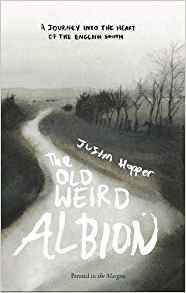
The Old Weird Albion, by Justin Hopper. Reviewed in 2019

One of my great pleasures has been the meeting of minds. We follow each other, read posts and comment, foment discussions. And it is a safe place! Unlike social media, it is very rare for strangers to barge in and attack other users. And on the very rare occasions this happens, it is easy to just block them. This makes it a much more enjoyable place to spend time. And there are no algorithms pushing contentious posts at the reader.

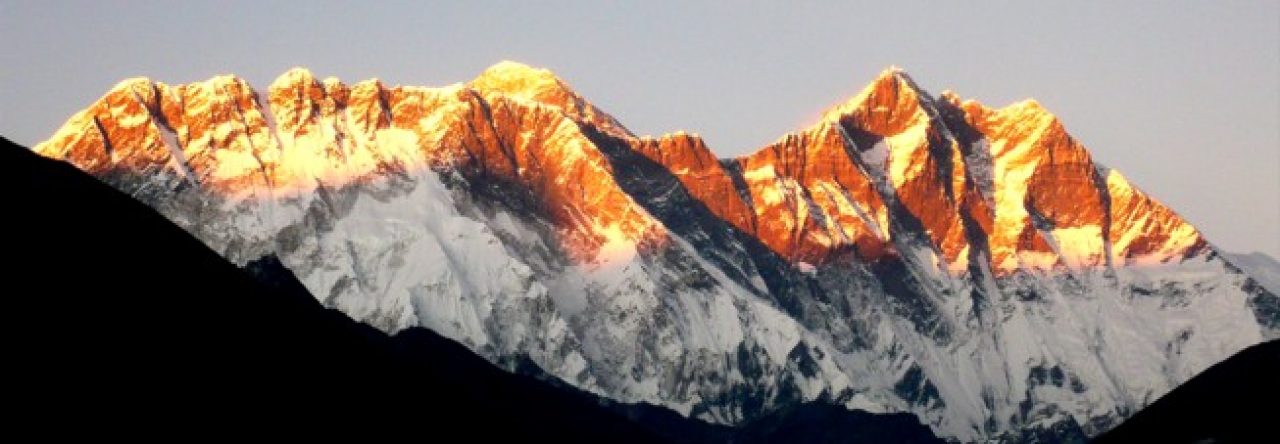
Mount Everest, photographed from Tengboche in Nepal from a post in 2021

But for the last couple of years I have been rather tardy in both posting and reading other’s blogs. Part of the reason for this is that since being retired, for some reason I seem to have less free time than I did before. I’m not really sure why that is. But I’m still here. And to get myself back into the swing of things, as well as writing some new posts, I’ll probably re-post a few of the posts I put up a long while back, which many of my current followers won’t have seen.

Recycling is good, after all.

A piece of my artwork.

New ‘zine – Issue 1

I’ve completed my first new year’s project.

Ladies and gentlemen, I’d like to present Echoes and Imaginings, issue one.

Quite pleased with the title, actually. My aim is to produce at least four issues, although whether I do or not depends largely on how quickly I can put each issue together. I want them to roughly reflect the seasons of the year, without being too dogmatic about it. There is a slant towards folklore, psychogeography and a bit of speculation, as well as photography and poetry. Future issues may well have some of my artwork included.

I’m already writing articles for issue 2…

In this issue you can find Hoodening, Wassailing, a meditation on time, photographs, poetry, and more. There are lots of trees. Some of the articles have appeared here as posts, although there is some re-writing, but most of the poetry and the pictures are new. It is available through my Etsy shop, or just message me directly (I use PayPal).

Personally, I reckon it’s a thing of beauty.

And as well as these four issues, I have ideas for some others, which I expect to bring out at random times.

At the moment, I feel this is the way for me to go. I don’t see myself finishing a novel any time soon, although I do have an almost finished one sitting there. I don’t currently feel inclined to get it published, though. And equally, I don’t feel inclined to go through all the hassle of submitting poems or short stories to different publications or into competitions.

And on another note, you have probably seen on other blogs the ongoing issues of pirated e-books (especially on Amazon, I hear). I think we have AI to thank for a lot of this, and it seems so many authors are having their books ripped or plagiarised it’s becoming ridiculous. For that reason, I have simply decided my books will no longer be available as e-books, and have deleted them.

In Another Lifetime I Could Have Been…(3)

…a tramp.

My wife often says I’m in touch with my inner vagabond. I’m taking that to mean that I enjoy walking, unless she’s referring to something else. My dress sense, for example. But yes, I love walking, especially long distance walking, but most of all I like to simply wander. There is a tremendous pleasure to be had by just setting off for a long walk without any particular destination in mind. Taking the more interesting-looking path as we go.

Of course, it’s not always possible to travel this way. We need to have some sort of destination in mind unless we’re prepared to just settle down to sleep wherever we find ourselves at nightfall. Usually we don’t have the time and the freedom to travel like this. Some people may also find it unnerving not to have board and lodging all planned in advance.

I’ve only done it occasionally, I must admit, but found it remarkably liberating when I did. There was no pressure to reach a particular destination by nightfall, I just had the freedom to wander along at my own pace until I felt I’d had enough for the day.

Even then, of course, some planning had to be done. Would I carry food or rely on reaching somewhere I could get a meal of some sorts? Would I carry shelter? Extra clothes?

But that is not exactly tramping, of course. It is just an exercise to be enjoyed (or otherwise) for a short period. It’s not a permanent lifestyle.

I’m sure that very few folk have deliberately chosen tramping as a lifestyle, but I’m aware there are some who have. This leads to the obvious question – why? I suppose all of us, at some time, wonder what is really important in life? Riches and property are, indeed, a burden in many ways, as well as conferring the obvious advantages in life. Some people just didn’t want that lifestyle. Some didn’t want the responsibilities of a settled life, with or without a family. There were always some folk who could just never settle anywhere for long. Most, though, would have ended up tramping through loss of employment and / or home.

Certainly I understand the difficulties of the tramping life, especially when one is no longer young. And I certainly wouldn’t want to be trying to survive as a homeless person in a city – rightly or wrongly, I think of tramping as a rural phenomenon. The whole point of it was to be on the move, rather than staying in one place. I doubt it would be possible today, with so many laws against that kind of lifestyle. There were, of course, laws against it in the past, too, but almost certainly much harder to enforce. I think, too, society is just ordered differently today. We think differently to how we did fifty or a hundred years ago. A tramp turning up at a farm today looking for a couple of hours work in return for a meal would get short shrift, and I can’t imagine any householder regarding one with anything other than hostility.

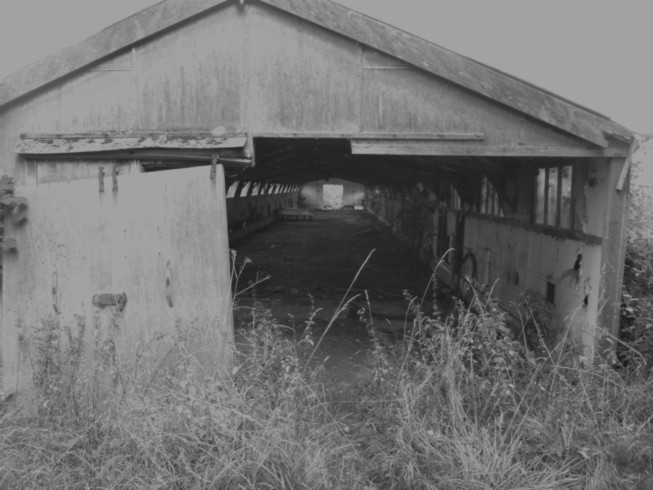
Again, I can’t imagine anyone choosing that lifestyle through the winter. But tramps used to learn of places they could settle for the winter, often carrying out odd jobs in return for permission to sleep in a shed or a barn and the odd meal. In this post I’m talking specifically about Britain, but I suspect it applies equally to hobos in America, swagmen in Australia, and possibly others I’m not aware of elsewhere.

And it would be unlikely to be a long life. But there were always some who chose it as a way of life rather than being forced into it by circumstances, and in another time I might possibly have been one of those.

My Virtual Reality

One of the things about growing…older, let’s say…and I’m not saying it’s a good thing or a bad thing, is the growing realisation that we’re never going to live in that place that we are convinced is perfect for us, or have the day to day lifestyle that is everything we want.

One consolation for the writer, even if it’s rather a shallow consolation, is the opportunity to write these places and lifestyles for ourselves. For the last year or so, nearly all my creative writing has been rather experimental, which is one reason I’ve not put much up on here. Rather than focusing on writing the complexities of a story arc, I have been very much concerned with the character of the characters I have written, and possibly even more concerned with the environment they occupy.

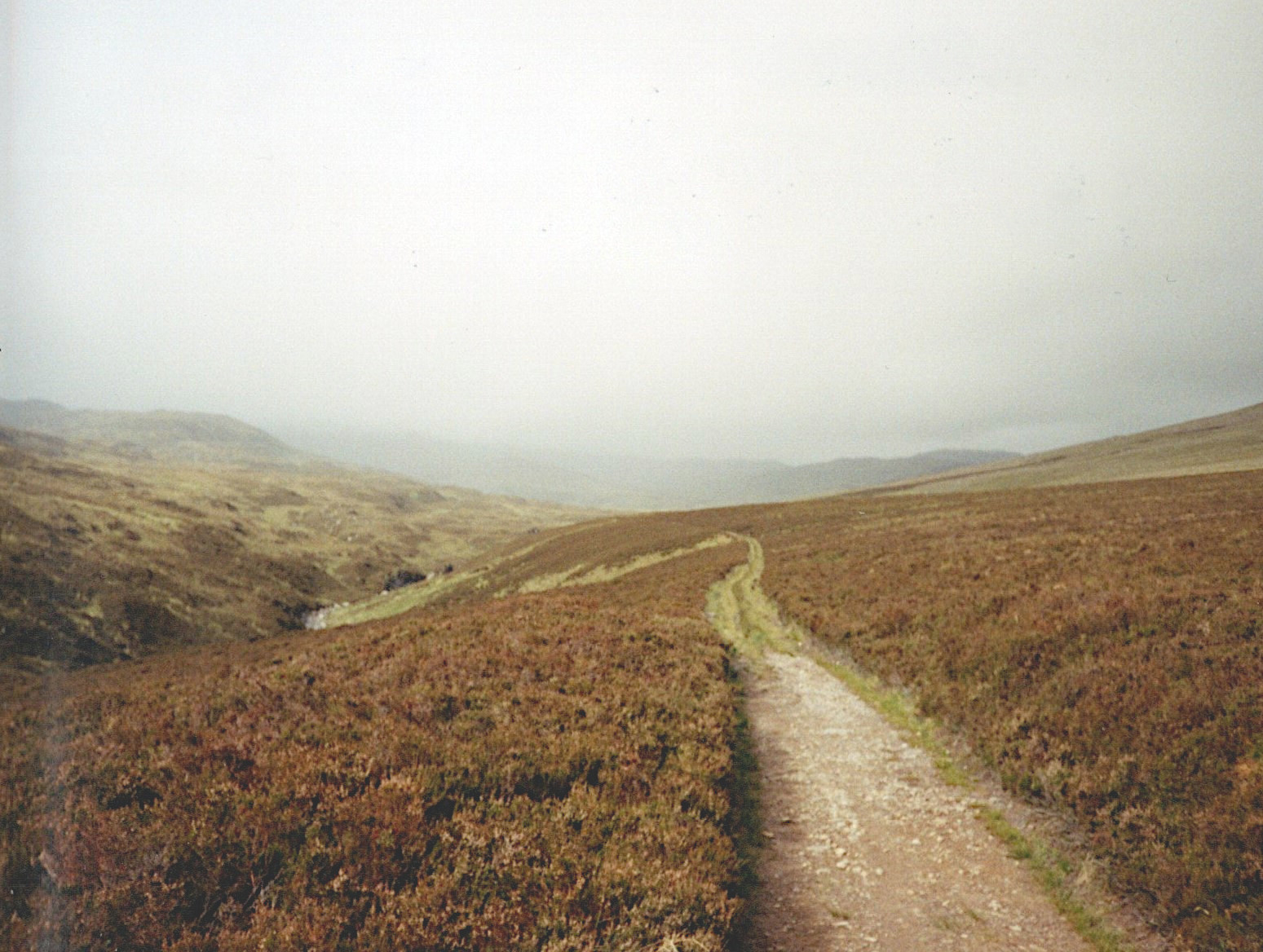
In a way, then, I’m exploring different versions of myself – although that, surely, is what all writers do anyway? – and it is instructive how much all of these versions have in common. For anyone who knows me, the information that these scenes involve almost nothing of town or city should come as little surprise. But it’s a learning process, a personal learning process. And even the photos I’ve chosen to accompany this post serve to reinforce what I already know about myself.

And the other strand that occurred to me as I thought about all this, is how it has brought home to me that the priority in my writing – my absolute, number one priority – is that first and foremost I am writing for myself. Whatever I write has to please a rather demanding reader; myself. And if that means my writing is even less ‘commercial’ than it was before, then so be it.

Strangely, this seems to have removed the pressure of time. I’ve always ended a writing day either pleased with the amount I’ve written or berating myself for not having written more. As if that was the sole measure of how successful or productive my day had been! Now, though, writing just for myself, success can be equated with how good I feel the output is; and by ‘good’ I mean quality (as defined by me, for me). So even a few lines that work well may be a good day’s work. I think this time pressure, this fixation with writing a certain amount each day, is a purely commercial pressure; an I-need-to-finish-another-book thing.

So goodbye to that. It’s not for me.

Sigh

Poem number five in my Poem-A-Day-For-A-Week-Or-So series. Snow outside, test cricket on the TV, beer in the cupboard. That’s my day sorted, then.

The sea sighs for you tonight.

It sucks at the shingle

And smears your footprints

Like a wet thumb rubbed across writing.

Where once you walked and left your

Prints, it gently wipes the land clean.

Lovingly it lays its cheek to the ground

And nuzzles your memory.

.

We are more than specks

In the infinity of time and space

Yet somehow we need to

Make sense of our lives.

Rock endures

But so does the wind and the rain.

More so, in fact, since in the end

Mountains are levelled

And the wind and rain remain.

.

In the end the passage of many feet

May be more durable than

Dwellings of stone.

Winter – 3

Winter would have brought a period of enforced leisure for our ancestors. Their days would have become shorter with the increasing hours of darkness, until in midwinter the daylight hours would make up only one third of the time.

All outdoor activities would effectively cease in the darkness, and even during the day the worsening weather would limit what could be achieved outdoors. But other than those tasks that could be carried out, what did they do in these times? how did they pass those long hours?

At times, no doubt, there would have been feasting and merry-making because they would have required some cheer and a sense of well-being to help them get through the winter. But they must also have been mindful of husbanding scarce food resources through those long barren months.

it may be that they played games. Although archaeology hasn’t furnished us with evidence of board games or dice or variations on these, it is still possible they would scratch, perhaps, some form of grid into the beaten soil of the floor and play games of skill or chance. It is not beyond possibility that some flat rocks with strange scorings and lines on them were used for that purpose.

With no TVs or books or computers, it might seem to us that time would have weighed heavily on their hands. But you are used to what you are used to, and they would have seen things differently. They may have looked forward to a period of relative inactivity; long hours of no talk, sitting or lying down, the mind slowing down until hours were passed in no thought. Did they then also pass unusually long hours in sleep? A kind of semi-hibernation as a way of conserving energy?

But long hours also, of talking. They must have talked: of daily life and plans and past disasters and glories, of gossip, and told stories both new and handed down from previous generations. These stories would have been incredibly powerful tools for the preservation of the tribe. With no written word, the spoken word becomes the only way knowledge is transmitted. And thus it has to be memorised, both for use and also to transmit in the future. As aids to memorising, powerful tools are repetition, rhyme and rhythm. We cannot know exactly how this was utilised, but it cannot have been long before poetry and song evolved.

It can be no coincidence, but in all the early societies we know of who had no written records, those of which we know about through records left by others – such as the Romans writing of the Britons – it is clear that poetry and song were important, and the bard a highly valued member of that society. Indeed, the writings left by Romans, who tended to denigrate anyone not Roman as barbarian and primitive, violent, and uncultured, still make it clear these ‘barbarian’ tribes valued poetry and song highly. Partly, this must have been for educational purposes, but they seem also to have been valued for themselves, for their beauty. It is taking things too far to suggest this proves the same would have applied in Neolithic times, but it is certainly possible. At some point, there would have been music. I imagine this developed out of ritual, perhaps through repetitive chanting and the beat of drums…

And so, I can imagine this at first being perhaps the preserve of the shaman, until becoming a specialised ‘post’ – that of the bard – and acquiring the value of entertainment, as well as instruction.

The Oddness of Time – 2

I was eleven, and it was my first year in secondary school.

I don’t remember the day or the date, which in a way surprises me, since everything else was so vivid. But I was walking with Chas, a sometime friend, and we had just finished a maths lesson and were on morning break. The day was overcast, and I suspect it was early summer.

003a

We had just walked down the half dozen steps that ran down to the Lower Quad from the strip of asphalt beside the cloisters which connected the two main school buildings, and separated the Upper Quad from its lower cousin. At that point, I know I had not yet realised that ‘Quad’ was short for ‘Quadrangle’ – why would I? I was in my first year there, all was relatively new and there were more than enough new things to get my head around and cope with, without adding any unnecessary ones into that particular stew.

At the bottom of the steps I looked to my right at the large building that housed the dining hall and the geometry room, among others. There was nothing unusual or special about it that day, I just looked at it and had a powerful realisation – an understanding – that I would never again experience exactly what I was experiencing in that moment.

I might view the same view again, and perhaps the weather would be the same. Maybe even every boy in the school might occupy exactly the same place as they occupied at that moment, either outside where I could see them or elsewhere, unlikely though that might be. But it could never actually be the same again.

The universe would have changed; in one year we would occupy the same position relative to the sun, but not to all the other bodies in space. That would never be repeated. The Virginia Creeper on the dining hall wall would have changed – grown larger, grown new new leaves and lost many of the older ones. So too the other trees and plants.

We would never occupy the same point in time again.

I did not discover anything new that day. I did not add anything to the sum of human knowledge. But what I did was actually experience my existence in a way I had never done before, and have done only a few times since.

It is tempting to look back across that huge gulf – over fifty years, more than half a century – and fill my eleven year old head with profound thoughts that were not there at the time. But I knew I would never experience that moment again, yet I understood instinctively that I would forever be able to recall it. In a way like a snapshot, but a snapshot that included physical feelings and a strange sense of wonder.

Time is sometimes described as an infinite series of moments – because only the present exists – much like an old-fashioned cine film where the perception of movement is supplied by viewing a rapid sequence of still images, each one a gradual progression between the previous ones and the following ones, yet in a way this idea negates the whole concept of motion, since if that really was our experience, we should lose the consequences of motion; just think of the effects of a car crash, or a punch to the jaw, for example.

This was a snapshot in time, but it was anything but frozen. I felt it not only as a moment, but as part of continuous stream. I could still feel the rest of the world flowing past me as I stood there.

Buddhists speak of ‘Little Enlightenments’, which are moments when one has an almost overpowering feeling of existence, a strong sense of being connected to the whole world, during which that person experiences a heightened awareness – they seem to hear what is around them more clearly, see unusual detail and find that even colours appear more vivid than usual. At the same time thought seems unusually profound. This only lasts a short time, perhaps a couple of seconds, but leaves behind a powerful impression. I have twice experienced this, and each time I was somehow reminded of my experience that day at school.

And I wonder if the connection there is that I had an unexpected understanding of time for a few moments at the foot of the steps below the cloister.


Why You Should Buy Books (especially mine!)

007

Hours of pleasure for the price of a cup of coffee in Bigbucks.

Like any other worker, you pay for my time. Only unlike the decorator, say, you only pay for a tiny fraction of the real time spent creating your book.

And what do you get for this investment?

Why, I bring you a whole, newly created world to explore!

I introduce you to people you never expected to meet, without the inconvenience of having to make small talk with them.

Heroes and villains, fools and wise men.

Perchance I will take you on a perilous voyage, yet you will return safely to the shore.

Encounter your deepest fears, and overcome them.

Know love, and disappointment, happy ever after and abject failure.

See through the eyes of the cruel and the eyes of the kind.

And all this for less than the price of a coffee.

And unlike the decorator, I won’t come and tread paint into your carpet, disappear for two weeks to do another job, leave your kitchen a complete mess, eat all your biscuits or drink all your tea.

I mean, really, what have you got to lose?

On Windover Hill and The Oddness of Time

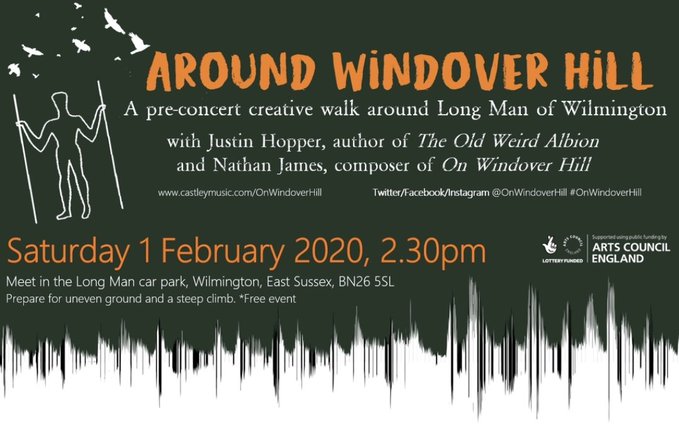
Yesterday, we joined a walk to the Long Man of Wilmington, on the South Downs in Sussex. The walk was led by composer Nathan James, and Justin Hopper, the author of The Old Weird Albion.
EPrcQenWoAQWbeb

The Long Man is a chalk figure etched through the grass into the hillside, below the summit of Windover Hill, revealing the chalk that lies beneath. When and why it was first cut is the subject of myth and speculation – and that brings us neatly to Nathan’s new composition.

P1060405a

On 7th March, Nathan will premier his fantastic new choral work On Windover Hill at Boxgrove Priory, Chichester, Sussex. This has been inspired by the Long Man, its mythology, and the art that has arisen around it, as well as the written history and the geography of the surrounding land. It has a very English feel to it, in the tradition of Vaughan Williams or Holst.

Full details of the work and the performance can be found here. Tickets can also be bought by clicking ‘The Premier’ link in the sidebar there. We have ours, and it would be great to see it sold out!

This walk was by way of a taster for the concert, with a mixture of history and mythology imparted along the way, a poem from Peter Martin, read by himself, and extracts from stories read out by Justin, all of which referenced the Long Man. Also  Anna Tabbush sang two folk songs, one of which was the only song known about the Long Man, appropriately enough called The Long Man and written by the late Maria Cunningham.

P1060395a

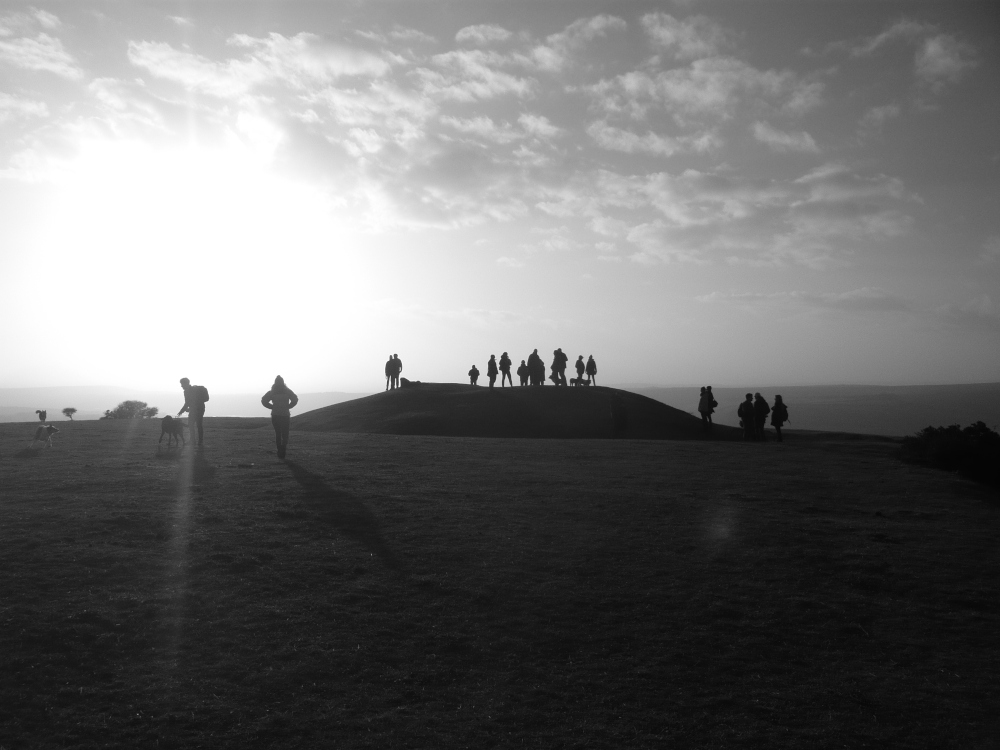
I’m not sure How many people I expected to see, but we were around forty, with a surprisingly large number being artists of one sort or another.

The weather was so much better than we had a right to expect – the forecast had been for clouds and rain, but the clouds cleared during the morning, and we had plenty of sunshine as we ascended, although it rather lived up to its name at the top, with more than enough wind for everyone.

P1060404a

Here, the remains of prehistoric burial mounds sit overlooking the Long Man, and the rest of the surrounding countryside.
P1060403a

Some landscapes seem to muck around with your perception of time, and Downland seems especially prone to this. I’m not entirely sure why this should be, but suspect it is a combination of factors.

It is a very open landscape, and other than the contours of the land and a few trees, frequently the only features that stand out are prehistoric ones, such as barrows and chalk figures. Due to the uncertainty around their origins, these have a timelessness about them, a fluidity when it comes to grasping their history. We see the long view, which perhaps works on our sense of time as well as space. The more recent additions to the landscape are usually in the form of fences, which can easily seem invisible as we look around for something less ephemeral than the open sky to fix our eyes on.

The Downs are an ancient landscape, in any case. When human beings recolonised what is now Britain after the last Ice Age, at first they kept to the higher ground which gave less impediment to travel and settlement than the marshy and thickly wooded lowlands. Most standing stones and burial mounds from the Neolithic or earlier are found on these higher areas.

I do not get these feelings in more recent landscapes. At a medieval castle or manor house, it is easy to imagine the inhabitants baking bread or sweeping corridors; activities as natural to us today as they were then. I feel a comfortable mixture of the old and the new, a recognisable timeline connecting the past with me.

But barrows, standing stones and hillside figures have a purpose alien and unknown to us. Step on the ground near these remains and you can feel the presence of the unknown. No wonder the belief in the past in faeries and elves who inhabited the underground, and who lived essentially out of time.

They offend our carefully erected sense of order and belonging and, perhaps, still pose a barely acknowledged threat to us today.

I might be imagining it, of course, but listening to the extracts from On Windover Hill on the website, I think I recognise that feeling in places, an unexpected musical response to my own feelings. And then Nathan’s description of his creative process on the website echoes some of this too.

I’m hooked!

The Old Way 3

Number three in a series of poems.

Untitled-Grayscale-01


The Old Way 3


If in some distant future

Our roads are haunted

By the ghosts of countless travellers,

I wonder if,

Instead of ghostly horses and their riders,

Our descendants will be terrified

By the spectres of lorry drivers,

And motor cyclists.


But the Old Way

Has already seen ten times

Ten thousand travellers,

And all that over the course of

Many times a thousand years.


For all that time

It has linked cottage and farm.

For thousands of years

It has linked town and hamlet,

Village and encampment.


All that time.


And if ghosts there be,

Travelling the way,

It must surely be crowded.