Winter – 1

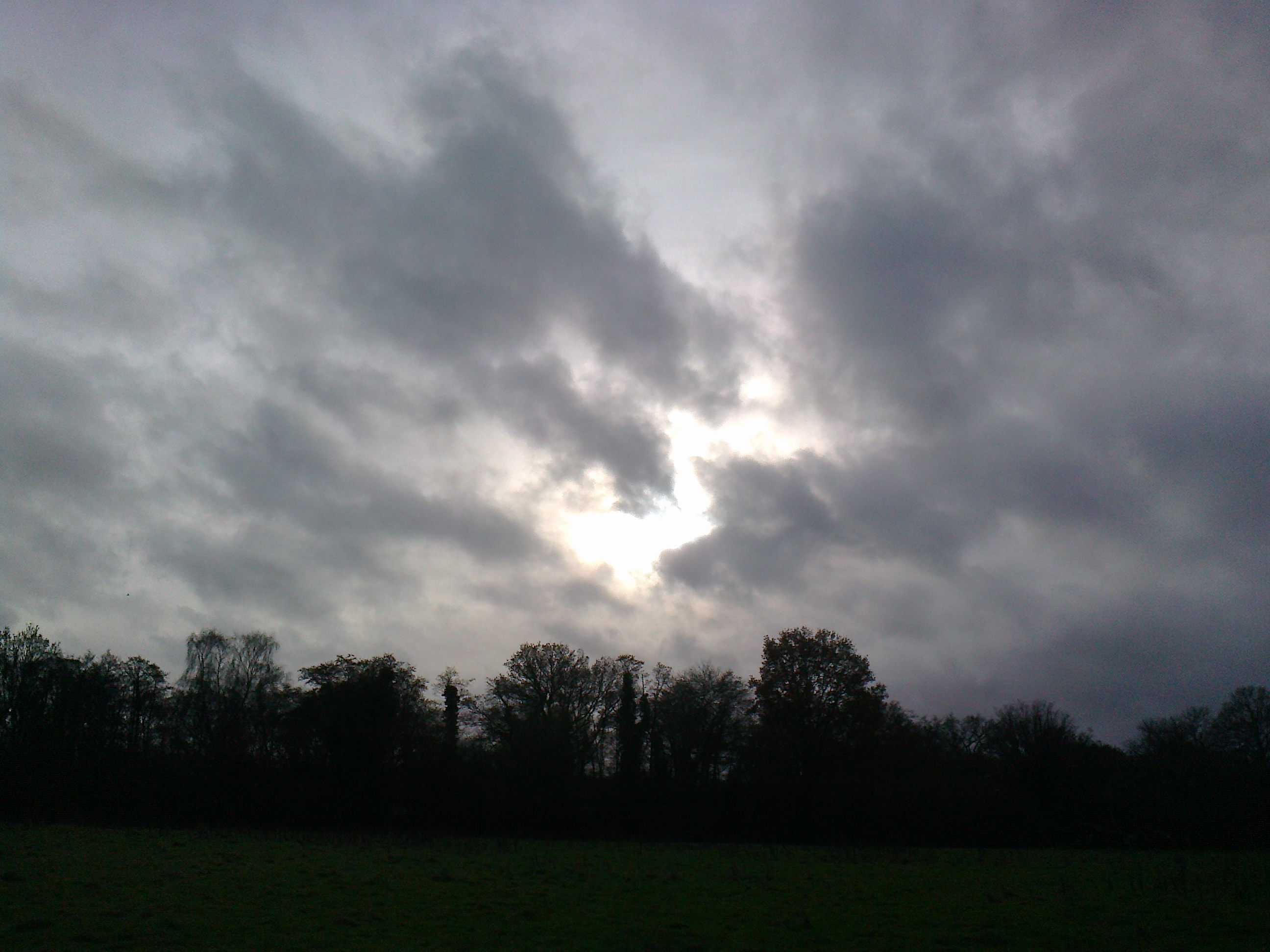
The long-range weather forecast is predicting generally mild, wet weather in the run-up to Christmas. So still no sign of ‘winter’ yet.

Although there is a lot to be said for mild weather, we need the cold of winter to help to break up the soil for the following year and kill off many pests. But our climate is changing.

There are some swallows still around, apparently. Presumably because there are still plenty of insects for them to eat. They should have left ages ago. What does this mean for them in the coming months? If the weather remains mild and the insects persist, will they be able to survive the winter here? And will they still be able to successfully migrate if the expected colder weather kills off these insects, or will they have left it too late? I suspect it will not end well for them.

There have always been a few of these days at the turn of the seasons, although probably nowhere near as many as now, and I wonder how our ancestors would deal with these days; the days I am sometimes tempted to call the Nothing Days. Those days which are grey and cold, but not severely so. The leaves are continuing to fall but seem in no hurry to complete the job. Nothing seems to be contributing to the change of the seasons. If any plants or animals are responding to anything, it can only be to the shortening of the daylight hours. There are still plenty of nuts and berries for the wildlife to forage – the birds are largely ignoring our bird feeders at the moment – although little for the human forager; the blackberries have finished, the chestnuts and hazelnuts all gone.

I suspect our ancestors would have moved into their own winter routines anyway, and got on with the jobs in hand, largely mending and making. With the onset of rains and wind and snow, rooves and walls would be repaired and strengthened, leaks caulked, trenches dug out to drain water away from dwellings. Tools and weapons would be fashioned and repaired. Measures taken for comfort and warmth – perhaps grasses and rushes and bracken collected and heaped up inside, likewise firewood, and fodder for animals.

Although I’m only guessing, but a fire in the middle of a hut filled with heaps of dried grasses might have required a Neolithic risk assessment following a visit by a fire and safety officer.

R. I. P. Winter

It’s beginning to feel both as though autumn has been with us forever, and that it is especially reluctant to leave us, this year.

This year has been a mast year; the trees and bushes have been laden with prodigious quantities of nuts and berries. The hawthorns, especially, seem to be weighed down with berries, and we have gathered large quantities of nuts from the hazel in our garden. There are so many acorns beneath the oaks nearby that there is a thick, continuous, crunchy, carpet of them underfoot. Traditionally, this has been said to indicate a harsh winter ahead, although how the trees and bushes are meant to work this out when we have no idea what the weather will be then, heaven only knows.

What it really indicates, of course, is that the climatic conditions have been such throughout the year that these trees and bushes have successfully produced their large crops. Nothing to do with what will come along later.

On the other hand, the leaves have held onto their greens for longer than usual and only turned late, and still seem most reluctant to fall. It has taken the determined efforts of a few strong winds just to remove about half of them. Certainly, around my part of Britain, anyway.

It is not cold. There are no signs of a proper winter chill approaching, with the long-range weather forecast contenting itself with predictions of the occasional cold spell in the next month, which takes us through to mid-December. In the garden the grass and many of our other plants are still engaged in that crazy autumn growth spurt.

Of course, it was never unusual for November to be wet and mild, and we may yet have a biting cold winter, although I wouldn’t bet on it. It is a long, long time since we have had a winter like that in these parts. In my lifetime, only the winters of 1963 and 1978/79 really stand out as being extremely harsh, although a few others have had shorter periods of cold and snow. The expectation for winter around here now is that it will just be chilly and wet. I think only once in the last six or seven years have we had more than just the odd flurry of snow; that was from the so-called ‘Beast from the East’ a couple of years ago, and even that only lasted a few days.

We seem to have lost winter somewhere along the way, which sounds very careless of us.

In fact, that is quite a good way of describing it.

You don’t need me to tell you we have been careless in the way we have interacted with nature, the result being our world is heating up dangerously. And in our part of the world, this has led to hotter, drier, summers and milder, wetter, winters. There has been a notable increase in destructive flooding events. Downpours are frequently very heavy and long-lasting. Rather than being spread out through the month, we may get an entire month’s worth of rain in less than a day. Summers, conversely, have become very dry.

This is absolutely nothing to the extreme climate conditions suffered by millions of others in other parts of the world, but it helps to bring it home to us that the Climate Emergency is real, and it is happening. With everything else happening in the world at the moment, this seems to have been conveniently ignored by the mainstream media for the last six months.

R. I. P. Winter.

I Am The Wind

Untitled-Grayscale-01

I clatter dry leaves along dusty footpaths

And bear burdens far greater

Than mere birds and clouds.


On high, cold, moors I blow

In the hollow eyes of sheep, inert and prone,

And ruffle the hissing grass over barrows

Of long-dead chieftains.


From the fading fires of the sick and the dying

I blow prayers in the smarting eyes

Of disinterested and uncaring gods.


I steal your thoughts.

The New Viking

Untitled-TrueColor-01

Long, long ago, (although not in a galaxy far, far away) I posted a poem about Vikings which was called, astonishingly, Vikings. (It can be found here should you wish to re-visit it.

This is a rather tongue-in-cheek follow up.

The New Viking, a Reformed man


He brought death and terror to these Saxon lands,

Taking iron and fire to fearful hamlets,

But he was defeated by a woman,

A yellow-haired woman, soft and pliant.

And now the screams of battle are the

Bloodcurdling cries of infants.


He beats his sword into a ploughshare,

And grows rows of turnips and cabbages.

His axe cleaves firewood.

Maybe he’ll name his house ‘Dunplundering’.


He no longer lives within sight of his beloved sea,

But he watches trees ripple in the wind;

An ocean of billows topped with brilliant green spume.


Casting long shadows in warm sunlight,

These immobile giants roaring and sighing,

Desperately attempting to free themselves

Of their earthen shackles

Feel uncomfortably close to home.


Those northern winters still call him.

The fire, the mead, the fighting,

The tales of monsters and warriors.


Hamstrung by instinct

He shifts uneasily, guiltily, on his chair by the hearth.

His sword fingers twitch and tap and he

Looks for reasons to pick arguments

With his neighbours.


Anything would do.

Restless Wind

107b

Some people need the familiar,

Finding in it safety and comfort.

But some see it as a constraint,

Suffocating them like the walls of a prison.


And the same wind that blows

Through both their houses

Causes one man to close his door,

While the other throws his wide open.

Home

120

I’m walking on tracks,

On familiar tracks,

Under blue sky,

In the evening light.

My shadow before me,

The wind behind.


I’m yawning now,

And my legs are tired.

I’m looking forward to supper,

A beer and then bed.


The shadows lengthen,

Along with my stride

On familiar tracks,

Along familiar tracks.

I’m heading for home,

Now,

I’m heading for home.


Wild And Windy Weather

017

Roaring in rustling and

Tossing trees,

Wailing and moaning

In whipping wires.


A strident, insistent,

Car alarm.


An upset bin, with

Unwanted plastics…


Scraping,

Scratching,

Tumbling,

Chasing along the road.


Aggrieved air


With attitude.


Sketch n’ Haiku Day

We’ve had all sorts in the last week.

We’ve had cold, bright, sunny days. We’ve had cold snowy sleety days. And today we have lashing rain and wind. It’s milder than it was, but as miserable as sin and the wind still cuts through you!

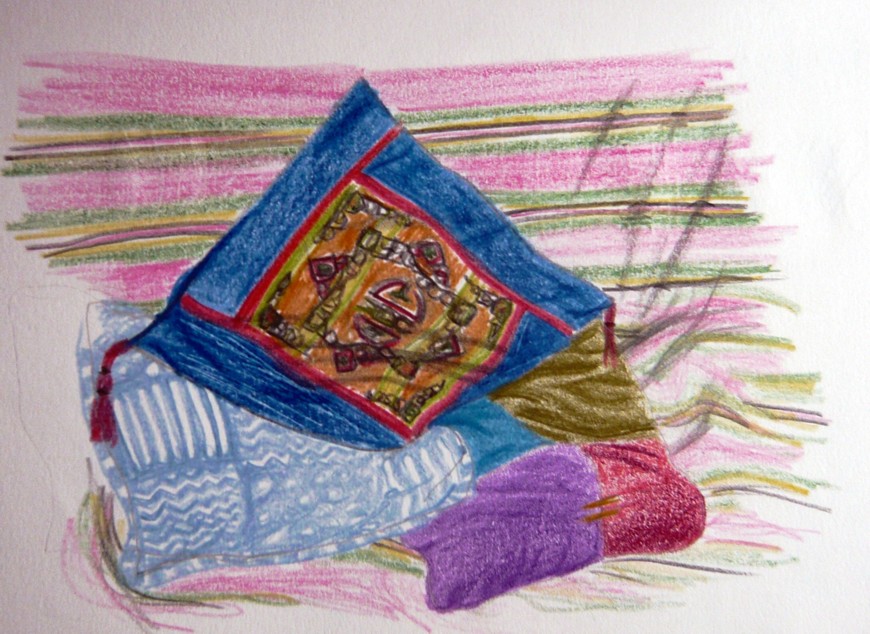
So here is a sketch for the day – cushions on the sofa to remind me of Nepal, since the top one came from there:

002

And here is a haiku for the day, to remind me of summer:

Amidst the traffic,

In the still airs above me,

A lark dripping down.

And a thought for the day? Another haiku, to remind me to slow down sometimes:

Obsession with time

Is climbing trees in autumn

To get down the leaves.

And today I begin the first edit for A Good Place – initially reading it through and thinking about the voice, the narration, to see if it works for me. Next, another read to look for flaws in the plot, redundancies, things to add and take out. Finally, try to knock the grammar into shape. If I’m happy with that, then it’s on to the beta readers.

Hope you all have a good day.

Winter – a Tanka

I was writing a haiku yesterday, and decided to go the extra mile with it. Traditionally in Japan these poems were sometimes written in the form of tanka, which are essentially poems of five lines rather than three, with a syllable count of 5/7/5/7/7.

They could also be written as linked verse, with one or two poets writing haiku, and others supplying the two remaining lines between each haiku.

I’ve gone down the linked verse route, and also given myself the remit that each verse (of two or three lines) must contain a word or sentiment linking it to those either side – something that was also commonly done.

Yesterday was cold and miserable, hence the results.

It’s my first attempt – please don’t be too harsh!

029

The flowers have gone.

Crumbling stems standing askew,

In waterlogged soil.


Outlined against the grey sky,

Old willows by the stream.


Ten thousand leaves are

All that remain of autumn.

Wistful nostalgia.


Memories of warmer days,

Are all but forgotten now.


Wrapped up warm and snug,

Watching the grey willows weep.

Hands in my pockets.


Leaves fall slowly through the air,

Onto silent black waters.


Now a gust of wind

Swirls leaves around and around.

Racing each other.


Shifting clouds race overhead,

Sudden drizzle on the breeze.


Spiteful winter day,

Grasses shiver in the wind.

Low sunlight dazzles.


Walking in meditation,

Clouds unexpectedly clear.


Sudden bright sunshine

Reminds me the cold Winter,

Will change into Spring.

010a

Prayer Flags

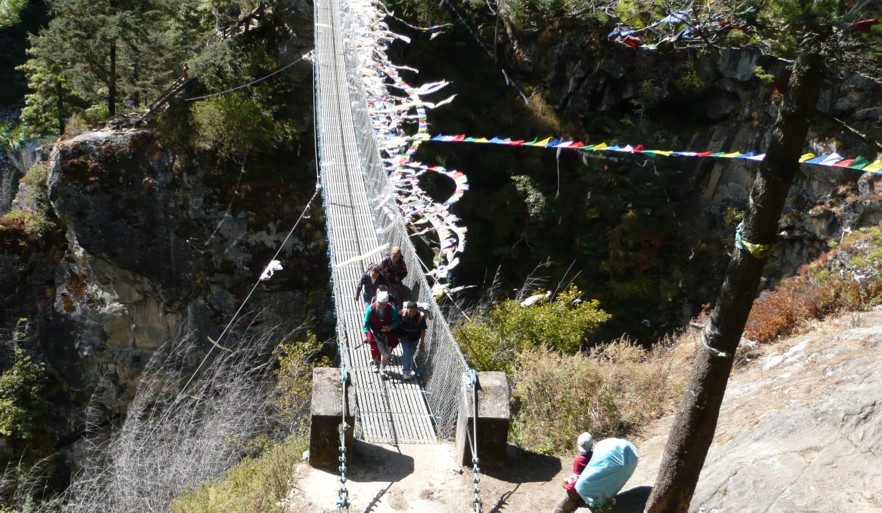
Prayer flags are found wherever Tibetan Buddhism is found. As they flutter in the breeze, they use this wind to send blessings out into the world. Through many parts of the Himalaya they adorn monasteries and humble homes, chortens and bamboo flagpoles. They are tied in their hundreds and thousands to bridges, above mountain peaks, and in the courtyards of every conceivable building.

Elsewhere, they are to be found wherever exiled Tibetans live, and wherever their school of Buddhism flourishes.

The makers of the flags intend the prayers and blessings that adorn them not for their own benefit, but for the benefit of all beings.

eleven

Prayer flags in the Yumtang Valley, Sikkim, India.

prayer flags

Prayer flags, Observatory Hill, Darjeeling, India.

IMG_0005

Prayer flags outside a monastery in Sikkim, India.

106a

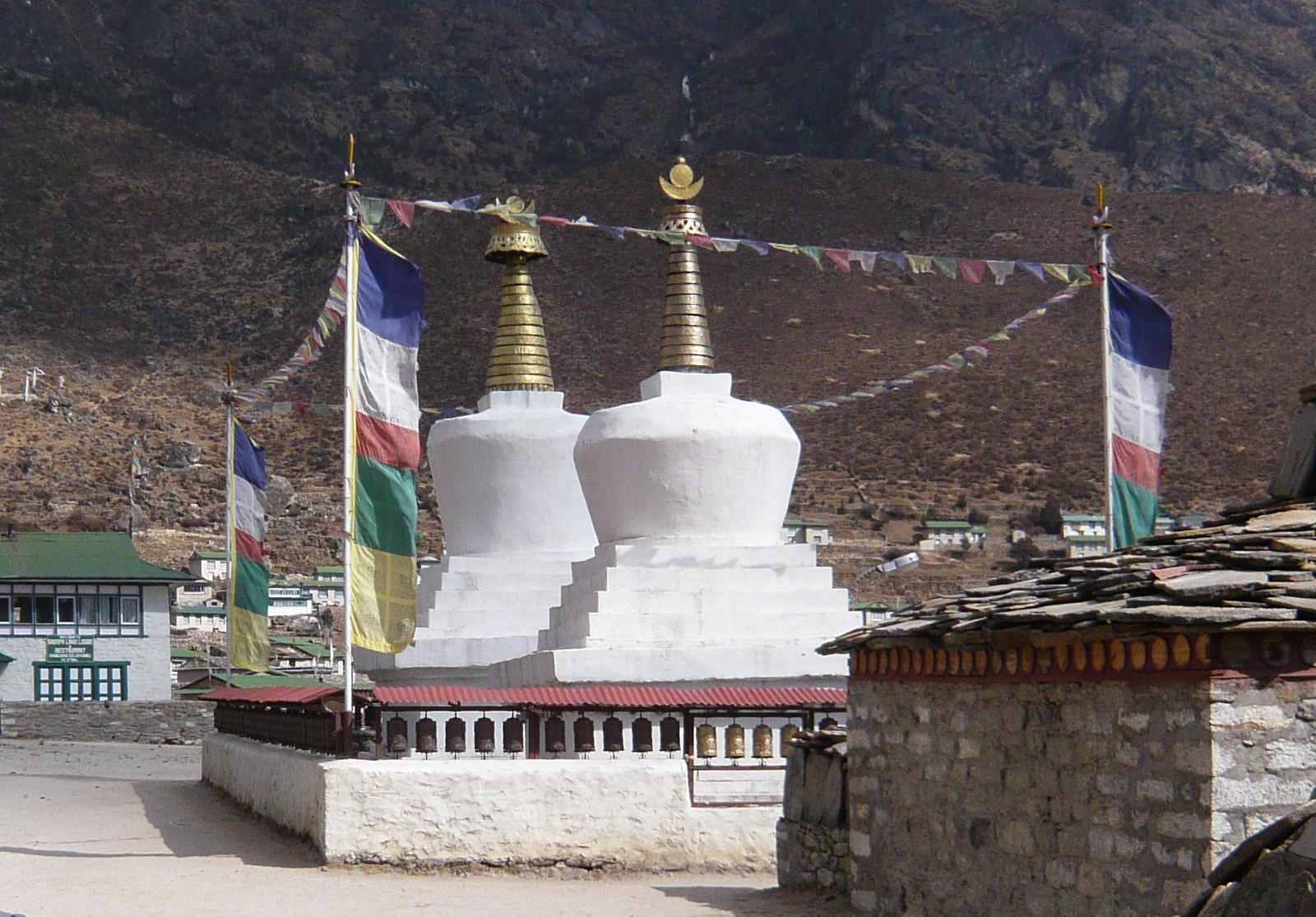
Prayer flags adorn a pair of chortens and walls of prayer wheels in Khumjung, Nepal.

139a

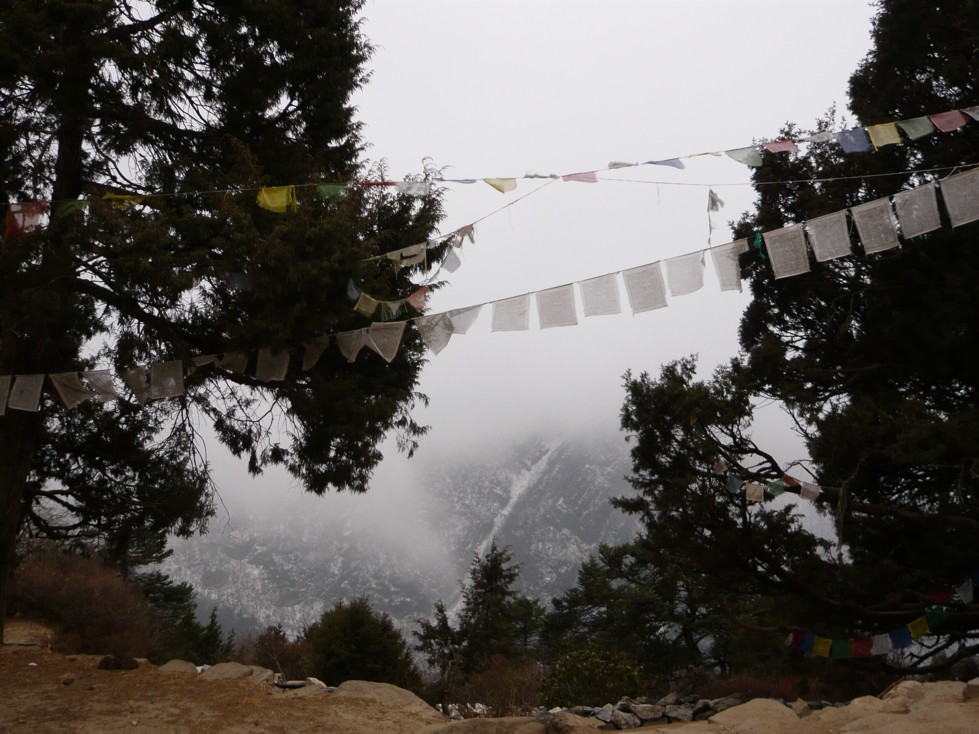
Prayer flags at Tengboche, Nepal.

141a

And adorning a bridge of the Dudh Khosi, again in Nepal.