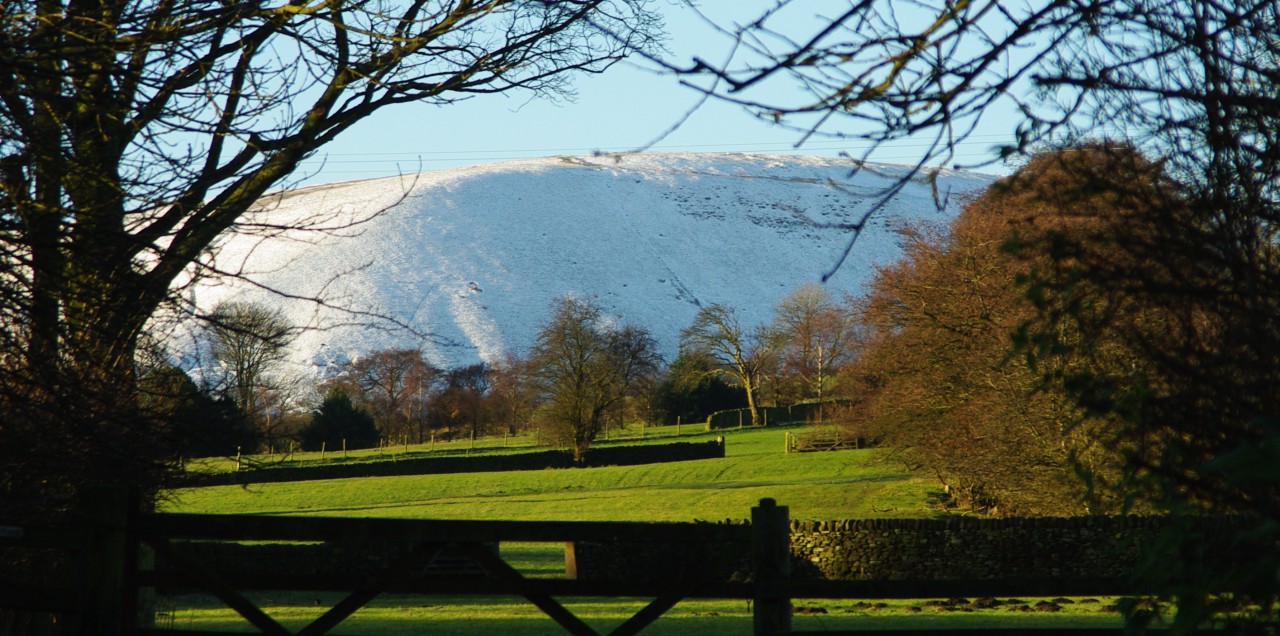
Ah, Bluebells

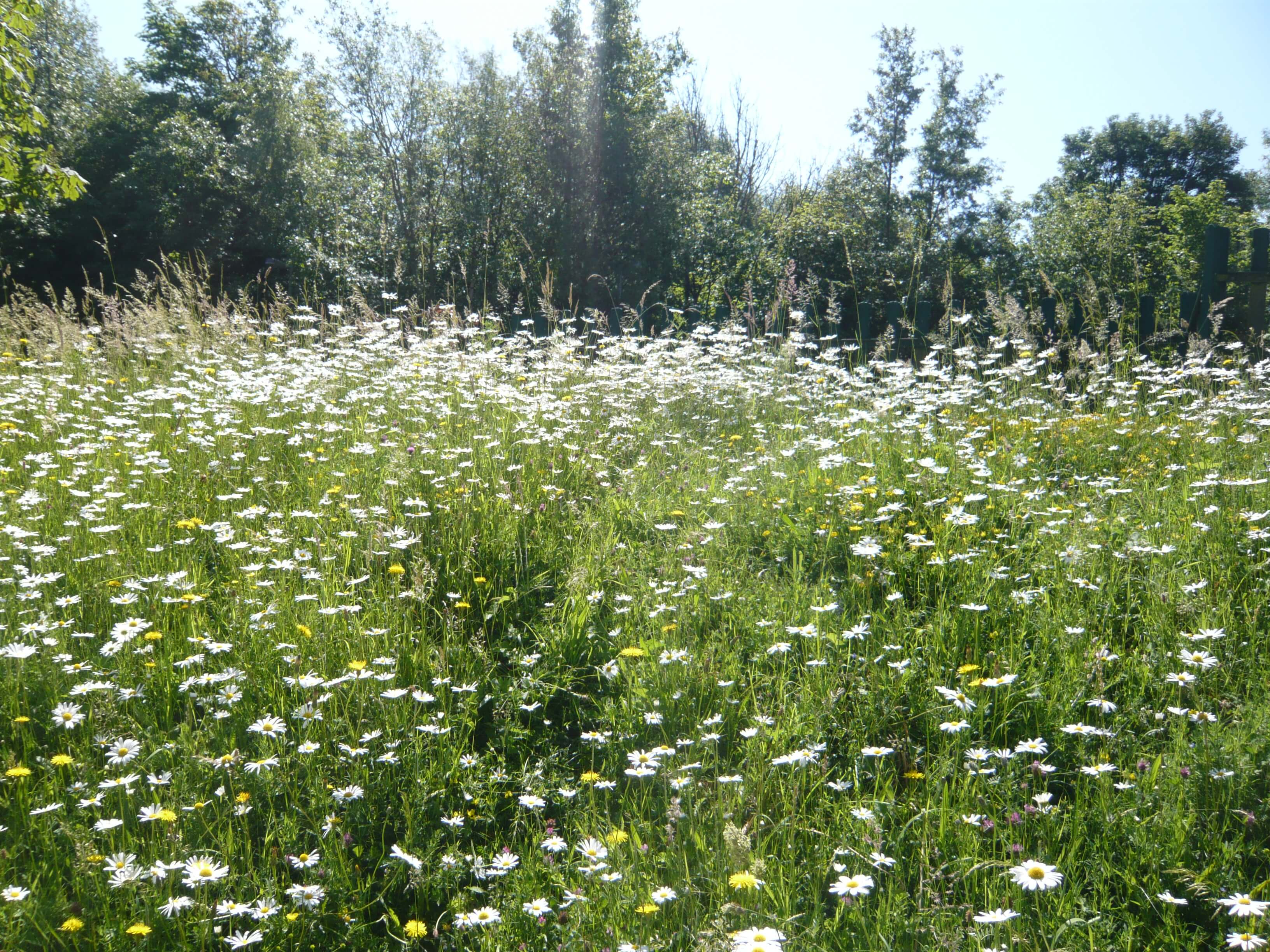
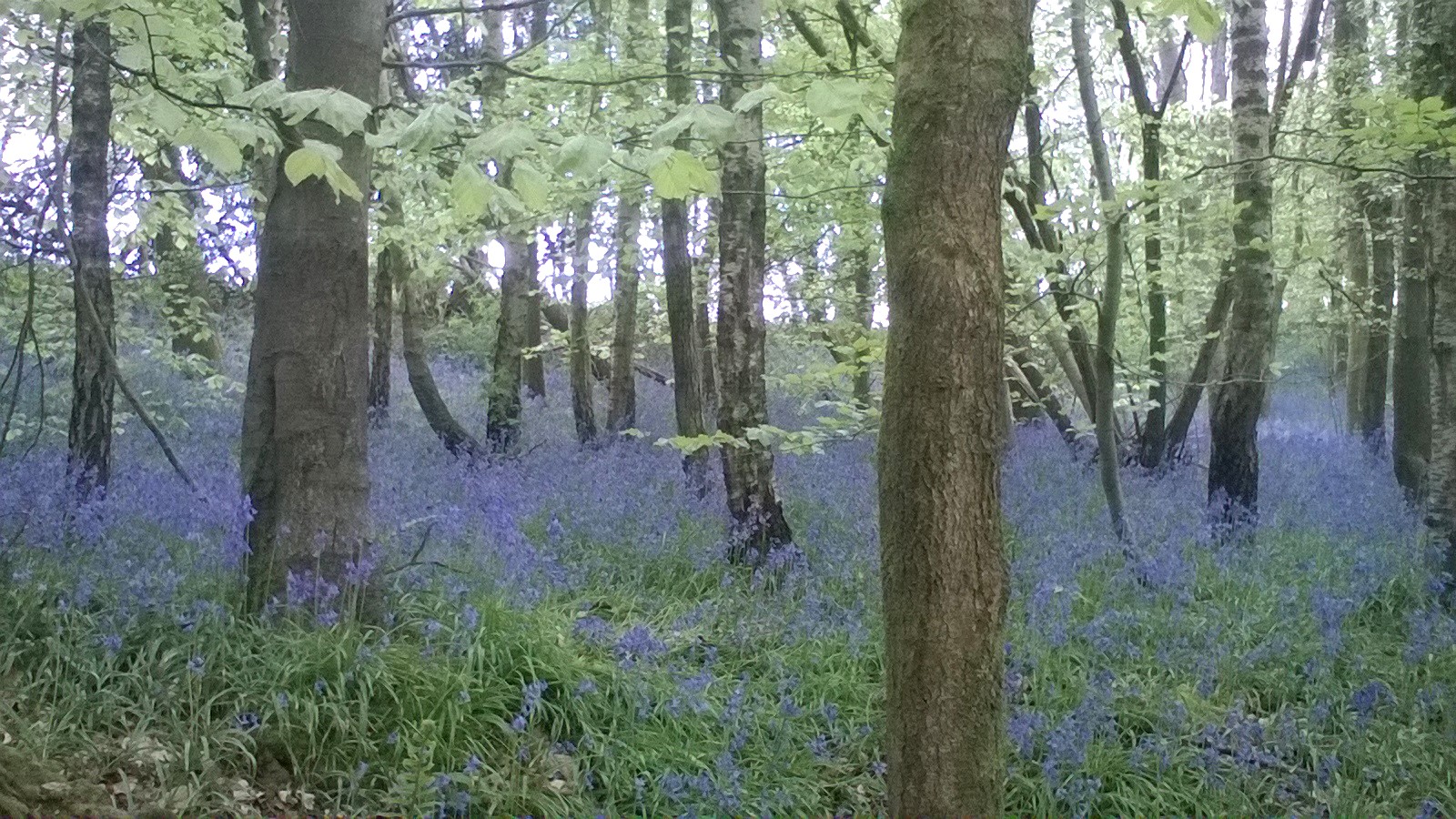
At the weekend we went for a walk to look at the bluebells. Nothing else was happening, so it seemed a good opportunity. They always look superb in this wood a couple of miles away from where we live and the sun even came out for a while. I reckon we might just be into Summer, now.

May Day Mayhem

The May Day festival, Beltane, is a survival, or revival, from the Iron Age, celebrated in Celtic communities – Scotland and Ireland particularly – and revived as a full festival in Scotland in the 1980’s by the Beltane Fire Society. Beltane was a fire festival, although nothing of that remains in the festivities carried out in England. Beltane was first mentioned by name in Irish writings from the late 800’s / early 900’s.

The English version of this festival involves cutting flowers and greenery and dancing around a maypole, which things are also carried out during Beltane, celebrating the beginning of Summer which begins on May 1st. When I was a child, dancing around the maypole was the chief, possibly only, activity carried out on May Day. I have a photograph of my brother, my cousin, and myself, dressed up for the May Day Fair at which there was maypole dancing, but no obvious indication of surplus greenery. Past generations in England celebrated May Day with a day of celebrations which while including maypole dancing as an important manifestation of encouraging the fertility of the soil (and the festival-goers!) would also have included plenty of food and drink and general gaiety.

Mayhem, if you like.

This year, I managed two May Day days out.

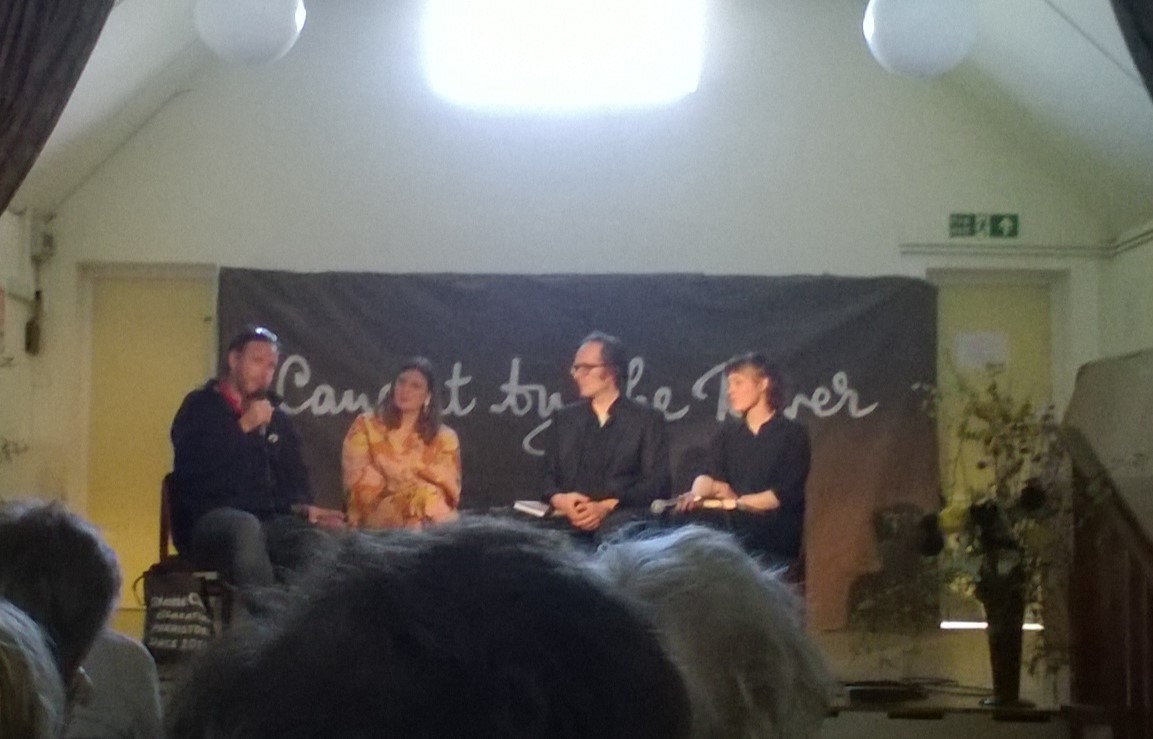
On Saturday, two days before May Day, I visited Kingston near Lewes, in Sussex, for the Caught by the River Mayday event. Caught by the River describe themselves as an arts/nature/culture clash and you can read all about them here. I have followed them now for several years, and this seems as good a time as any to mention that their coverage of arts, nature, and culture are second to none and if you’re not yet following them, well, you should be.

There was mask-making to begin with, especially to involve the children, the makers encouraged to incorporate flowers and greenery into their masks, and almost inevitably a certain amount of folk-horror found its way into some of these.

Nice, Richard.

This was followed by a promenade around the maypole, after which the activity moved indoors.

There were films, talks, and discussions, subjects including rivers, village life in the early eighteenth century, art, standing stones and the like, and the environment. After which, in the late afternoon, we all promenaded up the hillside to the Gurdy Stone.

This is the Gurdy Stone, a modern standing stone on a hillside overlooking Kingston. Here, Local Psycho (Jem Finer and Jimmy Cauty), held a gathering to encode the music of their Hurdy Gurdy song into the stone “To mark the 50,000 year return of the Green Comet and release of The Hurdy-Gurdy song on Heavenly Recordings.”

Throughout the day, naturally, we all had access to the pub.

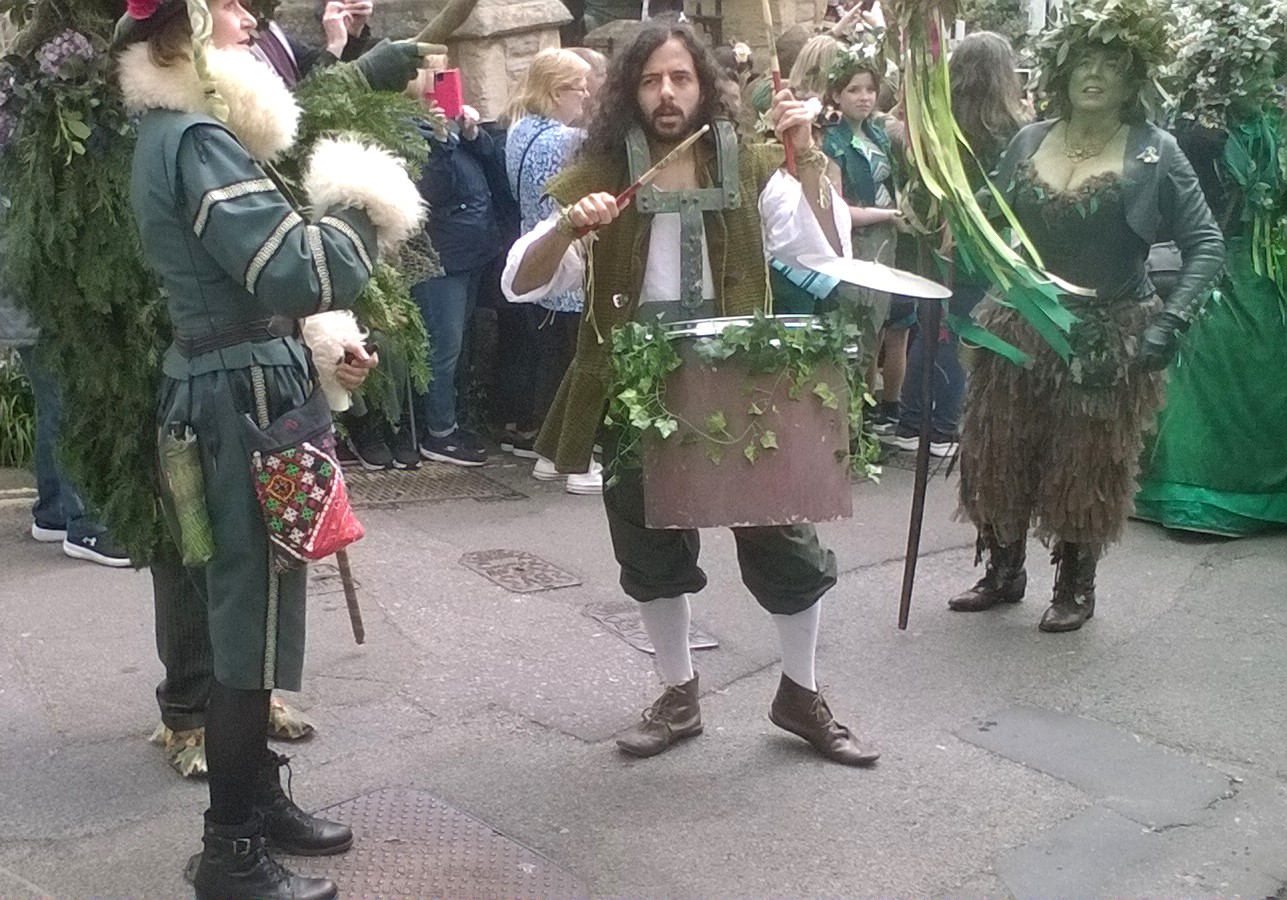
And then on Monday, which was May Day, we went down to Hastings. It rather felt as though everyone in South East England must be in the town, either at the Jack in the Green festivities or watching blokes on motorbikes roaring up and down the seafront for no discernible reason. I don’t much like crowds, and some of this was very difficult. But away from the huge horsepower and testosterone nonsense, amongst the Jack in the Green celebrations the atmosphere was brilliant and the large numbers of people perfectly acceptable. Jack in the Green is a manifestation of the spirit of spring, related to the Green Man, a dancing figure covered in greenery.

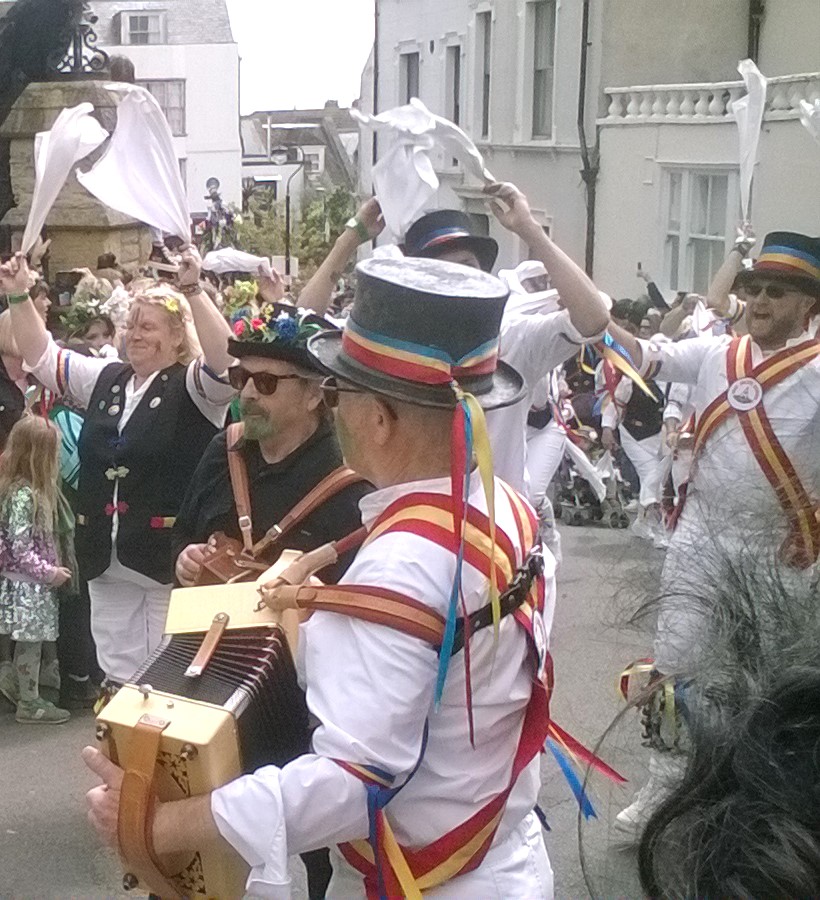
The festival in Hastings has grown over the years into a large event involving musicians, dancers, Morris sides, huge figures in addition to Jack in the Green such as the Queen of the May, a witch, and others, plus any number of people joining in the procession around the town, all decorated with as much, or as little, greenery and/or flowers as they feel suitable.

There you go, a Morris side.

Followed by a large witch with a cat. Why the witch? I’ve no idea. Why not? I suppose.

And there you have it. Music. Drumming. Greenery. Crowd involvement. Summer is icumen in and winter’s gone away-o.

And there was beer again, of course.

Belief Systems and Rain

I had a conversation with a blogging friend a few days ago, in the course of which she asked me if I knew why it was that so many Westerners seemed drawn to Eastern beliefs, especially the more ‘esoteric’ ones.

I briefly mentioned the fascination the East has held for Westerners throughout history, and the fact that many in the West have drawn away from traditional religion – specifically Christianity – in the last fifty or sixty years especially, and that leaves a void: when you have been brought up within a belief system, that needs to be replaced by something. The Beatles nudged a whole generation in that direction by visiting the Maharishi in Rishikesh in the 1960’s / 1970’s, and there followed a whole slew of books on the subject, many seeming to want to outdo the others in sheer weirdness. But even before that there had been a lot of interest in both Buddhism and Hinduism from the late Victorian period onward, with a number of popular books available.

I can’t claim to be immune to this, either. I also rejected Christianity long ago, but felt I needed something to take its place despite deciding the concept of gods had no place in my life. The world is a wonderful and incredibly beautiful and fascinating place, all of which is explained perfectly well by science. But I do need something to satisfy the spiritual part of me – a part that, surely, all of us have?

I have read a lot about Buddhism, and for a long while thought of myself as a Buddhist. In a way, I still do, although I can’t entirely buy into the belief sets of any of the three major schools of Buddhism. But I did read Buddhism Without Beliefs by Stephen Batchelor. I can’t remember the details of the book, but that is unimportant, it’s the message of the title in this case. I like Buddhism. I like its core message, which pared down to basics is simply to be kind to everyone and everything. It is the only religion I know that has no need for gods. Oh, sure, they’re there if you want them, but no one is ordering you to have one.

This doesn’t have to be ‘esoteric’ or ‘eastern’, either. It can apply just as well here in the west. And it doesn’t require sacred writings or rituals, I find poetry or a walk in the woods does just as well for me.

I’m listening to the heavy rain as I write this – which is something that seems to happen a lot at the moment, but is something I find particularly soothing. I wonder at the origins of this; is it something primeval, hidden deep in my DNA from the times we lived in caves or rough shelters and we could take comfort from the fact we were snug, and perhaps large sharp-toothed beasts were taking a similar break somewhere and not out looking for early humans to eat? Or is it perhaps just a forgotten memory of a very calming experience I once had, which my subconscious has decided to hang onto for my benefit, but without telling me why? I am aware of a few of the times I’ve experienced it, such as lying in a tent at night hearing the pounding of the rain on the canvas, with a wonderful feeling of warmth and snugness. Then there was another time in the mountains of Spain, coming across an abandoned cottage just as a rainstorm hit and spending the next half an hour or so just sitting on a bench and leaning against the wall, listening to the rain and thinking. I’m sure there must be many more.

In these rainstorms, I feel as though I’m immersed in nature – something that always makes me feel calm and relaxed, and which is but a step from what the Japanese call Forest Bathing. Forest Bathing is essentially taking a walk in woodland, using all your senses to connect with that environment. This reminds me strongly of meditation, especially meditation as I learned it in a Buddhist environment, which is where I’m going with all this rambling. If I have an actual religion now, it has to be nature. A belief in nature as something important, beneficial and precious. I wouldn’t ‘worship’ nature – ‘worship’, for me, has connotations of supplicants on bended knees with hands clasped together intoning religious dogma and praying, but I do have strong feelings of respect and admiration for nature, which I suppose you could call the same thing.

It just seems a pity that more people don’t seem able to accord it the same respect.

In All Weathers

We’ve been on the South Downs again.

That’s why you haven’t heard from me for a while. Here’re a few pictures.

We began walking from Amberley this time, and on the first day the weather was pretty meh. It was either raining or starting to rain or just deciding when to rain. But, as always, the Downs looked fantastic. This view reminded me of a Roland Hilder painting:

But it got steadily wetter throughout the day. We took a very welcome break in the Frankland Arms in Washington and if I was writing a pub review it would get five stars – especially as it served Harvey’s Old Ale. But I only allowed myself one of those, as we still had some serious mileage to do. And it was, as noted, getting wetter. We approached Chanctonbury Ring:

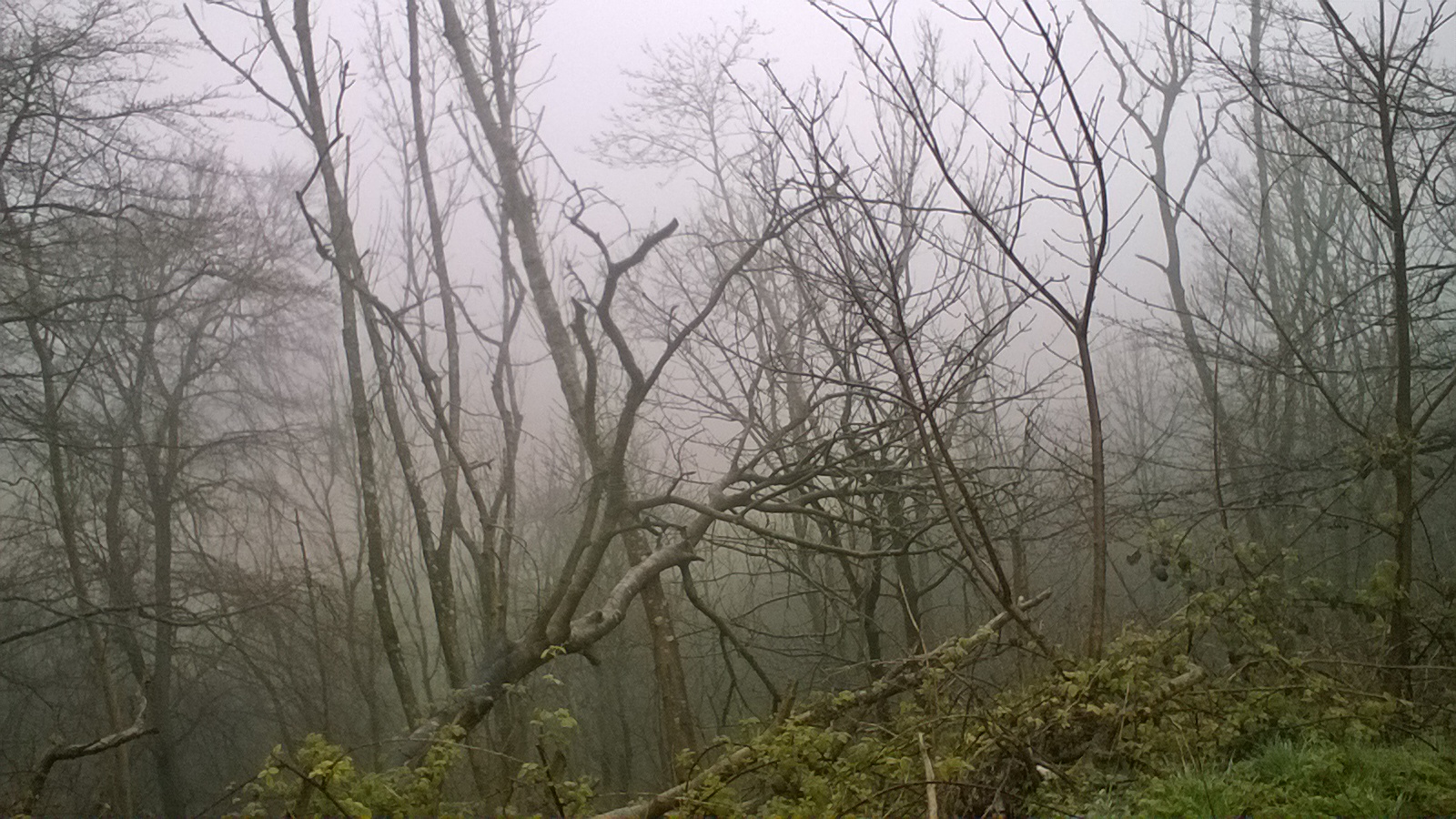
And as we began the descent from the top, the saddest part of the journey. We walked among a large number of ash trees, all of which were dead or dying from Ash Dieback disease. It looked like a picture of the Somme.

The next day was dull, but at least it was dry. We walked past the Devil’s Dyke which I never seem to be able to get a good picture of, no matter which angle I take it at. The Devil’s Dyke is so-called because for some reason the Devil wanted to destroy Sussex, and got talking to Saint Dunstan and asked him the best way to do it. Why he did that I can’t imagine. Never ask a saint for advice if you’re the Devil. It won’t end well. Anyway, Saint D suggested he dig a channel through the South Downs and flood it. Right, thought Old Nick, and set to work. Saint D let him toil away for a few hours and then caused all the cocks in Sussex to crow. Thinking it was morning, Old Nick threw down his shovel, twirled his moustaches and hissed ‘Curses, foiled again!’

Alternatively, it might have been caused by melt-water during the ice age, but why spoil a good legend?

And the best weather? During our rest day in Lewes. And, oh look! There’s the Harvey’s Brewery! What a good rest day.

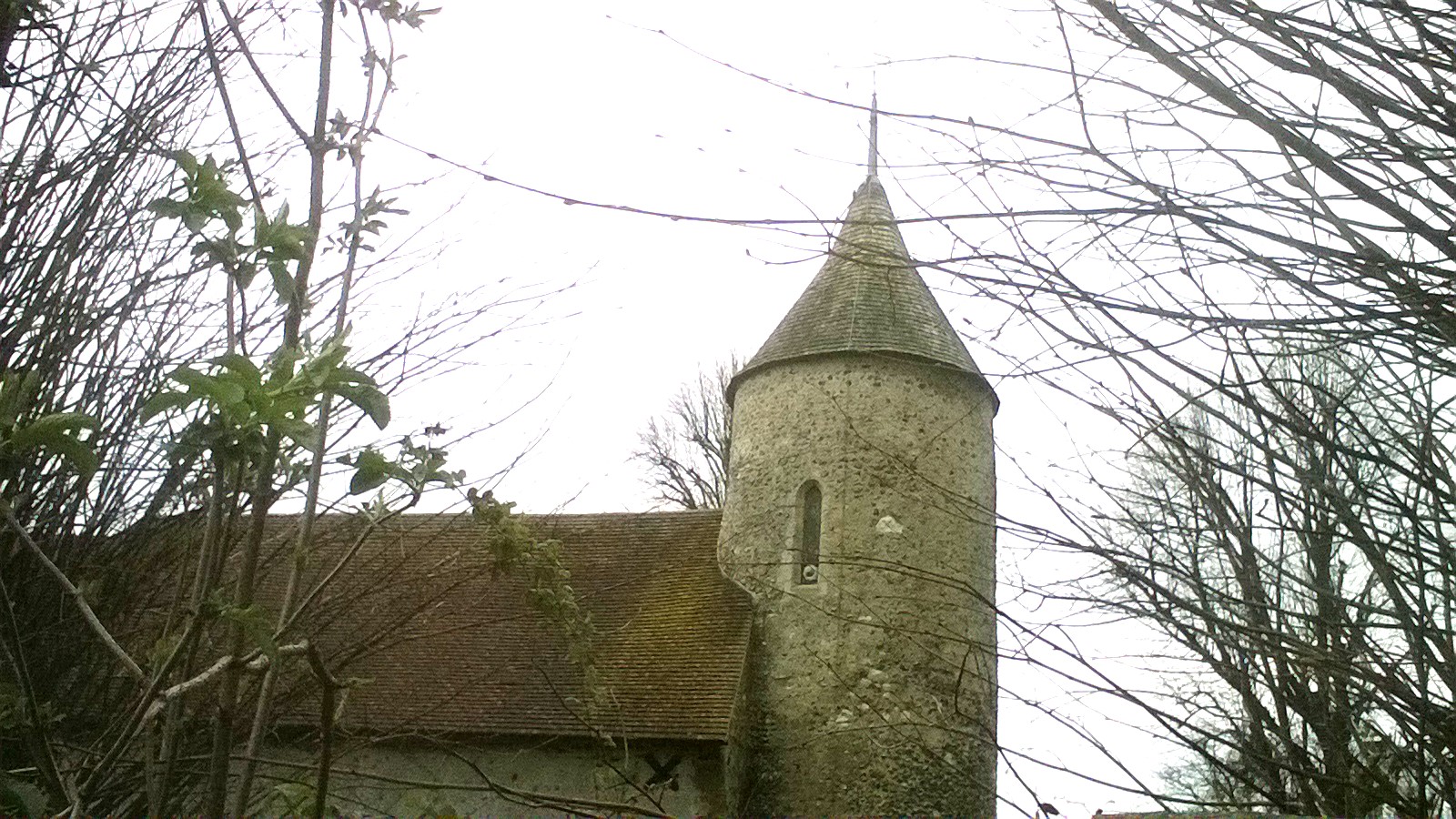
The following day was dull again as we left Lewes, and by now quite a sharp wind was blowing – into our faces too, unfortunately. But we had a pretty decent day and passed this church in Southease, one of only two (I think) in England with a round tower outside of Norfolk. The other is in nearby Lewes.

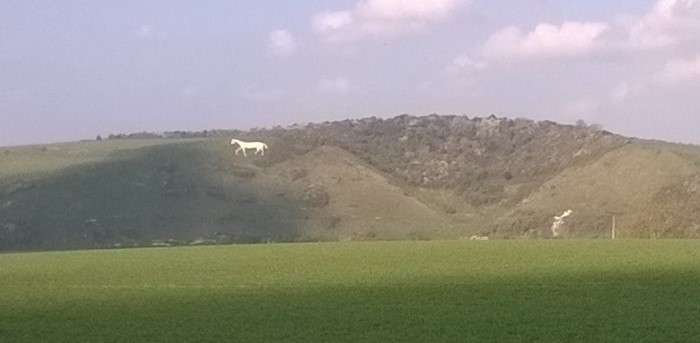
The final day began sunny but again with a sharp and unkind wind. We left Alfriston with its church on the edge of the village by the river and headed towards the coast. On the South Downs away to our right we passed a white horse carved into the chalk.

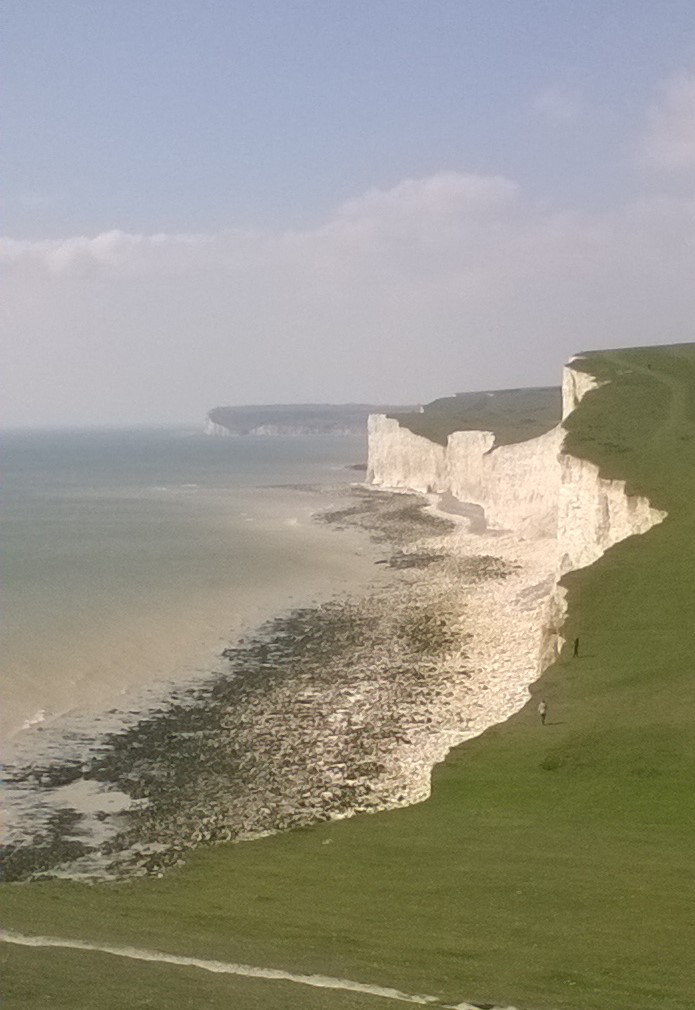
Soon we were up onto the Downs again, for the final walk into Eastbourne over the Seven Sisters and Beachy Head. I tend to forget how tiring this leg can be, going continually uphill then downhill for the best part of six miles. For some reason, although we could see the Belle Tout lighthouse in the distance, it never seemed to get any nearer. Once I could do this leg of the walk easily, but…getting a little older…

An always fantastic view, though. Here we’re looking back across the Seven Sisters towards Seaford Head.

After all that, we could do with a holiday.

A Quiet Place

Hermits have long gone out of fashion, which is rather a shame. At one time I think I might have viewed it as a good career choice. It had its perks; accommodation was provided, usually in the form of a rude hut (that’s rude as in rudimentary, of course, not because there were obscene drawings on the walls. Although heaven knows what the hut’s occupant might have been driven to in the long winter months…) or a romantically ruined building, food was generally provided, although I suspect that within the job description for a hermit it would have been set out that nourishment came in the form of gruel and acorns rather than an a la carte menu, and people generally left you alone to get on with hermitty things. The downside, though, was what those hermitty things consisted of. There would have been long hours of prayer and contemplation, and I think even if the weather was crap, the hermit would be expected to be out in it praying and contemplating – probably contemplating a hot meal, a hot bath and a warm bed. The estate’s owners and guests would expect to view you hermitting, which you’d have to put up with whenever that might occur – probably every time you felt least like hermitting. The rude hut probably leaked and had an earth floor and nowhere to light a fire and you’d probably have to dig a hole in the woods every time you needed a crap and if the estate servants were late bringing the gruel or even forgot about it altogether, I doubt you’d be welcome going up to the Big House to complain.

I’ve no idea whether the terms and conditions of employment were ever open to negotiation, but if the position still existed today, I’m sure they would be. Hopefully, the profession would have been unionised and today’s hermit could look forward to comfortable lodgings with regular meals, well out of the way of the noise and hubbub of society.

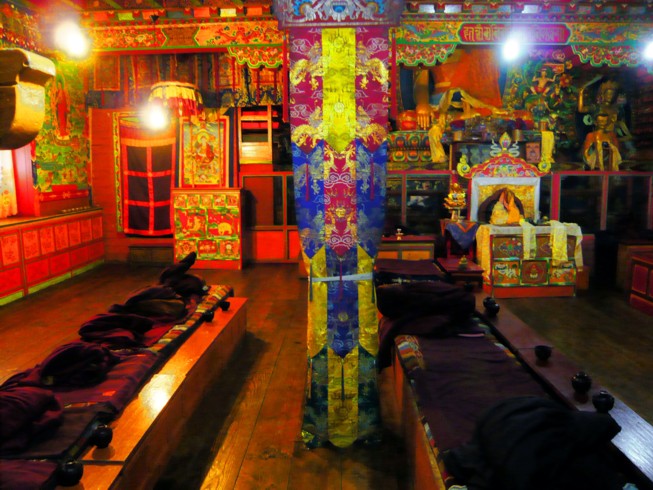
But I didn’t intend to talk about hermits, it just kind of happened. We’ve finally got some decent weather here, and yesterday I was walking through a village in the sunshine and idly thinking there are two situations in which I reckon I could renounce the world. One is in somewhere like Kathmandu in the Buddhist temples there. I’ve always had such a profound feeling of peace and stillness in these places. Buddhism is the only set of beliefs I’ve ever really been attracted to, although more as a philosophy of life than as a religion. I can’t do religion. The world is beautiful and amazing enough without throwing imaginary beings into the mix. But Buddhism is more about being a better person and looking after the world and everyone and everything in it. I could melt into that environment without too much difficulty. At least for a while.

The other situation, especially on an English summer’s afternoon in the countryside, is to retreat to somewhere remote and live a simple life away from the world as much as is practical. I’ve probably told you that before. That’s where the hermit thoughts came in.

But sadly, as already mentioned, hermits aren’t a thing anymore. Not in this country, at least. There are openings available in various other countries, but I don’t think I’m ready to explore those options. Perhaps I’ll just go for another walk.

He’s Big, He’s Bad, He’s Very, Very, Bad

I wrote this four or five years ago, but having name-checked nursery rhymes, folk songs, folklore and the like over the past few weeks, now seemed like a good time to post it.

The BBW

or He’s big, he’s bad, he’s very, very, bad

That Big Bad Wolf – it now appears

We’ve had it wrong for all these years.

You know the way the story goes

He dresses up in grandma’s clothes

After he’s had her for his lunch

(they make much play of how he’d crunch

Her up and then he’d gulp her down,

Then put on sleeping cap and gown,

Get into bed, pretend to sleep,

I’m sure he never counted sheep!)

Then in comes young Red Riding Hood,

Who travels blithely through the wood,

So innocent – without a care,

Apparently, she’s not aware

It’s full of perils – hungry wolves

Who dress up in old women’s clothes

To name but one – there’s more, no doubt.

But any one would catch her out.

She’s pretty thick, it must be said,

She sees a big bad wolf in bed

Instead of being cross and furious

She stands there looking vaguely curious

Says ‘What big eyes you’ve got today.’

Is that all she can think to say?

Big eyes? Big eyes? Well, what about

The pointed ears, the great long snout,

Did she not have the slightest thought

This might not be the one who ought

To welcome her to Primrose cottage,

That frail old woman in her dotage?

And what about – ah yes, the teeth.

You knew we’d get around to teeth

Before too long – I think you’d say

About the pearlies on display

It would not take much of a guess

To know that they weren’t NHS.

And so back to that gormless youth

Who stands there staring at the wolf

With no great wonder or surprise

Except to say he had BIG EYES!

And now I wonder more and more

If she had seen her gran before.

Now, if it was left up to me

I’d let the wolf have her for tea.

Just eat her up and finish there.
Although that just might be unfair

Perhaps the girl had poor eyesight,

That’s why she never quite took flight.

I hear it now, a low voice quavers,

‘She should have gone to Specsavers!’

But let’s just leave all that for now,

I hinted some way back just how

This story has become perverted,

The happenings have been inverted.

The emphasis on Riding Hood

When actually I think it should

Be focused more upon the roles

The wolf was playing with the clothes.

We’ve never paid it much attention,

Because it only gets a mention

As a ploy to fool the brat.

I think there’s more to it than that.

The clues were there, before our eyes

It isn’t much of a surprise.

The women’s clothes, the wolf, the bed,

The things that story left unsaid.

The true events I’ll tell you now,

A charming little tale of how

A handsome wolf had searched worldwide

For love (or something on the side).

A simple tale in many ways

It tells how he had passed his days.

He’d been with several little pigs,

And tried some other casual gigs,

But nothing seemed to satisfy

He needed something else to try.

He heard how in the Big Wild Wood

The father of Red Riding Hood

A widowed man, still lithe and strong,

Was also searching for someone.

(The woodland folk had seen his chopper

And word was it was quite a whopper!)

His mind made up, he hatched a plan

To win this handsome, big strong man.

You know the rest, or at least some,

A perfumed letter asking him to come.

A rendezvous deep in the woods,

Where he could view some tempting goods

He might find pleasing. The next day

The wolf, now nervous, in bed lay.

He wondered should he have done more,

But then a knock upon the door.

He held his breath, the door swung wide,

The woodman slowly came inside.

Cue clapping hands and smiles and laughter –

They both lived happily ever after!

At The Hop

I was talking about hop pockets and pokes last week – and pigs, of course, which was how it all started, but forget the pigs for now. Let’s stick with the pokes and pockets. At the weekend we went for a walk through a part of Kent we hadn’t walked for a few years and part of the walk took us through this field:

This was a hop garden many years ago. Conveniently close to the oast houses so that as soon as the hops were picked they could be taken in and dried before there was any chance of them spoiling. Taken in bagged up in pokes, and once dried shipped out to the brewers in pockets. A word of explanation for those not familiar with these terms: hops are not grown in fields, they are grown in gardens. Not like your or my back garden, but like a field. But a field full of poles. Hop poles. With huge cable-like wires strung between them to support the hop bines as they grow.

When they are ready for harvesting, the bines are pulled down and the hops picked and put in pokes – large sacks (but you knew that, of course. You remembered it from last week). Then once dried they are shovelled into pockets – another size of sack.

And what are the hops for? Making beer, my friend. Lovely beer.

I don’t have a picture of the hop garden from back then, but late one cold, misty, autumn night about thirty years ago, I walked through it and the eeriness was instantly imprinted on me and once I was home I felt compelled to make an oil pastel painting of it (below).

Anyway, as I said I don’t have a photo of the hop garden in question, but this one from Pixabay illustrates very nicely the hop poles and wires with the growing hop bines growing up and across them:

Image by -Rita-👩‍🍳 und 📷 mit ❤ from Pixabay

The poles were supported by wires kept under tension, anchored into the ground around the edge of the garden. Quite a few of these are still in situ around the very edge of the field and just into the woodland and hedgerows bordering it.

In 1872, there were 72,000 acres of land in England growing hops, the majority of these being in Kent, employing over 100,000 seasonal workers at picking time. By 2003, the acreage in Kent was down to just over 1,000 and for the first time ever the county had been overtaken by Herefordshire, which now grew more, although the decline does at least appear to have halted for now. In 2011 there were a total of just over 2,500 acres under cultivation in England but it is such a small number there were fears the industry could die out. Although hops are still used in beer brewing, much of the requirement is imported, especially with a popular shift towards less bitter-tasting beers. But in much the same way that Kent has also lost a huge percentage of its apple orchards, a once rich and diverse farming landscape has become more and more homogenised, with endless huge fields of arable crops and sheep and cattle replacing the hop bines and apple trees.

I spent one autumn apple picking around thirty years ago and the farm I was working on had a large acreage of hop gardens (both apples and hops all sadly gone, now). It was an incredibly busy and bustling time, with our diverse group apple picking – a mixture of locals and Europeans come over for the work – and a traditional mix of workers in the hop gardens; as well as locals, there were a lot of gypsies and possibly still a few people down from London’s East End, which was a traditional way for those workers to make some extra money in the nineteenth and early twentieth centuries. It was busy, noisy, very hard work, and a lot of fun.

And, not surprisingly, there are a number of traditional songs about hop picking. So here is the wonderful Shirley Collins and the Albion Dance Band to perform ‘Hopping down in Kent’ especially for you.

A Pig In A Pocket

Most people know the meaning of the saying to buy a pig in a poke, of course. It means to buy something without first checking you’re getting what you think you’re paying for. And where does the saying originate? Again, most people can tell you it comes from a few hundred years ago – actually the Middle Ages – when a buyer at a market might be offered a piglet in a sack and if they were foolish enough to buy it without first checking the contents, were likely to find later that the sack contained only a cat, although why it didn’t make a fuss and let people know it was a cat, and a cat that really didn’t want to be in this dratted sack, no one is saying.

(And was it actually a live cat or a dead one? Over to schrodinger for that one…)

If the buyer was wise enough to check, and opened the bag to see what was within, they would then be letting the cat out of the bag.

So, what is a ‘poke’, then? Let’s take the long route to this one, the scenic route… Go back a couple of hundred years when pockets weren’t something let into our clothes, but were more like cloth bags tied around the waist. A kind of medieval bumbag, if you will. Or just a bag on a piece of string tied around the waist if you won’t. This is why in the nursery rhyme we learn that:

‘Lucy Lockett lost her pocket,

Kitty Fisher found it;

Nothing in it, nothing in it,

But the binding round it.

which sounds very odd if you think only of what we understand as pockets nowadays and must confuse huge numbers of children when they hear it.

But the point is that the pocket was a bag, which in French is ‘poche‘ and from which comes the old English word for a large bag, a sack, which is ‘poke‘, with pocket being a diminutive of that: poke-et.

So, let’s back up there. A poke is a large bag, a sack. As mentioned above, I’ve seen dictionaries citing ‘poche‘ as the origin of the word, but a favourite source of mine, a Victorian dictionary of Sussex dialect, when discussing the saying cites the original Anglo Saxon word Pocca, meaning a pouch.

They’re probably both right.

But just to add a little more weight to all this, when hops are picked (at least in Kent and Sussex) they are first measured by the tallyman into a poke (yes, a large sack), then taken to an oast house where they are dried, after which they are shovelled into a hop pocket (a different sized sack) before being taken off for sale to the brewer.

To make lots of lovely beer!

Red Herrings

I had a couple of conversations the other day on detective novels, in which red herrings were mentioned, and it reminded me of something I had been reading a few days before, as well as one verse of an old nursery rhyme, the words recorded in the 1800’s, which goes thus:

The man in the wilderness asked of me
How many strawberries grew in the sea.
I answered him, as I thought good,
As many as red herrings grew in the wood.

Pixabay image

It is supposedly one of the lesser-known nursery rhymes, but I came across it in one of the books my children had when they were small. Possibly, the Tale of Squirrel Nutkin. Again, there is an old song occurring along the English east coast called the Red Herring, of which these are the first two verses:

1
What shall we do with the red herring’s head?
Oh, we’ll make that into feather beds, and all such things,
We’ve red herrings and heads and feather beds, and all such things.

Chorus
Of all the fish that swim in the sea, red herring it is the fish for me,
And all such things.

2
What shall we do with the red herring’s eyes?
Oh, we’ll make ’em into puddings and pies, and all such things,
We’ve red herrings and eyes and puddings and pies,
Red herrings and heads and feather beds, and all such things.

There seem to be many versions of this, one of which was collected by Cecil Sharp, well-known as one of the first people to travel around England in the early 1900’s collecting and writing down folk songs, afraid they would become lost as, in a rapidly modernising world, fewer and fewer people now sang them.

Unusually (because I never trust it as a source) I looked at Wikipedia which merely defined a red herring as a distraction, or something misleading. It suggests the term came from a strong smelling smoked kipper which could be dragged across a track to put hounds off of a scent.

And what it reminded me of was that a dictionary of the Sussex Dialect, published in 1875 does not have a particular entry for red herring, yet under ‘White-Herring’ is found the definition: A fresh herring, as distinguished from a dried one, which is called a red-herring. Delving a little deeper, we find references to dried, smoked, herrings – named red herrings – in use to mask the scent of trails both literally and figuratively, in a story published by William Cobbett in 1807 and also a couple of references from the 1780’s. There is apparently a bit of disagreement over where the phrase was used first in that context, but that doesn’t seem relevant here, it’s just interesting to find out that red herrings actually exist, and how they came to assume the role they have in literature and everyday conversation.

The Hooden Horse

In the town I used to live in, there was once a pub called the Hooden Horse, sadly now renamed to something much less interesting. I was reminded of this at an exhibition at Maidstone museum on Hooden Horses. Hooden Horses? Well, briefly…

Hoodening is a rural folk tradition unique to East Kent, England. Going back a few hundred years, in the week or so running up to Christmas, groups of farm labourers would dress up as various characters and go from door to door requesting money, cake and beer. One of the characters would be the Hooden Horse, which was an artificial horse’s head made of wood, with a jaw operated by string, on a wooden pole, held by one of the performers with his body covered in cloth – usually sacking. A sort of play was then performed in rhyme, a mixture of plot and satire, usually featuring a few local characters who would be well known to the watchers and might be the butt of jokes and scorn, as well as stock characters such as Molly, a waggoner, and the Mayor. And of course the horse (him)self, invariably called Dobbin. There would also be music performed on whatever might be available – accordions, fiddles, drums or whistles.

The relationship to Morris dancing and Mummers is hard to avoid and, like these traditions, has been revived in modern times by enthusiastic traditionalists.

A photo from the early twentieth century

A modern Hooden Horse

Another early twentieth century photo.

There are many other traditions in Britain involving what is known as ‘animal guising’, where men or women take the guise of an animal, the Padstow ‘obby ‘oss being perhaps the best known of these. The performance on May Day in Padstow, Cornwall, invariably draws large crowds.

On the left, a Hooden horse, and on the right a Mari Lwyd, the ‘skull horse’ of Welsh tradition. Although unconnected (as far as I know) the Welsh had a similar tradition, also taking place around Christmas and New Year. Skull horses are to be found in other parts of England, however, including Yorkshire.
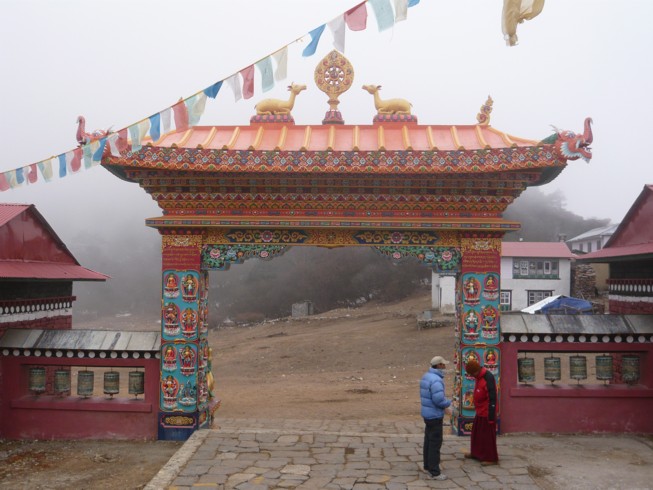
Stag guising is another old tradition – possibly older than horse guising. It was certainly in existence during medieval times and survives today in the form of the Abbots Bromley Horn dancers, Staffordshire, who perform carrying reindeer antlers on poles on the Monday following ‘Wakes Sunday’ in September. Wakes Week became a tradition in industrial Northern England when factories and mills closed down for a week for maintenance giving the workers a holiday. This began in the early nineteenth century, but before this the ritual presumably took place at a different time of year.

The exhibition is on until 17th July 2023 and there is a link to their site here.