I’ve had this post in mind for a while without actually getting around to writing any of it. But I felt it would fit in well here, following on from my last post.
We are supposedly better informed today than we were twenty, fifty, a hundred years ago. I’m not sure I agree, though. Certainly, there is no lack of information available, and access to it couldn’t be any easier. In fact whatever you want to know, you can find it online. Anything. Whether it be true or false, it’s there online. And because all this information is easily available, and because billions of people have access to the internet, it can be spread incredibly far and wide in a tiny amount of time. It is certainly not just AI that has led to this. The internet was full of misinformation long before AI was an issue.
I heard a few years ago that university students were forbidden to use Wikipedia as a source for essays and research. The people who add information to Wikipedia do not have to be any kind of expert. There is a certain amount of checking, but I don’t know how rigorous it is. Certainly, it is not unknown for mistakes and deliberate falsehoods to be added. This is why I have never used it as an information source. At best I have found what I might be looking for on there, but then gone to a reliable site to check it. For medical information, for example, I would use the UK’s NHS site. For historical information, I might use a top university website, or a large museum’s. A site where the information will have been uploaded by experts and specialists.
YouTube seems to be ridiculously popular with huge numbers of people as an information source. There are, of course, YouTube channels by very reputable people and institutions, but also a huge number of ones which exist solely to spread misinformation and total lies. And while it may be easy to tell some of the bad ones from the good, that still leaves large numbers that might or might not be reputable.
The same is true of social media. Countless sites run by Holocaust deniers, Nazi sympathisers, and every sort of conspiracy theorist from Flat Earthers to those who believe the world is run by paedophile alien lizard people. Again, while most of these are obviously what they are, many are less so.
Why so many sites spreading disinformation? The first reason is that there are many people who believe the crazy conspiracy theories. I’m not getting into the hows and whys of this, but the psychology is interesting. But the second reason is money. Many of these sites are monetised, so that the more clicks they get, the more views, the more money the site owner ‘earns’. Probably a feeling of power, too.
And to return to AI briefly, if anyone is in any doubt that it will make things up or provide misinformation, should you ask an AI program for examples of misinformation from an AI program, it will provide them. Whichever way you look at that, it is proof.
The advent of physical self-publishing, too, has contributed to this, albeit less seriously. The vast majority of self-published books are fiction, but who is there to check the accuracy of the supposedly factual ones?
As difficult as it is to separate fact from fiction now, how will it be in five, ten, or twenty years down the line? Or a hundred? We already treat historical records with a certain amount of suspicion, aware that many of them will be biased or fabricated. I suspect that generations to come will decide it is impossible to be certain of anything that happened in these times.
Once, I thought I’d write a footpath book, a guidebook for an area I walked frequently and knew well. As well as the practicalities of walking the paths – pointing out turnings that were easy to miss, alternative routes, the geography of the paths – I would also discuss the history and geology of the area, the wildlife and architecture, the folklore…
I’m sure you’ve seen plenty of examples of these books.
But that, naturally, would require me to walk each path carefully noting every point at which I would need to remark on these details. But I know me. I would be coming up to a point where I knew I needed to take note of the vagaries of the route, or points of special interest, and then a mile or two later I’d realise I’d been working on a poem in my head and had forgotten all about the task in hand….I would just find it impossible to keep my focus on the technicalities while walking. And I don’t really do technicalities very well, anyway.
And to have to do this for every step of every part of these routes, well, it’s not what I do. While walking, I’m inclined to drift along, my mind wandering, my focus flitting from one thing to another – whatever catches my eye at the time.
It will just have to go down as another of my discarded projects. The footpath book is for someone else to write.
Anyone still following their New Year’s resolutions? Good on you. As a rule I don’t make them, but this year I have drawn up a bit of a list. Partly, this is a coincidence. I’m on Goodreads, and they encourage you to set a reading target for the year, which I usually do as I think it provides that little extra spur to get on with it when I don’t feel much like reading.
When I’m feeling a bit meh, for example.
But the timing of the Goodreads prompt, being at the start of the year, not unnaturally suggested I might compile a little list of targets in other areas, which I did, but which I’m not going to be foolish enough to share here. Anyway, those few of you who follow me on Goodreads might notice that the couple of books I’ve been reading so far this year are books I’ve read before. And that’s because one of the resolutions I’ve made is that I shall re-read lots of books this year that I have read and enjoyed in the past. Favourites of mine. Books that give me real pleasure to read. In fact, the TBR pile beside my bed is currently eight books, not including the one I’m reading, six of which I’ve read before.
Re-reading a book is always a good idea anyway, as one inevitably notices things one didn’t notice the first time around. But my motive is pleasure, pure and simple. I shall still read some new books this year, but I shall focus strongly on those I’ve read before that I love. We’re often told, in one way or another, that we ‘should’ read this or that book, or that it is an ‘essential’ read (I know I’ve been guilty of it myself in the past, and will no doubt do it again). Well, this year, those folk can shove off. And take their ‘essential’ reads with them.
New Year’s Resolution lists seem to be routinely full of ways to ‘improve’ the maker of the list – make them fitter, get a better job, etc etc – rather than simply to bring pleasure. And although that’s perfectly laudable, it’s important not to forget pleasure for its own sake. It’ll help us get through the year.
I have finally got my family history book formatted and printed, and I reckon it looks quite decent. So all I need to do now is to get it posted out to family members.
While researching all this, I naturally made a lot of discoveries. Some were certainly more unexpected than others, though. From previous research my father had done, we already suspected that my great grandfather had changed his name, possibly on a whim, from Prater to Canning. I was able to confirm this by, amongst other things, a comparison of various dates of birth in his family. This immediately removes the possibility of my searching back to see whether my name has any noble / famous / important roots. This is something that matters a lot to some people, although obviously only along the male line, which is why it seems to matter much more to men.
Although I turned it up too recently for the book, I have learned details about my father’s life in WWII which I would otherwise never have come to know. I had no idea – and seemingly nor had anyone else in the family – that from 1940 until joining the regular army in 1943 and being posted to India and Burma, he had been part of what had been dubbed ‘Churchill’s Secret Army’, soldiers trained to operate behind enemy lines in the event of a German invasion of Britain. Fulfilling the same role as the French Resistance, they would have carried out acts of sabotage and hit-and-run attacks to slow the enemy advance. it was only after that threat had receded that he joined the ‘Regulars’.
And then, less unexpectedly, there were the stories of extreme hardship: the early deaths, the poverty, the workhouse, tuberculosis and pleurisy…
Of course, if it was possible to search back far enough, we would all find we had a common early human ancestor, which gives the lie to the importance of race.
Does any of this research really matter? Well, in some ways, no. Does it sound crazy if I say that despite all my work, it does not matter that much to me? I’m very much in two minds over this. A lot of this felt more like an intellectual exercise than a personal quest. It was interesting to find out where my great grandparents and their parents had lived, for this felt just close enough to be a part of me. But before them? And especially when I could discover nothing more than their names and some vague dates? No, not really. Throughout this project I have been especially keen to be able to put names to old photographs, for this seemed the only way to make these people come alive again, or at least begin to. That I’ve been able to positively identify some of them feels more satisfying than pushing a line back another hundred years, although I do have nearly every branch back at least to the 1700’s, but in every case it is the stories I’ve found out about these people that matter.
But back to my question. Does any of this research matter? I do think it has the potential to bring us a little closer to our families by emphasising our shared history, and I’ve greatly enjoyed long discussions with cousins about our various researches and discoveries. But beyond that? Well, I’ve enjoyed learning the social history involved with my family, the realities of how people actually lived in the towns and countryside over the last few hundred years. And as well as emphasising my connection to my extended family it has also, as I wrote a few month ago, given me a greater sense of connection to the land where I live.
I have enjoyed exploring the past, but I’m not going to live there.
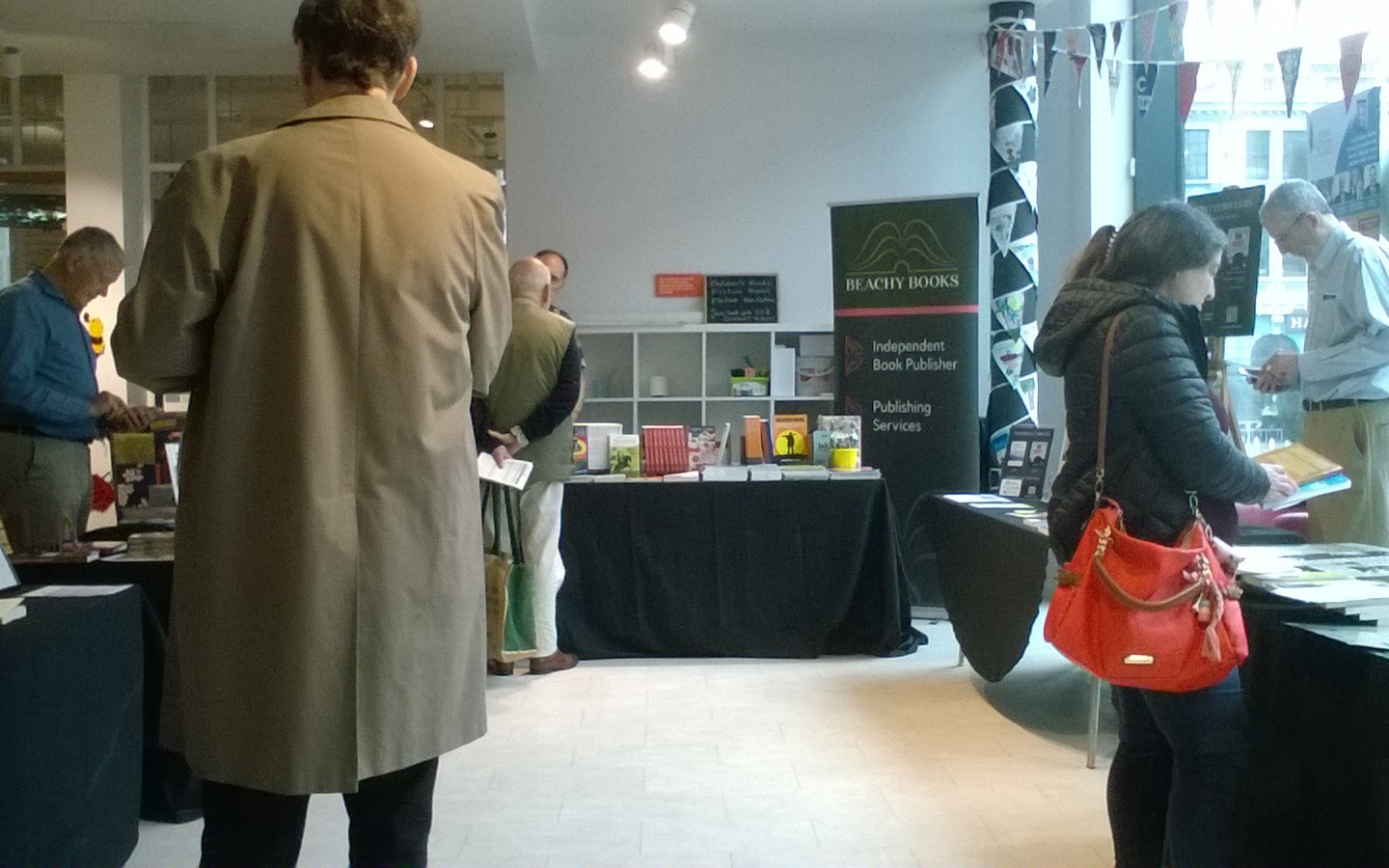
Tunbridge Wells now boasts a literary festival. Over four days this year it hosts talks from well-known writers such as Michael Rosen, Michael Parkinson and Sheila Hancock. But not just the big names.
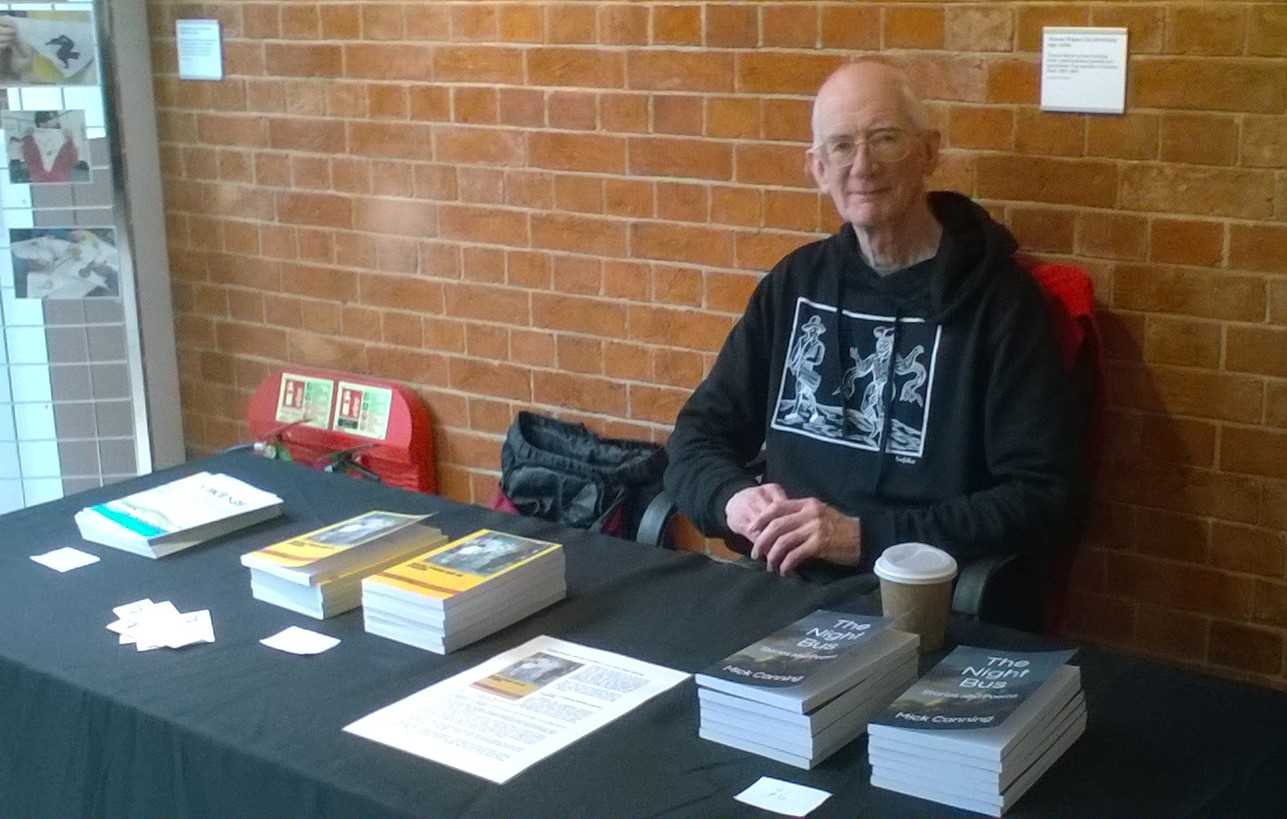
Yesterday was the day local writers could book a table and hawk their wares. It’s been some time since I’ve taken part in one of these, in fact, I’ve only done it once before, I think. When I used to regularly have paintings in exhibitions, I spent a lot of time essentially doing the same thing – chatting to other painters, talking to members of the public who might buy a painting and generally ‘networking’ (I still find that a slightly silly word). Although talking about Making Friends with the Crocodile did have another effect – it reminded me again that I’m beginning to feel I ought to take one final trip to India, sometime.
Anyway, I think I should probably do one of these more often. Did I sell armfuls of books? No, but I sold a few. I had some good conversations with members of the public and other writers, It also seems to have the effect of energising my commitment to writing, which is something that happened to my painting at exhibitions, too. Talking about my books and projects encourages me to focus afresh on them and, basically, get my finger out and get on with it, which can’t be a bad thing.
In this book Matthew Green charts the decline and eventual abandonment of eight British settlements; a diverse selection ranging from the Stone Age settlement of Skara Brae in the Orkneys, through several Medieval villages and cities and up to the twentieth century, to an area emptied of its inhabitants during the Second World War and a village that was abandoned when the valley it inhabited was flooded to create a reservoir – although in that case ‘abandoned’ is the wrong word, since that particular story is a harrowing tale of folk driven from their homes at the diktat of decision makers far away, not even of their own country.
In each chapter he tells the story of the decline of the settlement drawing upon written records for all but the oldest, Skara Brae, for which he relies upon archaeological evidence, and some of the more recent, for which he uses a mixture of eye-witness accounts and the testimonies of those who had heard their stories at first hand. Of all the stories here, that of Dunwich is probably the most famous, with its myths of bells from long-drowned churches being heard far out under the waves, although the popular description of Dunwich as a ‘drowned city’ is inaccurate, as it fell away into the sea as the cliffs beneath it were eroded away. But much is known of Dunwich, with many extant records and maps of the city, enabling Matthew to chart its decline and eventual end in some detail.
Hirta is the biggest island of the St Kilda archipelago and was occupied for at least two thousand years until 1930, when the final thirty six islanders voted to leave. By then, most of the families and younger residents had left for the mainland, and their traditional way of life had become unsustainable. Until a couple of hundred years ago the islanders were virtually cut off from the rest of Scotland, due to the distance and the difficulty of making a landing at the island. Existing almost exclusively on a diet of seabirds (remarkably, they were apparently lousy fishermen!), the islanders lived a remarkably difficult life and it is no surprise that as they were exposed more and more to the outside world, more and more of the islanders opted to leave for a better life.
I found I was drawn deep into these stories not just because I found them so fascinating, but also because of Matthew’s skilful and easy style. A very well researched and beautifully presented book, I’d definitely give it five stars out of five.
Well, my favourite twelve, anyway. One a month, if you like, although that wasn’t how I read them. Or perhaps the twelve book reviews of Christmas – oops, no. Missed that one. Anyway…these are some of the books I read in 2022, not books that were first published this year. But I seem to have read so many good books in 2022, it’s difficult to make a choice and this has ended up being a little arbitrary.
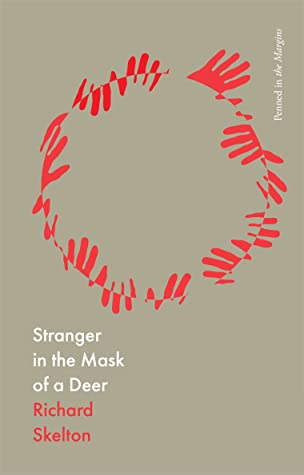
Stranger in the Mask of a Deer by Richard Skelton. It has been a long time since I last read something new and immediately put it into my top ten reads, but this remarkable work is straight in there. A few weeks later I had to re-read it, captivated by its dream-like quality.
It is essentially a poetic narrative ranging between the present day and Palaeolithic Britain, told by humans both ancient and modern, and by non-human voices. Its essence is life and ritual, the connection between humans and animals, between humans and the land they occupy, and the elements surrounding them.
The remains of deer skulls complete with antlers, but with eye holes punched into the skull so they might be worn as masks, have been found at Star Carr in Yorkshire, dating to approximately eleven thousand years ago. It is presumed these masks would have been used in rituals…
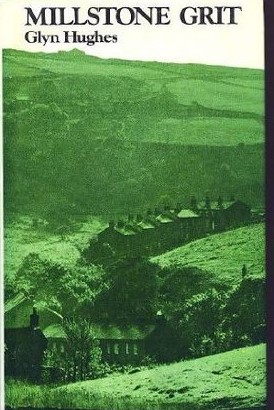
Millstone Grit by Glyn Hughes. This very readable book was originally published in 1975, describing a fifty mile walk the author took through East Lancashire and the West Riding of Yorkshire; an exploration of the moorlands and villages alongside the industrial towns, all of them suffering in their own ways from the effects of the loss of traditional industries in that area. It is about Hughes’ attachment to this area he came to live in, the clash between human and non-human landscapes, and about working class history in these places, but above all else about some most remarkable people he meets along the way.
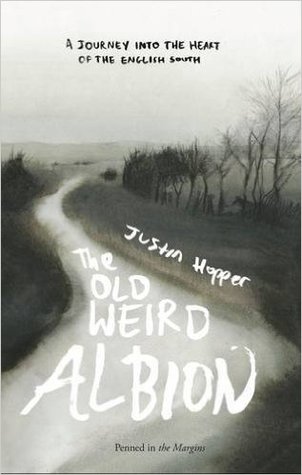
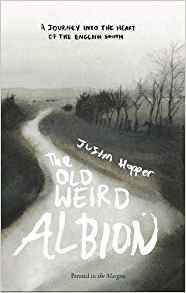
I re-read The Old Weird Albion by Justin Hopper. This is a book about tracing a mystery in his family’s past, beginning with a woman preparing to throw herself off Beachy Head, a notorious spot for suicides, but also about the effects the landscape of the South Downs has had upon people.
This is a book I reviewed on this blog when I first read it three years ago – the link is here – and I’ll just put an extract of that review here: ‘He has a gift for sifting and selecting the weird in these relationships, not just at sites that might be naturally expected to encourage the weird, such as Chanctonbury Ring, high on the Downs above Steyning or in old ruined buildings, but also in humdrum blocks of flats in modern developments. He references modern phenomena like crop circles and throughout there is the presence of ‘magic’, in the sense of a natural force. Many of the people he meets are an eccentric mix of the weird, too, although I choose this description carefully, largely in the old, original meaning of the word of ‘fate’ or ‘destiny’.’
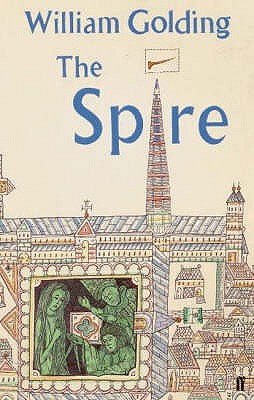
Another re-read, this time of a book I first read some forty years ago. The Spire by William Golding is a novel set in medieval England, in an unspecified city somewhere in the south. It is a story essentially about pride and hubris, about the Dean of a church determined to have built a great spire on his church, despite warnings that the foundations will not be able to support such a colossal structure. The ending seems predictable and yet that is not really where the story is going, being more concerned with the characters inhabiting that space.
The setting is the church and environs, and it evokes the feel of the ecclesiastic medieval as successfully as The Name of the Rose does. One test of how good a novel set in historical times is, is whether it transports the reader easily to that setting. I certainly found it did.
I bought Hemisphere by Pete Green at an event where poets read excerpts from their work. It is effectively a poetic journey around the northern hemisphere, beginning in Scotland, the journey approximating to the latitude of the arctic circle. The writing conveys a tremendous sense of place and feels very right for the cold edgelands described.
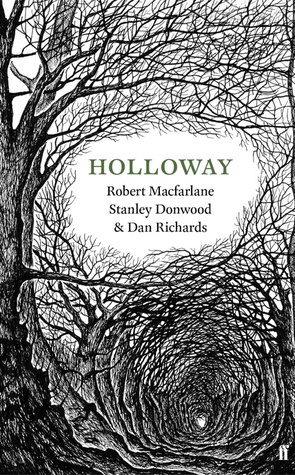
Holloway by Robert MacFarlane and Dan Richards, with illustrations by Stanley Donwood is a short book, describing a journey MacFarlane, Donwood, and Richards made in Dorset, essentially a revisit of a trip MacFarlane made previously with Roger Deakin for an earlier book, exploring holloways. Holloways, often known as sunken tracks or paths, are old – frequently very old – paths made over the centuries by the passage of feet, both human and animal, and perhaps by the wheels of wagons and carts. It is a short journey – perhaps ‘experience’ would be a better word – describing wild camps and walking, cycling and visiting old buildings; in some ways, perhaps it is really no more than a short camping trip, undertaken by a group of men acting out a boyhood adventure. The writing, though, by both MacFarlane and Richards is exquisitely poetic and Donwood’s illustrations never less than beautiful.
Notes on the Sonnets by Luke Kennard.
‘Luke Kennard recasts Shakespeare’s 154 sonnets as a series of anarchic prose poems set in the same joyless house party.
A physicist explains dark matter in the kitchen. A crying man is consoled by a Sigmund Freud action figure. An out-of-hours doctor sells phials of dark red liquid from a briefcase. Someone takes out a guitar.
Wry, insolent and self-eviscerating, Notes on the Sonnets riddles the Bard with the anxieties of the modern age, bringing Kennard’s affectionate critique to subjects as various as love, marriage, God, metaphysics and a sad horse.’
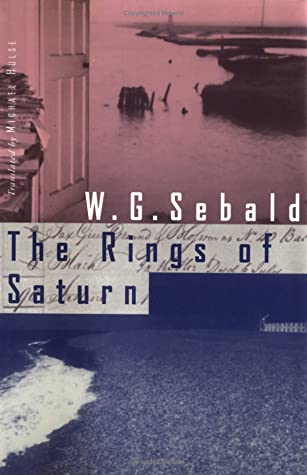
The Rings of Saturn by W. G. Sebald had been on my ‘to-read’ list for a long time, but I finally got around to picking up a copy this year. On one level, this is a walking journey taken by the author along the Suffolk coast in the early 1990’s, describing both places and people he comes across, but really, it is much deeper than that and is a psychogeographical work par excellence. Throughout the journey, we are never quite certain whether events are happening to the author, or have happened in the past, or perhaps to someone else at some other time. He goes off in unexpected directions, literary, historical, and physical, exploring a wide and eclectic range of subjects yet throughout there is a cohesion to the narrative.
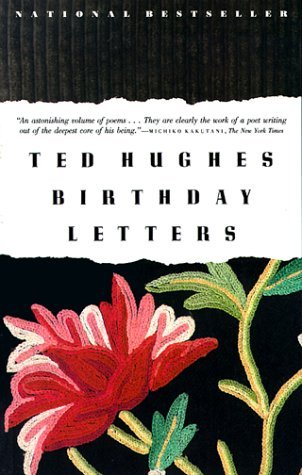
The Birthday Letters are a not-quite-series of poems Ted Hughes wrote to his wife the American poet Sylvia Plath after her death. Personally, I find them to be probably his most accessible poems and wonder whether that says something about me, although this isn’t the time to go into that. Theirs was a difficult relationship, and her suicide (as well as that of a later lover of his) frequently colours people’s opinions of Hughes. Inevitably, these are often extremely personal poems, so much so that at times I feel a slight discomfort reading them, as if I’d opened someone’s private correspondence by accident, but Hughes wrote them as an attempt to restore her to him, and published them almost for the public to read as his own account of her life and death.
Sadly, Roger Deakin only wrote three books, of which Notes From Walnut Tree Farm is compiled from diary entries he kept during the last six years of his life. In these notes, he recorded his day to day life on the farm, walks on nearby Mellis Common, the yearly cycle of the natural world all around him, and his thoughts on literature, the importance of nature, and musings on the past.
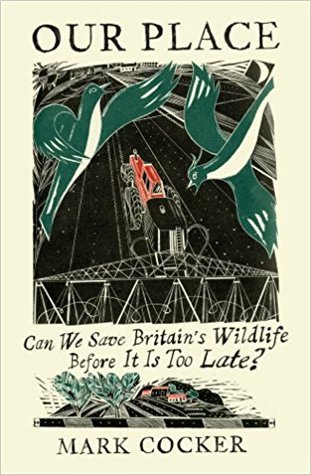
Our Place by Mark Cocker is an exploration of the history of environmental thought and politics in Great Britain and, especially, the way forward. It asks pertinent questions like who owns the land and why? And who benefits from green policies? Not afraid to be radical in its suggestions, it asks why there is such a disconnect between the British public’s sympathy for and championing of the countryside and the reality of its current condition.
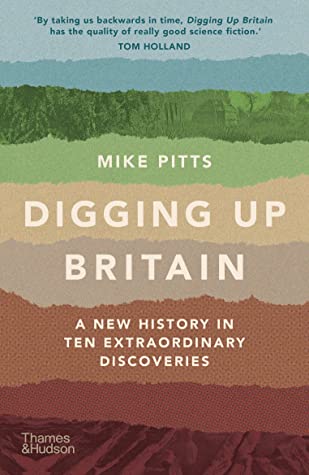
Digging up Britain by Mike Pitts tells the story of Britain’s history and prehistory in ten astonishing excavations. As someone who has always had an interest in history and pre-history, I found this book a timely reminder of the huge strides taken forward in our understanding of the past over the last ten years or so, due to such important tools as DNA analysis as well as the painstaking work of those who excavate and interpret these sites. There are some remarkable tales in this book.
Hours of pleasure for the price of a cup of coffee in Bigbucks.
Like any other worker, you pay for my time. Only unlike the decorator, say, you only pay for a tiny fraction of the real time spent creating your book.
And what do you get for this investment?
Why, I bring you a whole, newly created world to explore!
I introduce you to people you never expected to meet, without the inconvenience of having to make small talk with them.
Heroes and villains, fools and wise men.
Perchance I will take you on a perilous voyage, yet you will return safely to the shore.
Encounter your deepest fears, and overcome them.
Know love, and disappointment, happy ever after and abject failure.
See through the eyes of the cruel and the eyes of the kind.
And all this for less than the price of a coffee.
And unlike the decorator, I won’t come and tread paint into your carpet, disappear for two weeks to do another job, leave your kitchen a complete mess, eat all your biscuits or drink all your tea.
The viewer sees a painting that appears to be composed of watercolour and charcoal, of a winding road or track, possibly even a river, leading towards a line of downland hills, the whole created entirely in black and shades of grey, with the title and author scrawled into the picture in brilliant white, as though it were a prehistoric figure etched into the Downs themselves.
And that’s just the cover.
This is a book quite unlike any I have read before, in that it is a book about the south of England, especially the South Downs of Sussex, but it is far more than geography and the associated disciplines such as geology and biology, rural history and architecture, and folklore. Psycho-geography was not a term I had come across before, but there is an aptness to it that becomes apparent as you read.
The book opens at Beachy Head, a beautiful piece of Sussex with a dark reputation for suicide, as a woman throws herself off the edge. Quickly, we learn that this woman was the first wife of the grandfather of the author, Justin Hopper. And we learn that this book is in part a chronicle of his efforts to discover this person and learn something of her life and, consequently, her motives for such an act.
In so doing, he needs to revisit parts of his earlier time in Sussex and examine his own relationship to the area as well as the relationship of other players, not just his grandfather and other members of their family.
He has a gift for sifting and selecting the weird in these relationships, not just at sites that might be naturally expected to encourage the weird, such as Chanctonbury Ring, high on the Downs above Steyning or in old ruined buildings, but also in humdrum blocks of flats in modern developments. He references modern phenomena like crop circles and throughout there is the presence of ‘magic’, in the sense of a natural force. Many of the people he meets are an eccentric mix of the weird, too, although I choose this description carefully, largely in the old, original meaning of the word of ‘fate’ or ‘destiny’.
A strength of this book is its intensity, and I feel impelled to look at the pictures it references and read the books it quotes. So much so that upon finishing the book, I spent some time tracking down an old copy of one of those books, which I am now reading, and which holds my interest in just the way Justin implied it would.
On a personal level, this book came just at the right time for me, in that I am reacquainting myself with the geography and history, and the plants and animals, of the South of England, where I grew up and which formed my love of the natural world, and the book has encouraged me to look at this in a new way.
World Book Day, celebrated today, 7th March, has the declared aim: Our mission is to give every child and young person a book of their own.
It is celebrated in the UK, although I have no idea whether this is an idea that has been taken up elsewhere, and would be interested to find out.
Schools, in particular, seem to have embraced the idea, with children encouraged to attend classes dressed as their favourite book or literary character. Thus hundreds of Harry Potters and Willy Wonkas and Very Hungry Caterpillars march into schools across the country once each year.
A splendid thought!
Which brings me to a marvellous project aimed at schools across the country.
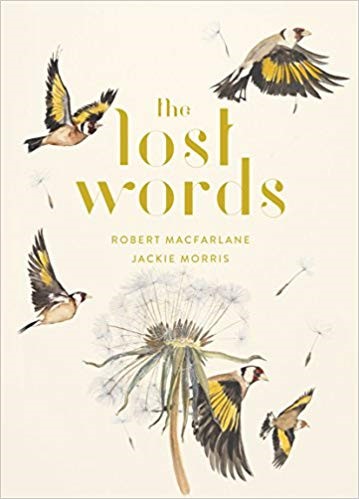
Growing, in a way, out of Robert Macfarlane’s brilliant book Landmarks is The Lost Words, a collaboration between Robert Macfarlane and artist Jackie Morris. I can do no better than to quote Jackie Morris on the reasons: It had come to the attention of some who work in the world of words that certain words were slipping out of common usage. As a result when it came to amend the junior dictionary for a new edition these words were gone… These words included bluebell, conker, heron, acorn and perhaps the one that cut the deepest for me, kingfisher.
So The Lost Words is aimed towards children, to encourage them, through the words and paintings of the book, to discover the natural world that so many of them know nothing of.
So many grow up today without any meaningful contact with the natural world, and this book aims to encourage them to know and to love and protect it.
And the project – the campaign, really, in a very ad hoc way, is to raise money where necessary to place a copy of the book in every school in Britain. It has already been achieved in Scotland, I understand, and hopefully, it will soon be achieved in every other school in Britain.






 Mick Canning