Wow, What a Book #3, #4, #whatever

Well, Saturday already. Seems only yesterday it was Friday *sigh* I suppose I’d better get on with it.

I don’t think I’ll do ten of these after all, because I rather run the risk of listing books just because I like them, rather than because they have had a real and measurable influence on me. So today I present the final three.

1. Silent Spring, by Rachel Carson.

Image result for silent spring

I read this book when I was in my mid twenties, and it really did open my eyes to what we as a species were doing to the planet. Up until that point, I had not really understood the impact that we were having on the environment. Shocked, I became interested in learning more, and then even more shocked as I learned what food and drink manufacturers put in their products for us to consume. At that time, one of them was the nasty compound dropped by the Americans on Vietnam during the Vietnamese War; a defoliant that was known to be carcinogenic.

It was used as orange food colouring.

I got hold of a list of all the ‘E’ numbers that were permitted additives, and which the industry certainly didn’t want us to know about. Certain ones were very nasty indeed. It was at this point that I became very keen on reading the labels on food and drink packaging.

I became involved with various pressure groups, such as Greenpeace.

That book changed my life.

2. The Razor’s Edge by W Somerset Maugham.

download

In some ways, this could lay claim to be the book that has had the greatest influence on my adult life, but in a different way to Silent Spring.

I’d always tried to be a reasonably decent human being, but reading this made me rethink the way that I wanted my life to be. It is the story of a man who returns from the first world war and begins to question his place in society. He finds the trappings of modern western life, and its values, empty and meaningless – its focus on making money, selfishness and greed. He then searches for something meaningful in his own life, through education, religion and travel, and explores his relationships to others.

The message in this book immediately resonated with me; that there is much more to life than the pursuit of money, essential though some of it it might be to my survival. Other people mattered. Helping others was important. What is called the spiritual life, whether or not you believe in a god or not, was an important part of us all.

5. The War of the Worlds by H G Wells.

hgg

Are you serious? you ask. How could this book be an influence on your life? One of the first science fiction books, and admirable for that, but an influence?

Well, it is easily told, and the answer will probably surprise you. This book provided the initial impetus for me to become a vegetarian.

Yes, a vegetarian. There is a passage in the book where the narrator recoils with disgust as the Martians take the blood from still-living humans for their nutrition, but then comments that it was probably the same reaction as an intelligent rabbit would feel observing our own eating habits. That made me consider whether it was necessary for me to eat meat, and I came to the conclusion that no, it was not.

Wow, What a book #2

To continue with the 10 books that have most influenced my life.

My second choice is The Lord of the Rings, by J R R Tolkien.

Image result for the lord of the rings book cover

I suspect that very few readers are unaware of the story of The Lord of the Rings, having either read the book, seen the film, or both. And at this point, it might be a good idea to just make it clear that I am talking about the book here, and not the Peter Jackson films, or even the ill-fated attempt at animating the entire book in 1978, an attempt that got as far as the first book, and was, to be honest, rather dreadful. Let me content myself by just saying it was a bit ‘Disney’. I’m not that mad on the Peter Jackson films either, to be honest, but back to the book.

So, I’m not going into any great detail about the story, but, in a nutshell, it involves a quest to destroy a ring that gives great power to the wearer, but inevitably corrupts and destroys them. It’s maker, Sauron, is attempting to find it, and the free peoples of the world must not only keep it from him, for if he recovers it it he will then have power to enslave the entire world, but also take it to the fiery mountain, Mount Doom, where it had been forged, to cast it into the flames and destroy it.

Mount Doom is, inconveniently, inside Sauron’s heavily fortified and guarded kingdom.

Elves, dwarves, men, wizards, hobbits, orcs…you all know it, don’t you?

As readers, we are all different. Some of us like a plot that gallops along so fast that we can barely keep up, with writing that limits itself to the action and no more than the minimum descriptions necessary.

Others, like me, enjoy the scenery and the atmosphere of the described world almost as much as the plot itself – join the Slow Book Movement now! Just send a completed application form to…sorry, wrong place. Where was I? Oh yes, most readers like a mixture of the two, of course.

But as one of these Slow Readers, there is a massive amount in this book that appeals to me. When I read descriptions of the hobbits setting off to walk through woods and fields as the sun comes up through early autumn mists, I might have been reading a description of a morning when I had done just that whilst wild camping in the countryside in my part of England. I have always loved walking on footpaths and through fields and woods, and disliked roads and towns.

The countryside Tolkien described around the Shire – the home of the hobbits – might have been my countryside. there were chalk downs and woods and streams, even one or two names (for example Michel Delving) that could have been local.

There were other woodlands in the book, and if they were described as magical, then that was little more than I naturally felt about woodlands anyway. Aren’t they all magical?

And, on top of all that, there were mountains. Today, I love mountains! But I had never seen one at this point, and suddenly I wanted to go and climb one. There were inns and beer, adventure and song, friendship and dangers. What was not to like?

The whole book is really made up of three books, and the first book, which has always been my favourite, is the one which is mainly set in this land that I could almost identify. This was not the first fantasy book that I had read, but it was, and still is, the one whose descriptions have the greatest power to draw me in. It is the one that, to me, seems the most real.

All of this, with the themes of courage and friendship, self sacrifice and loyalty, and the message that good will eventually triumph over evil, come together in a mixture that is in just the right proportions to appeal to me.

But how has it actually influenced me?

For a start, when I began to write, everything that I wrote seemed to be influenced by that book. This was not actually a good thing, because other than The Lord of the Rings, I don’t really enjoy fantasy! But I wrote that way for a long while.

Today, though, what remains is the descriptive writing. I wonder whether I might otherwise have been a very different reader and writer, since before I read LOTR, I read mainly detective stories and adventure novels.

And I explored a lot of the Middle English literature that influenced Tolkien, from Beowulf to Sir Gawain and the Green Knight, which I suppose not too many people do today.

I visited mountains because of that book.

And a measure of how strong this appeal was (and remains) is that I have probably read the book about twenty times. The last but one time, though, was around twenty years ago. When I decided to re-read it last year, I did wonder whether I would be disappointed. I strongly suspected that I might have ‘grown out of it’.

I needn’t have worried.

I enjoyed it just as much as I ever had; I noticed one or two details I had either forgotten or never really noticed in the first place, and I found myself drawn in every bit as strongly as I had been before.

I loved it.

Wow, What a Book! #1

I thought that I would pick out what might be the 10 books that have most influenced my life. Well, I say 10 books, but I may tire of this long before I reach 10, so let’s just see what happens.

You see, these are not really reviews, although it is necessary to give some idea of the plot of each book, it is more about how they have influenced me, and I may decide after a while that I’m just giving away too much about myself.

Or that I’m just going over and over the same ground.

Okay, then. Let’s get on with it. The rules:

Firstly, I must have read the book more than 5 years ago. I know this is an arbitrary figure, but any book that I have read recently is likely to be clearer in my mind, and so appear a little more important to me than it really is. It needs time to settle.

Secondly, I need to be able to demonstrate to myself exactly how it is that the book has influenced me. Just to say ‘it was important to me’ will not be enough. That would be little better than just saying ‘I like it’. Perfectly valid, but hardly the stuff of a blog post. This is another reason to impose the 5 year rule – there must have been enough time elapsed to see the influence.

So I’ll start today with Steppenwolf by Hermann Hesse.

Image result for steppenwolf Hesse

Sometimes, you get the feeling that some people have just been born into the wrong century. Not that they would prefer dressing in cravats or crinolines, although they might anyway, or that they have a hankering after a little piracy or bubonic plague, but rather you can see that they don’t fit in with the pace of modern life, or much like the ethos of the times.

There must be quite a few people like that, which must partly explain the immense popularity of Steppenwolf both when it was released, and then especially in the 1960’s and 1970’s.

It was the second book by Hesse that I had read, after cutting my teeth on ‘The Journey to the East’ as a teenager, and I was a little unprepared for its message.

Whereas ‘The Journey to the East’ felt like a bit of drug-induced fantasy, although a very clever and readable one, without any obvious message beyond ‘free yourself from the conventions of society, man’, Steppenwolf clearly had a more serious message to convey.

It begins with the protagonist, Harry, contemplating taking his own life, because he sees himself as a serious writer both at odds with the world that he lives in (Germany, post WWI), whose values, especially the bourgeois ones, he despises, but also with his inner alter ego, the very opposite of the sophisticated artist that he sees himself, which he calls the Steppenwolf – or the wolf of the steppes. He hates and fears this alter ego, who he feels he cannot control, and who sneers at everything that Harry holds dear.

It is whilst Harry is contemplating suicide, that he comes across a booklet entitled ‘Treatise on the Steppenwolf’ and as he reads it, he discovers that it is about himself. the booklet talks about Harry and his alter ego, but also explains that there are many, many more of these other sides to his character.

Through the rest of the book, Harry learns how to reconcile these many sides of himself and, more importantly, how he can manage to live in this world that up until then, he sees no value in.

When I read the part of the book that consisted of the treatise on the various different natures that made up the protagonist of the novel, it was the first indication to me that we really do have these different sides to our characters; sides that do not need to be in conflict with each other, but can coexist quite peaceably. As a typical young man, I knew that there were parts of me that yearned for safety, parts that simply wanted to rebel. Parts that enjoyed home life and parts that wanted nothing more than to wander the world with my possessions in a rucksack. There was the aesthete and there was the lover. The artist and the fighter.

Until then, the rebel in me had sneered at the home lover, and the artist seemed to be in perpetual conflict with the fighter. I had felt embarrassed by parts of my character and, just as did the hero of Steppenwolf, rather tried to repress them.

What this book did was to show me that it was natural to feel like that, and that the secret was to accept all of these sides of me, and allow them to all have their moments of dominance, and their moments of passivity. They did not need to be in conflict.

It completely changed my outlook on life.

How India Changed an Englishman

I wrote a piece for The Good Men Project, about my time in India and how I came to write Making friends with the Crocodile’. Sushi Menon kindly edited it to make it readable, and gave it a title, and you can find it here:

How India Changed An Englishman

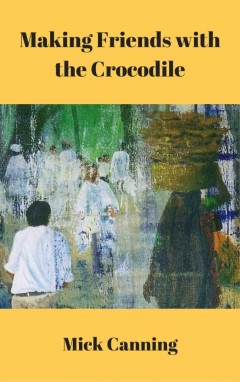
Making Friends with the Crocodile cover

The Book is Released – Hurrah!


Making Friends with the Crocodile‘ is now released!

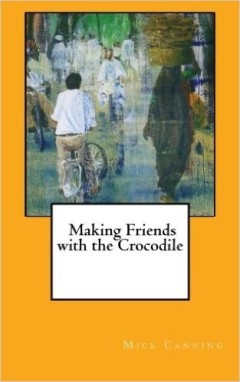
Making Friends with the Crocodile cover                             POD cover

Kindle edition                                                     Paperback edition

Anyone who has already pre-ordered it on Kindle / Amazon should have received it by now, and in countries where there is no pre-order facility, such as India, the Kindle edition is also now available to buy.

The paperback is available from the Amazon.com, Amazon.ca, Amazon.co.uk and Amazon.eu sites only – this is a quirk of Amazon – but can also be ordered from the estore at CreateSpace, at the following link:

https://www.createspace.com/6301808

And now, I wait to see what people think of the book, with a considerable amount of nervousness.

If you do buy a copy, please consider leaving a review either at Amazon, or on Goodreads, if you are a member (better still, at both!). Reviews are genuinely the lifeblood of a writer, and do help to sell books.

Finally, the blurb again…

‘Siddiqa was only just into her teens when she was forced to leave her home to live with her new husband and his family in another village. The years have passed, and now Siddiqa has three children of her own. Her grown up son has brought his new wife, Naira, to live with them, so Siddiqa is no longer the lowliest in the household, for she has a daughter-in-law.

Life in rural India is particularly harsh for women. This novel explores themes of female oppression and tradition and asks whether the next generation will find life any easier.’


The Morning After…

Wow, what a weekend!

After the book launch, the parties!

Celebrations!

Oh, and when I looked out of the window to see the streams of bunting all the way along the road, and the swarms of well-wishers gathering outside the house, I was so excited!

Then once I had gone out and signed loads and loads of autographs, I was being chased all over town for interviews by all the big newspapers!

And then I…

Well, okay. That’s not strictly true.

It’s not very true at all.

In fact, it’s not true in even the teeniest tiniest littlest way.

My life does not seem to have altered in the slightest and, actually, I’m glad about that.

070 (2)

Right, now it’s time to get on with the next stage.

I’ve put a link on the image of the book on my sidebar, which goes directly to my book page on Amazon (thanks, Stuart!).

And I’m looking at the best way to create Print on Demand paperback copies of the book, probably by using CreateSpace (lots of recommendations), and hope to have that sorted out in a couple of days. I don’t think it’s too difficult, but my way of dealing with new technology tends to be by shouting at it and slamming doors, so I may take longer than other writers.

But since the release date of the Kindle copy is June 4th, I should have time to arrange for the paperback to be released on the same date.

So, what next?

Actually, it will be great to feel that I can focus on just writing again, and not just constant editing and revision, so it’s back to the long Work in Progress, ‘The Assassin’s Garden’. This has a timeline that stretches from Medieval Persia through Medieval India and the British Raj, through to Edwardian England. It’s already a long novel and nowhere near finished, so I suspect that I might eventually have a trilogy on my hands.

I might even write a short story or two.

Ooh, it’s exciting. I do love this writing lark!

Published!

Well, blimey, Making Friends with the Crocodile is now published on Kindle and is up on Amazon as we speak!

Making Friends with the -Crocodile

About a week ago, I reached the point where I felt that the editing was finally complete, or, at least, if it wasn’t, then I might just pick at it for ages without really making any further difference, and so it was time to get the process finished.

What a relief.

It feels as though I have been under pressure for weeks. I’ve felt tired, I’ve felt tense.

Ooh, I’ve been irritable!

All this pressure, of course, is of my own making. A lot of it, I suspect, being due to this being my first foray into publishing.

I knew that I needed to format my text for Kindle, and heard that Scrivener was a useful tool for that. And so I downloaded Scrivener, and spent a couple of hours working through the tutorial until I decided that it just wasn’t going to happen for me.

I’m sure it is very useful, but I was getting to the point where I felt like chucking the laptop at the wall.

So I went and looked in detail at the instructions for publishing on Kindle, and found that you could just save your file in the correct format and then upload that.

Bye, bye Scrivener.

I looked at a few Kindle books and then wrote the stuff at the front and back of the book – about copyrights and stuff like that.

I inserted my table of contents.

I already had my book cover ready.

I wrote the blurb:

‘Siddiqa was only just into her teens when she was forced to leave her home to live with her new husband and his family in another village. The years have passed, and now Siddiqa has three children of her own. Her grown up son has brought his new wife, Naira, to live with them, so Siddiqa is no longer the lowliest in the household, for she has a daughter-in-law.

Life in rural India is particularly harsh for women. This novel explores themes of female oppression and tradition and asks whether the next generation will find life any easier.’

Working out how to upload to Kindle, and to complete all of the forms and tick boxes proved a little long winded, but reasonably straightforward.

So then, suddenly, there it was. Sitting on Amazon, available for pre-order, with a launch date of 4th June. Although for some reason, unfortunately, pre-order is not available in India.

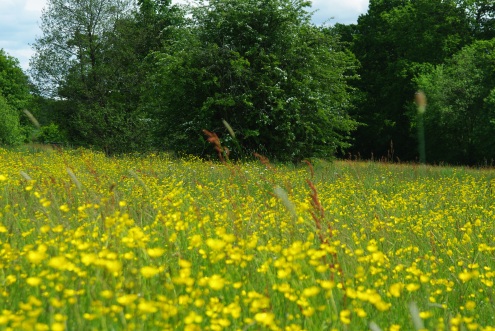
And now it feels much like stepping off of a crowded and noisy street into summer sunshine; the sounds of the shouting and the traffic disappearing and being replaced by birdsong.

IMGP2282

Woo-hoo!

And what a buzz to go and look at my own author page on Amazon, with my own book there!

Woo-hoo again!

For the moment, as I say, it is only available for pre-order, and will be released on 4th June. But if anyone does feel inclined to buy it, pre-orders will help boost the ratings when it actually launches.

I am going to look again at Print on Demand, in a day or so. Initially, I had ruled it out, mainly because the one site that I looked at required the customer (i.e. me) to order and pay for a set number in advance, and I assumed that would always be the case, but now I think that is possibly not so. Certainly, the Amazon tool, CreateSpace, looks as though it might work more the way that Kindle does.

It will be great if it does, since I really prefer to have a physical copy of a book, and I know there are still a few other people out there who still feel that way.

So…now to get my head around promotion…

Ooh, it’s nearly finished!

I’m getting excited, now.

My novel, ‘Making Friends with the Crocodile’ is hopefully ready for its final edit.

This part of the journey seems to be taking a great deal of time, but this might be because it is my first foray into publishing. I know that there is still much to do – formatting, advertising, proof-reading, the publishing itself, amongst a plethora of smaller but no less important tasks – but I am finally beginning to feel that I am getting there.

Curiously, after what I wrote in my last post, I never found any of the characters threatening to hijack the plot in any way. Although I never planned it out in any detail, I had a rough plan in my head, which, remarkably, I kept to. Perhaps it is because the subject matter is strong. I don’t know.

And I think that I have settled upon the cover (the artwork is my own).

Making Friends With The Crocodile cover 1

I may play around with the wording, slightly, for example I might take out the words ‘A Novel’.

For some background; the story is set in a village in Northern India, some fifteen odd years ago. It is about the deteriorating relationship between two women in a family: the mother and her daughter in law. Like this relationship frequently is, it is a strained, fractious one, not helped by that society’s attitudes towards women and their roles in general. And when one of them gets caught up in events beyond her control, these attitudes become dreadfully destructive.

As always, your thoughts would be very much appreciated.