What’s In A Name?

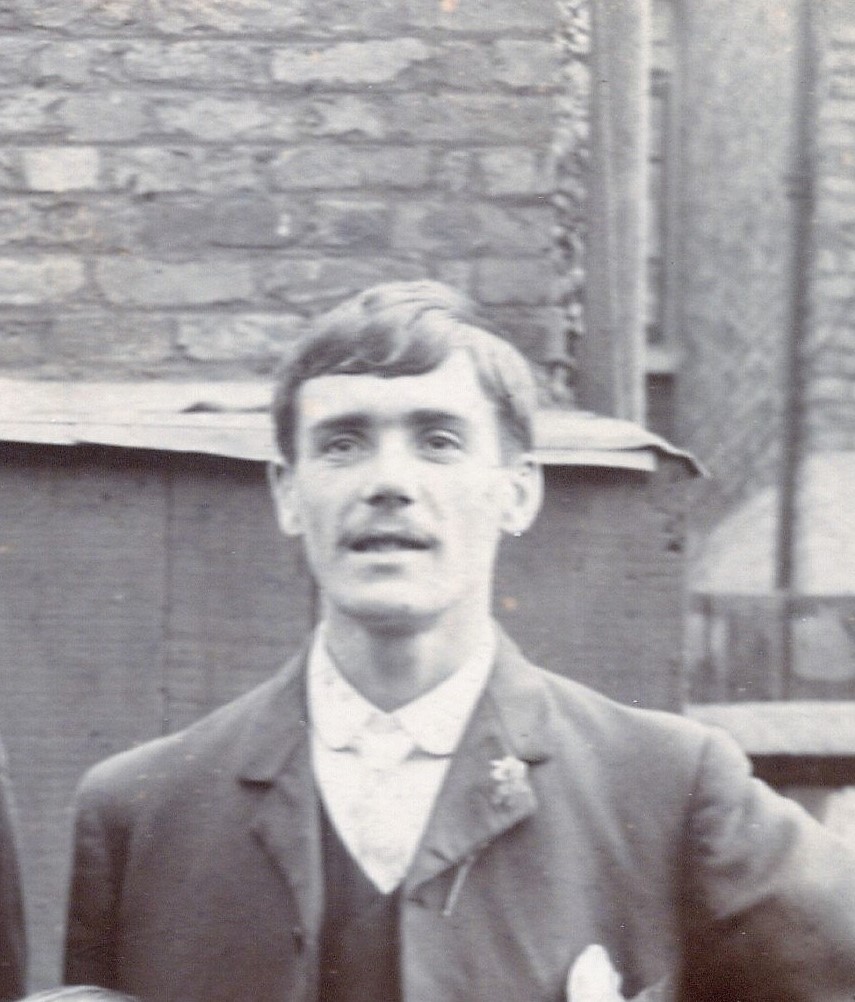
My Great Grandfather moved from rural Hampshire to London sometime in the late 1870’s, during the course of which he changed his surname first from Prater to Cannon, and then to Canning. We don’t know the reason why, but I suspect a family rift of some sort. Whatever the reason, from that point onwards our family were Cannings, rather than Praters.

Great Grandad pictured in 1904 in East Ham, London.

So really, my name should be Mick Prater.

But it isn’t.

Does it matter? In any way at all?

Of course it doesn’t.

And this, I think, illustrates the absurdity of those – primarily men – who think it is of paramount importance that the family name is continued. I know this supposedly gives a kind of spurious immortality to family members but, really, it’s a nonsense.

Review of The New Asylum by Frank Prem

48274258._SY475_

This is Australian poet Frank’s third collection of poems, and in a way this is a return to the narrative arc of his first collection; Small Town Kid, after the heartbreak of his second collection, Devil in the Wind, which dealt with the horrors of the bush fires in Australia on what became known as Black Saturday in February 2009

Not only is this a personal, time-ordered narrative like Small Town Kid, but it takes up Frank’s life where that collection left off, with his taking a job at the institution in his home town housing people with mental health problems. At that time (around forty years ago), these institutions were generally known as ‘mental asylums’ although that name, as well as a lot of the attitudes that coloured people’s ideas of them, have supposedly been consigned to history.

These poems take us on Frank’s journey from his visits to the institution where both his parents worked, then as naive and wide-eyed Trainee Psychiatric Nurse through to today, introducing us to a wonderful collection of colourful, sad, genial, well-meaning and, yes sometimes, mad characters, both staff and residents of the institution and, latterly, the hostel that acts as a ‘half-way house’ between incarceration and release.

All these characters are realistically and sympathetically drawn, and I suspect that not a few readers will be surprised at the humour (occasionally black) and warmth that comes through from the average day in their lives. Frank does not shy away from showing the attitudes prevalent in those earlier days, when patients were severely regimented and often treated less than sympathetically, although I suspect there is much he does not reveal. But where he is at his best, I feel, is in depicting the almost unutterable sadness of many of the inmates. In ‘Huntington’s Marionette’ it is for the young victim of this, one of the cruellest of all diseases, In ‘Lost: One Cockerel’ it is for another youngster, this time a young man with his mind destroyed by illicit drugs. Then there are the families of these victims, often victims themselves in so many ways – dealing with loss or aggression, blame, or just the horror of watching a loved one disintegrate before their eyes.

And the institution is frequently under-staffed and the staff are over-worked, a situation all too familiar to anyone working in public health today as well as then. The final poem  ‘Still its Creature’ is the book’s epilogue, and it is worth quoting the first few lines..

in aftermath

it seems so clear

there are few mental-health

happy endings

and there are no

simple cures

I give this five stars out of five.

Go On A Journey!

Everyone should go on a journey; a journey of discovery.

Even if they only do it once.

The journey will be different for everyone. No two journeys will be the same. But what they will have in common is that they will all be journeys where the traveller discovers something about themselves, as well as the environment where they have chosen to journey. The essence of the journey is that it gives the traveller both time and space to think; that on the journey they allow themselves to be open to new sights and thoughts and people.

boat

For some, it will be a carefully curated tour to a country with a different culture to their own. Perhaps a Westerner travelling to Nepal or Cambodia, or an Indian visiting Spain or Iceland, with a carefully prepared itinerary designed to help them get the most out of their journey.

For some, it could be much the same, but as an independent traveller. They would have the flexibility to either keep to a strict itinerary, or to go off somewhere new as the whim takes them. Because everyone’s sense of adventure is different.

For some, it will be a long, long trek through difficult terrain, pushing themselves physically and mentally every step of the way.

img_0010

For some, it might also be a long journey, but under easier conditions, where the aim is more one of contemplation, perhaps a pilgrimage of sorts.

For others, the difficult terrain might be that of their prejudices and fears – the terrain of the mind.

006-2

What starts as a pilgrimage might end up in your discovering that you do not believe in God; well, that is fine. Remember, it is perfectly possible to be a spiritual person without believing in any god.

Although what ‘spiritual’ actually means is not so easy to nail down. I think of it as pertaining to the spirit, rather than to material things. In that sense, I would associate altruism with the spiritual, and greed with the material. A sense of calm and peace with the spiritual, a rowdy hedonism with the material.

For some, the journey might be from their house to a town or village a few miles away, and the journey might take no longer than a day.

034a

It is essential, though, that the journey is undertaken for the sake of the journey. The destination is, in some ways, unimportant. It is what happens on that journey that matters.

Many, perhaps, will journey without realising that they have done so, or arrive at their destination not realising that is what it is. They might only realise later.

Some will arrive at a totally unexpected destination, and perhaps that is the best destination of all.

Go on, then, off you go!

A Limo in Lima…

…something that ought to be a cautionary tale.

It was a long time ago, now, but I am sure these things still happen. I was sent by the company I then worked for, to Lima, Peru. My role there was to carry out some training of half a dozen local men who had been recruited to operate the computers in our branch office.

Now, I have never been what could be described as a ‘snappy dresser’. I incline towards what can best be described as a ‘casual’ look, although I have at times been unfairly described as a ‘scruffy bugger’, and no one looks their best after a journey of over 24 hours, with a couple of flight changes and a certain amount of time spent hanging around in airports.

And thus it was I emerged into South America haggard and unshaven, sporting a pair of old jeans and a tee shirt, picked up my battered rucksack from the carousel, then looked around for whoever was meeting me.

IMG_0001

We’ll blend in. No one will us notice us in our big, clean, shiny black limo.

I was accosted by a smart suit and tie which was housing a short man who looked like a mafia boss, but who was affable and friendly and directed me to my transport.

A huge, black, limousine.

Now, in some other circumstances I might have quite enjoyed the ride, since it was an experience I had never had before (or since, as it happens), but we then proceeded to drive through massive slum areas where most of the ‘housing’ appeared to lack even a roof. The road was pitted with potholes, most of the traffic consisted of battered buses, lorries and cars, and poverty seeped out of everything that could be seen.

I have never been so embarrassed.

Every time the car stopped, I wondered whether we would get attacked and robbed – we certainly attracted a lot of attention, all of it the wrong kind as far as I was concerned. And after I was dropped off at the hotel where I would be staying, I was left wondering just who the hell that was meant to impress?

Me? If so it failed abysmally. My (already somewhat low) opinion of the company I worked for simply plummeted further.

The locals? If that was the case, then God forgive the b*stards that thought of it.

Can anyone enlighten me as to the thinking behind that?

A Shared Humanity

‘The world knows nothing of its greatest men’ goes the old saying. Or women, of course, since it is men who tend to write these things. I may have alluded to this before.

017

I was reading a blog post by Rajiv earlier today, on the partition of India and Pakistan in 1947, and we swapped a couple of comments, the result of which decided me to write this short post. You can read Rajiv’s post here: Partition in the Punjab

Those of us who did not live through that time, cannot really imagine the full horror of it all. The figures alone are dreadful.

14 million people were displaced, forced to move from their homes to either what remained India or became East or West Pakistan, by any means of transport available, frequently on foot. Those that survived the journey, frequently one of tremendous hardship, carried memories that were often too dreadful to relate.

Most lost their possessions.

Families were split apart and separated, many of them never to meet again.

Millions of refugees.

Up to 1 million were killed in what were effectively religious killings – the actual figure is unknown. Trains were set on fire, men and women, adults and children, lost their lives in what became a frenzy of killing.

Much, of course, has been written of this over the years, and the blame placed on many shoulders. The British were extremely culpable in this case, mainly through neglect and thoughtlessness. Those that assumed power in India and Pakistan need to take their share of the blame, too.

But the world, as I remarked at the start of this post, knows nothing of its greatest men. Or, in this case, its greatest men and women, or at least very little of them.

On both sides of the new borders, whilst most people succumbed to fear and many to hatred, whilst innocent lives were taken and dreadful acts carried out, there were many, many people who sheltered and saved those of other religions who had been their friends and neighbours before, often at great personal risk.

They gained nothing from it, but simply displayed their common humanity.

I have read of a few examples of this, a few stories from both sides of that border, and I have seen it mentioned briefly in documentaries.

But now, before the last players in that tragedy finally pass away, it would be marvellous if there could be a concerted effort to collect these stories and record them, as an inspiring example of people reaching out to each other across what is, once again, becoming a depressingly familiar religious divide, and, most importantly, remembering and commemorating their bravery.

How India Changed an Englishman

I wrote a piece for The Good Men Project, about my time in India and how I came to write Making friends with the Crocodile’. Sushi Menon kindly edited it to make it readable, and gave it a title, and you can find it here:

How India Changed An Englishman

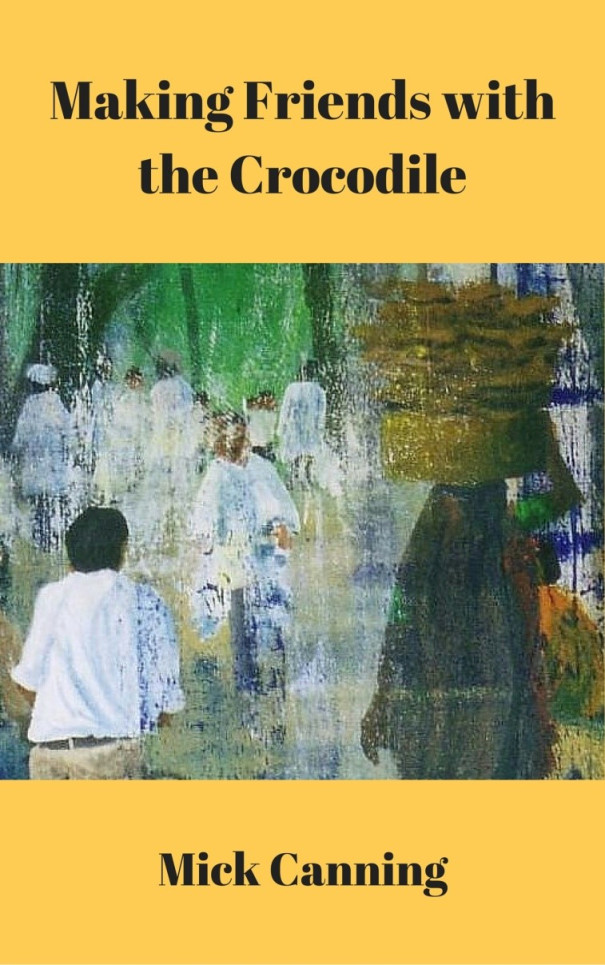
Making Friends with the Crocodile cover

Ooh, it’s nearly finished!

I’m getting excited, now.

My novel, ‘Making Friends with the Crocodile’ is hopefully ready for its final edit.

This part of the journey seems to be taking a great deal of time, but this might be because it is my first foray into publishing. I know that there is still much to do – formatting, advertising, proof-reading, the publishing itself, amongst a plethora of smaller but no less important tasks – but I am finally beginning to feel that I am getting there.

Curiously, after what I wrote in my last post, I never found any of the characters threatening to hijack the plot in any way. Although I never planned it out in any detail, I had a rough plan in my head, which, remarkably, I kept to. Perhaps it is because the subject matter is strong. I don’t know.

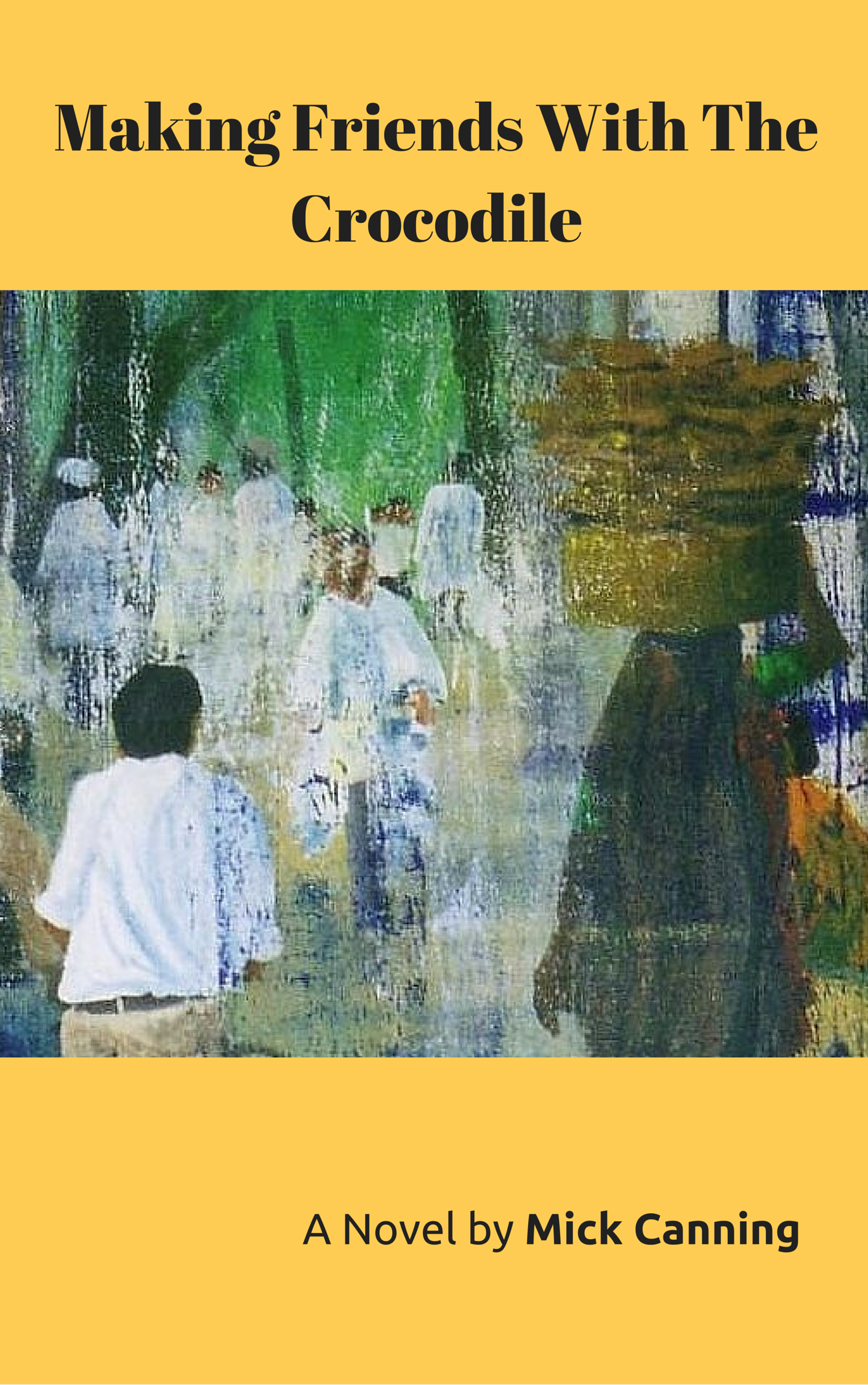
And I think that I have settled upon the cover (the artwork is my own).

Making Friends With The Crocodile cover 1

I may play around with the wording, slightly, for example I might take out the words ‘A Novel’.

For some background; the story is set in a village in Northern India, some fifteen odd years ago. It is about the deteriorating relationship between two women in a family: the mother and her daughter in law. Like this relationship frequently is, it is a strained, fractious one, not helped by that society’s attitudes towards women and their roles in general. And when one of them gets caught up in events beyond her control, these attitudes become dreadfully destructive.

As always, your thoughts would be very much appreciated.

An Alien Culture?

More people travel for leisure purposes today than have ever done so in the past. And many work abroad on short- or long-term contracts, often with a certain amount of leisure time available to experience the culture that surrounds them there.

And this will result in these travellers meeting the people that make up the indigenous society where, for a while, they find themselves. Will there then be a meeting of minds?

Having lived in an ex-pat society, as I have referred to on here before, I am familiar with the laager mentality that often pervades it. I won’t go into all the permutations, but there is frequently a combination of arrogance and fear that leads to a strong feeling of ‘us and them’.

Many travel with the firm conviction that their own society is superior to any other, and are unwilling to see any good at all in any others. Some who go away to work resent being uprooted, and arrive with that resentment packed in their baggage. Some find the experience to be fearful, if they do not understand the language being spoken around them or assume that this alien society has values that somehow threaten them.

And they can either lock themselves away and peer over the barricades, or they can embrace the experience and learn from it.

137 (2)

Travel broadens the mind, it is said, but sometimes it seems to just cement prejudices more firmly in place.

And how easy it is to travel around just looking for things to justify prejudices!

One of the more infuriating things that I come across occasionally is a bigoted and ignorant letter or article in a local newspaper (it often tends to be the local ones) where someone’s idiot views are justified by the phrase ‘I know; I was there’. I imagine them living their entire time in a foreign country in a compound that they rarely leave, yet thinking that they now know exactly how the society functions beyond their walls.

I’ve met one or two of them, over the years.

I spent three years in Oman, working, and I’ve travelled fairly extensively in India, but I do not imagine or pretend that I really have much more than a superficial experience of these places. I knew little of the local culture in Oman beyond what I could see in the streets and villages and markets that I visited. I didn’t know anyone well enough to spend time at their homes or in their social circles. I went with groups of other westerners to places of interest. I did spend a lot of time exploring the desert and the nearby towns on my own, but I was effectively still inside my own little bubble. It is a huge regret that I never got deeper under the surface.

I have, perhaps, managed to learn a little more about the real India, especially through spending time on a project in a village, although I cannot pretend, even to myself, that I really have any idea of what it is like to actually live in an Indian village.

During the later days of the British Raj, the rulers took the approach that their civilisation was naturally superior, and that there was nothing in Indian civilisation worthy of their consideration. The irony of this is that around the end of the eighteenth century, and the first years of the nineteenth, many of the British in India had taken a keen interest in Indian history and culture, themselves doing a tremendous amount to unearth much of the history that had been lost and forgotten. For that comparatively brief period, it would seem that many of the British treated Indians and their culture with a deep respect.

The reasons that this changed are probably deeper than my understanding, but two things stand out. Firstly, that from the beginning of the nineteenth century, many British women came to India in search of husbands, bringing with them what we tend to think of as Victorian attitudes, and secondly, there was an upsurge of evangelism in Britain, which translated itself in India as a movement to convert the ‘heathens’ to Christianity. These combined as a new feeling of superiority, and contempt for a society that was now seen as inferior, especially when much of it resisted their overtures.

With this, the British as a whole seemed to become more intolerant and arrogant, and less respectful of sensibilities. This culminated in the horrors of 1857, which could be said to be caused directly by these attitudes.

To return to the present day, it seems that many travellers have attitudes no better than their Victorian predecessors’. I wrote a post a few months back that mentioned a number of westerners I came across in a Himalayan hill resort, https://mickcanning.co/2015/10/25/the-mad-woman-of-the-hill-station/  should you wish to view it, whose behaviour and attitudes were just downright arrogant and disrespectful. They were doing no more than confirming their prejudices as they travelled, and at the same time I daresay they were confirming many people’s views of western travellers.

Yet there are many people who travel with open ears, open eyes and an open mind, and their rewards are far greater than those of the blinkered traveller. They have the wonderful opportunity to experience and learn about different cultures at first hand, speak to people who hold different beliefs and ideals to them, and perhaps learn a little of what drives them. In return, they have an opportunity to enlighten others, perhaps, to things in their own society that might not be understood by those others. In a small way, each and every one of them can choose to contribute either to different societies coming to understand and become more tolerant, or to the further spread of tensions, mistrust, and misunderstandings.

And all of these little interactions, added together, are as important and influential as the contacts between politicians and diplomats.

Rich Beyond my Wildest Dreams

The other day, a friend of mine jokingly asked me whether I would be moving into a big mansion and getting a chauffeur driven car, once my novel is published and I have made a fortune.

For a few minutes we invented a whole new life for me; where my riches enabled me to buy whatever I desired and to do whatever I wished. Then we got tired of that, and the conversation moved on to more mundane things.

But let us say this came to pass, because, you know, things happen. Unexpectedly. What would I want?

old car one (2)

I can only listen to one piece of music at a time, no matter how much I may love music.

I can only read one book at a time and, God knows, I have a pile as high as, ooh, this to get through already. I continually try not to buy any more books when I go out. And I continually fail.

I don’t want a flash car. I don’t actually want a car at all, as it happens. I’m stuck with one at the moment, because the work that actually provides me with a tenuous living requires it. If I no longer did that work, I would probably get rid of the car.

A bigger house? No, not really. Perhaps one further out of town, though.

There is travel, of course. More trips to India and Nepal, for a start. But again, time is not infinite, and there would be a limit to how many different places I could go. Would I stay in luxury hotels, then? No. I have no desire to do that. Fly first class? That is probably the one thing I would do. I am tall, and the leg-room on most flights is a little mean even for children. And then my back causes me so much pain at the best of times that any long-haul flight is extremely uncomfortable.

We all use language carelessly at times. What do I mean by rich? Well, possibly something different to what you would mean, then again, possibly not. For some people, the idea of being rich means having virtually unlimited money so that they can buy every conceivable luxury. For others, it simply means not having to worry about whether they can make ends meet in day to day life, and that is the category that I fall into.

I have known people who earn heady amounts of money yet do not consider themselves rich, because they find it too easy to spend it almost as fast as they earn it. I have known others who would consider themselves rich if they came into a very modest windfall.

Today, in the affluent western world at least, the vast majority of us are rich, although we don’t recognise it. Why? Modern advertising is insidious and relentless and companies spend billions of pounds each year persuading us all that we cannot live without their products, that we all have a right to them and that we want (and deserve) them.

And that we want them now.

This has meant that luxury fripperies have come to be seen as necessities.

Audiences watching TV programs, or walking down their high streets, or opening magazines, are constantly bombarded with an unending stream of images of luxury goods that they are told are rightfully theirs, and which are paraded by their football or ‘reality’ TV heroes.

What these advertisers don’t want us to see is that the trash they are pushing is unnecessary and does nothing to enrich our lives.

Now, where was I?

Oh yes, I just have to nip out for a loaf of bread.

Of course, it has to be an artisan-crafted Estonian cob loaf made with organic Bulgar wheat flour milled under a full moon and leavened with yeasts descended from the very yeasts used by the court baker of Peter the Great of Russia and baked for thirty seven and a quarter minutes in a bread oven fired with birch logs and scented with juniper and a teaspoonful of fuller’s earth.

It will be damned expensive, but I DESERVE IT AND I WANT IT NOW.

The Language Barrier

As part of its strategy to counter extremism, the British Government has today announced its intention to fund a plan to help all migrants to this country learn English. For once, I think that this is a plan to applaud.

For the inability to speak and understand the language of others around you fosters fear, misunderstanding and distrust.

Having lived in an ex-patriate community myself, I remember how easy it is to become persuaded by others that you are somehow surrounded by ‘enemies’, and to develop a laager mentality. This mindset takes it as a given that everyone outside of the circle does not understand you, they are somehow ‘against’ you, and forever plotting to attack or undermine you, so you sit there muttering darkly about these ‘outsiders’, and voicing your dislike and prejudices against them…it becomes a cycle of mistrust that can possibly become violent.

It is another example of the saying that we hate what we fear, and we fear what we do not understand. And when someone is trapped in a limited social circle because they cannot understand anyone outside of that circle, their chances of becoming a full member of the wider community are severely limited.

Having travelled in non-English speaking countries, I realise how much easier life becomes for me when I make the effort to learn even a small amount of the language.

There will be some who refuse to learn the language on the grounds that they feel that they are there temporarily, possibly working on a short term contract, and can get away with using their own language in a limited circle of work, shopping and socialising.

And there will be some for whom it is a matter of pride to use only their birth language.

I think that both of these viewpoints are mistaken.

Writers understand only too well the importance of language. We worry over whether to use this or that word or phrase to get our meaning across; we worry over whether the way we have worded something may be misunderstood. But when you are attempting to communicate with others in a language that you only vaguely understand, every single conversation is full of these fears.

And when that is the norm, it becomes easier just to avoid any situations where you have to try to use that language.

But it does not actually take much to overcome these fears. Perhaps accepting an invitation to visit to someone’s home, or their place of worship, will lead naturally to conversations where people can learn about each other. But the essential thing is to be able to communicate, which becomes next to impossible without at least a few words of a language in common.