Blue Monday

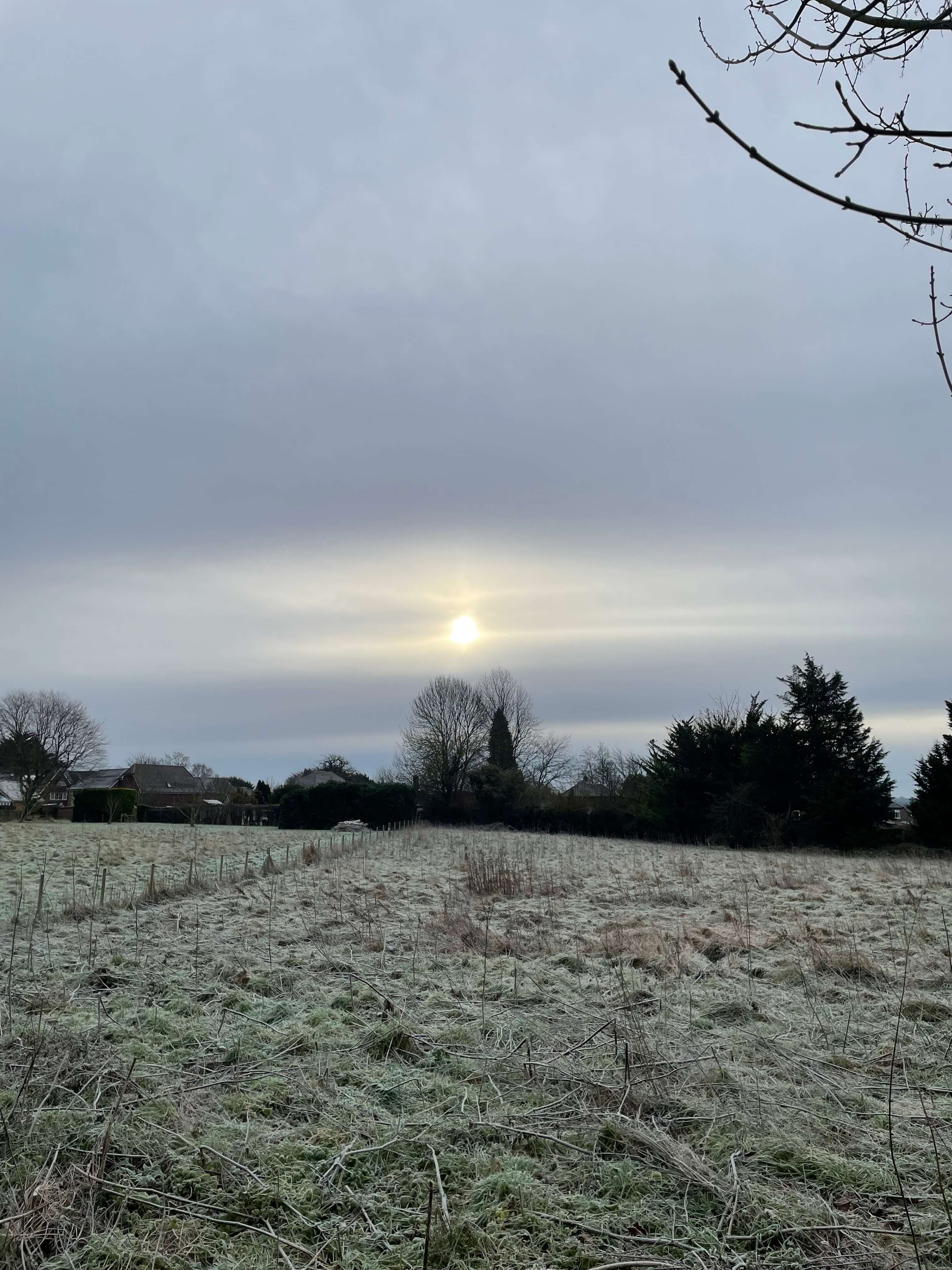
The third Monday in January – Blue Monday – is supposedly the worst day of the year for those who suffer from depression. So here we are on the 20th, Blue Monday. But there is no scientific reason for this date to be singled out, it is just a modern myth invented, apparently, by a UK travel company who presumably intended it to prompt people to take foreign holidays to cheer themselves up. However, I can see some justification for the claim, while also seeing a certain hope. Justification, because I tend to feel depressed and miserable at this time of the year. Tired. Lacking in energy or, indeed, motivation.

But also a certain hope; by now the daylight hours are lengthening, which becomes apparent when we are fortunate enough to have clear skies around sunrise or sunset. New growth is apparent, with new shoots finding their way up through the earth and leaf or blossom buds swelling on trees and bushes.

I feel so tired at this time of the year. I just feel I need to survive this winter, just get through it. I shall light a fire, wrap up warm, pour a beer and read a pile of books. I am in touch with my inner dormouse and intend to essentially hibernate until Spring.

Phew!

A mere ten days after mentioning I thought I was close to finishing the final draft of A Good Place, it is, in fact, finished. This is the second novel I have written that’s set in India, this time in a fictitious hill station in the Himalaya, amongst the English diaspora remaining behind after Independence.

Having discarded two previous drafts, the skeleton of the story is now essentially the plot I visualised way back when I started.

There is a lesson in there, somewhere.

It will shortly go off to a couple of beta readers for their comments, and then hopefully after that it will just be a case of one final edit, then the hard part. I intend to at least have a go at finding a publisher and / or an agent.

But for now, I think I’ve earned a beer.

A Jolly Wassail and the Howlers (and not forgetting the Hoodeners!)

Yesterday, we went Wassailing.

If you care to Google (other search engines are available) Wassailing, you will learn it traditionally takes place on the Twelfth Night (after Christmas), i.e. 5th January, and is a British custom. You will also discover that wassailing involves groups (traditionally men) visiting apple orchards, usually after dark, and to encourage the trees to be especially fruitful the following year songs are sung, trees might be beaten with sticks to wake them up, and offerings of bread soaked cider left in the branches of certain trees. Perhaps one particular tree would be selected to represent the whole orchard.

A Dictionary of the Sussex Dialect published in 1875 has something to say on the subject. It defines howlers as ‘boys who in former times went round wassailing the orchards. A custom now nearly obsolete. The custom of wassailing used to be observed on the eve of the Epiphany, when the howlers went to the orchards, and there encircling one of the best bearing trees, drank the following toast,-

‘Here’s a health to thee, old apple tree,

May’st thou bud, may’st thou blow,

May’st thou bear apples enow!

Hats full! Caps full!

Bushel, bushel, sacks full!

And my pockets full, too! Huzza!

The wassailers derived their name from the Anglo-Saxon salutation on pledging one to drink, which was waes hael, be of health; to which the person pledged replied drinc hael, I drink your health.

Epiphany occurs usually on 6th January, or on the first Sunday falling between 2nd and 8th January, which tends to tie in roughly with Twelfth Night, at least as far as 6th January goes.

Groups of wassailers might also take the opportunity to go from door to door singing wassailing songs (like the one above and plentiful variations) to earn a penny or two. It is possible that the tradition of Christmas carolling derived from this. A wassail bowl was often also taken around, which would hold spicy mulled cider. This might perhaps also be offered at houses visited, although my copy of the 1849 Chambers Dictionary suggests a wassail bowl was used to drink in the New Year and does not mention anything about wassailing itself. I suppose this might represent a sort of official disapproval of the tradition. But it does confirm that drinking was involved, and I’ve no doubt the revellers enjoyed their share.

Howlers would appear to be a Sussex tradition, the name deriving from the boys ‘howling’ the orchard.

Away from the south of England, wassailing appears to have been more widespread, in the sense that not just apple orchards, but also bees might be wassailed, to encourage them to be productive, and it might also happen at other times of the year.

It being 6th January, we took a bus and a couple of trains and made our way to the village of Worth, just outside Sandwich, in East Kent, to not only join in with wassailing apple orchards but also watch some Hooden Horse antics. Hooden Horses you shriek in confusion? Look no further than this post, which even explains why we chose to go to East Kent.

Anyway, ale was drunk in the pub where we began the afternoon, with the Hooden Horse company performing their version of the traditional play – this particular company have recently revived the custom in this area – before we set off (horse and all) to wassail a nearby orchard on our way into Sandwich. In this case, the wassailing consisted of making plenty of noise as we passed the orchard – many a shout of waes hael and drinc hael, ringing of hand bells, and clashing of sticks. Personally, I am convinced there will be a bountiful harvest there next autumn. Then on to Sandwich for further Hooden Horse Hi-jinks (and further ale) in a welcoming taproom, before we made our way back home (since we had quite a long journey), although hardier folk than us went on for further malarky elsewhere in town.

Warning! Do not let this ‘doctor’ anywhere near your loved ones!

Gathering in the pub car park before the Wassailing walk

In the taproom, Sandwich

  • several of these photos courtesy of Sabina

We’ll just have to look out for another malarky opportunity soon, I guess.
In Another Lifetime I could Have Been…(2)

…a monk.

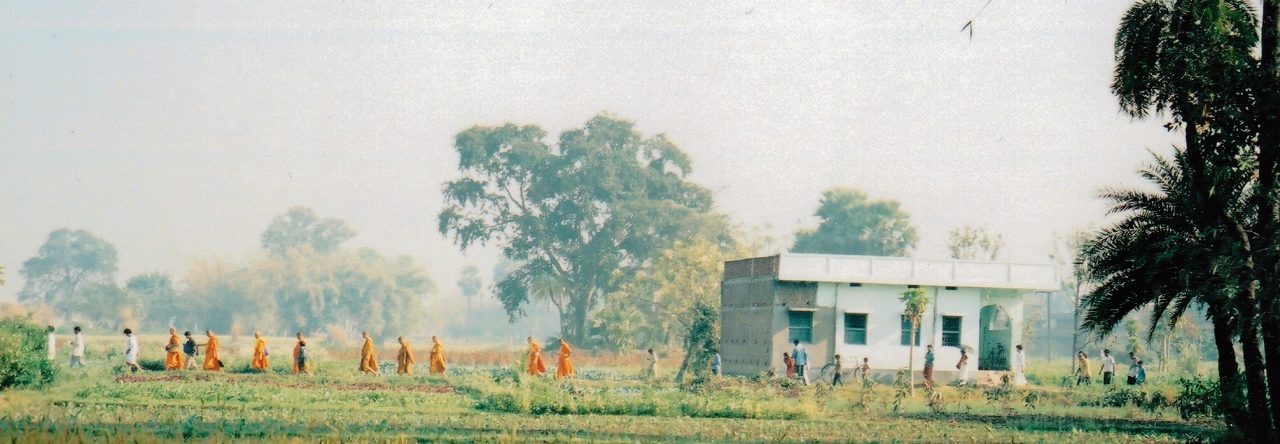
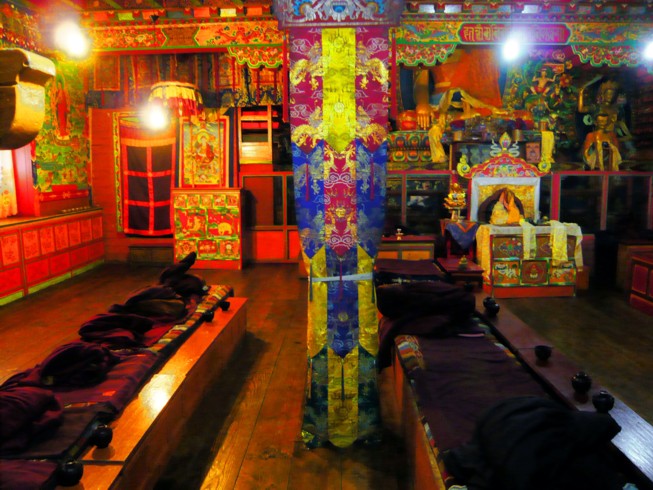
Yes, you heard me correctly. a monk. Regular readers of this indulgence will know I pour scorn on organised religion, but also that I have a hankering for the simple life and for solitude. I would love to be disciplined enough to do without fripperies, but I never quite seem to get there. Obviously social media would also have to go if I was a monk. In fact, even if I didn’t become a monk, I think perhaps social media should go. That would be good for me.

But not books, of course. They’re Important.

In another time, a time when belief in the predominant religion was a given, I would have had no problem in becoming a monk. But since I don’t have that belief, it sounds like a contradiction to say that to me the spiritual side of life is extremely important, but the spiritual is, to me, separate from religion. I view the spiritual side of me as being that part that yearns for simplicity, for art, for the minimum possessions required for life, and to be surrounded by nature. Incidentally, I also understand that monks are given a daily ration of beer or wine.

That also sounds good.

And because I was fortunate to have been born in an age of scientific enquiry when most people no longer blindly accept religious dogma, but are generally prepared to question it, I am free to make choices based on my own conscience and on what I consider important.

But I could almost, under certain circumstances, become a Buddhist monk, even in this life. I have said before how I am attracted to Buddhism, although as a philosophy rather than as a religion. I like the way the emphasis is on yourself to make your best life. Gods don’t have to be involved.

I have twice spent a week in that sort of environment – one time a week of Zen meditation, which was very hard work but left me with a great feeling of clear-headed calm, and once on a retreat at a Benedictine monastery where I made a point of attending a simple morning service each day and spending the rest of the day in thought and writing and painting and gently wandering around the extensive grounds. As a panacea for the stresses of modern life it was difficult to beat. I could, as I said, see myself in another life settling into the routine there on a permanent basis. But not in this life.

At The Hop

I was talking about hop pockets and pokes last week – and pigs, of course, which was how it all started, but forget the pigs for now. Let’s stick with the pokes and pockets. At the weekend we went for a walk through a part of Kent we hadn’t walked for a few years and part of the walk took us through this field:

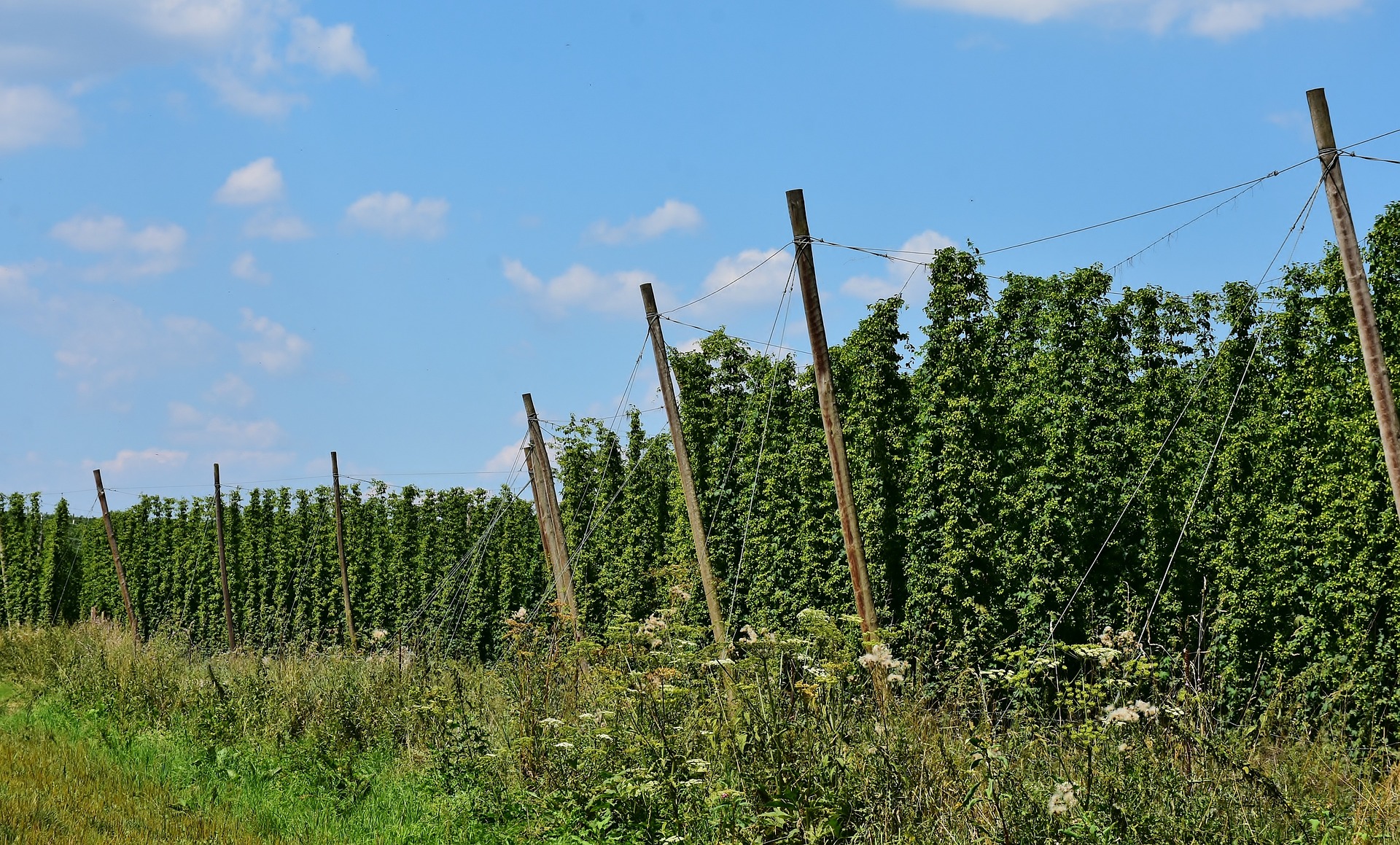
This was a hop garden many years ago. Conveniently close to the oast houses so that as soon as the hops were picked they could be taken in and dried before there was any chance of them spoiling. Taken in bagged up in pokes, and once dried shipped out to the brewers in pockets. A word of explanation for those not familiar with these terms: hops are not grown in fields, they are grown in gardens. Not like your or my back garden, but like a field. But a field full of poles. Hop poles. With huge cable-like wires strung between them to support the hop bines as they grow.

When they are ready for harvesting, the bines are pulled down and the hops picked and put in pokes – large sacks (but you knew that, of course. You remembered it from last week). Then once dried they are shovelled into pockets – another size of sack.

And what are the hops for? Making beer, my friend. Lovely beer.

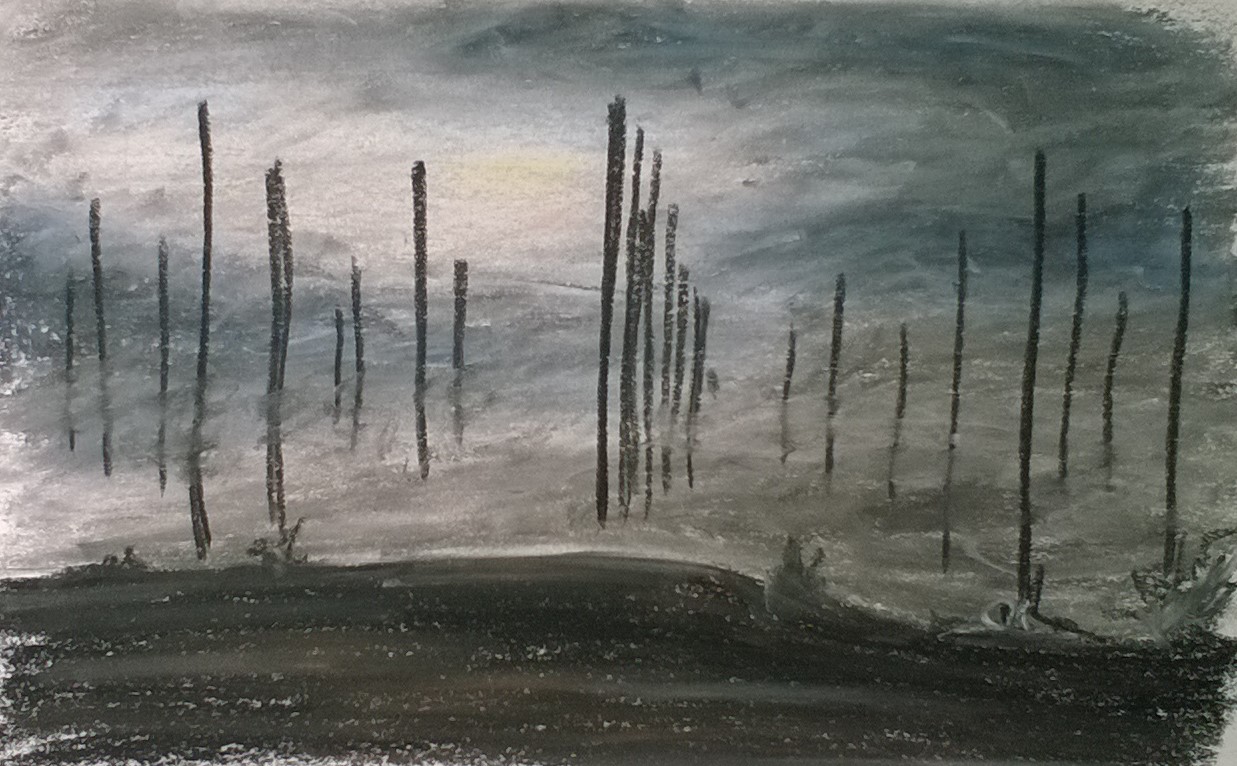
I don’t have a picture of the hop garden from back then, but late one cold, misty, autumn night about thirty years ago, I walked through it and the eeriness was instantly imprinted on me and once I was home I felt compelled to make an oil pastel painting of it (below).

Anyway, as I said I don’t have a photo of the hop garden in question, but this one from Pixabay illustrates very nicely the hop poles and wires with the growing hop bines growing up and across them:

Image by -Rita-👩‍🍳 und 📷 mit ❤ from Pixabay

The poles were supported by wires kept under tension, anchored into the ground around the edge of the garden. Quite a few of these are still in situ around the very edge of the field and just into the woodland and hedgerows bordering it.

In 1872, there were 72,000 acres of land in England growing hops, the majority of these being in Kent, employing over 100,000 seasonal workers at picking time. By 2003, the acreage in Kent was down to just over 1,000 and for the first time ever the county had been overtaken by Herefordshire, which now grew more, although the decline does at least appear to have halted for now. In 2011 there were a total of just over 2,500 acres under cultivation in England but it is such a small number there were fears the industry could die out. Although hops are still used in beer brewing, much of the requirement is imported, especially with a popular shift towards less bitter-tasting beers. But in much the same way that Kent has also lost a huge percentage of its apple orchards, a once rich and diverse farming landscape has become more and more homogenised, with endless huge fields of arable crops and sheep and cattle replacing the hop bines and apple trees.

I spent one autumn apple picking around thirty years ago and the farm I was working on had a large acreage of hop gardens (both apples and hops all sadly gone, now). It was an incredibly busy and bustling time, with our diverse group apple picking – a mixture of locals and Europeans come over for the work – and a traditional mix of workers in the hop gardens; as well as locals, there were a lot of gypsies and possibly still a few people down from London’s East End, which was a traditional way for those workers to make some extra money in the nineteenth and early twentieth centuries. It was busy, noisy, very hard work, and a lot of fun.

And, not surprisingly, there are a number of traditional songs about hop picking. So here is the wonderful Shirley Collins and the Albion Dance Band to perform ‘Hopping down in Kent’ especially for you.

A Pig In A Pocket

Most people know the meaning of the saying to buy a pig in a poke, of course. It means to buy something without first checking you’re getting what you think you’re paying for. And where does the saying originate? Again, most people can tell you it comes from a few hundred years ago – actually the Middle Ages – when a buyer at a market might be offered a piglet in a sack and if they were foolish enough to buy it without first checking the contents, were likely to find later that the sack contained only a cat, although why it didn’t make a fuss and let people know it was a cat, and a cat that really didn’t want to be in this dratted sack, no one is saying.

(And was it actually a live cat or a dead one? Over to schrodinger for that one…)

If the buyer was wise enough to check, and opened the bag to see what was within, they would then be letting the cat out of the bag.

So, what is a ‘poke’, then? Let’s take the long route to this one, the scenic route… Go back a couple of hundred years when pockets weren’t something let into our clothes, but were more like cloth bags tied around the waist. A kind of medieval bumbag, if you will. Or just a bag on a piece of string tied around the waist if you won’t. This is why in the nursery rhyme we learn that:

‘Lucy Lockett lost her pocket,

Kitty Fisher found it;

Nothing in it, nothing in it,

But the binding round it.

which sounds very odd if you think only of what we understand as pockets nowadays and must confuse huge numbers of children when they hear it.

But the point is that the pocket was a bag, which in French is ‘poche‘ and from which comes the old English word for a large bag, a sack, which is ‘poke‘, with pocket being a diminutive of that: poke-et.

So, let’s back up there. A poke is a large bag, a sack. As mentioned above, I’ve seen dictionaries citing ‘poche‘ as the origin of the word, but a favourite source of mine, a Victorian dictionary of Sussex dialect, when discussing the saying cites the original Anglo Saxon word Pocca, meaning a pouch.

They’re probably both right.

But just to add a little more weight to all this, when hops are picked (at least in Kent and Sussex) they are first measured by the tallyman into a poke (yes, a large sack), then taken to an oast house where they are dried, after which they are shovelled into a hop pocket (a different sized sack) before being taken off for sale to the brewer.

To make lots of lovely beer!

The Hooden Horse

In the town I used to live in, there was once a pub called the Hooden Horse, sadly now renamed to something much less interesting. I was reminded of this at an exhibition at Maidstone museum on Hooden Horses. Hooden Horses? Well, briefly…

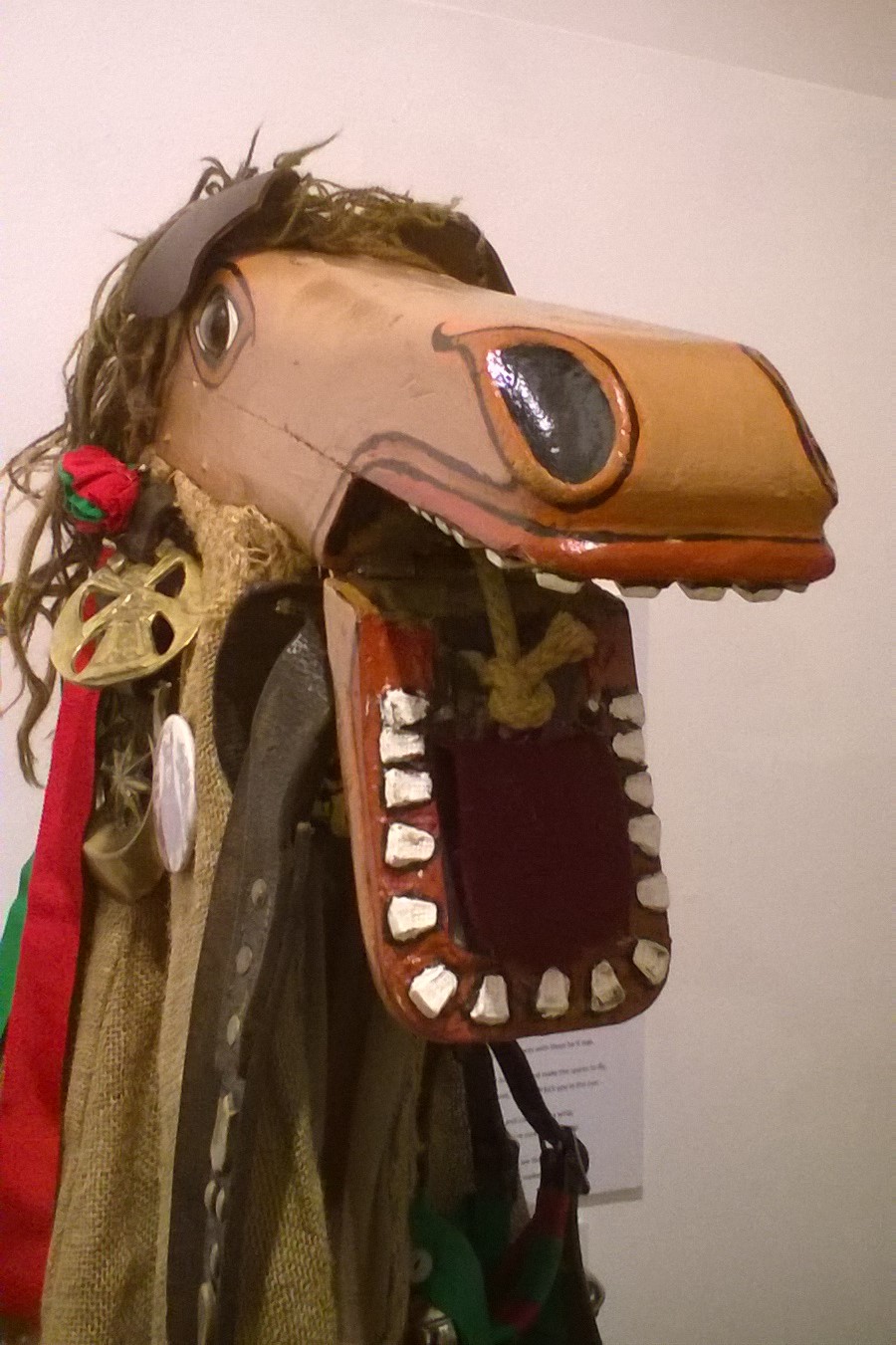
Hoodening is a rural folk tradition unique to East Kent, England. Going back a few hundred years, in the week or so running up to Christmas, groups of farm labourers would dress up as various characters and go from door to door requesting money, cake and beer. One of the characters would be the Hooden Horse, which was an artificial horse’s head made of wood, with a jaw operated by string, on a wooden pole, held by one of the performers with his body covered in cloth – usually sacking. A sort of play was then performed in rhyme, a mixture of plot and satire, usually featuring a few local characters who would be well known to the watchers and might be the butt of jokes and scorn, as well as stock characters such as Molly, a waggoner, and the Mayor. And of course the horse (him)self, invariably called Dobbin. There would also be music performed on whatever might be available – accordions, fiddles, drums or whistles.

The relationship to Morris dancing and Mummers is hard to avoid and, like these traditions, has been revived in modern times by enthusiastic traditionalists.

A photo from the early twentieth century

A modern Hooden Horse

Another early twentieth century photo.

There are many other traditions in Britain involving what is known as ‘animal guising’, where men or women take the guise of an animal, the Padstow ‘obby ‘oss being perhaps the best known of these. The performance on May Day in Padstow, Cornwall, invariably draws large crowds.

On the left, a Hooden horse, and on the right a Mari Lwyd, the ‘skull horse’ of Welsh tradition. Although unconnected (as far as I know) the Welsh had a similar tradition, also taking place around Christmas and New Year. Skull horses are to be found in other parts of England, however, including Yorkshire.

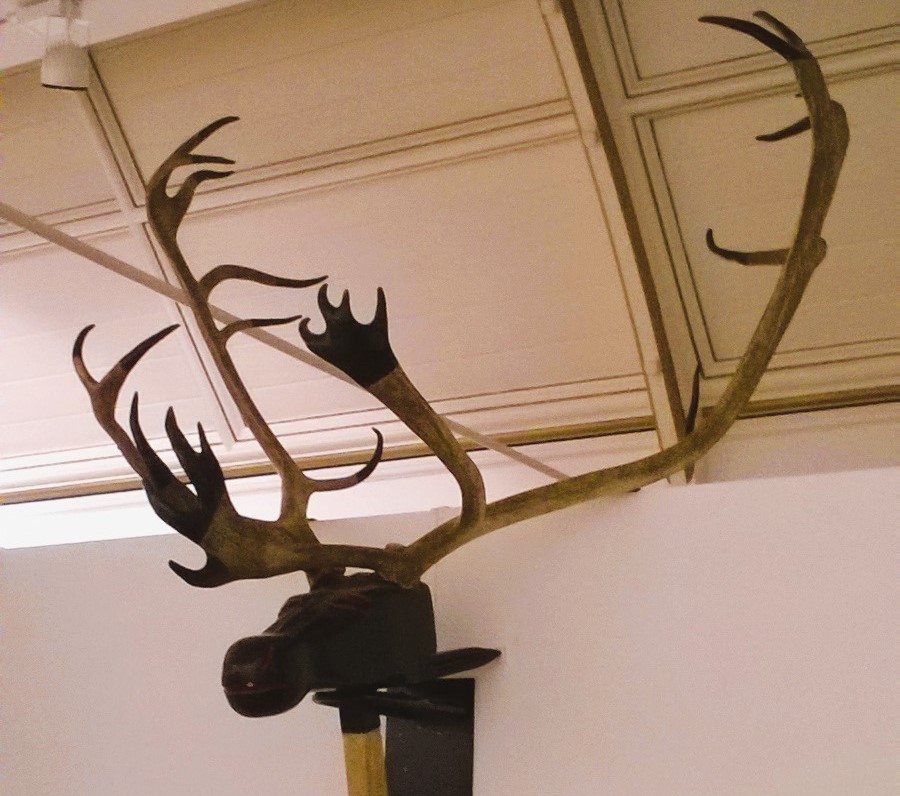
Stag guising is another old tradition – possibly older than horse guising. It was certainly in existence during medieval times and survives today in the form of the Abbots Bromley Horn dancers, Staffordshire, who perform carrying reindeer antlers on poles on the Monday following ‘Wakes Sunday’ in September. Wakes Week became a tradition in industrial Northern England when factories and mills closed down for a week for maintenance giving the workers a holiday. This began in the early nineteenth century, but before this the ritual presumably took place at a different time of year.

The exhibition is on until 17th July 2023 and there is a link to their site here.

Home

120

I’m walking on tracks,

On familiar tracks,

Under blue sky,

In the evening light.

My shadow before me,

The wind behind.


I’m yawning now,

And my legs are tired.

I’m looking forward to supper,

A beer and then bed.


The shadows lengthen,

Along with my stride

On familiar tracks,

Along familiar tracks.

I’m heading for home,

Now,

I’m heading for home.


If I Could Just Wave A Wand…

337a

Pandering to my Inner Vagabond, here…

If I could just wave a wand,

I would wander the world.

With my notebook in hand,

And a bag on my back.


I would sleep under hedges,

In hotels and haylofts.

Drink beers under trees,

And eat cheese on the moor.


I’d watch clouds over hilltops,

And boats on the ocean.

Shapes and shadows at sunset,

A moon with a view.


And I’d write trivial poems

Of snowfall and sunlight,

Birds singing at dawn

And the sounds of a stream.


There’s the lure of a skyline,

And skylarks above me,

Wine and wood smoke my welcome

At the end of the day.


To travel, to journey,

There’s magic in wandering

Over moorland and downland,

Through woods and through fields.


The world’s full of wonders

All waiting for wanderers.

Let me follow these paths

For as long as I can.


Virtually at Everest – part 2

Part 2 of my virtual trek to Virtual Everest Base Camp, undertaken while my foot is all sympathy-inducing-poorly. Part 1 can be found here

It was interesting watching Bob haggle with our taxi driver, but annoying to have to spend so long finding another taxi. Still, we reached Swayambunath eventually, and began the long climb up the steps towards the temple complex. As usual, we were surrounded by monkeys hoping for tidbits and just generally getting in everyone’s way.

239a

‘Oh, aren’t they cute!’ exclaimed Bob, reaching out to stroke one.

‘I wouldn’t,’ I warned him.

‘Oh, why not?’

‘Well, possibly rabies, for a start.’

We were seated in a taxi heading back towards Thamel inside half a minute.

‘For the last time,’ I said, exasperated, if you just leave them alone they won’t be a problem.’

‘But you said they had rabies!’

‘I only said possibly. It’s fairly unlikely, actually. You just have to be…careful.’

‘Well, you said!’ He folded his arms and stared sulkily out of the window. ‘I don’t think I want to do any more sightseeing!’

He brightened up when we got to the hotel and it was time to pay for the taxi. The driver had asked for 200 rupees when he picked us up, and I had just nodded at him, while Bob crammed himself into the back of the taxi, casting nervous looks outside all the time.

But now Bob decided it was time to haggle. I watched them for a moment, then went to get a drink in the garden. Bob joined me about ten minutes later.

‘What did you pay?’

‘Three hundred,’ he said, triumphantly.

I left him at the hotel and went off for a couple of hours, wandering around the backstreets taking a few photos, visiting shops and cafes, and generally building up my strength for an evening of Bob’s company.

But, in the event, he wasn’t too bad. He seemed to take a liking to the Nepalese beer, and was delighted to find he could get pizza in the hotel restaurant. We had quite a pleasant evening, and turned in early since the following day would be busy.

After breakfast, we walked out into Thamel. I had planned to indulge myself by taking the bus up to Jiri, a trip of one day, and then walking from there, which adds an extra week onto the trek, but is very much off the beaten track as far as regular trekkers go, but since I now had Bob with me, I supposed we’d have to fly into Lukla like everyone else, and leave the Jiri leg of it until another virtual time.

The first thing to do, though, was get him kitted up. Fearing the worst, I asked him what clothes he’d brought with him.

‘T-shirts, shorts, sandals.’

‘Is that it?’

‘Oh, I’ve also got a sunhat!’

‘Right, you’ll need quite a bit, then.’ There are scores of shops selling all sorts of outdoor clothing in Thamel, and I wasn’t worried about being able to find what we wanted. What did worry me slightly, was that Bob is quite tall, and he is also somewhat overweight. The average Nepali is neither, and my fears that the clothing could be a little on the small side for Bob were soon borne out. By lunchtime Bob was the proud owner of some very smart looking trekking trousers that came down no lower than his shins, and a couple of jackets that came down just to the top of his trousers, and the sleeves of which were a good six inches too short.

Still, he seemed happy enough.

‘How are the shoes, Bob?’

‘Well, a little tight, but they’ll do. It’ll only be for a few days, anyway. It was a good idea of yours to cut the holes in the toes.’

‘Um. Well, no one seemed to have anything your size, Bob. Think of them as a type of, er, mountain sandal. And…a few days? No, the trek takes a couple of weeks.’

‘Weeks? I need to get back for work!’

‘Oh, that’s okay. You needn’t come with me. You can stay here at the hotel and then get your flight home.’ He stared at me in a way that made me feel wretched. ‘Look, I’ll change your flight,’ I said at last.

‘Can you do that?’

‘Yes, it’s my virtual trip, this, so I suppose I can.’

I changed his flight, and then booked us both on a flight up to Lukla. The next morning, we were at the airport ready to fly up into the mountains.

‘Is that what we’re flying on?’

Personally, I love the little twin engine planes that do this journey, and hundreds like it all around the Himalaya, but Bob declared he’d only feel safe on a ‘proper aircraft’ – in other words a jet liner.

‘They can’t land in the tiny airfield where we’re going, Bob.’

‘Why not?’

‘Well, it’s, as I said, tiny.’

‘Oh.’

110

He was airsick all the way.

Thank heavens it was virtual sick.