Sue me and I’ll have you killed!

…slowly, he inched his way along the ledge, his heart in his mouth. It was too late to even contemplate turning back now. The sun was sinking rapidly in the pale sky in front of him, dropping towards the distant plains that were almost hidden in the desert haze. It would be completely dark within the hour. For the first time, he knew real fear. He could never survive a night on this thin, narrow ledge – God knows, there was barely enough room to stand and almost nothing to hold on to. It was inevitable that he would slip off at some point. Even now, there was a thin skin of ice on much of the surface, and the terrible cold would descend as soon as the sun disappeared.

Gritting his teeth, he edged towards what looked like a slightly better foothold, and cried out in sudden terror as his foot slid into space, the momentum taking him over the edge and falling…

Hell, I can’t do that! Stop! Phew, that was close.

As writers, we have to be so careful, because nowadays even our characters have rights, did you know that? And we can’t just be doing this and that to them, just as we please. Only the other day, a lawyer claiming to be acting for a character in a well-known children’s series attempted to take the author to court and sue her for, literally, defamation of character.

This character claimed that the author had totally misrepresented his actions, and applied motives to them that could only be described as evil.

And she said he had no nose, which was just spiteful.

He has claimed damages running into millions of dollars.

If this character is successful, then it is difficult to know where we will see this ending.

The fact that the author has created said character is no defence in law. Really, they are like our children. And whereas a few hundred years or more ago, parents had absolute authority over their children, and, short of killing them, could do whatever they so willed with them, nowadays they have more rights than their parents. And I’m afraid that it may come to that with our characters, too.

‘Why should I be killed off?’ They cry. ‘What right have you…?’ And so they will challenge it.

It has even been mooted in some quarters that these characters should perhaps be able to resort to the legal process appropriate for the time and world that they have been created for. Thus, a dragon in a tale set in ancient times, peeved because the author claimed it ate virgins and had bad breath (not sure if the two are connected…) might very well demand that it meet the author in Trial by Combat, a trial that the author would probably be rather ill-prepared to face.

Upset a Tudor monarch or a Viking chieftain, and I wouldn’t give much for your chances.

And any authors writing tales set in the future, who had unwisely failed to specify what sort of legal process was in existence at this time, might find the lawyers, or even their characters, being given the right to specify this. And that might get very nasty indeed.

But there may still be one remedy open to us. If our characters hold the threat of litigation over us, we might, just might, be able to retaliate by threatening to make their next incarnation even more horrible than the one that they are prosecuting us over. Threaten to sue me for creating you with a flatulence problem? Go ahead, and see what problems you have in my next novel! Don’t forget I’m writing a series! You had quite a decent time in the last one, it’ll be the torture chamber for you next!

It might work, but I’m still nervous about it.

001

So what am I going to do? I’m just going to write nice stories about pussy cats, from now on, that’s what.

Authors, you have been warned!
What a great review for Making Friends with the Crocodile!


Making Friends with the -Crocodile

Somali, at: Somali K Chakrabarti has put up such a generous review of my book, Making Friends with the Crocodile, that I am going to spend the rest of the day puffed up with most unreasonable pride! It comes as I battle with the various internet demons to put up a version on Kobo (ready in a couple of days, I hope), and, finally, a Print On Demand version for sale in India.

My biggest worry when I published the book, was that as a Western male writing in the voice of an Indian female, I would not be able to make it sound realistic, but I finally feel reassured by Somali’s review.

It can be found here: Making friends with the Crocodile


How India Changed an Englishman

I wrote a piece for The Good Men Project, about my time in India and how I came to write Making friends with the Crocodile’. Sushi Menon kindly edited it to make it readable, and gave it a title, and you can find it here:

How India Changed An Englishman

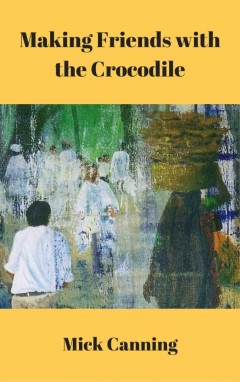
Making Friends with the Crocodile cover

Pitfalls for Writers – no.6: Historical Accuracy


‘Dear Mr. Author.

Whilst reading your book ‘Oh what fun and laughter we had during the time the Black Death wiped out our village’ the other day, I was disappointed to notice that you mentioned July 23rd 1449 as having been a sunny day in your fictitious village. From the descriptions you provide, you have clearly located said village a little to the south of present day Norwich, and my extensive researches prove that July 23rd 1449 would have been a rainy day there.

Yours disgruntledly,

A Pedant.’

How accurate do you need to be, as a writer, with historical facts?

If you are writing a non-fiction book, you have to be scrupulously accurate, no matter what subject it is.

End of.

On the other hand, if you are writing fiction, you have a certain amount of leeway. First of all, though, it is worth saying that if you sell enough copies of your book you will eventually attract correspondents like the fellow above. Is that something to worry about? Only if they get to know where you live, perhaps. Otherwise, send them a nice reply, thanking them for their diligence, and assuring them that you will correct your dreadful fault in the next edition. On the other hand:

‘Dear Mr Author.

The Black Death was actually sweeping the country in 1349, not 1449.

Yours smugly,

A Historian.’

This time, you’ve screwed up.

And yes, it matters.

Very minor inaccuracies are bound to slip through, and very few people will notice them. And if they do, they will not think anything of them.

Except for Arthur Pedant, of course.

The big things are another matter. Imagine reading a novel set in the days around the Russian Revolution, and then the author tells you that the Bolsheviks rose up against the state in 1927 instead of 1917. Or that they were led in the beginning by Stalin. Immediately, the author’s credibility has evaporated, as has their story.

Because the reader no longer believes the author, and they no longer accept their story.

The moral here, then, is don’t skimp on the research!

It is possible to radically change the facts of history, but the difference is that to do this the author must present it as the whole point of the story. In steampunk novels, the whole history of Victorian Britain is altered, but the reader accepts this as it is the premise behind the genre. It is seen not as a mistake, but as a narrative invention.

In many science fiction novels, the premise is a future that is the result of a different history than that which actually happened. For example, the Germans won the Second World War, or of different worlds or dimensions in which history diverges from the accepted version. Again, this is accepted by the reader, as it is the premise that the story is set on.

It is possible to break this rule, but to do so the author has to break it in such a way that it is quickly obvious that they have done it deliberately, and not by mistake.

One might, for example, set a novel in Victorian England that is not steampunk – a detective story, perhaps – but in which Queen Victoria is assassinated in 1860. As this is something that no one could possibly put in by accident, it will be seen as part of the invented narrative and accepted.

Well, probably. Where is Arthur Pedant?

The Past is Another Country…

…they do things differently there (L.P.Hartley )

Almost 20 years ago I was a care-worker, paying visits to support elderly folk who were, for various reasons, unable to cope on their own. I would provide support in a number of ways – cooking, washing and dressing,and cleaning, for example.

One man I visited quite often would talk a lot about his younger days – as is natural. He had a wealth of stories, and I always told him he should get someone to write them down. It is the ordinary person’s stories that are frequently the most interesting, and the ones that we usually don’t hear. Famous politicians, sports stars, movie stars…well, they write autobiographies, or have them written for them, and we hear all about the other famous people they knew and the hotels they stayed in…yawn, yawn, yawn.

But we hear far less about the family in the village 80 years ago, their day to day life and how the outside world impacted upon them.

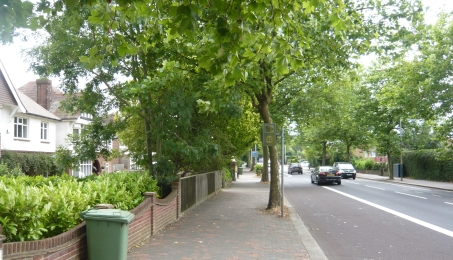
Below, there is a photo of London Road, just outside of Tunbridge Wells, taken earlier today.

005

My client told me that during his youth, he would walk back along this road after an evening out in town, describing how there was nothing but open fields on both sides for much of the walk. Looking at it now, it is hard to picture that, since I have never known it any way other than how it looks now.

But prior to this, in his childhood, he lived in the village of Groombridge, on the other side of Tunbridge Wells, and he told me how, as a schoolboy during the First World War, he and his classmates ran out of the class one day and across a field, to see a German Zeppelin airship that had just been shot down.

It is stories like this, that are the genuinely interesting stories that come out of the past.

And for my large Work In Progress, the past really is a foreign country. Much of it is set in Persia and India, in a time frame that covers some 300 years up until the late 19th century.

Now, I was about to write that if it is difficult for me to picture the main road near where I live as it was some 50 to 75 years ago, then it is far more difficult for me to picture the places in India and Persia where and when I have set my novel, but then I realised that this is not actually true.

And so this post is now taking a turn that I had not expected when I sat down to write it.

The Indian capital at the time was at Fatehpur Sikri, which today is just the remains of those buildings – it was only occupied for some 22 years, and then abandoned. I have visited the site and walked around it, and it is quite easy to imagine it occupied by Akhbar, his court, and the general population.

I have never been to Persia (modern day Iran), so my impressions are formed only at second hand. And much of what I have read consists of works about the 1500’s, and I am familiar with many of the paintings of the period, so again it seems almost natural to imagine it as it was then.

And then when I have travelled in India, as well as in the Middle East, I have spent a lot of time visiting the old parts of the towns and cities, and many rural areas where life follows the same patterns that it has for hundreds of years, and so, again, it seems more natural to picture the settings for my book in those time periods that concern me.

Finally, researching these areas, I often come across old black and white photos of places of interest to me, and since I have not been there, they are the only impression of these places that I have.

Of course, Tunbridge Wells in the Victorian era is much harder for me to visualise. All of the modern buildings get in the way of my imagination. All of the roads are surfaced with tarmac, the open spaces have largely gone, and many parts of the common that used to be open and windswept are now covered in trees.

On a slightly different note….

As a project, I occasionally take photos in sepia of the area around where I live, as though they might have been taken about 80 years ago – around the time that my elderly client was walking along the London Road, winds blowing across the fields either side of him, and the only light from the moon. Each photo that I take has something in it to show that it was taken recently though, rather than a long time ago, such as a modern vehicle, a modern street lamp, road markings, or modern windows. The shot below is an example.

Holden Pond

Easy to feel that it might be taken in 1930.

The Book is Released – Hurrah!


Making Friends with the Crocodile‘ is now released!

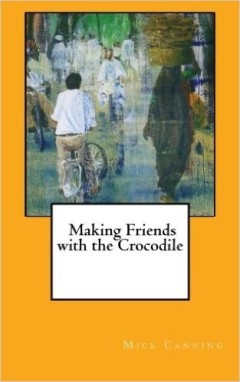
Making Friends with the Crocodile cover                             POD cover

Kindle edition                                                     Paperback edition

Anyone who has already pre-ordered it on Kindle / Amazon should have received it by now, and in countries where there is no pre-order facility, such as India, the Kindle edition is also now available to buy.

The paperback is available from the Amazon.com, Amazon.ca, Amazon.co.uk and Amazon.eu sites only – this is a quirk of Amazon – but can also be ordered from the estore at CreateSpace, at the following link:

https://www.createspace.com/6301808

And now, I wait to see what people think of the book, with a considerable amount of nervousness.

If you do buy a copy, please consider leaving a review either at Amazon, or on Goodreads, if you are a member (better still, at both!). Reviews are genuinely the lifeblood of a writer, and do help to sell books.

Finally, the blurb again…

‘Siddiqa was only just into her teens when she was forced to leave her home to live with her new husband and his family in another village. The years have passed, and now Siddiqa has three children of her own. Her grown up son has brought his new wife, Naira, to live with them, so Siddiqa is no longer the lowliest in the household, for she has a daughter-in-law.

Life in rural India is particularly harsh for women. This novel explores themes of female oppression and tradition and asks whether the next generation will find life any easier.’


The Morning After…

Wow, what a weekend!

After the book launch, the parties!

Celebrations!

Oh, and when I looked out of the window to see the streams of bunting all the way along the road, and the swarms of well-wishers gathering outside the house, I was so excited!

Then once I had gone out and signed loads and loads of autographs, I was being chased all over town for interviews by all the big newspapers!

And then I…

Well, okay. That’s not strictly true.

It’s not very true at all.

In fact, it’s not true in even the teeniest tiniest littlest way.

My life does not seem to have altered in the slightest and, actually, I’m glad about that.

070 (2)

Right, now it’s time to get on with the next stage.

I’ve put a link on the image of the book on my sidebar, which goes directly to my book page on Amazon (thanks, Stuart!).

And I’m looking at the best way to create Print on Demand paperback copies of the book, probably by using CreateSpace (lots of recommendations), and hope to have that sorted out in a couple of days. I don’t think it’s too difficult, but my way of dealing with new technology tends to be by shouting at it and slamming doors, so I may take longer than other writers.

But since the release date of the Kindle copy is June 4th, I should have time to arrange for the paperback to be released on the same date.

So, what next?

Actually, it will be great to feel that I can focus on just writing again, and not just constant editing and revision, so it’s back to the long Work in Progress, ‘The Assassin’s Garden’. This has a timeline that stretches from Medieval Persia through Medieval India and the British Raj, through to Edwardian England. It’s already a long novel and nowhere near finished, so I suspect that I might eventually have a trilogy on my hands.

I might even write a short story or two.

Ooh, it’s exciting. I do love this writing lark!

Published!

Well, blimey, Making Friends with the Crocodile is now published on Kindle and is up on Amazon as we speak!

Making Friends with the -Crocodile

About a week ago, I reached the point where I felt that the editing was finally complete, or, at least, if it wasn’t, then I might just pick at it for ages without really making any further difference, and so it was time to get the process finished.

What a relief.

It feels as though I have been under pressure for weeks. I’ve felt tired, I’ve felt tense.

Ooh, I’ve been irritable!

All this pressure, of course, is of my own making. A lot of it, I suspect, being due to this being my first foray into publishing.

I knew that I needed to format my text for Kindle, and heard that Scrivener was a useful tool for that. And so I downloaded Scrivener, and spent a couple of hours working through the tutorial until I decided that it just wasn’t going to happen for me.

I’m sure it is very useful, but I was getting to the point where I felt like chucking the laptop at the wall.

So I went and looked in detail at the instructions for publishing on Kindle, and found that you could just save your file in the correct format and then upload that.

Bye, bye Scrivener.

I looked at a few Kindle books and then wrote the stuff at the front and back of the book – about copyrights and stuff like that.

I inserted my table of contents.

I already had my book cover ready.

I wrote the blurb:

‘Siddiqa was only just into her teens when she was forced to leave her home to live with her new husband and his family in another village. The years have passed, and now Siddiqa has three children of her own. Her grown up son has brought his new wife, Naira, to live with them, so Siddiqa is no longer the lowliest in the household, for she has a daughter-in-law.

Life in rural India is particularly harsh for women. This novel explores themes of female oppression and tradition and asks whether the next generation will find life any easier.’

Working out how to upload to Kindle, and to complete all of the forms and tick boxes proved a little long winded, but reasonably straightforward.

So then, suddenly, there it was. Sitting on Amazon, available for pre-order, with a launch date of 4th June. Although for some reason, unfortunately, pre-order is not available in India.

And now it feels much like stepping off of a crowded and noisy street into summer sunshine; the sounds of the shouting and the traffic disappearing and being replaced by birdsong.

IMGP2282

Woo-hoo!

And what a buzz to go and look at my own author page on Amazon, with my own book there!

Woo-hoo again!

For the moment, as I say, it is only available for pre-order, and will be released on 4th June. But if anyone does feel inclined to buy it, pre-orders will help boost the ratings when it actually launches.

I am going to look again at Print on Demand, in a day or so. Initially, I had ruled it out, mainly because the one site that I looked at required the customer (i.e. me) to order and pay for a set number in advance, and I assumed that would always be the case, but now I think that is possibly not so. Certainly, the Amazon tool, CreateSpace, looks as though it might work more the way that Kindle does.

It will be great if it does, since I really prefer to have a physical copy of a book, and I know there are still a few other people out there who still feel that way.

So…now to get my head around promotion…

Ooh, it’s nearly finished!

I’m getting excited, now.

My novel, ‘Making Friends with the Crocodile’ is hopefully ready for its final edit.

This part of the journey seems to be taking a great deal of time, but this might be because it is my first foray into publishing. I know that there is still much to do – formatting, advertising, proof-reading, the publishing itself, amongst a plethora of smaller but no less important tasks – but I am finally beginning to feel that I am getting there.

Curiously, after what I wrote in my last post, I never found any of the characters threatening to hijack the plot in any way. Although I never planned it out in any detail, I had a rough plan in my head, which, remarkably, I kept to. Perhaps it is because the subject matter is strong. I don’t know.

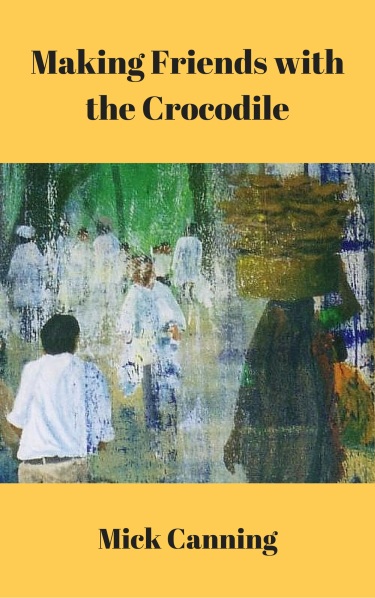
And I think that I have settled upon the cover (the artwork is my own).

Making Friends With The Crocodile cover 1

I may play around with the wording, slightly, for example I might take out the words ‘A Novel’.

For some background; the story is set in a village in Northern India, some fifteen odd years ago. It is about the deteriorating relationship between two women in a family: the mother and her daughter in law. Like this relationship frequently is, it is a strained, fractious one, not helped by that society’s attitudes towards women and their roles in general. And when one of them gets caught up in events beyond her control, these attitudes become dreadfully destructive.

As always, your thoughts would be very much appreciated.

Pitfalls for Writers – 4) Language; a bit of a follow-up

Back somewhere deep in the mists of time, I published ‘Pitfalls for Writers 1’. In this, I discussed some of the potential problems of language in a novel.

If I am to write a story of medieval Persia, for example, I will write it in English. No one who reads it is going to be fooled into thinking that my characters were really speaking in English. But this on its own is not enough. There must be something in the language I use that reminds the reader that the story setting really is medieval Persia.

P1050055

And so I suggested using a flavour of the speech. I might sprinkle the conversation with words such as ‘dirham’ (a unit of currency), or ‘djinns’ (genies). The characters might smoke a ‘qalyan’, which is how they would have referred to what we generally call a hookah. A greeting might be ‘Salām ʿalaykom’.

In the comment stream that followed, I concluded that I might employ a glossary, but certainly not footnotes.

This has now become most relevant to me.

About a month ago, I finished reading Anuradha Roy’s ‘The Folded Earth’. It is a novel that is set in India, written by an Indian writer, yet it uses a glossary, although she is presumably writing in the first instance for an Indian audience. This glossary explains a few words and phrases that many western readers would be unfamiliar with, although I would expect the majority of Indian readers to know them all.

My own novel is being read now by generous beta readers, and some of the discussion is over the use of the appropriate Hindi / Urdu words in the text.

And so, with ‘The Folded Earth’ as an example, I shall definitely use a glossary.

Next, it is important to employ the correct voice.

Speech:

Clearly, if the protagonists of a story are sitting down to a meal, they might complain about the amount of fat on the meat, but they would be most unlikely to refer to it as ‘adipose tissue’. Unless one or both were, for example, surgeons.

Very few people would be likely to refer to two items as being ‘in casual juxtaposition’. They would be far more likely to say something along the lines of ‘oh, they look a bit odd next to each other.’ As tempting as it might be for the author to show off their vocabulary, it is something that should be used most carefully.

Narrator:

If the story actually has a narrator, then this becomes even more important. The country bumpkin relating an everyday tale of rustic shenanigans should not be employing sophisticated and subtle wordplay. He or she should only be employing language that they would naturally use.

Author’s voice:

Even if there is no actual narrator, it remains important to use only language that would be natural to the situation. For example, it sounds plain wrong to describe a group of Vikings ‘computing’ an answer to a problem, even if it is only the author describing it that way.

Generally, of course, and I know that some will disagree with this, it is usually better to avoid all flowery and showy language in novels, and use simple language well.

Finally, a jarring note found in a few modern novels set in older times, is that the characters often think like modern folk. Reading these books as against books written, perhaps, 150 years ago, it is not just the style and language of the writing that are different, but also the prejudices. The hero of a novel set in 1840 is going to have casual prejudices against, perhaps, people of another race, women, etc etc. We tend to be reluctant to set these down in print, nowadays, perhaps as if by doing so we are almost admitting to having these prejudices ourselves.

However, if we want to depict our characters realistically, we need to do so ‘warts and all’. And if the writer is going to depict them otherwise, then he or she needs to have a good reason why they do.