At Tunbridge Wells Literary Festival

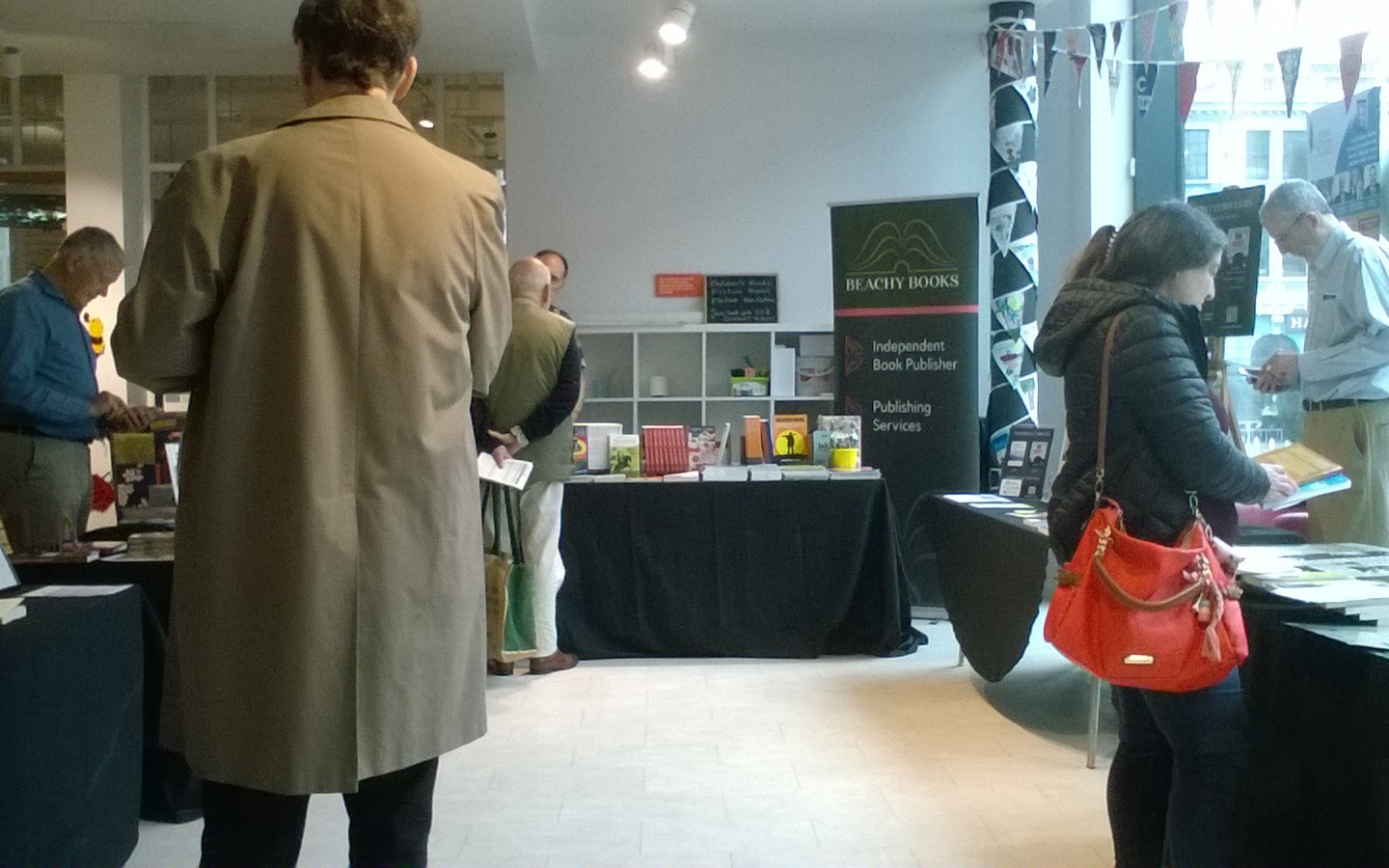
Tunbridge Wells now boasts a literary festival. Over four days this year it hosts talks from well-known writers such as Michael Rosen, Michael Parkinson and Sheila Hancock. But not just the big names.

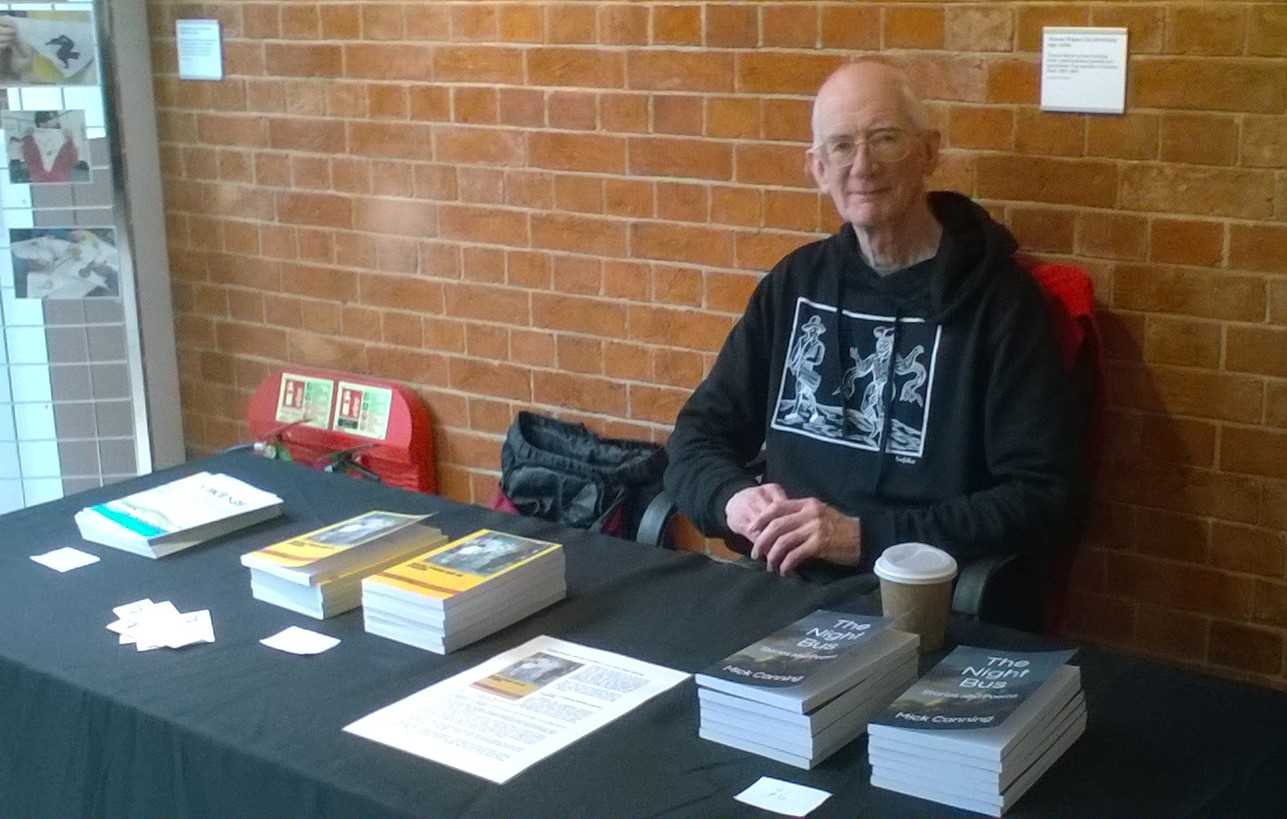
Yesterday was the day local writers could book a table and hawk their wares. It’s been some time since I’ve taken part in one of these, in fact, I’ve only done it once before, I think. When I used to regularly have paintings in exhibitions, I spent a lot of time essentially doing the same thing – chatting to other painters, talking to members of the public who might buy a painting and generally ‘networking’ (I still find that a slightly silly word). Although talking about Making Friends with the Crocodile did have another effect – it reminded me again that I’m beginning to feel I ought to take one final trip to India, sometime.

Anyway, I think I should probably do one of these more often. Did I sell armfuls of books? No, but I sold a few. I had some good conversations with members of the public and other writers, It also seems to have the effect of energising my commitment to writing, which is something that happened to my painting at exhibitions, too. Talking about my books and projects encourages me to focus afresh on them and, basically, get my finger out and get on with it, which can’t be a bad thing.

So, I’d better get on with it.

A Warning To Other Writers

Oh, this sodding book.

I…no, first, a little bit of context.

Those of us who call ourselves creatives, why do we create? Why do we have this need to make things? I know the usual answer is we write / paint / carve / whatever it is we do, because we have to, because there is something inside of us that needs to find an outlet. But what is that something? In my case, as well as a storyline it is frequently a place where I have spent some enjoyable time. It provides me with a comfortable setting in which to tell a story.

Most of what I do, certainly the work I feel is my best, my most successful (in the sense of expressing what I want to express), falls into that category. My long poem The Night Bus, for example, was the result of a thirty year (admittedly intermittent) search for a way to record my experience of a long bus ride across Northern India into Nepal. I attempted prose and paintings without success, although through this I did develop a style of painting I went on to successfully use on many Indian paintings, and had long given up on the project when chance showed me a way into the poem. The poem I completed succeeds in conjuring up (for me) the impressions and feelings I had on that journey; I can relive the journey again by re-reading the poem. Whether it conveys anything of that to other readers, I naturally cannot know.

And my stories, too. I look through Making Friends With The Crocodile, and I am in rural Northern India again. I re-read The Last Viking and can easily feel myself on an island off the west coast of Scotland. This is not to imply any intrinsic merit to my writing, other than its ability to transport myself, at least, into the setting I am attempting to describe.

These stories are a composite of three basics: a setting, as mentioned already, a storyline – and again this needs to be something important to me, or I find it pretty well impossible to put my heart into it, and strong, convincing, characters.

It is useful, then, to know where lots of my writing comes from, and what shapes it, what drives it. I have long suspected that this is frequently nostalgia and, recognising that, have wondered whether this might be a bad thing. Nostalgia, after all, has a rather bad press…does it just mean I am living in the past because I am viewing it through rose-tinted spectacles? As a way of not addressing issues of today I should be tackling?

This yearning for nostalgia, though, is a desire for something we see as better than what we have now. To write passionately about something it needs to be something I feel strongly about. Obviously this can also be something we find frightening or abhorrent – dystopian warnings about the future or anger about injustices, for example – but even in those cases the familiar provides a cornerstone of safety, even if only by way of comparison.

This is also true when I paint. I am not someone who can paint to order – if I’m not inspired, it does not work. A number of difficult commissions have proved that point to me. I paint what I like, what moves me. After all, whatever I am creating, it should be foremost for myself.

That book, then…

I began writing it about five years ago for all the wrong reasons. I had self-published Making Friends With The Crocodile and decided my next story should also be set in India, and as a contrast decided to write about British ex-pats living in a hill station in the foothills of the Himalaya. I wanted to write about India again. The trouble was, I had no idea what story I was going to tell. I had no stories that might slot into that setting I felt in any way driven to write; it just seemed to feel appropriate at the time. I was pleased by the reception the first book had and felt I ‘should’ write this one.

What could possibly go wrong?

I spent time putting together a plot, with which I was never wholly satisfied, and began writing. Really, I should have seen the obvious at that point and bailed out. But I carried on, and twice reached a point where I thought I had the final draft.

My beta reader then proceeded to point out all the very glaring faults.

So twice I ripped out a third of it and chucked it away, then re-plotted the second half of the book and got stuck into the re-write. I’m sure you can see part of the problem at this point – I wanted to hang onto as much of the story as I could, instead of just starting completely afresh. And now here I am trying to finish the final draft for the third time, as my February project for this year. And it’s just not working for me. But at this point, after well over a hundred and fifty thousand words (half of which I’ve discarded) I just feel I’ve invested too much time and effort in it to abandon it now. Somehow, it has to get finished. I do have an idea for a couple of quite drastic changes which I’ll try this week, but unless I feel I’m making some real progress I’ll then happily put it aside for a while and concentrate on next month’s project: painting and drawing.

And, to be honest, if it eventually ended up as a story of less than ten thousand words, and if I felt satisfied with it, then I’d take that as a result, now.

And the moral of all this? I’m sure there was a point after a couple of months when I knew I shouldn’t have been writing this book. I should have binned it there and then and saved myself a lot of fruitless trouble, but stubbornly ignored the warning signs.

A Busy Time in West Bengal

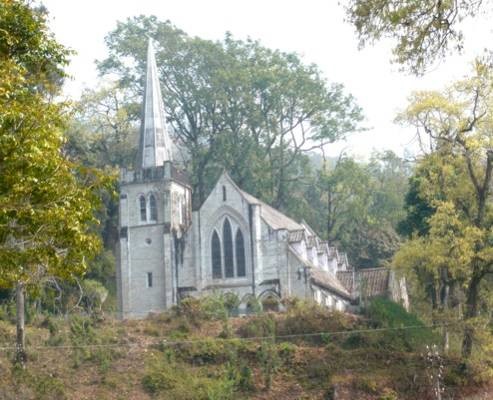
For the last couple of months, during Lockdown and its easing, I have spent an awful lot of time up in the Himalayan foothills of West Bengal.

bookshop (2)

Okay, that’s not strictly true, but for most of that time I have spent my working day revising, re-writing, and editing A Good Place, my novel set in a fictitious hill station there. I have some new characters to weave in, some old ones to remove, and the story line to alter in several major ways, including a different ending.

I finished the first draft some nine months ago, but there were parts I didn’t feel entirely satisfied with then, and my beta reader unerringly picked those out for major revision. I then spent a while thinking about the story line and took out nearly all the final third of the book and chucked it.

That left me with a lot to rewrite.

Much of the problem stemmed from the fact that after I published Making Friends With the Crocodile, which is set in an Indian village with peopled with all Indian characters, I wanted to write a novel dealing with the British who remained behind in India after partition. A kind of balance to my writing. That was all well and good, but I began writing the novel before I was completely satisfied with the story line, and the more I wrote of it the less I liked it. So I kept changing the story line as I wrote rather than doing what I really should have done, which was delete the whole thing and go away and write something completely different, waiting until I knew what I really wanted to write. But I’m now content that I have the story I want to tell, rather than Just A Story.

Consequently, I have been virtually living in West Bengal during these days, inevitably leading to yearnings to be there in person. Which does nothing to ease the feelings of frustration at enduring the travel restrictions of Lockdown.

050a

However, one of the advantages of having several projects on the go at once, which I always have, is that I can switch to another for a while when I need to. Last week, then, I spent one day giving a final edit to a short story which gave me the opportunity to spend the day (in my head!) in rural Sussex, which was very welcome. Especially as that is somewhere we can get to now, with a minimum of hassle.

And A Good Place? I’m glad you asked. I think I’m close to finishing the second draft, which will be a blessed relief.

Just so long as my beta reader doesn’t throw her hands up in horror when she reads it…

Why You Should Buy Books (especially mine!)

007

Hours of pleasure for the price of a cup of coffee in Bigbucks.

Like any other worker, you pay for my time. Only unlike the decorator, say, you only pay for a tiny fraction of the real time spent creating your book.

And what do you get for this investment?

Why, I bring you a whole, newly created world to explore!

I introduce you to people you never expected to meet, without the inconvenience of having to make small talk with them.

Heroes and villains, fools and wise men.

Perchance I will take you on a perilous voyage, yet you will return safely to the shore.

Encounter your deepest fears, and overcome them.

Know love, and disappointment, happy ever after and abject failure.

See through the eyes of the cruel and the eyes of the kind.

And all this for less than the price of a coffee.

And unlike the decorator, I won’t come and tread paint into your carpet, disappear for two weeks to do another job, leave your kitchen a complete mess, eat all your biscuits or drink all your tea.

I mean, really, what have you got to lose?

Hey, That’s My Picture on Your Book!

Boy, are you in trouble!

005

But first, a disclaimer. I am not a legal expert, and if you are in any doubt about the subjects I’m talking about, you should consult an authoritative source.

In general, as most writers are aware, the maker of an artistic work (e.g. painting, novel, photograph, concerto) automatically owns the copyright to said work. Selling the work does not constitute selling the copyright. This is an issue that occasionally confuses writers, for example, but it is worth remembering that even if a publisher agrees to publish your new novel, you retain the ownership and copyright to that novel, unless you specifically sign them away.

This means that the painter of a picture may sell the picture, but the new owner has no right to make any copy of this work for any purpose, and the artist retains the right to do so. Again, if the new owner is to have the right to make a copy of the picture and publish it, the artist must specifically assign the new owner the right to do so. After all, purchasing a novel or a music CD does not confer the right to copy and sell either of those.

But it’s not all as straightforward as that, and it’s more complicated if an artist has been specifically paid to create it for a purpose, or creates it as part of their duties for an employer. In this case, the employer / commissioner may hold the copyright.

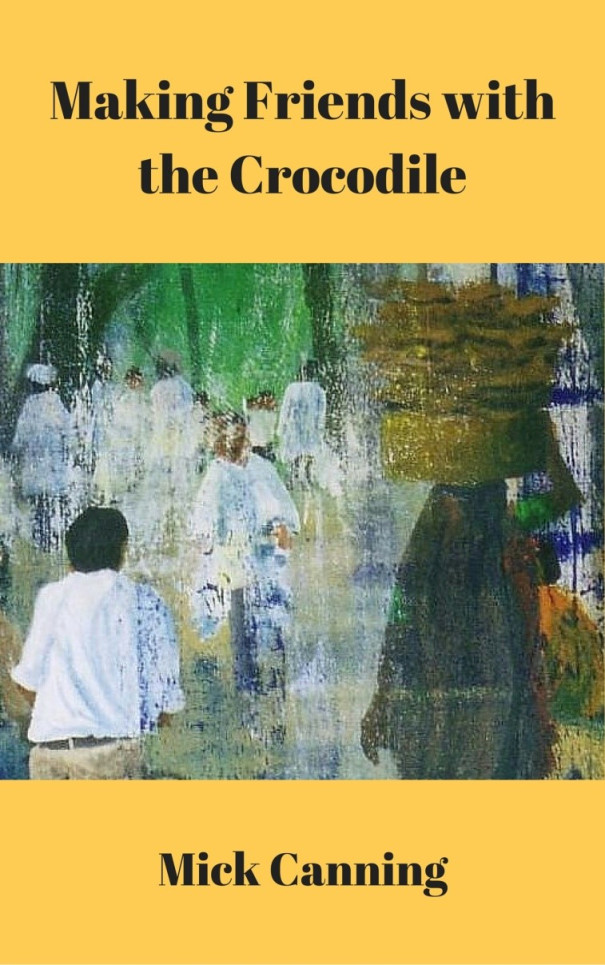
As an example of this, my novel Making Friends with the Crocodile features an image from one of my paintings on the cover (see picture on the right). I sold the painting many years ago, but the image still belongs to me as I did not sign it away.

Therefore if you wish to use an image on the cover of your book that does not belong to you, you must obtain written permission from the copyright holder to do so. If so, then what you will almost certainly get / buy are reproduction rights and NOT the copyright. That would give you the right to use the image for certain purposes (e.g. book cover) but the artist retains the right to sell the reproduction rights to others, too.

Unless they are exclusive reproduction rights. See? I told you this could get complicated.

It is possible to take (another) artist’s work and sufficiently transform it so that it becomes a new work, but again the devil is in the detail (quite literally). There have been a number of cases where artists have taken others to court to argue the point – and the point is whether the new work is sufficient transformative to be considered a new work. As an example, a photograph downloaded from the internet and then either just being subject to colour changes, or having another image added to it, was considered to be infringing the original copyright.

But there have been other cases where the original image has been altered sufficiently to be considered a new work. If you are intending to go down this route, you would be wise to acquaint yourself with the ins and outs of this. To get a more detailed analysis, you might find this link useful: February 13th Creative

And if you have paid someone for an image for your cover? It might be someone you know, or it might be over the internet (perhaps one of these ‘get a service for five dollars’ sites), but the law doesn’t change. Ensure you have the appropriate permission, preferably signed, before pressing the ‘publish’ button with their image on your cover.

It could save you an awful lot of hassle.

Welcome to my Crisis!

I’ve been hiding from the internet.

No, I didn’t go away, unfortunately, although a holiday was what I both have been and am still craving. I made a rash promise some weeks ago to put up a Facebook Author page, to do a minor relaunch of my novel, and to serialise a bawdy Elizabethan detective story. Really, I should know myself better than that.

dawn panorama

I think it was the short story that finally broke me.

Writing, for me, is a pleasure, comparable to painting. It is all about crafting the finished product, taking my time and eventually producing the best I can. When all goes well, the process is immensely satisfying from beginning to end.

Within that process, of course, there are times of writer’s block, false starts and finishes, wrong turnings, and many other things to go wrong. And the editing can be an infuriating process. But overall, there needs to be a flow.

Making Friends with the Crocodile worked for me at the length it was (45,000 words), since I wrote it almost as a stream of consciousness as the story unfolded in my mind. It came out in a rush partly because of its importance to me, and partly because I found I could visualise the characters, the story and the setting clearly. Once I had reached the end, I knew that was the end.

Obviously, many stories take a lot more coaxing to get down on paper. I’ve struggled with ones that need to be forced, certainly in places, partly because at that point they are not ‘me’ at the heart of them; I have lost that flow. But sometimes because of the length.

One reason I stopped entering short story competitions is I write a lot of long short stories. I am perfectly aware of the dictum that whatever you write can be edited down to the required length and that, indeed, they should be edited down.

But I also strongly believe that when a story presents itself to be written, that story has an internal length that needs to be respected, even after editing. Some require a few hundred words, some a lot more. But to attempt to turn Making Friends with the Crocodile into a 120,000 word novel or a 5.000 word short story, I am sure would have meant a lesser read. It would have been padded out for the sake of it, or stripped down to bare bones that would have meant that the characters could not have been drawn as strongly as I wanted them to be, and therefore encouraged less empathy from the reader.

Where is all this leading?

I began the short story / serial. It was working quite well, and I had a good few chuckles to myself as I was writing it and then, suddenly, it was almost 10,000 words long and nowhere near finished.

Oh dear.

So I attempted to cram and trim and edit and get it down to a suitable length for serialisation, but I was not happy with the result. Oh no. And I had one of my minor panic-I-can’t-cope-stress attacks and decided the only way to deal with it was to hide.

So, I’m not going to serialise it after all. I will finish it, but the attempt to condense it into a few instalments simply wasn’t working, and what I ended up with felt completely wrong. I will return to it at some point in the future, and finish it as the novella that it clearly is.

There is another strand to all this:

I made the Facebook Author page. That was the easy bit, and I’ll show you where it is next time. And I put together the re-launch promotion piece by the simple expedient of gathering together extracts from lots of the kind reviews the book has had.

But I am in a state of recurring panic, once again, over this huge need to self-promote to sell books. Of course, we all want to, but we are forever urged to use this or that platform, accept this or that offer, etc. Now, we are told that we ‘must’ have a YouTube channel. Really? And a presence on all sorts of social media. Are we not ‘serious’ writers if we are not prepared to move heaven and earth to sell a couple of extra books? That we should ‘invest’ a hundred or five hundred dollars here and there to advertise ourselves?

I have sold a few, and what is really important to me is the tremendous feedback that I’ve had.

Blowing my own trumpet is anathema to me, as I have written in the past. I just can’t do the selling and marketing the way that seems to be presented as essential. It’s an aspect of life that I hate, and a reason I have never gone into ‘business’. Everything around the promotion and marketing just seems relentless and is something that I cannot cope with.

Fortunately, I am not interested in fame. The idea frightens me.

And I really struggle with social media. I have had two goes at being on Facebook, and cope with it at the moment by not going on it very much. I spent ages trying to see the use of Linkedin, and have solved that one by closing my account last week. I really see no use for it.

And I am not doing Twatter.

So here I am back on WordPress, which is a platform I do enjoy. I’ll dip in and out of it a bit over the next few weeks or months, I suspect, since I still feel a bit panicky, but I will be there.

Thank you for your patience!
The Indian edition of my book is published!

Well, it’s taken me long enough, as I’m sure everyone will agree, but I have finally managed to publish Making Friends with the Crocodile as a Print on demand paperback in India! Hurrah!

It is published by Pothi, and is available on their site, here, and on Amazon.in and Flipkart.

pothi-advertising

It is still available as a Kindle e-book from Amazon, and is also available as an e-book from Kobo, worldwide, for those who do not favour Kindle.

I have been told plenty of times that I need to be more proactive promoting the book, but I’m not terribly good at that. However, this is me having another pathetic stab at it:

Buy it now! It’s great! Please…pretty please…

Oh well, I’m working on it.

Should you be kind enough to buy it, or, indeed, if you have already done so, please consider leaving a review. Reviews encourage others to buy the book, and, on Amazon, once a book has garnered a certain number, then Amazon list it a little more prominently – which is a tremendous help to the author!

And I have been lucky enough to garner some very complimentary and generous reviews, so far. A few excerpts:

‘This beautifully written story, set in a village in Bihar, draws you in from its first page.’

‘Making Friends with the Crocodile is a very fine book. And it takes us into the harsh reality of the life of women in rural India, much more effectively than any official report.’

‘The characters are depicted with obvious respect for a culture that is both beautiful and at times shocking. By the novels finale, though tragic, we are left with a very thought provoking and memorable story.’

‘This is a novel with depth and real emotional involvement. Told simply and with an honesty that defies disbelief at events and attitudes, it packs some serious punches. It’s a story that will live with me for a long time, and one that has materially altered my opinions about certain cultural norms. Researched in real depth and related in language that fits the narrator so well, it’s a very good read.’

‘Mick has delved into the mind of a middle- aged woman living in rural Bihar and has beautifully sketched the love – hate relationship she shares with her daughter in law. The book gives a lot of perspective on the mind-set and predispositions that prevail in the rural north Indian society (which apply, at large to many other parts as well).’

The blurb: ‘Siddiqa was only just into her teens when she was forced to leave her home to live with her new husband and his family in another village. The years have passed, and now Siddiqa has three children of her own. Her grown up son has brought his new wife, Naira, to live with them, so Siddiqa is no longer the lowliest in the household, for she has a daughter-in-law.

Life in rural India is particularly harsh for women. This novel explores themes of female oppression and tradition and asks whether the next generation will find life any easier.

I suppose that at least when I publish my next book, I should have a much better idea of how to go about it.

What a great review for Making Friends with the Crocodile!


Making Friends with the -Crocodile

Somali, at: Somali K Chakrabarti has put up such a generous review of my book, Making Friends with the Crocodile, that I am going to spend the rest of the day puffed up with most unreasonable pride! It comes as I battle with the various internet demons to put up a version on Kobo (ready in a couple of days, I hope), and, finally, a Print On Demand version for sale in India.

My biggest worry when I published the book, was that as a Western male writing in the voice of an Indian female, I would not be able to make it sound realistic, but I finally feel reassured by Somali’s review.

It can be found here: Making friends with the Crocodile


How India Changed an Englishman

I wrote a piece for The Good Men Project, about my time in India and how I came to write Making friends with the Crocodile’. Sushi Menon kindly edited it to make it readable, and gave it a title, and you can find it here:

How India Changed An Englishman

Making Friends with the Crocodile cover

The Book is Released – Hurrah!


Making Friends with the Crocodile‘ is now released!

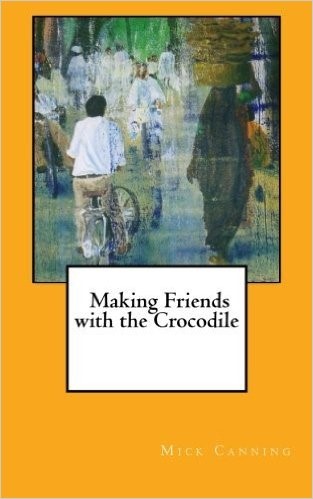
Making Friends with the Crocodile cover                             POD cover

Kindle edition                                                     Paperback edition

Anyone who has already pre-ordered it on Kindle / Amazon should have received it by now, and in countries where there is no pre-order facility, such as India, the Kindle edition is also now available to buy.

The paperback is available from the Amazon.com, Amazon.ca, Amazon.co.uk and Amazon.eu sites only – this is a quirk of Amazon – but can also be ordered from the estore at CreateSpace, at the following link:

https://www.createspace.com/6301808

And now, I wait to see what people think of the book, with a considerable amount of nervousness.

If you do buy a copy, please consider leaving a review either at Amazon, or on Goodreads, if you are a member (better still, at both!). Reviews are genuinely the lifeblood of a writer, and do help to sell books.

Finally, the blurb again…

‘Siddiqa was only just into her teens when she was forced to leave her home to live with her new husband and his family in another village. The years have passed, and now Siddiqa has three children of her own. Her grown up son has brought his new wife, Naira, to live with them, so Siddiqa is no longer the lowliest in the household, for she has a daughter-in-law.

Life in rural India is particularly harsh for women. This novel explores themes of female oppression and tradition and asks whether the next generation will find life any easier.’