Remnant #1 – The Indian Mutiny

I recently did a deep dive into the burrows of my hard drive. I’m not sure whether I will write another novel at the moment, but whether I do or not there are several part completed ones that will not actually be completed because I ran out of steam…

One such was a set of preliminary drafts for a story set during the so-called Indian Mutiny of 1857. This piece is part of a chapter setting out the background to what happened. It hasn’t been vigorously checked, but I think the facts are all correct. It’s obviously incomplete, but I think it does stand alone.

And should I post a few more of these remnants occasionally?

9th May 1857, and a dreadful heat sits on the Northern Indian plain like breathless death. The air is full of dust and the land is parched, cracked and waterless, eight months or so since the last rains came, yet the suffocating debilitation of the temperature, well over a hundred degrees Fahrenheit for most of the day and a goodly portion of the night, is made more unbearable still by the effects of the high humidity. One felt that one could almost wring water out of the surrounding air, yet the only moisture visible was the sweat covering anyone foolish enough to attempt to move around in this climate.

In Meerut, less than forty miles northeast of Delhi, eighty-five sepoys have just been sentenced by Court Martial to ten years imprisonment. Muslim and Hindu, they are imprisoned for refusing to bite cartridges that have been smeared both with cow fat that was sacred to some and pig fat which defiled them all. In a move of breath-taking stupidity, the British have decided that this concoction is a suitable one for their native troops to have smeared onto cartridges that work by having the top bitten off, before pouring and ramming the contents down the barrel of the new Lee Enfield rifle. To be fair, after the mistake was realised, moves were made to ensure that the grease was made from different ingredients, but the damage by then was done. The belief was widespread that the grease was still composed of these taboo ingredients and, worse still, that it was a deliberate attempt by the British to contaminate and weaken their religions. The crassly insensitive handling of the issue did nothing to improve matters.

Nor is this an entirely new development. For maybe a quarter of a century things have been going rapidly downhill. There have been a number of ‘minor’ mutinies in the past, but these seem to be on the increase. For High Caste Hindus, ‘crossing the black water’ is prohibited, so attempts to force serving soldiers to sail abroad have been invariably interpreted as caste breaking and resulted both in mutinies and draconian punishments. Both this and the foolishness with the new cartridges have acquired added importance, though, due to the increased activity of Christian missionaries in India. It is possible that the British never fully realised quite how important religion was to the Indians. There never had been an Indian nation. India’s history was one of various states, Hindu and Moslem, shifting empires, conquests and absorptions. The idea of Indian nationhood had not yet arisen. Nor did there exist a universal shared culture. As well as the beliefs and traditions surrounding the different religions – Sikh, Parsi and tribal as well as the predominant two – the massive size of India had meant that most regions knew little about the others, even of their existence.

What mattered most to the average Indian, other than the struggle to survive, was his religion. It was what defined his life. And by 1857 it must have appeared to many that the British were determined to defile and break these religions, and then to impose their own. This was hardly helped by the general change in attitude exhibited by the British towards their subjects.

Much had altered over this time. In the late 1700’s, many of the British who came out to India acquired a huge respect, and frequently love, for the country and its people. Scholars such as James Princep and William Jones immersed themselves in the study of the languages and history of India, carrying out research and making huge discoveries. They treated the educated Indians in their circle as equals, treated others with respect and frequently married Indian wives. More than a few also converted to Islam. All this gradually changed in the 1800’s, however. A major factor in this was a steady increase in the number of women who came out to India from Britain. Debutants became aware of the existence of a pool of marriageable young men who were supposedly earning large sums of money and living in style with servants at their beck and call. They only lacked wives to make their lives complete. What could be more natural than to go to their assistance? Thus the ‘Fishing Fleet’ came into existence.

The impact that this had upon the British way of life in India was dramatic. As more of the British men married within their own, the growing community rapidly came to look down with disgust and contempt on those that cohabited with Indian women. And it was a short step from that to frowning upon those who changed their religion, wore native clothes, or even fraternised with the ‘natives’. Attitudes, too, were changing back in Britain. An increase of Christian evangelical zeal coincided with more information finding its way back from India about the country the British were ransacking, most shockingly that the majority were heathens who worshipped idols.

Within the army itself, the Indian troops noticed a change in their officer’s attitudes. Previously, British officers would happily mix with their men, socially as well as on duty and spoke their languages well. They were now more reluctant to learn these languages, found it irksome to talk for long to their men and no longer went hunting or to social events with them. This, the troops tended to put down to the influence of the church – the ‘Padre Sahibs’.  

The British have always referred to the uprising that exploded in 1857 as The Indian Mutiny. The Indians prefer to give it the title of the First War of Independence, yet there had already been a number of mutinies throughout the time that the British had been in India, even within the Bengal army. In 1765, on the eve of the Battle of Baksar, Company sepoys had rebelled and been executed. Then in 1806 an attempt was made to force sepoys in Tamil Nadu to wear a leather badge, anathema to Hindus, which had resulted in rebellion. And throughout the eighteenth and nineteenth centuries there had regularly been mutinies when the British had forced sepoys to serve ‘abroad’, often prohibited by their caste, which was frequently viewed as a deliberate attempt to weaken said castes. And viewed as a prelude to attempting to convert them to Christianity.

There were, of course, many other factors contributing to this outbreak of violence. Over the previous twenty five years or so, the British had steadily been displaying a greater intolerance towards all facets of Indian society than they had done before. The respect that they had previously shown towards India’s long and rich history had all but disappeared, to be replaced by an attitude that they were governing ‘ignorant savages’ who were ripe for conversion to Christianity. And indeed, the company encouraged further Evangelical and Unitarian missionary activity; frequently this consisted simply of setting up schools and medical facilities for the poorer Indians, but this did nothing to allay Indian suspicions. In another insensitive gesture, English also replaced Persian as the official language of both government and education.

So, simmering just beneath the surface of all walks of Indian society was this fear, this suspicion, that the English were determined to break the native religions and to force Christianity upon India. And it only needed a spark like the Meerut incident to ignite a conflagration that would rapidly sweep across Northern India.

Move forward twenty-four hours and dreadful deeds have been done in the Indian heat. In the morning, the remainder of the Indian regiment at Meerut rose up to free their comrades, broke into the armoury, and then began to systematically slaughter the European community.

Even then, it was possible that the revolt might have petered out, if the sepoys had not decided to ride through the night to Delhi, to seek out the aged Mughal Emperor Bahadur Shah Zafar, who ‘ruled’ as no more than a puppet of the English, and to declare themselves as his army of liberation. As they rode, they gathered supporters from the disaffected population and, around dawn, poured into Delhi.

It was the middle of Ramadan, so most of Delhi had been awake for some while, since for all Muslims it is forbidden to eat or drink during the daylight hours of Ramadan, and so across the city meals had been prepared, cooked and eaten before sunrise. At this time of year, too, because of the intense heat, much of the other activity of the city happened around dawn and dusk, whence it was a little cooler. And so, the streets were busy with worshippers making their way to and from mosques and temples, traders and shoppers busy at markets, beggars and hawkers, businessmen and palanquin bearers, soldiers and magistrates, all out and about in the labyrinth of streets and alleys that criss-crossed Delhi between the city gates.

Rumours of rebellion had been abroad for some months before, and so much of the native population of Delhi was in a state of keen anticipation. The rebels immediately found that they had sympathisers who rose in revolt as soon as they entered the city, especially many of the native soldiers stationed there. The British soldiers were mainly barracked outside the city walls and although a few Europeans quickly realised the severity of the situation, in the main events unfolded faster than could be dealt with and the city was largely overrun before the army could effectively intervene.

By nightfall the majority of the European population of Delhi – men, women and children – had either fled the city or been hacked to pieces. The only ones spared during the initial massacre were those few that had converted to Islam.

The next four months saw much bitter fighting across the north, as the rebels tried desperately to widen the rebellion and hold onto areas they had taken, while the British, with any hope of reinforcements many long weeks away, attempted, equally desperately, to break sieges and retake towns and garrisons that had fallen to the rebels. On both sides, tremendous cruelties and massacres were carried out, few more infamous than that at Cawnpore…

Writing Update

I haven’t done one of these for a long time. For anyone wondering what has happened to my novel in progress, it’s finished. Hurrah! I know there were two earlier versions which got discarded as soon as I had finished them, but I’m really pleased with this one – it’s the book I had visualised when I began it nine years ago. Only better. When I had finished the earlier versions, I felt relief they were finished, but no joy. This time, I’m really happy with what I’ve written. I know it’s what I want to say.

Irrelevant photo. Because.

It has had the attention of several beta readers and is now all the better for their suggestions. It has also had what I hope will be the final edit, and I am beginning the process of looking for a publisher or an agent. This means a lot of research and writing both long and short synopses. And then, I suppose, months of waiting to see whether I have any luck.

There is also poetry and zine-making going on sporadically, plus some currently vague ideas for another novel.

It’s all go, I tell you.

Where Do The Dead Go?

I know. It’s been a while.

I’ve been thinking about how I publish my poetry and stories, and concluded that the simple way is the best way. I don’t wish to spend a lot of time and money submitting them to competitions and magazines, putting them to one side where they may end up forgotten or just unpublished while I decide to submit them ‘just one more time.’ I’m not interested in putting a lot of time and energy into chasing the best deal or the most prestigious publications.

The whole purpose of writing is firstly for myself, and secondly because (naturally) I’d like to be read. It doesn’t have to be a large audience, I’m quite chuffed when anyone let’s me know they’ve read something of mine and enjoyed it. In which case I might as well just write some more zines and publish work on this blog. It feels like far less pressure. And the novel I’ve finished (Long Shadows) and which is still being edited I might submit to an agent or two, but I’ve no intention of spending months and years trying. If I’ve no luck I will quite quickly just self-publish it.

Anyway, putting my writing where my mouth is, here’s a poem.

Stormy Weather. Again.

Well, it’s blowing a hooley out there at the moment. Winds howling around the eaves of the house and rain spattering the windows. What a miserable winter we seem to be having so far. Not particularly cold, but at times the damp makes it feel about a hundred below zero.

Sort of.

Not a day for going out and achieving stuff. A day for staying in and achieving other stuff. There, that’s me at my literary best. Talking of which, it seems a good day to get some editing done on my novel now I’ve got feedback from my kind beta readers.

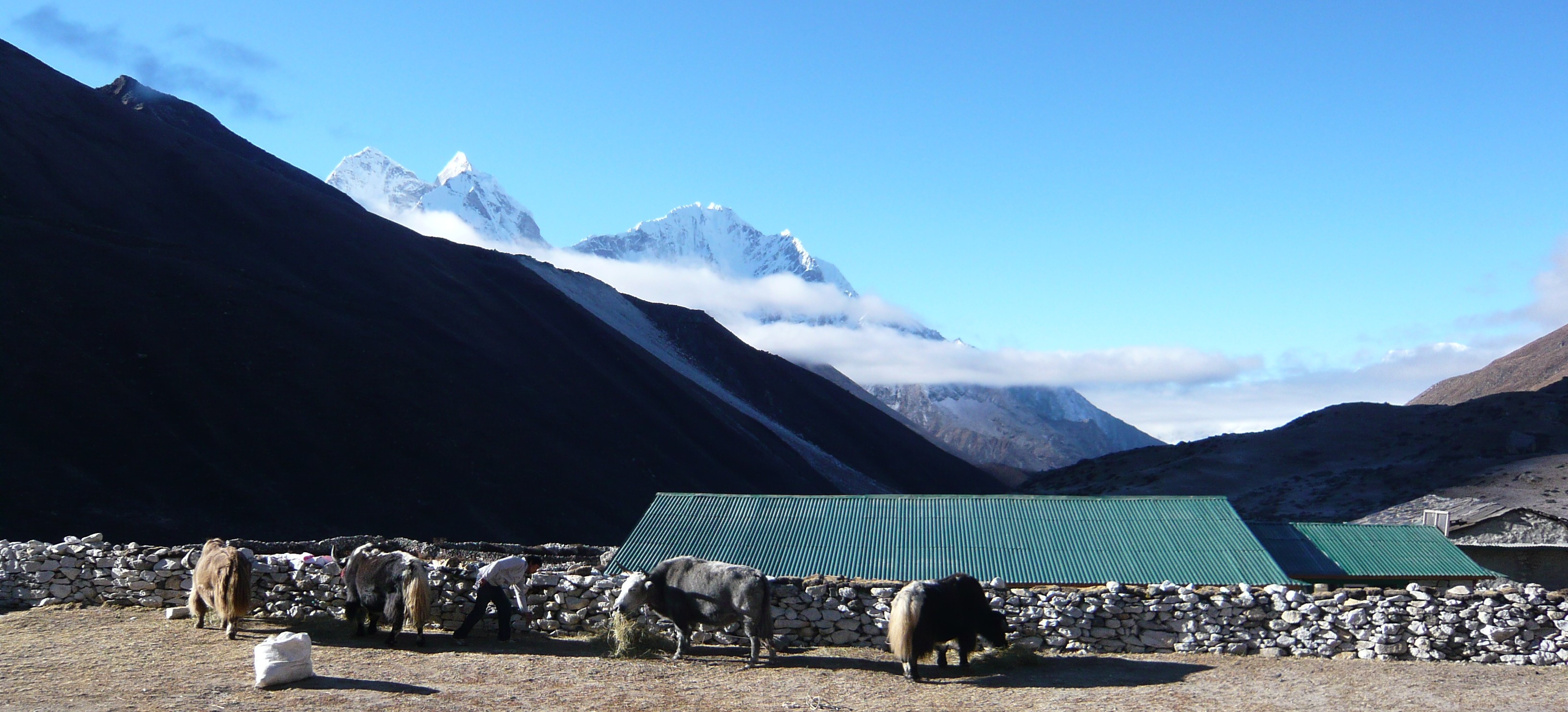
So here’s a picture of some yaks in the Nepalese Himalaya.

You’re welcome.

Found – One Muse

‘Oh, you’re back.’

‘Well, not really. I’ve been here all the time. I just didn’t have anything to say to you, that’s all.’

‘Why on earth not?’

‘For a start, you don’t listen to me. You keep fannying around with that novel that your heart’s not in, anyway. What is it that you actually want to write? Not that one, at least at the moment.’

‘I’d love to finish it, actually, just get it out of the way.’

‘It’ll still be there when you’re ready to finish it – if you ever are. And if you’re not, it doesn’t matter. Surely you’ve got other stuff you’d rather be working on?’

‘I…’

‘Like, your poetry’s pretty crap, but you enjoy writing it.’

‘Hey! I…’

‘Then there’s the other novel, the one you’ve been faffing around with for years.’

‘Yes…’

‘So work on that one, since you actually do like it, and do a few paintings, for God’s sake. You’ve been saying you’re going to, well get on with it.’

‘I thought a muse was meant to be an inspiration, not a nag.’

‘A muse,’ she replied tersely, ‘will say whatever she thinks necessary to get her author off his lazy butt! Now, what about this pamphlet or brochure you’re meant to be doing at the moment?’

‘The zine?’

She visibly cringed.

‘Yes…that. As far as I can see you’ve been tinkering with it for months but you’ve nothing to show for it.’

‘I…’

‘You seem to have decided on a few of the poems you want to put in it, and a short story, but you haven’t rewritten the essays you wanted to use, haven’t sorted out the photographs and done nothing towards the artwork. You’ve not even decided on a title for the thing yet!’

‘I’ve…’

‘Yes, and that’s another thing. You keep jumping from one thing to another, and never completing anything.’

‘I’ve always thought it’s good to have a couple of projects on the go. When I get stuck on one I can go and work on another.’

‘Yeeessss….a couple you say. Exactly how many have you got on the go at the moment?’

‘Ah, er, I’m not sure…’

‘No? Well roughly how many?’

‘Er…’

‘Very roughly? You don’t actually know, do you? Just finish something! What about the short poem’ -*cringe* – ‘zine you’ve got in bits? As far as I can tell it’s nearer completion than the other one.’

‘Um, I suppose I could…’

‘And I’m not some lifestyle guru, but get out and go for more walks. And listen to more music and read some more books. You’re not reading very much at the moment, are you? And read something you want to read and listen to something you want to listen to. Not because you think you ‘ought’ to, whatever the hell that means. And stay off fricking social media, too. It’s poisonous.’

‘That’s certainly true.’

‘So just see that you do, or I really will be off. I’ll be checking up on you more regularly, now. I can see it’s the only way.’

She’s a tough, unforgiving, so-and-so, my muse.

A Busy Time in West Bengal

For the last couple of months, during Lockdown and its easing, I have spent an awful lot of time up in the Himalayan foothills of West Bengal.

bookshop (2)

Okay, that’s not strictly true, but for most of that time I have spent my working day revising, re-writing, and editing A Good Place, my novel set in a fictitious hill station there. I have some new characters to weave in, some old ones to remove, and the story line to alter in several major ways, including a different ending.

I finished the first draft some nine months ago, but there were parts I didn’t feel entirely satisfied with then, and my beta reader unerringly picked those out for major revision. I then spent a while thinking about the story line and took out nearly all the final third of the book and chucked it.

That left me with a lot to rewrite.

Much of the problem stemmed from the fact that after I published Making Friends With the Crocodile, which is set in an Indian village with peopled with all Indian characters, I wanted to write a novel dealing with the British who remained behind in India after partition. A kind of balance to my writing. That was all well and good, but I began writing the novel before I was completely satisfied with the story line, and the more I wrote of it the less I liked it. So I kept changing the story line as I wrote rather than doing what I really should have done, which was delete the whole thing and go away and write something completely different, waiting until I knew what I really wanted to write. But I’m now content that I have the story I want to tell, rather than Just A Story.

Consequently, I have been virtually living in West Bengal during these days, inevitably leading to yearnings to be there in person. Which does nothing to ease the feelings of frustration at enduring the travel restrictions of Lockdown.

050a

However, one of the advantages of having several projects on the go at once, which I always have, is that I can switch to another for a while when I need to. Last week, then, I spent one day giving a final edit to a short story which gave me the opportunity to spend the day (in my head!) in rural Sussex, which was very welcome. Especially as that is somewhere we can get to now, with a minimum of hassle.

And A Good Place? I’m glad you asked. I think I’m close to finishing the second draft, which will be a blessed relief.

Just so long as my beta reader doesn’t throw her hands up in horror when she reads it…

Lockdown Stream of Consciousness

107 (2)

Here we are in week whatever it is of Lockdown, and I have to say I’m finding it ever so difficult to dream up a new blog post. It’s not that I’m having any difficulty writing, as I’m making good progress with one of my novels. I timetable my day so I write in the morning and don’t allow myself to look at the internet until after lunch. I go out and walk each day, I’m eating well. And I don’t mind the idea of Lockdown as such, since I’m quite a solitary person at the best of times; fond of my own company and never at my best with groups of people.

When it comes to writing a new post, though, I just seem to dry up. I think one reason for this is the major change to everyone’s lifestyles that this crisis has demanded. Not so much the changes to mine, strangely enough, but those of other people. I look at some of the posts I have partly written and think they seem somehow too trite for today. Some others are about journeys or visits to places I love, and I don’t seem to have the heart to finish them. Perhaps it’s all a bit too raw, too painful. I rarely write political pieces, and have even less enthusiasm at the moment than usual. Again, the politics are either too trite, or just incredibly infuriating. And there are more than enough bloggers covering the infuriating stuff, even if I wanted to.

Write a parody? I do, occasionally. But a parody of the Coronavirus Crisis seems tasteless, and both our inept government and the unpleasant fool in the White House are already parodies of themselves. I could do a humorous one later, I suppose. I might go and see what Bob is up to…

But I don’t feel I’ve anything original to offer at the moment, and I’m generally a subscriber to the school of thought that states if you have nothing to say, then it’s best not to say it.

So I thought today I’d pick a random photograph I haven’t posted before and put that up, and just go with a stream of consciousness, and see where it led me.

It turns out it led me here.

Spain 2

It was after posting my series of poems ‘The Old Way‘, last week, and also mentioning that I’d almost completed a very long poem on a very long bus journey, that made me think of travel again. Not that that is unusual, of course. I’d nip off on another journey at the drop of a hat if I had the chance, but for the time being we can’t afford to do that.

But, I am planning to publish those poems and a whole lot more, plus a few short stories, in a book some time later this year, as well as the Indian novel I’m currently editing – A Good Place. Two book in one year! We’ll see how that pans out…

But…Spain. Mallorca, this time, to be precise. Mallorca is the largest of the Balearic islands and lies in the Mediterranean Sea about a hundred miles east of the Spanish city of Valencia.

If you were to do a Google search for Mallorca (Go on, now I’ve mentioned it you can’t resist, can you?), you would be forgiven, looking at the results, for thinking there was nothing on the island other than the city of Palma, beaches, swimming pools, hotels and night clubs.

And you would be very wrong.

Certainly, there’s plenty of that if you want it, but there is also the rest of the island, which measures approximately fifty miles by forty miles, and contains some surprisingly big hills and mountains, small villages and towns, orchards, fields and woodlands, hiking trails and Roman and Moorish remains.

img20190320_11402114

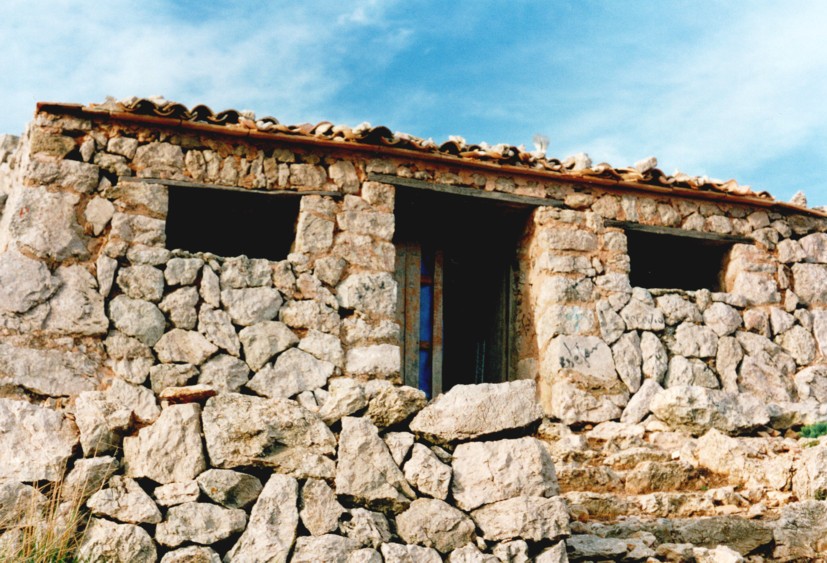
I’ve only had one visit there, and after flying into Palma I took the train up into the Tramuntana, the range of mountains on the north west of the island, to the little town of Soller. From there I walked up into the mountains themselves and spent the next couple of days just wandering around and exploring, sleeping overnight in a stone refuge.

img20190320_11394102

Luxury holiday accommodation at about 2000ft.

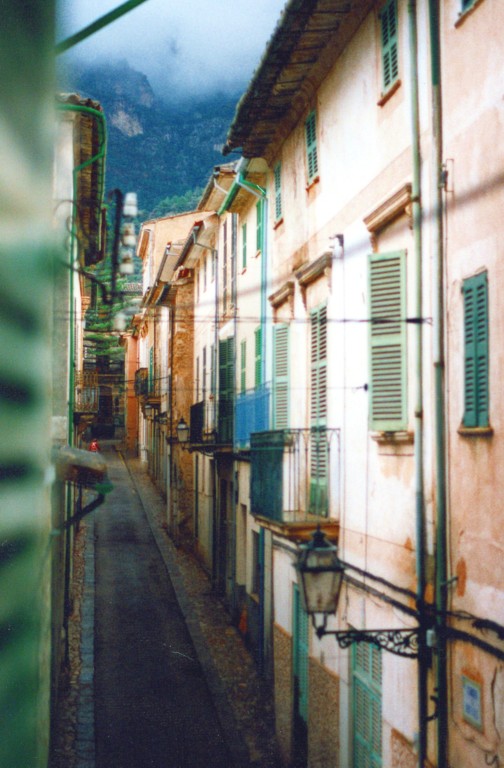
But there was a lot of rain arriving, and I retreated back to Soller for the remainder of my week, finding a room in a cheap backstreet hotel and spending the days exploring the lower hills and villages, and some of the coast nearby.

img20190320_11335509.jpg

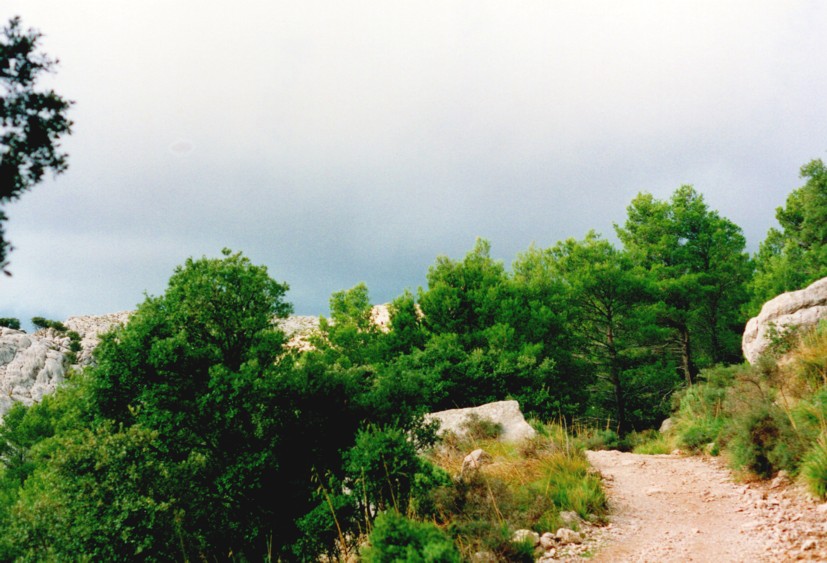
Lots of rain arriving.

img20190320_11421944

View from the window of my other luxury holiday accommodation in Soller. Lots of rain still arriving.

img20190320_11302033

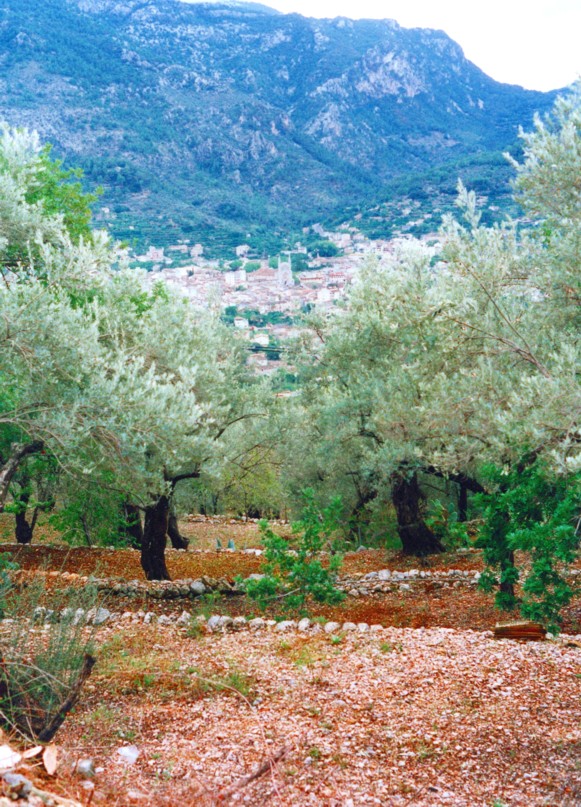
But it wasn’t all rain. There were lots of little villages to explore…

img20190320_11410230

Farms, and hills to wander around in…

img20190320_11311220

img20190320_11332135

img20190320_11414759

Village church

…and lots of bread and cheese and fruit and wine to enjoy. Not that you need to see a picture of that.


Wordy Wednesday 1

Many bloggers post photographs on Wednesday under the heading ‘Wordless Wednesday’. Me? I’m going to write a few posts about words – specifically words in English borrowed from languages of the Indian Subcontinent.

I’m just plain awkward, but you knew that, didn’t you?

I am currently editing the first draft of my novel A Good Place, which is set in a hill station in Northern India. And in that hill station live a number of English who remained behind after Partition.

‘I’m sitting on the veranda of the bungalow in my pyjamas.’ Well, no, no one says that in my book. But if they had, what is the significance of that sentence?

The significance is the number of words borrowed from Indian languages.

Untitled-Grayscale-03

Veranda is an Indian word, but coming originally, perhaps, from Persian. The Oxford Dictionary suggests two derivatives, either from the Hindi (varanda) or from the Portuguese (varanda). Digging a little deeper, if I refer to Hobson-Jobson, the Anglo-Indian Dictionary that was published in 1886 and traces pretty well every word or phrase borrowed from the Sub-Continent, I discover a very long entry on this word. It begins by dismissing the possibility of it being derived from the Persian beramada, and goes on to state that it appears to exist independently in both Hindi, and in Portuguese (and Spanish). It then traces the possible routes the word might have taken to reach the English language, before then saying, surprisingly, that it could have its roots in the Persian after all. This seems quite likely to me, since many Persian words made their way to India especially with the Mughals, and it suggests a possible route to the Spanish peninsular when the Islamic armies arrived in the early eighth century.

I tried typing it into Ngram Viewer. This is an online tool that searches through the entire database of books that Google can access online (including ones still under copyright) published since 1800. Looking at the results for all books in English, it tells me it was barely used in 1800, although it does exist, rises steadily to a peak about 1910, and then falls away slowly, although it is still in common usage. Unfortunately Ngram has not been set up to search books in Indian languages, or even Portuguese. I tried Spanish and the pattern was similar, except that after peaking just before 1910 , it dropped sharply, but since then the trend has been upwards. I then noticed something. I had actually looked at the trend in American English. So I then tried British English, and this gave me a rather different pattern; The curve rose gradually until it peaked in the 1950’s and then fell away sharply. Why? I think it must be due to a surge of historical / biographical / nostalgic writing, both fiction and non-fiction, after the British left India.

Don’t worry, I’m not going to try to go into that sort of detail with other words.

Next, bungalow actually refers to a ‘Bengal style’ house (often with a veranda!) that the British frequently chose to live in.

And pyjamas are loose cotton trousers worn in India which were ‘adapted’ for night wear by Europeans.

Okay, class, lesson over. Be sure to wash your hands before eating your snacks (samosas and pakoras today, of course).

Hey, That’s My Picture on Your Book!

Boy, are you in trouble!

005

But first, a disclaimer. I am not a legal expert, and if you are in any doubt about the subjects I’m talking about, you should consult an authoritative source.

In general, as most writers are aware, the maker of an artistic work (e.g. painting, novel, photograph, concerto) automatically owns the copyright to said work. Selling the work does not constitute selling the copyright. This is an issue that occasionally confuses writers, for example, but it is worth remembering that even if a publisher agrees to publish your new novel, you retain the ownership and copyright to that novel, unless you specifically sign them away.

This means that the painter of a picture may sell the picture, but the new owner has no right to make any copy of this work for any purpose, and the artist retains the right to do so. Again, if the new owner is to have the right to make a copy of the picture and publish it, the artist must specifically assign the new owner the right to do so. After all, purchasing a novel or a music CD does not confer the right to copy and sell either of those.

But it’s not all as straightforward as that, and it’s more complicated if an artist has been specifically paid to create it for a purpose, or creates it as part of their duties for an employer. In this case, the employer / commissioner may hold the copyright.

As an example of this, my novel Making Friends with the Crocodile features an image from one of my paintings on the cover (see picture on the right). I sold the painting many years ago, but the image still belongs to me as I did not sign it away.

Therefore if you wish to use an image on the cover of your book that does not belong to you, you must obtain written permission from the copyright holder to do so. If so, then what you will almost certainly get / buy are reproduction rights and NOT the copyright. That would give you the right to use the image for certain purposes (e.g. book cover) but the artist retains the right to sell the reproduction rights to others, too.

Unless they are exclusive reproduction rights. See? I told you this could get complicated.

It is possible to take (another) artist’s work and sufficiently transform it so that it becomes a new work, but again the devil is in the detail (quite literally). There have been a number of cases where artists have taken others to court to argue the point – and the point is whether the new work is sufficient transformative to be considered a new work. As an example, a photograph downloaded from the internet and then either just being subject to colour changes, or having another image added to it, was considered to be infringing the original copyright.

But there have been other cases where the original image has been altered sufficiently to be considered a new work. If you are intending to go down this route, you would be wise to acquaint yourself with the ins and outs of this. To get a more detailed analysis, you might find this link useful: February 13th Creative

And if you have paid someone for an image for your cover? It might be someone you know, or it might be over the internet (perhaps one of these ‘get a service for five dollars’ sites), but the law doesn’t change. Ensure you have the appropriate permission, preferably signed, before pressing the ‘publish’ button with their image on your cover.

It could save you an awful lot of hassle.