Once, I thought I’d write a footpath book, a guidebook for an area I walked frequently and knew well. As well as the practicalities of walking the paths – pointing out turnings that were easy to miss, alternative routes, the geography of the paths – I would also discuss the history and geology of the area, the wildlife and architecture, the folklore…
I’m sure you’ve seen plenty of examples of these books.
But that, naturally, would require me to walk each path carefully noting every point at which I would need to remark on these details. But I know me. I would be coming up to a point where I knew I needed to take note of the vagaries of the route, or points of special interest, and then a mile or two later I’d realise I’d been working on a poem in my head and had forgotten all about the task in hand….I would just find it impossible to keep my focus on the technicalities while walking. And I don’t really do technicalities very well, anyway.
And to have to do this for every step of every part of these routes, well, it’s not what I do. While walking, I’m inclined to drift along, my mind wandering, my focus flitting from one thing to another – whatever catches my eye at the time.
It will just have to go down as another of my discarded projects. The footpath book is for someone else to write.
My wife often says I’m in touch with my inner vagabond. I’m taking that to mean that I enjoy walking, unless she’s referring to something else. My dress sense, for example. But yes, I love walking, especially long distance walking, but most of all I like to simply wander. There is a tremendous pleasure to be had by just setting off for a long walk without any particular destination in mind. Taking the more interesting-looking path as we go.
Of course, it’s not always possible to travel this way. We need to have some sort of destination in mind unless we’re prepared to just settle down to sleep wherever we find ourselves at nightfall. Usually we don’t have the time and the freedom to travel like this. Some people may also find it unnerving not to have board and lodging all planned in advance.
I’ve only done it occasionally, I must admit, but found it remarkably liberating when I did. There was no pressure to reach a particular destination by nightfall, I just had the freedom to wander along at my own pace until I felt I’d had enough for the day.
Even then, of course, some planning had to be done. Would I carry food or rely on reaching somewhere I could get a meal of some sorts? Would I carry shelter? Extra clothes?
But that is not exactly tramping, of course. It is just an exercise to be enjoyed (or otherwise) for a short period. It’s not a permanent lifestyle.
I’m sure that very few folk have deliberately chosen tramping as a lifestyle, but I’m aware there are some who have. This leads to the obvious question – why? I suppose all of us, at some time, wonder what is really important in life? Riches and property are, indeed, a burden in many ways, as well as conferring the obvious advantages in life. Some people just didn’t want that lifestyle. Some didn’t want the responsibilities of a settled life, with or without a family. There were always some folk who could just never settle anywhere for long. Most, though, would have ended up tramping through loss of employment and / or home.
Certainly I understand the difficulties of the tramping life, especially when one is no longer young. And I certainly wouldn’t want to be trying to survive as a homeless person in a city – rightly or wrongly, I think of tramping as a rural phenomenon. The whole point of it was to be on the move, rather than staying in one place. I doubt it would be possible today, with so many laws against that kind of lifestyle. There were, of course, laws against it in the past, too, but almost certainly much harder to enforce. I think, too, society is just ordered differently today. We think differently to how we did fifty or a hundred years ago. A tramp turning up at a farm today looking for a couple of hours work in return for a meal would get short shrift, and I can’t imagine any householder regarding one with anything other than hostility.
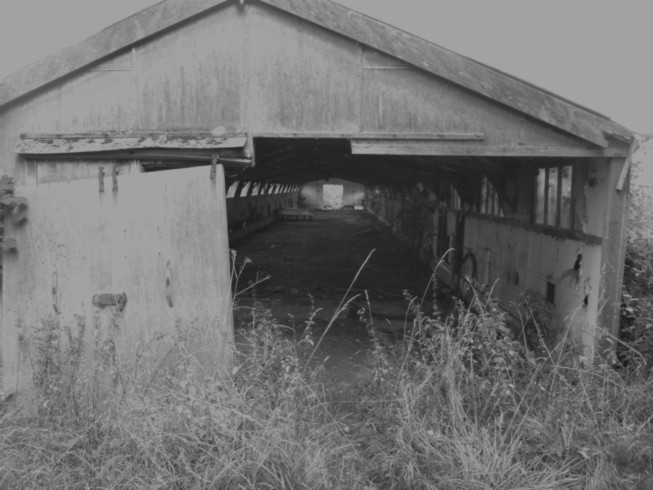
Again, I can’t imagine anyone choosing that lifestyle through the winter. But tramps used to learn of places they could settle for the winter, often carrying out odd jobs in return for permission to sleep in a shed or a barn and the odd meal. In this post I’m talking specifically about Britain, but I suspect it applies equally to hobos in America, swagmen in Australia, and possibly others I’m not aware of elsewhere.
And it would be unlikely to be a long life. But there were always some who chose it as a way of life rather than being forced into it by circumstances, and in another time I might possibly have been one of those.
I’ve been playing this album for much of the last week. the first I had heard of Sharron Kraus was on Chanctonbury Ring, the album she worked on with Justin Hopper, based on Justin’s book The Old Weird Albion. Joy’s Reflection is Sorrow is filled with beautiful haunting songs in the folk tradition, with more than a touch of otherworldliness about them.
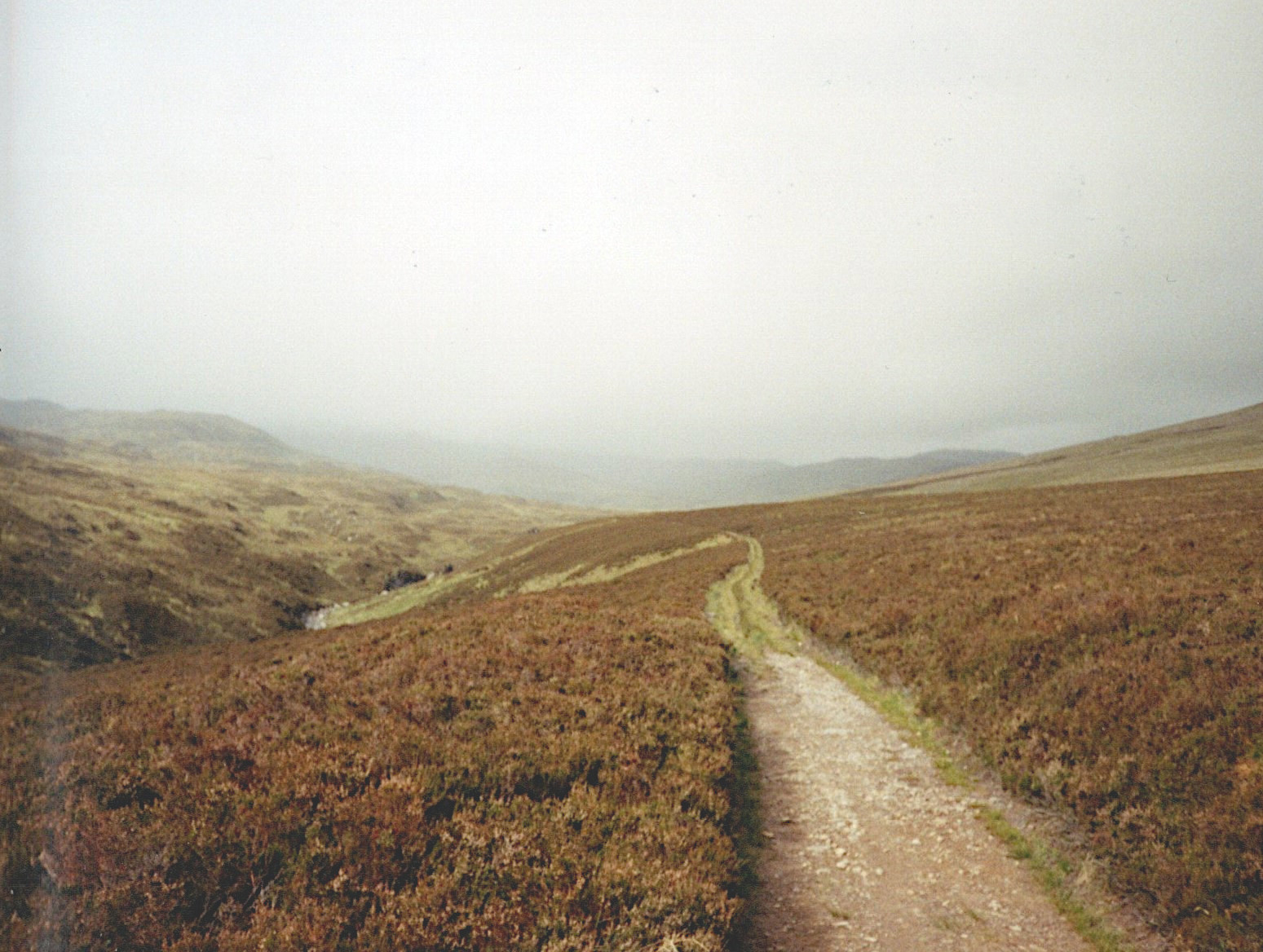
My world is full of paths that are too well trodden at the moment. I suppose everyone’s is, really. All the paths nearby on the common and through the woods are overflowing with dog walkers and families out for exercise and relaxation, and without going further afield it is difficult to find anywhere to walk in solitude. So a longer walk is demanded this week, out to fields and woods and rivers where I know I shall meet hardly a soul.
I think I shall resist posting progress reports on my writing in future, since I jump from project to project and no sooner do I say I’m doing a final edit of x, than I am working on y and have shelved x for the foreseeable future. I have, for example, found great difficulty in finishing A Good Place, revising the plot and the ending for the third time now…
It’s downright embarrassing, really.
I’m finding writing very difficult at present, though, which is one reason I’m not posting on here very often. Like everyone else, I just need to hang in there.
And I’m reading An Indifference of Birds by Robert Smyth.
This is another book about birds, but in this case it looks at how birds see us and how we affect them. And by extension, it looks at how we affect the whole of the natural world, and the enormous damage we are doing to it. But if that sounds horribly gloomy, the book is a delight to read – beautifully written, and filled with observation and information. Do buy it.
I’m posting this poem again, as it rather illustrates what I’ve personally found particularly frustrating during the recent lockdown. We can go for longer walks now, it is true, but that’s still not the same.
If I could just wave a wand,
I would wander the world.
With my notebook in hand,
And a bag on my back.
I would sleep under hedges,
In hotels and haylofts.
Drink beers under trees,
And eat cheese on the moor.
I’d watch clouds over hilltops,
And boats on the ocean.
Shapes and shadows at sunset,
A moon with a view.
And I’d write trivial poems
Of snowfall and sunlight,
Birds singing at dawn
And the sounds of a stream.
There’s the lure of a skyline,
And skylarks above me,
Wine and woodsmoke my welcome,
At the end of the day.
To travel, to journey,
There’s magic in wandering
Over moorland and downland,
Through woods and through fields.
The world’s full of wonders
All waiting for wanderers.
Let me follow these paths
For as long as I can.
The poem can be found in my collection The Night Bus, which is available here. should your interest have been piqued by this…
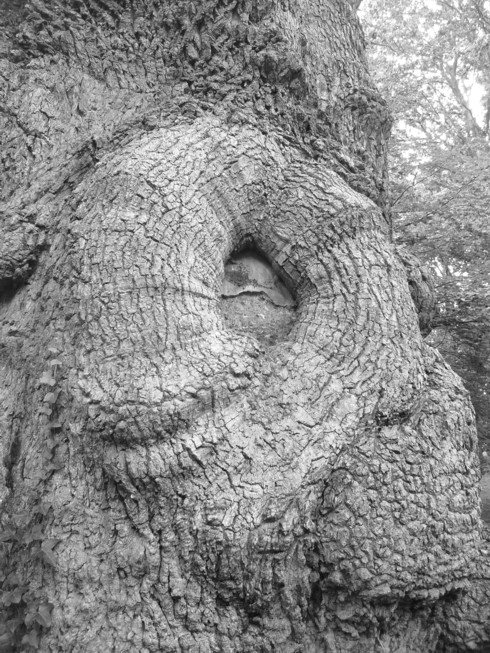
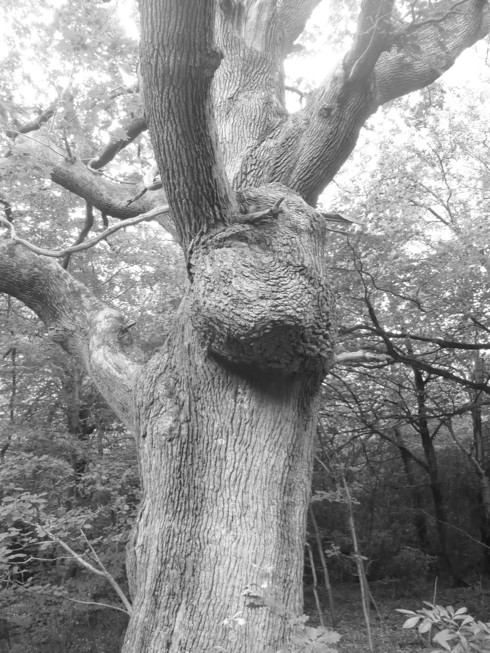
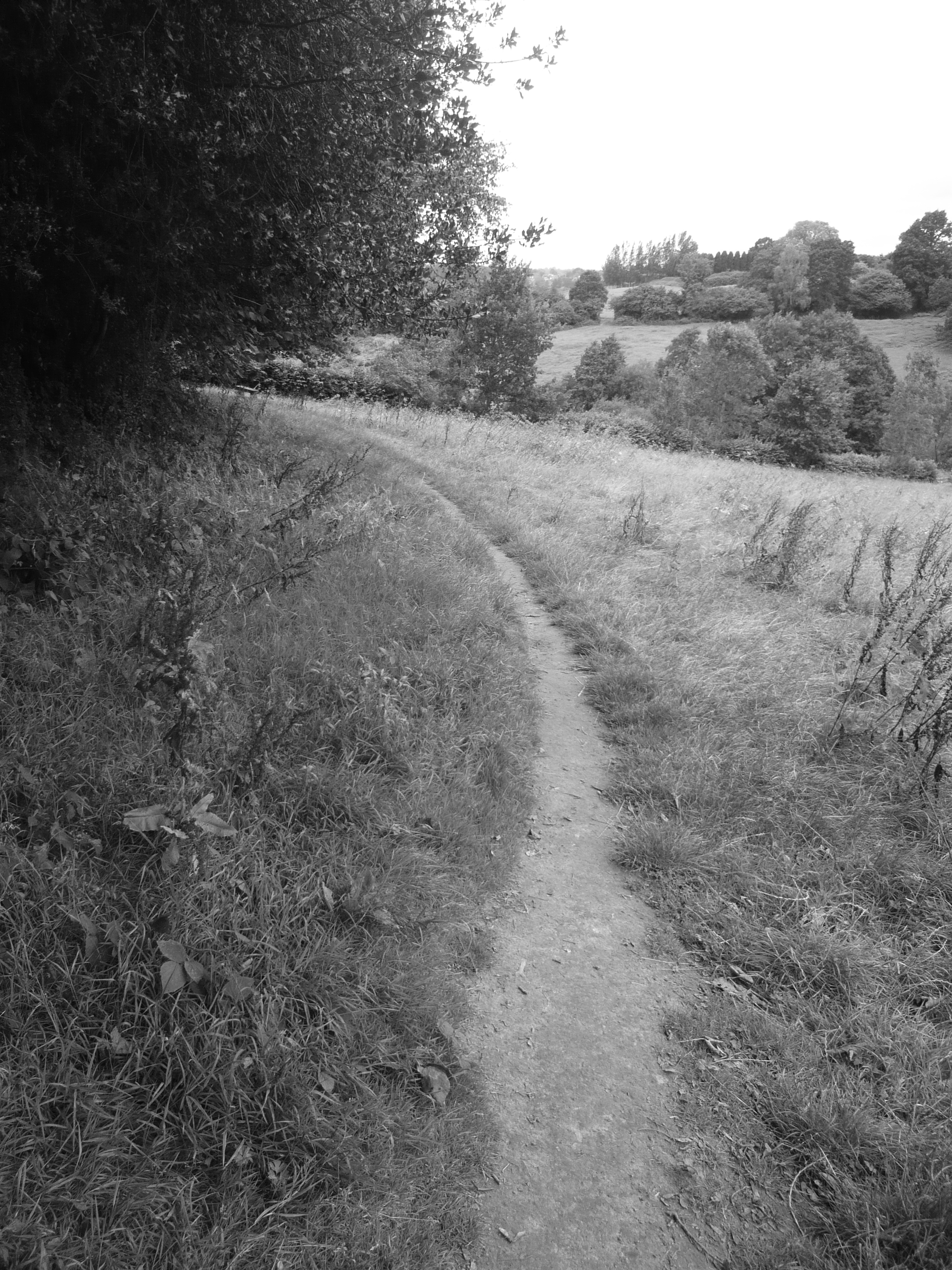
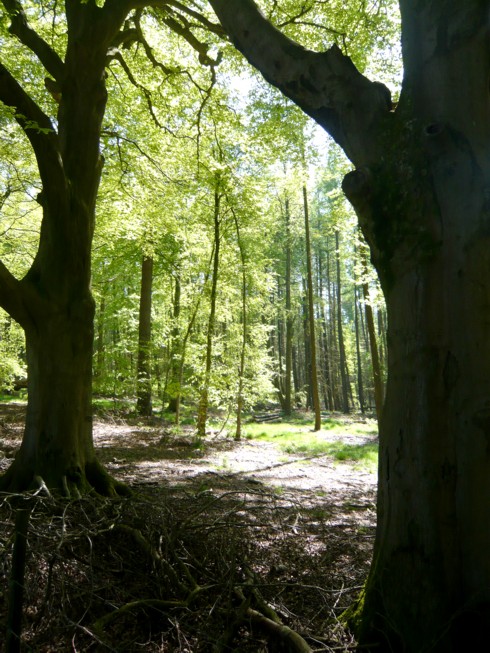
It is a grey, overcast, cool and drizzly August day, and I am feeling particularly flat and uninspired, and disinclined to human company. So in the absence of mountains, what else would I rather do than go for a walk in the woods?
Taking black and white photographs to reflect my mood, naturally…
Loving the Oak trees that seem to somehow look as awkward and as out of sorts as I feel…
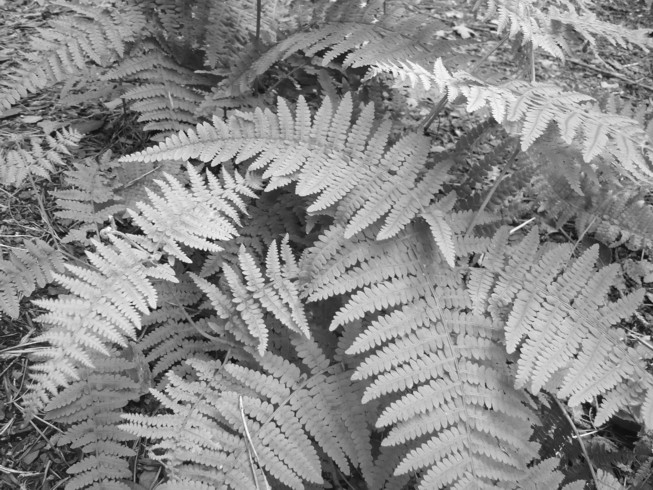
Relishing the lushness of the plants that still seem comparatively fresh…
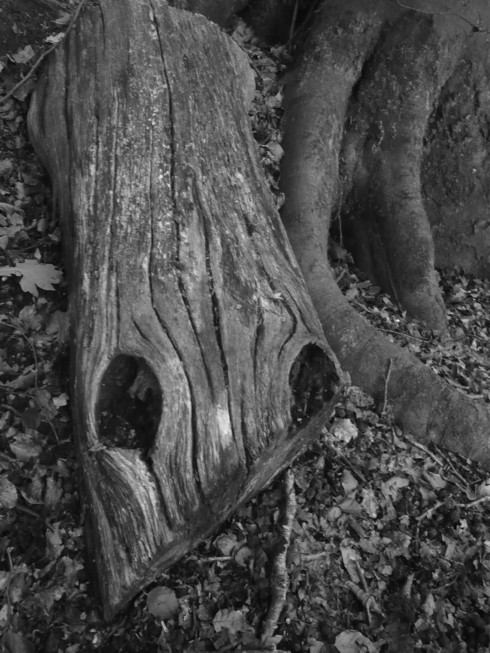
The fantastic shapes of old wood…
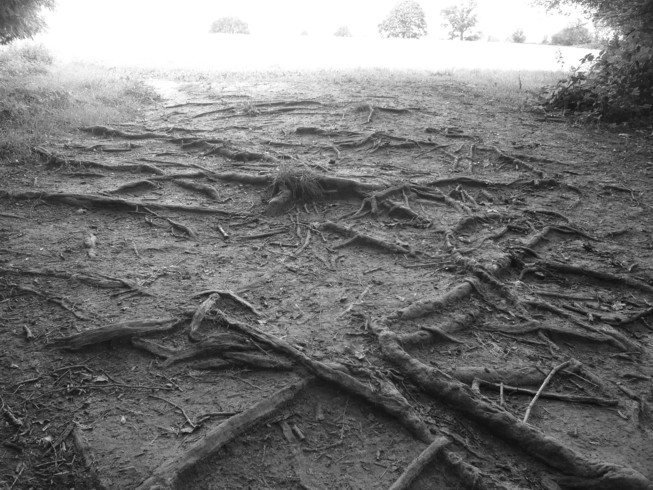
The roots that look as though they might attempt to encircle the earth like Yggdrasil, the mighty tree of Norse legend…
In 1988 – thirty years ago! – I walked the Annapurna Circuit. This has long been regarded as one of the top ten walks in the world, and is certainly the walk I have enjoyed most. I put up a post about the circuit a year and a half ago (here) should you wish to read it, but as a celebration of that anniversary, I thought I would put up some more photographs over several posts.
Today, they are all from our second day’s walk.
We camped the whole way, since there was virtually no accommodation on the route then. It was sometimes possible to sleep on the floor of a tea-house, but that usually meant an uncomfortable night in a very smoky atmosphere, and probably not a great deal warmer than a tent. It meant we were travelling with four guides, a couple of cooks, a couple of ‘kitchen boys’, and an average of fifteen to twenty porters (every so often one or two would leave, and others get hired from a village we were passing through).
We began our walk from Gorkha, walking through the Terai – the sub-tropical forest region that stretches across most of Southern Nepal and much of the Himalayan Foothills of Northern India. This was a land of small rural villages, terraced fields carved painstakingly out of the hillsides, and, naturally, wooded hillsides.
Much of the woodland had already gone, cut both as clearance for fields and for fuel and fodder. It was already leading to much soil erosion and the degradation of the remaining soils. With the passage of thirty years, this can only have got worse.
On day 2 we walked from our campsite beside the Dharandi Khola to the settlement of Chepe Ghat.
Transport in these areas was entirely by foot, usually in the form of porters who carried massive loads upon their backs. Occasionally by pony, or by bullock, but never by yak – they do not survive at these comparatively low altitudes. In 1988, walking the Annapurna Circuit was entirely on tracks and paths, since there were no roads of any description on our route. Today, there are motorable roads along part of it, but back then we did not see or hear a motorised vehicle for the duration of the trek.
Building materials in these areas were, and predominantly still are, wood, thatch, and mud. Stone was used only in larger settlements.
The boy pictured above, incidentally, will now be in his late thirties.
Wooded hillsides, with the terraced fields belonging to a nearby village encroaching.
Rice paddy – terraced fields flooded for the planting of rice, the staple crop of the Nepal Lowlands.











 Mick Canning