An Andalusian Adventure (1)

img20190318_12075705

It wasn’t my first trip to Spain, although it was a long time ago now. I walked into Malaga with a rucksack on my back and followed the signs for ‘Centro’ until I found myself in the crowded central district of older narrow streets with three- and four-story shops and cafes, guest houses and cheap hotels. The second hotel I tried offered me a perfectly adequate room on the third floor at a very good price.

The hotel was old. The wooden floors of the corridors were worn and polished by the passage of countless feet, and everywhere seemed gloomy. It gave the impression of having more nooks and corners where light never penetrated than it should. But the only light came from the occasional bulbs hanging from the ceilings, and other than by returning to the street, the visitor would only encounter daylight once they had reached their room and opened the curtains.

The bed was old, and sagged a good deal more than it should, and the furniture was so dark with age it was difficult to make out the grain. As a base for a few days, I decided it would suit me fine. As I unpacked and settled in, I suddenly heard a violin being played. It sounded quite close, and I opened my bedroom door to investigate. I had just decided the sound was coming from a neighbouring room when it stopped, and then a door opened. A man about ten years older than myself emerged and stopped when he saw me.

‘I’m sorry,’ he said. ‘Did I disturb you?’

He introduced himself as a German who I shall call Matthias, although I am no longer certain that was his name, and who immediately invited me to go for a beer.

It would have been rude of me to refuse.

Matthias was meandering around Europe, he told me, and supporting himself largely by busking. Later that week I was to see him playing in the street and be surprised at just how many passers-by threw coins into his hat. It seemed a particularly enjoyable way to travel. Over those beers and then over a few more later in the week, we talked travel and philosophy, music and religion. When I meet someone while travelling, I find it interesting how I often have less constraint than I would when I meet someone for the first time in more familiar surroundings. Frequently, I will reveal things about myself I would never dream of doing to someone I meet perhaps for the first time at a friend’s house, or at my writing group. I presume it is the unspoken knowledge we will never meet again.

Beside the entrance to the hotel was a little café where I made it my habit to take a breakfast consisting of strong coffee, sometimes with slices of thick white bread dipped in olive oil, sometimes with fried eggs. It was a good place to sit and watch Malaga waking up. Its clientele were a broad mixture of workers all grabbing a quick breakfast on their way to office, shop or building site. Mostly they sat in silence, reading the morning paper and smoking, other than to give their orders to the waiter. On the bar a tiny transistor radio chattered away in speech too indistinct for me to make out more than the occasional word. In a way, though, that only added to the atmosphere. Despite it being a familiar situation, there was enough of the unfamiliar and the foreign to make it feel a little exotic.

I wanted adventure, I wanted to explore. I’ve wanted to do that for as long as I can remember. I travelled in those days with a few changes of clothes in a rucksack and a minimum of half a dozen paperbacks, which invariably included something by Hermann Hesse and at least one poetry book.

That, at least, hasn’t changed much.

I liked to travel light (other than the books, of course), so I had no camera with me and probably very few of the essentials most people would think to take on a Spanish holiday. No swimwear, for example. I don’t do beaches, at least not in that way.

But I had come to Malaga because I had a peripatetic nature, and my itchy feet were troubling me. After a few days I decided to take a walk out to the little town of Colmenar, to the north of the city. I would take a room there for one night and return to Malaga the following day. Any other destination would have done just as well; the purpose was the journey, and the journey was the purpose. I chose this route simply because while wandering around the outskirts of Malaga I saw a narrow road winding up into the hills with almost no traffic on it, signposted to Colmenar. The morning after I had made the decision, I packed my rucksack and checked out of my hotel immediately after breakfast.

Part 2 to follow

A Yearning For Wilderness

Inhospitable deserts. High mountain passes. Hills or moorland in thick, blanketing fog or sudden treacherous snowfall.

IMG_0035

A situation in which I test my skills and resilience to the limit, aware of the consequences of a miscalculation or of taking my eye off the ball for too long. Certainly not a case of me fighting against the desert, or the mountain, because it’s not a battle. I have no need to ‘conquer’ anything, merely to respectfully request safe passage.

deserty-desert

At the moment I have to accept second best, walking in woodlands near my home. At least there are fewer people around while it is raining, although those who are include a posse of shrieking children – honestly, where are the wolves and bears when you need them? Two hundred years ago in Britain children would either have avoided all but the lightest of woodland, or passed through as silently as possible. Although the bears and wolves were long gone by then, the children would have been raised on a diet of nursery stories that taught them the dangers of venturing into wild places, the remnants of very necessary advice from those earlier times when careless children frequently got eaten.

Happy days!

P1060456

Don’t misunderstand me, I love these woodlands, and am very grateful I can get to them easily. Within them, for example, is this wonderful grove of oak trees. The oaks are not particularly old, probably around two hundred years I would imagine, but are stunningly beautiful. Some have branches thick with moss, all have wonderfully sculpted bark and all are home to huge numbers of creatures.

P1060458

P1060459

Already one or two have a limb dropping to the ground for extra stability. And the grove as an ecosystem within the wider woodland is perfect – each tree is around twenty five meters from its neighbours, which appears perfect when I look at the size of the canopy of each tree: its branches just about meet the branches of its neighbours, but there is no sense of their growth being restricted. I wonder whether this is chance, the result of long centuries of naturally evolving woodland – when one tree dies and eventually falls, that newly-opened space exploited by another seedling, or perhaps intelligent planting by a long-forgotten landowner?

P1060466

Where the woods are managed, especially the cutting in those areas where the holly is spreading in dense swathes crowding out all other growth, there are stacks of cut logs and branches exploited by children (shrieking or otherwise) to make dens. None of them would keep out the weather, but that’s not really their point. What I particularly like about them, other than it’s good to find children who want to play in this environment, rather than just sit in front of a screen, is most of these dens end up resembling the skeleton of some fantastic monster. And although that hardly turns these woods into a wilderness, it does give them just the faintest frisson of excitement, especially in the gloom.

And reminds me I want to be in the wilderness…

img20190318_12020089

As is basic human nature, of course, the longer the restrictions (either imposed or of my own choosing) go on, the more I yearn for that wilderness.

Patience!

A Busy Time in West Bengal

For the last couple of months, during Lockdown and its easing, I have spent an awful lot of time up in the Himalayan foothills of West Bengal.

bookshop (2)

Okay, that’s not strictly true, but for most of that time I have spent my working day revising, re-writing, and editing A Good Place, my novel set in a fictitious hill station there. I have some new characters to weave in, some old ones to remove, and the story line to alter in several major ways, including a different ending.

I finished the first draft some nine months ago, but there were parts I didn’t feel entirely satisfied with then, and my beta reader unerringly picked those out for major revision. I then spent a while thinking about the story line and took out nearly all the final third of the book and chucked it.

That left me with a lot to rewrite.

Much of the problem stemmed from the fact that after I published Making Friends With the Crocodile, which is set in an Indian village with peopled with all Indian characters, I wanted to write a novel dealing with the British who remained behind in India after partition. A kind of balance to my writing. That was all well and good, but I began writing the novel before I was completely satisfied with the story line, and the more I wrote of it the less I liked it. So I kept changing the story line as I wrote rather than doing what I really should have done, which was delete the whole thing and go away and write something completely different, waiting until I knew what I really wanted to write. But I’m now content that I have the story I want to tell, rather than Just A Story.

Consequently, I have been virtually living in West Bengal during these days, inevitably leading to yearnings to be there in person. Which does nothing to ease the feelings of frustration at enduring the travel restrictions of Lockdown.

050a

However, one of the advantages of having several projects on the go at once, which I always have, is that I can switch to another for a while when I need to. Last week, then, I spent one day giving a final edit to a short story which gave me the opportunity to spend the day (in my head!) in rural Sussex, which was very welcome. Especially as that is somewhere we can get to now, with a minimum of hassle.

And A Good Place? I’m glad you asked. I think I’m close to finishing the second draft, which will be a blessed relief.

Just so long as my beta reader doesn’t throw her hands up in horror when she reads it…

Ghost Roads

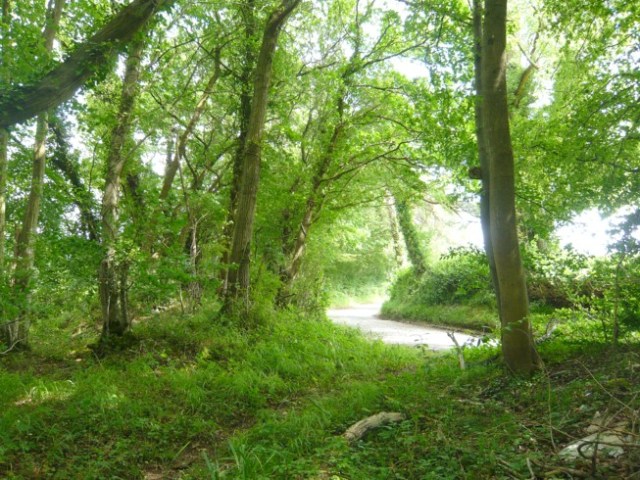
I love old roads that have fallen into disuse, or been relegated to the role of footpath.

There is one a few miles away on the edge of the next town. It used to be part of the road running from London to Hastings, but when the ‘A’ road that now serves that purpose was built, it not only rendered it redundant for the purposes of long distance travel, but the new cutting actually sliced through it, so it now ends at the top of a hill. From that point, there are only a couple of footpaths leading away in different directions.

Almost fifty years ago (really? Ye Gods!) I cycled along there on my way to the coast from the London suburb in which I lived as a teenager. Many of the roads I used that day are now very much wider, and all are much busier, save the one on the edge of that town. When I walk there from my house, it feels that for that part of the walk I am on a ghost road. I can still think myself onto my cycle, into that year, and the absence of traffic feels weird. If I think hard, I can almost feel spectral traffic going past. What adds to that effect, is that I often walk that way in the evening and the light – or lack of it – only encourages those feelings.

I think of it as a Ghost Road, but that definition really refers to a road that is haunted. Such a road is the B3212 that crosses Dartmoor, and on the stretch between Postbridge and Two Bridges it passes the cluster of buildings known as Powdermills. Powdermills is so-called because most of it was built for the manufacture of gunpowder. The buildings are spaced far apart in case of accidents (translation: the gunpowder blowing them to Kingdom Come), and for the same reason the roof of each building was of tarred paper. This allowed the blast of an accident to disperse upwards, hopefully giving the occupants of the building a slight chance of survival.

Anyway, there were many such accidents and many deaths. The B3212 is supposedly haunted at the bend nearest Powder Mills, just where it passes over the Cherry Brook, by a pair of hairy hands that try to wrench the steering wheel of unwary drivers that pass that way, causing them to crash. I admit to occasionally slowing down at that point and taking my hands off the wheel to see if anything happened.

It didn’t.

But I still like to think a Ghost Road is one that has fallen into partial or complete disuse. Perhaps old Roman roads that survive as footpaths are ghost roads; there are certainly stories around the country of spectral Roman legions marching along them at the dead of night.

046a

I think there is something magical about any road falling into disuse and gradually becoming overgrown. A road constructed for wheeled traffic used only by foot traffic. It has a special feel when you walk it, different to the feel of other footpaths.

A country lane at night can feel like a Ghost Road, especially in the light of a full moon.

Another type of Ghost Road is the ancient trackway. These paths criss-cross the British countryside and are often of great antiquity. Formed originally by the passage of feet, both human and animal, but used later by carts and other four-wheeled vehicles. These also seem to have that magical feel, although in this case I feel I’m sharing the passage with the ghosts of countless other travellers over thousands of years.

And in the midst of the lockdown during the Covid-19 pandemic we seemed to acquire a few more of these Ghost Roads – an unexpected benefit of the pandemic, in my opinion. It seems a real shame they have become busy again.

The Night Bus

After a day of faffing and kerfuffle (and a little bad language, but not too much) yesterday, I have posted my new book up on Amazon.

312EjL1fieL._SY346_

The Kindle e-book will be released on 30th November and is available to pre-order now. It will take a few days yet for the paperback edition to be ready, as I need to check through a printed proof first. I’ll post when that is done.

The book is in two parts. A collection of seven short – and not so short – stories, which make up the bulk of the book, followed by a selection of recent poems.

I have always enjoyed travel and, one way or another, nearly every piece in here is to do with travel. The only exceptions are a couple of the poems that seemed to fit in among the others for aesthetic reasons.

Some of the stories are quite dark, but the majority of the poems have a lighter touch. In these, especially, I hope that my love of the natural world comes through.

Two of the longer stories are set in India; in one, a young man goes in search of a mysterious destiny, while in the other a travelling Englishman becomes embroiled in a chilling disappearance. One story speaks of the support and comradeship of a close-knit island community while another tells of jealous intelligences far older than mankind.

Of the poems, there is one long piece, which gives the title to this collection and tells of a long journey across India and into the mountains and, among others, one short series of poems about the ancient paths and tracks of Britain.

An early piece of writing advice I was given, and for which I am eternally grateful, was ‘Write the stories and poems you want to read’. This I have done, and I hope you will want to read them too.

The Joy of Unknowing (2)

As soon as I had written my last blog post, I thought of this piece I wrote quite a long time ago which offers a similar take on travel and navigation. I am tempted to tidy it up a bit and perhaps update it to mention GPS, but instead I’ll leave it as it is.

Untitled-Grayscale-01

When I was a teenager, I began to use maps, although in rather an ad hoc, hit and miss manner. They were there for me when I was really stuck, or just wanted to know which general direction something lay. It would be a very long time before I began to use them in a careful, detailed way, able to predict the exact lie of the land, navigate in the fog or the dark, find my way through complicated landscapes with the map and compass. And, do you know, since I’ve learned to do that, I feel as though I’ve lost something rather magical, although I don’t suppose that I can blame it all on that. The maps that I was using as a teenager would tend to be the Bartholomew’s touring maps, small scale with little detail. I would feel, as I headed along a Cornish footpath, that I only knew roughly where I was going. It felt like an adventure, an exploration.

Untitled-Grayscale-02

Now, I need to be more and more remote to get that feeling, and even then it does not always work. Having just spent some time in Ladakh, in the Himalaya in the far north of India, I was surprised at just how easy all of my walking was. Setting off with map and compass, I always knew exactly where I was, only confused at times by the multiplicity of tracks criss-crossing the landscape. Even then, reference to mountains and villages with map and compass would invariably allow me to set my position. It doesn’t mean that I wanted to get lost, just that there was a small part of me that said ‘even this is all tame!’ Equally, I can be put off, by using the map, by the knowledge that over the interesting looking ridge that I was heading for, lies a motorway or building estate, and so I spend ages trying to plot a route that I try to get perfect, rather than simply heading off in the direction that I want to go and exploring as I go, correcting my course as I travel.

Nothing can tempt me more than a track leading tantalisingly into the distance, perhaps meandering through Mediterranean scrub towards a notch in the skyline, perhaps leading through a glowing archway of trees. Even now, when using map and compass to navigate, I often have to resist the temptation to ignore the map and head off to follow an interesting looking track. I think that this must be a part of my ‘I wonder what’s over the other side of the hill?’ nature. It is another reason why I’ve never been able to lie on a beach – apart from the fact that it seems a particularly pointless pastime in any case. Any time that I’ve tried it, it never seems to be more than a couple of minutes before I begin to think ‘What’s round the cliff?’ or ‘If I head back up the river, I think I might find a way through those hills.’ And then I just have to go to find out.

Restless Wind

107b

Some people need the familiar,

Finding in it safety and comfort.

But some see it as a constraint,

Suffocating them like the walls of a prison.


And the same wind that blows

Through both their houses

Causes one man to close his door,

While the other throws his wide open.

The Weald of Kent and Sussex

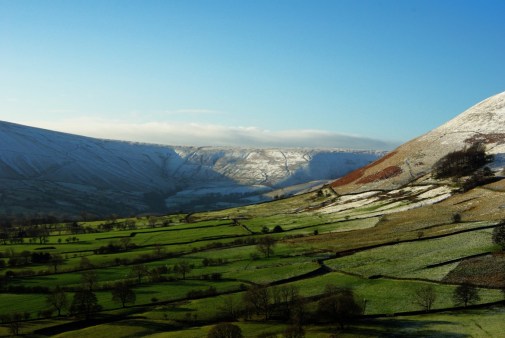
South East England is my area. It is where I was raised and, other than a few years spent abroad, it is where I have lived my whole life. In particular, the Weald and the Downs. Not so much the coastline, which has never particularly attracted me, but the hills and valleys, the woodlands and rabbits, the hidden crags and open downland, the land of streams and foxes and badgers, birds and villages and butterflies.

039a

On the Sussex Downs

There is a curious fact about the wooded areas of South east England, which is that there is more woodland, covering a greater area now, than was the case four hundred years ago.

032a

Back then, South East England was the industrial heartland of Britain. This was before the discovery of the coal seams of the North and the Midlands, and the various factors which would eventually lead to the greatest impact of the Industrial revolution being in those areas.  Instead, the modest iron deposits of the Weald were mined and worked into firedogs and nails, cannon and cooking pans, as the wealth of words such as hammer and forge in place names still bear witness.


037b

Huge numbers of trees were cut down to feed the fires of these forges, and huge numbers also for charcoal burning, for building, and near the coast the great Kent and Sussex oaks were in huge demand to build the large number of ships the navy demanded. But then from the mid eighteenth century onwards, industry began to shift northwards.

Despite the pressures on the land for building and for farming in this crowded corner of our crowded island, there is actually more woodland now than there was during the fifteenth and sixteenth centuries. And that is not something that can be said of many parts of Britain or, I suspect, many parts of the world at all.

010a

The Weald is an area whose underlying rocks are sandstone and clay, which means that the unimproved soils are inevitably either light and sandy or thick and claggy. In some parts there are old sunken tracks known as ‘Summer Roads’, so-called because they became impassable in the winter months, when they might have had a foot or more of thick, wet, muddy, clay on their surface. When these were in use, journeys between villages that might take an hour or two in summer, could became almost impossibly long during the winter.

037x

At the moment, all everything in the news seems depressing and unpleasant and so, this post is an indulgence. Just a smattering of information, and a few photos of places I love, largely to improve my mood.

Spain 2

It was after posting my series of poems ‘The Old Way‘, last week, and also mentioning that I’d almost completed a very long poem on a very long bus journey, that made me think of travel again. Not that that is unusual, of course. I’d nip off on another journey at the drop of a hat if I had the chance, but for the time being we can’t afford to do that.

But, I am planning to publish those poems and a whole lot more, plus a few short stories, in a book some time later this year, as well as the Indian novel I’m currently editing – A Good Place. Two book in one year! We’ll see how that pans out…

But…Spain. Mallorca, this time, to be precise. Mallorca is the largest of the Balearic islands and lies in the Mediterranean Sea about a hundred miles east of the Spanish city of Valencia.

If you were to do a Google search for Mallorca (Go on, now I’ve mentioned it you can’t resist, can you?), you would be forgiven, looking at the results, for thinking there was nothing on the island other than the city of Palma, beaches, swimming pools, hotels and night clubs.

And you would be very wrong.

Certainly, there’s plenty of that if you want it, but there is also the rest of the island, which measures approximately fifty miles by forty miles, and contains some surprisingly big hills and mountains, small villages and towns, orchards, fields and woodlands, hiking trails and Roman and Moorish remains.

img20190320_11402114

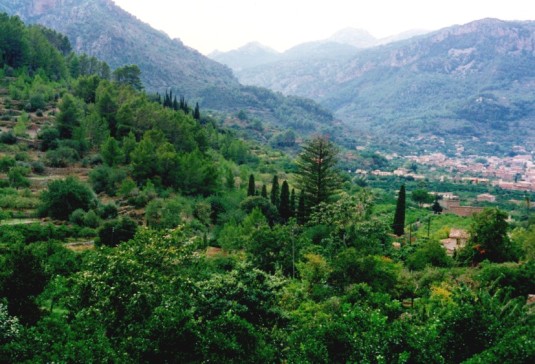
I’ve only had one visit there, and after flying into Palma I took the train up into the Tramuntana, the range of mountains on the north west of the island, to the little town of Soller. From there I walked up into the mountains themselves and spent the next couple of days just wandering around and exploring, sleeping overnight in a stone refuge.

img20190320_11394102

Luxury holiday accommodation at about 2000ft.

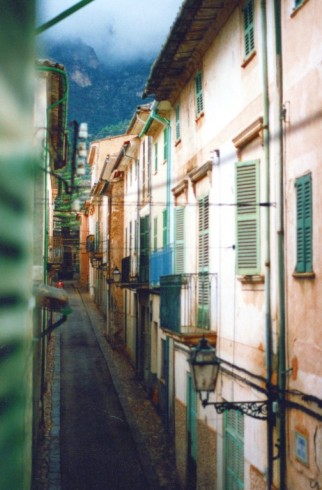
But there was a lot of rain arriving, and I retreated back to Soller for the remainder of my week, finding a room in a cheap backstreet hotel and spending the days exploring the lower hills and villages, and some of the coast nearby.

img20190320_11335509.jpg

Lots of rain arriving.

img20190320_11421944

View from the window of my other luxury holiday accommodation in Soller. Lots of rain still arriving.

img20190320_11302033

But it wasn’t all rain. There were lots of little villages to explore…

img20190320_11410230

Farms, and hills to wander around in…

img20190320_11311220

img20190320_11332135

img20190320_11414759

Village church

…and lots of bread and cheese and fruit and wine to enjoy. Not that you need to see a picture of that.


The Old Way 6

Poem #6 of 6. The end of the journey.

155a

The Old Way 6


When the square sails of the invading Romans

First appeared over the horizon,

This path was already ancient.

When the first sword was forged,

When the giant stones were placed

In mysterious alignments,

This path was already old.

Only when the great ice giants

Relaxed their grip on the land

Were these paths young.

These are paths to tread reverently,

Mindful of those countless others

Who also once passed this way.

Friend, take your place on this journey,

You are in fine company.