R. I. P. Winter

It’s beginning to feel both as though autumn has been with us forever, and that it is especially reluctant to leave us, this year.

This year has been a mast year; the trees and bushes have been laden with prodigious quantities of nuts and berries. The hawthorns, especially, seem to be weighed down with berries, and we have gathered large quantities of nuts from the hazel in our garden. There are so many acorns beneath the oaks nearby that there is a thick, continuous, crunchy, carpet of them underfoot. Traditionally, this has been said to indicate a harsh winter ahead, although how the trees and bushes are meant to work this out when we have no idea what the weather will be then, heaven only knows.

What it really indicates, of course, is that the climatic conditions have been such throughout the year that these trees and bushes have successfully produced their large crops. Nothing to do with what will come along later.

On the other hand, the leaves have held onto their greens for longer than usual and only turned late, and still seem most reluctant to fall. It has taken the determined efforts of a few strong winds just to remove about half of them. Certainly, around my part of Britain, anyway.

It is not cold. There are no signs of a proper winter chill approaching, with the long-range weather forecast contenting itself with predictions of the occasional cold spell in the next month, which takes us through to mid-December. In the garden the grass and many of our other plants are still engaged in that crazy autumn growth spurt.

Of course, it was never unusual for November to be wet and mild, and we may yet have a biting cold winter, although I wouldn’t bet on it. It is a long, long time since we have had a winter like that in these parts. In my lifetime, only the winters of 1963 and 1978/79 really stand out as being extremely harsh, although a few others have had shorter periods of cold and snow. The expectation for winter around here now is that it will just be chilly and wet. I think only once in the last six or seven years have we had more than just the odd flurry of snow; that was from the so-called ‘Beast from the East’ a couple of years ago, and even that only lasted a few days.

We seem to have lost winter somewhere along the way, which sounds very careless of us.

In fact, that is quite a good way of describing it.

You don’t need me to tell you we have been careless in the way we have interacted with nature, the result being our world is heating up dangerously. And in our part of the world, this has led to hotter, drier, summers and milder, wetter, winters. There has been a notable increase in destructive flooding events. Downpours are frequently very heavy and long-lasting. Rather than being spread out through the month, we may get an entire month’s worth of rain in less than a day. Summers, conversely, have become very dry.

This is absolutely nothing to the extreme climate conditions suffered by millions of others in other parts of the world, but it helps to bring it home to us that the Climate Emergency is real, and it is happening. With everything else happening in the world at the moment, this seems to have been conveniently ignored by the mainstream media for the last six months.

R. I. P. Winter.

A Yearning For Wilderness

Inhospitable deserts. High mountain passes. Hills or moorland in thick, blanketing fog or sudden treacherous snowfall.

IMG_0035

A situation in which I test my skills and resilience to the limit, aware of the consequences of a miscalculation or of taking my eye off the ball for too long. Certainly not a case of me fighting against the desert, or the mountain, because it’s not a battle. I have no need to ‘conquer’ anything, merely to respectfully request safe passage.

deserty-desert

At the moment I have to accept second best, walking in woodlands near my home. At least there are fewer people around while it is raining, although those who are include a posse of shrieking children – honestly, where are the wolves and bears when you need them? Two hundred years ago in Britain children would either have avoided all but the lightest of woodland, or passed through as silently as possible. Although the bears and wolves were long gone by then, the children would have been raised on a diet of nursery stories that taught them the dangers of venturing into wild places, the remnants of very necessary advice from those earlier times when careless children frequently got eaten.

Happy days!

P1060456

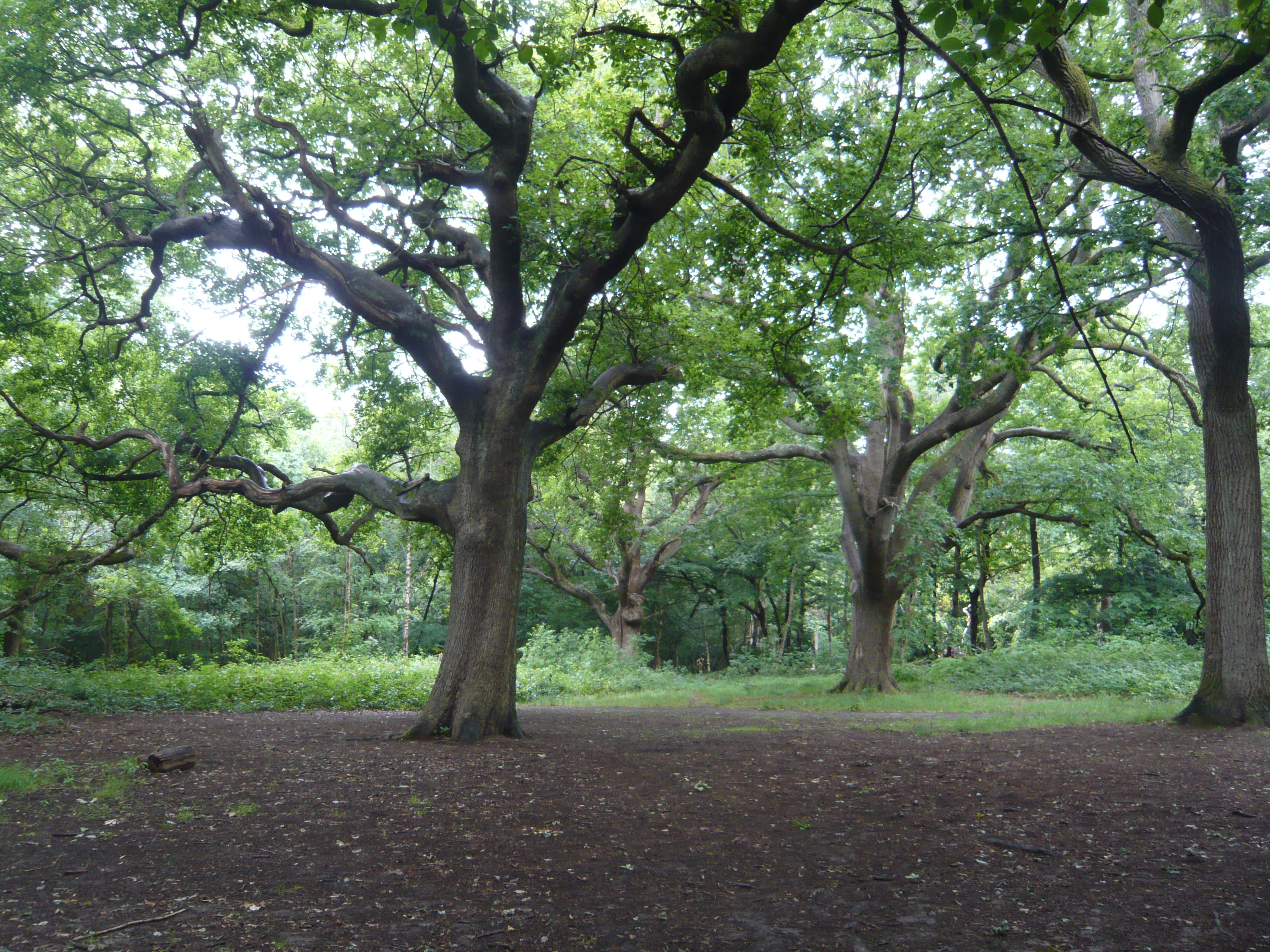
Don’t misunderstand me, I love these woodlands, and am very grateful I can get to them easily. Within them, for example, is this wonderful grove of oak trees. The oaks are not particularly old, probably around two hundred years I would imagine, but are stunningly beautiful. Some have branches thick with moss, all have wonderfully sculpted bark and all are home to huge numbers of creatures.

P1060458

P1060459

Already one or two have a limb dropping to the ground for extra stability. And the grove as an ecosystem within the wider woodland is perfect – each tree is around twenty five meters from its neighbours, which appears perfect when I look at the size of the canopy of each tree: its branches just about meet the branches of its neighbours, but there is no sense of their growth being restricted. I wonder whether this is chance, the result of long centuries of naturally evolving woodland – when one tree dies and eventually falls, that newly-opened space exploited by another seedling, or perhaps intelligent planting by a long-forgotten landowner?

P1060466

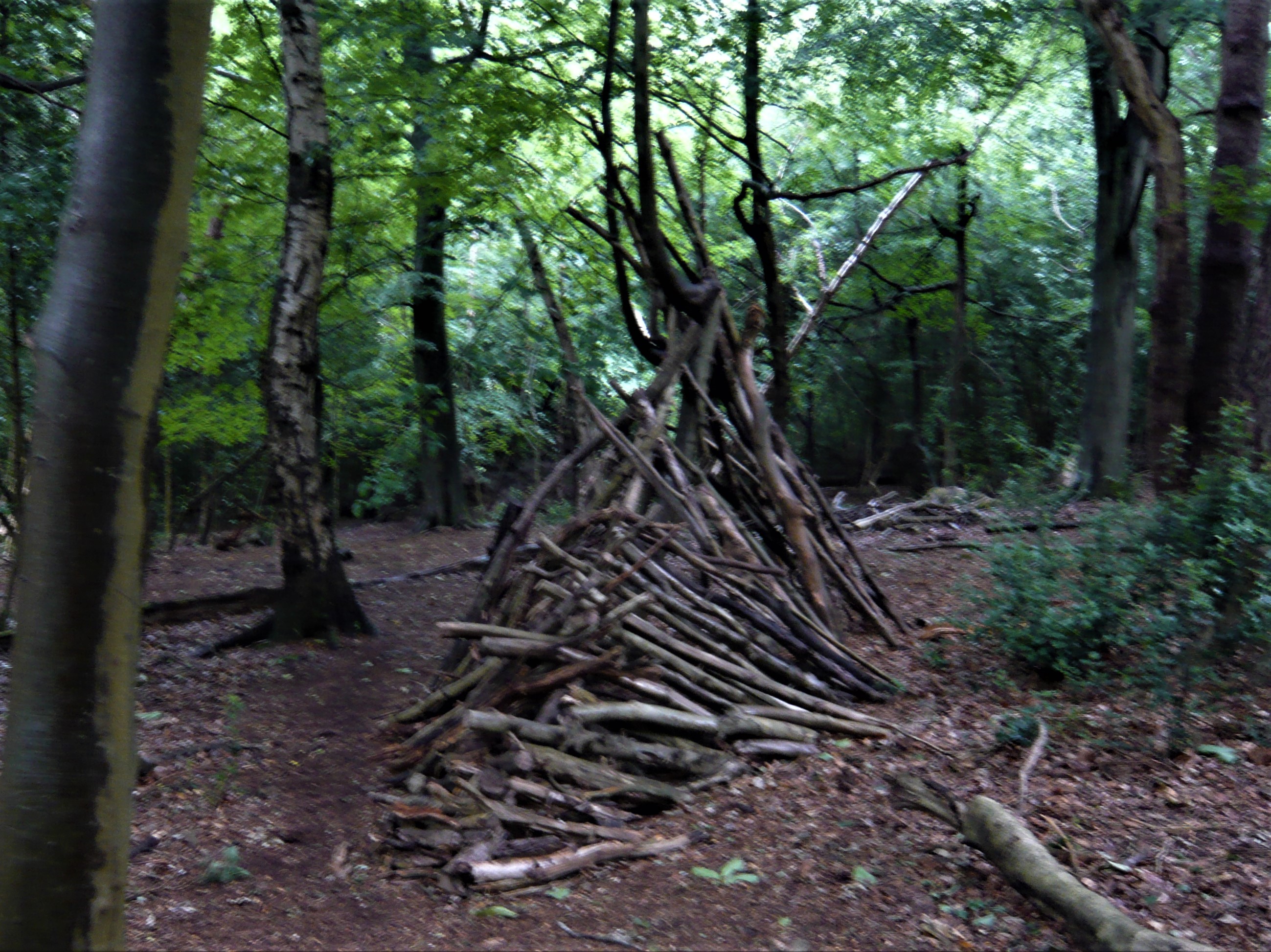
Where the woods are managed, especially the cutting in those areas where the holly is spreading in dense swathes crowding out all other growth, there are stacks of cut logs and branches exploited by children (shrieking or otherwise) to make dens. None of them would keep out the weather, but that’s not really their point. What I particularly like about them, other than it’s good to find children who want to play in this environment, rather than just sit in front of a screen, is most of these dens end up resembling the skeleton of some fantastic monster. And although that hardly turns these woods into a wilderness, it does give them just the faintest frisson of excitement, especially in the gloom.

And reminds me I want to be in the wilderness…

img20190318_12020089

As is basic human nature, of course, the longer the restrictions (either imposed or of my own choosing) go on, the more I yearn for that wilderness.

Patience!

Myth, Science and Religion

Religion begins as science, as an attempt to make sense of the world. The birth of religion marked the dawn of humans as rational, analytical beings. This was humans moving beyond the worries of simply surviving from day to day, and reaching that point in evolution where they looked with wonder upon the world around them and asked: How did this come into existence? What is it that controls the weather and other variables? By observing the natural world around them, the cycles of day and night, the seasons, the migrations of the animals, they would have concluded that these patterns suggested a grand design and order.

003a

An assumption would probably be made that all this was controlled by benevolent beings, but beings who might need propitiating occasionally to keep them sweet; the odd ritual here, perhaps a sacrifice of some sort there.

And if that was so, perhaps they could be propitiated in a somewhat greater way, to grant other boons?

It would not be long before someone claimed a channel to the gods to relay their desires and instructions, and so the priestly class would be born. Self-interest? Quite likely. After all, we see that in most religions today, so why not?

Religions then, over the years, spawned new religions, the spark being reinterpretation rather than inspiration.

We think we see echoes of old religions in myths. Myths are the fragments of history we know, combined with assumptions about how our ancestors acted and thought, frequently combined with scarce written evidence, which may or may not be biased or wholly inaccurate. When our written sources include stories of monsters and miracles, we should probably be advised to treat them cautiously.

Myth-makers frequently come with an agenda, although depending upon your point of view that is not necessarily a bad thing. If you are looking for a scientific analysis of the lives of our ancestors, it’s probably best to give myth a wide berth. Or at least to be very, very, careful what you take from it. But in a way, it does provide an alternative world view that many find preferable to both the stark realities of day to day life, as well as the cold dead hand of religion. After all, if you’re using your imagination, it’s easy to plan your myth-world much the way you’d like it.

And perhaps myth does offer us a way of getting inside the heads of those people, at least superficially.

One assumption we can make is that there would be similarities in the thought processes of those people, with the thought processes of us today. It is perfectly reasonable to assume they would react in similar ways to us, to pain and fear, to pleasure, warmth and cold. Our reaction to the unknown tends to be to populate it with characters or situations based on our experiences, and they probably did the same.

Stonehenge is aligned with the solar calendar. This we know. It’s science. And we know a considerable amount about the geography of the area around Stonehenge at the time it was built, through archaeology and science.

What we don’t know is how it was used. Just because it was aligned with the rising sun at summer solstice and the setting sun at winter solstice, does not mean we know what took place at those times. We assume our ancestors worshipped or venerated the sun there, especially at the time of the solstices, but we do not know that. Were there sacrifices? Did they hold special ceremonies connected with fertility or birth or death? Was it perhaps just like a club where they turned up now and again and got drunk and held orgies? It could be, since there is no hard evidence for anything.

Believers in ley lines also claim it is at the centre of an intricate system of lines connecting natural (‘holy’) locations with important (‘holy’) sites such as churches, wells and crossroads. Pseudoscience? Coincidence?

Our assumptions, though, lead us to think that because of the immense effort required to build the structure, it must have been an incredibly important site, and we are surely justified in concluding important ceremonies were enacted there.

Whatever they were.

The Joy of Unknowing (1)

We have just returned from a few days away in Shropshire, which is one reason you haven’t heard from me recently.

We were incredibly lucky with the weather, and spent the time walking and reading and mooching around towns and villages. And finding time for the occasional meal and cold beer, of course.

Yes, we did some lovely walks. And I find it a natural thing to be constantly identifying and photographing whatever I see when out for a walk. I have always been interested in all aspects of the environment, be it the plants and animals, the geography and geology, the weather, or the historical impact of people on the environment in forms such as old trackways, deserted buildings, or ancient boundaries.

006a

And we have spent several fantastic days surrounded by an environment rich in all these things, as we have walked through woods, fields, and open hillsides, seen ancient settlements, butterflies, birds, and many wildflowers, and all this in an area of some of the most complex geology in the UK.

But sometimes I feel myself tiring of the constant need to identify and record everything; it is really a way of trying to own them.

And when you post on social media too, it can feel at times a little like a competition to put up the best pictures of this or that wildflower or bird or mountain, which naturally need to be identified and named. Especially on Twatter, whose format seems to encourage this.

017a

So, on our first morning away, as we walk up a track heading into the hills above Church Stretton, under early morning blue skies with the air crystal clear and beautifully cool, I decide that for now I am just going to exist in the moment.

Because by doing this, I am relieved of the constant necessity of deciding whether this bird is a rook or a crow, or whether that flower is greater stitchwort or lesser stitchwort.

018a

Because it doesn’t really matter.

And for now, instead of having to always know whether it is this or that bird singing, I can allow myself to simply think there is singing. There is birdsong.

Or, even better, there is a sound I find melodic, and it pleases me.

By doing this, I can relax and centre myself, which is something I feel has been badly lacking in my life recently. I have struggled with social media in any case, feeling a huge pressure to post new material and to read the many I follow, even when I don’t feel up to it.

It feels like a return to a much simpler time in my life. I can enjoy the views of the hills, the sounds of the streams and birds, and just concentrate on being.

This must have been part of the pleasure I felt as a child on every occasion when I could roam outdoors. Certainly, I was curious about what I saw, but since I knew so little about them, there was always an openness to the experience and the excitement of discovery. I would see butterflies I had not seen before, and I would just get the thrill of seeing them without having to know anything more about them. I would see wildflowers I didn’t recognise and just enjoy the shapes and colours.

Naturally, you cannot really unknow things in that way, just as you cannot really return to that point in your childhood, but it is possible, even if for only a short while, to let go of the need to identify and quantify (and therefore own) everything, and simply exist in the here and now.

Wild And Windy Weather

017

Roaring in rustling and

Tossing trees,

Wailing and moaning

In whipping wires.


A strident, insistent,

Car alarm.


An upset bin, with

Unwanted plastics…


Scraping,

Scratching,

Tumbling,

Chasing along the road.


Aggrieved air


With attitude.


Sketch n’ Haiku Day

We’ve had all sorts in the last week.

We’ve had cold, bright, sunny days. We’ve had cold snowy sleety days. And today we have lashing rain and wind. It’s milder than it was, but as miserable as sin and the wind still cuts through you!

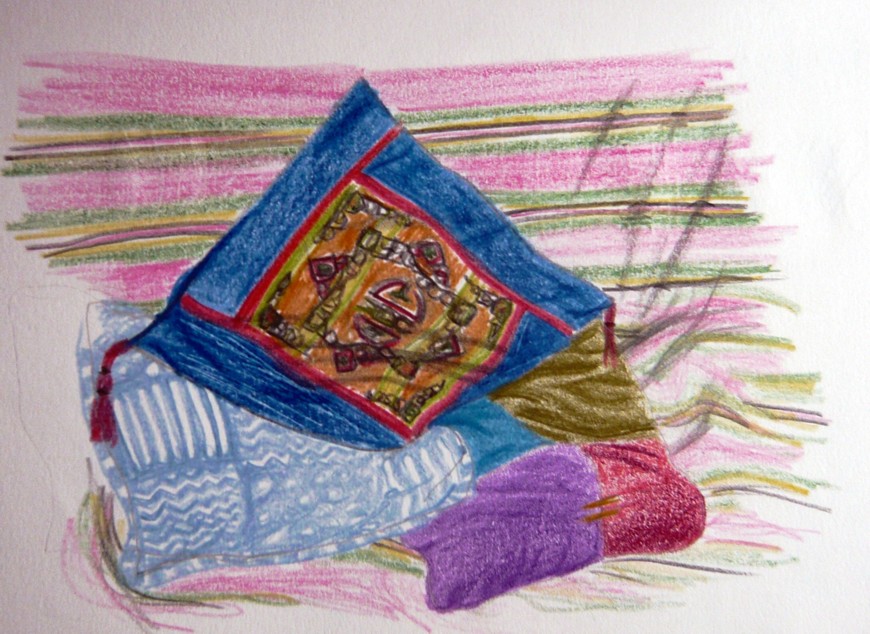
So here is a sketch for the day – cushions on the sofa to remind me of Nepal, since the top one came from there:

002

And here is a haiku for the day, to remind me of summer:

Amidst the traffic,

In the still airs above me,

A lark dripping down.

And a thought for the day? Another haiku, to remind me to slow down sometimes:

Obsession with time

Is climbing trees in autumn

To get down the leaves.

And today I begin the first edit for A Good Place – initially reading it through and thinking about the voice, the narration, to see if it works for me. Next, another read to look for flaws in the plot, redundancies, things to add and take out. Finally, try to knock the grammar into shape. If I’m happy with that, then it’s on to the beta readers.

Hope you all have a good day.

A Walk And Other Things

It was bitterly cold but sunny first thing yesterday morning, but after a couple of hours the air had warmed up enough to tempt me out. I was due a walk anyway, having not even left the house the previous day.

Every year there is a point somewhere around the middle of February when I feel the warmth of the sun for the first time that year, but yesterday morning there was already a hint of that.

It wasn’t cold enough to freeze the ground, except in a few particularly exposed places, and so it was very muddy underfoot. Therefore it was a delight to occasionally walk through drifts of last years leaves.

And there was so much birdsong. So much so that it became a background noise that was easy to filter out after a while, except when a particularly loud or unusual song caught my attention. Not that I do that deliberately, since birdsong is one of the delights of the countryside. At some point or another when I’m out, I can usually hear the rooks, but maybe because of the sun and the noise from the other birds they seemed to be silent. I’ve always associated them with cloudy skies for some reason, perhaps because I’m so used to hearing them on moorland and in the hills and mountains.

But I’m sure they like a sunny day every bit as much as the next bird.

This morning is cloudy again and the rooks are back. Outside I hear crark crark crark, and the occasional cronk. There is rain and sleet forecast for later, so I go into town in the morning. By the time I get home, the sky is already full of dark clouds and threatening to drop some weather soon.

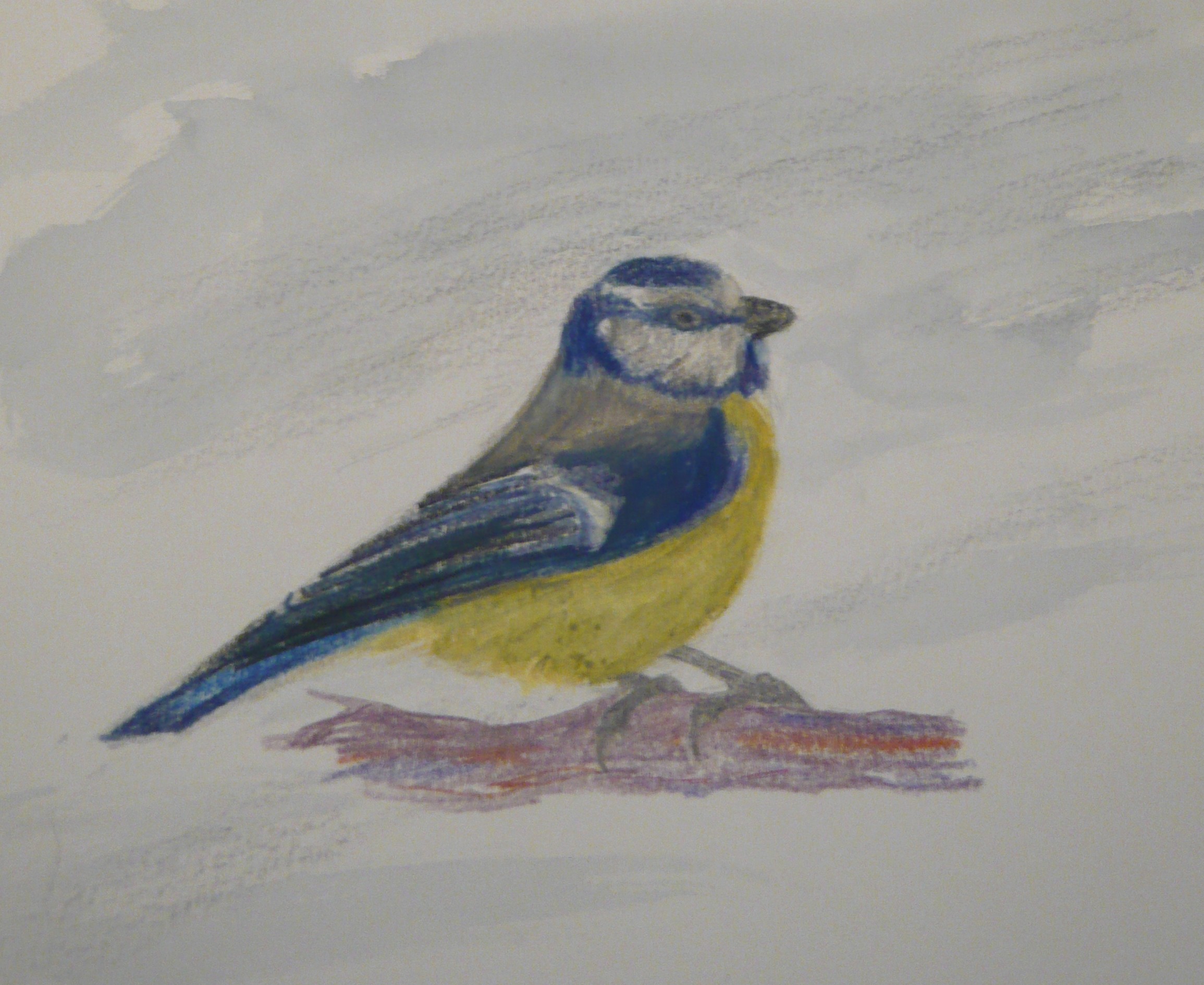
The afternoon, then. I partly spent painting this little fellow:

035

The blue tit is one of the few British birds whose population seems to be increasing slightly at the moment, in contrast to most whose populations have fallen – sometimes dramatically – over the last few years. We seem to be losing lots of the birds I took for granted as a child, which is such a sad thing. As a race, we seem to be so damned good at exterminating other creatures.

South Downs Way 1 – Eastbourne to Steyning

Once upon a time, or five or six years ago, if you prefer, I thought I would start up my own outdoor adventure company. It never happened in the end, largely due to the cost of insurance. However, if I had gone through with it I have to admit it would have been largely so I could go on long distance trails both in the UK and overseas without having to pay for it.

Oh, well. It was a nice idea.

The South Downs Way is a long distance footpath of one hundred miles in length, running from Eastbourne to Winchester, or Winchester to Eastbourne, if you must, along the top of the South Downs.

Hence the name.

We walked it in May.

It is usual, when writing about a journey – especially a long distance walk – to write in some detail about the scenery and the route, in sequential order. I don’t think I’ll do that this time. Instead I’ll probably jump about all over the place writing about odd things we found particularly interesting.  And post one or two photos of the stunning scenery…

039a

Such as this one.

So, a few points of interest.

This, then, is a dew pond:

043a

Chalk is a porous rock, allowing any rainfall to rapidly soak away, so the only way of providing water on the top of the downs is by artificial means. Dew ponds have been made up there for hundreds of years; a hollow is dug and lined with clay, which then fills naturally when the rain falls. Dew is probably not a significant contributor, despite the name. The downside to this simple system is should the pond dry out, then the clay, too, will dry out. When this happens, it will shrink and crack, and subsequent rainfall will leak out.

And while on the subject of rainfall, we didn’t have glorious weather all the way:

053a

We were forced to seek refuge in a convenient pub at the Devil’s Dyke for a couple of hours, but we made the best of it. This was clearly A Good Move because although it was still pouring with rain when we eventually left the pub, it began to clear up in about an hour and then we had sunshine for the rest of the day.

008a

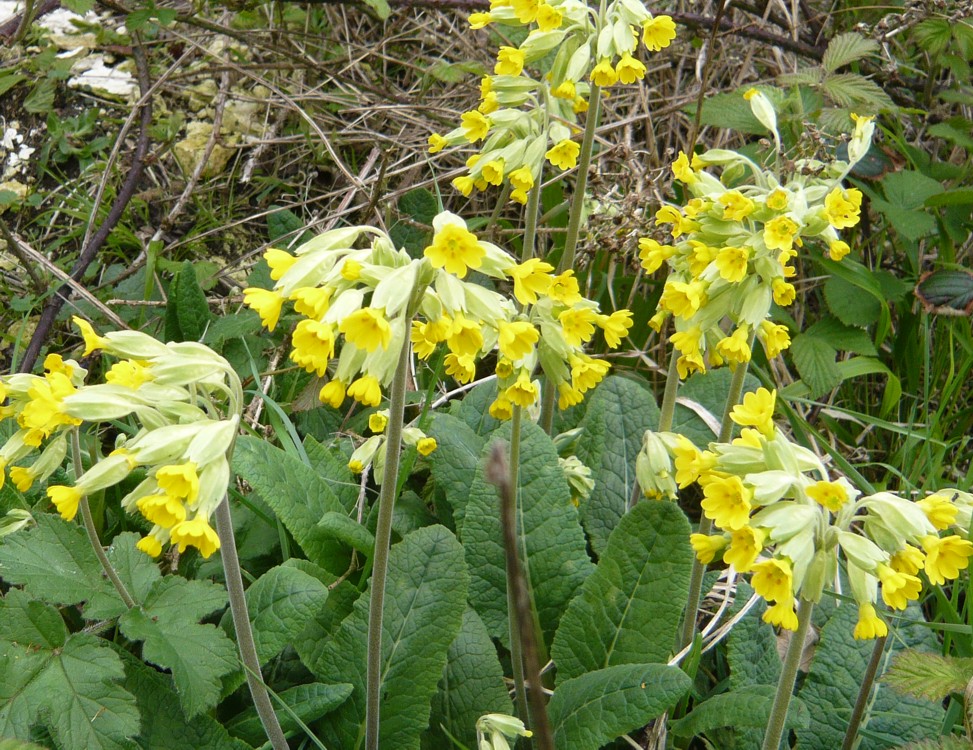
These are cowslips. The word comes from the Old English cuslyppe, which means cow dung, because, yes, that’s where they like to grow, apparently. Years ago, before the coming of intensive farming practices and industrial weedkillers, our fields were full of cowslips, but they seem to be met with now primarily in the more open landscapes – like downland. For the first few days of our walk, especially, we saw lots of cowslips.

We had a rest day at Steyning, although we stayed at nearby Bramber.

050a

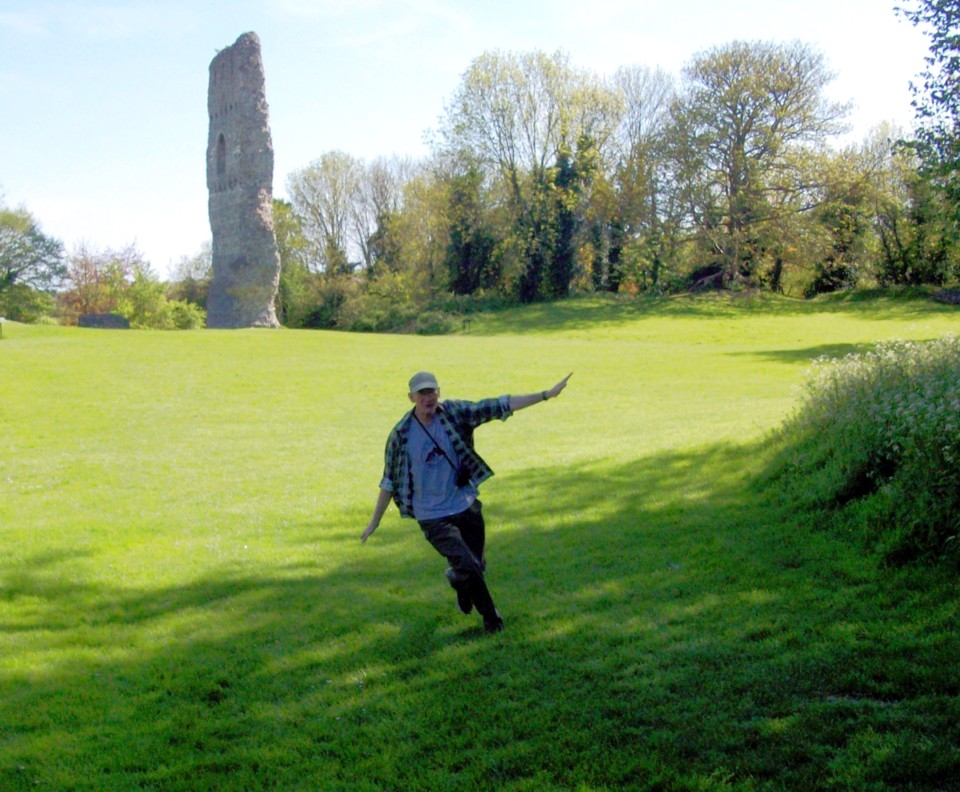
Bramber Castle is a strange and mysterious place, which magically energises the over sixties and causes them to revert to their childhood.

Although not for long, sadly.

New Year’s Essay, 2018

I rarely, if ever, make New Year’s resolutions. I feel that if there is something in my life that needs changing, then it should be addressed straight away, rather than leaving it until an arbitrary date in the future. Of course, for many people it acts as a focus or some other incentive to change old habits, although witness the number of gym memberships that never get used beyond, say, the end of January, and it becomes obvious that what many people need to change most is their resolve.

010a

Possibly jumping the gun a little with this photo…

As an introvert, I am very curious to know whether much of my behaviour is conditioned by my being that, or whether it is my behaviour that causes my introversion in the first place. It’s probably a ‘chicken and egg’ situation, of course, with both applying equally. My introversion is surely driven by those elements of anxiety, my inferiority complex and the depression I’ve always lived with, and, in turn, those things will be reinforced by my chosen introverted lifestyle.

But we are complex creatures. Like Harry Haller in Hermann Hesse’s excellent novel Steppenwolf, each one of us consists of many different personalities. Our characters will be made up of a mixture of the cultivated soul, the wild, untamed soul (the ‘wolf of the steppes’ in Hesse’s book), the dancer, the monk, the shopaholic, the miser…all those elements will be there to a greater or lesser degree. And alongside the Introvert exists also the Extrovert, even if this personality is rather repressed in my case. It is all a matter of balance.

It seems much worse in the winter, too. I am certain I am affected by SAD; it seems entirely logical that I should feel low when the weather is cold and grey and bleak, and perk up when the sun comes out. Perhaps we all do.

Yesterday, the weather was the pits. Cold, grey, and bleak, with added showers of freezing cold rain and a wind that cut through me like a knife. I really felt like crap. But today, I walked out under a clear blue sky, a bright sun glinting off the puddles and the grass rippling in a mild, gentle breeze. These are the moments I need to seize; to wrestle my soul back from the darkness. The moments I need to shake off the black dog and point myself towards the little things I can do to lift myself.

I remind myself that I have a published book that people have been nice about, therefore not all my writing is meaningless drivel. I have sold many paintings, and a lot of people have enthused over them. I can paint, and I don’t need to destroy them all. Family and friends do matter, and they do care about me. There will be warm, sunny days and expeditions.  There will be walks and bottles of wine shared. There will be wonderful books to read and interesting places to visit.

And so, I resolve to fight that bastard black dog for another year.

Danger! Natural Selection at Work!

Bob has a new mobile phone.

Do you remember Bob?

Some of you may remember him from when he and I went on a mighty expedition together. The report can be found here. And, as an update to that report, I can now reveal that Bob eventually found his way back home, much to his wife’s chagrin as she had already cashed in his life insurance and taken up with a new man.

But that’s another story.

Anyway, Bob has a new mobile phone. And, being Bob, he was insistent that it be the latest, most up-to-date, all-singing and all-dancing mobile phone, with more apps (whatever they are) than…something that has lots of apps.

He has an app for everything; an app for navigation when he is out in the countryside (naturally!), an app to help him choose whatever he is going to buy if he needs to go shopping, an app that gives him a weather forecast. He even has an app that tells him when he needs to eat or go to the toilet.

Heaven only knows how he managed to cope with life before the phone.

But, there is a downside to all this.

We went for a walk and, sure, we didn’t get lost. This was because Bob had his head over the phone the whole time. We didn’t get lost, but Bob bumped into twenty seven trees, fell in two streams, had an altercation with a herd of cows, tripped over almost fifty tree roots and finally walked into the bus stop.

And he had no idea of where we had been or what sort of countryside we had passed through. Rather a waste of time, really.

Now, Bob is not unique in this, oh, God, no.

The sidewalks in our town have become dangerous places since these phones became popular. I’m beginning to get seriously cross with the number of pedestrians who march towards me, head over their phones, and not even walking in a straight line, so it becomes quite difficult to avoid them. And should I have the temerity to perhaps cough discretely to let them know I’m there, or even to feebly call ‘look out!’ or ‘excuse me!’ I invariably get a glare and perhaps a few muttered words about not looking where I’m going.

And it appears to be an almost universal phenomenon now.

We get more and more news items about these people walking into the paths of vehicles, or off the edge of cliffs, or finding other similarly stupid ways to get killed.

Perhaps it’s a modern form of natural selection? I don’t know. Large numbers of idiots seem to kill themselves the same way taking ‘selfies’ (what a f*cking irritating word that is!), so perhaps there is something in that.

137a

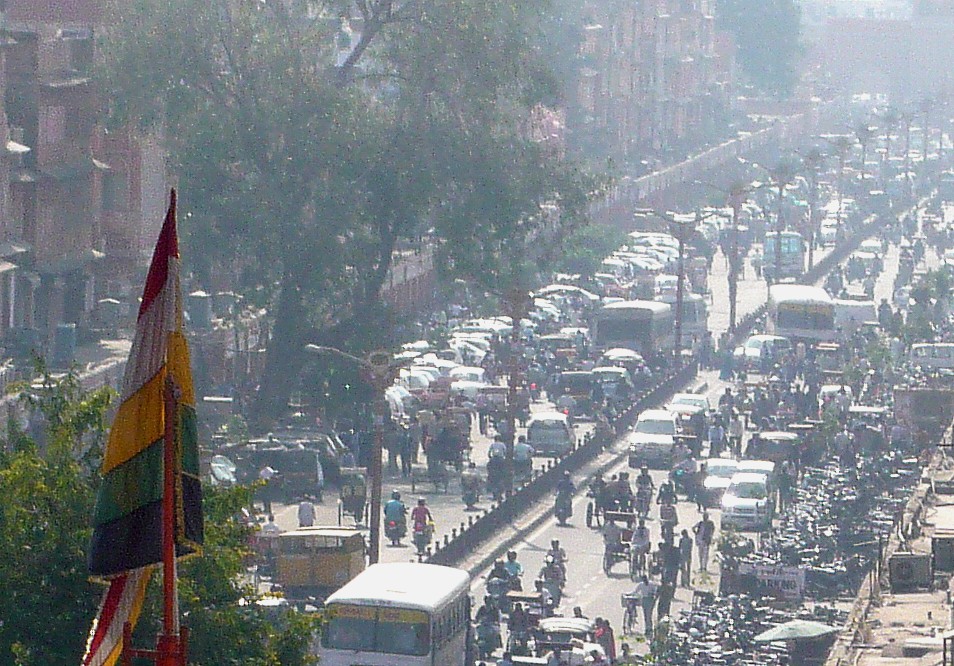
Jaipur – a random photo. Don’t try it here! 

I first became aware of the truly frightening potential for these sort of incidents a few years ago in India. Some of the driving on the switchback roads in the Himalaya is notoriously terrifying in any case, but to then see these fellows also using their phones while driving just made it even more frightening.

And then there was the girl I saw with a mobile phone ‘doing a Bob’ across an extremely busy Calcutta street.

Yet, she survived.

If there is anything in the theory of natural selection, then the future belongs to her!