Sojourn on Dartmoor

I’ve been on Dartmoor. My goodness, it was nice to get away.

016a

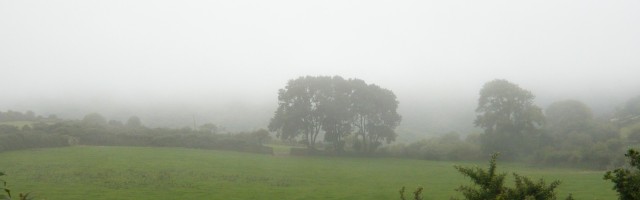
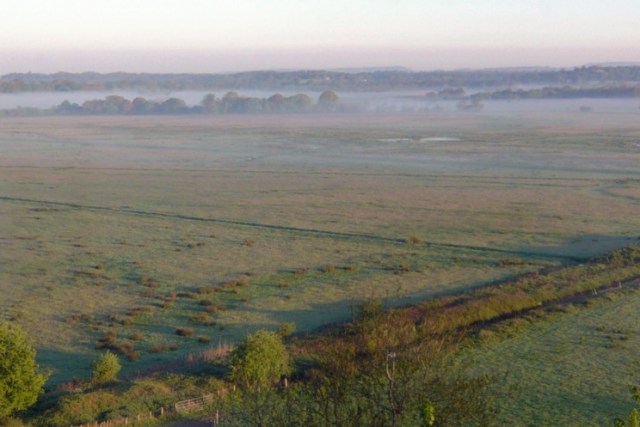
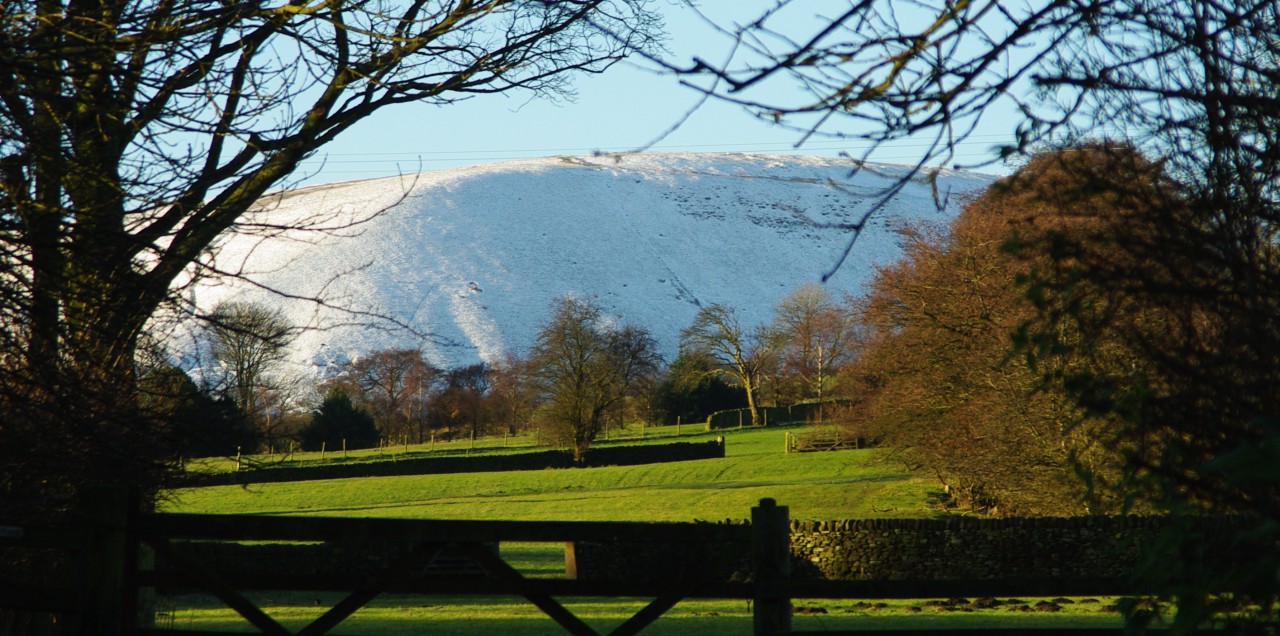
Dartmoor is frequently misty and moody, as it was on one walk.

021a

Yet it can often be fine and sunny. But whichever it is, I always think of it as unfailingly beautiful.

049a

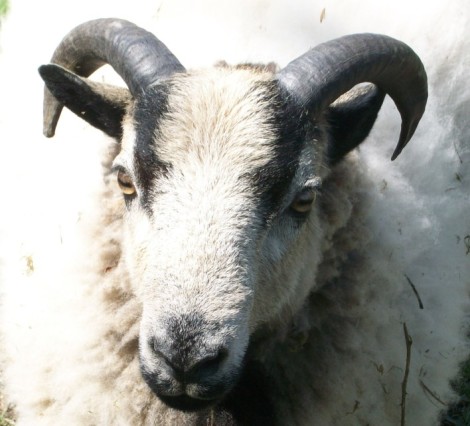
The sheep get everywhere, including on the top of old spoil heaps from derelict mine workings.

036a

Hooten Wheals is one such disused mine, with a plethora of remnants of old buildings and machine structures still extant. I believe the circular structures are the remains of buddles, circular shallow settling tanks used to extract the minerals from the rock.

056a

There are also plentiful remains of farms, houses and all sorts of settlements, from prehistoric times through to the recent past. These buildings at Swincombe are probably not particularly old.

052a

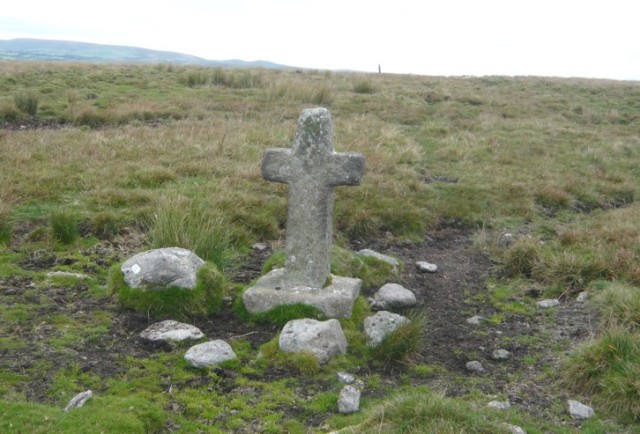
Old stone crosses are found all over Dartmoor. Their uses include marking the boundaries of the influences of various abbeys and waymarking paths. This one (and the one in the distance) are on Ter Hill.

042a

And because Dartmoor is so open, you get skies.

Wonderful skies.

Starless and Bible-Black – Under Milk Wood by Dylan Thomas

009

After my previous post, it seems entirely apt to post a review, today.

Writers rely upon reviews to sell books. To spread the word. And I am conscious how bad I am at leaving reviews – mainly because I’m not very good at writing them. But I Shall Try To Do Better!

To start with, this is the review I left on Goodreads some time ago for a book that is already very well-known.

This book begins, then, full of rich, playful language as it sets the scene and gradually introduces the players.

To begin at the beginning:

It is spring, moonless night in the small town, starless and bible-black, the cobblestreets silent and the hunched, courters’ -and -rabbits’ wood limping invisible down to the sloeblack, slow, black, crowblack, fishingboat-bobbing sea. The houses are blind as moles (though moles see fine to-night in the snouting, velvet dingles) or blind as Captain Cat there in the muffled middle by the pump and the town clock, the shops in mourning, the Welfare Hall in widows’ weeds. And all the people of the lulled and dumbfounded town are sleeping now.

I have heard poems by Dylan Thomas read by Richard Burton – the actor, not the nineteenth century explorer – and his warm, mesmeric, lilting tone suits the poetry like no other voice I could imagine. Now, I cannot read any Dylan Thomas without hearing it read in his voice.

(I want my work read like that. There is a man I know with a wonderful voice; mellifluous and rich and deep, like Burgundy and dark chocolate. Not Welsh, but very English, who I shall attempt to trick into reading one of my poems or short stories out loud, one day.)

So, to the poem, or play, if you will, for it is a play, first and foremost, told as a prose poem. The play is full of wonderful voices, the voices of a plethora of small-town characters; all of them realistically drawn with their dreams and vices and foibles, and depicted with great humour, but also with sadness. Sadness, for there is resolution for most of the characters, and for some their dreams come true, but others are disappointed.

All of these characters love and hate and desire each other, they reminisce, they have ambitions. In this play, they all have their day. In this place, each one gets to tell their story, or have it told for them.

From the very beginning, the language is rich like double cream and brandy butter; too rich, perhaps, for certainly by the time I had begun to near the end it had become too much. I found myself yearning for more plain, simple language. I wanted a few bread and water phrases.

But the words invite you to savour them slowly – in fact, they demand it. Perhaps the secret, then, is to read this little and often; to dip into it and immerse yourself in the language.

I really wanted to give this masterpiece four and half stars out of five, but without that option, I give it five, although with the caveat above.

Self Publishing – a Blessing or a Curse?

That depends on who you talk to, of course.

pothi edition

The self publishing boom has given rise to the publication of millions of new books, the majority of which would never have been published traditionally because they would be either deemed to be of insufficient interest to return a profit to the publishers or because they were, frankly, just too terrible to see the light of day.

How good a book is can be very subjective in many ways, but certain rules must apply.

If you buy a traditionally published book, you may be reasonably certain that it has been edited and proof-read to a high standard, the printing and layout of the book is of good quality, and the actual contents – plot, dialogue, character development et al – are sufficiently well written as to repay your reading time.

There are no such guarantees with a self published book.

As a member of several Goodreads groups, I receive regular emails which consist largely of other members promoting their books. These promotions frequently consist of a synopsis of the book, extracts, and links. All well and good, but the number of extracts that are poorly written, unedited (it would seem), with poor print layout, and the number of synopses that are equally poor, is very high indeed. Probably the majority, unfortunately. And should I follow the link to the ebook sales site and read a longer extract, frequently this, too, is filled with more of the same errors.

As far as the plot and dialogue and all that goes with that is concerned, I admit that may be partly down to taste. I have no doubt that some poorly written and poorly plotted books still give great pleasure to many readers, and good luck to them. There are certainly examples of the same amongst traditionally published books. And styles go in and out of fashion, anyway.

What I do take issue with, though, is poor, sloppy editing.

Most people cannot afford to pay for professional editing – I certainly can’t. I understand that. It means doing the job yourself, but taking infinite time and care over it. Check it over and over again until it is the best you can do. The odd mistake will slip through, but that happens even in a professionally edited work. Persuade others to act as beta readers for you. They may not be professionals, but they will spot things you don’t. You are too close to the work, anyway.

If you can’t do that, don’t publish the book.

Let’s take layout first. It only takes a careful look at half a dozen professionally published books to get a good idea of what that layout should look like. And you can buy books that supply more detail. If you are serious about your book, you should do that.

Spellcheck is a useful tool, but only if it is used properly. It recognises a correctly spelled word in its database, but has nothing to say about the suitability of its use. I do find it particularly irritating to come across passages where the completely wrong word has been used, no doubt because Spellcheck flagged it up as the correct spelling. Common examples are groyne / groin, sheer / shear, alter / altar etc. etc. etc.

Grammar is the biggest minefield, though. We all get that wrong at times, even the best of us. But at least avoid the biggest howlers – the so-called grocer’s apostrophe, for example. Put the manuscript through a program such as Grammarly, which is free to download, to pick up the majority of the errors.

Another phenomenon I have seen recently is a 4,000 word story published on Amazon as a ‘Novella’. I suppose there’s nothing wrong with selling a story that length, but anything that comes in at 4,000 words is a short story. And quite a short one at that. To describe it as a novella, no matter what price it is being sold at is, quite frankly, a bit of a bloody cheek.

Please don’t do that.

And I’m sure many other readers have their own pet peeves.


Sound The Retreat!

My reader will probably not be too surprised to learn that I have been on retreats a couple of times.

After all, someone who gripes about the rush and noise and pressures of the modern world, and who has anxiety issues, tends to spend quite a lot of time yearning for silence and solitude. Because there are, quite frankly, times when everything just gets too much to cope with.

Obviously there are many ways this might be achieved; perhaps I could commit a serious crime and then misbehave in gaol – that would probably lead to a good long spell in solitary, although I can think of several reasons why this might not be the ideal solution.

I could lock myself in a room and refuse to come out – from experience, though, that just leads to unpleasantness and tears. It worked tolerably well when I was a child, but as an adult I can see why it might not look so good.

Whenever I get the opportunity I go for a long walk. Unfortunately, if it is near my home I tend to be surrounded by dogs and dog walkers – not that’s there’s anything wrong with them, I hasten to add, but it’s hardly peaceful. There are several dog owners around here whose voices can not only be heard several counties away because of the sheer volume, but can also smash windows by pitch alone. And I soon get back to roads and so-called civilisation, no matter which route I take.

Then there are lots of other walkers bellowing into mobile phones: ‘Yes, it’s lovely and peaceful out here! Now, let me just yell a few personal and private details at you and anyone else within earshot! What? Yes, I’m still a complete tosser! Why do you ask?’

Going further afield takes more time, and that’s no good if I need a quick fix of silence, so generally I’m stuck with the dog walkers and the tossers.

So, retreats. Other than the meaning of legging it from a superior military force, a retreat is defined as withdrawing to a quiet / peaceful place. There is also the implication of it being a place to indulge in contemplation.

Yes, that’s exactly what I had in mind. Don’t mind if I do.

My first retreat was at an abbey not terribly far from where I live. Although I am not a Christian, I enjoyed a short week of taking quiet walks in the grounds of the abbey and the countryside beyond, reading, rising early and taking a silent breakfast with the monks, and even attending one of the services each day.

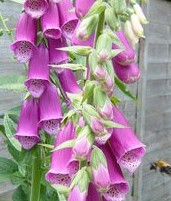
foxglove

Some of the time I spent painting watercolours which I have long lost. Since at least one was of foxgloves, here’s a photo of some just so you can imagine how incredibly good the paintings were!

The other retreat was in the North of England, and consisted of a week-long period of meditation with a Buddhist group. This was very hard work, but I did finish the week feeling refreshed.

Of course, it is perfectly possible to organise one’s own retreat by finding somewhere quiet and secluded and staying put for a week or however long one fancies (a year, perhaps?).

Perhaps I should do that soon.

South Downs Way 4 – Amberley to Winchester

Our room looked out over what is called Amberley Swamp. We slept with the curtains open, and were woken by the pre-dawn light, although the bluey greys and purples soon gave way to greens and yellows in the low morning sun.

109a

But once the sun was up, the mist contrived to linger for a while longer and the cool, still air was filled with the cries of unseen birds. Later, as we left Amberley and approached the first steep climb of the day, we saw a yellowhammer on a gatepost singing its traditional ‘a little bit of bread and no cheese’ song.

113a

I tried to get a photo of the little perisher, though I wasn’t very successful.

This is all about the sheep, by the way.

085

Baaa!

The South Downs landscape as we know it today was largely formed by sheep. I don’t mean that large flocks of sheep sat down and planned it as a kind of Rural Development Project, but that for certainly more than a thousand years it was grazed by huge flocks of sheep whose dung helped improve the soil so that in places crops might also be grown. This led to the felling of virtually all tree cover (originally, the Downs were forested, as was most of Britain) and the establishment of the large grassland areas we associate with the Downs today.

Fans of Terry Pratchett will recall that the Mistress Weatherwax series was set in a part of Discworld that bears a large resemblance to the Chalk Downs of England. No coincidence, I am sure, as he hailed from the Wiltshire area which includes, of course, Salisbury Plain. When I read these books, I get the sense that in describing that area, he is writing of an area that is dear and special to him. There are rolling Downs and sheep and a witch who is also a shepherd living in a shepherd’s hut, which is a caravan but not as we know it, Jim.

Shepherd’s huts were the most basic of boxes on wheels, usually with a tiny shuttered glass-less window, a bunk bed, a small wood burning stove and pretty well not much else. The  hut would be up on the downs (there’s an oxymoron that’s not an oxymoron for you) for most of the year, and the shepherd would live up there looking after the sheep. Probably no chance of a day off or a night out, month after month. It was a tough life, and not at all romantic. Even getting hold of water would be a problem, with the general lack of any water at all on top of the Downs, unless they parked up near a dew pond (see part 1).

There used to be one in the grounds of the Visitor’s Centre at Exceat, near Seaford, although I’ve no idea if it is still there now.

A number of companies now make shepherd’s huts for trendy well-off folks with a bit of garden to shove them in, and charge quite a lot of money, and they are frequently much larger than the originals would have been, and fitted out in some luxury – a far cry from how they would have been when built on the farm for the shepherd. Perhaps they need a new name for them: Mock Shepherd’s Huts, perhaps.

A quick look at what Professor Google comes up with when you enter ‘Shepherd’s hut’ into the search engine reveals an overabundance of words like ‘luxurious’, ‘style’ and ‘cool’ and ‘glamping’…you get the idea.

In the first post of this series, I mentioned I had once intended to start an outdoor adventure company, which never happened. Had I done so, it was to be called Red Kite Outdoors. I mention this, as we saw a number of Red Kites towards the end of our walk. Which gives me an opportunity to include a second poor quality photo of a bird in this post.

There, don’t say I never do anything for you.

141a

A Red Kite – just out of range of my camera.

As planned, on the last day we reached Winchester.

We cheated, incidentally. We were so tired after the penultimate day, we walked an easy path for 3 miles or so into the village / small town of West Meon, went for coffee there, had lunch, and then took the bus to Winchester.

We don’t care!

155a

An easy path

After finding our AirBnb guesthouse (pretty damn good, actually) we went and had a look in the cathedral. It is pretty close to the end (or start) point of the walk, after all.

166b

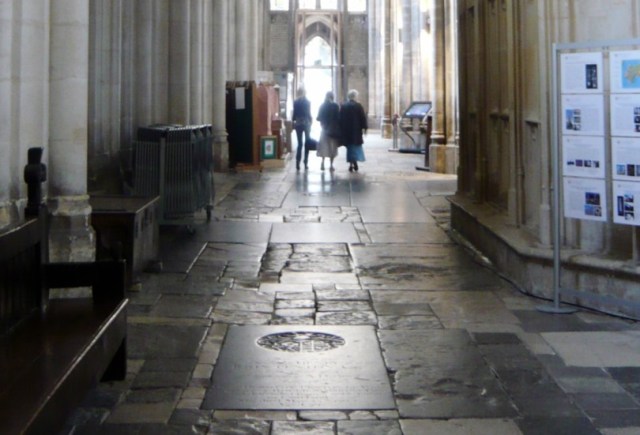
An arty farty reflective light shot of the cathedral that shows nothing of the cathedral

We stood around in the Cathedral as the choir went through their practice before Evensong. I do not know what piece they were singing, but it was a beautiful, haunting, ethereal piece. It was tempting to stay for Evensong, just to hear them sing again, but we had an appointment with a celebratory supper which I was reluctant to delay.

168a

What better way to celebrate our arrival in Winchester?

South Downs Way 3 – Chanctonbury Ring to Amberley

We left Chanctonbury Ring without being spooked, and continued on our way.

Near Washington, the South Downs Way drops down off the Downs and walkers have to cross the busy A24. Here, they have a choice – either make a dash across the several carriageways of rapidly moving traffic and hope their luck holds, or take a detour of a mile and half to the small town itself, where they can cross via a small bridge beside the church, possibly after taking refreshments at the Frankland Arms, a conveniently situated pub.

Well, which do you think we did?

Before we reached Washington, however, we passed four disused lime kilns set into a bank. These were built in 1839 by two farmers, and were in use from then until 1930 when production ceased.

097a

Historically, lime Kilns were constructed to burn limestone, such as chalk, which produced quicklime. Quicklime could be added to soils that were low in nutrients, helping to fix ammonia in the soil, aerate the soil, release calcium, and make the soil more workable. It was also used to produce mortar for building, and if mixed with mud it could be used to plaster walls and floors.

It has also been used for disposing of bodies in dozens of whodunnits from Sherlock Holmes to the present day.

Useful stuff, quicklime.

106a

It was scorchingly hot by now, and our pace had slowed considerably. As regularly as we could, we took advantage of any shade we came across to take a breather and drink some more water.

100b

‘The road goes ever onward’ Wrote Tolkien. It was certainly beginning to feel that way.

After the heavy rains and wind we had encountered during the first few days, this was to be the first of several extremely hot days, during which covering ten or more miles a day with rucksacks and hills to negotiate became a mighty chore. On the plus side, we certainly felt we’d earned a cold beer when we reached our destination each night.

South Downs Way 2 – Steyning up to Chanctonbury Ring

Mouse Lane begins in Steyning and runs along the foot of the scarp slope of the Downs, until it climbs a little towards Chanctonbury Ring, an old hill fort. It is a delightful route, as delightful as its name; a sunken lane full of flowers and bees and butterflies (and, no doubt, mice), cool under the overhanging trees in the hot morning’s sun. It would be pleasant to follow it the whole way, but our route takes us along the ridge, and so we leave the lane to take a footpath up the steep scarp slope.

But where we leave the lane, there is a poem inscribed on a stone block. It was written in 1915 during WWI, by a British soldier poet stationed in the Somme. We pause to read it then stand for a while in silence, each of us alone with our thoughts.

064a

I can’t forget the lane that goes from Steyning to the Ring

In summertime, and on the downs how larks and linnets sing

High in the sun. The wind comes off the sea, and, oh, the air!

I never knew till now that life in old days was so fair.

But now I know it in this filthy rat-infested ditch,

Where every shell must kill or spare, and God alone knows which.

And I am made a beast of prey, and this trench is my lair,

My God, I never knew till now that those days were so fair.

And we assault in half-an-hour, and it’s a silly thing:

I can’t forget the lane that goes from Steyning to the Ring.

Chance memory – John Stanley Purvis 1890 – 1968

Our footpath, ironically, then takes us past an old rifle range. So old, in fact, that according to a walker we stopped to talk with it is still possible to dig musket balls out of the bank behind the range.

On top of the ridge, there is a slight breeze, but it is already very hot and we are clearly in for a hard day’s walking.

Robert Macfarlane, writing in The Old Ways, records sleeping in the Ring one night, and being woken at 2 a.m. by blood-chilling screams that seemed to come from above him, and then proceeded to circle the Ring for a quarter of an hour, although he could see nothing that might account for the sounds – he rules out the possibility of a screech owl – until they finally disappeared and he fell asleep again.

I would never have shut my eyes there again, if that were me.

091a

The Ring has a reputation as the most haunted place in Sussex, with tales of hapless benighted travellers being scared witless for centuries. In 1966, apparently, a group of bikers decided to stay the night there and were forced to flee in terror.

We’ve been to Chanctonbury Ring before and it certainly has an atmosphere. I would have liked to have lingered for a while longer, but the downside of the journey is that we had still to cover quite a few miles in the heat to get to Amberley that afternoon.

057a

Three years ago when we visited the Ring, the weather was gloomy and somewhat more atmospheric, although we were mercifully left alone by whatever might be lurking around there on the astral plane.

Thankfully, it seems they only come out at night.


South Downs Way 1 – Eastbourne to Steyning

Once upon a time, or five or six years ago, if you prefer, I thought I would start up my own outdoor adventure company. It never happened in the end, largely due to the cost of insurance. However, if I had gone through with it I have to admit it would have been largely so I could go on long distance trails both in the UK and overseas without having to pay for it.

Oh, well. It was a nice idea.

The South Downs Way is a long distance footpath of one hundred miles in length, running from Eastbourne to Winchester, or Winchester to Eastbourne, if you must, along the top of the South Downs.

Hence the name.

We walked it in May.

It is usual, when writing about a journey – especially a long distance walk – to write in some detail about the scenery and the route, in sequential order. I don’t think I’ll do that this time. Instead I’ll probably jump about all over the place writing about odd things we found particularly interesting.  And post one or two photos of the stunning scenery…

039a

Such as this one.

So, a few points of interest.

This, then, is a dew pond:

043a

Chalk is a porous rock, allowing any rainfall to rapidly soak away, so the only way of providing water on the top of the downs is by artificial means. Dew ponds have been made up there for hundreds of years; a hollow is dug and lined with clay, which then fills naturally when the rain falls. Dew is probably not a significant contributor, despite the name. The downside to this simple system is should the pond dry out, then the clay, too, will dry out. When this happens, it will shrink and crack, and subsequent rainfall will leak out.

And while on the subject of rainfall, we didn’t have glorious weather all the way:

053a

We were forced to seek refuge in a convenient pub at the Devil’s Dyke for a couple of hours, but we made the best of it. This was clearly A Good Move because although it was still pouring with rain when we eventually left the pub, it began to clear up in about an hour and then we had sunshine for the rest of the day.

008a

These are cowslips. The word comes from the Old English cuslyppe, which means cow dung, because, yes, that’s where they like to grow, apparently. Years ago, before the coming of intensive farming practices and industrial weedkillers, our fields were full of cowslips, but they seem to be met with now primarily in the more open landscapes – like downland. For the first few days of our walk, especially, we saw lots of cowslips.

We had a rest day at Steyning, although we stayed at nearby Bramber.

050a

Bramber Castle is a strange and mysterious place, which magically energises the over sixties and causes them to revert to their childhood.

Although not for long, sadly.

A (Temporary) Farewell

I have decided to absent myself from WordPress World for a while.

032b

I frequently need to take a large step back from the world and give myself some time and space to re-charge my batteries, and also to think deeply about the importance I attach to whatever is going on in my life at the moment.

Those things that cause stress tend to assume a greater importance than they probably deserve to, while the things I do for my own pleasure tend to make me feel unreasonably guilty about giving them the time that others might want.

While there is so much going on, and so little time, I seem able to devote less and less of it to either writing blogs or following others. I have noticed I am leaving far fewer comments, and tending to skim read far more than I used to.

Clearly, I need a break.

But while I am doing that, I mean to write a number of blog posts without feeling under pressure to finish them by some sort of deadline, so that when I reappear I might have something to post that is worth reading.

Hopefully, I will be able to make progress on my book, short stories and poems.

And the odd painting or two.

See you later.

Very Random Sri Lanka!

Finally, it’s warm and sunny here! Hooray!

So here are a few random pictures I took in Sri Lanka some while ago. So what relevance is there in that? None, really…

108

I just like the randomness of them.

150

Lurking Kingfisher…

206

That, incidentally, is a Cannon Ball Tree.

206a

And that’s why.

210

And I have no idea what that tree is called, but the strange roots are little more than a hand-breadth wide, and as tall as I am.