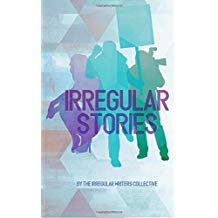
Irregular Stories

I had quite forgotten to post this. Whatever was I thinking of?

41t44jv6w8l._ac_us218_

If you look on the sidebar, you will espy a link to this book. It is a collection of short stories by members of my local writing group, The Irregular Writers Collective, including one by me.

As the blurb on the back says, From intrigue in Colombia to bizarre adventures in Italy, from an unusual protest to a prison break in 19th century Chile. Get ready for an exciting journey with the Irregulars…

I was reminded of its existence at our meeting last night, when mention was made of a follow-up book this year. I’ve already submitted my story for this, and am looking forward to reading stories from the others.

But in the meantime, Irregular Stories awaits your perusal!

It is available in paperback on Amazon.

And the link, again? It’s also here.

Review of Masks and Other Stories From Colombia by Richard Crosfield

In Masks and Other Stories From Colombia, Richard Crosfield brings us twenty five tales set in Colombia, the majority of them viewed through the privileged eyes of Printer, a British expatriate.

mask

Printer, we are told, has a good ear for a story, and is much in demand by hosts and hostesses at parties to recount these tales. He also has more empathy and sympathy for the Colombians who surround him than do most of the other cossetted expats. Naturally, this acts as a good device to introduce several of the stories.

Some of the stories are little more than vignettes, bringing the reader into the lives led by the mixture of the very poor, the well-to-do middle class, and the extremely well-off and powerful of Colombian society, as well as the expats among whom Printer lives and works. These appear to do little more than illustrate what the lives of these people are like, yet at the end of each story something has changed; there has been resolution of some kind.

Of the others, some demonstrate that you don’t always require an earth-shattering event to create a satisfactory ending, but just a quiet re-drawing of the landscape. Something has shifted, perhaps so subtly that not all the protagonists have even noticed. But we, the readers, see it clearly.

Yet it is easy for the reader to become lulled into a false sense of security by this, so that we are caught out – shocked, perhaps – when we come to one of the stories that has a more powerful and emotional conclusion.

The temptation when placing stories in a setting that is very different from the writer’s own setting, even when that writer has spent a good deal of time there – perhaps especially when that writer has spent a good deal of time there – is to either set all of them in the almost artificial world inhabited by the expat, or to try to set them in the wider community, a community that perhaps they may not completely understand. Richard has managed successfully to do both, something that demonstrates an easy familiarity with both these worlds.

Throughout the book, we can see that the author’s sympathies lie very much with the underdogs of Colombian society, although the stories never become clichés of the noble poor versus the evil rich. They are told with too much intelligence and enough humour to escape that, and, perhaps above all, the writing itself is easy and a joy to read.

Expect to encounter amateur cricketers and murderous bandits, whores and priests, street kids and artists. And a whole host of others.

This is most certainly a five star read.

My disclaimer – I received a copy of this book having beta read one of the stories for the author, although I was not asked to write a review. But my admiration for the stories and my pleasure reading them is entirely genuine.

Review of An Atlas of Impossible Longing

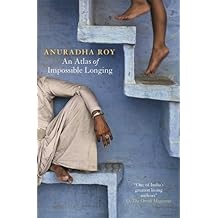
An Atlas of Impossible Longing

A year ago I read The Folded Earth, Anuradha Roy’s second novel, and decided it was so good I would have to read all of the others. And so recently I finished her first book, An Atlas of Impossible Longing. In this, Anuradha Roy tells the story of three generations of a family who have moved from Calcutta to live in a huge, rambling mansion in Songarh, a small town in the hills of Bengal.

Amulya’s wife, Kananbala, hates the isolation of the town, with its lack of fashionable shops and social life, and longs to return to Calcutta. Their oldest son, Kamal, longs for children, and his youngest, Nirmal, is widowed and longs for his unmarried cousin.

Everyone appears to long for something that proves unattainable, and at the centre of the story are two children, thrown together by chance circumstance and then separated by the cultural fears of adults, but who have formed an unbreakable bond that endures through years of separation.

Mukunda is an orphan of unknown caste adopted by the family, and his only companion is Bakul, daughter of Nirmal. They pass their time playing in the grounds of their home or in the woods and fields around the town.

As Bakul and Mukunda grow towards adulthood, their friendship slowly begins to become something more, and Mukunda is sent away to Calcutta by the family, suddenly fearful of the consequences of this.

As the years pass, Mukunda graduates from college and becomes prosperous, even through the years of Partition, without ever returning to see the family who raised him, although he thinks frequently of Bakul. But then chance sends him to Songarh, and he realises he must find out what has happened to her.

The pace of this book is deceptively languid, but this enables Roy to paint the characters and settings in exquisite detail, and for the plot to unfold at an easily assimilable rate.

I feel you always gain more from re-reading a book, and I am longing to do this, to immerse myself again in the rich landscape and characters Roy has created.

Most definitely a five star read.

Review – The Name of the Rose by Umberto Eco


002

Late in the year 1327 Brother William of Baskerville, a Franciscan monk, and Adso, a Benedictine novice, arrive at a monastery in Northern Italy. Winter is rapidly approaching, and so is both a legation led by a notorious inquisitor and another that contains that inquisitor’s implacable enemies. William is to speak in intercession between them.

But once they arrive at the monastery, a series of brutal murders begins, and, at the request of the Abbot, William and Adso are drawn into the investigation.

Every detective story needs a detective, and in The Name of the Rose it is William of Baskerville, who indeed uses logic and observation to make deductions, much like a medieval Sherlock Holmes.

Untitled-Grayscale-01

As the plot develops, there are long theological debates centred around both the poverty of Christ and the question of whether Christ laughed. Questions I have little knowledge of, but which read as authentic to me. But these debates are central to the plot. On the interpretation of Christ’s poverty alone, men and women are accused of heresy and burnt at the stake.

But everything is centred upon the monastery’s library. This library is the greatest library of its time in Europe, containing innumerable rare, important and beautiful volumes. At the centre of the story lies a mysterious and forbidden book, and this book lies at the centre of the labyrinthine library where only the Librarian and his assistant are permitted. But are the murders being committed to get hold of this book or is there another reason? Could they, in fact, be connected with the predictions in the Book of Revelations?

Untitled-Grayscale-02

This is such a well-known book that I found I forgot it was a translation from the original I was reading. Much like the Bible, of course, which point is salient to the monks, and certainly in medieval times this interpretation was a matter of life or death to thousands.

But the translation of  prose does not pose the same problems as the translation of verse, and I don’t suppose the English translation is any different from the Italian original. But the potentials made me smile

As a long book, it provides a canvas for long descriptions, both of the abbey and the associated buildings – essentially a castle – and of the long debates between the monks and the other players. At times there is undoubtedly a temptation to skip some of these, but the reader is adequately rewarded for persevering in that the descriptions paint a powerful picture of the place and time, while the debates tell much about the importance of religion and the ridiculous interpretations of every word of the Bible that quite literally governed the lives and deaths of everyone at that time.

A word about the pace of the book, though. Some readers may find it a little slow (although if those readers skip the debates and longer descriptions it is as fast-paced as any other), but remember it is not just a detective story, it is also a historical novel and moves at the pace one would expect of a book of that genre.

I read this a very long time ago, and although I remember it as having been a very good book, I had forgotten just how good. I will unhesitatingly give it five stars.

And the meaning behind the title? Well, you need to wait until the end to find out, and then you need to understand Latin…

Starless and Bible-Black – Under Milk Wood by Dylan Thomas

009

After my previous post, it seems entirely apt to post a review, today.

Writers rely upon reviews to sell books. To spread the word. And I am conscious how bad I am at leaving reviews – mainly because I’m not very good at writing them. But I Shall Try To Do Better!

To start with, this is the review I left on Goodreads some time ago for a book that is already very well-known.

This book begins, then, full of rich, playful language as it sets the scene and gradually introduces the players.

To begin at the beginning:

It is spring, moonless night in the small town, starless and bible-black, the cobblestreets silent and the hunched, courters’ -and -rabbits’ wood limping invisible down to the sloeblack, slow, black, crowblack, fishingboat-bobbing sea. The houses are blind as moles (though moles see fine to-night in the snouting, velvet dingles) or blind as Captain Cat there in the muffled middle by the pump and the town clock, the shops in mourning, the Welfare Hall in widows’ weeds. And all the people of the lulled and dumbfounded town are sleeping now.

I have heard poems by Dylan Thomas read by Richard Burton – the actor, not the nineteenth century explorer – and his warm, mesmeric, lilting tone suits the poetry like no other voice I could imagine. Now, I cannot read any Dylan Thomas without hearing it read in his voice.

(I want my work read like that. There is a man I know with a wonderful voice; mellifluous and rich and deep, like Burgundy and dark chocolate. Not Welsh, but very English, who I shall attempt to trick into reading one of my poems or short stories out loud, one day.)

So, to the poem, or play, if you will, for it is a play, first and foremost, told as a prose poem. The play is full of wonderful voices, the voices of a plethora of small-town characters; all of them realistically drawn with their dreams and vices and foibles, and depicted with great humour, but also with sadness. Sadness, for there is resolution for most of the characters, and for some their dreams come true, but others are disappointed.

All of these characters love and hate and desire each other, they reminisce, they have ambitions. In this play, they all have their day. In this place, each one gets to tell their story, or have it told for them.

From the very beginning, the language is rich like double cream and brandy butter; too rich, perhaps, for certainly by the time I had begun to near the end it had become too much. I found myself yearning for more plain, simple language. I wanted a few bread and water phrases.

But the words invite you to savour them slowly – in fact, they demand it. Perhaps the secret, then, is to read this little and often; to dip into it and immerse yourself in the language.

I really wanted to give this masterpiece four and half stars out of five, but without that option, I give it five, although with the caveat above.

The Indian edition of my book is published!

Well, it’s taken me long enough, as I’m sure everyone will agree, but I have finally managed to publish Making Friends with the Crocodile as a Print on demand paperback in India! Hurrah!

It is published by Pothi, and is available on their site, here, and on Amazon.in and Flipkart.

pothi-advertising

It is still available as a Kindle e-book from Amazon, and is also available as an e-book from Kobo, worldwide, for those who do not favour Kindle.

I have been told plenty of times that I need to be more proactive promoting the book, but I’m not terribly good at that. However, this is me having another pathetic stab at it:

Buy it now! It’s great! Please…pretty please…

Oh well, I’m working on it.

Should you be kind enough to buy it, or, indeed, if you have already done so, please consider leaving a review. Reviews encourage others to buy the book, and, on Amazon, once a book has garnered a certain number, then Amazon list it a little more prominently – which is a tremendous help to the author!

And I have been lucky enough to garner some very complimentary and generous reviews, so far. A few excerpts:

‘This beautifully written story, set in a village in Bihar, draws you in from its first page.’

‘Making Friends with the Crocodile is a very fine book. And it takes us into the harsh reality of the life of women in rural India, much more effectively than any official report.’

‘The characters are depicted with obvious respect for a culture that is both beautiful and at times shocking. By the novels finale, though tragic, we are left with a very thought provoking and memorable story.’

‘This is a novel with depth and real emotional involvement. Told simply and with an honesty that defies disbelief at events and attitudes, it packs some serious punches. It’s a story that will live with me for a long time, and one that has materially altered my opinions about certain cultural norms. Researched in real depth and related in language that fits the narrator so well, it’s a very good read.’

‘Mick has delved into the mind of a middle- aged woman living in rural Bihar and has beautifully sketched the love – hate relationship she shares with her daughter in law. The book gives a lot of perspective on the mind-set and predispositions that prevail in the rural north Indian society (which apply, at large to many other parts as well).’

The blurb: ‘Siddiqa was only just into her teens when she was forced to leave her home to live with her new husband and his family in another village. The years have passed, and now Siddiqa has three children of her own. Her grown up son has brought his new wife, Naira, to live with them, so Siddiqa is no longer the lowliest in the household, for she has a daughter-in-law.

Life in rural India is particularly harsh for women. This novel explores themes of female oppression and tradition and asks whether the next generation will find life any easier.

I suppose that at least when I publish my next book, I should have a much better idea of how to go about it.

I have some news!

I have some news.

I’m sure some of you (especially the writers) will remember that I reported here a week or two back the disturbing news that fictitious characters now have the legal right to sue their creators for defamation of character, or any other hurt (real or perceived) caused through those said creators’ thoughtless and heartless actions.

imgp2288

In case you want to have a look, the link is below.

Sue me and I’ll have you killed!

Well, news reaches me this morning of a new grouping of characters, namely sidekicks in detective stories, who have come together under the name of Sidekicks Of Detectives (or ‘Sods’) to challenge their positions as The Most Stupid Person In A Detective Story.

Initially, the group was to have been organised by Captain Hastings, sidekick to the famous Poirot, but after some heated discussion it was agreed that, actually, he couldn’t organise his way out of his own front door without help, and the task was then delegated to Doctor Watson, who arranged a meeting at a coffee shop, one of a well-known chain, in Central London. Unfortunately, he forgot to mention either which branch it was, or the time of the meeting, and so there has only been limited progress on that front, so far.

But, further cases have already come to court.

A number of characters from ‘Three men in a boat’, by Jerome K Jerome, Bertie Wooster and others created by P G Wodehouse, and various characters from books by Spike Milligan began a collective case, but were laughed out of court.

Dan Brown is being sued by every single character he invented.

And there is some confusion in America, where Donald Trump has apparently filed a case against himself on the grounds that he has irreversibly blackened his own character.

I’m told he is confident of winning the case, since the stories he has spread about himself are scarcely believable, and that it is generally held that he must be a fictitious character, since the majority of observers and commentators say they ‘can’t believe this guy is for real!’

The trouble is, all this is symptomatic of our legislative culture. It was the retrospective case brought by Big Ears and Mr Plod against the estate of Enid Blyton that, I think, I found most distressing. By all accounts, they cooked it up over an evening of heavy drinking, after being taunted by the Tubby Bear family, and it is strongly suspected (although it cannot be proved) that much of the impetus came from a third character – possibly one of the Fluffy Cats, since they are known to be bad through and through (it’s okay, I can say that. It was proved in a recent court case of character assassination that the Fluffy Cats brought, and lost, against the estate).

But Big Ears and Mr Plod did win their case, and now not only is it a legal requirement that in future they both be referred to as intelligent, but Big Ears must henceforth be renamed as ‘Graham’. And his ears are officially ‘of normal dimensions’. Or else.

Which brings me to my own characters.

I have decided that I am not going to be dictated to, or browbeaten by, some miserable little…hang on, there’s someone at the door. I’d better just get that. Hello? What? A writ? about what? Oh…

I’m sorry, I have to stop there.

Wow, What a Book #3, #4, #whatever

Well, Saturday already. Seems only yesterday it was Friday *sigh* I suppose I’d better get on with it.

I don’t think I’ll do ten of these after all, because I rather run the risk of listing books just because I like them, rather than because they have had a real and measurable influence on me. So today I present the final three.

1. Silent Spring, by Rachel Carson.

Image result for silent spring

I read this book when I was in my mid twenties, and it really did open my eyes to what we as a species were doing to the planet. Up until that point, I had not really understood the impact that we were having on the environment. Shocked, I became interested in learning more, and then even more shocked as I learned what food and drink manufacturers put in their products for us to consume. At that time, one of them was the nasty compound dropped by the Americans on Vietnam during the Vietnamese War; a defoliant that was known to be carcinogenic.

It was used as orange food colouring.

I got hold of a list of all the ‘E’ numbers that were permitted additives, and which the industry certainly didn’t want us to know about. Certain ones were very nasty indeed. It was at this point that I became very keen on reading the labels on food and drink packaging.

I became involved with various pressure groups, such as Greenpeace.

That book changed my life.

2. The Razor’s Edge by W Somerset Maugham.

download

In some ways, this could lay claim to be the book that has had the greatest influence on my adult life, but in a different way to Silent Spring.

I’d always tried to be a reasonably decent human being, but reading this made me rethink the way that I wanted my life to be. It is the story of a man who returns from the first world war and begins to question his place in society. He finds the trappings of modern western life, and its values, empty and meaningless – its focus on making money, selfishness and greed. He then searches for something meaningful in his own life, through education, religion and travel, and explores his relationships to others.

The message in this book immediately resonated with me; that there is much more to life than the pursuit of money, essential though some of it it might be to my survival. Other people mattered. Helping others was important. What is called the spiritual life, whether or not you believe in a god or not, was an important part of us all.

5. The War of the Worlds by H G Wells.

hgg

Are you serious? you ask. How could this book be an influence on your life? One of the first science fiction books, and admirable for that, but an influence?

Well, it is easily told, and the answer will probably surprise you. This book provided the initial impetus for me to become a vegetarian.

Yes, a vegetarian. There is a passage in the book where the narrator recoils with disgust as the Martians take the blood from still-living humans for their nutrition, but then comments that it was probably the same reaction as an intelligent rabbit would feel observing our own eating habits. That made me consider whether it was necessary for me to eat meat, and I came to the conclusion that no, it was not.

Wow, What a book #2

To continue with the 10 books that have most influenced my life.

My second choice is The Lord of the Rings, by J R R Tolkien.
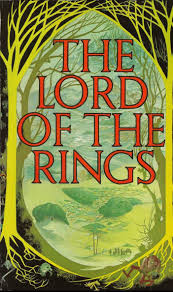
Image result for the lord of the rings book cover

I suspect that very few readers are unaware of the story of The Lord of the Rings, having either read the book, seen the film, or both. And at this point, it might be a good idea to just make it clear that I am talking about the book here, and not the Peter Jackson films, or even the ill-fated attempt at animating the entire book in 1978, an attempt that got as far as the first book, and was, to be honest, rather dreadful. Let me content myself by just saying it was a bit ‘Disney’. I’m not that mad on the Peter Jackson films either, to be honest, but back to the book.

So, I’m not going into any great detail about the story, but, in a nutshell, it involves a quest to destroy a ring that gives great power to the wearer, but inevitably corrupts and destroys them. It’s maker, Sauron, is attempting to find it, and the free peoples of the world must not only keep it from him, for if he recovers it it he will then have power to enslave the entire world, but also take it to the fiery mountain, Mount Doom, where it had been forged, to cast it into the flames and destroy it.

Mount Doom is, inconveniently, inside Sauron’s heavily fortified and guarded kingdom.

Elves, dwarves, men, wizards, hobbits, orcs…you all know it, don’t you?

As readers, we are all different. Some of us like a plot that gallops along so fast that we can barely keep up, with writing that limits itself to the action and no more than the minimum descriptions necessary.

Others, like me, enjoy the scenery and the atmosphere of the described world almost as much as the plot itself – join the Slow Book Movement now! Just send a completed application form to…sorry, wrong place. Where was I? Oh yes, most readers like a mixture of the two, of course.

But as one of these Slow Readers, there is a massive amount in this book that appeals to me. When I read descriptions of the hobbits setting off to walk through woods and fields as the sun comes up through early autumn mists, I might have been reading a description of a morning when I had done just that whilst wild camping in the countryside in my part of England. I have always loved walking on footpaths and through fields and woods, and disliked roads and towns.

The countryside Tolkien described around the Shire – the home of the hobbits – might have been my countryside. there were chalk downs and woods and streams, even one or two names (for example Michel Delving) that could have been local.

There were other woodlands in the book, and if they were described as magical, then that was little more than I naturally felt about woodlands anyway. Aren’t they all magical?

And, on top of all that, there were mountains. Today, I love mountains! But I had never seen one at this point, and suddenly I wanted to go and climb one. There were inns and beer, adventure and song, friendship and dangers. What was not to like?

The whole book is really made up of three books, and the first book, which has always been my favourite, is the one which is mainly set in this land that I could almost identify. This was not the first fantasy book that I had read, but it was, and still is, the one whose descriptions have the greatest power to draw me in. It is the one that, to me, seems the most real.

All of this, with the themes of courage and friendship, self sacrifice and loyalty, and the message that good will eventually triumph over evil, come together in a mixture that is in just the right proportions to appeal to me.

But how has it actually influenced me?

For a start, when I began to write, everything that I wrote seemed to be influenced by that book. This was not actually a good thing, because other than The Lord of the Rings, I don’t really enjoy fantasy! But I wrote that way for a long while.

Today, though, what remains is the descriptive writing. I wonder whether I might otherwise have been a very different reader and writer, since before I read LOTR, I read mainly detective stories and adventure novels.

And I explored a lot of the Middle English literature that influenced Tolkien, from Beowulf to Sir Gawain and the Green Knight, which I suppose not too many people do today.

I visited mountains because of that book.

And a measure of how strong this appeal was (and remains) is that I have probably read the book about twenty times. The last but one time, though, was around twenty years ago. When I decided to re-read it last year, I did wonder whether I would be disappointed. I strongly suspected that I might have ‘grown out of it’.

I needn’t have worried.

I enjoyed it just as much as I ever had; I noticed one or two details I had either forgotten or never really noticed in the first place, and I found myself drawn in every bit as strongly as I had been before.

I loved it.
Wow, What a Book! #1

I thought that I would pick out what might be the 10 books that have most influenced my life. Well, I say 10 books, but I may tire of this long before I reach 10, so let’s just see what happens.

You see, these are not really reviews, although it is necessary to give some idea of the plot of each book, it is more about how they have influenced me, and I may decide after a while that I’m just giving away too much about myself.

Or that I’m just going over and over the same ground.

Okay, then. Let’s get on with it. The rules:

Firstly, I must have read the book more than 5 years ago. I know this is an arbitrary figure, but any book that I have read recently is likely to be clearer in my mind, and so appear a little more important to me than it really is. It needs time to settle.

Secondly, I need to be able to demonstrate to myself exactly how it is that the book has influenced me. Just to say ‘it was important to me’ will not be enough. That would be little better than just saying ‘I like it’. Perfectly valid, but hardly the stuff of a blog post. This is another reason to impose the 5 year rule – there must have been enough time elapsed to see the influence.

So I’ll start today with Steppenwolf by Hermann Hesse.

Image result for steppenwolf Hesse

Sometimes, you get the feeling that some people have just been born into the wrong century. Not that they would prefer dressing in cravats or crinolines, although they might anyway, or that they have a hankering after a little piracy or bubonic plague, but rather you can see that they don’t fit in with the pace of modern life, or much like the ethos of the times.

There must be quite a few people like that, which must partly explain the immense popularity of Steppenwolf both when it was released, and then especially in the 1960’s and 1970’s.

It was the second book by Hesse that I had read, after cutting my teeth on ‘The Journey to the East’ as a teenager, and I was a little unprepared for its message.

Whereas ‘The Journey to the East’ felt like a bit of drug-induced fantasy, although a very clever and readable one, without any obvious message beyond ‘free yourself from the conventions of society, man’, Steppenwolf clearly had a more serious message to convey.

It begins with the protagonist, Harry, contemplating taking his own life, because he sees himself as a serious writer both at odds with the world that he lives in (Germany, post WWI), whose values, especially the bourgeois ones, he despises, but also with his inner alter ego, the very opposite of the sophisticated artist that he sees himself, which he calls the Steppenwolf – or the wolf of the steppes. He hates and fears this alter ego, who he feels he cannot control, and who sneers at everything that Harry holds dear.

It is whilst Harry is contemplating suicide, that he comes across a booklet entitled ‘Treatise on the Steppenwolf’ and as he reads it, he discovers that it is about himself. the booklet talks about Harry and his alter ego, but also explains that there are many, many more of these other sides to his character.

Through the rest of the book, Harry learns how to reconcile these many sides of himself and, more importantly, how he can manage to live in this world that up until then, he sees no value in.

When I read the part of the book that consisted of the treatise on the various different natures that made up the protagonist of the novel, it was the first indication to me that we really do have these different sides to our characters; sides that do not need to be in conflict with each other, but can coexist quite peaceably. As a typical young man, I knew that there were parts of me that yearned for safety, parts that simply wanted to rebel. Parts that enjoyed home life and parts that wanted nothing more than to wander the world with my possessions in a rucksack. There was the aesthete and there was the lover. The artist and the fighter.

Until then, the rebel in me had sneered at the home lover, and the artist seemed to be in perpetual conflict with the fighter. I had felt embarrassed by parts of my character and, just as did the hero of Steppenwolf, rather tried to repress them.

What this book did was to show me that it was natural to feel like that, and that the secret was to accept all of these sides of me, and allow them to all have their moments of dominance, and their moments of passivity. They did not need to be in conflict.

It completely changed my outlook on life.