Review of Masks and Other Stories From Colombia by Richard Crosfield

In Masks and Other Stories From Colombia, Richard Crosfield brings us twenty five tales set in Colombia, the majority of them viewed through the privileged eyes of Printer, a British expatriate.

mask

Printer, we are told, has a good ear for a story, and is much in demand by hosts and hostesses at parties to recount these tales. He also has more empathy and sympathy for the Colombians who surround him than do most of the other cossetted expats. Naturally, this acts as a good device to introduce several of the stories.

Some of the stories are little more than vignettes, bringing the reader into the lives led by the mixture of the very poor, the well-to-do middle class, and the extremely well-off and powerful of Colombian society, as well as the expats among whom Printer lives and works. These appear to do little more than illustrate what the lives of these people are like, yet at the end of each story something has changed; there has been resolution of some kind.

Of the others, some demonstrate that you don’t always require an earth-shattering event to create a satisfactory ending, but just a quiet re-drawing of the landscape. Something has shifted, perhaps so subtly that not all the protagonists have even noticed. But we, the readers, see it clearly.

Yet it is easy for the reader to become lulled into a false sense of security by this, so that we are caught out – shocked, perhaps – when we come to one of the stories that has a more powerful and emotional conclusion.

The temptation when placing stories in a setting that is very different from the writer’s own setting, even when that writer has spent a good deal of time there – perhaps especially when that writer has spent a good deal of time there – is to either set all of them in the almost artificial world inhabited by the expat, or to try to set them in the wider community, a community that perhaps they may not completely understand. Richard has managed successfully to do both, something that demonstrates an easy familiarity with both these worlds.

Throughout the book, we can see that the author’s sympathies lie very much with the underdogs of Colombian society, although the stories never become clichés of the noble poor versus the evil rich. They are told with too much intelligence and enough humour to escape that, and, perhaps above all, the writing itself is easy and a joy to read.

Expect to encounter amateur cricketers and murderous bandits, whores and priests, street kids and artists. And a whole host of others.

This is most certainly a five star read.

My disclaimer – I received a copy of this book having beta read one of the stories for the author, although I was not asked to write a review. But my admiration for the stories and my pleasure reading them is entirely genuine.

Wood Carving

001a

I’ve shared this picture of one of my wood carvings before, but never with any detail. But now I’ve shoved it into my online shop, I thought I’d say a little about it.

My piece is 13 inches tall by 7 inches wide, and just under an inch deep. I carved it out of oak and it took me about a week to do.

It’s a copy of a Fourteenth Century French carving of a crucifixion scene in ivory, that would have been intended for use in a private shrine.

I’m not a religious person, but I do enjoy looking at some of the wonderful carvings that were produced, especially in later Medieval times, for use in churches. In fact, virtually all art in the western World at that time was probably intended for religious use. Even that which ended up in private hands – i.e. Royalty or others of the ruling classes – almost invariably depicted religious subjects.

My shop can be found here.

A Sussex Footpath

The sun shone all day.

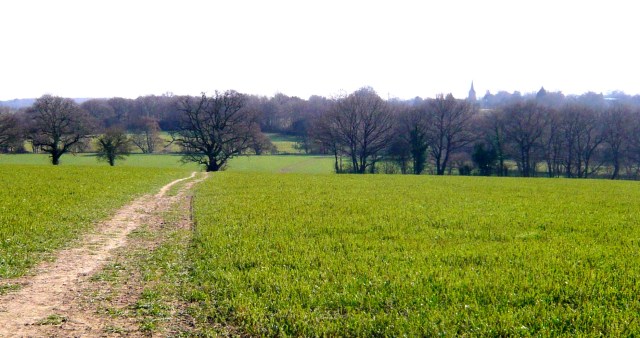
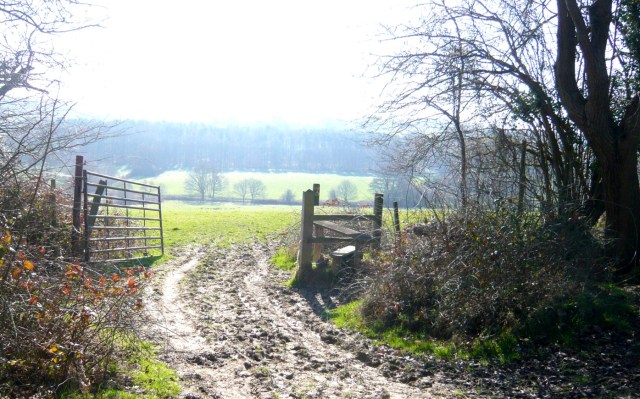
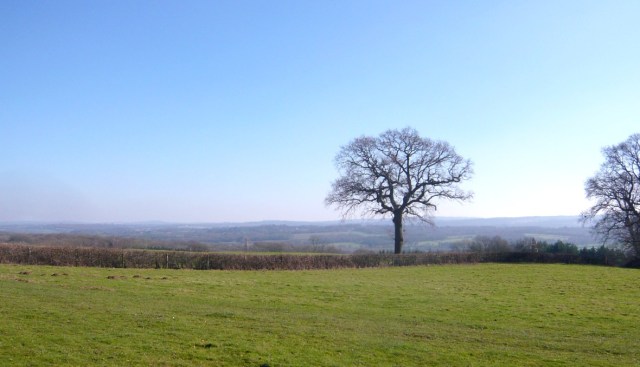
We took a bus out to the village of Hartfield in Sussex, and had a long walk through the woods and fields, and over a few hills. Spring is certainly here, now. Although there are not yet many flowers out in the countryside, even though there are lots of daffodils and snowdrops and crocuses in the gardens, there is a wonderful fresh green gradually spreading across fields and through the woods.

006a

The land has already dried out quite a lot after winter – unusually, so I think. Probably because we have had a relatively dry winter around here. But even where a little water still stood around in the fields and on the paths, it just gave the sun somewhere to glitter and sparkle.

007a

There were plenty of birds around – tits and finches, blackbirds, thrushes, pigeons, skylarks, buzzards and a hovering kestrel.

We saw the first butterflies of the year: a Brimstone and one or two Peacocks.

009a.jpg

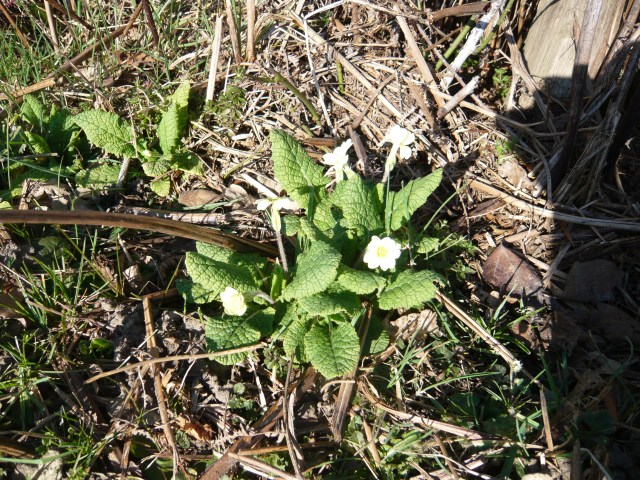
There is blossom on the Blackthorn trees, and there were a few flowers out. In places, there were lots of Lesser Celandines, and here and there a few primroses.

013.JPG

Honestly, I cannot think of a better way to spend a day.

Those Old Paths

We seem to be in the middle of a spell of warm, sunny weather. It seems Spring really has arrived, although things could always change quickly, of course. But it’s the sort of weather that tempts me out to go walking as much as I can. We are extremely fortunate in the UK to have such a wonderful network of footpaths, open to the public.

042a

Dartmoor footpath

Many of the ancient tracks are still just that; just trackways that have never been turned into roads over the years. Often, this is due to their locations in the landscapes they traverse. Neolithic or Bronze Age man lived in a landscape that frequently comprised dense, almost impenetrable, forest, with networks of streams meandering through marshy lowlands, and wherever possible they would utilise the higher ground to move around, and hence we have long-distance footpaths today still following these same routes such as the Ridgeway, while modern roads tend to utilise the lower, flatter land where possible. Walking these Old Ways (and it is impossible to even mention them without referencing Robert Macfarlane’s wonderful book, The Old Ways!) always gives me goosebumps, as I feel I’m following in the steps of these prehistoric travellers.

And yes, we are lucky. Not only do we have so many of these paths, but we have the right to walk them whenever we please. But this has not always been the case. Up until comparatively recently, huge areas of the British countryside were owned by the landed gentry who denied the public any access. In 1932, the first mass trespass by five hundred men and women at Kinder Scout, in the Peak District, led to the imprisonment of five of the trespassers but this led to a second, three weeks later at nearby Castleton, involving ten thousand trespassers.

This growing movement, demanding the right to roam, led eventually to the creation of the first of the national parks in 1951, and to the Countryside Right Of Way act in 2000. So today it is possible to walk plentiful footpaths pretty well anywhere in the country, thanks to this incredibly successful movement of direct action.

My header picture at the very top of the page, incidentally, is a view of the Peak District looking towards Kinder Scout.

And it’s another gorgeous day today, so we’re off for a walk to make the most of it. I’ll catch up with everyone later.

On A Home Visit

On A Home Visit

038a

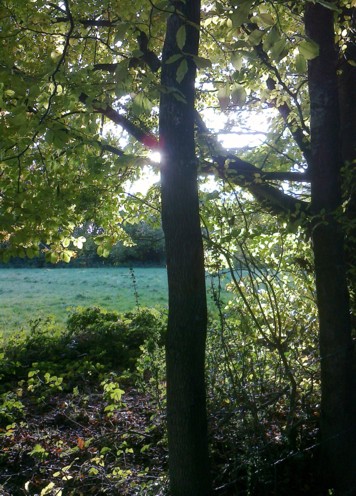
It has been a long time.


But when I used to live here

Did I notice how neatly

The trees seem to fit

Between earth and sky?


Did I realise

How right it all was?


The just-ness of the hills

Rising to the east,

And the is-ness

Of fields and streams.


My world of changeless certainty.


Wordy Wednesday 3

trichy temple 2

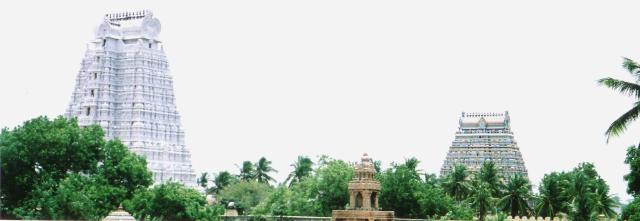
Arv’s comments on last week’s Wordy Wednesday post reminded me of some of what stirred my interest in the history of language. Reading about the unexpected discovery in the nineteenth century of the great similarities between words in Sanskrit, the ancient written language of much of the Indian Subcontinent, and words in Ancient Greek and Latin which were a starting point for the study of Linguistics, was something that fascinated me.

The word for ‘father‘, for example, is ‘pita‘ in Sanskrit, and ‘pater‘ in Latin and Greek.

The word for ‘mother‘ is ‘mata‘ in Sanskrit, ‘mater‘ in Latin and ‘meter‘ in Greek.

The word ‘Aryan‘, actually has the meaning of noble or honourable in Sanskrit (arya), which in Latin becomes ‘ariana‘ (holy) and in Ancient Greek ‘areia‘.

And there are other, seemingly more unlikely, connections.

The word for ‘horse‘ is ‘aswa‘ in Sanskrit, and ‘asva‘ in Lithuanian!

Whether the implications behind this are that there was a great mixing of peoples in those days and that different civilisations adopted words from the others, or that all these languages descended from one single, now lost, language in the distant past, can never be known for certain, but the evidence for the latter is extremely strong, especially as the world population was so much smaller then.

Modern research suggests that Sanskrit, spoken by the ancient tribes of India who called themselves ‘Aryans’, entered the Indian subcontinent from the north west, an area both closer to modern day Europe (and its languages) and to the source of the original migration of peoples out of Africa.

Of course, the theory of a single original language puts me in mind of the myth of the Tower of Babel…

My interest was also stirred by a number of similarities I came across when I was travelling or working overseas. One example will suffice:

Cat‘ is ‘chat‘ in French, ‘gato‘ in Spanish and Portuguese ‘katz‘ in German, ‘kot‘ in Polish, ‘kot‘ in Russian and ‘kitta‘ in Arabic.

I think the real significance of these similarities is that when you consider it logically, I don’t suppose that the speakers of all these languages were just waiting for someone to come along and give them a useful word for the furry mouse-catchers they had hanging around their villages and towns. It seems entirely probable that they all contain similar words because all those languages descended from one common source.

And this all leads me to one final thought (deep breath!)…in this ancient, lost, original language of our distant ancestors, we can be fairly certain, for example, that the word for ‘father‘ was something similar to most of its derivatives in use today. As well as the Latin, Greek and Sanskrit examples above, it is ‘padre‘ in Spanish, ‘pere‘ in French, and ‘vater‘ in German.

We may not be able to reconstruct this language (although in the future, who knows?), but we can certainly make a good guess at what a number of its words were, and they were words that most of us are familiar with today.
Home

120

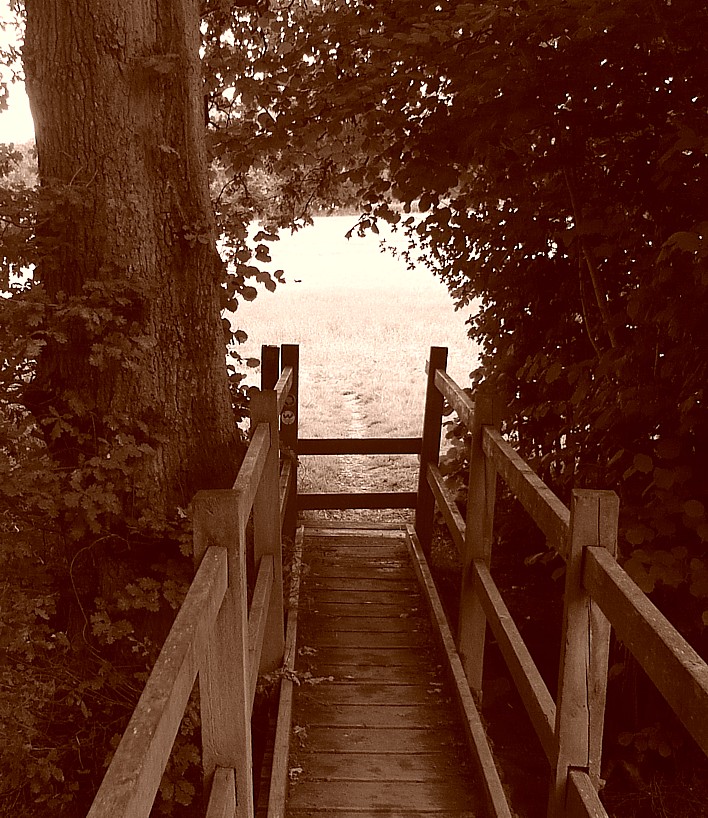
I’m walking on tracks,

On familiar tracks,

Under blue sky,

In the evening light.

My shadow before me,

The wind behind.


I’m yawning now,

And my legs are tired.

I’m looking forward to supper,

A beer and then bed.


The shadows lengthen,

Along with my stride

On familiar tracks,

Along familiar tracks.

I’m heading for home,

Now,

I’m heading for home.


Leh Old Town

Fourteen years ago I went up to Ladakh, in the Northern Indian Himalaya. Crikey, fourteen years! Where did that go?

025a

This is a painting I made in ink and watercolours of an area of the Old Town of Leh, the Main Town of Ladakh. It shows part of a Buddhist shrine, next to another old building. Most of the buildings are a mixture of stone and wood, the wood frequently carved and / or painted.

Although there were quite a few new buildings in the town, the majority of them were old and the whole town had the feel of belonging to another century. I travelled in early April, before most visitors arrive and when Ladakh is still bitterly cold and wintry – certainly overnight. During the day the temperature just sneaked a little above freezing. This meant that I seemed to be the only Westerner there – I certainly don’t remember seeing any others – and I was never hassled by touts of any description, possibly because it was still too early.

But, above all, the people were among the friendliest I have ever met.

Regretfully, I doubt I’ll get another chance to go there, but it is certainly a very special place!

Picture available on my Etsy shop site here

Acrobat

071a

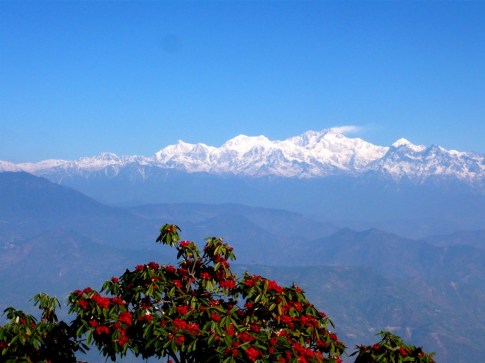
Totally irrelevant photograph: Mt. Kanchenjunga from Darjeeling

I don’t suppose he would think of himself as an acrobat,

As anything special.

But I watch him measuring the distance by eye,

Before he gathers himself

And leaps,

Two…

Three…

Four feet into the depths

Down

To land on the tip of a tiny wooden post,

All four paws

Together.


Review of Small Town Kid by Frank Prem

Small Town Kid (Frank Prem Memoir Book 1)

I have enjoyed Frank’s poetry ever since I discovered it a couple of years ago.

Small Town Kid is a book of poems about growing up in a small town in Australia during the 1960’s and 1970’s. The town is provincial, the way that small towns invariably are, where everyone knows everyone else, and everyone else’s business.

In those days, a small town was very different to a small town today, now the internet and social media have changed even the slow-paced life of these places forever. And so those of a certain age will recognise many of the situations and much of subject matter of these poems, while to those much younger they may well seem almost alien.

Rich in emotions, as well as in visual detail, we listen to Frank describe experiences such as hunting rabbits, letting off fireworks, and going on picnics, turning his nose up at his mother’s cooking and enjoying his grandmother’s cakes, suffering school and returning home at the end of the day. We find ourselves both observing and participating in the day to day life of his town.

This could be any small town, and any child. If you could extract the peculiarly Australian nuances and replace them with others, the poems might be about a small town anywhere and any child who grew up in it.

The poems are presented in an order showing the boy growing up from his earliest years through to reaching young adulthood, taking the reader on a journey alongside him.

And they have that power, that they transport you there.

Frank writes sparingly, knowing like an artist when to stop. But everything is there, and the writing invariably has beauty no matter what its subject matter.

Unhesitatingly, I give this book five stars.

You can find more of Frank’s poetry on his blogsites:

Welcome

About and Welcome