The Christmas Story! 3rd and Final Part.

They could see at once that something was very wrong.

There was no movement from the child in the bed of course, since they were within TimeShift, but the agonised rictus on his face, the distorted jaw and neck, and the twisted body lying half in and half out of the bed, immediately made them freeze and stare in horror.

A snapshot…a cruel statue…tiny hands caught in time, clawing desperately at a heaving chest…bulging eyes…

Henderson actually thought he could hear a terrified scream, somewhere in the air in that suddenly awful room.

‘Shee-it!’ Said Edwards, softly and slowly.

Nobody moved.

315a

After a minute or so, as if by comment consent, they opened the door and slowly went out to the landing, each of them reluctant to leave the child – it felt like they were abandoning him.

‘Try that door.’

Lesley was the nearest. Raising his fist he began to tap gently at the door, then realised what he was doing and shrugged, pushing the door slowly open.

They faced a woman frozen in the act of throwing a dressing gown around her shoulders as she stepped towards them, the dressing gown caught billowing like a hero’s cape, although her face was frightened and staring. Instinctively, they all took a step back.

‘She’s heard him,’ muttered Edwards. ‘She’ll make sure he’s okay.’

But none of them believed it.

‘She’ll get an ambulance, for sure.’

‘But what about all that fucking snow? How will they get through that?’

‘What can we do?’

‘I don’t know.’

‘Seems blindingly obvious,’ said Edwards, after a couple of moments. ‘We just pop him in the sleigh and take him to hospital ourselves.’ Henderson looked grim.

‘It’s really not that easy, I’m afraid. We’re in TimeShift, but he’s not.’

‘So? Just bung him in the sleigh anyway, and off we go.’

‘No, we can’t. When you’re inside TimeShift you can’t move any other bodies that are outside. It’s impossible. And even if we could, what about his mum? She’d just find him gone.’

‘So to get him to the hospital, we have to do it outside of this TimeShift thing?’

‘I think we’ll have to do everything outside of that. First we need to find out what’s wrong, which means we have to get outside of TimeShift straight away. Talk to his mother….’

‘…won’t she sort of just freak out when she sees us?’

‘We can’t worry about that. We just need to work out how to do it.’

‘Don’t you know, then?’

‘Er, no. When it happened last time, I don’t know how it worked.’

‘Can you call the office and ask them?’

‘Only in real time. But there is one way I can think of. One or both of you will need to stay here, whilst I take the sleigh and come back in…what, one minute? Will that give you long enough to speak to her and find out what’s happening?’ They both looked doubtful.

‘I’m not sure that the sight of us appearing in her house at the dead of night will really help. Ain’t there any way you can stay here? At least she’ll know who you are.’

‘I don’t think so. Neither of you know how to operate it.’

‘No, we don’t. Okay, come back in a minute or two, and we’ll tell you how we’re getting on.’

***

There were four figures on the landing when he returned.

Lesley and Edwards were standing either side of the woman they had seen in the bedroom, who had her hands to her mouth in shock, whilst the fourth was a man in pyjamas who was lying stretched out on the floor A cricket bat was lying a short distance from his outstretched right arm.

‘What the…

‘Sorry, I had to biff ‘im.’

‘Why?’

‘He was attacking us.’

‘Oh, for…

‘But the boy’s having a fit, and needs to get to hospital. And, shit, that was weird.’

‘What was?’

‘The way she stopped moving the moment you appeared.’ Henderson looked at him, and then went back into the child’s bedroom. He was still lying in that awful, contorted, position, but now there was just a hint of dark blue in his lips. He returned to the landing.

‘I think he’s dying. We don’t have much time.’

‘Have you got a plan, then?’

‘Just to get him to hospital as fast as possible. If I go and get that programmed into the SatNav, then we just have to come out of TimeShift and get him on board as quickly as we can and…’

‘Oh, bugger it! It’s obvious!’ shrieked Lesley suddenly.

‘Eh? What are you talking about?’

‘Well, instead of pratting about here, why don’t we just go and get a doctor and bring ‘im here? We can stay inside this TimeShift bastard thing until the last moment, then.’

‘Yeeess…that might be the answer. It’d probably be quicker. Although, we might have a problem if they don’t believe us. We can’t afford to spend too long trying to persuade them; the boy mightn’t last that long.’ Edwards narrowed his eyes.

‘Don’t you worry about that. The doc’ll come with us!’

***

Finding the hospital proved to be the easy part.

It was a small hospital, and at that time of night there were a mixture of sleeping and wakeful patients, nurses doing rounds and writing in folders and dealing with a number of minor crises, but it seemed impossible to find a doctor. They stood at a doorway staring into a restroom where a nurse was sitting with a half empty mug of something and a pile of papers. She looked tired.

‘Don’t they have doctors here at night?’ asked Edwards.

‘I suppose they must have, but I don’t know where we’ll find them.’ They looked at each other.

‘Well, why don’t we just take a nurse?’

‘Well, why not? Come on.’

They hurried back to the sleigh, and as soon as they were aboard, Henderson switched off the TimeShift.

‘Right! Let’s go!’

They ran through the entrance and down the corridor, ignoring the shout from the desk porter, and burst into the restroom.

‘We’ve got a boy dying out there!’

‘What? Who are you? Where?’

‘I don’t know the address; you just need to come with us. He’s having a fit.’

‘I can’t just go…’ Her voice faded away as she took a proper look at the elves.

‘You’ll come with us,’ said Lesley, in a voice that said very clearly that she was going with them. ‘You need to bring anything?’

‘Er, yes…a couple of things…I’ll need a hand.’

‘Right, come on. We’re in a hurry!’

There was plenty of room on the sleigh, with most of the sacks now lying empty on the floor at the back. It took a couple of seconds to deploy the new ramp and push the trolley of equipment on board, and then they were up in the sky again, the nurse in the front seat beside Henderson. As soon as the reindeer started up and they were back in TimeShift, he felt himself relax.

‘Right. Sorry about this, but there’s a boy having a fit, and the ambulance would never get through this snow.’ She nodded.

‘Okay, I get that. I understand that you’re Santa Claus…I suppose. But,’ she lowered her voice and jerked her thumb backwards, ‘who on earth are they?

‘Elves.’

‘They look a bit rough for elves!’

‘I’ve had worse.’

‘You want a beer, love?’

‘What? I…’

‘We’re here!’ said Henderson, hurriedly. This time he managed to bring the sleigh down in the road, squeezing in between a couple of parked cars.

‘Let’s get the trolley off first.’

They pushed it through the snow up to the front door, and then Henderson switched off the TimeShift.

‘Okay. Hurry!’

They hammered on the front door.

***

It was two hours later.

At least, in some ways it was, but just at that moment it was really a hundred and eighty-nine and a bit years earlier.

‘And you’re sure the little feller’s alright, now?’

‘The nurse said he’ll be fine. And we’ve only got two more drops, then we can go home.’

‘Right, I think we need some more beers, then.’

‘Hey, these are good ones!’ Henderson said in surprise. Edwards looked hurt.

‘What was wrong with my lagers? You seemed happy enough with them earlier.’

‘Oh, nothing. No, they were great. I mean, these are pretty expensive ones. Where on Earth did they come from?’

‘Oh, they were in the lounge in that house. I’m sure no one will mind.’

‘No,’ Henderson agreed, ‘under the circumstances, I’m sure they won’t.’

***

If you’ve read this far, and my thanks for doing that, then you might like to read last year’s Christmas short stories:

First one

Second one

Third one

Fourth one
I have some news!

I have some news.

I’m sure some of you (especially the writers) will remember that I reported here a week or two back the disturbing news that fictitious characters now have the legal right to sue their creators for defamation of character, or any other hurt (real or perceived) caused through those said creators’ thoughtless and heartless actions.

imgp2288

In case you want to have a look, the link is below.

Sue me and I’ll have you killed!

Well, news reaches me this morning of a new grouping of characters, namely sidekicks in detective stories, who have come together under the name of Sidekicks Of Detectives (or ‘Sods’) to challenge their positions as The Most Stupid Person In A Detective Story.

Initially, the group was to have been organised by Captain Hastings, sidekick to the famous Poirot, but after some heated discussion it was agreed that, actually, he couldn’t organise his way out of his own front door without help, and the task was then delegated to Doctor Watson, who arranged a meeting at a coffee shop, one of a well-known chain, in Central London. Unfortunately, he forgot to mention either which branch it was, or the time of the meeting, and so there has only been limited progress on that front, so far.

But, further cases have already come to court.

A number of characters from ‘Three men in a boat’, by Jerome K Jerome, Bertie Wooster and others created by P G Wodehouse, and various characters from books by Spike Milligan began a collective case, but were laughed out of court.

Dan Brown is being sued by every single character he invented.

And there is some confusion in America, where Donald Trump has apparently filed a case against himself on the grounds that he has irreversibly blackened his own character.

I’m told he is confident of winning the case, since the stories he has spread about himself are scarcely believable, and that it is generally held that he must be a fictitious character, since the majority of observers and commentators say they ‘can’t believe this guy is for real!’

The trouble is, all this is symptomatic of our legislative culture. It was the retrospective case brought by Big Ears and Mr Plod against the estate of Enid Blyton that, I think, I found most distressing. By all accounts, they cooked it up over an evening of heavy drinking, after being taunted by the Tubby Bear family, and it is strongly suspected (although it cannot be proved) that much of the impetus came from a third character – possibly one of the Fluffy Cats, since they are known to be bad through and through (it’s okay, I can say that. It was proved in a recent court case of character assassination that the Fluffy Cats brought, and lost, against the estate).

But Big Ears and Mr Plod did win their case, and now not only is it a legal requirement that in future they both be referred to as intelligent, but Big Ears must henceforth be renamed as ‘Graham’. And his ears are officially ‘of normal dimensions’. Or else.

Which brings me to my own characters.

I have decided that I am not going to be dictated to, or browbeaten by, some miserable little…hang on, there’s someone at the door. I’d better just get that. Hello? What? A writ? about what? Oh…

I’m sorry, I have to stop there.

Well, yes, right…or write…

The clocks have gone back, and it’s getting dark earlier and earlier, but there is still a blackbird singing in the garden, although there is also the smell of wood smoke in the air – from a bonfire, I would guess – and a definite chill in the air. The autumn leaves have been exceptionally beautiful this year, seeming to have an extra couple of tones of red and orange. And there are still plenty of late flowers out. I may be a summer person, but it is  decidedly beautiful at the moment..

imgp2484

I said I’d take part in NaNoWriMo this year, didn’t I? What on earth could I have been thinking of?

Did I really commit to writing over a thousand words a day all through the month?

Oh, for goodness sake! I’ve not even had time to look at anyone’s posts for the last five days, let alone write anything.

I quit. November 2nd, and I quit. Just like that. I’m sure no one else has ever backed out of it that early. Can I claim some sort of record?

But, as some sort of penance, I’m going to put up a short fiction piece for today’s post. I wrote it last week, so that’s almost November…

Light Years

It appears now both ridiculously arrogant and incredibly stupid, but after a mere few thousand years of development we seemed to think that we had arrived at a stage of development that we should consider to be an advanced civilisation. For a handful of years we had been capable of a rather limited space travel. We were beginning to probe the makeup of the universe and were on our way to some understanding of its complexities. And out of all of these thousands of years of development, we had had machines only for a few hundred years. We had had electric light for less than two hundred years. Computers for less than a hundred. We reached the moon one year, and two generations later we were probing the edges of the Solar System. And in those two generations, the life expectancy of almost everyone on the planet increased dramatically. We invented mobile phones and within one generation they were tiny computers that virtually controlled our lives.

In short, the pace of our technological progress increased exponentially.

But we had had wars and cruelty and genocide all of this time. We never solved that problem, we only invented crueller and more effective killing machines.

And should we ever make contact with another civilisation – that’s civilisation, mark you, not just life form – then the odds were that it might be several millions of years old.

No one seemed to realise the rather obvious implications.

And, despite warnings from a few of our more eminent and talented thinkers, we continued to recklessly send signals out into this huge unknown, advertising both our presence and our level of development.

Science fiction in popular culture would have aliens suddenly visiting our planet, swooping through the skies in huge flying saucers with deadly heat rays as weapons. The visitors would be recognisably bipedal – large headed, of course, since their brains would be more developed than ours – but with a limited range of facial expressions (why limited, I always wondered? Surely they would have developed more subtle ones? But perhaps they no longer needed them). The world would be in a panic; world leaders would meet, and attempt to make contact with the visitors. There would be an ill-advised attempt to engage them in battle, which would turn out very badly, but they would finally be forced to leave, or leave of their own accord, and in the end we would be the wiser for it.

But it wasn’t like that at all.

No one seemed to know what they saw, and many seemed unaware even that they had seen anything at all. There was light, but not the lights of UFOs buzzing through the skies at night, and not the stabbing beams of destruction envisioned by the writers and film-makers. For several days, it seemed to me that the light was a rather odd colour, and at times a little misty, or…hard. Others noticed that the light would move around, almost in blocks. It sounds ridiculous, but there you go.

That was about the time that I noticed a slight throbbing in my head and my brother complained of a ringing in his ears. No more than that, although it did seem that there was more shouting and arguing from some of the families in the neighbourhood, but this wasn’t particularly unusual and I thought nothing of it then.

It was the following day, which was yesterday, that everything seemed to go quiet. The arguing had stopped, for which I was grateful, but so had the background noise of traffic. I walked down to the ground floor and pushed open the door, and with that the throbbing in my head seemed to get worse. There were one or two people in the street outside, but no one seemed to be in a particular rush. All of them appeared to be strolling or standing around aimlessly and when I began to walk towards one of them, I found it quite difficult to move my legs; they felt very, very tired. I stopped and looked at the man I had been approaching, but when I caught his eye he began crying. It seemed shocking, and I wanted to cry too, although I did manage to stop myself. In the end, I turned around and went back home. I thought I’d see if there was anything on the news, but the TV no longer worked, and nor did my laptop. There was power, since the power lights came on, and I filled the electric kettle and made a cup of tea, but that tasted awful – perhaps the milk was off –  and I poured it away.

My head was still throbbing, but I thought I ought to see how my brother was this morning. I tapped on his door, then went in, but he wasn’t in his room and the bed looked as though it hadn’t been slept in. He had gone out the previous evening, and it seemed obvious that he had stayed out all night. It didn’t seem to matter.

I still felt tired, and now I did start to cry. It only lasted a moment, though, and then I thought I should have some breakfast. I put a couple of slices of bread into the toaster and put a pan on the cooker. I was going to fry a couple of eggs, but the oil in the bottle seemed to have turned a greenish colour and set solid overnight. I pushed the lever down on the toaster anyway, and for about a second the whole thing glowed with a bright orange light that hurt my eyes, and then just faded away. There was no smell of burning, and the toaster looked unharmed. I unplugged it from the wall, and lifted the lever. The bread was still white.

All of this should have worried me more than it did, but the truth was that I felt that I didn’t care. For the next hour or so I sat at the window, watching the few people outside trudging slowly along or standing and crying. A couple of them were lying motionless in the road. With an effort, I lifted my head and looked up to see that there were bands of thick colour across the sky; not clouds, because they were too transparent to be clouds, and they were the wrong colour anyway. I don’t know what colour they were, but it was wrong.

When I looked down again, the street was empty, apart from the colours.

It is possible that what we saw was no more than a trick of the light, or perhaps they were machines. Possibly, they were even the creatures that had sent them. Who knows, maybe they were both at once.

Light. Yes, light. It keeps coming back to light.

I don’t even know whether this is the end.

But I think it is.

Wow, What a Book! #1

I thought that I would pick out what might be the 10 books that have most influenced my life. Well, I say 10 books, but I may tire of this long before I reach 10, so let’s just see what happens.

You see, these are not really reviews, although it is necessary to give some idea of the plot of each book, it is more about how they have influenced me, and I may decide after a while that I’m just giving away too much about myself.

Or that I’m just going over and over the same ground.

Okay, then. Let’s get on with it. The rules:

Firstly, I must have read the book more than 5 years ago. I know this is an arbitrary figure, but any book that I have read recently is likely to be clearer in my mind, and so appear a little more important to me than it really is. It needs time to settle.

Secondly, I need to be able to demonstrate to myself exactly how it is that the book has influenced me. Just to say ‘it was important to me’ will not be enough. That would be little better than just saying ‘I like it’. Perfectly valid, but hardly the stuff of a blog post. This is another reason to impose the 5 year rule – there must have been enough time elapsed to see the influence.

So I’ll start today with Steppenwolf by Hermann Hesse.

Image result for steppenwolf Hesse

Sometimes, you get the feeling that some people have just been born into the wrong century. Not that they would prefer dressing in cravats or crinolines, although they might anyway, or that they have a hankering after a little piracy or bubonic plague, but rather you can see that they don’t fit in with the pace of modern life, or much like the ethos of the times.

There must be quite a few people like that, which must partly explain the immense popularity of Steppenwolf both when it was released, and then especially in the 1960’s and 1970’s.

It was the second book by Hesse that I had read, after cutting my teeth on ‘The Journey to the East’ as a teenager, and I was a little unprepared for its message.

Whereas ‘The Journey to the East’ felt like a bit of drug-induced fantasy, although a very clever and readable one, without any obvious message beyond ‘free yourself from the conventions of society, man’, Steppenwolf clearly had a more serious message to convey.

It begins with the protagonist, Harry, contemplating taking his own life, because he sees himself as a serious writer both at odds with the world that he lives in (Germany, post WWI), whose values, especially the bourgeois ones, he despises, but also with his inner alter ego, the very opposite of the sophisticated artist that he sees himself, which he calls the Steppenwolf – or the wolf of the steppes. He hates and fears this alter ego, who he feels he cannot control, and who sneers at everything that Harry holds dear.

It is whilst Harry is contemplating suicide, that he comes across a booklet entitled ‘Treatise on the Steppenwolf’ and as he reads it, he discovers that it is about himself. the booklet talks about Harry and his alter ego, but also explains that there are many, many more of these other sides to his character.

Through the rest of the book, Harry learns how to reconcile these many sides of himself and, more importantly, how he can manage to live in this world that up until then, he sees no value in.

When I read the part of the book that consisted of the treatise on the various different natures that made up the protagonist of the novel, it was the first indication to me that we really do have these different sides to our characters; sides that do not need to be in conflict with each other, but can coexist quite peaceably. As a typical young man, I knew that there were parts of me that yearned for safety, parts that simply wanted to rebel. Parts that enjoyed home life and parts that wanted nothing more than to wander the world with my possessions in a rucksack. There was the aesthete and there was the lover. The artist and the fighter.

Until then, the rebel in me had sneered at the home lover, and the artist seemed to be in perpetual conflict with the fighter. I had felt embarrassed by parts of my character and, just as did the hero of Steppenwolf, rather tried to repress them.

What this book did was to show me that it was natural to feel like that, and that the secret was to accept all of these sides of me, and allow them to all have their moments of dominance, and their moments of passivity. They did not need to be in conflict.

It completely changed my outlook on life.

Sue me and I’ll have you killed!

…slowly, he inched his way along the ledge, his heart in his mouth. It was too late to even contemplate turning back now. The sun was sinking rapidly in the pale sky in front of him, dropping towards the distant plains that were almost hidden in the desert haze. It would be completely dark within the hour. For the first time, he knew real fear. He could never survive a night on this thin, narrow ledge – God knows, there was barely enough room to stand and almost nothing to hold on to. It was inevitable that he would slip off at some point. Even now, there was a thin skin of ice on much of the surface, and the terrible cold would descend as soon as the sun disappeared.

Gritting his teeth, he edged towards what looked like a slightly better foothold, and cried out in sudden terror as his foot slid into space, the momentum taking him over the edge and falling…

Hell, I can’t do that! Stop! Phew, that was close.

As writers, we have to be so careful, because nowadays even our characters have rights, did you know that? And we can’t just be doing this and that to them, just as we please. Only the other day, a lawyer claiming to be acting for a character in a well-known children’s series attempted to take the author to court and sue her for, literally, defamation of character.

This character claimed that the author had totally misrepresented his actions, and applied motives to them that could only be described as evil.

And she said he had no nose, which was just spiteful.

He has claimed damages running into millions of dollars.

If this character is successful, then it is difficult to know where we will see this ending.

The fact that the author has created said character is no defence in law. Really, they are like our children. And whereas a few hundred years or more ago, parents had absolute authority over their children, and, short of killing them, could do whatever they so willed with them, nowadays they have more rights than their parents. And I’m afraid that it may come to that with our characters, too.

‘Why should I be killed off?’ They cry. ‘What right have you…?’ And so they will challenge it.

It has even been mooted in some quarters that these characters should perhaps be able to resort to the legal process appropriate for the time and world that they have been created for. Thus, a dragon in a tale set in ancient times, peeved because the author claimed it ate virgins and had bad breath (not sure if the two are connected…) might very well demand that it meet the author in Trial by Combat, a trial that the author would probably be rather ill-prepared to face.

Upset a Tudor monarch or a Viking chieftain, and I wouldn’t give much for your chances.

And any authors writing tales set in the future, who had unwisely failed to specify what sort of legal process was in existence at this time, might find the lawyers, or even their characters, being given the right to specify this. And that might get very nasty indeed.

But there may still be one remedy open to us. If our characters hold the threat of litigation over us, we might, just might, be able to retaliate by threatening to make their next incarnation even more horrible than the one that they are prosecuting us over. Threaten to sue me for creating you with a flatulence problem? Go ahead, and see what problems you have in my next novel! Don’t forget I’m writing a series! You had quite a decent time in the last one, it’ll be the torture chamber for you next!

It might work, but I’m still nervous about it.

001

So what am I going to do? I’m just going to write nice stories about pussy cats, from now on, that’s what.

Authors, you have been warned!

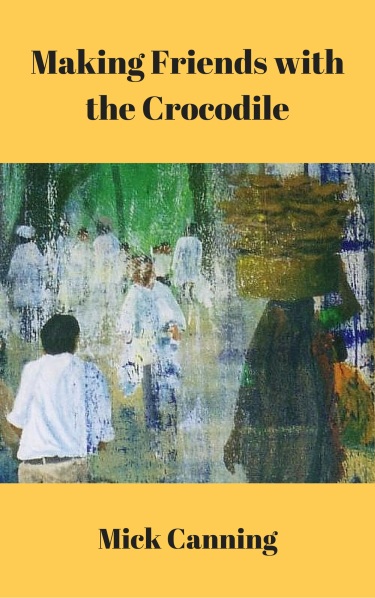
What a great review for Making Friends with the Crocodile!


Making Friends with the -Crocodile

Somali, at: Somali K Chakrabarti has put up such a generous review of my book, Making Friends with the Crocodile, that I am going to spend the rest of the day puffed up with most unreasonable pride! It comes as I battle with the various internet demons to put up a version on Kobo (ready in a couple of days, I hope), and, finally, a Print On Demand version for sale in India.

My biggest worry when I published the book, was that as a Western male writing in the voice of an Indian female, I would not be able to make it sound realistic, but I finally feel reassured by Somali’s review.

It can be found here: Making friends with the Crocodile


How India Changed an Englishman

I wrote a piece for The Good Men Project, about my time in India and how I came to write Making friends with the Crocodile’. Sushi Menon kindly edited it to make it readable, and gave it a title, and you can find it here:

How India Changed An Englishman

Making Friends with the Crocodile cover

Pitfalls for Writers – no.6: Historical Accuracy


‘Dear Mr. Author.

Whilst reading your book ‘Oh what fun and laughter we had during the time the Black Death wiped out our village’ the other day, I was disappointed to notice that you mentioned July 23rd 1449 as having been a sunny day in your fictitious village. From the descriptions you provide, you have clearly located said village a little to the south of present day Norwich, and my extensive researches prove that July 23rd 1449 would have been a rainy day there.

Yours disgruntledly,

A Pedant.’

How accurate do you need to be, as a writer, with historical facts?

If you are writing a non-fiction book, you have to be scrupulously accurate, no matter what subject it is.

End of.

On the other hand, if you are writing fiction, you have a certain amount of leeway. First of all, though, it is worth saying that if you sell enough copies of your book you will eventually attract correspondents like the fellow above. Is that something to worry about? Only if they get to know where you live, perhaps. Otherwise, send them a nice reply, thanking them for their diligence, and assuring them that you will correct your dreadful fault in the next edition. On the other hand:

‘Dear Mr Author.

The Black Death was actually sweeping the country in 1349, not 1449.

Yours smugly,

A Historian.’

This time, you’ve screwed up.

And yes, it matters.

Very minor inaccuracies are bound to slip through, and very few people will notice them. And if they do, they will not think anything of them.

Except for Arthur Pedant, of course.

The big things are another matter. Imagine reading a novel set in the days around the Russian Revolution, and then the author tells you that the Bolsheviks rose up against the state in 1927 instead of 1917. Or that they were led in the beginning by Stalin. Immediately, the author’s credibility has evaporated, as has their story.

Because the reader no longer believes the author, and they no longer accept their story.

The moral here, then, is don’t skimp on the research!

It is possible to radically change the facts of history, but the difference is that to do this the author must present it as the whole point of the story. In steampunk novels, the whole history of Victorian Britain is altered, but the reader accepts this as it is the premise behind the genre. It is seen not as a mistake, but as a narrative invention.

In many science fiction novels, the premise is a future that is the result of a different history than that which actually happened. For example, the Germans won the Second World War, or of different worlds or dimensions in which history diverges from the accepted version. Again, this is accepted by the reader, as it is the premise that the story is set on.

It is possible to break this rule, but to do so the author has to break it in such a way that it is quickly obvious that they have done it deliberately, and not by mistake.

One might, for example, set a novel in Victorian England that is not steampunk – a detective story, perhaps – but in which Queen Victoria is assassinated in 1860. As this is something that no one could possibly put in by accident, it will be seen as part of the invented narrative and accepted.

Well, probably. Where is Arthur Pedant?

The Past is Another Country…

…they do things differently there (L.P.Hartley )

Almost 20 years ago I was a care-worker, paying visits to support elderly folk who were, for various reasons, unable to cope on their own. I would provide support in a number of ways – cooking, washing and dressing,and cleaning, for example.

One man I visited quite often would talk a lot about his younger days – as is natural. He had a wealth of stories, and I always told him he should get someone to write them down. It is the ordinary person’s stories that are frequently the most interesting, and the ones that we usually don’t hear. Famous politicians, sports stars, movie stars…well, they write autobiographies, or have them written for them, and we hear all about the other famous people they knew and the hotels they stayed in…yawn, yawn, yawn.

But we hear far less about the family in the village 80 years ago, their day to day life and how the outside world impacted upon them.

Below, there is a photo of London Road, just outside of Tunbridge Wells, taken earlier today.

005

My client told me that during his youth, he would walk back along this road after an evening out in town, describing how there was nothing but open fields on both sides for much of the walk. Looking at it now, it is hard to picture that, since I have never known it any way other than how it looks now.

But prior to this, in his childhood, he lived in the village of Groombridge, on the other side of Tunbridge Wells, and he told me how, as a schoolboy during the First World War, he and his classmates ran out of the class one day and across a field, to see a German Zeppelin airship that had just been shot down.

It is stories like this, that are the genuinely interesting stories that come out of the past.

And for my large Work In Progress, the past really is a foreign country. Much of it is set in Persia and India, in a time frame that covers some 300 years up until the late 19th century.

Now, I was about to write that if it is difficult for me to picture the main road near where I live as it was some 50 to 75 years ago, then it is far more difficult for me to picture the places in India and Persia where and when I have set my novel, but then I realised that this is not actually true.

And so this post is now taking a turn that I had not expected when I sat down to write it.

The Indian capital at the time was at Fatehpur Sikri, which today is just the remains of those buildings – it was only occupied for some 22 years, and then abandoned. I have visited the site and walked around it, and it is quite easy to imagine it occupied by Akhbar, his court, and the general population.

I have never been to Persia (modern day Iran), so my impressions are formed only at second hand. And much of what I have read consists of works about the 1500’s, and I am familiar with many of the paintings of the period, so again it seems almost natural to imagine it as it was then.

And then when I have travelled in India, as well as in the Middle East, I have spent a lot of time visiting the old parts of the towns and cities, and many rural areas where life follows the same patterns that it has for hundreds of years, and so, again, it seems more natural to picture the settings for my book in those time periods that concern me.

Finally, researching these areas, I often come across old black and white photos of places of interest to me, and since I have not been there, they are the only impression of these places that I have.

Of course, Tunbridge Wells in the Victorian era is much harder for me to visualise. All of the modern buildings get in the way of my imagination. All of the roads are surfaced with tarmac, the open spaces have largely gone, and many parts of the common that used to be open and windswept are now covered in trees.

On a slightly different note….

As a project, I occasionally take photos in sepia of the area around where I live, as though they might have been taken about 80 years ago – around the time that my elderly client was walking along the London Road, winds blowing across the fields either side of him, and the only light from the moon. Each photo that I take has something in it to show that it was taken recently though, rather than a long time ago, such as a modern vehicle, a modern street lamp, road markings, or modern windows. The shot below is an example.

Holden Pond

Easy to feel that it might be taken in 1930.

The Book is Released – Hurrah!


Making Friends with the Crocodile‘ is now released!

Making Friends with the Crocodile cover                             POD cover

Kindle edition                                                     Paperback edition

Anyone who has already pre-ordered it on Kindle / Amazon should have received it by now, and in countries where there is no pre-order facility, such as India, the Kindle edition is also now available to buy.

The paperback is available from the Amazon.com, Amazon.ca, Amazon.co.uk and Amazon.eu sites only – this is a quirk of Amazon – but can also be ordered from the estore at CreateSpace, at the following link:

https://www.createspace.com/6301808

And now, I wait to see what people think of the book, with a considerable amount of nervousness.

If you do buy a copy, please consider leaving a review either at Amazon, or on Goodreads, if you are a member (better still, at both!). Reviews are genuinely the lifeblood of a writer, and do help to sell books.

Finally, the blurb again…

‘Siddiqa was only just into her teens when she was forced to leave her home to live with her new husband and his family in another village. The years have passed, and now Siddiqa has three children of her own. Her grown up son has brought his new wife, Naira, to live with them, so Siddiqa is no longer the lowliest in the household, for she has a daughter-in-law.

Life in rural India is particularly harsh for women. This novel explores themes of female oppression and tradition and asks whether the next generation will find life any easier.’